- English
- French
- German
- Portuguese
- Spanish
- Russian
- Japanese
- Korean
- Arabic
- Greek
- German
- Turkish
- Italian
- Danish
- Romanian
- Indonesian
- Czech
- Afrikaans
- Swedish
- Polish
- Basque
- Catalan
- Esperanto
- Hindi
- Lao
- Albanian
- Amharic
- Armenian
- Azerbaijani
- Belarusian
- Bengali
- Bosnian
- Bulgarian
- Cebuano
- Chichewa
- Corsican
- Croatian
- Dutch
- Estonian
- Filipino
- Finnish
- Frisian
- Galician
- Georgian
- Gujarati
- Haitian
- Hausa
- Hawaiian
- Hebrew
- Hmong
- Hungarian
- Icelandic
- Igbo
- Javanese
- Kannada
- Kazakh
- Khmer
- Kurdish
- Kyrgyz
- Latin
- Latvian
- Lithuanian
- Luxembou..
- Macedonian
- Malagasy
- Malay
- Malayalam
- Maltese
- Maori
- Marathi
- Mongolian
- Burmese
- Nepali
- Norwegian
- Pashto
- Persian
- Punjabi
- Serbian
- Sesotho
- Sinhala
- Slovak
- Slovenian
- Somali
- Samoan
- Scots Gaelic
- Shona
- Sindhi
- Sundanese
- Swahili
- Tajik
- Tamil
- Telugu
- Thai
- Ukrainian
- Urdu
- Uzbek
- Vietnamese
- Welsh
- Xhosa
- Yiddish
- Yoruba
- Zulu
Where to Buy an SCR Dosing Pump: Import and Quality Checklist
Sourcing a reliable SCR dosing pump starts with understanding what drives quality in the SCR dosing system itself. Whether you manage procurement for a heavy truck OEM, an aftertreatment integrator, or a commercial vehicle repair network, the wrong pump choice can trigger NOx non-compliance, system faults, and costly downtime. This guide walks you through where to buy, what certifications to verify, and how to evaluate suppliers before committing to a long-term partnership — so your purchasing decision holds up under real operational pressure.

Understanding SCR Dosing Pumps: Features and Functions
How the Dosing Pump Fits Into the Broader SCR Architecture
At the heart of the urea injection process is an SCR dosing pump. It takes DEF (Diesel Exhaust Fluid, also known as AdBlue) from the urea fuel tank and adds an exact amount to the exhaust stream before the SCR catalyst. The engine ECU or dose control unit (DCU) decides when and how much to deliver based on real-time data from sensors, such as the urea pressure sensor, the temperature sensor, and the quality sensor that are built into the urea tank system.
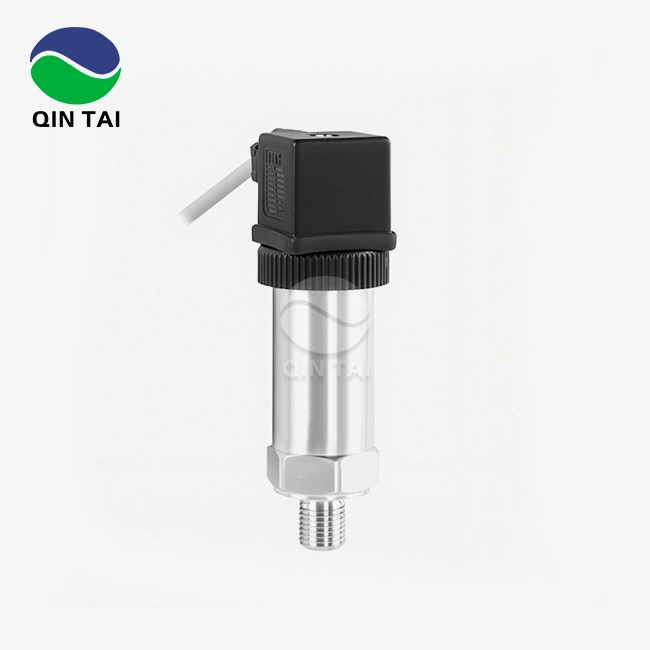
In this case, you should pay extra attention to the urea dosing pressure sensor. It sends closed-loop input to the DCU, picking up on pressure drops that mean there are leaks, blockages, or air getting in. It also warns of overpressure situations that are caused by frozen AdBlue or valve problems. Without correct pressure data, the SCR dosing system cannot self-diagnose. This causes fault codes like P204B and could cause limp-mode to be activated, which is very bad for fleet operators and OEM warranty claims.
Key subsystem components include:
- Dosing module: Houses the pump, pressure sensor, and filter assembly; responsible for accurately measuring DEF, usually within ±3% of the volume.
- Urea pressure sensor: Checks the hydraulic pressure in real time, which lets the ECU make sure the injectors are working properly and avoid blocks caused by crystallization by using the best dose cycles.
- Tank-integrated sensors: Level, temperature, and quality sensors tell the SCR system what's going on with the tank and make sure the AdBlue content stays within the 32.5% ± 1.5% ISO 22241 range.
These parts work together as a regulated unit. Every part further down the line, including the catalyst, is put at risk by a bad pump that provides uneven pressure. SCR dosing system is a critical component in this chain, and tolerances are a must for OEMs that want to meet China VI or Euro VI standards.
Where to Buy SCR Dosing Pumps: Import Considerations for International B2B Buyers
Evaluating Manufacturer Credibility Before Placing an Order
Global buyers usually choose from well-known brands. In this case, Bosch, Continental, and Denso are all well-known brands. But when buying something for mass production, you also have to think about wait times, the ability to customize, and the total cost of ownership. In this category, certified Chinese manufacturers have grown a lot, and now they supply Tier-1 OEMs in Asia, Europe, and the Middle East with parts that meet IATF 16949 and ISO 9001 standards for the SCR dosing system.
When importing SCR dosing components, verify the following compliance markers before signing any purchase agreement:
- CE marking: Required for products entering European markets; confirms that the product is safe and compatible with electromagnetic fields.
- ISO 9001 / IATF 16949 certification: Indicates a validated quality management system — essential for OEM supply chains.
- RoHS and REACH compliance: Confirms restricted hazardous substance limits, required for EU import clearance.
- CMC / Ex / UL certifications: Relevant for industrial-grade and explosion-risk environments such as mining generators and marine applications.
These certifications quickly narrow down your list of suppliers and get rid of the risk of customs holds or failures to comply after delivery. If you choose a seller that has all of these things, it means that their production process has been checked by more than one group, not just the ones they say they have.
Beyond certifications, evaluate sourcing channel structure, including that of the SCR dosing system. Direct ties with manufacturers give you more control over price and customization, while approved distributors shorten the lead time for smaller orders. Online business-to-business (B2B) marketplaces can surface competitive options, but require stricter due diligence on certification documentation and production audit reports.

SCR Dosing Pump Quality Checklist: What to Look for When Purchasing
Technical Specifications That Separate Reliable Pumps from Field Failures
Often, unit price is what procurement teams look at. But the real cost of a pump that doesn't do its job right or is made of low-quality parts usually goes over the initial savings within the first service interval. These are the core performance indicators that technical departments should validate before approval for the SCR dosing system:
- Dosing accuracy: A well-designed pump keeps its volumetric accuracy within ±3% of its rated pressure range, which is usually 5 to 9 bar for light- to heavy-duty uses.
- Material durability: Internal components in contact with AdBlue must use corrosion-resistant materials, as urea solution is slightly corrosive and breaks down regular metals over time.
- Freeze-expansion tolerance: Quality pumps incorporate flexible internal structures that handle AdBlue's 9% volume increase when it freezes, keeping the diaphragm from rupturing.
- Service life rating: Industrial-grade dosing systems targeting generator sets or mining equipment should demonstrate a rated operational lifespan of at least 15,000 to 20,000 hours.
- Sensor compatibility: The pump's pressure output must match the ECU/DCU signal protocol — either analog (0.5V–4.5V) or SENT digital output — to ensure seamless integration.
After reviewing specifications, confirm warranty coverage, spare parts availability, and after-sales response time. A supplier unable to commit to documented warranty terms or provide replacement parts within a reasonable lead time represents a supply chain risk that grows over the life of a fleet.
Comparing SCR Dosing Systems: Making the Right Choice
Price vs. Total Cost of Ownership
Exhaust Gas Recirculation (EGR) is still an option way to cut down on NOx, but it works in a different way: it sends exhaust gasses back into the combustion chamber instead of cleaning up fumes from the tailpipe. For heavy-duty uses that need to meet Euro VI or EPA Tier 4 Final standards, SCR dosing system urea injection lowers fuel costs and improves the quality of the waste. Most modern heavy truck platforms have both systems, but the SCR dosing system is the one that has to be followed the most.
Keep the difference between purchase cost and total cost of ownership in mind when comparing prices from different suppliers. A pump that is 20% less expensive might need to be replaced more often or its sensors might not work with your current DCU, which would mean you have to pay to have them re-calibrated, which would cancel out any savings. To make a strong case to management for supplier approval, procurement teams should ask for total lifecycle cost documentation instead of just unit pricing.
Import Process and Post-Purchase Best Practices
Documentation and Maintenance Protocols That Protect Your Investment
Smooth customs clearance depends on complete documentation: commercial invoice, packing list, certificate of origin, CE/ISO certificates, and product technical data sheets. Missing any one document delays release and disrupts production schedules. Hire a freight forwarder who knows about the HS codes for car parts to properly group SCR dosing system parts and avoid tariff misclassification.
Post-delivery, assign installation to technicians familiar with urea dosing module calibration. Not using the right amount of torque on pressure sensor fittings — typically M10×1 or M12×1.5 thread standards — can cause tiny leaks that set off fault codes within the first operational cycle. Establish a routine maintenance schedule that includes filter replacement, injector nozzle inspection, and pressure sensor diagnostics at manufacturer-recommended intervals to sustain system efficiency and emission compliance over the full vehicle or equipment lifespan.

Conclusion
It takes more than just comparing prices to find SCR dosing pumps for mass production or repair use. A purchase choice that affects emission compliance, guarantee exposure, and operating consistency is based on a number of factors, such as the validity of the certification, the alignment of technical parameters, the compatibility of sensors, and the dependability of the provider.
Give more weight to suppliers who carry verifiable certifications, offer customization capability, and back their products with documented after-sales support for the SCR dosing system. The upfront diligence pays dividends across the entire product lifecycle.
FAQ
How do I verify a supplier's certification authenticity?
Ask for certificate numbers and check them against the public record of the granting body. For ISO and IATF certifications, the certification body (like TÜV or Bureau Veritas) keeps databases that can be searched. Genuine suppliers will gladly give you original certificates.
What warranty terms should I expect from a reputable manufacturer?
Standard guarantee coverage for SCR dosing parts used in industrial vehicles lasts for 12 to 24 months or a certain number of operating hours, whichever comes first. Make sure that the warranty covers both parts and technical help.
Can dosing pumps be customized for specific engine models?
Yes, reputable companies offer OEM and ODM services that change the pressure ratings, connector types, mounting arrangements, and signal output protocols to fit different ECU calibrations. Make sure that the supplier's tech team can give you proof data that is specific to your application.
What causes the P204B fault code?
P204B usually means that the urea dose pressure sensor circuit is drifting. This can be caused by dirty connector pins or sensors that are getting old. This type of failure is much less likely to happen with sensors that have gold-plated connections.
What is a safe minimum service life for an industrial-grade dosing pump?
For generator set and mining uses, aim for a rated service life of at least 15,000 to 20,000 hours, and make sure you have performance data to back that up.
Partner with Qintai for a Certified SCR Dosing System Supplier
Qintai — established in 2001 and ranked China's No. 1 market-share OEM supplier — delivers certified SCR dosing system components trusted by Weichai Power, Yuchai Power, and Quanchai Power. Holding ISO 9001, IATF 16949, CE, RoHS, REACH, and UL certifications, Qintai supports OEM/ODM customization and mass production with a 58-patent R&D foundation. Reach our technical team at info@qt-sensor.com or visit qt-sensor.com to request specifications and pricing.
References
1. European Commission. Regulation (EC) No 595/2009 on Type-Approval of Motor Vehicles — Euro VI Heavy-Duty Emissions. Official Journal of the European Union, 2009.
2. U.S. Environmental Protection Agency. Diesel Exhaust Fluid (DEF) and SCR Technology Overview. EPA Office of Transportation and Air Quality, 2021.
3. ISO. ISO 22241-1: Diesel Engines — NOx Reduction Agent AUS 32 — Quality Requirements. International Organization for Standardization, 2019.
4. SAE International. SAE J2986: Urea-Based SCR Systems for Heavy-Duty On-Highway Diesel Engines. SAE International, 2018.
5. Bosch Automotive Handbook, 10th Edition. Exhaust-Gas Aftertreatment Systems for Diesel Engines. Robert Bosch GmbH, 2022.
6. IATF. IATF 16949:2016 — Quality Management System Requirements for Automotive Production and Service Parts Organizations. International Automotive Task Force, 2016.


Our customers’ satisfaction speaks for our quality — contact us to experience the same reliable service.