- English
- French
- German
- Portuguese
- Spanish
- Russian
- Japanese
- Korean
- Arabic
- Greek
- German
- Turkish
- Italian
- Danish
- Romanian
- Indonesian
- Czech
- Afrikaans
- Swedish
- Polish
- Basque
- Catalan
- Esperanto
- Hindi
- Lao
- Albanian
- Amharic
- Armenian
- Azerbaijani
- Belarusian
- Bengali
- Bosnian
- Bulgarian
- Cebuano
- Chichewa
- Corsican
- Croatian
- Dutch
- Estonian
- Filipino
- Finnish
- Frisian
- Galician
- Georgian
- Gujarati
- Haitian
- Hausa
- Hawaiian
- Hebrew
- Hmong
- Hungarian
- Icelandic
- Igbo
- Javanese
- Kannada
- Kazakh
- Khmer
- Kurdish
- Kyrgyz
- Latin
- Latvian
- Lithuanian
- Luxembou..
- Macedonian
- Malagasy
- Malay
- Malayalam
- Maltese
- Maori
- Marathi
- Mongolian
- Burmese
- Nepali
- Norwegian
- Pashto
- Persian
- Punjabi
- Serbian
- Sesotho
- Sinhala
- Slovak
- Slovenian
- Somali
- Samoan
- Scots Gaelic
- Shona
- Sindhi
- Sundanese
- Swahili
- Tajik
- Tamil
- Telugu
- Thai
- Ukrainian
- Urdu
- Uzbek
- Vietnamese
- Welsh
- Xhosa
- Yiddish
- Yoruba
- Zulu
Diesel Nitrogen Oxide (NOx) Sensors
Sealed waterproof design
High reliability, stable signal output
Fast response time
Startup time is much shorter than the industry's 165s
Various software and 300+ communication protocols
Long service life up to 6000H,high than industry standard
Strong resistance to lead and sulfide poisoning
Appearance and customer interface can be compatible with mainstream OEM products
Diesel Nitrogen Oxide (NOx) Sensors for Euro VI and EPA Tier 4 SCR Systems: 30–60 s Light-Off, Up to 6000H Service Life
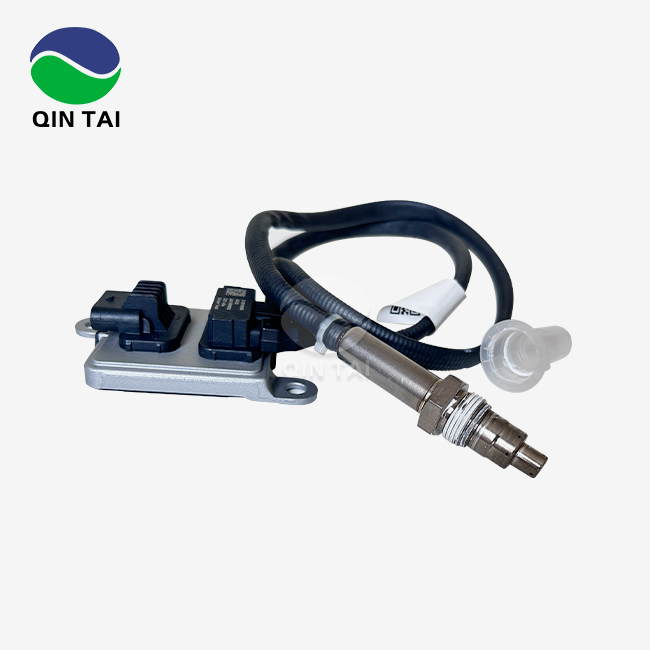
Xi'an Qintai Automotive Emission Technology Co., Ltd. makes Diesel Nitrogen Oxide (NOx) Sensors for diesel engines that run SCR aftertreatment. These parts read the NOx level in the exhaust gas. The reading then goes to the ECU or the SCR control module. Euro VI and EPA Tier 4 applications are what the sensors are built for. The housing is sealed and waterproof. Specs on the list cover a 0–3000 ppm measurement range, a SAE J1939 CAN bus, a 30–60 second light-off time, and a service life of up to 6000H. Cable lengths and connectors are customizable.
What a Diesel NOx Sensor Does
The exhaust aftertreatment system is where these this product sit. From there they report the NOx concentration to the ECU. Yttria-stabilized zirconia ceramic makes up the sensing element. Signal interface duties fall to an integrated control module.
On Euro VI and EPA Tier 4 systems, urea (AdBlue/DEF) dosing gets closed-loop feedback from this signal. Onboard diagnostics (OBD) rely on it too. There, odd readings may point to catalyst degradation or a fault in the sensor.
Main functions:
- Keep an eye on NOx levels. The readings feed the urea dosing control in the SCR system
- Useful for checking how much the catalytic converter actually cuts emissions
- Helps you stay compliant with Euro VI and EPA Tier 4 emission requirements
- Spots faults in sensors or the catalyst, and sets diagnostic trouble codes (DTCs)
Features
- Sealed waterproof housing
- Light-off time of 30–60 seconds
- Service life up to 6000H
- It also stands up to poisoning from lead and sulfide
- Over 300 communication protocols are supported. You also get a choice of software options
- Cable lengths and connectors can be customized
- On request, the look and the customer interface can be matched to OEM units
The internal heater brings the sensing element up to an operating temperature of approx. 750°C. Exhaust temperature tolerance is listed at up to 800°C. Longer service life means fewer replacements. How long it actually lasts depends on the engine and on operating conditions.
Product Specifications
| Parameter | Specification |
|---|---|
| Measurement range | 0–3000 ppm |
| Accuracy | ±10% at lower concentrations |
| Signal protocol | SAE J1939 CAN bus |
| Communication protocols | 300+ supported |
| Sensing element | Yttria-stabilized zirconia ceramic |
| Cell design | Dual-chamber |
| Housing | Sealed waterproof design |
| Exhaust temperature tolerance | Up to 800°C, with thermal shock resistance from water droplets |
| Operating temperature | Approx. 750°C |
| Light-off time | 30–60 seconds |
| Service life | Up to 6000H |
| Poisoning resistance | Lead and sulfide |
| Connector and cable length | Customizable |
| Emission standards | Euro VI, EPA Tier 4 |
This table lists only the parameters provided in the product specification data. Details not shown here, such as dimensions, supply voltage, or output details, are not specified on this page. Send your ECU model and protocol needs, and Qintai's engineers can confirm the available technical data for your model.
Main Components and Dual-Chamber Design
A complete sensor includes five parts:
- Sensing element (zirconia ceramic cell)
- Heating element that holds sensor temperature steady
- Signal conditioning circuit
- Control module built into the unit (ECU interface)
- Connector and wiring harness
Two cells sit inside the dual-chamber design. The first cell pumps oxygen. It pulls O2 out of the sample gas. Next, a second cell breaks down NOx so it can be measured.
Upstream and Downstream Sensor Roles
Two NOx sensors show up on plenty of SCR systems. Each one does a separate job.
The upstream sensor sits ahead of the SCR catalyst. It reads raw NOx left over after combustion. That value helps the ECU work out how much AdBlue the system needs.
Downstream of the catalyst sits the second sensor. Its job is to check how well the SCR system cuts NOx. Should the readings stay high, the ECU may log an AdBlue system fault, reduced catalyst efficiency, or a faulty sensor.
Applications and Buying Considerations
Qintai makes them for diesel vehicles and engines that use SCR aftertreatment. OEM projects can use them. So can emission-system programs. Distributors and trading agents can get them as replacement supply.
Before you order, confirm these points:
- Upstream or downstream position
- Connector type and cable length
- ECU compatibility and the communication protocol
- Target emission standard
- Annual volume and delivery schedule
OEM and ODM Customization for Diesel Nitrogen Oxide (NOx) Sensors
Qintai takes on OEM and ODM work. That work starts with product design and goes through mass production. Connectors can be changed on request. Cable lengths are another option. Software can be adjusted as well. Interface layout is open to change too. The team can also match the look of OEM units and their customer interface.
Fitting a set of Diesel Nitrogen Oxide (NOx) Sensors into a platform you already run gets simpler. Technical support and joint development come from the in-house R&D team. Lead time on production usually runs 1–2 weeks.

Quality Control and Certifications
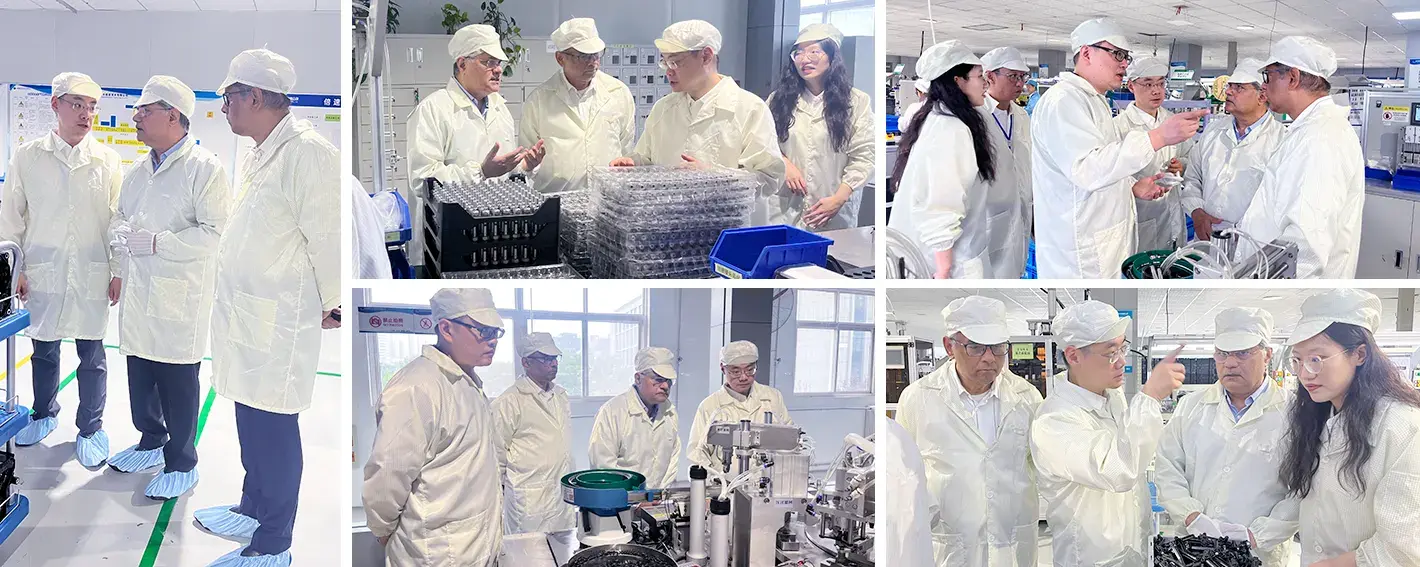
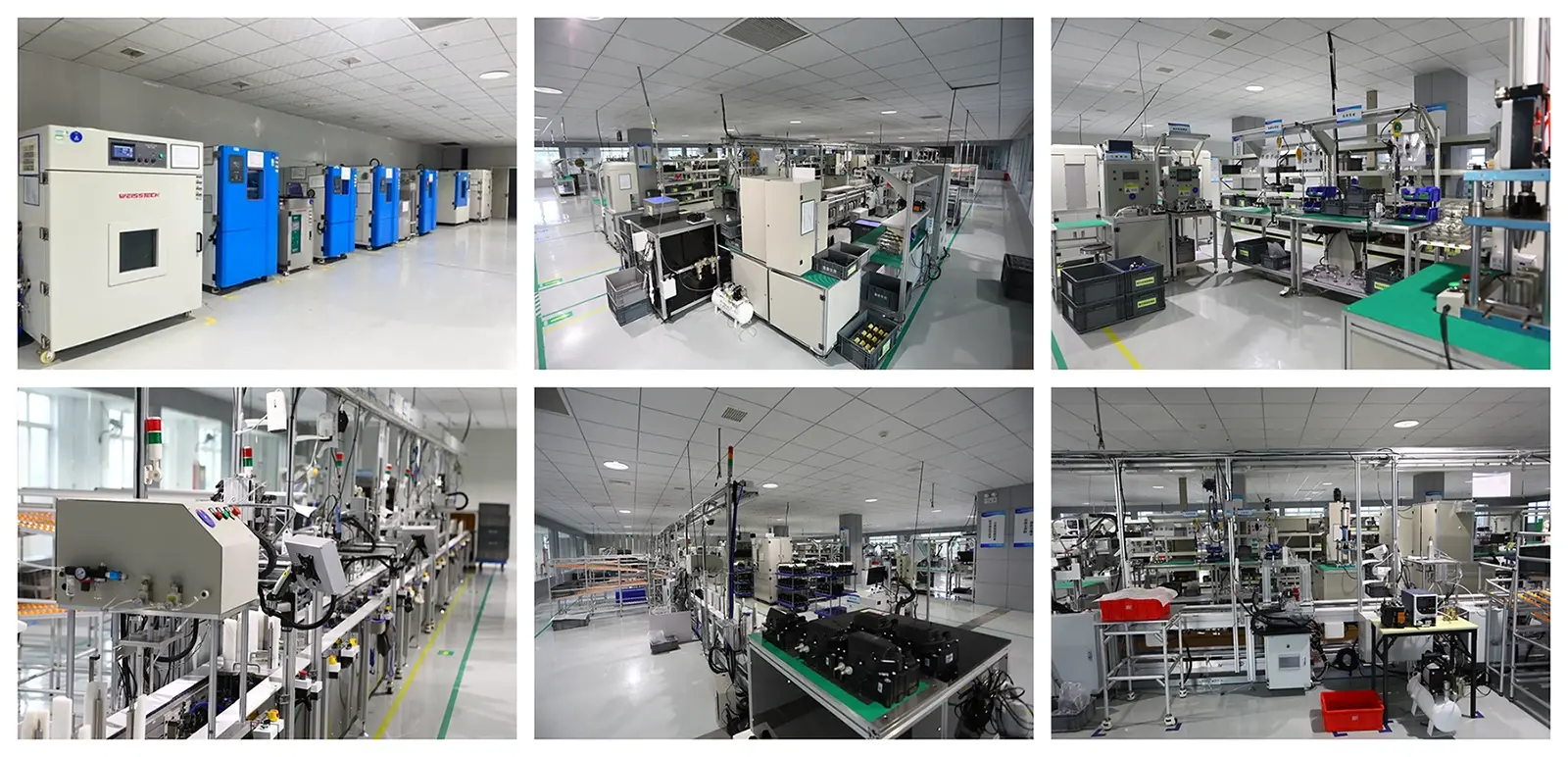
Qintai operates a 400 m² testing center with more than 100 testing and inspection devices, over 20 of which are specialized instruments. Testing covers microscopic inspection, dimensional measurement, physical and chemical properties, environmental loads, mechanical loads, and electrical loads.
DPV testing is done in-house, except for EMC-related tests. Sensor core production and thick-film printing also run in-house on dedicated sensor production lines.
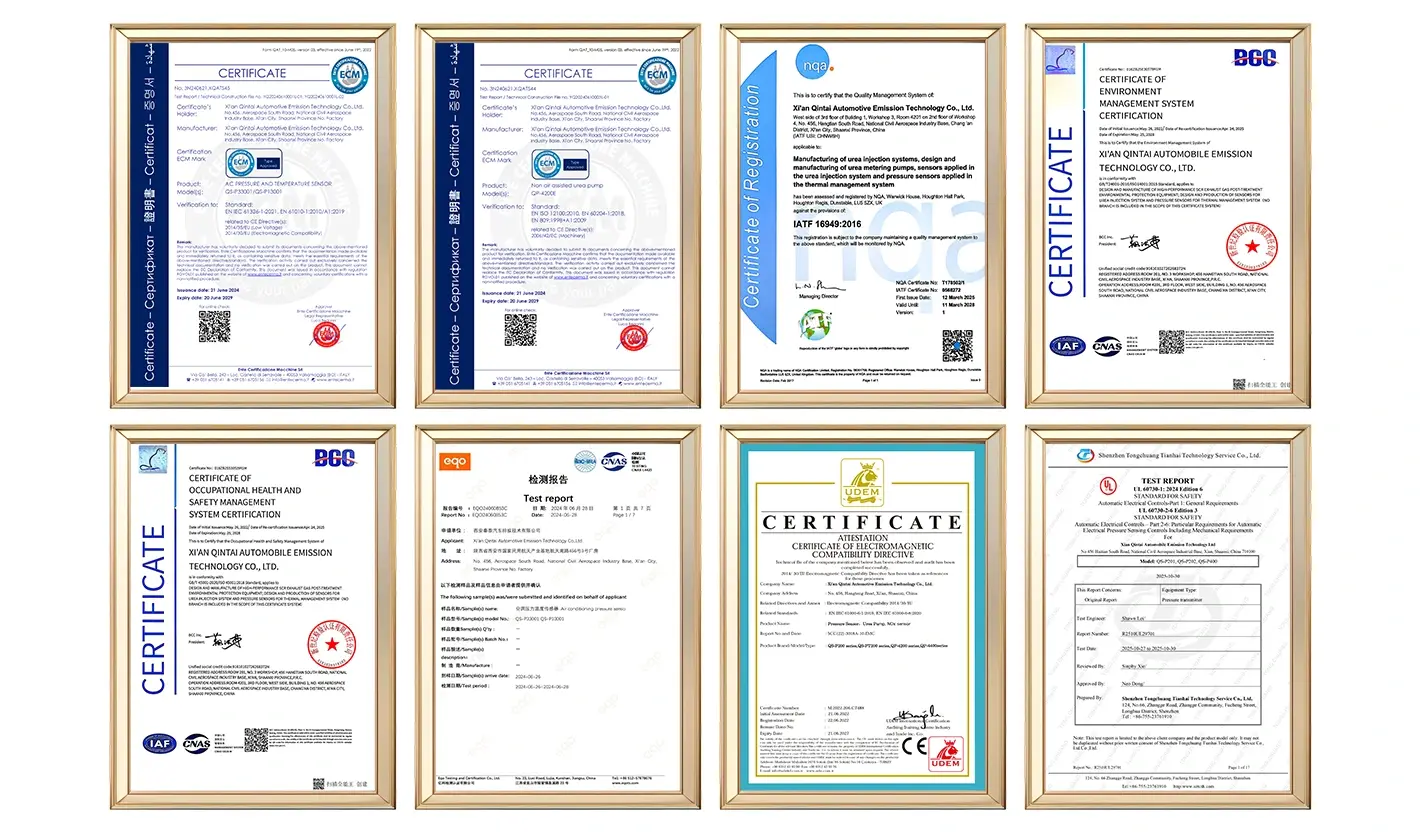
ISO 9001 and IATF 16949 back the quality management work. Certificates held by the company also cover CMC, Ex, UL, CE, REACH, and RoHS. Which ones apply to your sensor model? Ask us to confirm before you order.
About Qintai
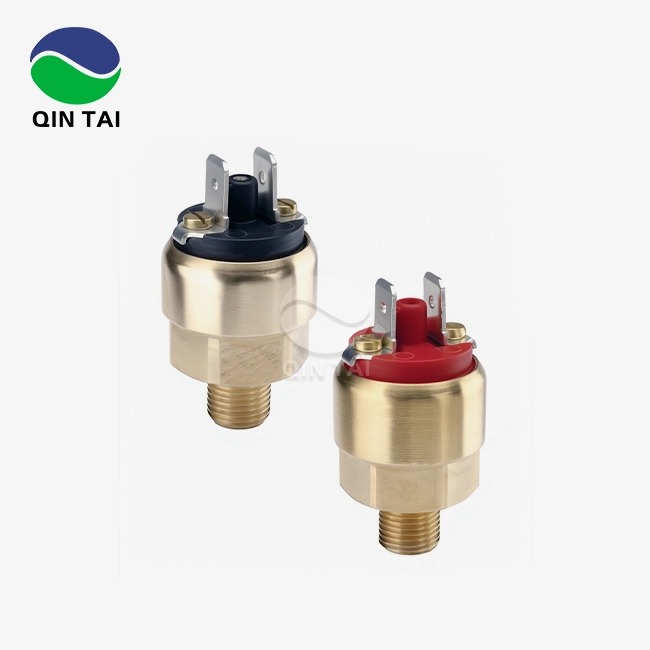
Qintai has worked in emission control since 2001. Its team of 420 people includes 86 R&D technicians, and its customers are located in more than 60 countries and regions. The company reports 58 invention patent applications and has received an R&D collaboration award from China Yuchai Power.
Customers and partners named by the company include Weichai Power, Yuchai Power, Quanchai Power, BYD, DINEX, FAWDE, KAMAZ, NAVECO, DEUTZ, SANY, and SINOTRUK. Company-wide annual capacity covers 1.5 million urea quality sensors and 2 million pressure sensors; NOx sensor capacity is not stated here.
Qintai has exhibited at AAPEX 2024, Hannover Messe 2025, and Manufacturing World 2025, with Automechanika Istanbul 2026 and SENSOR+TEST 2026 planned.
Packaging and Delivery
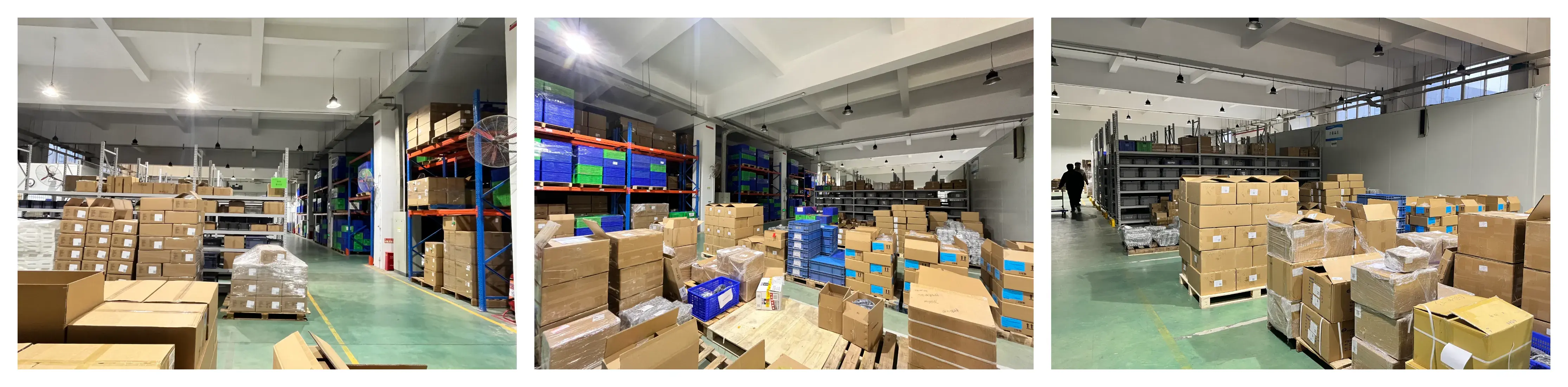
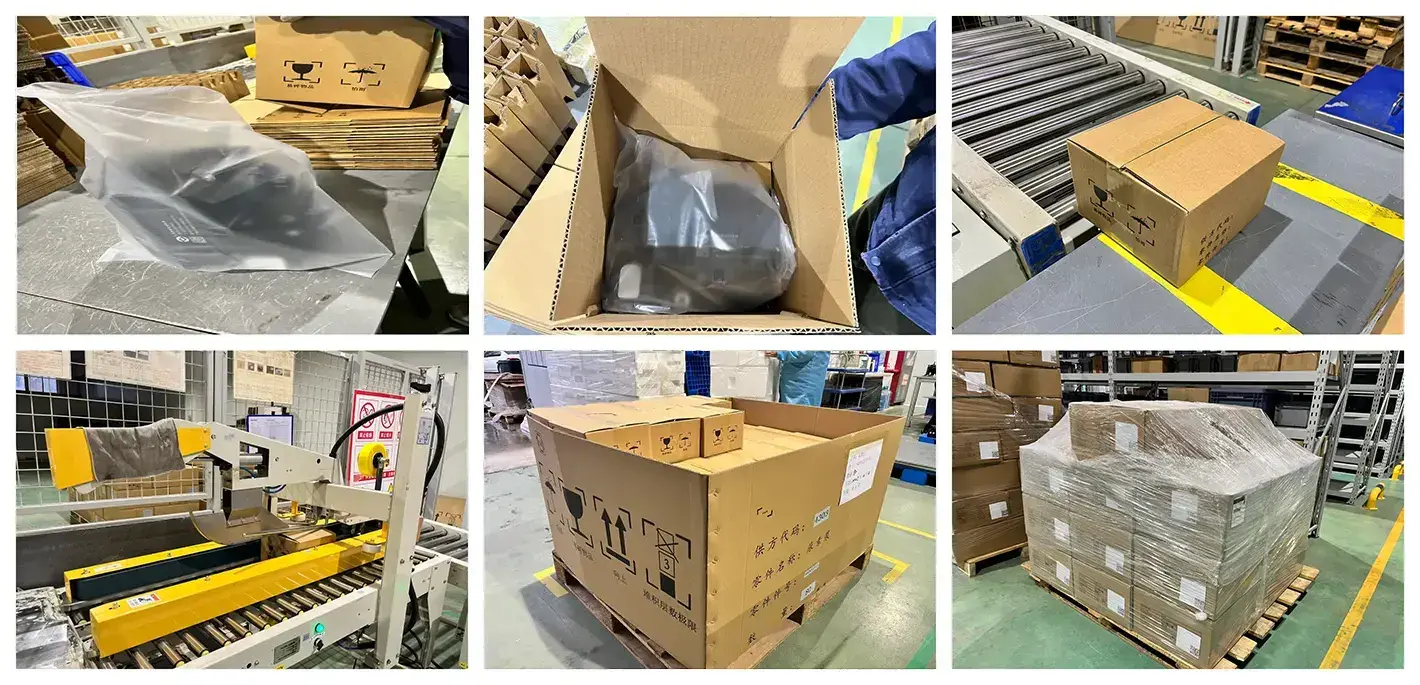
Protective foam and anti-static materials sit inside reinforced cartons. Custom packaging for Diesel Nitrogen Oxide (NOx) Sensors can be arranged too. Before shipment, staff check barcodes and quantities. They also look at appearance and packaging integrity.
Products that are in stock and selected ship within one week. We can send them by air freight, sea freight, and express delivery.
FAQ
Q: What job does a NOx sensor do in a diesel vehicle?
A: It measures NOx in the exhaust and sends the data to the ECU or SCR module. That data helps control urea dosing. It also supports catalyst efficiency checks. When faults appear, it feeds DTC reporting.
Q: Which parts make up a NOx sensor?
A: A zirconia ceramic sensing element sits at the core. Next to it is a heater element, plus a signal conditioning circuit. The unit also holds an integrated control module, and a connector with wiring harness.
Q: What are the key listed properties?
A: Readings run from 0 to 3000 ppm. The signal protocol is SAE J1939 CAN bus. Light-off takes 30–60 seconds. Up to 800°C of exhaust temperature is tolerated, and service life reaches up to 6000H.
Q: How do upstream and downstream sensors differ?
A: Raw NOx gets measured by the upstream sensor, and this happens before the SCR catalyst. After the catalyst, the downstream sensor checks how well the SCR is working.
Q: Is customization possible for this product?
A: Yes. Cable lengths can be changed. So can the software and the connectors, to fit what you are building.
Q: How fast can you deliver?
A: Selected in-stock products ship within one week. Typical production lead time is 1–2 weeks.
Contact Us
Send your ECU model, protocol requirements, drawings and quantities for Diesel Nitrogen Oxide (NOx) Sensors to info@qt-sensor.com. Qintai's engineers will review your SCR project and recommend a suitable sensor.

 Sensors.webp)

Our customers’ satisfaction speaks for our quality — contact us to experience the same reliable service.