- English
- French
- German
- Portuguese
- Spanish
- Russian
- Japanese
- Korean
- Arabic
- Greek
- German
- Turkish
- Italian
- Danish
- Romanian
- Indonesian
- Czech
- Afrikaans
- Swedish
- Polish
- Basque
- Catalan
- Esperanto
- Hindi
- Lao
- Albanian
- Amharic
- Armenian
- Azerbaijani
- Belarusian
- Bengali
- Bosnian
- Bulgarian
- Cebuano
- Chichewa
- Corsican
- Croatian
- Dutch
- Estonian
- Filipino
- Finnish
- Frisian
- Galician
- Georgian
- Gujarati
- Haitian
- Hausa
- Hawaiian
- Hebrew
- Hmong
- Hungarian
- Icelandic
- Igbo
- Javanese
- Kannada
- Kazakh
- Khmer
- Kurdish
- Kyrgyz
- Latin
- Latvian
- Lithuanian
- Luxembou..
- Macedonian
- Malagasy
- Malay
- Malayalam
- Maltese
- Maori
- Marathi
- Mongolian
- Burmese
- Nepali
- Norwegian
- Pashto
- Persian
- Punjabi
- Serbian
- Sesotho
- Sinhala
- Slovak
- Slovenian
- Somali
- Samoan
- Scots Gaelic
- Shona
- Sindhi
- Sundanese
- Swahili
- Tajik
- Tamil
- Telugu
- Thai
- Ukrainian
- Urdu
- Uzbek
- Vietnamese
- Welsh
- Xhosa
- Yiddish
- Yoruba
- Zulu
capacitive pressure sensor
Excellent resistance to corrosion and abrasion
Optimized for high pressure applications
Easy mounting
Customizable
QS-P105 Capacitive Pressure Sensor for High Pressure Applications
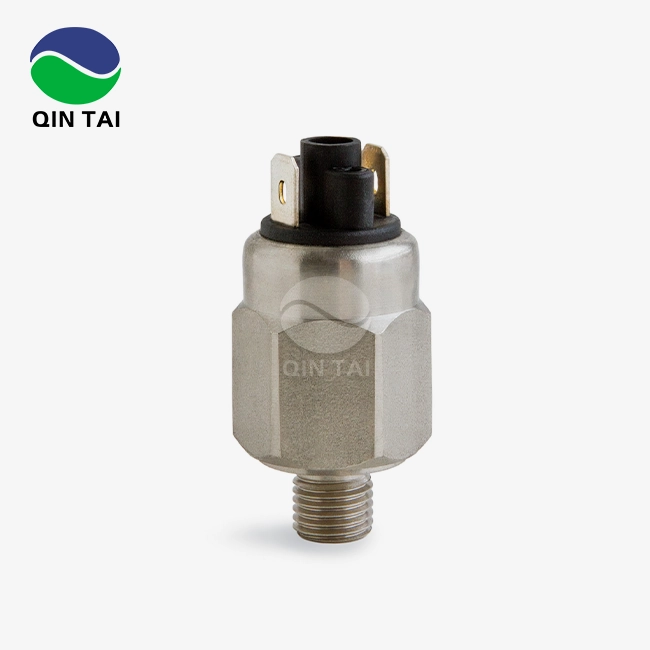
Engine, vehicle, and industrial systems can run the QS-P105 from Xi'an Qintai Automotive Emission Technology Co., Ltd. It is a capacitive pressure sensor built for high pressure work. Corrosion and abrasion do not wear it down easily. Mounting takes little effort, and the unit can be adapted to match project specs. Qintai has been in emission control since 2001. Buyers in more than 60 countries and regions come to the company. Quality management follows ISO 9001 and IATF 16949. Pressure range, output signal and interface data are missing from this page. Send us your requirements and we will confirm what fits.
Product Overview
Inside the QS-P105, pressure turns into an electrical signal through a change in capacitance. A flexible diaphragm sits parallel to a fixed electrode in this sensing design. Push the diaphragm with pressure and the gap between the two shifts. Qintai built the model for high pressure engine, vehicle and industrial systems. The unit resists corrosion and abrasion. Mounting is simple, and the specs can be customized.
How Capacitive Sensing Works
Capacitance comes from the formula C = ε₀εᵣA/d. Here A is the electrode area and εᵣ is the dielectric constant. The letter d stands for the gap between the electrodes. As pressure rises, d shrinks and capacitance goes up.
Most capacitive sensors use silicone, ceramic, or air as the dielectric. The diaphragm is usually metal or silicon-based. Sensitivity and temperature range depend on these choices. This page does not list the materials used in the QS-P105.
The signal circuit usually does three jobs. It amplifies and linearizes the small capacitance change. Then it filters noise and compensates for temperature drift. That is how This product picks up small pressure changes. Output can be analog or digital, depending on the design.
Common Benefits of Capacitive Sensing
Capacitive designs are widely used because they commonly provide:
- High sensitivity to small pressure changes
- Fast response for real-time monitoring
- Low hysteresis and repeatable readings
- Stable over the long term, so recalibration may be needed less often
- No moving mechanical parts, which supports long service life
These points describe the technology in general. Performance figures for the QS-P105 are not provided on this page.
Product Specifications
| Item | Detail |
|---|---|
| Model | QS-P105 |
| Sensing technology | Capacitive |
Pressure range, output signal, accuracy, operating temperature, interface, and materials are not stated in the available product data, so they are not listed here. Contact us to confirm these details for your project.
Typical Applications
Qintai builds the QS-P105 for engine, vehicle, and industrial systems that run at high pressure. Some of these systems need pressure readings in corrosive or abrasive conditions. For that job, a capacitive pressure sensor with corrosion and abrasion resistance can be a good fit. Whether it suits you depends on your media. The pressure range and the interface matter too. Send over those details and we will take a look.
Diesel engine SCR aftertreatment systems are also part of what Qintai makes. That work gives the company's engineers a feel for the pressure requirements on the engine side.
Design Considerations
Heat and cold can change the diaphragm and the dielectric. Capacitance then shifts. Compensation for temperature, written into the design and the calibration, keeps that drift small.
External electromagnetic fields can add noise. Shielding and proper grounding are used to deal with that. Tell us your operating temperature and wiring conditions. Our engineers will check them against the sensor.
In-House Sensor Production
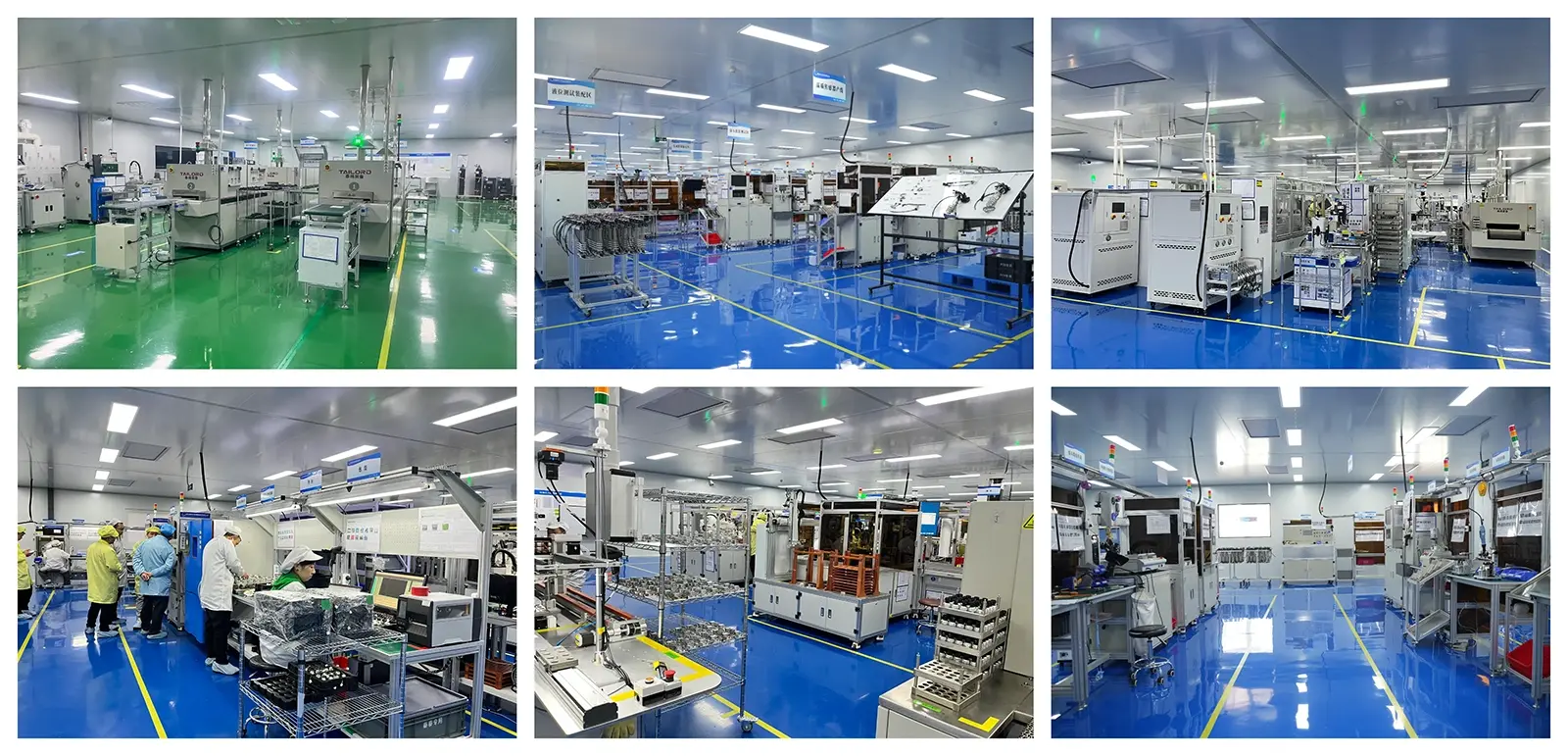
Qintai produces sensor cores in-house and runs dedicated thick-film printing lines. It operates two sensor production lines and two dust-free urea pump assembly lines. Stated annual capacity across the company is 2 million pressure sensors, 1.5 million urea quality sensors, and 1 million urea metering pumps. The range also covers other sensors and transmitters.
Testing and Quality Control
Over 100 inspection devices sit inside Qintai's 400 m² testing center. More than 20 of those are specialized instruments. Checks cover microscopic inspection and dimensional measurement. Physical properties get tested, and chemical ones too. Environmental conditions are tested as well. So are mechanical and electrical loads. DPV testing happens in-house. The exception is EMC-related tests.
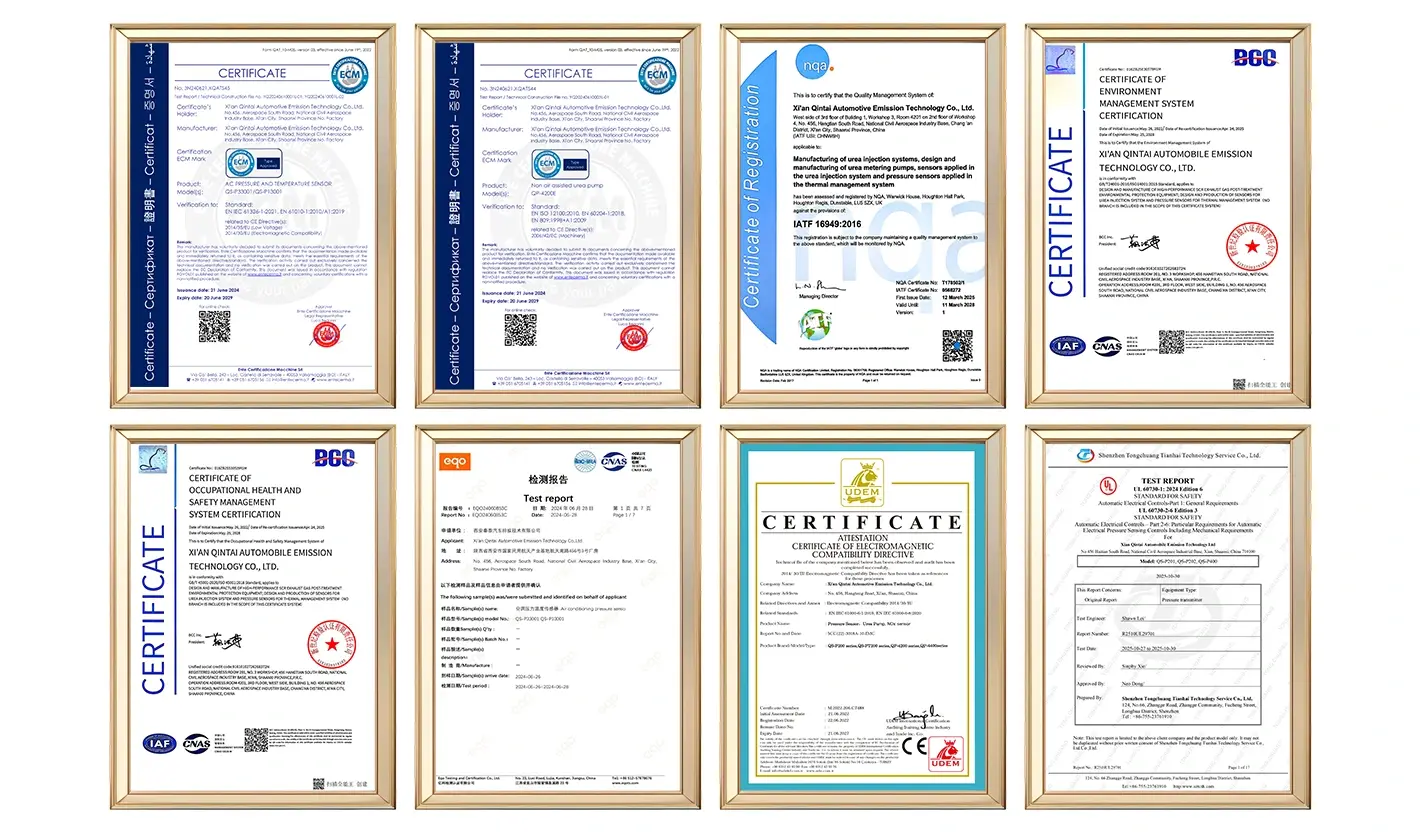
ISO 9001 and IATF 16949 guide quality management. CMC, Ex, UL, CE, REACH, and RoHS sit on the company's certification list as well. Before you order, check with us on which documents apply to the QS-P105.
OEM and ODM Support for capacitive pressure sensor
Qintai offers OEM and ODM service from product design to mass production. Its 86 R&D technicians can adapt specifications for the QS-P105 this product to your application and project needs. China Yuchai Power recognized the team with its Strong R&D Collaboration Award.
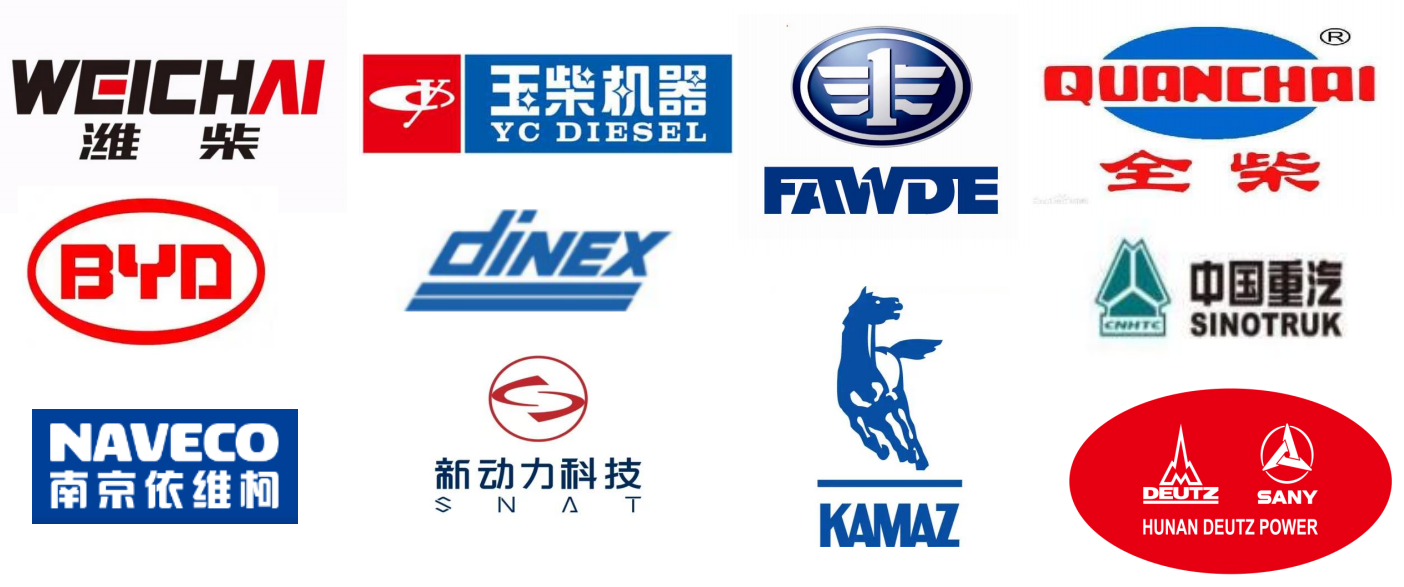
Company materials name Weichai Power, Yuchai Power, and Quanchai Power among its supply relationships, with partnerships that also include BYD, DINEX, FAWDE, KAMAZ, NAVECO, DEUTZ, SANY, and SINOTRUK.
Global Reach and Exhibitions
Qintai products ship to more than 60 countries and regions. That reach covers Europe, the Middle East and South America, among other places. In 2024 the company took part in AAPEX in Las Vegas. Hannover Messe 2025 in Germany came next, then Manufacturing World 2025 in Osaka. Two shows are already planned: Automechanika Istanbul 2026 and SENSOR+TEST 2026 in Nuremberg.
Packaging and Shipment
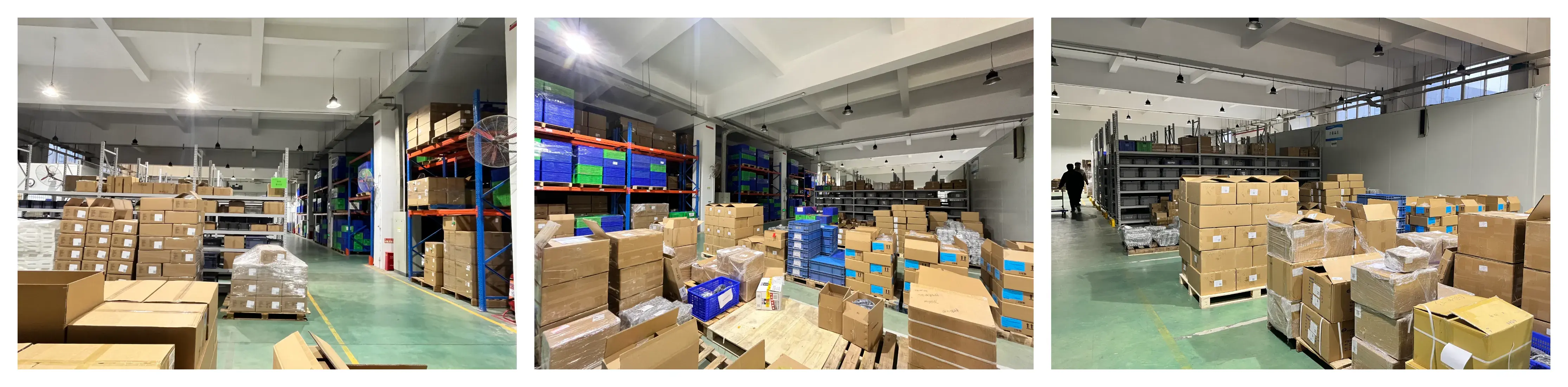
Protective foam goes into the box, together with anti-static material and reinforced cartons. Custom packaging can be arranged on request. Before goods leave, staff check the barcodes and the quantities. They also look at the appearance and make sure the packaging is intact.
Storage runs on standard inventory and traceability procedures. International orders go out by air freight, by sea freight or, for a capacitive pressure sensor, by express delivery.


FAQ
Q: What is the QS-P105?
A: This is This product built for high pressure work. It stands up to corrosion and abrasion, and it mounts without fuss.
Q: Can I customize it?
A: Yes. Qintai adjusts specifications to suit your application and project needs, all the way from design through to mass production.
Q: Where do I find the pressure range and the output signal?
A: This page does not list them. Tell us what you need. We will then confirm which options are available.
Q: What is the lead time?
A: In-stock products that apply ship inside one week. Normal production takes 1–2 weeks. Confirm the timing for your order when you ask for a quotation.
Q: Which certifications are available?
A: Qintai holds ISO 9001 and IATF 16949. CMC, Ex, UL, CE, REACH, and RoHS are on its list too. Ask us for the documents that apply to your model.
Q: Does temperature affect readings?
A: Heat and cold can change capacitance. The design and calibration include compensation, which cuts that effect down.
Q: How is the product shipped?
A: Foam goes in with the items. So do anti-static materials and reinforced cartons. You can pick air freight, sea freight or express delivery.
Contact Us
Tell us your capacitive pressure sensor pressure range, the media, what you use it for, and how many you need. Write to info@qt-sensor.com.

Our customers’ satisfaction speaks for our quality — contact us to experience the same reliable service.