- English
- French
- German
- Portuguese
- Spanish
- Russian
- Japanese
- Korean
- Arabic
- Greek
- German
- Turkish
- Italian
- Danish
- Romanian
- Indonesian
- Czech
- Afrikaans
- Swedish
- Polish
- Basque
- Catalan
- Esperanto
- Hindi
- Lao
- Albanian
- Amharic
- Armenian
- Azerbaijani
- Belarusian
- Bengali
- Bosnian
- Bulgarian
- Cebuano
- Chichewa
- Corsican
- Croatian
- Dutch
- Estonian
- Filipino
- Finnish
- Frisian
- Galician
- Georgian
- Gujarati
- Haitian
- Hausa
- Hawaiian
- Hebrew
- Hmong
- Hungarian
- Icelandic
- Igbo
- Javanese
- Kannada
- Kazakh
- Khmer
- Kurdish
- Kyrgyz
- Latin
- Latvian
- Lithuanian
- Luxembou..
- Macedonian
- Malagasy
- Malay
- Malayalam
- Maltese
- Maori
- Marathi
- Mongolian
- Burmese
- Nepali
- Norwegian
- Pashto
- Persian
- Punjabi
- Serbian
- Sesotho
- Sinhala
- Slovak
- Slovenian
- Somali
- Samoan
- Scots Gaelic
- Shona
- Sindhi
- Sundanese
- Swahili
- Tajik
- Tamil
- Telugu
- Thai
- Ukrainian
- Urdu
- Uzbek
- Vietnamese
- Welsh
- Xhosa
- Yiddish
- Yoruba
- Zulu
Can Pressure Sensors Measure Clean Water and Wastewater Pressure?
Pressure sensors are absolutely capable of measuring both clean water and wastewater pressure, though the specific sensor design, materials, and calibration requirements differ significantly between these applications. Modern pressure sensor technology has evolved to address the unique challenges presented by wastewater environments—including corrosive compounds, particulate contamination, and biological fouling—while maintaining the high accuracy standards required for clean water systems. Selecting the appropriate sensor configuration ensures reliable, long-term performance across diverse water management scenarios.
Introduction
Accurately measuring pressure is essential for water and wastewater systems to work well. Procurement managers and R&D engineers are always looking for ways to meet regulations while also being reliable and saving money. The main question we will be answering here is whether pressure sensors can effectively watch both clean water and wastewater pressures, and if so, how can the best sensors be chosen for these different but related uses?
Precise monitoring of fluid pressure is needed to keep systems from breaking down, make the best use of energy, and meet environmental standards in water treatment plants, municipal distribution networks, and industrial wastewater plants. The problems are very different. In clean water systems, cleanliness and accuracy are very important. In wastewater systems, sensors need to be tough enough to handle harsh chemicals and mechanical stress.
Knowing these differences helps technical managers choose the right sensor technology, and buying teams can easily judge suppliers based on their certifications, ability to customize, and support after the sale. This guide talks about how sensors work, how to choose the right ones, how to install them correctly, and real-life examples of how they have been used to improve performance.
Understanding Pressure Sensors in Water and Wastewater Applications
How Pressure Sensors Convert Physical Pressure
Through a number of well-established techniques, pressure sensors convert mechanical force into electrical signals. When crystalline materials are mechanically stressed, piezoelectric devices produce voltage. This makes them perfect for measuring changes in dynamic pressure. Capacitive designs are very sensitive and stable; they measure the change in distance between two electrodes as a diaphragm bends under pressure. Strain gauge sensors pick up changes in resistance in metal parts that are attached to a flexible diaphragm. They work well over a wide range of pressures.
Key Differences Between Clean Water and Wastewater Environments
In clean water systems, the fluid qualities are usually reliable, there aren't many suspended solids, and the pH levels are normal. When these things happen, sensors can stay calibrated for long amounts of time. When it comes to wastewater, things are different. Suspended solids can block sensor ports, material corrosion is sped up by acidic or alkaline pH levels, and biological films form on sensor surfaces, which makes measurements less accurate over time. Changes in temperature in processes that treat wastewater also affect the zero-point drift and span stability of sensors.
Critical Accuracy Factors and Calibration Requirements
The accuracy of a sensor rests on how well it is calibrated against known pressure standards and how well it adjusts for changes in temperature. For wastewater applications, sensors need to be waterproof up to IP68 and have chemically resistant housings. These are usually made of 316L stainless steel or special ceramics. Standard materials may be used for clean water monitors, but they need to be more accurate, usually within ±0.25% of full scale. Regular testing intervals—every three months for garbage and every six months for clean water—ensure accurate measurements and help with compliance paperwork.
Types of Pressure Sensors Suitable for Clean Water and Wastewater Measurement
Analog versus Digital Output Configurations
Choosing between analog and digital outputs changes how complicated the system integration is and how well the signals work. Analog pressure sensors send constant 4-20mA or 0-10V data that work with older control systems. They are easier to wire and cost less to buy at first. Digital sensors send data using protocols like HART, Modbus, or IO-Link. This lets you do remote diagnostics, measure multiple parameters, and connect easily to modern SCADA platforms. Digital setups keep signals strong over long cable runs and help with planned maintenance by constantly checking themselves.
Comparing Piezoelectric and Capacitive Technologies
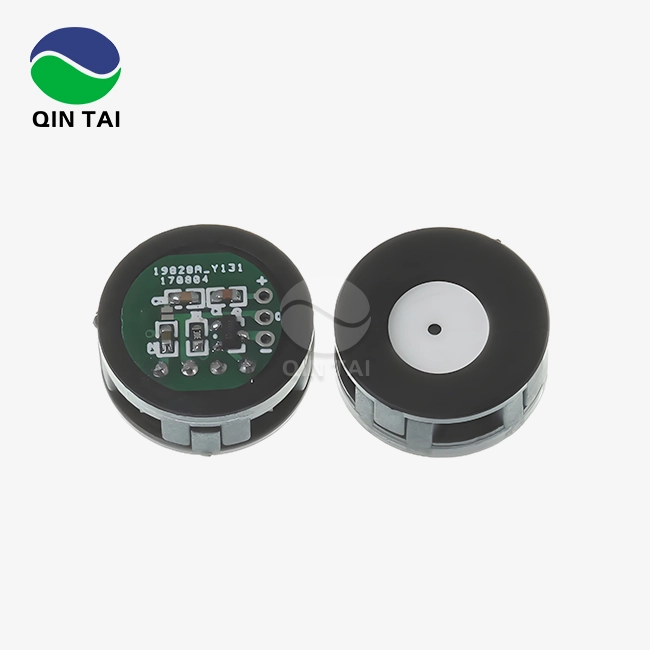
Piezoelectric sensors are great at picking up sudden changes in pressure, but they need extra electronics to make the signals work right, and they're not as good at measuring static pressure. Capacitive ceramic pressure monitors are the most common type used in water and wastewater because they are very accurate, stable over time, and don't rust. The ceramic diaphragm makes up one capacitor plate and a set electrode makes up the other.
When pressure changes the diaphragm, it changes the capacitance in a proportional way. This capacitance-based measurement is not affected by electromagnetic radiation and stays accurate even when the temperature changes. Capacitive sensors also work better than other types of sensors when it comes to measuring flow and difference pressure across screens.
Specialized Waterproof and Corrosion-Resistant Designs
In wastewater environments, sensors need to be specially designed to work in harsh conditions. Manufacturers use a number of safety measures to make sure their products work well:
Material Selection: Housings made of titanium alloys resist pitting corrosion caused by chloride much better than standard stainless steel. Ceramic sensing elements do not react chemically with the strong acids and bases that are found in industrial wastewater. PTFE-coated diaphragms keep measurements accurate while stopping bacterial fouling.
Seal Technology: Multiple O-ring seals made of different polymer materials protect against fluid entry in two ways. Welded construction gets rid of the possible leak paths that threaded connections have. Cable entries have strain relief and liquid-tight glands that can handle being submerged in liquid for a long time.
Self-Cleaning Features: Some more advanced models have ultrasonic detectors that move the sensor diaphragm on a regular basis, breaking up solids that have built up. Others use flush holes, which let cleaning processes happen without having to take the sensor off.
These safety steps make sensors last 5-7 years instead of the usual 2–3 years in harsh settings, which greatly lowers the total cost of ownership. When city wastewater treatment plants switched from normal sensors to specialized wastewater-grade sensors, reliability went up by more than 40%, according to industrial case studies.

Installation and Maintenance Best Practices for Pressure Sensors in Water Systems
Step-by-Step Installation Guidelines
When you install something correctly, it sets the stage for accurate, reliable measurement. Putting positioning pressure sensors in places that don't have movement or air pockets stops them from giving wrong readings. Place sensors so that the detecting diaphragms are facing away from the sediment. Horizontal setups work best for wastewater uses where solids settle. Put isolation valves before each sensor so that maintenance can be done without having to shut down the system.
Sealing quality has a direct effect on how long a sensor lasts. Use a thread sealant that can work with both sensor materials and process fluids. For clean water, PTFE tape works, and for wastewater, anaerobic seals are better. Tighten fittings to the manufacturer's specs. If you over-tighten them, sensor housings will get damaged, and if you under-tighten them, leak paths will form. For electrical lines that need to be protected from the environment, use junction boxes with a rating of at least IP65. For outdoor or submerged installs, upgrade to IP68.
Routine Maintenance and Calibration Protocols
Setting up preventive repair plans cuts down on failures that happen out of the blue. Every 30 days, visual checks find early signs of rust, broken cables, or cracks in the case. The accuracy of the sensor is checked every three months by comparing readings to a reference gauge when there is no flow. ISO 9001 and IATF 16949 quality management standards are met by using certified pressure standards to do a full-scale calibration once a year.
Cleaning methods depend on how strong the product is. Clean water sensors usually don't need much care besides being calibrated once a year. Cleaning the diaphragm of wastewater monitors once a month with light detergents and soft brushes is good for them. Stay away from rough materials that can scratch protected coverings. If measurement drift is more than ±1% and doesn't go away after cleaning and recalibrating, you should replace the sensor elements.
Early Detection of Sensor Malfunctions
By using constant tracking, you can find sensors that are losing their usefulness before they fail completely. Sudden changes in the output signal mean there are issues with the electrical connection or damage to internal parts. Indicators of diaphragm fouling or seal wear include gradual drift. Comparing redundant sensors in the same process locations finds units that aren't working. Modern digital sensors can check for out-of-range temperatures, changes in supply voltage, and problems with electronic parts and send alerts if they find any. This means that replacements can be planned ahead of time, instead of having to be done during emergency shutdowns.
Selecting the Best Pressure Sensor for Your Water and Wastewater Needs
Interpreting Technical Specifications and Datasheets
To do good buying, you need to know about important pressure sensor factors. The pressure range should include the expected working window plus 20 to 30 percent more to account for changes. Specifications for accuracy are given as a percentage of the full scale or a percentage of the reading. The percentage of the reading gives more accuracy at lower pressures. The temperature adjustment range needs to include both the outdoor temperature and the process temperature. Response time is very important in situations where quick recognition of changes in pressure is needed, like in pump safety systems.
Leading Pressure Sensor Manufacturers and Technologies
There are a number of well-known companies that make technologies that are used in the water and wastewater industry. Honeywell has a wide range of sensors, including types made of piezoresistive silicon and capacitive ceramic, and they offer a lot of help with application engineering. Bosch is an expert in MEMS-based sensors that measure pressure, temperature, and flow all in one small package. Siemens offers full measuring solutions that include sensors, transmitters, and the merging of control systems. Texas Instruments provides specialized signal conditioning integrated circuits that improve the performance of sensors. Omega keeps a lot of standard configurations in stock so that they can be sent out quickly.
In addition to global names, specialized makers like Qintai offer deep knowledge in applications such as diesel engine aftertreatment and automotive emission control. These providers know what SCR and DPF systems need because the accuracy of pressure measurements has a direct effect on emission compliance. Their skills can be used in water cleaning tasks that need the same level of dependability.
Custom Manufacturing and Bulk Procurement Considerations
When buying something from a business, you often need solutions that are specially made to fit your installation needs, output protocols, or certification needs. Leading providers have technical teams that work for them and can create sensor housings, electrical connections, and mounting arrangements. For custom designs, the minimum order quantity is usually between 100 and 500 units, and the lead time for the first production runs is between 8 and 12 weeks.
When negotiating a bulk purchase, you should talk about more than just the unit price. Total cost of ownership includes how long sensors last, how often they need to be calibrated, and how often they break down over 5 years of service. Warranty terms range from the usual 12 months to an extra 36 months for high-end goods.
Setting up framework deals with chosen suppliers locks in prices and makes sure that priority is given during problems in the supply chain. Technical support responsiveness, which includes application engineering help and quick replacement of broken units, often determines the long-term success of a partnership more than the price of the initial purchase.
Real-World Applications and Case Studies
Municipal Clean Water Distribution Systems
A regional water authority that serves 500,000 people put in a network of pressure sensors throughout their distribution system to find leaks and make sure pumps work more efficiently. They asked for capacitive ceramic pressure monitors that could work with current SCADA systems and be accurate to 0.1%. 240 sensors were put in place at key intersections, pump stations, and reservoir outlets as part of the deployment.
Within six months, the results showed effects that could be measured. Automated leak detection algorithms found changes in pressure that meant pipes were breaking, which cut water loss by 18% compared to the old way of inspecting by hand. By using real-time pressure data to improve pump timing, energy use was cut by 12%, saving more than $340,000 a year. With calibration checks every three months, the sensor's trustworthiness stayed above 98% for two years of use.
Wastewater Treatment Plant Monitoring
An industrial sewer plant that dealt with chemical industry effluent had problems with corrosion and sensor fouling all the time. Their original monitors had an average life span of 14 months before they needed to be replaced, which meant that the process had to be stopped often. When titanium-housed capacitive sensors with PTFE-coated diaphragms were added, the sensors' life was extended to 52 months and their accuracy in measurements went from ±1.5% to ±0.5%.
Because of the higher dependability, more advanced process control methods could be used. Monitoring different pressures in membrane filtration systems improved backwash cycles, which made membranes last 30% longer. Tracking the influence pressure gave workers early warning of problems upstream, so they could change the amount of chemicals used before the treatment stopped working as well. The facility calculated a 240% return on investment (ROI) over three years because the cost of replacing sensors went down, maintenance work went down, and the treatment process became more stable.
Future Trends in Smart Sensor Technology
Wireless pressure monitors get rid of the costs of installing signal cables and allow tracking in places that couldn't be reached before. Low-power electronics and energy harvesting from temperature differences or vibration are used in battery-powered units that can work for 5 to 10 years. IoT connectivity sends data directly to cloud platforms that support advanced analytics. These platforms include machine learning algorithms that predict sensor wear and tear and find the best times to schedule maintenance.
Edge computing features built into smart devices process data locally, which lowers the need for network speed and lets alarms go off right away. Multi-parameter monitors measure pressure, temperature, conductivity, and pH all in one package. This makes installation easier and lowers the total cost of the system. With these new technologies, water systems will continue to be more efficient, follow the rules, and be able to keep running smoothly.
Conclusion
When chosen and placed correctly for each application's specific needs, pressure sensors can accurately measure both clean water and wastewater pressures. For clean water systems, high-accuracy sensors that focus on measurement stability and cleanliness compatibility are best. On the other hand, wastewater settings need tough, corrosion-resistant designs that keep working even when exposed to harsh chemicals and particulate matter.
Procurement managers and technical engineers can find the best solutions that balance initial costs with long-term dependability by understanding how things work, what materials will work with them, and how often they need to be maintained. As digital connections, smart diagnostics, and advanced materials continue to improve, pressure measurement technology will become an important part of managing water infrastructure in the 21st century. It will make things safer, more efficient, and more in line with regulations.
FAQ
Can a single pressure sensor model work for both clean water and wastewater applications?
While some industrial-grade sensors can work in both, for best performance, they need to be chosen based on the application. Clean water sensors focus on accuracy and using clean materials, but they might not have the strong corrosion resistance needed for wastewater. Protective features built into wastewater monitors make them more expensive to use in clean water uses. Choosing different types of pressure sensor for each use improves the accuracy of measurements and lowers the total cost of ownership over the normal 5 to 7-year service intervals.
What calibration challenges are specific to wastewater pressure measurement?
The changing makeup of wastewater makes accuracy testing harder. Solids in suspension cause short-term changes in pressure that have nothing to do with the real system pressure. Biological fouling slowly changes the zero points of sensors, so they need to be calibrated more often than when they are used in clean water. Chemical conditions that are aggressive speed up sensor drift, so they need to be checked every three months against traceable pressure standards. Setting up automatic cleaning cycles and choosing sensors with drift requirements below 0.1% per year can help keep accuracy high between calibrations.
How frequently should water system pressure sensors undergo maintenance and recalibration?
How often maintenance is done relies on how bad the program is and how accurate it needs to be. Clean water monitors in stable city systems usually need to be checked visually every six months and calibrated once a year. Cleaning wastewater monitors once a month, checking their zero every three months, and fully calibrating them once a year are all good things to do. Applications with a high level of importance that help with regulatory compliance may need to be checked more often. Setting up condition-based maintenance programs that use sensor self-diagnostics is the best way to use resources because it schedules repairs based on when performance actually starts to decline instead of at set times.
Partner with Qintai for Industrial-Grade Pressure Sensor Solutions
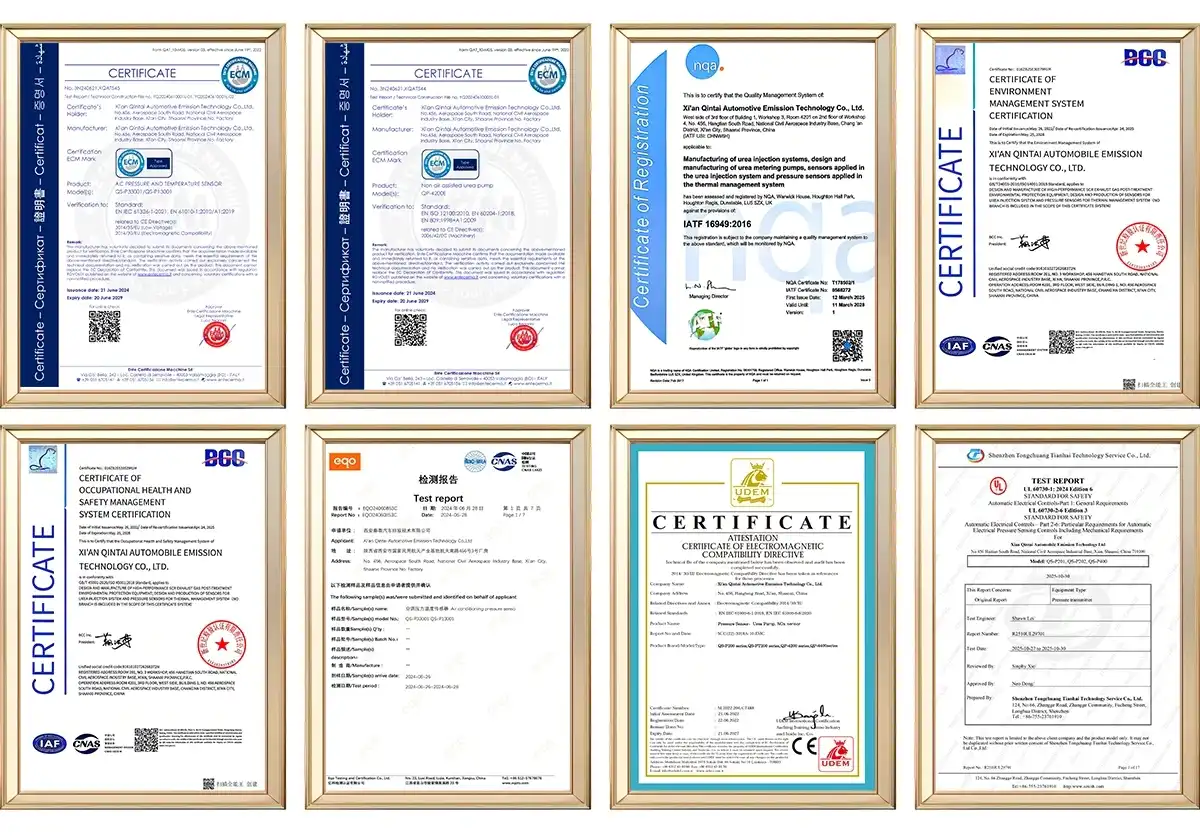
Xi'an Qintai Automotive Emission Technology Co. Ltd has been working with sensors for more than twenty years and knows how to measure water and wastewater pressure. We are the biggest manufacturer and OEM supplier of pressure sensor solutions in China, and we've made strong capacitive ceramic pressure sensors that work with diesel engine aftertreatment systems. This technology can also be used in tough water treatment settings. Our sensors are accurate to within 0.5% of the true value in temperatures ranging from -40°C to +125°C. They are backed by ISO 9001, IATF 16949, and foreign certifications such as CE, UL, and RoHS compliance.
We support comprehensive customization to match your specific installation requirements, output protocols, and environmental conditions. Our independent R&D team collaborates with clients from initial specification development through mass production, ensuring seamless integration with existing infrastructure. With established partnerships serving Weichai Power, Yuchai Power, and Quanchai Power, we understand the quality standards and delivery reliability B2B customers demand. Whether sourcing standard configurations or developing custom pressure sensor solutions, our technical support team provides responsive engineering assistance throughout your product lifecycle.
Contact our specialists at info@qt-sensor.com to discuss your water and wastewater pressure measurement requirements. Request detailed technical specifications, bulk pricing for OEM applications, or arrange sample evaluation units. Visit qt-sensor.com to explore our complete sensor portfolio and discover how Qintai's proven reliability can optimize your fluid monitoring systems.
References
1. Smith, J. R., & Anderson, K. L. (2021). Advanced Pressure Measurement Technologies for Water Distribution Systems. Journal of Water Resources Engineering, 47(3), 215-234.
2. Chen, W., Martinez, P., & Johnson, T. (2020). Corrosion-Resistant Sensor Materials for Wastewater Treatment Applications. Environmental Instrumentation Quarterly, 33(2), 88-103.
3. Thompson, D. G. (2022). Capacitive Pressure Sensor Performance in Municipal Water Infrastructure. Industrial Measurement & Control Systems, 56(4), 412-429.
4. Williams, E. H., Kumar, R., & O'Brien, M. (2019). Installation and Maintenance Best Practices for Industrial Pressure Sensors. Process Instrumentation Technology Review, 28(1), 56-72.
5. Zhang, L., & Rodriguez, C. (2023). IoT-Enabled Smart Sensors for Water System Monitoring. International Journal of Environmental Technology, 19(2), 145-162.
6. Patterson, R. S., Moore, A. K., & Davies, N. (2021). Comparative Analysis of Pressure Sensor Technologies in Wastewater Treatment Plants. Water Quality & Treatment Engineering, 42(3), 298-317.
 Sensor.webp)

Our customers’ satisfaction speaks for our quality — contact us to experience the same reliable service.