- English
- French
- German
- Portuguese
- Spanish
- Russian
- Japanese
- Korean
- Arabic
- Greek
- German
- Turkish
- Italian
- Danish
- Romanian
- Indonesian
- Czech
- Afrikaans
- Swedish
- Polish
- Basque
- Catalan
- Esperanto
- Hindi
- Lao
- Albanian
- Amharic
- Armenian
- Azerbaijani
- Belarusian
- Bengali
- Bosnian
- Bulgarian
- Cebuano
- Chichewa
- Corsican
- Croatian
- Dutch
- Estonian
- Filipino
- Finnish
- Frisian
- Galician
- Georgian
- Gujarati
- Haitian
- Hausa
- Hawaiian
- Hebrew
- Hmong
- Hungarian
- Icelandic
- Igbo
- Javanese
- Kannada
- Kazakh
- Khmer
- Kurdish
- Kyrgyz
- Latin
- Latvian
- Lithuanian
- Luxembou..
- Macedonian
- Malagasy
- Malay
- Malayalam
- Maltese
- Maori
- Marathi
- Mongolian
- Burmese
- Nepali
- Norwegian
- Pashto
- Persian
- Punjabi
- Serbian
- Sesotho
- Sinhala
- Slovak
- Slovenian
- Somali
- Samoan
- Scots Gaelic
- Shona
- Sindhi
- Sundanese
- Swahili
- Tajik
- Tamil
- Telugu
- Thai
- Ukrainian
- Urdu
- Uzbek
- Vietnamese
- Welsh
- Xhosa
- Yiddish
- Yoruba
- Zulu
How Does a Nitrogen Oxide Sensor Measure Emissions
A nitrogen oxides sensor measures emissions by pulling a small sample of exhaust gas into a heated ceramic cell, usually made of zirconia. Inside the cell, pump electrodes remove excess oxygen, and a second chamber splits nitric oxide into nitrogen and oxygen. That reaction creates a small electrical current that rises and falls with the NOx level. A built-in controller converts the current into a concentration value, often in ppm, and sends it to the engine control unit. In this guide, I explain each step, compare sensor types, and show how to choose the right unit for your engines or systems.
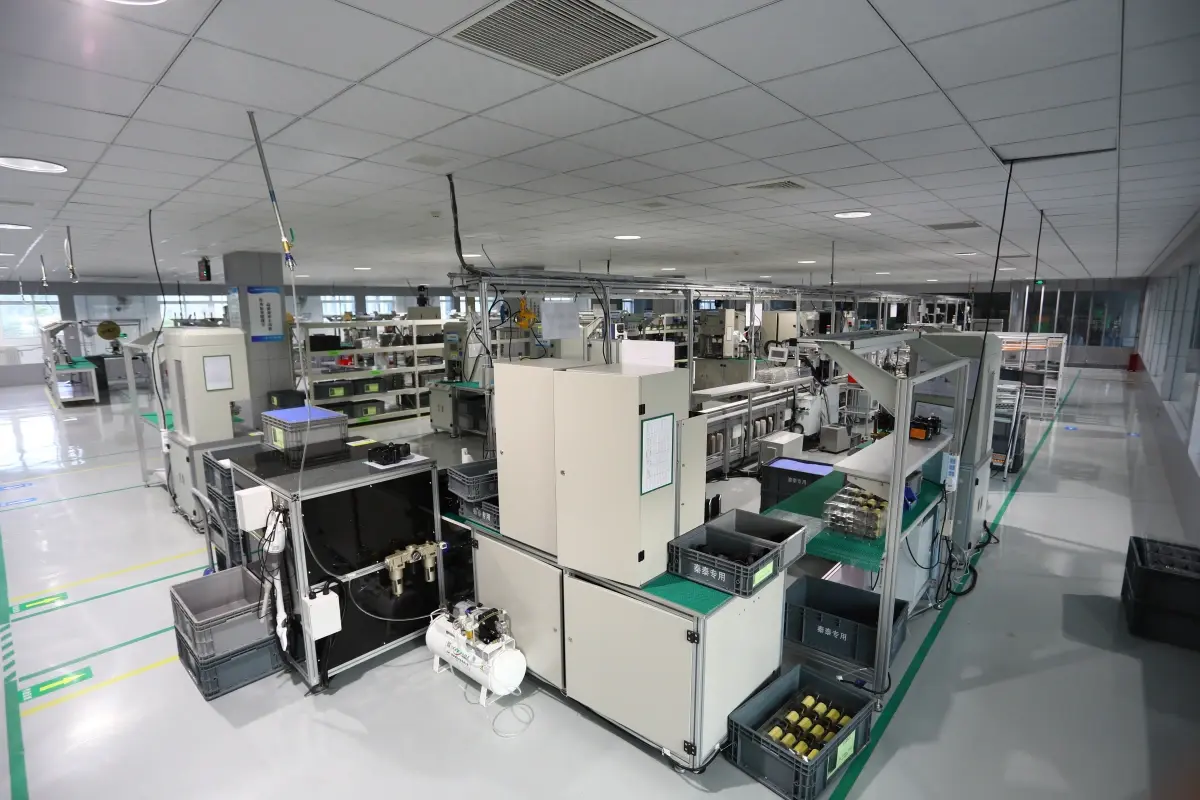
How a Nitrogen Oxides Sensor Works Inside Exhaust Gas
What Is a Nitrogen Oxides Sensor and Why Does It Matter?
A nitrogen oxides sensor will report nitric oxide (NO) and nitrogen dioxide (NO₂) as total NOx if it finds them in exhaust gas. This kind of gas is made when there is a lot of burning, which happens a lot in diesel engines. In 2010, the EPA set the heavy-duty NOx limit at 0.2 grams per brake horsepower-hour in the US. Since then, the EPA has made the 0.035 standard for engines made after 2027 much stricter. The engine control unit wouldn't be able to see what's coming out of the tailpipe otherwise. At this point, the tool looks like the eyes of the system. It helps with things like following the rules, adding the right amount of urea, doing diagnostics on board, and keeping the catalyst safe in cars, building equipment, farm machinery, and generator sets.
How Does the Sensing Element Produce a Reading?
Most diesel engines use a zirconia ceramic cell to move oxygen ions around when the engine is hot. The element gets warm to about 700–800 °C with the help of a heater. A pump cell in the first chamber takes away most of the oxygen, and NO₂ changes into NO. Someone in the second box splits the NO into nitrogen and oxygen. When oxygen ions are released, they make a current that flows. The amount of NOx in the air can be seen in this current. If the controller gets a different reading of the oxygen level inside the cell, it can fix any changes in the oxygen level in the exhaust. It looks at changes in temperature, pressure, and the age of the sensor before giving a ppm or mg/m³ number. That's the number the ECU takes in the end.
What Are the Main Components of a NOx Sensor?
A lot of units are made up of five parts that all work together. An element made of zirconia ceramic heats the cell to the right level of warmth. In addition, there is a circuit that boosts the signal, a control module built in that talks to the ECU, and a connector that links to the wiring harness. The science work is done by the clay cell. The heater keeps it that way. This is important because things change when the cell gets cold. Little currents are fed into the circuit, which then cleans them up. This part of the car and the ECU talk to each other and make the car run. These parts can still send power and messages even if they are hot or shaking. I check everything because the same trouble code can be caused by a bad cell or a weak link.
Types, Accuracy, and Output Signals of NOx Sensors
What Are the Main Types of Nitrogen Oxides Sensors?
One type of nitrogen oxides sensor is used for different things. These cells are used in diesel and gasoline engines because they can handle smoke that is hot and vibrates a lot. These cells can go either before or after the SCR catalyst. A tool for extraction or in-situ work is often used in business systems. Through filters and hot lines, it sends gas to a monitor.
Different technologies, like electrochemical, semiconductor, and zirconia, can sense and react to different gasses in different ways. They also work at different temperatures and at different times. Some people also choose systems that can find more than one gas, like O₂, NH₃, CO, or CO₂. The way something works in real life should be used to decide if it's right for you. It measures things that are very different from each other, like a truck exhaust pipe and a boiler stack.
What Determines NOx Sensor Accuracy, Range, and Response Time?
Range, resolution, repeatability, linearity, drift, and resistance to the environment all play a role in how accurate something is. It shouldn't lose clarity at low volumes, even if it's being used a lot and the peaks are short. A measurement can be changed by oxygen, water, pressure, temperature, humidity, dust, and gasses that break down metals. It's also important how quickly you answer.
The time it takes for a monitor to pick up 90% of a step change is T90. It must be checked for the whole sample system, not just one part of it. In other words, you should also check the tubes and filters. How stable is the calibration? How long should the service last? You should know what kind of test data was gathered in real life. Tests that were done at room temperature don't tell us much about how a unit works when it's hot outside.
What Is the Output Signal of a NOx Sensor?
A lot of new sensors send data to the ECU through the CAN bus. Some older ones sound an alarm that changes based on the amount of NOx in the air. The monitor sends more data than just this. The temperature and diagnostic state are also sent, which helps the ECU figure out if a number is right. The CAN protocol, connection pinout, and message style can help a company that makes things figure out if a sensor will work with something they already have.
It's possible that simpler industrial devices will work better with analog outputs. People who want to buy something should also look at the documentation to see if it shows raw sensor output or saved, set data. Each value might be different. It takes less time to validate and fix things after integration if the rules for how to talk to each other are clear.

How NOx Sensors Support SCR Systems and Compliance
How Does the NOx Sensor Support the SCR System?
Two nitrogen oxides sensors usually work together. It checks how much NOx gets in before it hits the SCR catalyst. It's not clear how much AdBlue or DEF the ECU needs to put in to change NOx into nitrogen and water. That number makes it clear. There is a sensor further down the line that checks to see if the catalyst cut down on the NOx enough. The ECU either changes the dose rate or sends a fault code if it doesn't. Under-dosing can lead to emission fails, and over-dosing can lead to crystal deposits or ammonia slip. If the response is right, it stops each of these things. Since DEF is a solution of 32.5% urea, every extra liter costs fleet owners money.
NOx Sensor Versus Oxygen Sensor: What Is the Difference?
Or, it checks the state of the fuel-air mix or the amount of oxygen in the air. With a nitrogen oxides sensor, you can measure nitrogen dioxide right from burned fuel. Oxygen data can help with modeling emissions and keeping combustion under control, but it can't usually be used instead of direct NOx measurement for SCR control, troubleshooting, or government checks. They're not the same, but both are useful. These days, NOx, oxygen, temperature, pressure, flow, and ammonia measurements are often combined to help find and fix problems more quickly.
A separate sensor works well in small car installations. In industrial plants, on the other hand, gas analyzers that are built in might work better. First, decide what you want to track. Then, think about how long it takes to set up, how good the data is, how much it costs to maintain, and how much the whole system costs.
What Are the Advantages of a Working NOx Sensor?
Five good things happen when a monitor is healthy. It makes sure the SCR system works well and helps engines follow the rules set by the EPA and Euro VI. It saves fuel because the ECU can better change when the EGR and injections happen. Because of this, expensive catalysts don't break. You can also test against yourself and report on compliance. If a fleet's monitor breaks, it can send out alerts and turn off the power to cars, so they can't stay on the road. It will be easy for OEMs to plan for and guess warranty claims once all sensors work the same way in every batch.
Calibration, Installation, and Troubleshooting
How Is a Nitrogen Oxides Sensor Calibrated and Tested?
Some labs check their work with nitrogen oxides sensors and approved zero and span gasses. Tests like these are used when a project needs more accuracy or a bigger range. Original tuning might be enough if you're just getting new parts for your car. Industrial systems, on the other hand, need field checks and zero and span checks more often.
To make sure everything works right, check the heater's resistance, the power supply, how it warms up, and how it reacts to changes in gas levels. There should also be a check against a reference analyzer that has been properly set up. People who want to buy something should set limits for things like communication, accuracy, consistency, drift, and how fast they can react. Test results, calibration papers, and tracked gas standards make it easy for buyers from other countries to see proof of performance.
How Should I Install a NOx Sensor Correctly?
It is important to put the sensor in the right way so that it works right and lasts as long as possible. To be sure the probe is in the right place in the gas stream, keep it away from moving or hot parts and direct heat shock. It is important to check the grounding, polarity, state of the links, tightening pressure, and transmission settings while starting up the machine. It could be a loose link or not enough force if something seems to have broken. A sensor that is easy to connect means less work and fewer trips back to the shop for sellers and service shops. Everything works the same for every engine on OEM lines because the wiring and torque are always the same.
How Do I Troubleshoot and Replace a NOx Sensor?
Lost signs, readings that don't stay the same or make sense, heater failure, slow response, diagnostic codes, and drift are all things that can go wrong. I start by checking the codes that don't work. After that, I look at the process data, the oxygen readings, the output temperature, and the engine load. If you compare it to a reference instrument, you can tell if the sensor or the catalyst is broken. There is no need to make a new part for this order. If you need to make a change, you might have to learn the ECU, set it up, or restart the software. Before you place your order, make sure you do these things. Even if the sensor fits mechanically, it may still need to be matched in software. Also, make sure that the engine type and part number match.
Choosing and Buying the Right Nitrogen Oxides Sensor
How to Choose the Best Nitrogen Oxides Sensor for Your Application?
You must first decide on the tools for the nitrogen oxides sensor, the gas conditions, the installation site, the measurements' goal, and any needs for integration. Next, look at the concentration range, accuracy, response time, temperature resistance, calibration interval, service life, connection, probe size, wire length, mounting thread, protection rating, vibration resistance, and communication protocol. Most diesel engines put quick reaction and being able to work with CAN at the top of their list of goals.
A lot of the time, boilers and power plants need to be stable and work at a level that meets standards. The list is stronger and can handle tough conditions when generator sets are used in mines or other places where the power goes out. Add up all the costs of owning the system, such as setup, calibration, controllers, downtime, repair, shipping, warranty, support, and guarantee. Choose the OEM, standard, or custom form that fits your project's size and layout the best.
What Should I Include in an RFQ and Supplier Check?
If the RFQ is clear, the seller can tell you what kind of sensor will work and how much it costs. Include the model of the equipment, the type of gas, the expected concentration, the working and peak temperatures, the pressure, the accuracy, the reaction time, the mounting measurements, the connection, the cable length, the power source, the protocol, the annual volume, the delivery plan, and the certification needs. After that, look at the supplier's quality control, how well they can keep track of goods, their guarantee, and their customer service after the sale.
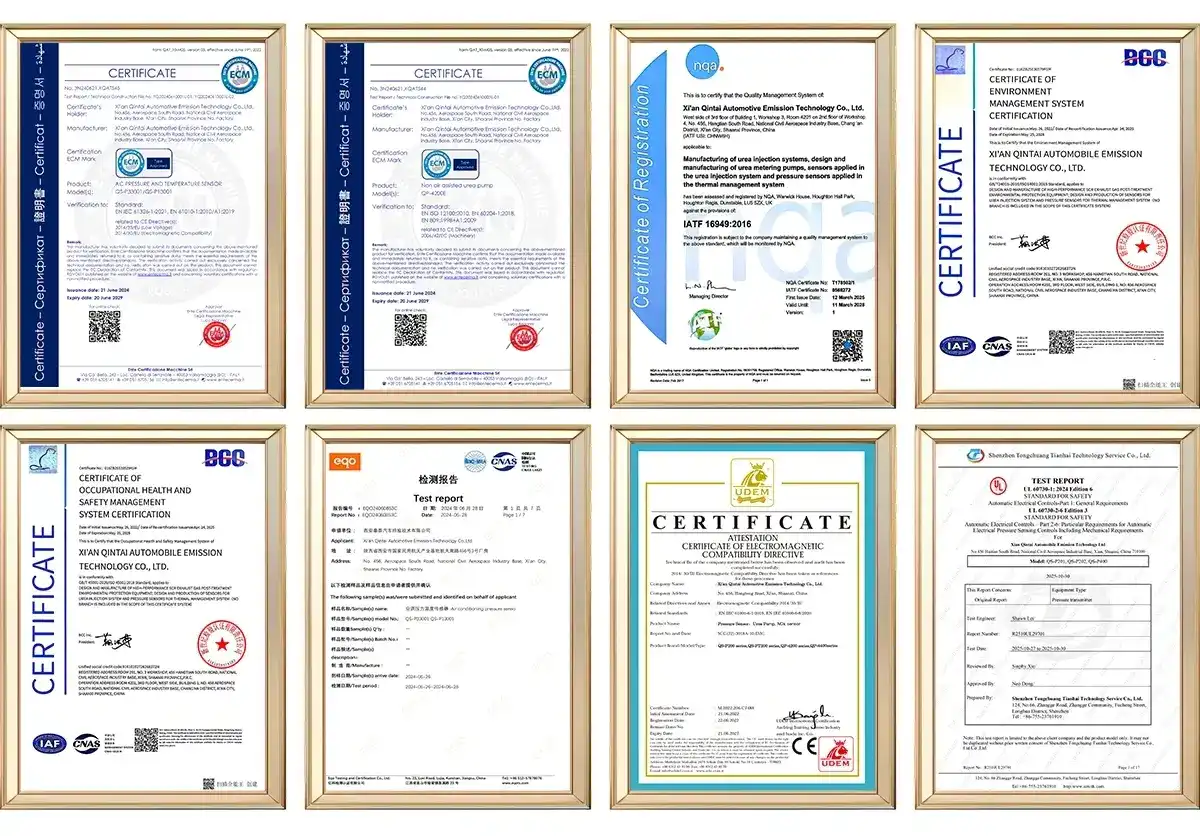
Watch out for how uniform their batches are. We work on sensors and fuel aftertreatment while we're at Qintai. We have ISO9001 and IATF16949 certifications, and we can help with both OEM and ODM projects. A lot of people from Yuchai Power, Weichai Power, and Quanchai Power buy from us too. Get some samples or pilot orders of something before you buy a lot of it. This will lower the risk of the project.
How Do I Validate a Sensor Before Mass Production?
It's better to have validation that is specific to an application than validation that is general. It is important to check a diesel engine with SCR's temperature, vibration, cold starts, steady operation, and quick loads. Also, you should check the engine's size before and after adding the catalyst. For a business boiler job, you should think about both in-situ and extraction methods, as well as filtering, controlling condensation, and getting to the boiler to do maintenance and calibration.
It adds checks for software, firmware, electrical signals, mechanical fit, output accuracy, and change control when an OEM is added. Compare a sample to a normal device to show proof before you ask for permission. Then, instead of just looking at the datasheets, integrators and procurement teams can use performance data to compare offers. This helps everyone talk about costs better.
Conclusion
A nitrogen oxides sensor in the exhaust sends NOx through a hot zirconia cell. Different electrodes in this cell work together to control the amount of oxygen. One electrode creates a current that tracks the amount of NOx. A controller changes it and sends it to the ECU, usually through a CAN bus. Sensors on and above the catalyst let the ECU change how much urea is used and check to see how well the catalyst is doing its job. That helps follow EPA and Euro VI rules and makes sure that parts that are used after treatment are safe.
It depends on the range, drift, response time, and how it is used to tell how accurate something is. That's why test results should be like real smoke. The readings are correct because the tools were calibrated, set up correctly, and any issues were fixed in a well-organized way. Think about the job, the cost, and how it will be used to make a good choice. For each sample, a reference analyzer is used to make sure it fits before a lot of them are made.
FAQ
What does a NOx sensor measure?
How does a nitrogen oxides sensor know? It tells you how much nitric oxide and nitrogen dioxide are in the waste gas as a whole in parts per million (ppm) or milligrams per cubic meter (mg/m³). It also tells you what heat level the devices are at and what state the tracking is in. This information helps the ECU figure out what's wrong with the SCR and how much medicine to give it.
How often does a NOx sensor need calibration?
How often should I set up a monitor? New car parts often only need to be tuned by the factory. At least one approved gas has to be used for regular zero and span checks in most factories. You should ask the seller to be sure of the range because it depends on how you move, how you work, and the rules of the project.
What information should I send for a quotation?
How do I send information and get a quote? Send the type of equipment, the NOx range, the temperature, details about the connectors, the connection protocol, an installation drawing, how much will be shipped each year, and when it will be shipped. If you send us pictures of your current sensor, we can quickly come up with a solution that fits your needs.
Request a Nitrogen Oxides Sensor Quote from Qintai
This is Qintai, a tech company that has been around since 2001. We take part in OEM and ODM projects, make changes, and make a lot of diesel engine aftertreatments. We can help you find a trustworthy company that sells nitrogen oxides sensors. We have approvals from UL, CE, REACH, IATF16949, ISO9001, and RoHS. Send us an email at info@qt-sensor.com telling us what you need. We are going to look at your drawings, measurements, and volumes.
References
1. U.S. Environmental Protection Agency, Control of Air Pollution from New Motor Vehicle Engines: Heavy-Duty Engine and Vehicle Standards and Highway Diesel Fuel Sulfur Control Requirements, Federal Register, 2001.
2. U.S. Environmental Protection Agency, Control of Air Pollution From New Motor Vehicles: Heavy-Duty Engine and Vehicle Standards, Federal Register, 2023.
3. European Parliament and Council, Regulation (EC) No 595/2009 on Type-Approval of Motor Vehicles and Engines with Respect to Emissions from Heavy Duty Vehicles (Euro VI), Official Journal of the European Union, 2009.
4. Moos, R., A Brief Overview on Automotive Exhaust Gas Sensors Based on Electroceramics, International Journal of Applied Ceramic Technology, 2005.
5. Kato, N. et al., Performance of Thick Film NOx Sensor on Diesel and Gasoline Engines, SAE International Technical Paper 970858, 1997.
6. International Organization for Standardization, ISO 22241-1: Diesel Engines — NOx Reduction Agent AUS 32 — Part 1: Quality Requirements, 2019.

Our customers’ satisfaction speaks for our quality — contact us to experience the same reliable service.