- English
- French
- German
- Portuguese
- Spanish
- Russian
- Japanese
- Korean
- Arabic
- Greek
- German
- Turkish
- Italian
- Danish
- Romanian
- Indonesian
- Czech
- Afrikaans
- Swedish
- Polish
- Basque
- Catalan
- Esperanto
- Hindi
- Lao
- Albanian
- Amharic
- Armenian
- Azerbaijani
- Belarusian
- Bengali
- Bosnian
- Bulgarian
- Cebuano
- Chichewa
- Corsican
- Croatian
- Dutch
- Estonian
- Filipino
- Finnish
- Frisian
- Galician
- Georgian
- Gujarati
- Haitian
- Hausa
- Hawaiian
- Hebrew
- Hmong
- Hungarian
- Icelandic
- Igbo
- Javanese
- Kannada
- Kazakh
- Khmer
- Kurdish
- Kyrgyz
- Latin
- Latvian
- Lithuanian
- Luxembou..
- Macedonian
- Malagasy
- Malay
- Malayalam
- Maltese
- Maori
- Marathi
- Mongolian
- Burmese
- Nepali
- Norwegian
- Pashto
- Persian
- Punjabi
- Serbian
- Sesotho
- Sinhala
- Slovak
- Slovenian
- Somali
- Samoan
- Scots Gaelic
- Shona
- Sindhi
- Sundanese
- Swahili
- Tajik
- Tamil
- Telugu
- Thai
- Ukrainian
- Urdu
- Uzbek
- Vietnamese
- Welsh
- Xhosa
- Yiddish
- Yoruba
- Zulu
Diesel NOx Sensors vs. NOx Modules: Which Fits Your Application?
Diesel nitrogen oxide (NOx) sensors fit applications where the vehicle, test stand, or diagnostic tool already supplies the control electronics, power, and calibration. A NOx module fits applications that need a matched assembly combining the probe, control unit, connector, and harness in one part. I recommend deciding by three factors: where the fault sits, how much downtime you can accept, and whether your product needs a documented, repeatable signal over CAN. This article compares both options, covers upstream and downstream positions, and gives a procurement checklist for US buyers, including diagnostic equipment makers building private-label products.
What Is a Diesel NOx Sensor and How Does It Work?
What the Sensor Does in an SCR System
A NOx sensor measures nitrogen oxides in exhaust gas and sends the reading to the engine control unit (ECU) or SCR control module. The ECU uses that signal to meter DEF (AdBlue) dosing, check catalyst efficiency, and set diagnostic trouble codes. Regulation explains why this matters in the United States. The EPA's 2010 standard limits heavy-duty NOx to 0.20 g/bhp-hr, and the agency's 2023 final rule lowers the limit to 0.035 g/bhp-hr beginning with model year 2027. California's Heavy-Duty Omnibus Regulation, adopted in 2020, also tightens limits in steps. I see the sensor as the feedback point for the whole aftertreatment system.
Core Components and Technical Properties
A typical unit contains a zirconia ceramic sensing element, a heater, a signal conditioning circuit, an integrated control interface, and a connector with wiring. Inside, a dual-chamber design uses a first pumping cell to remove oxygen and a second cell to decompose NOx, which gives a cleaner signal. Typical figures include a 0–3000 ppm range, ±10% accuracy at lower concentrations, exposure to exhaust temperatures up to 800°C, and a warm-up of 30–60 seconds to roughly 750°C. Communication usually runs over SAE J1939 CAN. These are typical values, so request the actual datasheet and calibration curve for your exact model.
Upstream and Downstream Positions
Most modern diesel engines use two diesel nitrogen oxide (NOx) sensors. The upstream sensor sits before the SCR catalyst and reads raw engine-out NOx, so the ECU can calculate how much DEF to inject. The downstream sensor sits after the catalyst and shows how well the SCR system converts NOx. If its readings stay high, the ECU may flag a dosing fault, reduced catalyst efficiency, or a failing sensor. The two positions use different calibration and coding, even when the parts look alike, so I never treat them as interchangeable. Confirm the OE part number and position before ordering.
NOx Sensor vs. NOx Module: What Is the Technical Difference?
Standalone Diesel NOx Sensor
A standalone diesel NOx sensor may consist mainly of the probe and its connection components. Signal processing and communication then come from separate electronics, such as the vehicle's control unit or a test-equipment board. This setup suits buyers who already have proven electronics and want to replace only the wear item. It also gives equipment makers freedom to design their own interface hardware and calibration routine. The trade-off is more integration work, including heater control, CAN timing, and signal validation. When those pieces are already validated, a standalone sensor often costs less per unit and keeps the bill of materials simple.
Integrated NOx Module
An integrated NOx module combines the probe, control unit, connector, wiring harness, and calibrated electronics into one assembly. Because the electronics match the probe, installation is faster and diagnostic risk drops. That helps repair shops and fleets that bill by the hour, and it helps diagnostic-tool makers who want one part number with a defined CAN output. The unit price may run higher, since you pay for the added electronics and harness. A module also makes sense when the control unit or wiring may have failed along with the probe, because replacing only the probe would leave the fault in place.
What a Quotation Should Specify
Quotations often hide the largest cost differences. Ask the supplier to state in writing whether the price covers only the sensing element, a control unit, a harness, or a full module. Request the calibration curve, accuracy specification, and protocol documents, such as J1939 message definitions, for the exact model. Confirm connector type, cable length, and heater drive requirements as well. Buyers who compare a bare probe quote with a full module quote end up with misleading price gaps. A written scope also protects you from surprise engineering charges when a project moves from samples to volume supply.
How to Choose Between a Diesel NOx Sensor and a NOx Module?
Confirm the Fault Before Buying
Reading one trouble code does not prove a diesel nitrogen oxide (NOx) sensors has failed. I recommend recording all codes, comparing live upstream and downstream values, inspecting the probe and harness, and checking for exhaust leaks. Then verify power, ground, heater operation, and CAN communication. Emissions warnings, reduced power, limp mode, abnormal DEF use, and failed emissions tests can also come from poor DEF quality, catalyst wear, a temperature-sensor fault, wiring damage, or ECU communication problems. External cleaning rarely repairs a failed sensing element, heater, or internal electronics, so a confirmed diagnosis saves both money and downtime.
Match the Choice to Your Use Case
Define the use before comparing prices. Choose a standalone sensor when the existing electronics, harness, and communication work and your technicians can handle component-level repair. Choose a module when speed matters, when the electronics may also be damaged, or when you need a matched, ready-to-install part. Emission-testing and diagnostic equipment makers face a third case. They need a stable signal, open protocol access, and documented calibration, because sensor drift leads to retests and customer complaints. For those projects, I would request samples of both formats and validate each on your own test bench.
Compare Total Installed Cost
Unit price tells only part of the story. Add labor hours, diagnostic time, vehicle or line downtime, and the cost of a repeat repair if the first part fails or does not match. A cheaper sensor that needs coding work or a second visit can cost more than a module. Volume buyers should also compare price stability across batches, lead time, MOQ, and any development fee. Ask for volume price tiers in writing so your annual budget does not shift after the first order. The goal is the lowest total cost over the part's service life, not the lowest invoice.

Diesel NOx Sensor Compatibility and Procurement Checklist
Electrical and Communication Checks
Start with the electrical layer. Confirm 12V or 24V supply, connector pin configuration, cable length, heater control, and the CAN protocol. For US heavy-duty work, SAE J1939 is the common standard, so ask for the message list and signal scaling. Check that the sensor output matches what your ECU or diagnostic tool expects, including error flags and warm-up status. A mismatch in pin layout or communication settings can make a good sensor look faulty, which wastes bench time. Ask the supplier for a pinout drawing and a sample before you commit to volume.
Mechanical and Environmental Checks
Next, verify the mounting thread, probe dimensions, sensor orientation, and operating temperature range. The sensing element must tolerate exhaust temperatures up to 800°C and thermal shock from water droplets. Trucks, buses, construction equipment, agricultural machinery, and generators add vibration, moisture, salt, soot, and DEF crystallization to the list. Ask which tests the supplier ran and request the results. A sensor that passes on a clean bench but fails in salt-laden road spray will generate returns, so match the validation data to your real operating conditions.
Documentation and Commercial Terms
For B2B purchasing, request quality documentation, traceability, validation data, warranty terms, samples, MOQ, lead time, packaging details, and technical support. Accuracy drift is the largest hidden risk for test-equipment makers, so ask how the supplier controls it and what calibration curve documentation ships with each batch. A typical project moves from technical discussion to sample validation, then private-label customization and volume supply, and it often takes several months. Plan your schedule accordingly. Raise confidentiality and development-fee questions at the start, since they shape the whole project.
Application Guide and Supplier Evaluation
Matching Products to Diesel Equipment
The right option for diesel nitrogen oxide (NOx) sensors depends on duty cycle, environment, electrical system, and aftertreatment layout. Trucks and buses prioritize durability and fast replacement on heavy-duty SCR systems. Construction and agricultural machinery face dust, moisture, temperature swings, and seasonal use. Generators run for long periods, so they need continuous-duty performance and long-term replacement supply. The emissions standard alone does not decide the part, because Euro 5 and Euro 6 systems, or EPA-compliant engines, can use different sensor configurations and diagnostic strategies. I suggest keeping a one-page spec sheet for each platform you support.
Purchasing Mistakes to Avoid
Four mistakes show up again and again. Buyers select by vehicle brand only, although one brand may use several engines, sensor locations, and OE references. They confuse a NOx sensor with an oxygen sensor. They ignore upstream or downstream position. They choose on unit price alone. A low-cost but incompatible part adds labor, downtime, and diagnostic expense. Check wiring, exhaust leaks, DEF quality, catalyst condition, and ECU communication before replacing anything, and confirm any coding, adaptation, or relearn procedure in advance.
OEM, Aftermarket, and OEM/ODM Suppliers
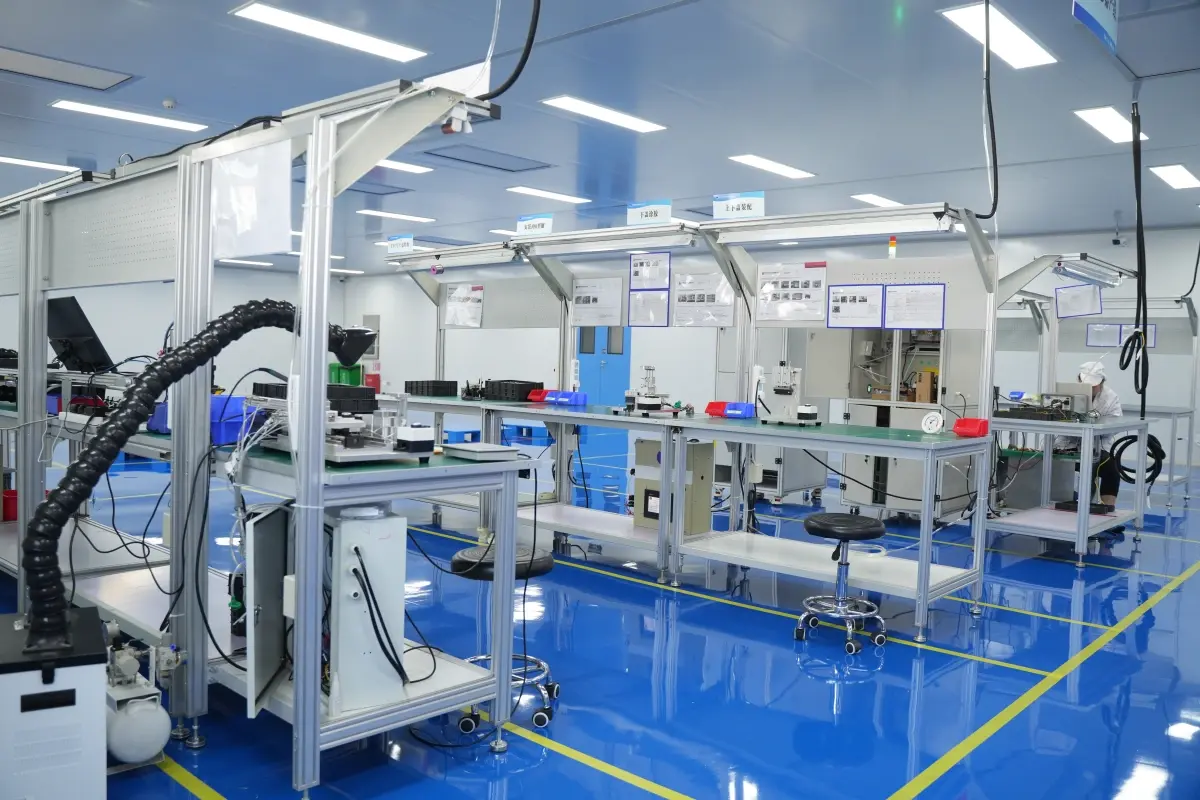
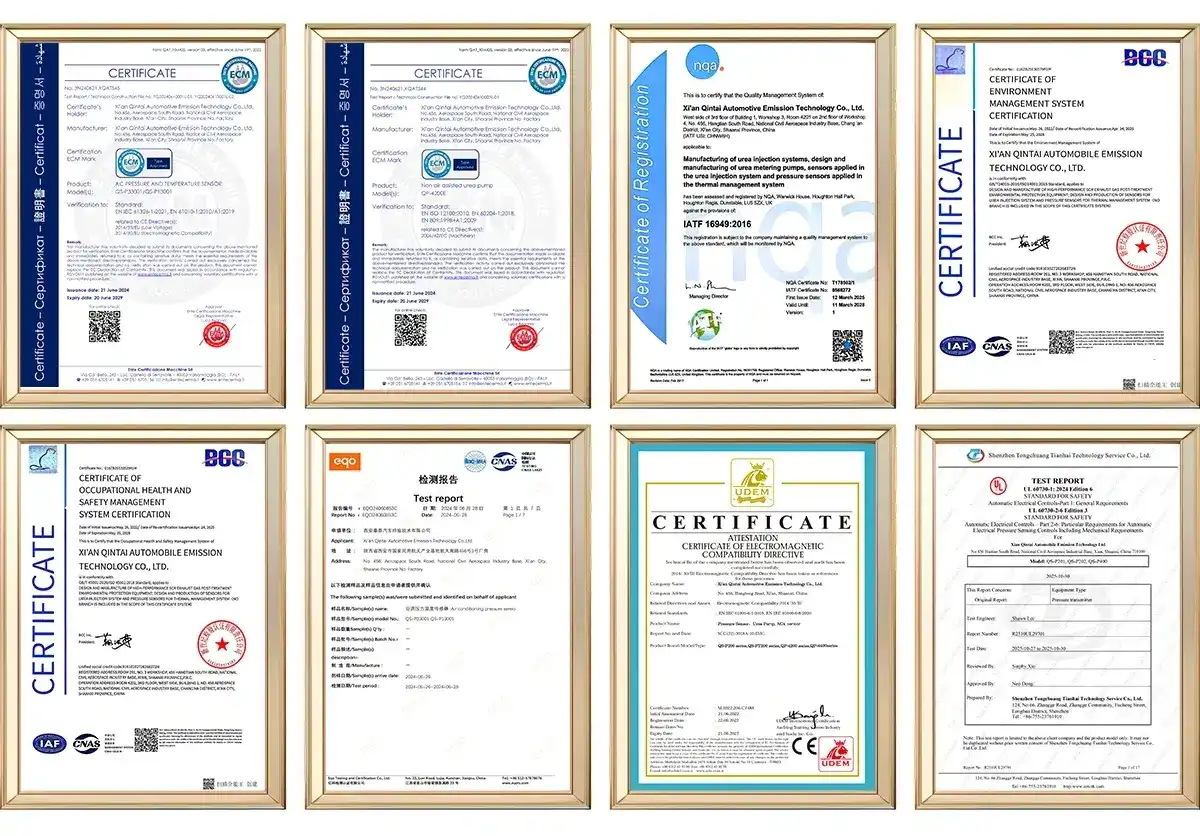
OEM parts give factory-level integration and suit warranty-controlled work, though they cost more. A qualified aftermarket or OEM/ODM supplier can offer broader availability and custom development. Qintai, founded in 2001, is a national high-tech enterprise in Xi'an that develops and manufactures diesel engine SCR aftertreatment products and sensors. It holds ISO9001, IATF16949, CMC, Ex, UL, CE, REACH, and RoHS certificates, has applied for 58 invention patents, and serves customers in more than 60 countries and areas, including Weichai Power, Yuchai Power, and Quanchai Power. Qintai offers OEM/ODM service and product customization, so equipment makers can discuss private-label projects. Confirm exact NOx sensor specifications and documents for your model with the team.
Conclusion
Diesel nitrogen oxide (NOx) sensors and NOx modules both serve SCR feedback control, but they suit different situations. A standalone sensor works when the existing electronics, harness, and CAN communication are confirmed functional and a technician can handle the repair. An integrated module fits cases where the electronics may also be faulty, downtime is costly, or a matched assembly is needed. Upstream and downstream positions are not interchangeable, and the emissions standard alone does not identify the correct part. Careful diagnosis, a written quotation scope, and checks of voltage, connector, protocol, environment, and calibration documentation reduce ordering errors. Comparing total installed cost, rather than unit price, gives the clearest basis for the final decision.
FAQ
What is the difference between a sensor and a module?
A sensor is mainly the exhaust-gas sensing component. A module also includes the control unit, connector, harness, and calibrated electronics in one assembly.
Can I swap upstream and downstream sensors?
Generally no. They sit in different positions and may use different calibration, coding, temperature ranges, and cable lengths.
Does a replacement need coding or calibration?
Some applications do. Confirm any coding, adaptation, or relearn procedure before ordering.
What should I send a supplier?
Send the OE number, equipment and engine model, emissions standard, sensor position, voltage, connector details, symptoms, and expected volume.
Request a Diesel NOx Sensor or NOx Module Recommendation
Qintai can help you match diesel nitrogen oxide (NOx) sensors or complete NOx modules to your platform, test line, or private-label product. As an experienced diesel nitrogen oxide (NOx) sensors supplier with OEM/ODM and customization services, we can review your OE number, voltage, protocol, and volume. Email info@qt-sensor.com to request samples, documentation, and a quotation.
References
1. U.S. Environmental Protection Agency, Control of Air Pollution From New Motor Vehicles: Heavy-Duty Engine and Vehicle Standards, Federal Register, 2023
2. California Air Resources Board, Heavy-Duty Omnibus Regulation, 2020
3. Johnson, T. V., Review of Vehicular Emissions Trends, SAE International Journal of Engines, 2015
4. Moos, R., A Brief Overview on Automotive Exhaust Gas Sensors Based on Electroceramics, International Journal of Applied Ceramic Technology, 2005
5. Zhuiykov, S. and Miura, N., Development of Zirconia-Based Potentiometric NOx Sensors for Automotive and Energy Industries in the Early 21st Century, Sensors and Actuators B: Chemical, 2007
6. Kato, N. et al., Performance of Thick Film NOx Sensor on Diesel and Gasoline Engines, SAE Technical Paper, 1997

Our customers’ satisfaction speaks for our quality — contact us to experience the same reliable service.