- English
- French
- German
- Portuguese
- Spanish
- Russian
- Japanese
- Korean
- Arabic
- Greek
- German
- Turkish
- Italian
- Danish
- Romanian
- Indonesian
- Czech
- Afrikaans
- Swedish
- Polish
- Basque
- Catalan
- Esperanto
- Hindi
- Lao
- Albanian
- Amharic
- Armenian
- Azerbaijani
- Belarusian
- Bengali
- Bosnian
- Bulgarian
- Cebuano
- Chichewa
- Corsican
- Croatian
- Dutch
- Estonian
- Filipino
- Finnish
- Frisian
- Galician
- Georgian
- Gujarati
- Haitian
- Hausa
- Hawaiian
- Hebrew
- Hmong
- Hungarian
- Icelandic
- Igbo
- Javanese
- Kannada
- Kazakh
- Khmer
- Kurdish
- Kyrgyz
- Latin
- Latvian
- Lithuanian
- Luxembou..
- Macedonian
- Malagasy
- Malay
- Malayalam
- Maltese
- Maori
- Marathi
- Mongolian
- Burmese
- Nepali
- Norwegian
- Pashto
- Persian
- Punjabi
- Serbian
- Sesotho
- Sinhala
- Slovak
- Slovenian
- Somali
- Samoan
- Scots Gaelic
- Shona
- Sindhi
- Sundanese
- Swahili
- Tajik
- Tamil
- Telugu
- Thai
- Ukrainian
- Urdu
- Uzbek
- Vietnamese
- Welsh
- Xhosa
- Yiddish
- Yoruba
- Zulu
OEM Urea Dosing Pressure Sensor Supplier for Global Markets - Qintai
Emissions compliance and operational efficiency require a reliable OEM urea dosing pressure sensor provider. Precision sensors that monitor AdBlue pressure assure SCR system performance and NOx reduction as diesel engine manufacturers and aftertreatment integrators confront tougher Euro VI and China VI standards. A national high-tech enterprise founded in 2001, Qintai provides self-developed sensor solutions that support heavy trucks, construction machinery, agricultural equipment, and generators worldwide with measurement accuracy, environmental resilience, and mass production capacity.
Understanding Urea Dosing Pressure Sensors: Functionality and Benefits
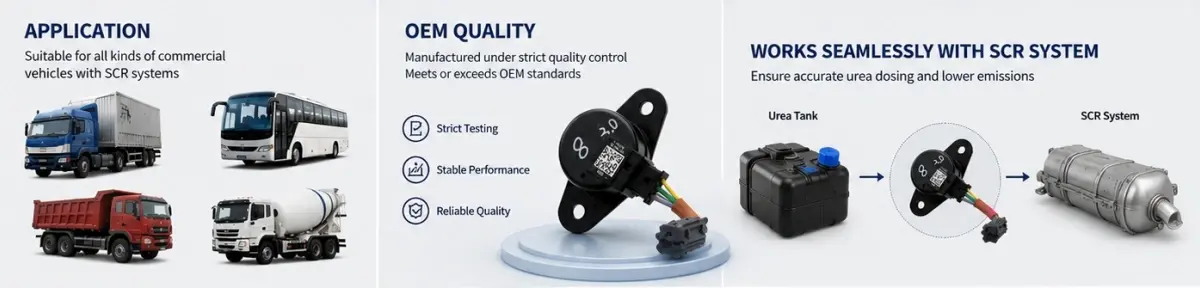
Selective Catalytic Reduction systems turn dangerous nitrogen oxides into harmless nitrogen and water vapor via precision AdBlue administration. The pressure sensor continually monitors supply line fluid pressure and sends real-time voltage signals to the SCR control unit as the crucial feedback component between the dosing pump and injector nozzle.
Core Working Principles of Pressure Sensing Technology
Advanced diaphragm technology converts mechanical pressure into electrical information in modern pressure sensors. A sensor diaphragm is forced by urea solution in the dosing circuit. This mechanical deflection produces a proportional voltage output from 0.5 VDC to 4.5 VDC at maximum pressure. The ECU responds to these inputs to optimize pump dosage for engine load and emission objectives.
Emission Control Accuracy and System Reliability
Correct pressure feedback affects NOx conversion efficiency. The control unit may modify urea injection time and volume with surgical precision when sensors provide exact data within ±0.5% tolerance. Under-dosing causes emission test failures, while over-dosing produces crystallization deposits and system damage. This optimization eliminates both. This measurement reliability helps Euro VI manufacturers achieve strict emission criteria throughout ambient temperatures and engine operating conditions.
Maintenance Cost Reduction Through Early Detection
Pressure monitoring provides predictive maintenance to forecast faults before catastrophic breakdowns. Pressure abnormalities indicate pump wear, line obstructions, or injector clogging. Early intervention reduces costly component replacements and vehicle downtime, which is especially important for commercial fleets where each day of operation generates income.
How to Choose the Best Urea Dosing Pressure Sensor for Your Application?
Beyond pressure range, selection criteria include durability, compatibility, and supplier support. Procurement managers must assess sensor compatibility with operating settings and integration needs.
Precision and Sensitivity Requirements
System performance is limited by measurement precision. Sensors for heavy-duty applications must retain ±0.5% accuracy from -14 to +130.5 psi, working dependably despite temperature and vibration changes. The Urea dosing pressure sensor must be particularly robust, as cold-start circumstances with increased urea viscosity and pressure spikes test sensor sensitivity.
Compatibility with Existing SCR Architectures
Interface compatibility cuts integration time and technical expenses. Most DCU and ECU platforms employing 5V supply voltage support analog output sensors with 0.5-4.5 VDC ratiometric signals. To enable drop-in replacement without harness changes or software updates, mounting dimensions, connection types, and signal protocols must match system specifications.
Customization Capabilities for Specialized Applications
Standard automotive sensors cannot meet generator set manufacturers' pressure ranges and environmental sealing requirements. OEM customization providers meet mining application temperature ranges, space-constrained mounting brackets, and specific control system electrical connections. Qintai's engineering team works with R&D to provide customized solutions that fulfill high performance criteria at competitive prices.
Installation, Maintenance, and Troubleshooting of Urea Dosing Pressure Sensors
Sensor longevity and measurement accuracy are maximized by proper installation and maintenance.
Step-by-Step Installation Best Practices
Mounting placement affects sensor performance and accessibility. Place the sensor between the dosing pump output and injector input, away from heat and moving parts. Clear any threaded connections of debris that might impair sealing. Use urea-compatible thread sealant to tighten the sensor to manufacturer-specified torque levels to prevent leaks and avoid mechanical stress on the detecting element. Before system commissioning, use diagnostic equipment to evaluate signal output after electrical connection.
Scheduled Maintenance and Health Monitoring
Connection seals should be visually inspected for moisture ingress, mounting security checked, and fault codes scanned regularly. For the Urea dosing pressure sensor, current pressure readings wandering from baseline suggest calibration or diaphragm damage. Clean exterior surfaces to prevent chemical accumulation that might impact heat dissipation or connection integrity.
Common Issues and Diagnostic Support
Signal discrepancies are usually caused by electrical connections, not sensors. Intermittent readings from compromised terminals or wiring activate check engine lights. Urea crystals in the detecting port limit diaphragm movement, falsely raising pressure. Qintai's regional service centers and remote diagnostics enable specialists identify sensor problems from systemic concerns.
Qintai's Edge as a Global OEM Supplier for Urea Dosing Pressure Sensors
Beyond pricing comparisons, supplier partners should be assessed for production, quality assurance, and long-term partnership.
Self-Developed Sensor Core Technology
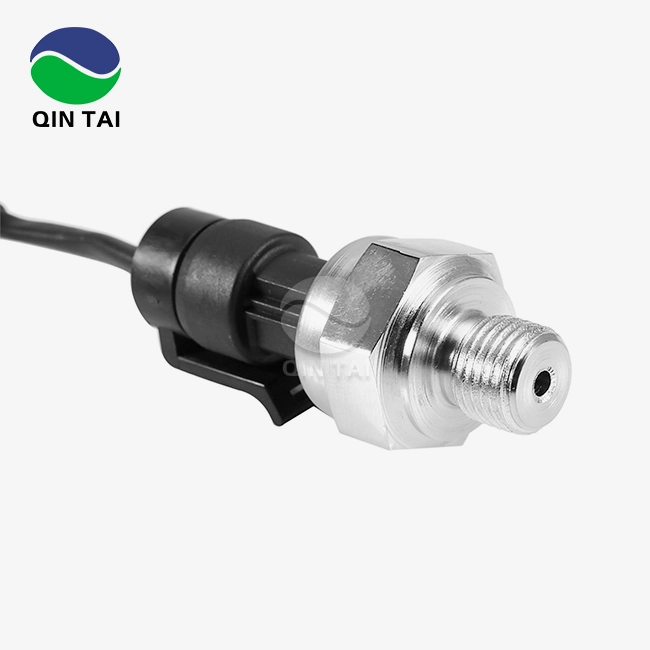
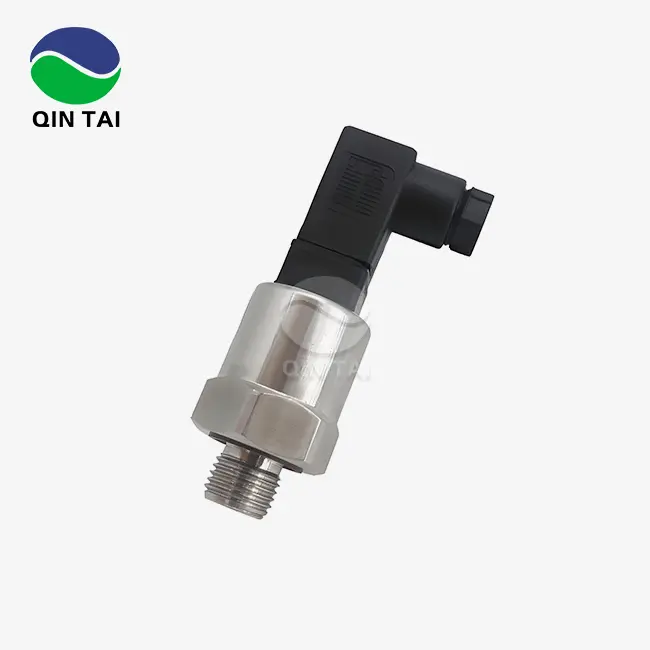
No third-party vendors are needed for crucial components since Qintai controls sensor core development and manufacture. Vertical integration assures quality, preserves IP, and allows quick design iterations to meet client needs. The QS-P226 type, with its exclusive sensor core technology, provides steady performance from -14 to +130.5 psi with incredible ±0.5% accuracy. The sensor is sealed against moisture, dust, and chemicals found in tough automotive settings. The QS-P226 enables continuous real-time monitoring for SCR control unit responsiveness to system changes over 60-80°F. This sophisticated design concept enables emissions-compliant light-duty and heavy-duty diesel applications without compromising durability.
International Certifications and Quality Assurance
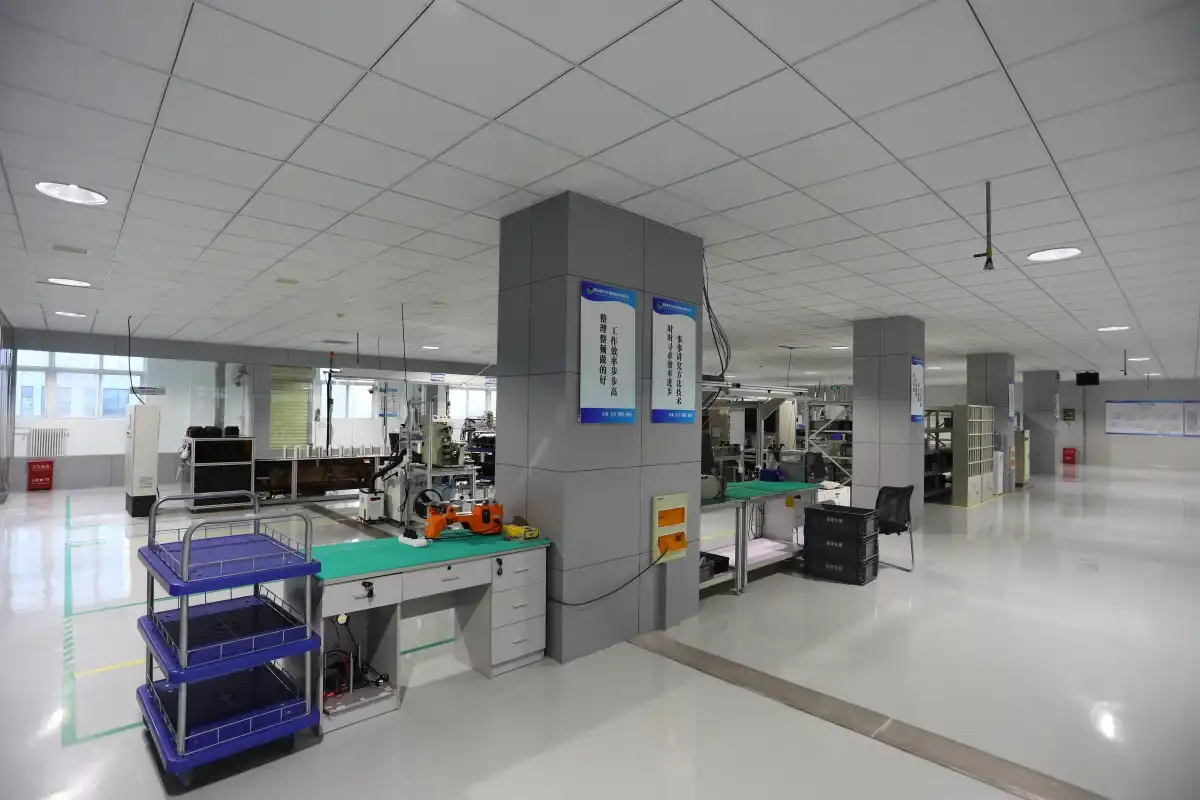
The ISO9001 and IATF16949 certifications show our dedication to worldwide automotive quality standards. Before shipment, all sensors are 100% tested for measurement accuracy, signal stability, and environmental resistance. CMC, Ex, UL, CE, REACH, and RoHS certifications provide compliance with regional regulatory standards in Europe, the Middle East, South America, and more than 60 nations.
Innovation Through Dedicated Research and Development
Qintai's 86-person R&D team improves sensor technologies via targeted research, with particular focus on the Urea dosing pressure sensor for emission control systems. Our 58 automobile emission control system invention patents demonstrate innovative investment. Our technological experience allows us to predict market trends, design next-generation sensing systems, and provide engineering consulting for customer product development.
Annual Production Capacity Exceeding Two Million Units
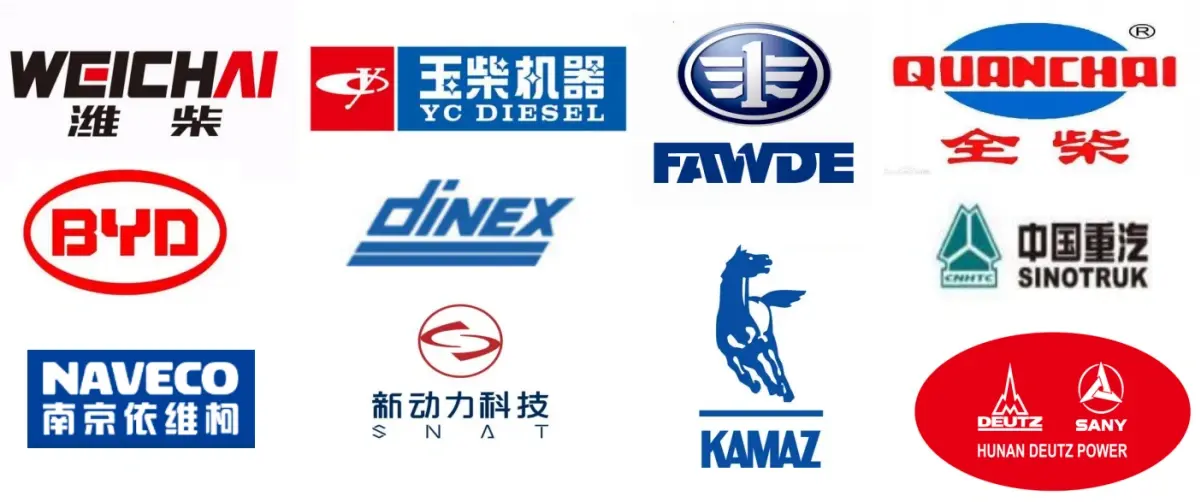
We produce over two million sensors annually as China's top OEM supplier, servicing Weichai Power, Yuchai Power, and Quanchai Power. Large-volume orders are met with strict quality standards at this production scale. Our manufacturing solutions allow quick expansion for new projects without affecting delivery or product quality.
Procurement Guide – How to Buy Urea Dosing Pressure Sensors from Qintai?
From initial inquiry to after-sales assistance, efficient procurement processes reduce lead times and assure project success.
Requesting Quotes and Technical Specifications
Clearly define requirements before procuring. Send application data to info@qt-sensor.com, including engine specs, pressure range, yearly volume predictions, and customization requests. Complete quotations including technical datasheets, certification paperwork, and sample availability are delivered within 48 hours.
Bulk Orders and Custom Development Programs
Volume contracts allow specialized production and discounted pricing. Bulk purchases benefit from efficient logistics and flexible payment arrangements for long-term partnerships. From specification review to prototype validation and mass production transition, bespoke development projects include milestone timeframes and quality gate approvals to meet client expectations.
International Shipping and Lead Time Management
Catalog goods have standard wait times of 4-6 weeks, with expedited alternatives for urgent orders. We provide door-to-door worldwide shipment with complete tracking through logistics partners with automotive component experience. Complete packaging protects sensors during shipment and meets air and sea freight carrier regulations.
Warranty Terms and After-Sales Services
All Qintai sensors have a 12-month guarantee on manufacturing flaws, with failure investigation findings determining replacement or credit. Our global service network provides troubleshooting, application help, and field failure investigation beyond warranty terms. True partnerships prioritize client success above transactional vendor relationships.
Conclusion
When precise sensors meet strong SCR systems, emissions compliance and operational dependability meet. Choosing the right urea dosing pressure sensor provider influences whether enterprises meet regulatory requirements and stay on budget. Qintai's two decades of expertise and extensive production capabilities provide sensors that survive harsh conditions and provide precise feedback for current diesel applications. Our self-developed technology, international certifications, and dedicated R&D investment make us a strategic partner for heavy truck, construction machinery, agricultural equipment, and generator markets worldwide.
FAQ
Q1: What factors most significantly influence sensor accuracy in SCR applications?
A: The main parameters impacting measurement precision are temperature stability, vibration resistance, and medium compatibility. Sensors that retain calibration accuracy during temperature cycling and mechanical stress work consistently. Urea-induced corrosion destroys sensor elements over time, but chemical resistance prevents it.
Q2: Can Qintai customize sensors for proprietary SCR system architectures?
A: Absolutely. Our engineering team works with R&D to change pressure ranges, mounting arrangements, electrical connections, and custom sealing solutions for particular system requirements. Structured customization procedures ensure prototypes satisfy performance standards before production.
Q3: What are typical lead times for bulk sensor orders?
A: Standard production orders ship 4-6 weeks after purchase order confirmation. Dedicated production allocation reduces lead times and ensures constant supply for volume commitments above 10,000 units. When manufacturing schedules allow, expedited processing meets urgent needs.
Partner with a Leading Urea Dosing Pressure Sensor Manufacturer
With established sensor technology and thorough production, Qintai can assist your emissions control goals. Leading OEMs require Euro VI and China VI compliance measurement precision, environmental resilience, and dependability, which our QS-P226 model provides. As an established supplier to major power system manufacturers in 60+ countries, we offer manufacturing scale, technical experience, and quality certifications to expedite procurement and improve product performance. For application assistance, technical documentation, or sample assessment, contact our engineering team at info@qt-sensor.com.
References
1. Johnson, M. & Peterson, R. (2022). "Advanced Pressure Sensing Technologies for Automotive Emission Control Systems." Journal of Automotive Engineering and Technology, Vol. 14, Issue 3, pp. 127-145.
2. European Commission Directorate-General for Internal Market (2021). "Euro VI Heavy-Duty Vehicle Emissions Standards: Implementation and Compliance Requirements." Official Publication of the European Union, Brussels.
3. Zhang, L., Wang, H., & Liu, X. (2023). "Reliability Analysis of SCR System Components in Commercial Diesel Engines." International Conference on Vehicle Emissions and Aftertreatment Systems Proceedings, Shanghai Automotive Institute.
4. Thompson, D. (2021). "Selective Catalytic Reduction System Design and Optimization." SAE International Technical Paper Series, Paper No. 2021-01-0589, Warrendale, PA.
5. National Highway Traffic Safety Administration (2022). "Heavy-Duty Engine and Vehicle Standards: Technical Review and Market Analysis." U.S. Department of Transportation, Washington, DC.
6. Kumar, S. & Anderson, P. (2023). "Predictive Maintenance Strategies for Diesel Emission Control Systems." Fleet Maintenance and Management Quarterly, Vol. 28, No. 2, pp. 56-73.

Our customers’ satisfaction speaks for our quality — contact us to experience the same reliable service.