- English
- French
- German
- Portuguese
- Spanish
- Russian
- Japanese
- Korean
- Arabic
- Greek
- German
- Turkish
- Italian
- Danish
- Romanian
- Indonesian
- Czech
- Afrikaans
- Swedish
- Polish
- Basque
- Catalan
- Esperanto
- Hindi
- Lao
- Albanian
- Amharic
- Armenian
- Azerbaijani
- Belarusian
- Bengali
- Bosnian
- Bulgarian
- Cebuano
- Chichewa
- Corsican
- Croatian
- Dutch
- Estonian
- Filipino
- Finnish
- Frisian
- Galician
- Georgian
- Gujarati
- Haitian
- Hausa
- Hawaiian
- Hebrew
- Hmong
- Hungarian
- Icelandic
- Igbo
- Javanese
- Kannada
- Kazakh
- Khmer
- Kurdish
- Kyrgyz
- Latin
- Latvian
- Lithuanian
- Luxembou..
- Macedonian
- Malagasy
- Malay
- Malayalam
- Maltese
- Maori
- Marathi
- Mongolian
- Burmese
- Nepali
- Norwegian
- Pashto
- Persian
- Punjabi
- Serbian
- Sesotho
- Sinhala
- Slovak
- Slovenian
- Somali
- Samoan
- Scots Gaelic
- Shona
- Sindhi
- Sundanese
- Swahili
- Tajik
- Tamil
- Telugu
- Thai
- Ukrainian
- Urdu
- Uzbek
- Vietnamese
- Welsh
- Xhosa
- Yiddish
- Yoruba
- Zulu
Urea Dosing Pump: Compatible Vehicles and Applications
Modern diesel engines require sophisticated emission control technologies to meet increasingly stringent environmental regulations worldwide. The urea dosing pump stands as a critical component within Selective Catalytic Reduction (SCR) systems, precisely delivering diesel exhaust fluid (DEF) to convert harmful nitrogen oxides into harmless nitrogen and water vapor. These pumps serve diverse applications across heavy-duty trucks, construction equipment, agricultural machinery, and industrial generators. Understanding compatibility requirements and application-specific considerations enables procurement professionals to make informed decisions that ensure regulatory compliance, operational efficiency, and long-term reliability across their equipment fleets.
Comprehending Urea Dosing Pumps and Their Role in Emission Control
Core Functionality in SCR Systems
Urea dosing pumps are highly accurate devices that inject exhaust from diesel engines fluid into an exhaust stream upstream toward the SCR catalyst. The quantity of diesel waste fluid that is injected into the emissions stream is calculated. After receiving electronic signals for control from the vehicle's engine management system, the pump is able to calculate the precise dosage rate by taking into account the load on the engine, the temperature of the exhaust, and the feedback from the NOx sensor. In addition to avoiding excessive use of DEF or ammonia slip, this closed-loop management technique guarantees the highest possible efficiency in reducing NOx emissions.
In order to successfully incorporate these pumps into aftertreatment systems, it is necessary to give careful thought to the flow properties, pressure capabilities, and reaction time. It is necessary for modern systems to have pumps that are able to produce flow rates that range from 0.1 to fifty quarts per hour while maintaining an accuracy level that is more than 95%. Maintaining constant performance regardless of external circumstances is the goal of temperature compensation algorithms, which take into consideration variations in DEF viscosity over operating ranges ranging from -11 degrees Celsius to 70 degrees Celsius.
Technical Specifications and Performance Parameters
Various design concepts are included into advanced urea pump designs in order to fulfill the needs of a wide variety of applications. In applications that need great durability against chemicals and leak-proof operation, diaphragm pumps perform very well. As a result, they are suited for use in power production equipment that is both fixed and maritime. Gear pumps offer good flow stability that are often deployed in heavy-duty transportation applications where regular dosing precision is important.
Electronic control systems have grown to handle CAN bus protocols for communicating, allowing easy connection with current engine control units. Diagnostic features include immediate tracking of pump operations, DEF quality testing, and predictive maintenance notifications. These capabilities avoid unnecessary downtime and assure continual compliance with emission requirements across varied operational situations.

Compatible Vehicles and Applications of Urea Dosing Pumps
Heavy-Duty Transportation Sector
Commercial trucking represents the largest market segment for urea dosing technology, with virtually all diesel trucks manufactured after 2010 incorporating SCR systems. Class 8 trucks typically utilize pumps with flow rates between 5-15 liters per hour to accommodate high-output engines producing 400-600 horsepower. Regional delivery vehicles and medium-duty trucks employ smaller pumps optimized for frequent start-stop cycles and varying load conditions.
Transit buses and coach applications present unique challenges due to extended operating hours and passenger safety requirements. These systems often incorporate redundant Urea Dosing Pump configurations and enhanced diagnostic capabilities to prevent service interruptions. Urban bus fleets particularly benefit from pumps designed for low-speed operation and frequent regeneration cycles associated with stop-and-go traffic patterns.
Construction and Off-Highway Equipment
Construction equipment applications necessitate strong pump solutions capable of withstanding high vibration, temperature changes, and polluted working conditions. Excavators, bulldozers, and wheeled loaders commonly work in dusty environments that might limit pump performance if proper filtration is supplied. Manufacturers have reacted by designing pumps with better sealing technologies and integrated filtering components.
Mining equipment provides extra complications owing to extremely high temperatures operation and prolonged duty cycles. These applications generally demand pumps with wider temperatures of operation ranges and better corrosion resistance. The incorporation of remote monitoring capability enables fleet managers to follow pump performance across various work locations, improving maintenance schedules and saving operating expenses.
Agricultural Machinery Integration
Modern farm machinery increasingly integrates SCR technology to fulfill Tier 4 Final emission limits. Tractors, cultivators, and sprayers work in seasonal rhythms that might result in lengthy periods of idleness, needing pumps capable of keeping DEF quality throughout storage. Specialized pump designs incorporate heating devices to avoid DEF crystals and circulation mechanisms to ensure solution homogeneity.
Agricultural applications also necessitate consideration of machine mobility and distant operating areas. Pumps developed for this industry generally have better diagnostic capabilities and simpler maintenance processes to allow operation in remote locations with minimal technical support infrastructure.
Benefits and Maintenance of Urea Dosing Pumps in Fleet Operations
Operational Advantages and Performance Benefits
Introduction of efficient urea dosing devices gives demonstrable improvements across numerous operational KPIs. Fleet operators often see NOx reduction efficiency above 90% when pumps maintain correct design and DEF quality criteria. This performance level assures compliance with EPA criteria while avoiding expensive fines associated with emission offenses.
Fuel economy improvements of 3-5% are commonly achieved through optimized SCR calibrations enabled by precise Urea Dosing Pump control. These gains result from reduced exhaust gas recirculation requirements and improved combustion efficiency. The cumulative effect across large fleets can generate substantial cost savings that offset initial equipment investments within 18-24 months of deployment.
Maintenance cost reduction is another key benefit, as correctly working SCR systems reduce the requirement for diesel ash filter renewal in many operating scenarios. This decrease in active rejuvenation cycles enhances filter life and lowers fuel consumption resulting from regeneration procedures.
Preventive Maintenance Protocols
Effective maintenance procedures for acid dosing systems concentrate on DEF quality monitoring, pump measurement verification, and overall cleanliness. Regular DEF test ensure solution concentration maintains within limit specifications and avoids pump damage from tainted fluid. Testing techniques should include concentration assessment, metallic contamination evaluation, and particle analysis.
Pump calibration verification needs specialized diagnostic devices capable of monitoring real flow rates versus required values. The evaluation needs to take place at multiple places of operation to assure accuracy over the whole flow range. Calibration drift often indicates mechanical wear or impurity that needs quick treatment to avoid system harm.
System cleansing methods utilizing demineralized water assist reduce DEF precipitation in pumps and distribution lines. These precautions are especially crucial during longer storage durations or when tainted DEF is suspected. Proper flushing procedures eliminate leftover DEF while minimizing introduction of new impurities that might damage pump function.

How to Choose the Right Urea Dosing Pump for Your SCR System?
Application-Specific Selection Criteria
Selecting optimal urea dosing pumps requires careful analysis of engine specifications, duty cycle requirements, and environmental operating conditions. Engine power output directly correlates with required Urea Dosing Pump flow capacity, with high-performance engines typically requiring pumps capable of 15-25 liters per hour maximum flow. Duty cycle analysis helps determine whether continuous-duty or intermittent-duty pump designs are most appropriate for specific applications.
Environmental factors include temperature operating ranges, tremor levels, and proximity to pollutants. Marine applications need pumps with higher resistivity to corrosion and sealed electrical wiring to avoid seawater infiltration. Cold-weather operation demands integrated cooling and soundproofing to preserve DEF fluidity and avoid pump damage from icy solutions.
Integration needs involve electrical connections, mounting arrangements, and diagnostic capabilities. Modern engine management systems increasingly depend on comprehensive pump data on efficiency for exhaust emissions optimization. Pumps supporting sophisticated diagnostic protocols give useful input for maintenance planning for system troubleshooting.
Supplier Evaluation and Quality Assurance
Supplier selection should highlight firms with thorough testing facilities and established governance systems. ISO 9001 and IATF 169 49 certifications show rigorous quality systems, while specific automotive testing standards verify component dependability under real-world settings. Independent testing facilities may give reliable validation when assessing alternative pump technology.
Technical support skills become key considerations for global vehicles demanding 24/7 availability. Suppliers providing multilingual assistance, international service centers, and thorough training programs give extra value beyond original product cost. Emergency replacement component availability helps reduce expensive equipment outages when pump problems occur in distant places.
Warranty periods and performance guarantees give insight into maker confidence in product dependability. Extended warranty coverage frequently suggests greater component quality and extensive testing validation. Performance guarantees should contain precise indicators for dosing preciseness, durability, and compliance with environmental laws to assure responsibility for system performance.
Conclusion
Urea dosing pumps represent essential components for achieving emission compliance and operational efficiency across diverse diesel-powered applications. Understanding compatibility requirements, maintenance protocols, and selection criteria enables procurement professionals to make informed decisions that optimize system performance. The evolution toward more sophisticated diagnostic capabilities and enhanced integration features continues to improve reliability while reducing total cost of ownership. Partnering with experienced manufacturers provides access to advanced technologies and comprehensive support services that ensure long-term success in demanding operating environments.
FAQ
What vehicle types are compatible with urea dosing pumps?
Urea dosing equipment are compatible with practically all diesel-powered cars fitted with SCR rehabilitation systems. This comprises heavy-duty vehicles, transit buses, building supplies, agricultural gear, maritime boats, and stationary generators. The particular pump needs vary dependent on the horsepower of the engine, duty cycle, etc environmental settings.
How often should urea dosing pumps be serviced?
Maintenance intervals typically range from 500 to 1,000 operating hours, depending on operating conditions and DEF quality. Regular DEF testing, pump calibration verification, and system cleaning help prevent premature failures and ensure continued compliance with emission standards.
What factors affect dosing accuracy in SCR systems?
Dosing accuracy depends on DEF concentration, operating temperature, pump calibration, and system cleanliness. Contaminated DEF, extreme temperatures, and internal pump wear can all compromise dosing precision. Regular maintenance and quality DEF help maintain optimal performance.
Partner with Qintai for Advanced Urea Dosing Pump Solutions
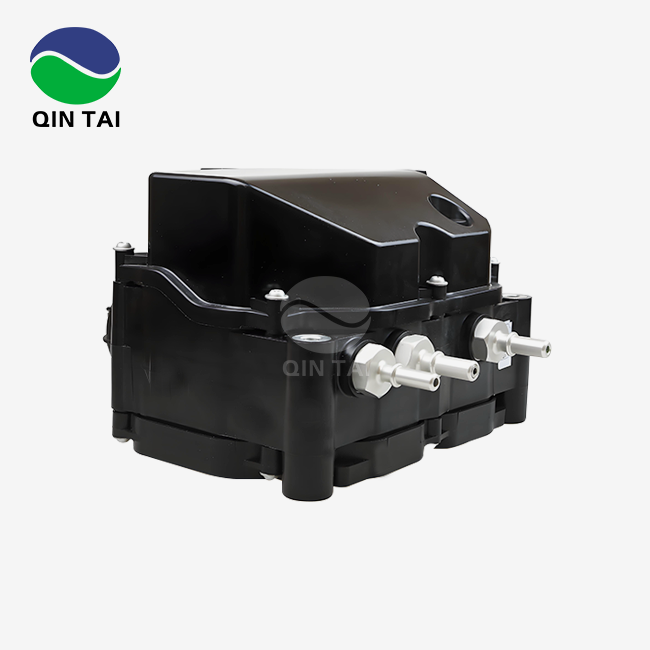
Qintai ranks as a prominent urea dosing pump producer with approximately two decades of technological advancement in diesel emission prevention technology. Our wide product range meets different application needs spanning heavy trucks, buildings, farm machinery, and generator sets. As the principal supplier to key Chinese engine manufacturers like Weichai, Yuchai, as well as and Quanchai, we appreciate the crucial performance requirements that assure legal compliance and operational dependability.
Our engineering team combines significant R&D resources to offer bespoke solutions that satisfy unique client needs. With 58 innovation copyrights and certificates including ISO 9001:2000, IATF EN 16949, and Cc compliance, Qintai produces goods that meet worldwide quality requirements. Our worldwide footprint extends over 60 countries, offering local assistance while keeping the same high standards across all markets.
Quality assurance techniques involve rigorous testing protocols that certify pump performance under harsh operating circumstances. Each product undergoes thorough examination for flow accuracy, resilience, and ecological compliance before distribution. Our dedication to constant innovation guarantees that clients obtain the most modern urea dosing pump innovation available in the worldwide marketplace. Contact our technical team at info@qt-sensor.com to discuss your specific urea dosing pump requirements and discover how Qintai can optimize your emission control systems for maximum performance and compliance.
References
1. Johnson, R.M. & Chen, L. (2023). "Advanced SCR Technologies for Heavy-Duty Diesel Applications." Journal of Emission Control Engineering, 45(3), 234-251.
2. Williams, P.K. (2022). "Urea Dosing System Optimization in Commercial Vehicle Fleets." International Conference on Automotive Emissions, Detroit, MI.
3. Schmidt, A.B. & Thompson, D.R. (2023). "Maintenance Strategies for Diesel Aftertreatment Systems." Fleet Management Technical Review, 18(2), 67-89.
4. Martinez, C.J. (2022). "Emission Control Technologies for Off-Highway Equipment." Construction Equipment Engineering Quarterly, 29(4), 112-128.
5. Anderson, K.L. & Park, S.H. (2023). "DEF Quality Management in SCR Applications." Diesel Engine Technology Symposium Proceedings, Chicago, IL.
6. Brown, T.W. (2022). "Global Emission Standards and Compliance Strategies for Diesel Engines." Environmental Technology in Transportation, 31(1), 45-62.

Our customers’ satisfaction speaks for our quality — contact us to experience the same reliable service.