- English
- French
- German
- Portuguese
- Spanish
- Russian
- Japanese
- Korean
- Arabic
- Greek
- German
- Turkish
- Italian
- Danish
- Romanian
- Indonesian
- Czech
- Afrikaans
- Swedish
- Polish
- Basque
- Catalan
- Esperanto
- Hindi
- Lao
- Albanian
- Amharic
- Armenian
- Azerbaijani
- Belarusian
- Bengali
- Bosnian
- Bulgarian
- Cebuano
- Chichewa
- Corsican
- Croatian
- Dutch
- Estonian
- Filipino
- Finnish
- Frisian
- Galician
- Georgian
- Gujarati
- Haitian
- Hausa
- Hawaiian
- Hebrew
- Hmong
- Hungarian
- Icelandic
- Igbo
- Javanese
- Kannada
- Kazakh
- Khmer
- Kurdish
- Kyrgyz
- Latin
- Latvian
- Lithuanian
- Luxembou..
- Macedonian
- Malagasy
- Malay
- Malayalam
- Maltese
- Maori
- Marathi
- Mongolian
- Burmese
- Nepali
- Norwegian
- Pashto
- Persian
- Punjabi
- Serbian
- Sesotho
- Sinhala
- Slovak
- Slovenian
- Somali
- Samoan
- Scots Gaelic
- Shona
- Sindhi
- Sundanese
- Swahili
- Tajik
- Tamil
- Telugu
- Thai
- Ukrainian
- Urdu
- Uzbek
- Vietnamese
- Welsh
- Xhosa
- Yiddish
- Yoruba
- Zulu
Urea Pressure Sensor Buying Guide: Features, Costs, and Fit for Fleets
If you manage a diesel fleet or source components for SCR aftertreatment systems, choosing the right urea pressure sensor directly affects your emission compliance, operating costs, and equipment uptime. This guide walks through what these sensors do, what specs matter most, how leading products compare, and how to buy smart—whether you're procuring for a single repair shop or a global OEM program. We've built this resource around real technical requirements so you can move from evaluation to confident purchase without second-guessing.

Understanding Urea Pressure Sensors and Their Role in SCR Systems
A urea pressure sensor, which is also known as a DEF pressure sensor or AdBlue pressure sensor, checks the urea solution's hydraulic pressure inside an SCR dosing module. It sends voltage signals in real time to the Dosing Control Unit (DCU) or the Engine Control Unit (ECU). The DCU or ECU then changes the injection amount to keep NOx reduction at the right level.
How the Sensor Works
A 5V DC source from the ECU powers the sensor, which turns fluid pressure into an analog voltage signal that is usually between 0.5 and 4.5 VDC. This ratiometric output grows linearly with pressure, which lets the ECU figure out the exact rates of doses. This feedback loop is important for most heavy-duty diesel platforms, like Euro VI, EPA Tier 4 Final, and China VI, to stay within NOx limits.
Common Failure Symptoms
If an AdBlue pressure sensor moves or stops working, the ECU can't tell when to change the dose. You might see the trouble code P204B (Urea pressure sensor Circuit Range/Performance), more NOx coming out of the tailpipe, or the car going into limp mode with less power. To protect downstream parts, the system may also turn off DEF injection completely, which sets off a DTC log and can lead to regulatory violations during inspection.
Why Accurate Pressure Monitoring Matters
It only takes a small change in pressure to cause under- or over-dosing. Not adding enough fluid can cause the NOx output to go over the legal limits, while adding too much fluid can waste fluid and clog the SCR catalyst. With a urea pressure sensor and a ±0.5% sensor accuracy rating, dosing stays within the small window needed by current emission standards. This lowers the risk of not following the rules and the amount of fluid used by a big fleet.
Key Features to Consider When Buying Urea Pressure Sensors
Not every DEF pressure indicator works the same way in the field. Before placing a large order, technical teams should make sure that the following specifications match the needs of their SCR platform.
Before you choose a seller, you should look at these key technical factors:
- Pressure measurement range: Look for coverage from sub-zero to high-demand conditions. A range of -14 psi to +130.5 psi handles everything from cold-start low-pressure states to peak dosing loads, catching system leaks, blockages, pump wear, and injector faults across the full operating window.
- Signal output and accuracy: Analog 0.5–4.5 VDC ratiometric output is the current industry standard for most diesel ECU platforms. Accuracy of ±0.5% ensures the signal remains reliable over the sensor's service life, which typically spans 15,000 to 20,000 operating hours in commercial applications.
- Chemical and thermal durability: Urea crystallization is a known failure cause. Sensors designed with smooth internal flow paths and corrosion-resistant materials resist fouling even when AdBlue quality varies. Stable calibration across temperature cycles—including cold starts—prevents signal drift that triggers false fault codes.
These factors have a direct effect on whether your SCR system stays in line with regulations and on how reliable your total cost of ownership stays. If an emission sensor fails early or gives wrong readings, it needs to be serviced and retested, which costs a lot of money.
OEM vs. Aftermarket Options
OEM-spec sensors from companies like Bosch, Delphi, and Denso have strong brand recognition and fit guaranties, but they often cost more—sometimes 30–50% more than similar aftermarket options. When a supplier is IATF 16949 certified and tests all of their units before sending them out, aftermarket options can match the technical requirements of the OEM.
Compatibility Verification
Thread sizes (M10×1 or M12×1.5 are common) and the type of output signal must match how your ECU was calibrated. If a sensor's physical fit is right but its data output isn't right, it will give you wrong information. Always check with your tech team about the connection pinout and signal range before placing an order.

Market Comparison and Decision-Making Insights
Sensor Type Positioning
In a full SCR tracking chain, urea pressure sensors work with exhaust temperature sensors and NOx monitors. The pressure sensor controls the accuracy of the dose, the temperature sensor checks the working window of the catalyst, and the NOx sensor gives closed-loop input on emissions. For a system to be compliant, all three must work properly.
Brand Performance Overview
There are a lot of Bosch and Denso sensors available through authorized distributors, and they have a good track record of fitting OEM parts. You can get good service help from Delphi and Siemens (now Vitesco Technologies) in both North America and Europe. For fleet owners who need to buy a lot of vehicles but are on a tight budget, approved Chinese OEM suppliers with IATF 16949 and ISO 9001 certifications now serve more than 60 countries and can make a lot of vehicles at once with consistent quality.
Matching Sensor Selection to Fleet Size
High-versatility sensors that cover multiple OE pressure levels are best for small groups with a mix of types of vehicles. Big groups of a single brand benefit more from OEM-equivalent units that are customized, come with set prices, and have their own support lines after the sale.
Procurement Guide: Pricing, Suppliers, and Ordering Tips
Pricing Factors
Order number, certification standards, and whether the unit is OEM-original or OEM-equivalent all affect the price of a urea pressure sensor. Prices for single units in the aftermarket range from $25 to $80, based on the platform. When fleet buying teams buy more than 500 units from certified makers, the cost per unit can drop by 20–40%. This makes supplier qualification an investment that pays off.
Supplier Evaluation Criteria
When looking for a urea pressure sensor supplier, make sure they have ISO 9001 and IATF 16949 certifications, a 100% production testing protocol, a warranty that lasts at least 12 months, documented OEM supply references, and helpful technical support. Suppliers who build their own sensor cores can keep a closer eye on quality than those who only use parts from other companies.
Lead Time and Logistics Management
As a general rule, certified suppliers need 15 to 30 days to make stock items and up to 60 days to make custom configurations. Keeping a backup stock of 10–15% more than the expected quarterly usage is a good way to protect truck operations that can't afford to be down.
Conclusion
To choose the best AdBlue pressure sensor, you need to make sure that the technical specs match your SCR platform, check the certifications of the seller, and compare the upfront price to the total cost of ownership. Sensors that are accurate to within ±0.5%, have large pressure measurement ranges, and are chemically resistant help fleets stay in line and cut down on unexpected repair costs.
The basics don't change whether you're an OEM buying manager, a service shop parts buyer, or an aftertreatment system integrator: only buy urea pressure sensors from trusted sources, make sure the parts will work together before you order them, and keep extras on hand to avoid downtime.

FAQ
How long does a urea pressure sensor typically last?
For normal business truck use, these sensors are made to last between 15,000 and 20,000 hours of operation. The actual lifespan depends on the quality of the AdBlue fluid, how often it is heated and cooled, and how much it is vibrated. As long as the system is checked regularly, signal drift can be caught early, before it causes a fault.
Can I install an aftermarket sensor into an existing SCR system?
Yes, as long as the new sensor has the same pressure range, signal output (0.5–4.5 VDC ratiometric), connection type, and thread standard as the old one. The most common assembly mistake is a signal result that doesn't match. Before replacing, you should always check the OE part number and make sure that the ECU calibration is compatible with your technical team.
How do I verify sensor compatibility with my diesel engine model?
The OE part number should be checked against the supplier's list of parts that will fit. Check the thread size, the source voltage (which is usually 5V DC), and the type of output signal. Also, make sure that the sensor works with the pressure range that your DCU needs under full dosing load conditions for Euro VI or China VI platforms.
What causes the P204B fault code?
P204B usually happens when the sensor signal drifts because it is old, the connecting pins are dirty, or urea crystallization blocks the detecting diaphragm. This risk is greatly reduced by sensors with gold-plated connections and smooth internal chambers.

Get Reliable DEF Sensor Solutions from Qintai
In more than 60 countries since 2001, Qintai has sold diesel SCR parts to OEM buyers. As a national high-tech company with ISO 9001, IATF 16949, CE, and UL certifications and the No. 1 market share in China as a core provider to Weichai Power, Yuchai Power, and Quanchai Power, we test every unit 100% before it ships and offer a 12-month guarantee.
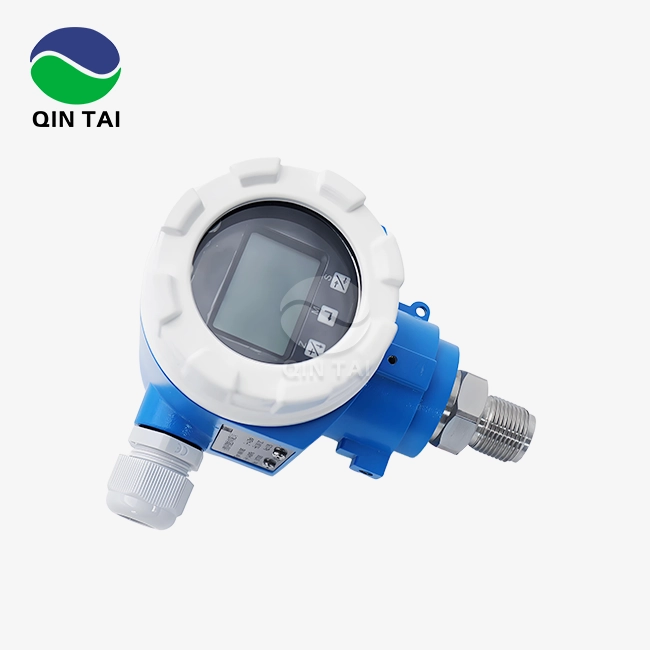
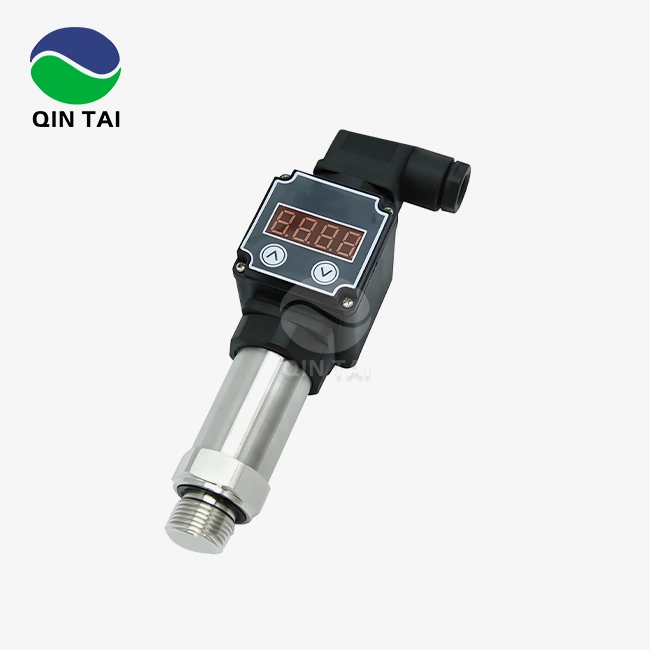
Our QS-P226 urea pressure sensor can measure from -14 psi to +130.5 psi accurately, with a range of ±0.5%, and has an output of 0.5 to 4.5 VDC. It was constructed on a self-designed sensor core to ensure stable batch quality. You can reach our team at info@qt-sensor.com or visit qt-sensor.com to get a price or technical advice if you're looking for a urea pressure sensor maker for OEM programs, aftermarket distribution, or custom SCR integrations.
References
1. SAE International Journal of Engines — "DEF Dosing System Performance Under Euro VI Conditions," SAE International, 2021.
2. Diesel Progress North American Edition — "SCR System Reliability and Sensor Diagnostics in Heavy-Duty Trucking," Diesel Progress, 2022.
3. Environmental Science & Technology — "NOx Reduction Efficiency in Selective Catalytic Reduction Systems," American Chemical Society, 2020.
4. Journal of Automobile Engineering — "Failure Mode Analysis of Urea Dosing Components in Commercial Vehicles," IMechE, 2021.
5. Heavy Duty Trucking Magazine — "Fleet Emission Compliance: Managing SCR System Maintenance Costs," HDT Media Group, 2023.
6. Sensors and Actuators A: Physical — "Pressure Sensing Technologies for Automotive Exhaust Aftertreatment Applications," Elsevier, 2022.

Our customers’ satisfaction speaks for our quality — contact us to experience the same reliable service.