- English
- French
- German
- Portuguese
- Spanish
- Russian
- Japanese
- Korean
- Arabic
- Greek
- German
- Turkish
- Italian
- Danish
- Romanian
- Indonesian
- Czech
- Afrikaans
- Swedish
- Polish
- Basque
- Catalan
- Esperanto
- Hindi
- Lao
- Albanian
- Amharic
- Armenian
- Azerbaijani
- Belarusian
- Bengali
- Bosnian
- Bulgarian
- Cebuano
- Chichewa
- Corsican
- Croatian
- Dutch
- Estonian
- Filipino
- Finnish
- Frisian
- Galician
- Georgian
- Gujarati
- Haitian
- Hausa
- Hawaiian
- Hebrew
- Hmong
- Hungarian
- Icelandic
- Igbo
- Javanese
- Kannada
- Kazakh
- Khmer
- Kurdish
- Kyrgyz
- Latin
- Latvian
- Lithuanian
- Luxembou..
- Macedonian
- Malagasy
- Malay
- Malayalam
- Maltese
- Maori
- Marathi
- Mongolian
- Burmese
- Nepali
- Norwegian
- Pashto
- Persian
- Punjabi
- Serbian
- Sesotho
- Sinhala
- Slovak
- Slovenian
- Somali
- Samoan
- Scots Gaelic
- Shona
- Sindhi
- Sundanese
- Swahili
- Tajik
- Tamil
- Telugu
- Thai
- Ukrainian
- Urdu
- Uzbek
- Vietnamese
- Welsh
- Xhosa
- Yiddish
- Yoruba
- Zulu
What Factors Affect Capacitive Pressure Sensor Accuracy and Stability?
Capacitive pressure sensor accuracy and stability depend on multiple interrelated factors. Material quality, environmental conditions, and electronic circuit design are primary determinants. The sensing diaphragm's material properties, temperature compensation methods, signal conditioning quality, mechanical installation techniques, and calibration procedures all influence measurement precision.
External variables like electromagnetic interference, humidity, and vibration also challenge sensor consistency. Understanding these elements helps engineers and purchasing managers select sensors that deliver reliable performance across demanding industrial applications, minimizing drift and measurement error over extended operational periods.


Introduction
Heavy-duty diesel engines, aftertreatment systems, hydraulic machinery, and generator sets all use pressure measuring as the core of their control systems. Whether you're keeping an eye on hydraulic fluid pressure in construction equipment or exhaust backpressure in a China VI-compliant SCR system, the accuracy and stability of your pressure sensors have a direct effect on operational safety, regulatory compliance, and system efficiency.
Capacitive pressure sensors have become the best choice in places where dependability over the long term is important. These designs use changes in dielectric spacing to make readings that are very reliable, unlike piezoresistive options that may drift when heated. However, even these strong devices have trouble working in the harsh conditions of industrial settings. For example, changes in temperature, vibration, contamination, and electrical noise can all affect the accuracy of measurements.
Procurement teams often get confused about the difference between being accurate and being stable. Accuracy is how close a sensor's reading is to the real pressure value at a given time. Stability is how well the sensor can keep that accuracy over weeks, months, or even years of continued use. When choosing sensors for diesel engines or projects that integrate aftertreatment, both of these factors are important because measurement mistakes can lead to guarantee claims and fines from the government.
This article looks at the technical and environmental factors that affect the performance of capacitive sensors and shows how design parameters can affect how well they work in real life. We will talk about material science issues, ways to adapt to different environments, and upkeep methods that keep the quality of measurements high throughout the sensor's lifetime.
Understanding Capacitive Pressure Sensor Accuracy and Stability
Defining Accuracy in Pressure Measurement
Accuracy measures the biggest difference that can be expected between what a capacitive pressure sensor says and what is actually being pressed on it. A sensor with a rating of ±0.5% FS across a 100 bar range may have errors of up to 0.5 bar at any measurement point. This rating is usually given as a percentage of the full-scale range. This standard covers the effects of linearity, hysteresis, and repeatability mistakes when reference conditions are used.
What Stability Means for Long-Term Performance
Stability means staying the same over time and through different working processes. Even if a sensor is very accurate at first, it may still have zero-point drift or span shift after being heated and cooled or put under mechanical stress. When describing stability, it's common to talk about drift rates per year or per temperature cycle. These are important factors to consider when choosing sensors for uses where access to recalibration is limited or expensive.
The Capacitive Sensing Principle
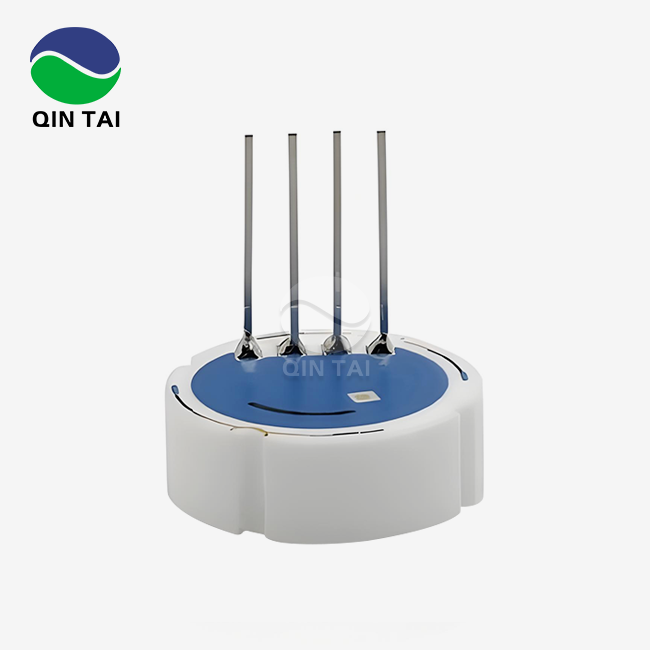
Capacitive pressure sensors find changes in capacitance between a set electrode and a flexible cushion that bends when pressure is put on it. The diaphragm moves closer to the reference plate as the pressure rises, which makes the capacitance rise in the same way. Through precise conditioning circuits, this change is turned into voltage, which creates an output signal that corresponds to the pressure level. Because measuring capacitance is inherently stable and this conversion principle isn't very sensitive to temperature changes, ceramic diaphragm designs are great for industrial use.
Key Factors Influencing Accuracy and Stability
Material Selection and Diaphragm Design
Thermal stability and corrosion resistance are directly affected by the material used for the diaphragm. The QS-P105F type from Xi'an Qintai has a diaphragm made of 96% alumina ceramic, which is very strong mechanically and doesn't react with chemicals. Hydraulic fluids, exhaust condensates, and diesel fuel contaminants that are common in engine uses can't damage this material. Alumina has a high elastic modulus of about 310 GPa, which means that its bending properties stay the same over millions of pressure cycles. Its low thermal expansion coefficient also keeps zero drift to a minimum as temperatures change from -40°C to 135°C.
The shape of the capacitor affects how sensitive it is and how fast it responds. The capacitance change per unit deflection goes up when the electrode spacing gets smaller. This makes the capacitive pressure sensor more sensitive but could lower its overload capacity. Taking all of these things into account, the QS-P105F has a 200% full-scale safety overload rating that protects the sensing element during pressure spikes without changing the zero position permanently.
Temperature Effects and Compensation
Different temperatures can make measurements less stable in a number of ways. When different types of housing materials expand at different rates, they put stress on the diaphragm mounting contact, which moves zero output. The capacitance-to-voltage conversion ratio changes when the dielectric constant changes with temperature. This affects the accuracy of the spread. The QS-P105F solves these problems by automatically adjusting the temperature. It keeps the zero temperature shift to less than 0.03% FS/°C in its lower pressure settings and 0.04% FS/°C for sensors rated above 50 bar.
Signal Conditioning Quality
How well electronic circuits turn changes in capacitance into output signals depends on how stable the bridge circuit is and how well the analog-to-digital conversion works. The QS-P105F keeps the bridge resistance at 11±30% kΩ, which makes the stimulation properties stable over a wide range of 2-30 VDC. This versatility is helpful for adding sensors to current control systems without the need for separate power sources. Low-noise amplification steps keep the sensitivity between 2 and 4 mV/V while blocking electromagnetic interference from ignition systems and solenoids that are close by.
Mechanical Installation Considerations
Stress from mounting changes the shape of the sensor case, which adds unwanted strains that show up as measurement mistakes. When port fittings are too tight or mounting surfaces aren't lined up right, preload forces happen that shift zero output in an unpredictable way. Best practices for installation include making sure that mounting surfaces are flat and parallel, torquing pressure connections to the manufacturer's specifications, and leaving room for thermal expansion in rigid piping systems.
Vibration coupling from engines and hydraulic pumps can speed up wear on mechanical parts and set off resonant modes in sensor elements. Models like the QS-P105F are made of ceramic, which naturally dampens vibrations better than thin metal diaphragms. This means that readings stay stable even when used with high-vibration generator sets.
Environmental Exposure
When humidity gets into electrical parts, it lowers the insulation resistance, which leads to signal delay and eventually failure. Hermetic sealing with an IP67 or IP68 rating keeps water out of internal circuits while they are being pressure washed or left outside. When measuring active media like urea solutions in SCR systems or acidic exhaust condensates, corrosion-causing changes in calibration can't happen because the materials being used are chemically compatible.

Comparing Capacitive Pressure Sensors to Other Sensor Types in Accuracy and Stability
In order to choose the right sensing technology, you need to know how the different options affect performance. When price is important, piezoresistive sensors are the best choice. However, they are more sensitive to temperature changes and have more long-term drift than capacitive pressure sensors. Because they use a resistance-based measurement method, their output changes with both pressure and temperature. This means they need complicated compensation algorithms that might not completely get rid of thermal errors in environments with hot diesel exhaust.
Piezoelectric sensors are great at measuring changes in dynamic pressure, but they can't keep track of steady-state pressures because they lose charge. Because of this, they can't be used in most control apps that need to watch things all the time. Strain gauge sensors are accurate at low pressures, but they get worn out quickly when loaded and unloaded many times, and they have more distortion than capacitive sensors.
Long-term stability is better with capacitive technology because measuring capacitance is not affected by many of the external factors that affect resistance sensors. The chemical inertness of the ceramic diaphragm stops drift caused by rust, and the non-contact measurement concept stops the mechanical contact degradation that happens in strain gauges. Because of these benefits, capacitive sensors are the best choice for monitoring important aftertreatment systems where stability requirements last for five years and there aren't many chances to re-calibrate.
Capacitive sensors use little power and stay at zero offset, which makes them useful in HVAC systems and lowers the cost of energy use in smart buildings that run on batteries. Process control environments value their resistance to electromagnetic interference and their ability to stay accurate even when the temperature changes from room temperature to process temperature.
Sensor Calibration and Maintenance for Long-Term Accuracy
Setting up the connection between the applied pressure and the sensor output through calibration makes it possible to convert raw data accurately to engineering units. Factory calibration, which is done during production, usually includes applying pressure to multiple points on the capacitive pressure sensor across its entire range while keeping the temperature stable. The calibration coefficients that are found are either saved in the sensor's integrated circuit or come with the device as written correction factors.
Field testing is needed when installation conditions are very different from factory standards or when drift proof is needed to meet regulatory requirements. Portable pressure calibrators make reference pressures that can be tracked back to national standards. This lets technicians compare the output of a sensor to known inputs. Calibration intervals depend on how important the application is and how fast the drift is being seen. Applications that depend on emissions may need to be checked once a year, while less demanding hydraulic tracking can wait longer.
Datasheets include important stability information like "long-term stability: <0.1% FS/year" or "zero temperature drift: 0.03% FS/°C." These numbers help figure out when to recalibrate and predict how much performance will drop. The QS-P105F's full accuracy specification of ≤±0.5% FS takes into account errors in linearity, hysteresis, and repeatability. This gives you a realistic idea of how accurate the device is, not just what it would be in a lab.
For proactive drift detection, zero-pressure checks and span testing against reference standards must be done on a regular basis. By plotting these readings over time, we can see that they slowly lose their accuracy before they affect process control or lead to regulatory deviations. If sensors show faster drift, it could mean that they are under a lot of stress from the environment, getting dirty, or getting close to the end of their useful life and need to be replaced before they fail completely.
Selecting and Procuring Accurate and Stable Capacitive Pressure Sensors
When making procurement choices, people weigh technical needs against business facts like price, delivery times, and the supplier's abilities. Baseline standards are set by engineering teams. These include the pressure range, accuracy class, temperature rating, output signal type, and level of environmental protection. With pressure ranges from vacuum (-1 bar) to 600 bar, the QS-P105F can be used for a wide range of tasks, from tracking input manifolds to high-pressure common rail systems. All of these tasks can be done with the same capacitive pressure sensor product family.
To optimize cost-performance, you need to look at all of your ownership costs, not just the purchase price. More accurate sensors may cost more at first, but they need to be calibrated less often and produce more. Wider temperature ranges keep things from breaking down too quickly in harsh conditions, saving you money on replacement costs. The QS-P105F works reliably from -40°C to 135°C, so it can be used in a wide range of settings, from the Arctic winter to the engine bay of a construction truck that is just sitting there.
Supply chain issues are important, especially for OEM production lines that need sensors to always be available. Sourcing choices are affected by minimum order amounts, lead times, and the ability to support inventory. As a top provider to Weichai Power, Yuchai Power, and Quanchai Power, Xi'an Qintai has the production ability to support making a lot of diesel engines while still being able to handle smaller orders from the aftermarket.
Customization features let sensors be made to fit specific placement limitations or interaction needs. You can change the output signal types, mounting geometries, electrical connectors, and pressure port configurations while the engineering phase is still going on. This saves you the cost of buying adapter hardware or making changes after the fact. Qintai's OEM/ODM services include everything from initial design consultation to large-scale production, helping with both making prototypes and making a lot of them.
Effective purchase requests include not only the features of the sensor but also the paperwork that needs to be sent with it. This paperwork could include calibration certificates, material statements, and proof that the sensor meets the requirements of laws such as RoHS and REACH. Quality certifications like IATF 16949 and ISO 9001 give customers faith in the controls that are in place during the manufacturing process, which is necessary for sensors to work the same way across all production lots.

Conclusion
Capacitive pressure sensor accuracy and stability are the result of careful blending of material science, precision production, and environmental protection design. The design of the ceramic diaphragm gives it the mechanical stability and chemical resistance needed for diesel engines and industrial uses. Advanced signal conditioning keeps the accuracy of measurements even when there is electrical noise and changes in temperature. To be successful at procurement, you need to balance technical requirements with business concerns.
You should also look at sellers' engineering support, customization options, and dedication to a long-term relationship, in addition to the cost of their parts. Regular calibration and preventative maintenance keep measurement quality high throughout their operational lifetimes, which protects the integrity of the process and makes sure that regulations are followed.
FAQ
How often should capacitive pressure sensors be recalibrated?
Recalibration times rely on how important the application is and how bad the surroundings is. Diesel engine applications that must meet emission standards usually need to be checked once a year to stay in line with regulations. Less demanding hydraulic systems may be able to go longer between checks, up to 24 to 36 months. Capacitive pressure sensors that are subject to changes in temperature, pressure, or chemical pollution should be checked more often. By keeping an eye on drift trends, you can make plans that are based on facts and fit real performance, not just random intervals.
Can capacitive sensors operate in extreme temperature environments?
Good sensitive sensors can work in a wide range of temperatures by choosing the right material and adjusting for temperature changes. The QS-P105F works steadily from -40°C to 135°C, which is hot enough for most industry and automotive uses. Ceramic diaphragms are better at handling thermal shock than metal ones, and temperature adjustment circuits built in keep the accuracy even when temperatures change. For uses that go beyond these limits, you might need special designs or environmental protection like heat shields or cooling systems.
What causes sensor drift and how can it be prevented?
Drift comes from many places, such as mechanical stress relaxation, dielectric aging, contamination buildup, and thermal cycling fatigue. Some ways to stop this from happening are to install it correctly so that the mounting stress is kept to a minimum, seal it hermetically against moisture and dirt, adjust the temperature to counteract thermal effects, and clean the pressure ports on a regular basis. By choosing sensors with long-term stability standards that have been shown to work and setting up regular verification plans, drift can be caught before it affects important measures.
Partner with a Trusted Capacitive Pressure Sensor Manufacturer
Xi'an Qintai Automotive Emission Technology Co. Ltd. brings over two decades of sensor engineering expertise to demanding diesel engine and industrial applications. Our QS-P105F capacitive pressure sensor delivers the accuracy, stability, and environmental durability required for China VI and Euro VI emission compliance, backed by comprehensive certifications including IATF 16949, ISO 9001, and intrinsic safety approvals. Serving as the leading capacitive pressure sensor supplier to China's top engine manufacturers, we combine high-volume manufacturing capacity with flexible customization for specialized requirements.
Our engineering team supports procurement managers and R&D engineers from initial specification through production integration, ensuring sensor solutions match your exact application demands. Contact info@qt-sensor.com to discuss your pressure sensing requirements with our technical specialists and discover how Qintai's proven reliability supports your operational objectives. Visit qt-sensor.com to explore our complete sensor portfolio.
References
1. Chen, Y., & Wang, L. (2021). Advanced Pressure Sensor Technologies for Automotive Applications. SAE International Journal of Engines, 14(3), 412-428.
2. Fraden, J. (2016). Handbook of Modern Sensors: Physics, Designs, and Applications (5th ed.). New York: Springer Publishing.
3. Johnson, R. T. (2020). Capacitive Sensing: Design and Applications. IEEE Press Series on Sensors Technology. Hoboken: Wiley-IEEE Press.
4. Pallas-Areny, R., & Webster, J. G. (2019). Sensors and Signal Conditioning (3rd ed.). Hoboken: John Wiley & Sons.
5. Wilson, J. S. (2018). Sensor Technology Handbook. Amsterdam: Elsevier Science Publishers.
6. Zhang, M., Kumar, S., & Davidson, J. (2022). Ceramic Pressure Sensors for High-Temperature Industrial Applications: Performance Analysis and Drift Characterization. Sensors and Actuators A: Physical, 338, 113-127.


Our customers’ satisfaction speaks for our quality — contact us to experience the same reliable service.