- English
- French
- German
- Portuguese
- Spanish
- Russian
- Japanese
- Korean
- Arabic
- Greek
- German
- Turkish
- Italian
- Danish
- Romanian
- Indonesian
- Czech
- Afrikaans
- Swedish
- Polish
- Basque
- Catalan
- Esperanto
- Hindi
- Lao
- Albanian
- Amharic
- Armenian
- Azerbaijani
- Belarusian
- Bengali
- Bosnian
- Bulgarian
- Cebuano
- Chichewa
- Corsican
- Croatian
- Dutch
- Estonian
- Filipino
- Finnish
- Frisian
- Galician
- Georgian
- Gujarati
- Haitian
- Hausa
- Hawaiian
- Hebrew
- Hmong
- Hungarian
- Icelandic
- Igbo
- Javanese
- Kannada
- Kazakh
- Khmer
- Kurdish
- Kyrgyz
- Latin
- Latvian
- Lithuanian
- Luxembou..
- Macedonian
- Malagasy
- Malay
- Malayalam
- Maltese
- Maori
- Marathi
- Mongolian
- Burmese
- Nepali
- Norwegian
- Pashto
- Persian
- Punjabi
- Serbian
- Sesotho
- Sinhala
- Slovak
- Slovenian
- Somali
- Samoan
- Scots Gaelic
- Shona
- Sindhi
- Sundanese
- Swahili
- Tajik
- Tamil
- Telugu
- Thai
- Ukrainian
- Urdu
- Uzbek
- Vietnamese
- Welsh
- Xhosa
- Yiddish
- Yoruba
- Zulu
What Is the Difference Between NOx Sensors and Oxygen Sensors
The essential difference between nitrogen oxides sensor technology and oxygen sensors lies in their measurement targets and applications. NOx sensors detect nitrogen oxide compounds (NO and NO₂) in exhaust streams, primarily supporting emission compliance through selective catalytic reduction (SCR) systems. Oxygen sensors measure residual oxygen content to optimize combustion efficiency by adjusting the air-fuel ratio. While oxygen sensors focus on engine performance, NOx sensors address regulatory requirements under EPA and Euro VI standards, making them indispensable in modern diesel aftertreatment systems.
Understanding NOx Sensors and Oxygen Sensors
Industrial leaders need to know more about how sensors work before they decide to buy them. Both types of sensors are used in diesel engines, but they work in very different ways.
Defining NOx Sensor Technology
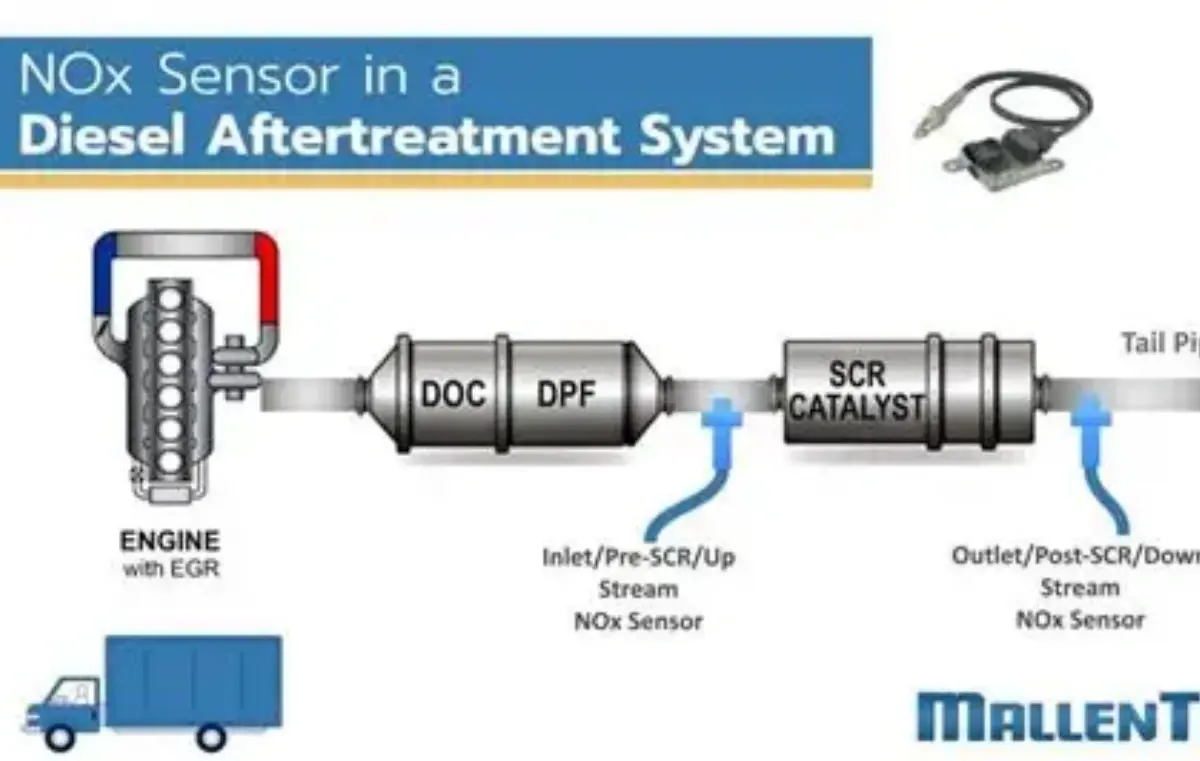
Diesel nitrogen oxides sensors use heated electrochemical sensing. They usually have a zirconia ceramic cell that is heated to 700–800 °C by a built-in heater element. The sensor element checks the levels of NO and NO₂ by comparing the exhaust gas makeup to a reference cell inside measurement chambers. This information is processed by a signal filtering circuit, and a CAN bus interface lets an integrated control module talk to the engine control unit (ECU). The connector and wiring harness finish off the assembly and make sure that data transmission works well even in rough exhaust conditions. These sensors give readings of NOx levels in real time, in parts per million (ppm) or mg/m³, which allows closed-loop SCR control.
How Oxygen Sensors Operate
Oxygen sensors, which are also known as lambda sensors, use an easier zirconia-based voltage generation concept to measure the amount of unburned oxygen in exhaust gases. When oxygen levels change from stoichiometric ratios, narrowband oxygen sensors change the voltage, but wideband sensors give a straight output over a wider range. These devices work at lower temperatures (300–600 °C) and are mostly used in gasoline engines, but they can also be used to monitor combustion in diesel engines. Their output helps the ECU keep the time and amount of fuel injection at the best levels. This has a direct effect on fuel economy and basic emissions control.
Core Differences Between NOx Sensors and Oxygen Sensors
When purchasing managers look at different sensor options, they need to know four main differences that affect how the systems work together and how much it costs to own them all.
Measurement Target and Sensing Technology
In an SCR system, the upstream sensor checks how much NOx gets into the catalyst, and the downstream sensor checks how well the NOx is being reduced. Single-point oxygen sensing is very different from this design with two sensors. Nitrogen oxides sensors figure out how much urea (AdBlue) to pump, which lets the ECU turn NOx into harmless nitrogen and water vapor. When readings further downstream show that there isn't enough reduction, the system changes the dosing rates or sends out fault codes. Oxygen sensors can't do this because they can only help optimize the air-fuel ratio and can't find nitrogen chemicals.
Application Context and Regulatory Impact
New EPA rules and Euro VI guidelines say that heavy-duty diesel engines must cut NOx to less than 0.2 g/kWh. Installations of nitrogen oxides sensors directly meet these needs, while oxygen sensors only help indirectly by improving burning. Fleet managers will be fined a lot if they don't follow the rules, so getting reliable nitrogen oxides sensors is a top concern. Oxygen sensors are still useful for checking on the health of a combustion process, but they can't be used instead of nitrogen oxides sensors to meet legal requirements. To stay within emission limits, industrial generator sets, farm equipment, and building gear all need NOx tracking to work properly.
Sensor Lifespan and Maintenance Requirements
It is normal for nitrogen oxides sensors to last between 160,000 and 200,000 kilometers before they stop working. Failure rates rise in places with bad fuel or a lot of dirt from exhaust. Oxygen sensors usually need to be replaced every 100,000 kilometers. Maintenance times are also different. Nitrogen oxides sensors need to be checked for heater current and temperature stability on a regular basis, while oxygen sensors need to be checked for pollution from oil leaks or water leaks. There are also different requirements for calibration. Most nitrogen oxides sensors use digital transmission (CAN bus) and can self-diagnose, which means they don't need to be calibrated by hand as much as analog oxygen sensor outputs do.
Troubleshooting and Diagnostic Complexity
When nitrogen oxides sensors fail, they cause the engine to use too much AdBlue, the SCR to work less efficiently, and malfunction signs to light up. Diagnostic trouble codes (DTCs) show that the heater circuit isn't working right, the signal doesn't make sense, or the sensor moves. If an oxygen sensor fails, the car will run rough, use a lot of gas, or fail emissions tests. Because of how the SCR system works, diagnosing NOx systems is more difficult than diagnosing oxygen sensors. Technicians have to look at the dosing module's function, the condition of the catalyst, and the accuracy of the sensors all at the same time. This level of complexity means that maintenance needs more technical know-how, which affects the needs for aftermarket service.

Why NOx Sensors Are Critical in Modern Emission Control Systems
As regulations continue to get stricter around the world, diesel engine makers and fleet managers must include nitrogen oxides sensors.
Regulatory Compliance and Environmental Impact
All diesel engines, from Class 8 trucks to off-road vehicles, must follow strict NOx limits set by the US Environmental Protection Agency. The Euro VI standards are the same as these requirements for foreign markets, and they use testing processes that are similar to how cars are driven in real life. When nitrogen oxides sensors work right, they keep the urea dose just right. If the dose is too low, it can damage the catalyst and cost a lot of money to fix.
If the dose is too high, it can cause crystals to form that block the flow of exhaust. The sensors also send information about the temperature and the state of diagnostics. This helps with onboard diagnostics (OBD), which officials check during exams. Besides following the rules, lowering NOx emissions also helps the environment by preventing ground-level ozone formation and acid rain.
Operational Efficiency and ROI Benefits
With accurate NOx input, closed-loop SCR control can be used to boost fuel economy by 3–5% by adjusting EGR rates and injection timing. For fleet managers who are in charge of hundreds of cars, these benefits mean a clear return on investment. The sensors make sure that the SCR system works well by stopping ammonia slip, which is when too much unreacted urea hurts the environment and breaks the rules. Long-term stable operation is good for generator set workers in mines and power plants because properly working sensors keep aftertreatment parts from overheating. When technology works all the time in harsh settings, it needs to be very reliable at an industrial level.
Selecting the Right Sensor: NOx Sensors vs Oxygen Sensors for Your Application
Teams in charge of buying things need organized review criteria to help them balance performance needs with budget limits.
Key Selection Criteria for Industrial Applications
Specifications for accuracy vary a lot between types of sensors. Good nitrogen oxides sensors stay within ±10% of the true reading from 0 to 1,500 ppm, and good oxygen sensors get as accurate as ±0.01 lambda. The environment affects the choice of sensor. For example, nitrogen oxides sensors need to be able to handle exhaust temperatures of up to 850 °C and sulfur contamination from low-grade gasoline.
For construction and farming equipment, where sensors are constantly under mechanical stress, vibration resistance is important. Communication protocol compatibility affects how well a system works together. For example, CAN bus interfaces make connecting ECUs easier, but they need vehicle architectures that are compatible. Aftertreatment system designers can change the sensing ranges and customize the interface settings to get the best sensor behavior for different catalyst formulations.
OEM vs Aftermarket Considerations
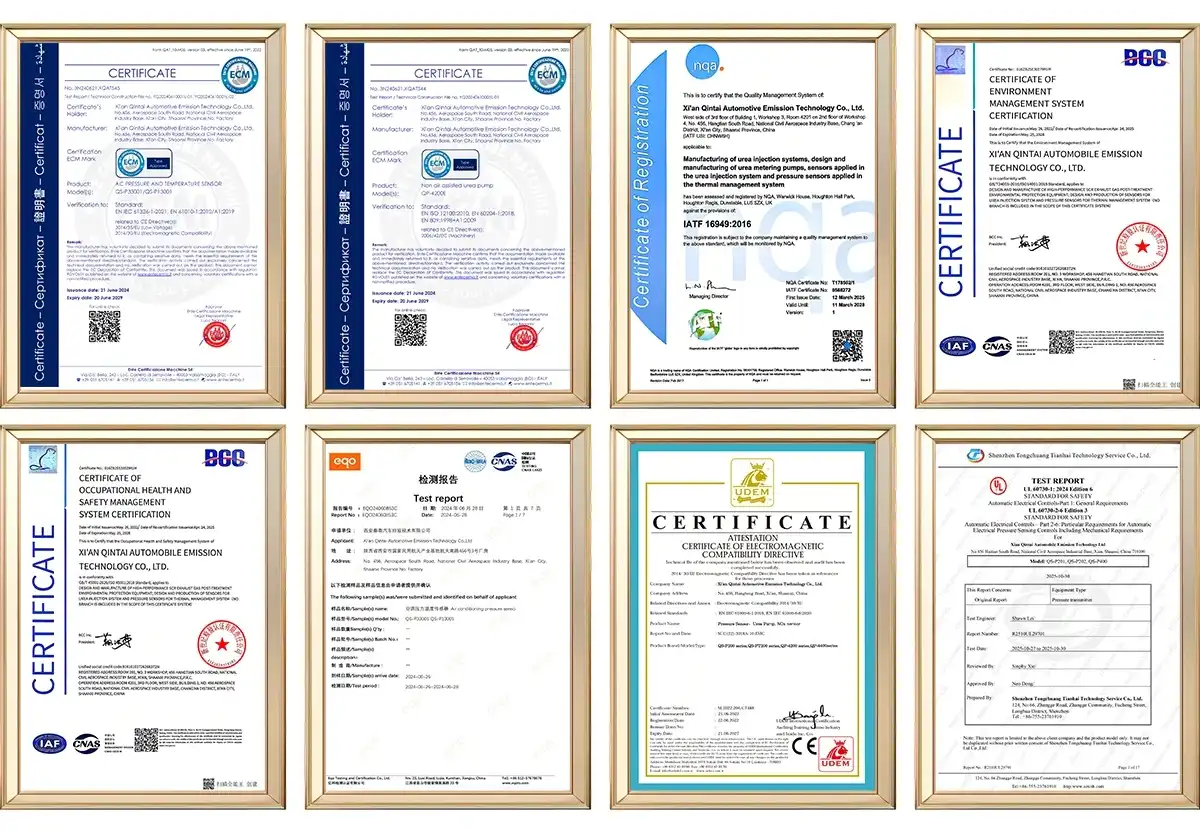
Original equipment maker sensors are certified to work with other devices and come with an insurance, but they cost a lot. Aftermarket options cut the cost of acquisition by 30–50% while keeping performance levels good enough for many uses. Purchasing managers need to carefully look at certification requirements. Sensors that don't have ISO 9001 or IATF 16949 certification add risk to the supply chain. When getting sensors for OEM assembly lines that make thousands of engines every month, mass production capacity is very important. There are a lot of different lead times. For common uses, established suppliers keep stock, but for custom sensor specifications, production cycles may last 8–12 weeks.
Total Cost of Ownership Analysis
In addition to unit pricing, procurement professionals should figure out the total costs of ownership, which should include how often the equipment needs to be calibrated, replaced, and what kind of technical support is needed. When compared to basic types that need external test tools, sensors with built-in diagnostics cut down on upkeep work by 20–30%. The terms of the warranty have a big effect on the long-term costs.
Full coverage that protects against early failures is useful because replacing sensors costs a lot of work. Having bulk purchasing deals with companies like Qintai lets you save money by buying more, and it also makes sure that the quality of each production batch is the same. Having relationships with suppliers that offer customization help and quick after-sales service lowers the risk of downtime when fixing complicated emission system problems.
Troubleshooting and Maintenance Best Practices for NOx and Oxygen Sensors
Proactive repair plans make sensors last longer and stop them from breaking down without warning, which can stop activities.
Common Failure Symptoms and Diagnostics
When nitrogen oxides sensors fail, they do so in certain ways that technicians can figure out using systematic diagnostics. If the heater element fails, the sensor can't reach its working temperature, which causes fault codes to appear right away. Signal reliability mistakes happen when sensors upstream and downstream give different readings, which could mean that the catalyst is breaking down or the sensors are getting dirty.
Oxygen sensors can tell when they are contaminated by having slow reaction times or voltage signal bias. Diagnostic scan tools show sensor data sources that can be compared to factors that are known to be good. Technicians with a lot of experience keep an eye on the internal oxygen balance readings in nitrogen oxides sensors to find early signs of shift before the sensors fail completely.
Preventive Maintenance Protocols
Engines should be serviced at regular times, which are usually every 50,000 kilometers or once a year for fixed equipment. Visual inspection can find rust in the connectors, damage to the wires, or actual damage to the sensors from road debris. Cleaning the exhaust ports around where the sensors are mounted stops soot from building up and changing the readings. Verification of the calibration using reference gases keeps the accuracy high, but most current devices can do this themselves, so you don't have to do it as often.
Monitoring the environment's condition is especially important for machines that work in harsh environments like high altitudes, very hot or cold temperatures, or corrosive air. Recording changes in sensor performance over time helps figure out when replacements are needed before major problems happen. This way, maintenance can be planned ahead of time and fixes can be done when they're needed.
Conclusion
To tell the difference between nitrogen oxides sensors and oxygen sensors, you need to know how they work differently in terms of controlling emissions and managing engines. The technology behind nitrogen oxides sensors helps with legal compliance by measuring NOx accurately and supporting SCR systems. On the other hand, oxygen sensors improve combustion by controlling the amount of air to fuel. When making purchases, people have to think about things like certification requirements, technical specifications, costs, and the supplier's abilities.
Both types of sensors are made by companies like Qintai, which has IATF 16949 certification and many OEM partnerships. These sensors are used in heavy trucks and industrial generator sets. Technical departments choose which sensors to use based on requirements for accuracy and durability, while purchasing departments work out prices and terms of delivery. Total cost of ownership and operational reliability are ultimately determined by good maintenance practices and relationships with suppliers.
FAQ
Can NOx Sensors Replace Oxygen Sensors in Emission Systems?
No—these sensors serve complementary but distinct functions that cannot substitute for one another. Oxygen sensors monitor combustion stoichiometry for fuel efficiency, while nitrogen oxides sensor technology measures post-combustion NOx for emission compliance. Modern diesel engines require both sensor types: oxygen sensors optimize EGR and injection parameters, while NOx sensors control SCR urea dosing. Attempting to use only one sensor type creates regulatory non-compliance or poor engine performance.
What Calibration Intervals Do NOx Sensors Require in Industrial Applications?
Most industrial-grade NOx sensors feature self-calibrating electrochemical cells that maintain accuracy without manual intervention for 160,000 kilometers or 3,000 operating hours. Harsh environments—such as mining equipment exposed to extreme dust or generator sets burning low-sulfur fuel—may require verification every 1,500 hours using calibration gas standards. Stationary applications benefit from annual calibration checks during scheduled maintenance. Sensors transmitting diagnostic status codes simplify calibration verification by alerting operators to drift conditions before accuracy degrades beyond acceptable limits.
Partner with Qintai for Certified Nitrogen Oxides Sensor Solutions
Xi'an Qintai Automotive Emission Technology Co. Ltd. has manufactured diesel engine aftertreatment components since 2001, earning recognition as China's leading OEM supplier to Weichai Power, Yuchai Power, and Quanchai Power. Our nitrogen oxides sensor product line meets IATF 16949, ISO 9001, and EPA certification standards, with 58 invention patents supporting continuous innovation. We maintain mass production capacity exceeding 500,000 units annually while offering customizable interfaces and parameters for aftertreatment system integrators.
Technical support teams provide responsive assistance throughout product lifecycles, backed by comprehensive warranty coverage. Whether you require OEM sensor integration for new engine platforms or aftermarket replacements for existing fleets, our engineering expertise ensures compatibility with SCR and DPF systems across heavy trucks, construction machinery, agricultural equipment, and generator sets.
Contact our procurement specialists at info@qt-sensor.com to discuss bulk pricing for nitrogen oxides sensor manufacturers seeking reliable supply chain partners. Our global distribution network spans 60 countries, delivering competitive lead times and localized technical support that reduce your total cost of ownership.
References
1. Majewski, W. A., & Khair, M. K. (2006). Diesel Emissions and Their Control. SAE International.
2. Johnson, T. V. (2015). Review of Vehicular Emissions Trends. SAE International Journal of Engines, 8(3), 1152-1167.
3. Guan, B., Zhan, R., Lin, H., & Huang, Z. (2014). Review of the State-of-the-Art of Exhaust Particulate Filter Technology in Internal Combustion Engines. Journal of Environmental Management, 154, 225-258.
4. Ballinger, T. H., Manning, W. A., & Walker, A. P. (2009). Aspects of SCR Catalyst Design for Diesel NOx Control Applications. Topics in Catalysis, 52(13-20), 1957-1962.
5. Chatterjee, D., Burkhardt, T., Weibel, M., Tronconi, E., & Nova, I. (2007). Numerical Simulation of NO/NO₂/NH₃ Reactions on SCR-Catalytic Converters. SAE Technical Paper Series, 2007-01-1136.
6. Environmental Protection Agency. (2020). Control of Air Pollution from New Motor Vehicles: Heavy-Duty Engine and Vehicle Standards. Federal Register, 85(12), 2021-2274.

Our customers’ satisfaction speaks for our quality — contact us to experience the same reliable service.