- English
- French
- German
- Portuguese
- Spanish
- Russian
- Japanese
- Korean
- Arabic
- Greek
- German
- Turkish
- Italian
- Danish
- Romanian
- Indonesian
- Czech
- Afrikaans
- Swedish
- Polish
- Basque
- Catalan
- Esperanto
- Hindi
- Lao
- Albanian
- Amharic
- Armenian
- Azerbaijani
- Belarusian
- Bengali
- Bosnian
- Bulgarian
- Cebuano
- Chichewa
- Corsican
- Croatian
- Dutch
- Estonian
- Filipino
- Finnish
- Frisian
- Galician
- Georgian
- Gujarati
- Haitian
- Hausa
- Hawaiian
- Hebrew
- Hmong
- Hungarian
- Icelandic
- Igbo
- Javanese
- Kannada
- Kazakh
- Khmer
- Kurdish
- Kyrgyz
- Latin
- Latvian
- Lithuanian
- Luxembou..
- Macedonian
- Malagasy
- Malay
- Malayalam
- Maltese
- Maori
- Marathi
- Mongolian
- Burmese
- Nepali
- Norwegian
- Pashto
- Persian
- Punjabi
- Serbian
- Sesotho
- Sinhala
- Slovak
- Slovenian
- Somali
- Samoan
- Scots Gaelic
- Shona
- Sindhi
- Sundanese
- Swahili
- Tajik
- Tamil
- Telugu
- Thai
- Ukrainian
- Urdu
- Uzbek
- Vietnamese
- Welsh
- Xhosa
- Yiddish
- Yoruba
- Zulu
What Is a Pressure and Temperature Transmitter in Process Control?
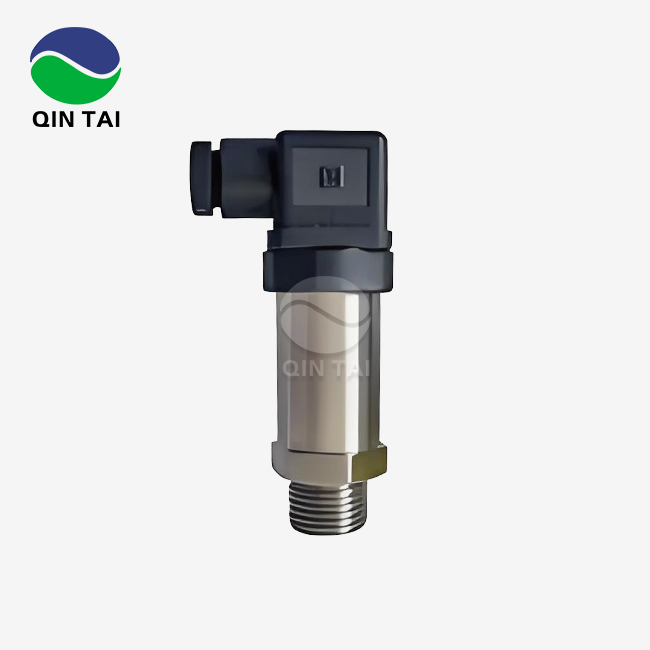
A pressure and temperature transmitter is an industrial measurement device that converts physical process variables — fluid or gas pressure and thermal conditions — into standardized electrical signals for monitoring and control systems. Unlike basic sensors, these transmitters deliver conditioned, transmission-ready outputs such as 0.5V–4.5V or 4–20mA signals directly compatible with PLCs and SCADA platforms. In process control environments ranging from diesel engine management to HVAC and oil & gas infrastructure, they form the sensory backbone that keeps operations safe, efficient, and compliant with industry standards including Euro VI emission regulations.

Understanding Pressure and Temperature Transmitters in Process Control
What a Pressure Transmitter Actually Does?
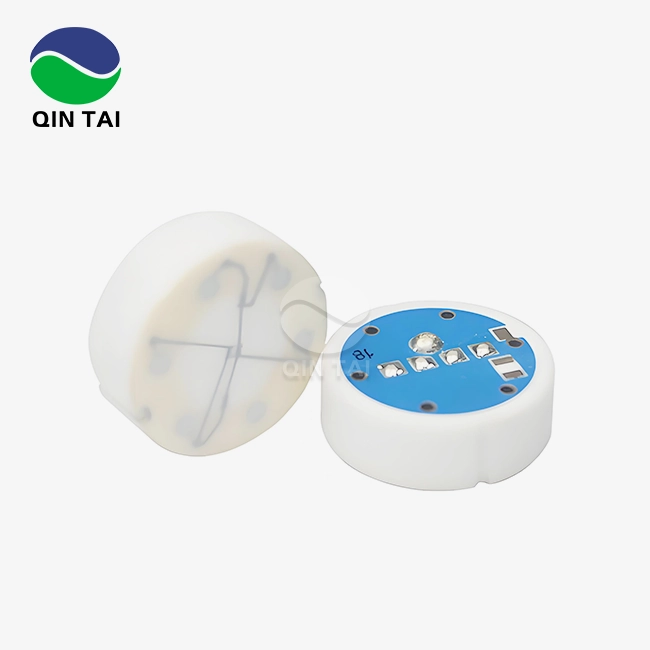
A pressure transmitter reads the mechanical force that gasses or liquids put on a sensing element, which is usually a ceramic or piezoresistive diaphragm, and turns that reading into a steady electrical output. This is very different from a simple pressure switch, which only works when a certain level of pressure is reached. Transmitters send constant, proportional signals that feed real-time data into automated control loops. This is why they are so important in hydraulic systems, chemical processing lines, and diesel engine aftertreatment.
The Role of Temperature Transmitters
Sensors like NTC thermistors, RTDs, or thermocouples are used in temperature sensors to record the temperature and send an electrical signal that corresponds to it. For example, NTC thermistors respond quickly to changes in temperature, which makes them great for measuring things in real time inside engine coolant circuits or refrigerant lines. The transmitter's internal circuitry smooths out the raw sensor signal, fixes any cold-end drift, and sends a clean signal that can be used by industrial control systems.
Combined vs. Individual Devices
When process parameters physically depend on each other, like the superheat of refrigerant or the condition of engine oil, measuring pressure and temperature at the same point with a single integrated pressure and temperature transmitter device gets rid of the errors that happen when two separate sensors are mounted in different places. Because they are better at handling correlation, dual-output receivers are now the first choice for R&D engineers and system designers who have to work with limited space.
Types and Classification of Pressure and Temperature Transmitters
Because they keep the signal strong and work with existing control architectures, wired transmitters are still the standard in most heavy-duty situations. Wireless versions are becoming more popular for remote tracking tasks like checking mine generator sets because installing cables would be too expensive. Explosion-proof types with ATEX or UL grades must be used in dangerous places like petrochemical plants and fuel storage facilities.
Smart receivers have digital diagnostics built in and can communicate using protocols like HART or CAN bus. This lets them be set up remotely and report on their own diagnostics, which cuts down on the number of field calibration visits. Even though conventional analog transmitters are easier, they are still very reliable in places with a lot of vibration, like building equipment, where the complexity of the electronics increases the risk of failure. For temperature sensing, NTC thermistor-based transmitters work best in HVAC and automotive applications that need a quick response time. On the other hand, RTD-based units are more stable over time and are better suited to chemical plant settings where accuracy loss over years of use poses a big compliance risk.
Key Factors to Consider When Purchasing Transmitters
It's not enough to just match pressure levels on a datasheet to choose the right pressure and temperature transmitter. These are the most important technical and business factors that should guide your specification process:
- Accuracy and total error band: A device rated at ±1.0% F.S for both pressure and temperature, with a total error band of ±3% across -30°C to 130°C, delivers the measurement confidence that emission-regulated diesel systems demand.
- Overvoltage and reverse polarity protection: In mobile equipment environments with unstable power supplies, forward and reverse overvoltage protection — such as 32V DC protection with reverse polarity safeguard — prevents costly field failures.
- Media compatibility: Confirm that the wetted materials are compatible with your process fluid. Engine oil, POE oil, refrigerant, and water each carry different chemical compatibility requirements.
- Process connection options: Availability of G1/4, M12×1.5, or M10×1 threads, with customization capability, is essential for OEM integration into existing manifold designs.
- Supplier certifications: Prioritize suppliers holding ISO9001, IATF16949, and relevant regional approvals. These certifications signal production process discipline, not just product quality.
As much as unit price is important when looking at providers, long-term production security, OEM co-development capability, and recorded after-sales response procedures are also very important. Advantages of bulk orders and consignment inventory arrangements can cut total procurement costs by a large amount over the lifecycle of a platform that lasts more than one year.

Installation, Calibration, and Troubleshooting Best Practices
A careful analysis of the mounting surroundings is the first step in a proper installation. Vibration, changing temperatures, and chemical exposure at the installation site can all affect how stable a measurement is over time. For most small dual-output transmitters, 10–20 N·m of mounting force keeps the threads from galling without putting too much stress on the sensor body. Integrity of the wiring can't be negotiated. When an electrical connector is securely engaged with the right type of electrical connector, signal loss that looks like sensor drift is stopped. After setting up, you should do a baseline calibration against a measure that can be tracked and write down the zero and span outputs before starting up the system.
Output signal clipping and apparent temperature offset are the most common field problems during operation of a pressure and temperature transmitter. Output signal clipping is usually caused by supply voltage going outside the 4.75–5.25V DC operating window, and apparent temperature offset is usually caused by poor thermal contact between the probe and the process medium rather than a sensor failure. A structured preventive maintenance schedule that checks the supply voltage, inspects the connectors, and compares the output to a portable reference on a regular basis greatly increases the average time between failures.
Industrial Applications and Benefits of Using Transmitters in Process Control
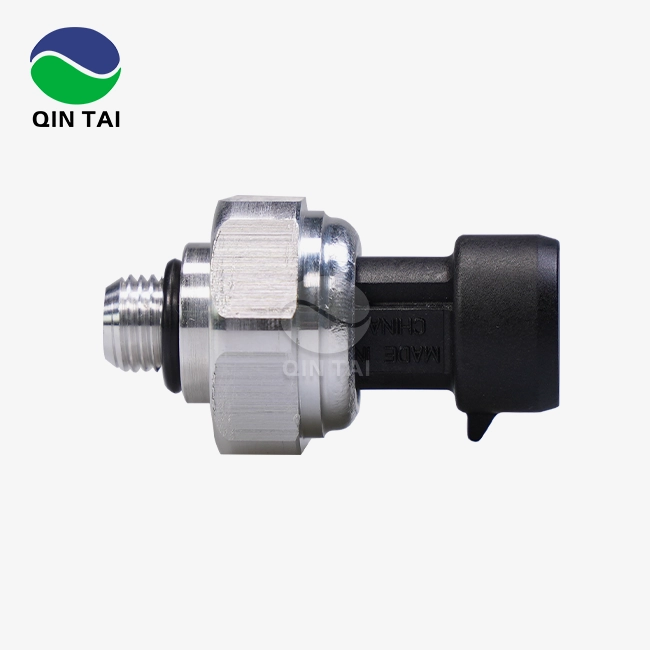
Integrated dual-output sensing has become common in many businesses, and the Qintai QS-PT225 is a great example of this. This gadget has a ceramic pressure sensor and an NTC thermistor inside a single 304 stainless steel housing. It gives out both pressure and temperature readings at the same time, with ±1.0% F.S accuracy on both channels.
These are the main working benefits this design gives you:
- Simultaneous dual-parameter output eliminates the spatial measurement offset that occurs when separate sensors are installed at different points, enabling precise superheat calculation in HVAC refrigerant circuits and accurate oil condition monitoring in diesel engines.
- Compact, space-saving integration reduces installation complexity in tight engine bays and hydraulic manifolds where mounting real estate is constrained.
- Wide operating range of -40°C to 130°C with compatibility across engine oil, POE oil, refrigerant, gas, and water makes a single platform serviceable across automotive, HVAC, and industrial hydraulic applications.
- Ratiometric 0.5V–4.5V output provides direct compatibility with standard ECU analog input channels without additional signal conditioning hardware.
These benefits directly solve the operational problems that buying managers and research and development engineers face when they have to build diesel aftertreatment systems that meet emission standards or find the best ways to make HVAC systems use less energy. Lifecycle costs go down because there are fewer parts, the wiring is simpler, and there is only one supplier for a device that does two things. New smart transmitter designs are adding CAN bus or LIN communication features, which makes these benefits even better. These features allow predictive maintenance processes where signal trend data can spot growing problems before they cause unplanned downtime.

Conclusion
Modern process control is based on accurate and reliable measurements of both pressure and temperature. This is true whether the control is for diesel engine emissions, HVAC optimization, or tracking of hydraulic systems. Integrated dual-output pressure and temperature transmitter devices like the QS-PT225 show the direction that industrial instruments are going: fewer parts, higher accuracy, more media compatibility, and easy integration with ECUs. Choosing the right transmitter is an important first step for engineers and procurement teams that have to deal with complicated emission regulations and tough operational environments. This choice affects how well the system works for the whole lifecycle of the platform.
FAQ
Q1: What is the difference between a pressure transmitter and a pressure switch?
A: A pressure sensor sends out a steady, proportional electrical signal that shows the process pressure in real time over its whole measurement range. A pressure switch only works at a single level that has been set and doesn't send a measured signal. When a control system needs more than just an on/off switch, it needs constant data for regulation, trends, or diagnostics. This is where transmitters come in.
Q2: What factors most affect temperature transmitter accuracy?
A: The quality of the sensor element, the thermal contact between the probe and the process medium, the security of the source voltage, and the change in ambient temperature can all affect how accurate a measurement is. It is important for well-designed devices to have a total error band across their operating temperature range. For the QS-PT225, this is ±3% from -30°C to 130°C. This gives engineers a realistic performance envelope for designing systems.
Q3: How do I source a certified dual-output transmitter with reliable after-sales support?
A: Give more weight to suppliers who have proof of their ISO9001 and IATF16949 certifications and a history of providing OEM parts. Ask for scientific datasheets that list the total error band, the types of media that can be used, and the overvoltage safety. Check to see if you can change the process links and pressure ranges, and make sure the seller has easy-to-reach technical help channels in case there are problems after delivery.
Partner With Qintai — Your Trusted Pressure and Temperature Transmitter Supplier
Since 2001, Qintai has been providing mission-critical sensing solutions to OEMs around the world. All of its product lines are certified by ISO9001, IATF16949, CE, UL, and Ex. The QS-PT225 pressure and temperature sensor can be integrated by an OEM. The pressure levels, process connections, and interface settings can be changed to fit the needs of your platform. You can contact our engineering team at info@qt-sensor.com to get pricing, samples, or specifics.
References
1. ISA-5.1: Instrumentation Symbols and Identification — International Society of Automation, 2009.
2. Instrument Engineers' Handbook: Process Measurement and Analysis — Béla G. Lipták, CRC Press, 2003.
3. Industrial Automation Handbook — Andrew Parr, Newnes/Elsevier, 2003.
4. Sensors and Transducers — Ian Sinclair, Newnes/Elsevier, 2001.
5. Euro VI Heavy-Duty Vehicles: Regulation (EC) No 595/2009 — European Parliament and Council, Official Journal of the European Union, 2009.
6. ASHRAE Handbook — Fundamentals — American Society of Heating, Refrigerating and Air-Conditioning Engineers, 2021.

Our customers’ satisfaction speaks for our quality — contact us to experience the same reliable service.