- English
- French
- German
- Portuguese
- Spanish
- Russian
- Japanese
- Korean
- Arabic
- Greek
- German
- Turkish
- Italian
- Danish
- Romanian
- Indonesian
- Czech
- Afrikaans
- Swedish
- Polish
- Basque
- Catalan
- Esperanto
- Hindi
- Lao
- Albanian
- Amharic
- Armenian
- Azerbaijani
- Belarusian
- Bengali
- Bosnian
- Bulgarian
- Cebuano
- Chichewa
- Corsican
- Croatian
- Dutch
- Estonian
- Filipino
- Finnish
- Frisian
- Galician
- Georgian
- Gujarati
- Haitian
- Hausa
- Hawaiian
- Hebrew
- Hmong
- Hungarian
- Icelandic
- Igbo
- Javanese
- Kannada
- Kazakh
- Khmer
- Kurdish
- Kyrgyz
- Latin
- Latvian
- Lithuanian
- Luxembou..
- Macedonian
- Malagasy
- Malay
- Malayalam
- Maltese
- Maori
- Marathi
- Mongolian
- Burmese
- Nepali
- Norwegian
- Pashto
- Persian
- Punjabi
- Serbian
- Sesotho
- Sinhala
- Slovak
- Slovenian
- Somali
- Samoan
- Scots Gaelic
- Shona
- Sindhi
- Sundanese
- Swahili
- Tajik
- Tamil
- Telugu
- Thai
- Ukrainian
- Urdu
- Uzbek
- Vietnamese
- Welsh
- Xhosa
- Yiddish
- Yoruba
- Zulu
Why Urea Pressure Sensors Fail: Causes, Tests, and Solutions
A urea pressure sensor is one of the most load-bearing components in any SCR (Selective Catalytic Reduction) aftertreatment system. When it works correctly, your dosing stays precise, NOx emissions stay within legal limits, and your engine runs without interruption. When it fails, the ECU loses accurate feedback, AdBlue injection becomes erratic, fault codes accumulate, and vehicles may enter limp mode. This guide walks through the real causes of DEF pressure sensor failure, how to test for them, and what you can do to prevent them from shutting down your operation.
Understanding Urea Pressure Sensor Failures
What This Sensor Actually Does
There is a pressure monitor for AdBlue that turns the hydraulic pressure inside the dosing module into a voltage signal that the Dosing Control Unit (DCU) or ECU can read right away. Most of the time, this signal is between 0.5 V and 4.5 V. Urea solution is added to the waste stream in the right amount by this feedback process. Urea solution turns nitrogen oxides into nitrogen and water, which are safe for breathing. You can't trust the whole reduction process if there isn't a right cue.
Common Failure Symptoms
Certain things happen that let you know when a DEF dosing pressure sensor is about to break. Technicians often say that pressure readings change even though nothing has changed in the working conditions, that saved DTCs like P204B (Urea pressure sensor Circuit Range/Performance) show up, that SCR systems shut down without warning, and that emission control procedures make the engine less powerful. These all point to the fact that the sensor's data is not being sent correctly anymore.
Why Early Detection Matters
Ignoring a broken sensor for too long costs a lot of money. People who don't follow the rules for EPA and Euro VI emissions events can be fined real money. You could lose a lot more money than the part itself if you have to shut down your fleet, manage construction equipment, or work on a generator set. Regular medical scans are used to find problems early and keep people in line. This stops expensive extra damage from happening.
Root Causes Behind Urea Pressure Sensor Failures
Chemical Corrosion and Crystallization
The urea solution is a little acidic when it gets hot, and AdBlue naturally crystallizes when it comes in contact with air or things that aren't moving. Urea crystal layers build up over time on sensors that don't have good internal shape or diaphragm materials that don't work well with each other. This buildup clogs the sensing tube, which throws off the calibration and finally causes the signal to drift or fail. The issue is much less likely to happen with devices that have less dead space and smooth flow paths inside them.
Thermal and Mechanical Stress
The temperature of diesel engines changes a lot. In the winter, they start cold, and in the summer, they run at full load. This is because the materials inside sensors expand and contract at different rates, so when they don't get enough temperature correction, they fall short. The problem is worse when the car shakes all the time. Tiny cracks show up in the solder joints and connecting pins after thousands of hours of use. This leads to signal loss that is hard to figure out and is usually thought to be a problem with the wires.
Manufacturing and Calibration Limitations
There is a range of precision levels in sensors on the market. In real life, instruments that use poor connector plating or diaphragm metals break down more quickly. If the sensor wasn't properly set up when it was made, the output signal won't show the real system pressure from the start. When OEM purchasing teams buy in bulk, even a few units that don't follow the rules can cause issues with guarantees and laws.

Diagnosing and Testing Urea Pressure Sensor Issues
Basic Field Testing Methods
A digital multimeter, a scan tool, and a pressure model are three easy tools that techs in the field can use to begin. While the system is on and the sensor is connected, check the supply voltage at the sensor connector. A steady 5V DC should be shown. After that, use the model to check if the signal value matches the pressure numbers you know. If the reading isn't between 0.5 V and 4.5 V when it should be, there is a very good chance that the sensor is broken. This simple field procedure helps technicians quickly determine whether a urea pressure sensor needs replacement.
Advanced Laboratory Validation
The people who work in R&D and system integration should test new sensor sources on a bench to make sure the sensors are accurate across the whole measurement range and can handle high temps that are like the ones they would see in real life. If you shake wired analog designs and later digital communication types (LIN/CAN) the same amount and then check how stable the sensor output is, you can see that they change how they work over time in very different ways. Sourcing teams can be sure of the information they need to choose which sources to work with after these controlled tests.
Interpreting Fault Codes
Most of the time, the fault number P204B means that the DEF pressure sensor is broken. It means that the output signal from the sensor has moved past what is considered to be good performance. The sensor is likely old, the pins that link it are dirty, or crystals have formed on the diaphragm. This code, along with live pressure data and a physical check for rust in the link, helps figure out whether the issue is with the sensor, the wiring harness, or the dosing pump.
Solutions and Best Practices for Preventing Sensor Failures
Preventive Maintenance Protocols
The best way to make sure sensors don't break is to maintain them regularly. Check the connecting parts for oxidation every time the service is due. Clean and approved AdBlue should be used to flush the dose system so that crystals don't build up. Recalibrate the sensors as often as the manufacturer says to. This should be done every 15,000 to 20,000 hours of use for industrial-grade uses. If you compare these steps to a shutdown that wasn't planned, they are very cheap.
Choosing the Right Sensor for Your Application
A lot of buyers don't know how important it is to pick the right paper. In tough chemical conditions, sensors with bodies made of wet stainless steel work better than those with bodies made of plastic. The type of link (M10×1 or M12×1.5 thread standards), style of the output signal (analog ratiometric vs. digital SENT), and range of temperatures must all be the same as the ones used for the ECU calibration. In cold places, heavy trucks, building equipment, and generator sets can keep their diaphragms from getting damaged by using sensors that are made to handle AdBlue's 9% volume growth when it freezes.
The Qintai QS-P226: Built Around These Exact Requirements
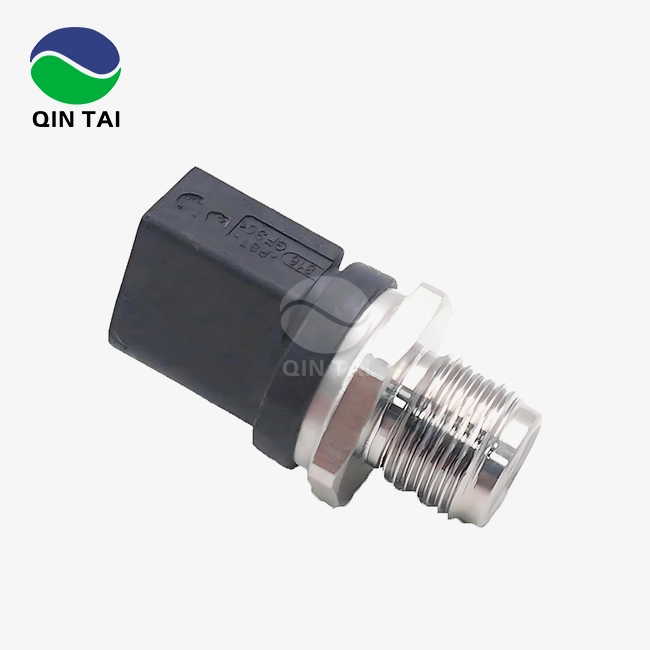
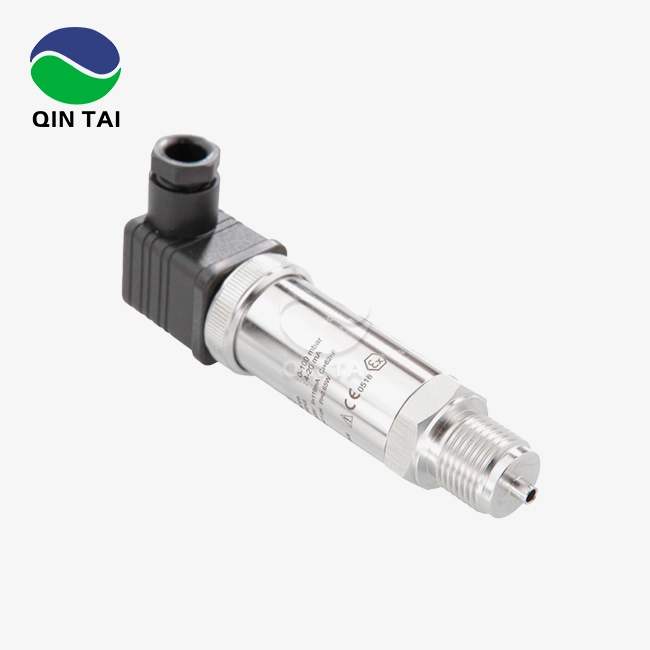
For the same reason we talked about above, Qintai made the QS-P226 urea pressure sensor. These are some of the most important facts about this device's speed:
- Measurement Range: -14 psi to +130.5 psi — covers the full operating window from system startup to maximum dosing pressure
- Signal Output: 0.5–4.5 VDC ratiometric analog — directly compatible with standard DCU/ECU inputs
- Accuracy: ±0.5% — ensures reliable dosing feedback across the entire pressure range
- Supply Voltage: 5V DC
- Warranty: 12 months, with 100% factory-tested quality assurance
These specs make the system work better in real ways. The wide measurement range finds system leaks that lower pressure, blockages that make pressure too high, pump issues that make the pump not work well, and injector issues before they affect compliance. The QS-P226 is made of materials that are resistant to chemicals and can handle crystallization and corrosion by urea. It is also thermally stable, which means that it stays tuned during cold starts and long periods of high temperature operation. The sealed design also keeps dust and moisture from getting into the internal parts. The earlier failure causes listed in this article are directly dealt with by these design choices. This gives buying teams and R&D engineers a clear technical reason to choose one option over another.
Procurement Considerations for Urea Pressure Sensors
Certification and Compliance Requirements
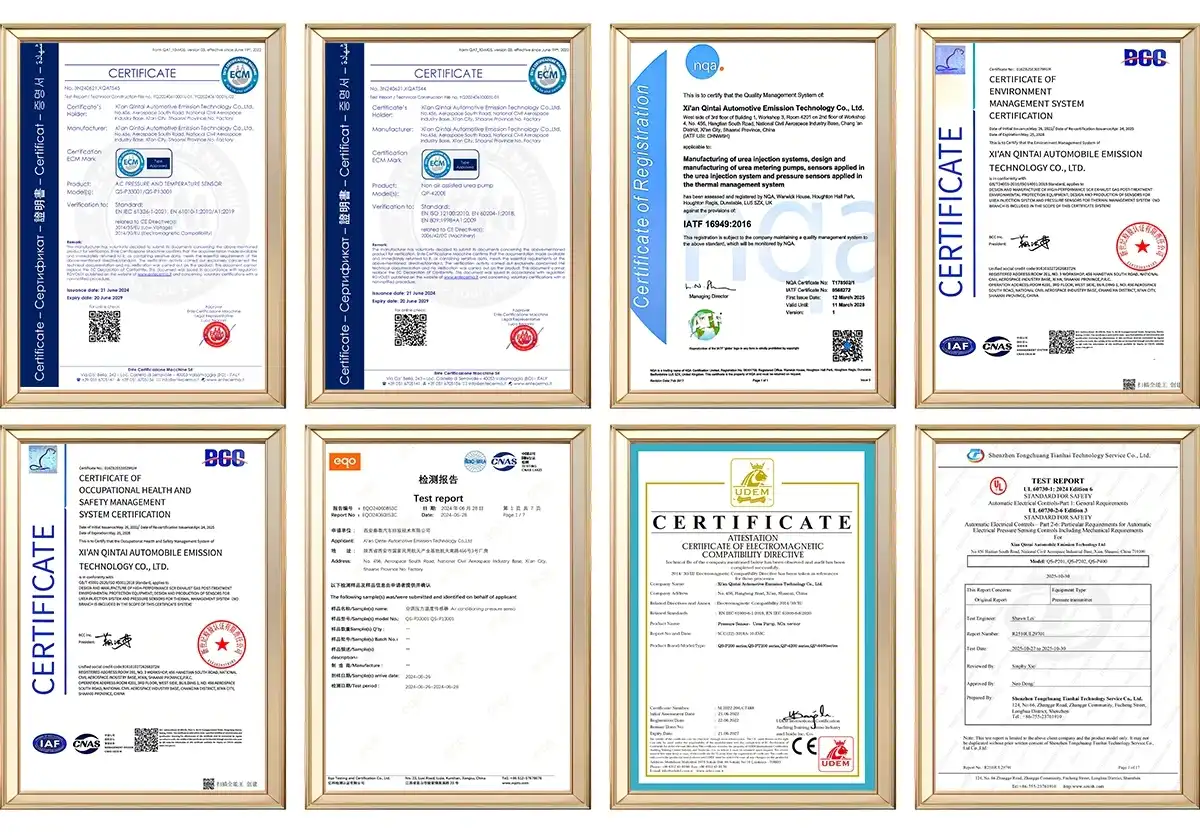
OEMs will only buy urea pressure sensors from companies that have approvals that can be checked. You should look for quality control standards like ISO 9001 and IATF 16949 at the very least. When sensors are used in places that are regulated, they need to meet the emission guidelines for China VI, Euro VI, or EPA Tier 4 Final. Teams that buy things should ask for test results and proof of certification from new providers before they are approved.
Bulk Order Strategy and Lead Times
When buying a lot, it's important to balance stock levels with supplier lead times so that production doesn't stop and costs stay low because you don't have to store too much inventory. It's easy for purchasing managers to adjust to changes in the production schedule when they work with a company that keeps stock on hand and lets OEM/ODM customization. There is less chance of getting parts that don't meet standards on a large scale when there are clear specifications, known wait times, and traceability documents in place.
Custom and OEM Ordering Options
Standard stock tools don't always work well for the job. People who make generator sets for mines or power plants often need sensors that can work in harsh conditions. For SCR system integrators to be able to use their DCU software, the sensors they use need to have certain transmission standards or connector pinouts. You can avoid problems with integration and speed up development with a urea pressure sensor source that lets you make full changes during the design phase. For example, you can change the interface, change the settings, and name the package.
Conclusion
Sensors in SCR aftertreatment systems generally break down because of one of four things: chemical rust, heat wear, mechanical stress, or mistakes in the way they were made. Engineers can choose sensors that will last longer if they know these failure modes, and buyers can use them to judge sellers fairly. Methodical tests, such as field testing, fault code analysis, and lab validation, make sure that a sensor is working right before a compliance event takes place. If you want the best long-term results, pick sensors that are made with the right ingredients, temperatures, and signals for your needs. Understanding these failure modes is essential when selecting a durable urea pressure sensor for SCR aftertreatment systems.
FAQ
How often should a DEF pressure sensor be recalibrated?
More often if the engine maker says so, but at least every 15,000 to 20,000 hours of use, the engine in most industrial cars should be re-calibrated. In rough places, like mines or power plants, the gaps may need to be shorter.
What causes fault code P204B?
Most of the time, P204B is caused by signal drift from an old sensor, urea crystals on the diaphragm, or oxidized connection pins. There is a lot less of this fault in sensors that have gold-plated connections and smooth internal flow shapes.
Can a urea dosing pressure sensor handle AdBlue freezing?
Yes, sensors with a flexible internal storage structure can handle the 9% size gain that happens when AdBlue is turned off. If this isn't built into the sensor, the diaphragm could get broken after several freeze-thaw cycles.
Are analog and digital sensor outputs interchangeable?
It doesn't matter if the output is analog (0.5 V–4.5 V) or digital (LIN or CAN); it has to match how your system's ECU or DCU is set. If you change them out without first restarting the software, mistakes or the wrong dose will happen.
What is a realistic service life for an industrial-grade DEF pressure sensor?
Well-made standard market items are made to last at least 15,000 to 20,000 hours of use. This number can go down if the temperature changes a lot, if the AdBlue is dirty, or if the fixing spot shakes a lot.
Partner with Qintai for Dependable Urea Pressure Sensor Supply
Qintai has supplied SCR aftertreatment components to OEMs and system integrators across more than 60 countries since 2001. As a urea pressure sensor manufacturer holding ISO 9001, IATF 16949, and multiple international certifications, Qintai supports OEM, ODM, and custom orders with verified technical documentation and consistent mass production capacity. Contact our team to discuss your specifications or request a quotation: info@qt-sensor.com
References
1. Society of Automotive Engineers International. SAE J1939 Standards Collection. SAE International, 2021.
2. European Commission. Regulation (EC) No 595/2009 on Heavy-Duty Vehicle Emissions (Euro VI). Official Journal of the European Union, 2009.
3. U.S. Environmental Protection Agency. Diesel Exhaust Fluid and Selective Catalytic Reduction: Technical Overview. EPA Office of Transportation and Air Quality, 2020.
4. Bosch Automotive Handbook. Automotive Sensors and Actuators: Fundamentals and Applications. Robert Bosch GmbH, 10th ed., 2022.
5. International Organization for Standardization. ISO 22241: Diesel Engines — NOx Reduction Agent AUS 32. ISO, 2019.
6. Transactions of the ASME Journal of Engineering for Gas Turbines and Power. Pressure Sensing Reliability in Diesel Aftertreatment Systems Under Thermal Cycling Conditions. ASME, 2022.

Our customers’ satisfaction speaks for our quality — contact us to experience the same reliable service.