- English
- French
- German
- Portuguese
- Spanish
- Russian
- Japanese
- Korean
- Arabic
- Greek
- German
- Turkish
- Italian
- Danish
- Romanian
- Indonesian
- Czech
- Afrikaans
- Swedish
- Polish
- Basque
- Catalan
- Esperanto
- Hindi
- Lao
- Albanian
- Amharic
- Armenian
- Azerbaijani
- Belarusian
- Bengali
- Bosnian
- Bulgarian
- Cebuano
- Chichewa
- Corsican
- Croatian
- Dutch
- Estonian
- Filipino
- Finnish
- Frisian
- Galician
- Georgian
- Gujarati
- Haitian
- Hausa
- Hawaiian
- Hebrew
- Hmong
- Hungarian
- Icelandic
- Igbo
- Javanese
- Kannada
- Kazakh
- Khmer
- Kurdish
- Kyrgyz
- Latin
- Latvian
- Lithuanian
- Luxembou..
- Macedonian
- Malagasy
- Malay
- Malayalam
- Maltese
- Maori
- Marathi
- Mongolian
- Burmese
- Nepali
- Norwegian
- Pashto
- Persian
- Punjabi
- Serbian
- Sesotho
- Sinhala
- Slovak
- Slovenian
- Somali
- Samoan
- Scots Gaelic
- Shona
- Sindhi
- Sundanese
- Swahili
- Tajik
- Tamil
- Telugu
- Thai
- Ukrainian
- Urdu
- Uzbek
- Vietnamese
- Welsh
- Xhosa
- Yiddish
- Yoruba
- Zulu
Accuracy Performance of Pressure and Temperature Transmitters
When sourcing measurement instruments for diesel engines and aftertreatment systems, accuracy isn't merely a specification—it determines whether your production meets emission standards, whether your equipment operates safely, and ultimately, whether your project succeeds or fails. Pressure and temperature transmitters serve as the eyes and ears of modern industrial systems, translating physical conditions into actionable data. For purchasing managers and R&D engineers working with heavy trucks, construction machinery, and generator sets, understanding accuracy performance means the difference between regulatory compliance and costly recalls, between predictable uptime and unexpected shutdowns.
Understanding Accuracy in Pressure and Temperature Transmitters
What Accuracy Actually Means in Industrial Measurement
How close a transmitter's output is to the real value of what it's measuring is called its accuracy. If we say ±1.0% F.S. (full scale) accuracy, which is common in more advanced ceramic sensor designs, we're saying what the biggest error that can happen in the whole measurement range is. This is very important in SCR aftertreatment systems because accurate pressure and temperature readings affect how well NOx is reduced and how well the system meets China VI and Euro VI emission rules.
The measurement chain has many factors that can change, such as the quality of the sensor elements, the electronics that condition the signals, interference from the surroundings, and the way they are installed mechanically. A transmitter in the exhaust system of a diesel engine has to deal with vibrations, changes in temperature, and harmful exhaust gases. The difference between instruments that are reliable and those that drift, fail early, or give false information that hurts system performance is their accuracy performance in these real-world conditions.
Key Factors Affecting Measurement Precision
Accuracy is based on how well the sensors are designed. When compared to traditional metal diaphragm designs, ceramic pressure sensing elements are more stable, especially in high-temperature environments like diesel exhaust applications. The ceramic material doesn't change its electrical properties over a wide range of temperatures, so readings can be taken over and over again, which is important for quality control in mass production.
Conditions in the environment always put pressure on accuracy performance. Changing temperatures can change the electrical resistance of sensing elements. Changing pressures can wear out mechanical parts, and vibration can add noise to signal paths. To keep these effects to a minimum, good transmitters use compensation methods and strong mechanical designs. The total error band specification, which is usually ±3% across the whole working temperature range, gives a more accurate picture of how accurate the product really is because it takes into account these external stressors instead of just lab conditions.
How calibration and repair are done has a direct effect on how accurate something stays over time. Over months and years of use, even the best transmitters slowly move away from their target. Setting up calibration plans based on how important the application is, how hard it is to operate, and what the maker recommends makes sure that measurements are accurate throughout the span of the product. This is especially important for OEM applications that need thousands of units in field service to work the same way.

Industry Standards and Accuracy Metrics
Professional purchasing choices depend on standard accuracy requirements that let buyers directly compare providers. The percentage of full scale method shows how accurate something is as a share of the whole measurement range. For example, a 10 Bar transmitter with 1% F.S. accuracy gives 0.1 Bar accuracy across its whole range. This method for specifying works well for processes that run at close to full scale all the time, but it might not be as good for processes that run at lower pressures.
Repeatability is a way to check how well a transmitter can give the same results when testing the same situation more than once. When repeatability is high, usually within 0.1% to 0.2% of span, sensor behaviour is stable and control system performance is reliable. Hysteresis measures the biggest difference in output when approaching the same pressure from directions that are increasing or decreasing. This shows the mechanical properties of the sensing element and the effects of internal friction.
The IEC 61298 and ANSI/ISA-S37.1 standards make it possible to describe and test the performance of transmitters, including devices such as the Pressure and Temperature transmitter. These guidelines set up uniform definitions, test methods, and reporting forms that make it easier to make useful comparisons during reviews of procurement. When looking over datasheets, making sure that promises of accuracy are based on well-known standards gives you trust in the manufacturer's honesty and the product's abilities.
Types of Pressure and Temperature Transmitters and Their Accuracy Profiles
Pressure Sensing Technologies and Configuration Options
Gauge pressure transmitters measure in relation to the air pressure outside. This makes them useful for tracking engine oil pressure, hydraulic systems, and pneumatic controls where differences in pressure are more important than absolute numbers. Absolute pressure monitors work with a perfect vacuum as a reference, so their readings don't change when the air pressure changes. This is important for managing engines at different altitudes and controlling processes regardless of the weather. Differential configurations find the difference in pressure between two places. This lets you figure out the flow rate and check the state of the filters in systems that clean water after treatment.
Usually, analogue output transmitters send 0-5V or 4-20mA signs that are proportional to the pressure being monitored. These simple interfaces work well with other control systems and can't be affected by noise because they use current loop signalling. Digital transmitters talk to each other using protocols like HART, Modbus, or CANbus. This allows two-way communication for setting up and diagnosing from afar, and digital compensation algorithms improve accuracy. Digital versions usually cost more at first, but their advanced features often make the extra money worth it for complicated systems that need to be monitored remotely or maintained ahead of time.
Temperature Measurement Technologies
RTD (Resistance Temperature Detector) monitors use the known link between metal resistance and temperature. They usually use platinum elements, which are very accurate and stable from -200°C to 850°C. RTDs are better than thermocouples at staying stable and repeatable over time. This makes them ideal for precise uses and testing standards. Their response is almost linear, which makes signal conditioning easier and lowers the uncertainty of measurements.
Thermocouple sensors get their voltage from differences in temperature between metal junctions that are not the same. They are very durable, can work in a wide range of temperatures, and respond quickly. Even though thermocouples aren't as exact as RTDs in most situations, they work great in harsh settings and for tasks that need to be installed with little damage. NTC thermistors are used in low-cost situations because they are very sensitive in small temperature ranges. This makes them good for monitoring engine coolant and measuring HVAC refrigerant temperature, where their nonlinear properties can be digitally corrected.
Combined Dual-Parameter Transmitters
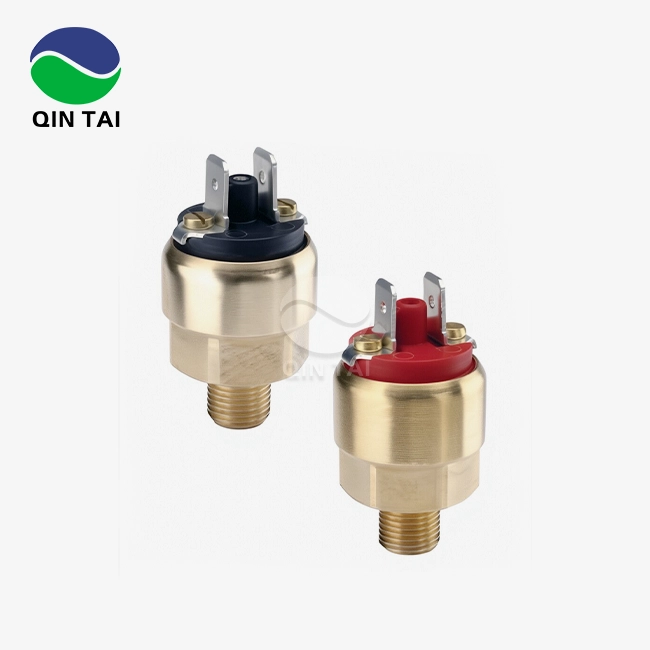
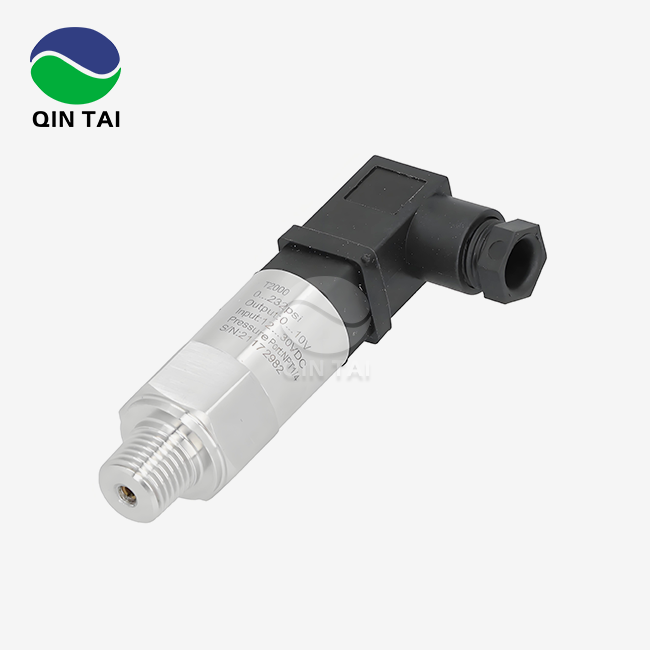
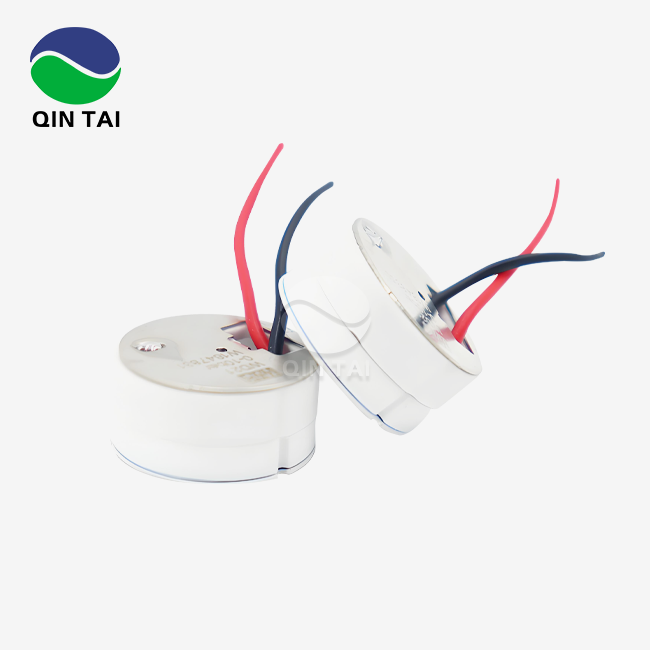
Having devices that measure both pressure and temperature in one package has many benefits for purchasing. The QS-PT225 is a good example of this method because it uses both a ceramic pressure sensor and an NTC thermistor to give accurate readings from a single point. This design gets rid of the mistakes that happen when you use separate sensors in different places. This is especially important for figuring out superheat in cooling systems and accurately characterising exhaust gases in diesel aftertreatment.
Combined transmitters not only improve measurement accuracy, but they also make installation easier, reduce the number of connection points where leaks or failures could happen, and lower the total cost of the system compared to using two separate instruments. The small 304 stainless steel design takes up very little room, which is helpful in engine bays or equipment setups with a lot of people. These devices can be used in a wide range of OEM applications because they have adjustable pressure ranges from 0-5 Bar to 0-40 Bar and flexible process connections with G1/4 and M12x1.5 threads. They also keep their 1.0% F.S accuracy for both the pressure and temperature channels.
How to Ensure and Optimize Accuracy Performance
Proper Installation Practices
"Choosing where to mount something has a direct effect on how accurate measurements are and how reliable they are over time, and this is especially critical for a Pressure and Temperature transmitter. Accurate readings can be achieved by placing transmitters where the temperature and pressure of the process media stay steady, avoiding dead-legs that collect contamination, and orienting sensors so that air pockets don't form. The QS-PT225's mounting torque range of 10–20 N-m makes sure that the seal is properly formed without putting too much stress on the sensor housing or damaging the threads. This is an important feature that is often missed during installation."
Radio frequency sources, ignition systems, and motor drives can all cause electrical interference that can mess up measurement signals, especially in analogue output transmitters. To avoid installation-related accuracy loss, keep signal cables away from high-voltage wiring, use shielded cables with proper grounding, and choose transmitters with built-in EMI protections like reverse polarity safety and 32V overvoltage protection. These safety features are especially useful in tough places like factories and cars where electrical noise is unavoidable.
Calibration Methods and Schedules
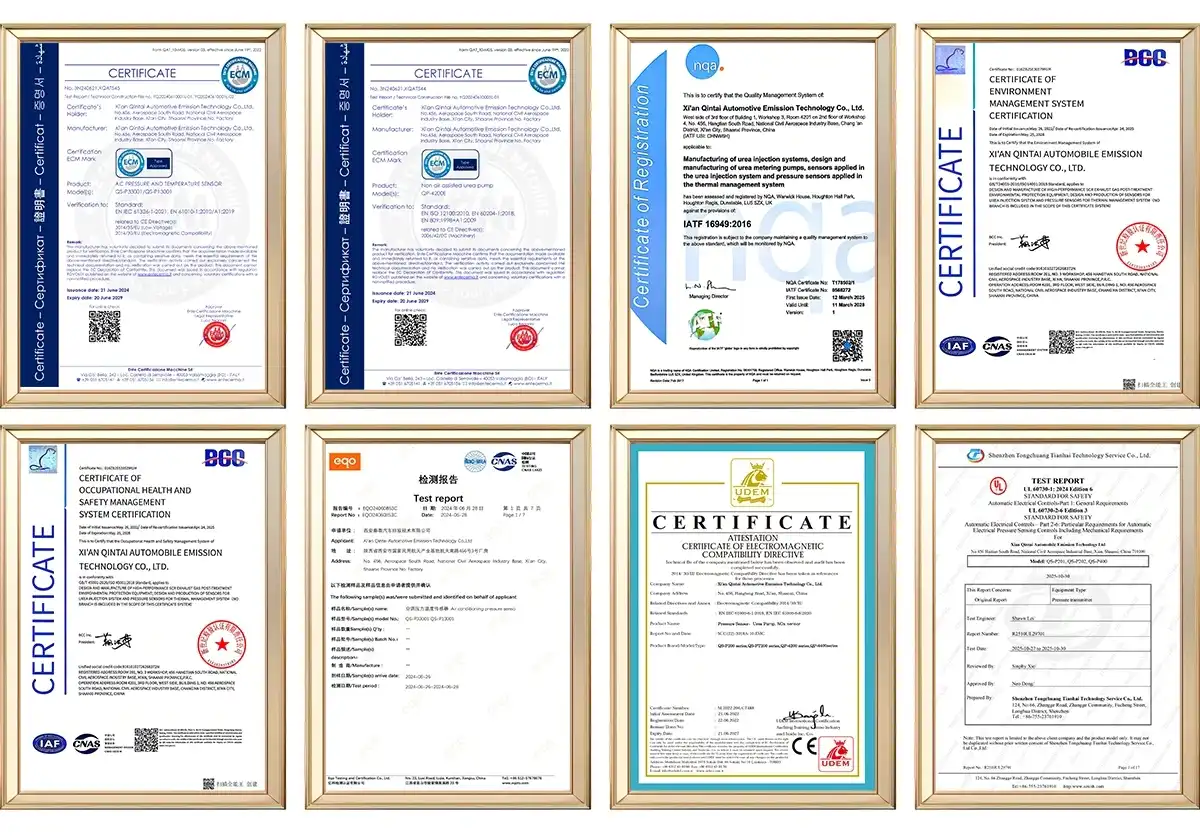
The most accurate verification is done in a lab using certified reference standards. This is usually done once a year or when measurement drift is suspected. To do this, the transmitter output is compared to traceable pressure and temperature references at several points across the whole working range. The offset and span parameters are then changed to reduce mistakes as much as possible. The measuring tracking needed for ISO 9001 and IATF 16949 quality systems is set up by the documentation made during calibration.
Field calibration is a useful option for installed transmitters that are hard or expensive to remove. Portable pressure calibrators and temperature references let you check and make changes without having to shut down the system, but they are usually not as accurate as methods used in a lab. The amount of time between calibrations depends on how hard the application is. Transmitters that work in stable conditions may only need to be checked every 12 to 24 months, but those that work in harsh environments with changing pressures, temperatures, or corrosive materials should be checked every three months.
Before making a calibration program, it's important to know how measurement uncertainty affects the process. This way, you can avoid both the waste and risk of not calibrating enough. A generator set monitoring app that can handle measurement errors of up to ±2% needs less maintenance than an emissions test cell that needs to be accurate to within ±0.5% in order to meet government standards. Aligning the amount of money spent on calibration with the actual level of accuracy needed saves money on maintenance costs and protects the accuracy of measurements.
Emerging Technologies Enhancing Accuracy
Modern transmitters have digital compensation methods that actively fix for effects caused by temperature, nonlinearity, and drift caused by getting older. These systems use microprocessors to constantly check the conditions of the sensors and make improvements in real time so that the accuracy stays the same even when the world changes. This technology is used in the QS-PT225's digital output choice, which gives better performance than designs that are only analogue and lets you use advanced features like fault monitoring and diagnostic reporting.
With remote diagnostics, maintenance can go from being reactive to being proactive, finding problems as they happen before they cause measurement fails. Self-diagnostic routines on transmitters check the integrity of the signal, find worn-out sensors, and let maintenance teams know when calibration is needed or a failure is about to happen. By replacing time-based maintenance with condition-based methods that only service instruments when they really need it, this feature cuts down on unexpected downtime and increases the time between service intervals.
Evaluating and Comparing Pressure and Temperature Transmitters for Procurement
Core Selection Criteria for Industrial Applications
To find the best balance between accuracy and cost, you need to know exactly what your application needs, and this evaluation must include the selection of a Pressure and Temperature transmitter that matches your performance targets. A hydraulic system for construction equipment that works in the 50–100 Bar range and has a control tolerance of 5% doesn't need an expensive transmitter with a 0.1% accuracy that is made for precise lab work.
On the other hand, a diesel engine development test cell that checks for emission compliance needs the highest level of accuracy possible, even if it costs more. With a standard of ±1.0% F.S., the QS-PT225 strikes the right mix for most OEM production needs, offering accuracy that meets regulatory requirements at a price that supports mass production cost goals.
For dynamic processes, response time affects the choice of transmitter. Pressures that change quickly in fuel injection systems or temperatures that change quickly when an engine starts up need transmitters that can respond in milliseconds. The direct-contact design of ceramic sensors and fast-response thermistors lets you keep track of changes in the process quickly. This keeps control delays from hurting system performance or putting people in danger. When reviewing specs, make sure that the accuracy claims are true across the entire frequency range that matters for your application.
Environmental compatibility is more than just ratings for temperature and pressure. The QS-PT225 is said to be compatible with engine oil, POE oil, refrigerant, gas, and water. This means it can be used in diesel engines and HVAC systems. However, some processes may use harsh chemicals that need different materials. The 304 stainless steel construction is resistant to corrosion in general, and the PPE+PAGF30 connector material is strong and doesn't conduct electricity. Check to see if the material is compatible with the process media you're using to avoid early mistakes that hurt accuracy and dependability.
Industry-Specific Accuracy Requirements
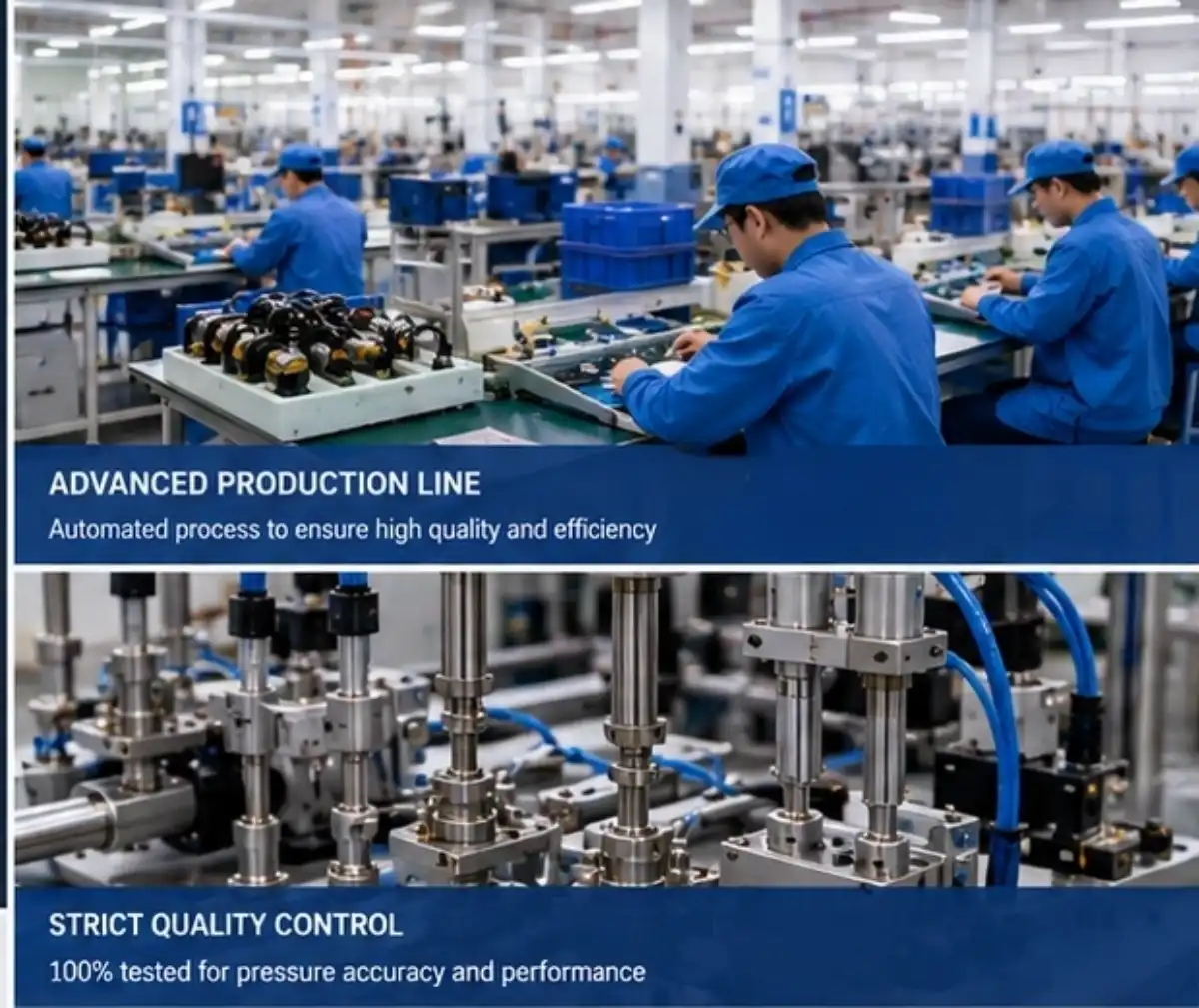
OEMs of heavy trucks and construction equipment need transmitters that meet IATF 16949 quality standards for cars and have been shown to be able to be mass-produced. Qualified suppliers are different from those who don't have statistical process control and production capacity because they can deliver consistent accuracy across production volumes measured in tens of thousands of units per year. As the main provider to China's top engine makers like Weichai Power, Yuchai Power, and Quanchai Power, Xi'an Qintai Automotive Emission Technology Co., Ltd. shows that it can do this by having the biggest market share in China's diesel engine aftertreatment sector.
Generator set makers care more about long-term stability and industrial-grade dependability than about how much the set costs at first. For use in mines, power plants, and backup power systems, transmitters need to stay accurate even after long periods of use with little access for maintenance. This device can work in a wide range of temperatures, from -40°C to 130°C, and is made of strong stainless steel, so it can handle tough conditions. It also has a ±3% total error band that covers the whole temperature range, so you can expect it to work reliably for a long time.
When it comes to aftermarket uses, cost-effectiveness, wide compatibility, and ease of operation are key. Repair shops and parts suppliers need transmitters that work with a variety of equipment models, don't require any special tools to install, and are priced competitively. The QS-PT225's pressure ranges and process links can be changed to fit different needs, which saves space on shelves and reduces the number of parts needed. Its simple electrical interface also makes replacement installs easier for technicians who haven't had a lot of training.
Conclusion
In the making of diesel engines, the integration of aftertreatment systems, and industrial automation, the operating success depends directly on how accurate the measurement instruments are. Sensor technology, environmental compensation, and calibration practices are the scientific basics that you need to know in order to make smart buying choices. Combined Pressure and Temperature transmitters, like the QS-PT225, provide synchronised readings with ±1.0% F.S. accuracy, meeting the realistic needs of OEM production while making installation easier and lowering the cost of the system.
The best results are achieved by matching the transmitter's abilities to the needs of the industry, whether those needs are regulatory compliance, long-term reliability, or cost-effectiveness. Partnering with experienced manufacturers who can provide full technical help and a track record of production turns buying parts into a strategic benefit.
FAQ
How does calibration improve measurement reliability?
Sensor drift, ageing electronic parts, and effects from the environment that make accuracy worse over time can be fixed through calibration. When the transmitter is calibrated on a regular basis, its output is compared to known reference standards to find errors. The device is then adjusted to get back to its original level of accuracy. Most industrial uses benefit from being calibrated once a year, but more often may be needed for critical processes or harsh operating conditions. Calibration that is recorded makes measurements traceable, which is needed for quality control systems and to follow the rules.
What distinguishes gauge from absolute pressure measurements?
When the gauge is open to normal air, no matter the height or weather, it reads zero, which means the pressure is equal to the area atmospheric pressure. Absolute pressure is based on a perfect vacuum, so measurements are not affected by changes in the atmosphere. For example, the same absolute pressure reading at sea level or high up in the air is the same. When pressure differences are more important than absolute values, gauge measurements are best. On the other hand, absolute sensors are best for systems that need to adjust for altitude and processes that need measurements that don't depend on the weather.
Do combined transmitters offer better accuracy than separate units?
Combined transmitters that measure both pressure and temperature from a single point get rid of mistakes caused by sensors being spread out in different places. This is especially helpful for thermodynamic calculations, like measuring superheat, that need values to be taken at the same time from the same place. While the accuracy of each sensor may be the same as that of a single unit, the accuracy of the whole system is often higher for tasks that need to combine tracking of two different parameters. This is because the timing of measurements is synchronised and location errors are removed.
Partner with a Trusted Pressure and Temperature Transmitter Manufacturer
Xi'an Qintai Automotive Emission Technology Co., Ltd. has been a leader in diesel engine sensors and SCR aftertreatment solutions for more than twenty years. Our ISO 9001, IATF 16949, and CMC certifications show that we make high-quality products, and our 58 idea patents show that we are always coming up with new ways to help global diesel engine OEMs. The QS-PT225 dual-parameter Pressure and Temperature transmitter shows off our engineering skills with its ceramic sensor technology, ±1.0% F.S. accuracy, and strong build made for tough automotive and industrial settings.
As China's top original equipment manufacturer (OEM) supplier to major engine manufacturers, we can meet your buying needs by offering flexible customisation, quick technical support, and reliable mass production. Whether you need to find sensors for new equipment, add aftertreatment systems, or find spare replacement parts, our wide range of products and experience with a wide range of applications will help you move your projects faster from the idea stage to production.
Email our technical team at info@qt-sensor.com to talk about your specific accuracy needs, get full QS-PT225 specifications, or look into custom configurations that will work best for your needs. You can find our full product catalogue, technical tools, and case studies at qt-sensor.com. These show how our sensors work in diesel engines, HVAC systems, hydraulic systems, and industrial control systems around the world.
References
1. Liptak, B.G. (2018). Instrument Engineers' Handbook: Process Measurement and Analysis, Volume 1. CRC Press.
2. Webster, J.G. & Eren, H. (2019). Measurement, Instrumentation, and Sensors Handbook: Spatial, Mechanical, Thermal, and Radiation Measurement, Second Edition. CRC Press.
3. Johnson, C.D. (2020). Process Control Instrumentation Technology, Eighth Edition. Pearson Education.
4. International Electrotechnical Commission. (2008). IEC 61298: Process Measurement and Control Devices - General Methods and Procedures for Evaluating Performance.
5. Morris, A.S. & Langari, R. (2021). Measurement and Instrumentation: Theory and Application, Third Edition. Academic Press.
6. ANSI/ISA-S37.1-1975 (R2012). Electrical Transducer Nomenclature and Terminology. International Society of Automation.

Our customers’ satisfaction speaks for our quality — contact us to experience the same reliable service.