- English
- French
- German
- Portuguese
- Spanish
- Russian
- Japanese
- Korean
- Arabic
- Greek
- German
- Turkish
- Italian
- Danish
- Romanian
- Indonesian
- Czech
- Afrikaans
- Swedish
- Polish
- Basque
- Catalan
- Esperanto
- Hindi
- Lao
- Albanian
- Amharic
- Armenian
- Azerbaijani
- Belarusian
- Bengali
- Bosnian
- Bulgarian
- Cebuano
- Chichewa
- Corsican
- Croatian
- Dutch
- Estonian
- Filipino
- Finnish
- Frisian
- Galician
- Georgian
- Gujarati
- Haitian
- Hausa
- Hawaiian
- Hebrew
- Hmong
- Hungarian
- Icelandic
- Igbo
- Javanese
- Kannada
- Kazakh
- Khmer
- Kurdish
- Kyrgyz
- Latin
- Latvian
- Lithuanian
- Luxembou..
- Macedonian
- Malagasy
- Malay
- Malayalam
- Maltese
- Maori
- Marathi
- Mongolian
- Burmese
- Nepali
- Norwegian
- Pashto
- Persian
- Punjabi
- Serbian
- Sesotho
- Sinhala
- Slovak
- Slovenian
- Somali
- Samoan
- Scots Gaelic
- Shona
- Sindhi
- Sundanese
- Swahili
- Tajik
- Tamil
- Telugu
- Thai
- Ukrainian
- Urdu
- Uzbek
- Vietnamese
- Welsh
- Xhosa
- Yiddish
- Yoruba
- Zulu
AdBlue Dosing System vs SCR Pump: Which Option Fits Best for Trucks
When deciding between an AdBlue Dosing System and an SCR pump for heavy-duty diesel trucks, the choice ultimately depends on your fleet's operational scale, emission compliance requirements, and total cost of ownership goals. Both technologies serve essential roles in reducing NOx emissions through Selective Catalytic Reduction, yet they differ significantly in design integration, maintenance demands, and adaptability. Understanding these distinctions helps procurement managers and R&D engineers select the solution that aligns best with regulatory mandates, long-term reliability, and budgetary constraints.
Introduction
Diesel engines today are under more and more pressure to meet strict emission standards, such as the EPA 2010, Euro VI, and China VI rules. The Selective Catalytic Reduction (SCR) aftertreatment system is what makes this all possible. It works by carefully adding Diesel Exhaust Fluid, also known as AdBlue or DEF, into the exhaust stream to change harmful nitrogen oxides into harmless nitrogen and water vapour.
Integrated AdBlue Dosing Systems and stand-alone SCR pumps are the two main technologies in this field. Both reduce NOx, but they are not the same in terms of architecture, installation flexibility, maintenance procedures, or whether they are right for different types of fleets. The people in charge of buying heavy trucks, building equipment, farm tools, and generator sets need to carefully consider these factors to make sure that operations run smoothly, downtime is kept to a minimum, and lifetime costs are kept in check.
This analysis gives you a useful way to judge these emission control technologies by their technical features, how much they cost, and their potential for long-term partnerships. This guide will help you figure out which approach will best support your strategy for meeting emission standards and your fleet's performance goals, whether you are in charge of OEM production lines or aftermarket supply chains.
Understanding AdBlue Dosing Systems and SCR Pumps
What Defines an AdBlue Dosing System?
It includes the urea holding tank, pump system, dosing control unit, injector nozzle, and urea filter adblue all in one unified box. This is called an AdBlue Dosing System. This design makes sure that the right amount of fluid is used, that NOx monitors provide real-time input for control, and that the spray is atomised perfectly in the exhaust stream. To keep up with emission standards without wasting DEF, the dosing control unit constantly changes the rate of urea input based on engine load, output temperature, and emission goals.
A lot of the time, these systems have high-tech filtering parts, like the urea filter adblue, that get rid of tiny particles, crystals, and contaminants before the fluid gets to the injector. This filtration step keeps the injectors from getting clogged, extends their life, and keeps the SCR catalyst from getting poisoned. Industry standards like ISO 22241 say that effective filtration is necessary to keep DEF pure and ensure long-term system reliability.
How SCR Pumps Operate Differently?
SCR pumps are only concerned with delivering and pressurising fluids. Unlike integrated dose systems, standalone pumps need to be mounted separately, have control units that are outside the pump, and extra plumbing to connect the tank, injector, and control unit. This modular method gives you the freedom to add features to older cars or change the settings to fit different vehicle architectures.
Drawing DEF from the holding tank, pressurising it to working levels (usually 5 to 9 bar), and sending it to the injector tip is what the pump does for a living. A lot of SCR pumps have built-in screens and pressure controls that keep flow rates steady even when the temperature changes. This modularity is good for aftermarket installers and system integrators, but it makes troubleshooting harder because there are more places where things could go wrong than with fully integrated systems.
Key Functional Differences
The main difference is between component flexibility and system integration. Integrated AdBlue Dosing Systems use centralised control algorithms to make installation easier, cut down on the number of connection points, and make diagnostics simpler. Modular SCR pumps are more flexible and can be used with a wider range of vehicle platforms, but they need stricter quality control during assembly and calibration to avoid leaks, uneven pressure, and incorrect dosing.

Key Comparison Factors Between AdBlue Dosing Systems and SCR Pumps
Precision and Efficiency in NOx Reduction
Accurate dosing has a direct effect on meeting emission standards and saving fuel. Integrated AdBlue Dosing Systems use closed-loop control methods that change the injection rates all the time based on the composition of the exhaust at any given time. This accuracy cuts down on the amount of DEF needed while increasing the effectiveness of NOx conversion—often going over 95% in ideal conditions.
Standalone SCR pumps can work just as well if they are paired with good control units and sensors. The problem comes up during installation and testing, when wrong tubing lengths, air pockets, or parts that don't fit right can make doses less accurate. Because of this, integrated systems are better for OEMs that want consistent results in mass production, while modular pumps are better for specialised uses that need custom configurations.
Reliability and Maintenance Demands
Total cost of ownership is affected by how often parts are maintained and how long they last. Dosing systems usually need to replace the urea filter adblue every 120,000 to 200,000 kilometres, but this depends on how they are used and the quality of the DEF. There is a lot of dust in building and farming equipment, which speeds up the filter's degradation. To keep the pump from straining and the injectors from getting clogged shorter repair cycles are needed.
Integrated systems make servicing easier by putting together parts into units that are easy to reach. Onboard diagnostics (OBD) systems help technicians figure out what's wrong by finding sensor mistakes, pump problems, or filter saturation. When it comes to modular SCR pumps, they need more thorough inspection procedures because failure modes can come from connection fittings, external wiring, or aftermarket parts that don't work with the pump. Fleet managers who care about uptime and regular service plans often choose combined solutions because they make troubleshooting easier.
Cost Considerations and Total Ownership
The initial cost of a buy is only one part of planning your finances. Because of their complex control electronics and well-thought-out coupling, Integrated AdBlue Dosing Systems usually have higher starting prices. This high-end purchase pays off in the form of less work needed for installation, fewer warranty claims, and lower long-term maintenance costs.
People on a tight budget and aftermarket owners looking for cheap retrofits like modular SCR pumps. The lower cost of the parts makes the prices competitive, especially for dealers and repair shops that have a lot of different kinds of cars in stock. Sourcing flexibility lets procurement teams talk to more than one supplier and negotiate, which could lead to lower unit prices through volume deals. To weigh these trade-offs, you need to look at how often the fleet is used, the risks of not following the rules, and the chance cost of unplanned downtime.
Which System Fits Best for Your Truck Fleet?
OEM Production and Mass Deployment
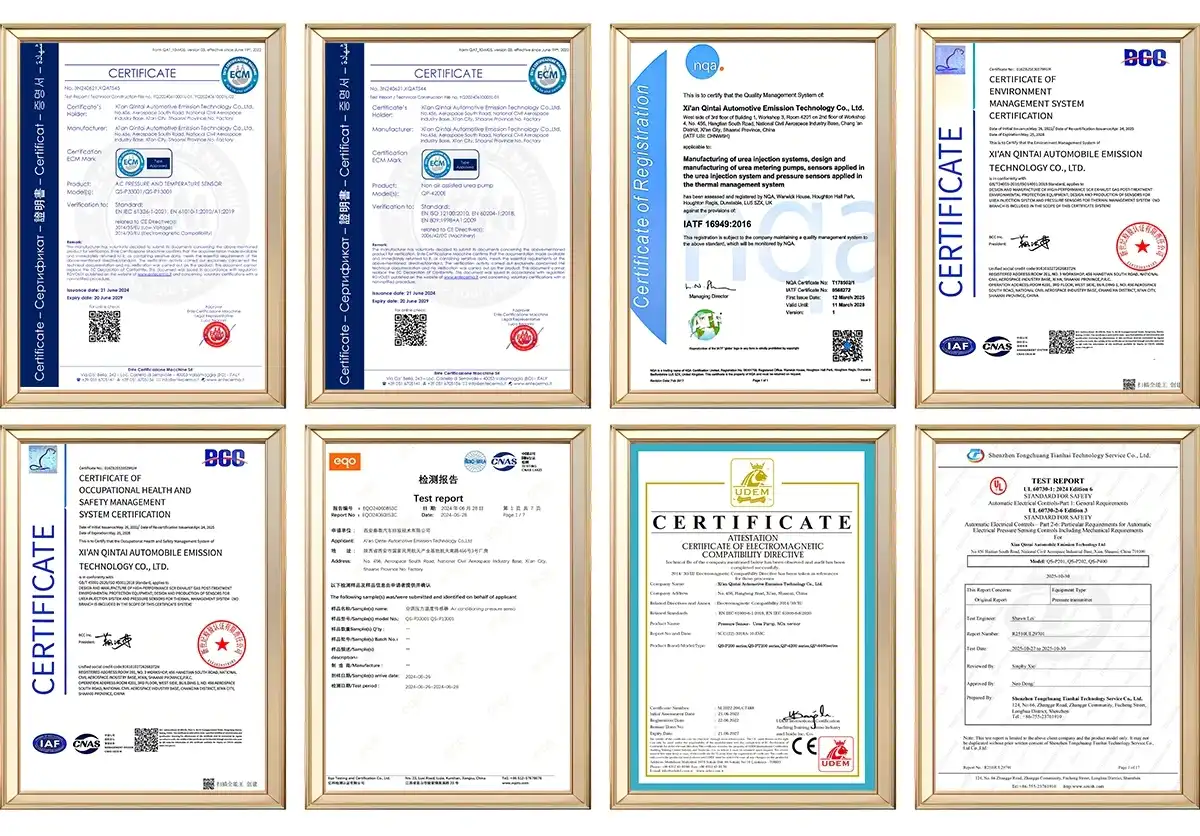
Integrated AdBlue Dosing Systems are most useful for companies that make diesel engines and vehicles. By cutting down on the number of steps needed to put together vehicles, these solutions speed up production lines and make sure that all vehicle types work the same way. It's easier to get systems certified to meet IATF 16949 and ISO 9001 standards when you buy them from qualified companies like Qintai, who have many invention patents and offer full expert help.
Because combined systems can be expanded easily, production can be sped up quickly without affecting pollution performance. The standard connections and predictable calibration settings make validation testing easier for R&D workers. Long-term partnerships with suppliers that keep prices stable and make sure that parts are always available even when the market changes give purchasing managers more power.
Aftermarket Flexibility and Retrofit Applications
Because they are so flexible, modular SCR pumps are often preferred by shops that fix commercial vehicles, sell parts, and take care of fleets. With the right control units and injectors, a single pump model can work with multiple truck brands. This simplifies inventory and frees up capital that would otherwise be held in stock. Retrofits can be done quickly and easily by techs with only moderate training, as long as they follow simple construction steps.
The aftermarket wants things to be cheap and work with a lot of other things. These requirements are met by stand-alone pumps, which let users find parts at low prices and choose designs that work best for their needs. But because of this, strict quality control is needed to make sure that installation mistakes or pairings of parts that don't work together don't happen, which could lead to warranty claims or failed emission tests.
Generator Sets and Stationary Applications
Generator set makers who work in mines, power plants, and backup power situations put durability and continuous use at the top of their list of priorities. Integrated AdBlue Dosing Systems work really well in these conditions because they are very reliable, can handle vibration and temperature changes, and need less service, which fits in with generator repair plans. Fluid containment is improved because there are fewer possible leak points. This is an important safety factor in equipment rooms that are closed off.
Environmental flexibility is important for generators that work in places with very high or very low temperatures, like cold building sites at -40°C or power plants in the desert that are hotter than 50°C. Advanced dosing systems use freeze protection techniques and temperature-compensated monitoring methods to keep reducing NOx levels no matter what the weather is like.
Future Trends and Innovations in AdBlue Dosing and SCR Technologies
Telematics Integration and Predictive Maintenance
A big step forward is the combination of telematics tools with pollution control systems. Modern AdBlue Dosing Systems send real-time diagnostic data to fleet management software. This lets maintenance plans plan ahead to replace urea filters and adblue before they stop working as well. This connection cuts down on sudden breakdowns, improves service intervals, and creates records of compliance that can be checked by regulators.
Machine learning systems look at how parts are used, the environment, and the quality of the fluid to correctly predict how long parts will last. Industry standards say that fleet operators can switch from reactive fixes to proactive maintenance, which will lower overall ownership costs by 15 to 20 percent. Buying groups should give more weight to suppliers that offer telematics interfaces that work with each other and strong data analytics support.
Enhanced Filtration Technologies
New ideas in urea filter adblue design try to make them last longer without lowering their filtration effectiveness. Multi-layer synthetic fibre media can now filter out particles as small as 5 to 10 microns while still keeping a lot of dirt and having a low pressure drop. These improvements stop injectors from breaking down because of crystallisation and keep metallic ions from contaminating sensitive SCR catalysts, which speeds up catalyst poisoning.
Qintai's research focuses on chemical compatibility testing to make sure that filter materials can handle the corrosive nature of 32.5% high-purity urea solutions at a variety of temperatures. Burst pressure testing proves that housings can handle DEF expanding when it freezes, which is a common way for things to fail in northern areas. These strict quality controls are in line with the requirements for IATF 16949 certification and show a dedication to the very small errors that are necessary for SCR dosing pumps to work properly.
Regulatory Evolution and Compliance Strategies
As new emission rules come out in North America and Europe, NOx levels will continue to get tighter. Even lower emission limits are expected to be required by the EPA's suggested rules for 2027 and later years. This will increase the need for more advanced dosing control algorithms and more efficient SCR catalysts. Vehicle makers need to work together with sellers of pollution systems to test new technologies in the real world before they are required to be used by regulators.
This regulatory pressure opens up opportunities for suppliers who can offer full technical support, quick prototyping, and flexible customisation. With more than 20 years of research and development experience and 58 invention patents, companies like Qintai can help OEMs make these changes more smoothly. Building long-term relationships with certified suppliers lowers the risk of noncompliance and speeds up the time it takes to market for next-generation vehicle platforms.
Conclusion
Which one you choose between an AdBlue Dosing System and an SCR pump depends on your business goals, the make-up of your fleet, and your compliance strategy. Integrated dosing systems are more reliable, easier to maintain, and give uniform performance. They are perfect for OEM production and usage in big fleets. Modular SCR pumps are flexible and cost-effective for aftermarket installs and unique uses that need custom designs. When making procurement decisions, it's important to weigh the initial investment against the long-term operational costs, the quality of the supplier partnership, and the assurance of regulatory compliance. As technology improves and emission standards get stricter, it becomes more important than ever to choose certified suppliers with a track record of success if you want to stay ahead of the competition and be good to the environment.
FAQ
Q1: What maintenance does a urea filter adblue require?
A: During major service intervals, urea filter and adblue parts usually need to be replaced every 120,000 to 200,000 kilometres. In building or farming settings with a lot of dust, shorter rounds may be needed to keep the pump from getting too stressed. Urea filters are different from other filters because they can't be cleaned and used again because the synthetic media inside them traps dirt deep inside the fibre structure. If you try to clean these filters, you could damage the material and cause the injectors to fail, which would require expensive fixes and cause problems with emission compliance.
Q2: How do I identify a failing AdBlue system component?
A: Increasing DEF use, dashboard warning lights showing NOx sensor errors, the engine going into "limp mode," and seeing crystallisation around the injector nozzle are all common signs of a problem. OBD-II readers can get diagnostic trouble codes that tell you exactly what's wrong with a part, like a pump pressure fault or a dosing control unit mistake. Checking the amount and quality of DEF fluid on a regular basis helps keep systems from breaking down. AdBlue that isn't very good and has metallic ions or particles in it speeds up the breakdown of parts and the poisoning of the SCR catalyst.
Q3: Can I source AdBlue dosing components from multiple suppliers?
A: While modular SCR pumps let you get parts from more than one source, mixing parts that don't work well together can cause problems and void the guarantee. Adblue's high-quality urea filters meet ISO 22241 standards, which make sure that materials don't break down chemically in urea solutions. Low-quality options might use adhesives that break down, letting out contaminants that hurt SCR catalysts. Suppliers with a good reputation, like Qintai, keep their IATF 16949 approval up to date. This ensures that each batch is the same and that the fine tolerances needed for system stability are met. Integration risks are lower when you buy whole systems or confirmed component kits from certified makers.
Partner with Qintai for Reliable AdBlue Dosing System Solutions
Qintai offers tried-and-true methods for controlling emissions, backed by more than 20 years of research and development experience and strong relationships with top OEMs like Weichai Power, Yuchai Power, and Quanchai Power. We are the biggest AdBlue Dosing System manufacturer in China, and we offer full OEM/ODM services, flexible customisation, and full certification compliance with standards like IATF16949, ISO9001, and REACH. Our high-tech filtration parts and precise dosing modules consistently lower NOx levels, make parts last longer, and make it easy to use them in heavy trucks, construction equipment, and generator sets.
Qintai offers dedicated technical support, rapid prototyping, and prices that are competitive around the world, whether you need mass production for OEM deployment or custom configurations for aftermarket solutions. Get in touch with our engineering team at info@qt-sensor.com to talk about your emission compliance needs and find out how our approved AdBlue Dosing System options can help your fleet run better while keeping total ownership costs low.
References
1. Diesel Technology Forum. (2020). Clean Diesel Technology: NOx Reduction Systems.
2. Environmental Protection Agency (EPA). (2022). Control of Air Pollution From New Motor Vehicles: Heavy-Duty Engine Standards. Federal Register, Vol. 87.
3. International Organization for Standardization (ISO). (2019). ISO 22241: Diesel Engines - NOx Reduction Agent AUS 32.
4. Johnson, T. V. (2015). Review of Selective Catalytic Reduction (SCR) and Related Technologies for Mobile Applications. SAE International Journal of Engines, 8(3), 1087-1102.
5. Majewski, W. A., & Khair, M. K. (2006). Diesel Emissions and Their Control. SAE International.
6. SAE International. (2021). Connected Vehicle Diagnostics and Predictive Maintenance. Technical Paper Series.


Our customers’ satisfaction speaks for our quality — contact us to experience the same reliable service.