- English
- French
- German
- Portuguese
- Spanish
- Russian
- Japanese
- Korean
- Arabic
- Greek
- German
- Turkish
- Italian
- Danish
- Romanian
- Indonesian
- Czech
- Afrikaans
- Swedish
- Polish
- Basque
- Catalan
- Esperanto
- Hindi
- Lao
- Albanian
- Amharic
- Armenian
- Azerbaijani
- Belarusian
- Bengali
- Bosnian
- Bulgarian
- Cebuano
- Chichewa
- Corsican
- Croatian
- Dutch
- Estonian
- Filipino
- Finnish
- Frisian
- Galician
- Georgian
- Gujarati
- Haitian
- Hausa
- Hawaiian
- Hebrew
- Hmong
- Hungarian
- Icelandic
- Igbo
- Javanese
- Kannada
- Kazakh
- Khmer
- Kurdish
- Kyrgyz
- Latin
- Latvian
- Lithuanian
- Luxembou..
- Macedonian
- Malagasy
- Malay
- Malayalam
- Maltese
- Maori
- Marathi
- Mongolian
- Burmese
- Nepali
- Norwegian
- Pashto
- Persian
- Punjabi
- Serbian
- Sesotho
- Sinhala
- Slovak
- Slovenian
- Somali
- Samoan
- Scots Gaelic
- Shona
- Sindhi
- Sundanese
- Swahili
- Tajik
- Tamil
- Telugu
- Thai
- Ukrainian
- Urdu
- Uzbek
- Vietnamese
- Welsh
- Xhosa
- Yiddish
- Yoruba
- Zulu
Urea Pressure Sensor Guide for Diesel Aftertreatment Systems
A urea pressure sensor, also called a DEF pressure sensor or AdBlue pressure sensor, is one of the most important components in a diesel SCR aftertreatment system. It measures the hydraulic pressure of the urea solution inside the dosing module and sends real-time data to the engine control unit. Without accurate pressure feedback, the ECU cannot regulate AdBlue injection correctly, which leads to NOx emission spikes and potential regulatory violations. This guide walks you through how these sensors work, what affects their performance, how to select the right one, and where to source them reliably.
Understanding Urea Pressure Sensors: Principles, Types, and Applications
How the Sensor Converts Pressure into a Signal
The mechanical force of the urea solution in the dosing line is picked up by a DEF pressure sensor. This sensor then turns the force into an electrical signal. A value of 0.5 V to 4.5 V is what most instruments give off. At the lowest voltage, the pressure is also the lowest that can be measured.
At the highest voltage, the pressure is also the highest. This signal is always being read by the ECU, which changes the dose pump's output to match. This closed-loop control keeps the flow of AdBlue in the small range that is needed to successfully lower NOx.
Common Sensor Technologies Used in SCR Systems
The three main types of sensing technologies used in SCR dosing systems are the following. When you press on a piezoresistive sensor's thin diaphragm, it bends. This changes the resistance of strain gages that are built into the sensor. Sensors that measure capacitance pick up changes in the capacitance as the diaphragm moves.
Resistive sensors are often cheaper than other types because they use a simpler bridge circuit for tasks that don't need accuracy. Piezoresistive designs are the best for treating heavy-duty diesel because they offer the best combination of accuracy, chemical protection, and signal steadiness over a wide operating range.
Real-World Applications Across Industries
A lot of diesel-powered tools have DEF pressure sensors. When heavy trucks are on long trips, they make sure that their SCR systems meet EPA rules and Euro VI rules. They have to deal with a lot of changes in load and temperature in building and farming tools.
They help fixed generator sets equipped with urea pressure sensor achieve long-term stable operation at sites such as power plants and mines, where precise dosing is critical for meeting emissions permit requirements. Before picking a component, it's important to understand the working principle of the whole sensor, since it needs to perform differently for various working conditions.
Advantages and Performance Factors of Urea Pressure Sensors
Why Pressure Sensing Matters More Than You Might Think
If you compare pressure sensors to temperature or concentration sensors in other parts of the aftertreatment system, pressure sensors show the health of the mechanical system the most quickly. If the pressure drops quickly, there could be a leak in the line or a broken pump.
If there is a pressure jump, it means that more than one part of the line is blocked or an injector is stuck. Following these changes in real time can help fleet managers and OEM engineers find issues before they lead to trouble codes, put a vehicle into limp mode, or damage parts in a way that can't be fixed.
Performance Factors That Affect Sensor Accuracy
There are several things that can change over time that affect how accurate a DEF pressure sensor reading is. When urea solution freezes, it does so at about -11°C (12°F) and its volume grows by about 9%. This makes temperature one of the most important factors. This growth could be bad for monitors that don't have their own balance systems built in.
Sign drift can also be brought on by mineral buildups or AdBlue that has evaporated. You should check connector pins and sensor threads often for early signs of corrosion or crystallization that can be fixed before they change readings. This is what most OEM specs say should be done: tune the sensors once a year or at every major service interval.
Signal Integrity and Calibration Intervals
A good analog sensor sends out a steady value that is equal to the range of measurements it can make. Signal drift is the most common type of degradation. This happens when the output moves away from its calibrated baseline even though the pressure doesn't change. Techs can use a digital voltmeter or an OBD scan tool that shows real-time sensor data to make sure the signal is correct.
If the target voltage falls within the expected range but the measured value deviates, your urea pressure sensor needs to be either re-calibrated or replaced. Gold-plated connector pins resist corrosion, extending the service interval before re-calibration is required.
How to Choose the Best Urea Pressure Sensor for Your Diesel Aftertreatment System
Key Specifications to Match to Your Application
What you need to know about your system before you ask a urea pressure sensor supplier for quotes is the supply voltage (5 V DC), the output signal type (analog 0.5–4.5 V or digital SENT/LIN), the operating temperature range, the thread size (M10×1 or M12×1.5), and the pressure range. It will be hard to dose or diagnose right away after installation if you don't match any of these to the ECU tuning. Before you buy a lot of something, you should always check the part number against the standard for the original equipment.
Evaluating Suppliers: Certifications and Mass Production Capacity
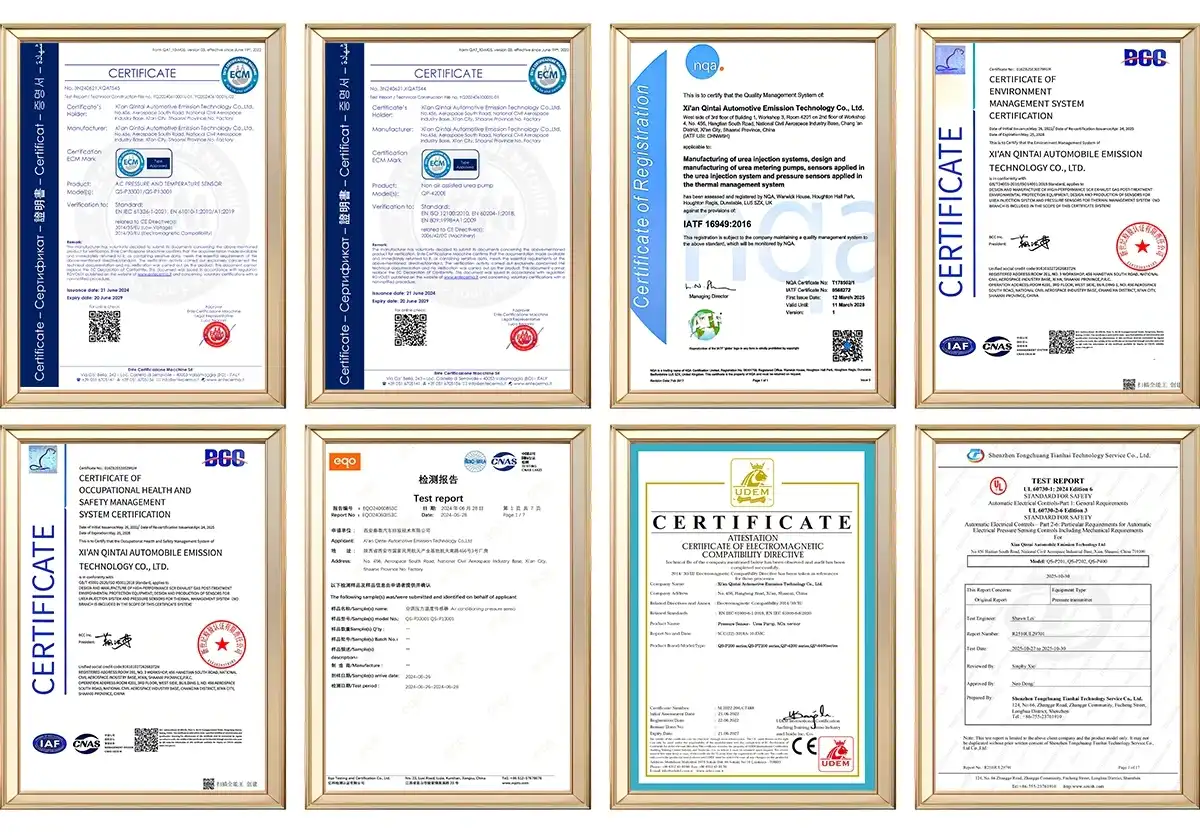
When OEM buying teams check out a seller, they do more than just look at the paperwork. If a company has both IATF 16949 and ISO 9001, you can be sure that there are rules in place while the products are being made. Ask the seller if they test all of the finished sensors' electrical connections before they send them out.
If a company wants to make a lot of things, you should make sure they can show that they can do so and that their lead times are always the same. Companies that make their own sensor cores are easier to track and can help with engineering changes faster than companies that buy parts and put them together.
Warranty, Delivery, and Long-Term Supply Agreements
Most industrial sensors come with a warranty that lasts for at least one year. Check to see if the seller is willing to sign a long-term deal with rules for price stability. You should also find out how quickly they can respond after the sale and if they have extra parts available. If you sell aftermarket parts, make sure that the supplier has enough stock on hand to make sure that orders are sent out quickly. When it comes to the total cost of ownership, these things often matter more than the price of the unit itself.
Troubleshooting and Calibration Guide for Urea Pressure Sensors
Identifying Common Fault Codes and Their Root Causes
One of the most common trouble codes to see when an SCR breaks is P204B, which stands for "Reductant Pressure Sensor Circuit Range/Performance." If the signal is moving, it's likely because the sensor is old, the pins that connect it are rusty, or urea crystals are partly blocking the sensor port. P20EE (Reductant Pressure Too Low) is usually a sign that the pump isn't working right, not a sensor. But if a sensor isn't working right and reads lower than the real pressure, it can give the same code.
Step-by-Step Calibration Procedure
First, connect a two-way scan tool that can work with live SCR data. Write down the monitor's voltage output when the system is not under any stress. Then, compare it to the normal baseline, which should be around 0.5 V. Then, run the dosing pump to make the system's pressure go up, and then check the output at a known point. If the differences between the values are bigger than the accuracy range, the sensor needs to be changed. To make sure everything works right, you should always clear all DTCs and test the system's features after changing them.
Preventing Crystallization-Related Sensor Failures
As part of regular maintenance, clean water is flushed through the dosing system containing the urea pressure sensor to remove residual urea crystals before they solidify. Using AdBlue that complies with ISO 22241 standards reduces mineral content and slows crystal formation. Generally, sensors with minimal dead space and smooth internal flow paths deliver longer service life and better field performance.

Procurement and Supply Chain Insights for Urea Pressure Sensors
Sourcing Strategy for OEM and Aftermarket Buyers
Procurement teams sourcing DEF pressure sensors at scale should separate their supplier pool into primary and secondary sources. A primary OEM-qualified supplier provides the production volume and documentation needed for vehicle homologation.
A secondary aftermarket source covers replacement demand and reduces exposure to single-source supply risk. When evaluating a new urea pressure sensor manufacturer, request production samples for independent bench testing before committing to a volume order.
Qintai QS-P226: Technical Specifications at a Glance
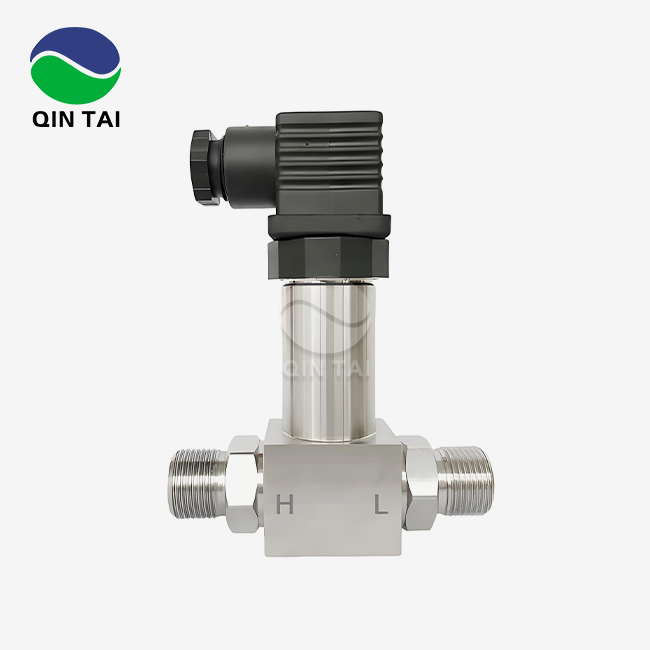
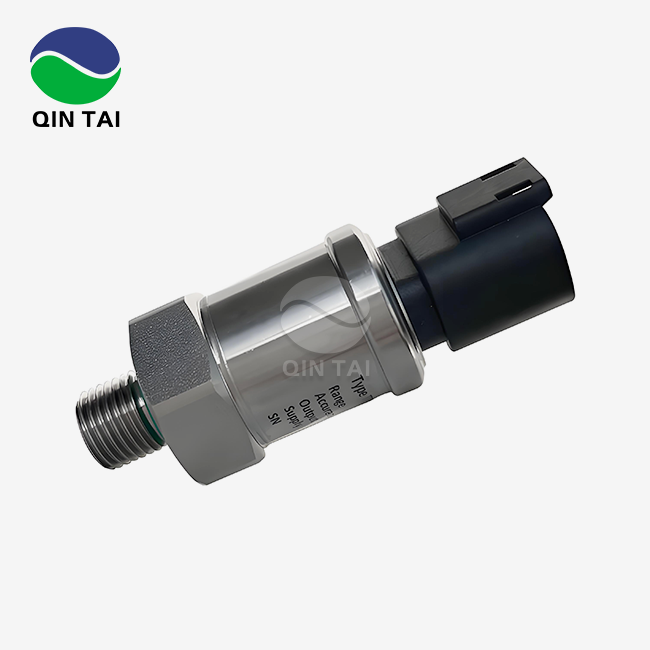
Qintai's QS-P226 is a self-developed analog DEF pressure sensor designed for SCR dosing systems in heavy-duty diesel applications. Here are the core specifications of this device:
- Supply Voltage: 5 V DC
- Output Signal: 0.5–4.5 V DC ratiometric analog
- Measurement Range: -14 psi to +130.5 psi
- Accuracy: ±0.5% full-scale
- Measuring Medium: Urea (AdBlue/DEF)
- Warranty: 12 months, 100% electrically tested before shipment
- Pressure Range: Refer to OE specification
These specifications place the QS-P226 within the operating window of most Euro VI and China VI SCR systems. The ratiometric output tracks proportionally with supply voltage, which eliminates reading errors caused by minor voltage fluctuations in the vehicle's electrical system.
The QS-P226 is built to perform in demanding field conditions. The sensor materials resist urea corrosion and crystallization, maintaining measurement accuracy even when fluid quality is marginal. An internal buffering structure accommodates the 9% volume expansion of freezing urea, protecting the diaphragm during cold-weather starts. Sealed housing keeps moisture and particulate contamination away from internal electronics, and the mechanical construction withstands continuous vehicle vibration without signal degradation.
These design choices directly address the failure modes most commonly reported in SCR aftertreatment fieldwork, making the QS-P226 a practical choice for both OEM integration and aftermarket replacement programs.
Building Long-Term Supplier Relationships
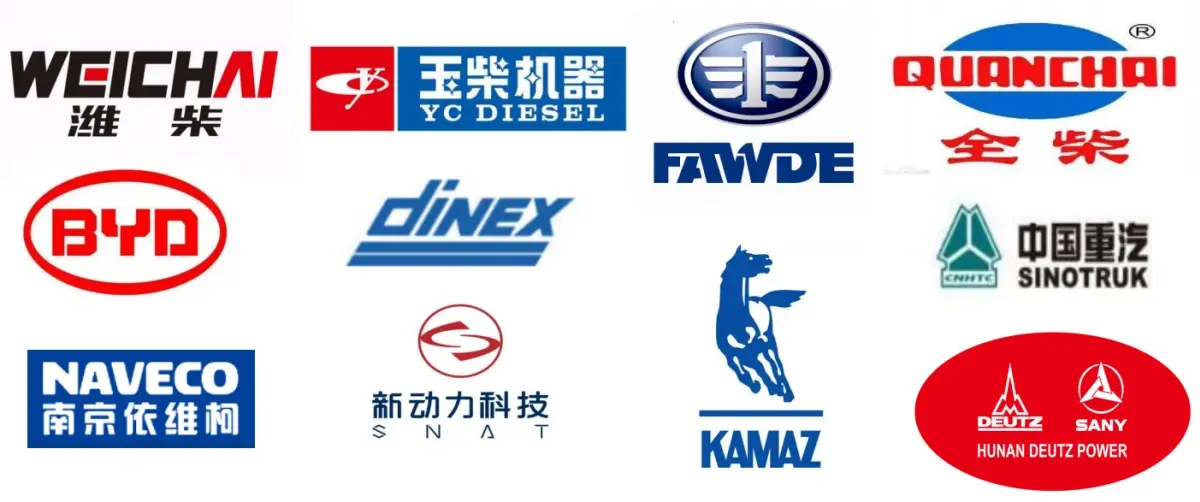
Long-term supply agreements with a qualified urea pressure sensor manufacturer reduce procurement risk and support stable production scheduling. Qintai, established in 2001 and certified to IATF 16949 and ISO 9001, serves as the No. 1 market-share OEM sensor supplier in China and supplies core customers including Weichai Power, Yuchai Power, and Quanchai Power. With OEM/ODM customization available and products distributed across more than 60 countries, Qintai supports global procurement teams with consistent lead times, engineering documentation, and dedicated after-sales response.
Conclusion
If you do not select the proper DEF pressure indicator which is essentially the urea pressure sensor for your SCR aftertreatment system, the system will suffer poorer emission compliance, shorter service life and higher maintenance costs. Purchasing and engineering teams can make better decisions when they understand how these sensors work, what specs are important for their application, and how to evaluate suppliers. This way, they can base their decisions on real technical requirements instead of merely catalog descriptions.
It was made to meet the precision and durability needs of current Euro VI and China VI systems. This is the Qintai QS-P226, which you can see below. This guide will help you build a stronger supply chain and avoid making mistakes that will cost you a lot of money, whether you are looking for parts to integrate with an OEM or to update an aftermarket part.
FAQ
How often should a DEF pressure sensor be calibrated?
Sensor calibration should be checked at least once a year or at every big service interval, according to most OEM maintenance plans. If the sensor connector and port are used a lot, like in mining engines or long-haul trucks, you should check them for crystallization every six months.
What happens if the sensor fails?
A broken AdBlue pressure monitor means the ECU can't get the data it needs to control the dose. If NOx emissions are too high, the system may turn off urea injection to protect parts. The car then usually goes into limp mode with DTCs saved.
Can I use one sensor across different SCR system brands?
The thread sizes are usually standard (M10×1 or M12×1.5), but the ECU needs the right type of output signal and calibration curve. It is important to always check that the signs from different brands of systems will work with each other before they are used together.
How long does a quality DEF pressure sensor last?
Standard diesel applications say that sensors that are well-made can last between 15,000 and 20,000 hours without any issues.
What is the P204B fault code?
That's what P204B means: there is a problem with the sensor circuit's range or how well it works. A lot of the time, this is caused by signal drift from getting older, connecting pins that are rusty, or urea crystal fouling at the sensor port.
Partner with Qintai for Your Next Urea Pressure Sensor Order
It is easy and stable to keep an eye on the DEF pressure in your SCR system with Qintai's QS-P226. It is made with IATF 16949 standards, is electrically tested 100% of the time before shipping, and comes with a 12-month warranty. We are a top company that makes urea pressure sensors.
We have been in business for more than 20 years and have worked with OEMs in more than 60 countries. We can help with OEM integration, aftermarket sales, and custom ODM projects. You can email our team at info@qt-sensor.com or visit qt-sensor.com to get examples or a price quote for a lot of sensors.
References
1. SAE International Journal of Engines – "SCR System Performance and DEF Dosing Accuracy in Heavy-Duty Diesel Applications," SAE International, 2021.
2. Emission Control Engineering – "Advances in Selective Catalytic Reduction Sensor Technology for Commercial Vehicles," ASME Press, 2020.
3. ISO 22241-1:2019 – "Diesel Engines – NOx Reduction Agent AUS 32 – Part 1: Quality Requirements," International Organization for Standardization, 2019.
4. Journal of Automotive Engineering – "Fault Diagnosis Methods for SCR Aftertreatment Systems in Diesel Engines," IMechE, 2022.
5. EPA Heavy-Duty Engine and Vehicle Standards – "Control of Air Pollution from New Motor Vehicles: Heavy-Duty Engine and Vehicle Standards," U.S. Environmental Protection Agency, 2021.
6. IATF 16949:2016 – "Quality Management System Requirements for Automotive Production and Relevant Service Part Organizations," International Automotive Task Force, 2016.

Our customers’ satisfaction speaks for our quality — contact us to experience the same reliable service.