- English
- French
- German
- Portuguese
- Spanish
- Russian
- Japanese
- Korean
- Arabic
- Greek
- German
- Turkish
- Italian
- Danish
- Romanian
- Indonesian
- Czech
- Afrikaans
- Swedish
- Polish
- Basque
- Catalan
- Esperanto
- Hindi
- Lao
- Albanian
- Amharic
- Armenian
- Azerbaijani
- Belarusian
- Bengali
- Bosnian
- Bulgarian
- Cebuano
- Chichewa
- Corsican
- Croatian
- Dutch
- Estonian
- Filipino
- Finnish
- Frisian
- Galician
- Georgian
- Gujarati
- Haitian
- Hausa
- Hawaiian
- Hebrew
- Hmong
- Hungarian
- Icelandic
- Igbo
- Javanese
- Kannada
- Kazakh
- Khmer
- Kurdish
- Kyrgyz
- Latin
- Latvian
- Lithuanian
- Luxembou..
- Macedonian
- Malagasy
- Malay
- Malayalam
- Maltese
- Maori
- Marathi
- Mongolian
- Burmese
- Nepali
- Norwegian
- Pashto
- Persian
- Punjabi
- Serbian
- Sesotho
- Sinhala
- Slovak
- Slovenian
- Somali
- Samoan
- Scots Gaelic
- Shona
- Sindhi
- Sundanese
- Swahili
- Tajik
- Tamil
- Telugu
- Thai
- Ukrainian
- Urdu
- Uzbek
- Vietnamese
- Welsh
- Xhosa
- Yiddish
- Yoruba
- Zulu
Aftertreatment Dosing Unit Uses: A Guide to DEF Delivery Systems
Modern diesel engines depend on sophisticated emission control technologies to meet increasingly stringent environmental standards. At the heart of these systems lies the Aftertreatment Dosing Unit, a precision-engineered component responsible for delivering Diesel Exhaust Fluid into the exhaust stream. This device ensures accurate urea injection, enabling Selective Catalytic Reduction systems to convert harmful nitrogen oxides into harmless nitrogen and water vapor. Understanding how these units function, their maintenance requirements, and selection criteria has become essential for procurement managers and engineers navigating today's regulatory landscape while balancing performance and cost-efficiency.

Understanding Aftertreatment Dosing Units and Their Core Functions
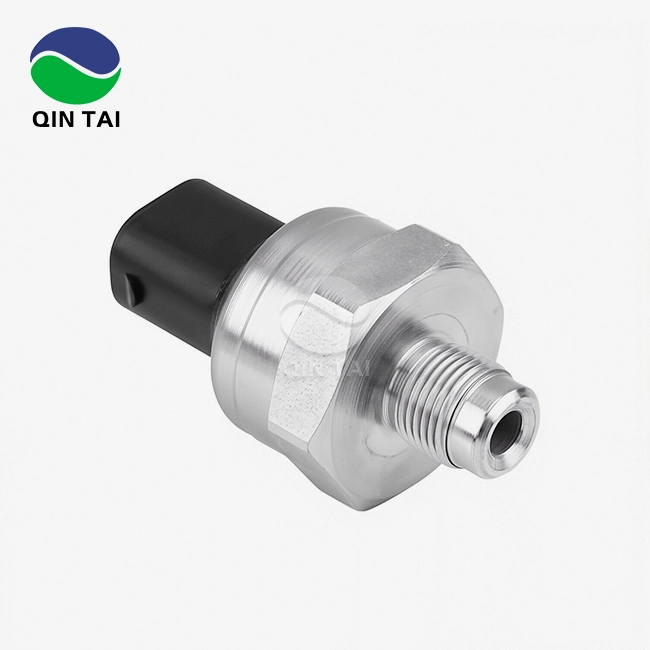
The Aftertreatment Dosing Unit controls the injection of DEF with microscopic accuracy and is the delivery mechanism in SCR systems. A dose pump, a pressure regulator, an electronic control interface, and specialised sensors, such as urea dosing pressure sensors that keep an eye on hydraulic conditions in real time, are all built into these units.
How Dosing Units Integrate with SCR Systems?
In the bigger picture of emission control, the Engine Control Unit tells the dosing units what to do based on the temperature of the exhaust, the readings from the NOx sensors, and the engine's load. The ECU figures out the exact amount of DEF that is needed, and the dosing unit presses the fluid to about 5–10 bar before atomising it through an injector nozzle. This atomisation makes a fine mist that quickly evaporates in the hot exhaust stream. This makes sure that the mixture is well mixed before it goes into the SCR catalyst.
The urea dosing pressure monitor is very important because it gives constant input to stop both under-dosing (which leads to emission compliance fails) and over-dosing (which causes urea crystallisation and system blockages). Research shows that keeping the pressure stable within ±1.5% accuracy lowers the chance of entering limp mode, which limits the engine's performance.
Control Mechanisms and Operational Benefits
Modern dosing units use closed-loop control systems that change the rate of injection on the fly. During city drive or idling, when exhaust temps drop below the best range for SCR operation, the system lowers dosing to keep catalyst surfaces from getting stuck with urea that hasn't been vaporised. On the other hand, dosing intensity goes up proportionally when the highway is being used or when there is a lot of traffic. This smart control has measurable benefits, such as a decrease in NOx of over 95%, better fuel economy of 3–5% compared to older EGR-only systems, and longer component life through better working conditions. The connection to engine control systems also makes predictive diagnostics possible, which lets workers know about possible problems before they get worse and need expensive repairs.
Diagnosing and Maintaining Aftertreatment Dosing Units
Regular repair and quick problem-solving have a direct effect on operating uptime and following the rules. By spotting early warning signs, you can keep small problems from turning into system failures that stop tools from working.
Common Symptoms and Their Impacts
Several lights show that the Aftertreatment Dosing Unit is having problems. Strange whining or grinding sounds coming from the pump area could mean that there is internal wear or contamination. When you see P204B trouble codes on your dashboard, it usually means that there is a problem with the pressure sensor circuit. This can be caused by corroded connecting pins or signal drift. If you can see urea crystallising around the injection tubes, it means that the urea wasn't atomised completely or was dosed too much.
There are bad effects from these malfunctions. Incorrect dosing affects emission performance right away, which could lead to fines for not following the rules during traffic checks. Crystallisation gradually blocks the flow of exhaust gases, creating more backpressure that lowers engine efficiency and sets off safety derate modes.
Step-by-Step Diagnostic Approach
When techs think a dose unit is broken, they should follow this step-by-step process:
Connect the diagnostic tools to get the problem codes that have been saved and to watch the live data streams. Check the amount of the DEF tank and the quality of the fluid—about 40% of dosing system complaints are caused by urea that is contaminated or broken down. Check all the electrical connections for rust, especially at the pressure sensor leads where water often gets in.
Next, make sure the pump works by listening for activation during the start-up sequences. The pump should run for a short time to prime the system and then run on and off while the system is working. The absence of pump noise is a sign of an electrical problem or parts that have seized up. Check the voltage at the pump connector. The readings should match what the manufacturer says, which is usually 12V or 24V depending on how the system is set up. If you can get a borescope, look at the injection tip. Check for urea buildup, carbon buildup, or damage to the body. Take out the air-assisted atomisation lines and look for any bottlenecks. A lot of systems have filters that need to be replaced every so often. Clogged filters stop the flow of air and make spray patterns less accurate.
Preventive Maintenance Best Practices
Setting up regular repair plans for dosing units greatly increases their useful life. DEF filters should be changed every 12,000. hours of use or once a year, whichever comes first. When storing something for a long time, flush the whole dosing system to keep the urea from crystallising. Urea that has been sitting still for weeks will harden in systems that are not being used.
When the DEF tank is being used in cold weather, make sure that the heating elements work properly. AdBlue freezes at -11°C, and even though dose unit diaphragms have built-in buffering structures, the growth that happens when it freezes can damage them. Our engineering tests show that sensors with flexible parts inside can handle more than 200 rounds of freezing and thawing without losing their signal. Keep detailed service records that show when maintenance is done and when parts are replaced. This paperwork is very helpful when filing a warranty claim and finding problems that keep happening, which could mean there are issues further up the line, like fuel pollution that changes the chemistry of the exhaust.
Real-World Case Study
Several excavators in a construction equipment fleet had dosing units fail more than once. The units only lasted 8,000 hours, when they were supposed to last 15,000 hours. An investigation showed that operators were filling up DEF tanks with urea solution from containers that were not properly kept and were in full sunlight, which caused the solution to break down thermally. After following the right procedures for storing DEF and putting in bulk dispensing equipment with quality monitoring, failure rates dropped by 73% and the average unit lifespan rose to 18,500 hours.

Comparing Dosing Unit Types, Brands, and Materials
To make choices about what to buy, you need to know about the different technologies and makers that are out there. Different uses need different qualities, and making sure that the product's abilities match these needs guarantees its best long-term performance.
OEM Versus Aftermarket Options
Original Equipment Manufacturer (OEM) dosing units for the Aftertreatment Dosing Unit go through a lot of validation testing along with engine development programs. This makes sure that they work well with the engine and that the guarantee covers everything. These units usually cost a lot, but they are guarantyd to work with other devices and come with full expert support. Aftermarket options can save you 30 to 50 percent on costs, which makes them a good choice for businesses with older equipment or limited funds.
But choosing an extra item needs to be carefully thought out. Quality varies a lot from one manufacturer to the next, and some items don't have the corrosion-resistant materials they need to last a long time. When looking at aftermarket choices, make sure that the parts you want to buy meet the ISO 22241 standards for urea system compatibility and ask for material specifications that prove the use of 316L stainless steel or PPS polymer diaphragms that won't break down in urea.
Leading Manufacturer Comparison
The global dose unit market is dominated by a few well-known names. People know that Bosch systems are built to last and have advanced closed-loop control methods that make dosing more accurate in a wide range of working situations. Their units work great in heavy-duty commercial settings where dependability over millions of kilometres justifies higher costs. Dosing technology from Denso is made with the same level of precision as automobile parts. Their small units are perfect for installations in farming equipment and generator sets that don't have a lot of room. Their focus on making things smaller doesn't mean they're less durable—data from the field shows that they work very well in places with a lot of shaking.
Cummins offers dosing units that are perfectly tuned for their powerplants by integrating their engine systems deeply. This vertical integration makes it possible to improve performance in ways that generic solutions can't, especially when it comes to cold-start and transient response during load changes. New Chinese companies, like Qintai, have gotten a big part of the market by offering reasonable prices and using ISO9001 and IATF16949-certified production methods. Since 2001, these suppliers have been working with big Chinese engine makers like Weichai Power and Yuchai Power. They have shown they can handle large-scale production and are now expanding their reach to Europe, the Middle East, and South America.
Material Considerations and Durability Features
Because 32.5% liquid urea solution is toxic, it needs special materials. Wet parts in high-end dosing units are made of 316L stainless steel, which is stronger than standard 304 grade alloys and lasts longer. For polymer parts, you should use PPS or PEEK materials that can handle being exposed to urea continuously at temperatures up to 125°C. Ratings for environmental safety have a big effect on how long someone lives. Units with IP69K certification can handle the high-pressure and high-temperature cleaning methods that are popular in mining and building sites. This is higher than the IP67 rating used for basic automotive applications, where resistance to water and high-pressure spray is not needed.
Features that keep temperatures stable are very important for equipment that works in harsh environments. When units are made for mine use in northern Canada or Siberia, they have better insulation and heaters that keep them ready to go at -40°C outdoor temperatures. On the other hand, units that will be used in the deserts of the Middle East need thermal management to keep them from vaporising when they are heated above 50°C for a long time.
Cost-Efficiency Analysis
When you look at the total cost of ownership, the original buying price is only one part of the picture. A high-quality dose unit that costs $1,200 and works steadily for 20,000 hours is a better deal than a cheaper one that needs to be replaced after 10,000 hours, and that's before you factor in the cost of labour and the time lost when the equipment breaks down. Strategies for buying in bulk cut costs per unit by a large amount. When fleet managers buy 50 or more units, they usually get savings of 15 to 25 percent and get priority when supplies are low. Setting up vendor-managed inventory deals, in which suppliers keep stock at customer sites, gets rid of the need to move stock and makes sure that replacements are available right away.
Procurement Guide: Selecting and Sourcing Dosing Units
Strategic buying strikes a balance between technology needs and business needs. This keeps costs low and the supply chain stable.
Essential Selection Criteria
First, make sure that the two pieces of the Aftertreatment Dosing Unit will work together mechanically. The thread sizes, mounting arrangements, and electrical connectors must all match the specs of the current equipment. M10x1 and M12x1.5 are common thread sizes, but different makers use different sizes. The electrical interfaces include digital SENT protocol communications and analogue voltage outputs (0.5V to 4.5V). Mismatches stop the system from working right.
Make sure that the performance requirements match the needs of the application. Heavy-duty industrial trucks need units that are rated to last a million kilometres, while fixed generator sets put continuous-duty operation ahead of vibration resistance. Marine applications need better corrosion protection for environments with a lot of salt, while construction equipment needs strong housings that can handle being hit and worn down.
Warranty terms should be carefully thought through. Standard coverage lasts for 24 months or 3,000 hours of use, but luxury providers give coverage that lasts for 36 months or 5,000 hours. Know what your warranty doesn't cover. For example, many policies won't pay out if you use DEF brands that aren't approved or if you don't keep records of your regular maintenance. Ask for specifics on how to file a service claim and how long it usually takes to be resolved. Some providers handle claims within 48 hours, while others take weeks.
Due to problems in the global supply chain, lead times are becoming more and more important. Standard products usually ship between 2 and 4 weeks, but custom configurations can take up to 12 weeks. To lower your risk, build ties with more than one supplier. Secondary sources can step in when main suppliers have problems with quality or capacity.
Sourcing Trustworthy Suppliers
Finding trustworthy partners takes more than just comparing prices. Ask for proof of approval, such as ISO9001 quality management and IATF16949 vehicle quality systems. Suppliers who work with big OEM customers have to show that they can produce a lot of items consistently high quality; look for suppliers who already have relationships with well-known engine makers. Look at the system for after-sales help. Does the supplier have technical support staff that knows how to diagnose emission systems? Can they give you replacement parts for things like seals and filters instead of having to buy a whole new unit? How often do they approve service claims, and how long does it usually take for them to be processed?
Think about the area's closeness and its ability to distribute. Shipping costs and arrival times are cut down by storing goods locally or regionally. Some suppliers have consignment inventory programs where customers store stock, but the stock stays with the supplier until it is used up. This way, the supplier avoids having to pay the customer for storage costs and the customer always has access to the stock. Ask for customer examples from businesses and apps that are similar to yours. Talking to current users gives you information about performance, support responsiveness, and long-term dependability that marketing materials can't show. Ask detailed questions about the number of failures, the most common problems, and the level of general satisfaction.
Cost Management Strategies
Talk about volume agreements that will get you good prices and allow you to keep your supplies flexible. When compared to spot purchases, blanket purchase orders that cover expected needs for 12 months usually get you 10-15% off. Include rules for adjusting the amount every three months, allowing a 20% difference to account for changes in demand without charging extra.
Look into vendor-managed inventory plans, in which sellers keep an eye on how much stock is being used and instantly restock. This keeps you from running out of stock and passes the cost of keeping inventory on to your suppliers. A lot of suppliers have VMI programs with no minimum fees for customers who hit certain yearly volume levels. When you buy equipment along with a maintenance agreement, you can be sure of the costs and the speed of service. Comprehensive packages that include regular maintenance, emergency repairs, and yearly system audits usually cost 8–12% of the equipment's purchase price per year. However, they avoid unexpected costs and make parts last longer with professional service.

Future Trends and Performance Optimization in DEF Dosing Systems
Emission control methods are always changing because of new ideas. This means that they can be more efficient and easier to use.
Emerging Technologies
The next step forward in managing emissions is smart dosing limits for the Aftertreatment Dosing Unit that use machine learning techniques. These systems look at past working trends to figure out the best dosing strategies. Compared to traditional control logic, these systems cut DEF use by 8–12%. In addition, predictive algorithms can spot slowing down over time and plan maintenance to happen before problems happen instead of after the fact.
Advanced materials science is making parts for the Aftertreatment Dosing Unit that last a very long time. Ceramic-composite diaphragms can withstand being exposed to urea for more than 30,000 hours without showing any signs of wear and tear. Nano-coated syringe valves keep urea deposits from sticking to them, so they stay clean forever without any help from a person. These new ideas are supposed to double the life of parts while cutting down on upkeep needs.
Predictive maintenance platforms that use the Internet of Things (IoT) link dosing units to cloud-based data engines that keep an eye on the performance of whole groups. Streaming data in real time finds oddities that point to impending failures, which leads to proactive service interventions. Fleet managers can see system health scores, DEF consumption trends, and predicted replacement schedules on a dashboard. This helps them plan maintenance better and avoid unplanned downtime as much as possible.
Regulatory Developments Shaping Procurement
Emission rules are getting stricter all over the world. In 2027, the U.S. Environmental Protection Agency's Clean Trucks Plan calls for NOx standards that are 90% lower than the current ones to go into effect. To meet these goals, dose methods will need to be more accurate and quick than ever before. The European Union Stage VI standards set similarly tough goals, but they also add limits on the amount of particles, which may mean that dosing units and DPF regeneration methods need to work together better.
These regulatory forces open up new market possibilities for companies that offer cutting-edge technologies. Early adoption of next-generation dose systems makes OEM customers look like environmental stars and protects product lines against changes that are coming soon to regulations. Procurement teams should talk to suppliers right away about their plans for meeting upcoming standards. Suppliers who don't have clear development strategies may not be able to meet customer compliance needs within the time frames set by regulators.
Operational Optimization Techniques
In addition to better hardware, operational practices have a big impact on how well a dosing system works. Industry studies show that failures are cut by 35–40% when operators and maintenance staff are taught how to take care of emission systems. Most dosing system problems can be avoided by doing simple things like only using ISO-certified DEF, not refilling tanks in dusty places, and never letting tanks run completely dry.
System interaction is another area of optimisation that is just getting started. Coordinating dosing control with engine mapping and transmission shift strategies lowers the amount of DEF needed while still meeting emission standards. Modern powertrains change the engine's working points to keep the exhaust temperatures at the best level for SCR efficiency. This lowers the dose load and increases the catalyst's life.
Conclusion
Aftertreatment Dosing Units have changed over time from simple pumping systems to complex mechatronic parts that are essential for meeting emission standards and running efficiently. Procurement professionals can make smart choices that balance performance, reliability, and cost by knowing what they do, how often they need to be maintained, and how to choose them. There are more and more technologies to choose from, with both well-known global brands and skilled newcomers providing a wide range of choices for various uses and price ranges. To buy dosing units successfully, you need to know a lot about technology and have good relationships with suppliers. This way, companies can meet current regulations and get ready for future environmental rules that will have a big impact on the diesel engine industry for decades to come.
FAQ
Q1: What are optimal maintenance intervals for dosing units?
A: Standard maintenance plans say that the dose unit should be inspected every 1,000 hours of operation, and every 10,000 hours, the whole system should be flushed out and all of its parts should be replaced. Every 12 hours, or once a year, the DEF filter should be changed. For example, equipment that works in harsh settings like mines or the ocean may need 50% shorter periods. Always write down what you do for maintenance so that your warranty stays valid and so that you have baseline performance data for troubleshooting.
Q2: Do aftermarket dosing units affect OEM warranty status?
A: Putting in aftermarket dosing units can void the engine manufacturer's warranty if it turns out that the part caused other problems. But parts of the U.S. Magnuson-Moss guarantee Act stop guarantee denials based only on using aftermarket parts. Owners and operators should get written confirmation from engine makers about which aftermarket brands they accept. Keeping specific service records and only using DEF that is ISO-certified can help protect you in case of a warranty disagreement.
Q3: What indicators signal dosing unit replacement is necessary?
A: If the pump noise gets too loud, the pressure control fails diagnostic tests, or fault codes keep coming back after sensor and connector repairs, you should replace the dosing units. Cracks that can be seen in the housings or DEF leaks that won't stop around the seals are signs that the structure is failing and needs to be replaced. Units that have been used for more than 15,000 hours and are getting close to the end of their useful life should be replaced during routine maintenance rather than waiting for them to break down without warning.

Partner with Qintai for Reliable Aftertreatment Dosing Unit Solutions
Qintai Automotive Emission Technology Co., Ltd. is ready to help you meet your emission control needs with complete Aftertreatment Dosing Unit solutions backed by more than 20 years of experience making specialised products. As a national high-tech company and China's top original equipment manufacturer (OEM) supplier to major power companies like Weichai, Yuchai, and Quanchai, we offer quality that is backed by ISO9001, IATF16949, and other international certifications. We also have 58 invention patents that show we are always coming up with new ideas.
Our own research and development lets us make units that are exactly what you need for your application, whether it's for heavy-duty commercial vehicles, construction equipment, farm equipment, or stationary power generation. We keep a large collection to ensure fast delivery, and our full-service technical support team is here to help you choose the right product, install it, and start using it. Our global delivery network, which includes more than 60 countries, makes sure that supply lines are reliable and that customers can get help after the sale.
Contact us at info@qt-sensor.com to talk about your needs with experienced application engineers who know what problems Aftertreatment Dosing Unit manufacturers face. We'll give you full technical specs, competitive quotes, and choices for customisation that are made to fit the needs of your project.
References
1. Diesel Technology Forum. (2021). "SCR Technology and Diesel Exhaust Fluid Systems." Diesel Technology Forum Publications.
2. SAE International. (2020). "J1939 Network and Diagnostics for Heavy-Duty Vehicles." SAE Technical Paper Series, 2020-01-0731.
3. Construction Equipment Magazine. (2022). "Fleet Maintenance Best Practices for Emission Systems." Construction Equipment, March 2022 issue.
4. U.S. Environmental Protection Agency. (2023). "Clean Trucks Plan - Proposed Rule for Heavy-Duty Vehicle Standards." EPA Office of Transportation and Air Quality.
5. Manufacturers of Emission Controls Association. (2021). "Diesel Exhaust Fluid Quality and SCR System Performance." MECA White Paper Series.
6. International Organization for Standardization. (2019). "ISO 22241: Diesel engines - NOx reduction agent AUS 32." ISO Standards Catalogue.

Our customers’ satisfaction speaks for our quality — contact us to experience the same reliable service.