- English
- French
- German
- Portuguese
- Spanish
- Russian
- Japanese
- Korean
- Arabic
- Greek
- German
- Turkish
- Italian
- Danish
- Romanian
- Indonesian
- Czech
- Afrikaans
- Swedish
- Polish
- Basque
- Catalan
- Esperanto
- Hindi
- Lao
- Albanian
- Amharic
- Armenian
- Azerbaijani
- Belarusian
- Bengali
- Bosnian
- Bulgarian
- Cebuano
- Chichewa
- Corsican
- Croatian
- Dutch
- Estonian
- Filipino
- Finnish
- Frisian
- Galician
- Georgian
- Gujarati
- Haitian
- Hausa
- Hawaiian
- Hebrew
- Hmong
- Hungarian
- Icelandic
- Igbo
- Javanese
- Kannada
- Kazakh
- Khmer
- Kurdish
- Kyrgyz
- Latin
- Latvian
- Lithuanian
- Luxembou..
- Macedonian
- Malagasy
- Malay
- Malayalam
- Maltese
- Maori
- Marathi
- Mongolian
- Burmese
- Nepali
- Norwegian
- Pashto
- Persian
- Punjabi
- Serbian
- Sesotho
- Sinhala
- Slovak
- Slovenian
- Somali
- Samoan
- Scots Gaelic
- Shona
- Sindhi
- Sundanese
- Swahili
- Tajik
- Tamil
- Telugu
- Thai
- Ukrainian
- Urdu
- Uzbek
- Vietnamese
- Welsh
- Xhosa
- Yiddish
- Yoruba
- Zulu
Where to Buy a Pressure and Temperature Transmitter in Bulk Online
If you need to source a pressure and temperature transmitter in bulk online, the most direct path is to work with verified manufacturers or authorized distributors who offer OEM/ODM services, volume pricing, and traceable certifications. Platforms like manufacturer websites, B2B portals, and industrial supply networks are common starting points. For diesel engine OEMs, SCR system integrators, and aftermarket suppliers, finding a single-device solution that measures both parameters simultaneously reduces procurement complexity, lowers unit cost, and keeps your supply chain lean.

Understanding Pressure and Temperature Transmitters: Key Concepts for Bulk Buyers
Prior to making a big purchase, it is helpful to know what you are getting and why the type of gadget is important for large-scale use.
What These Devices Actually Do
A pressure sensor changes the pressure of a fluid or gas into a common electrical signal that control systems can use. This signal is usually between 0.5V and 4.5V or 4mA and 20mA. An NTC thermistor or an RTD sends heat data to a temperature sender, which turns it into an output that can be read. When both functions are in one unit, readings from two separate sensors placed at different points are in sync and match up with the spot. There is no signal offset.
Why Integrated Units Matter for Industrial Buyers
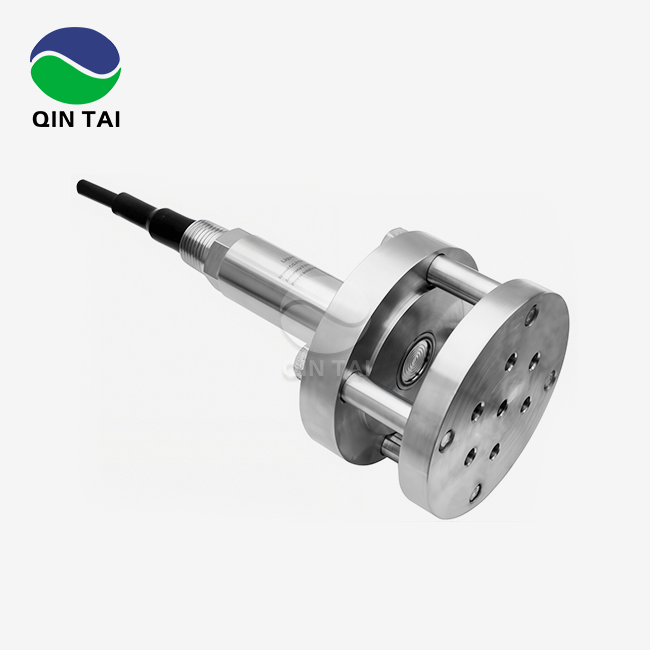
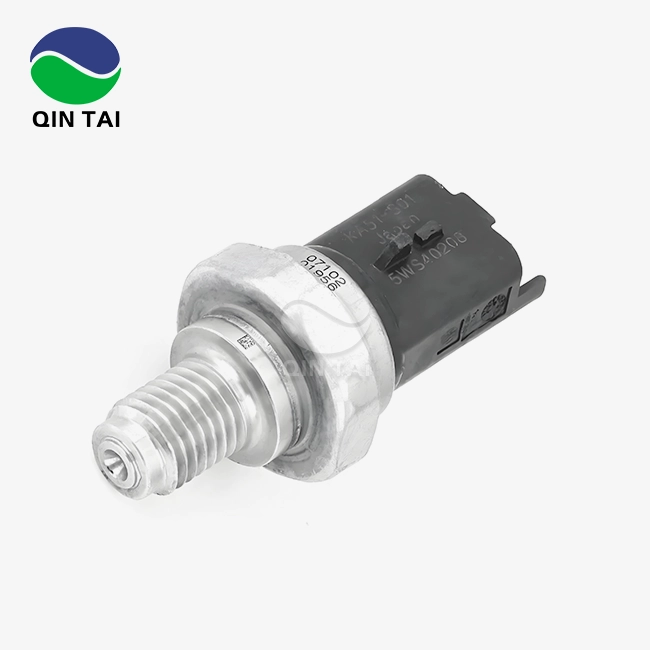
Standalone sensors need to be mounted, wired, and calibrated on their own schedules. That is no longer needed with an integrated dual-output device like Qintai's QS-PT225. It sends both pressure and temperature data from a single process connection. This saves time and money when ordering hundreds or thousands of units because it cuts down on installation work, possible failure spots, and the number of parts you need to buy.
Accuracy, Calibration, and Lifecycle Costs
When you buy in bulk, the accuracy of your devices has a direct effect on your total cost of ownership. A sensor with an F.S. accuracy of ±1.0% and a total error band of ±3% can work in temperatures ranging from -40°C to 130°C and keep working well without needing to be re-calibrated often. You can quickly add up the costs of service claims and fixing when you multiply even small differences in accuracy by thousands of units in the field. Long-term gains are protected by setting tight accuracy from the start.
How to Choose the Right Pressure and Temperature Transmitter for Bulk Purchase
To buy a lot of devices, you need to make sure that the technical specs match your production schedule and application environment.
Match Specifications to Your Application
Pressure ranges and media compatibility of the pressure and temperature transmitter need to be different for each industry. Ranges for the QS-PT225 are 0–5 Bar, 0–10 Bar, 0–20 Bar, and 0–40 Bar. It can handle engine oil, POE oil, refrigerant, gas, and water. It can work in temperatures from -40°C to 130°C, so it can be used to control engine management in cars, HVAC refrigerant circuits, hydraulic systems, and industrial process control. You can avoid expensive returns by making sure that the pressure medium compatibility and output signal type meet your system's needs before you place your order.
Evaluate Supplier Certifications and Production Scale
OEM buyers who are following the China VI or Euro VI emission compliance frameworks must get source approval. Check for compliance with ISO 9001, IATF 16949, and any CE or RoHS rules. It is true that Qintai has all of these credentials and has also applied for 58 invention patents. They have the most market share among Chinese OEMs, such as Weichai Power, Yuchai Power, and Quanchai Power. Their production infrastructure can handle large orders without affecting quality.
Compare Features Across Suppliers Before Committing
When comparing quotes from different dual-sensor makers, keep these things in mind:
- Overvoltage protection: The QS-PT225 carries 32V DC overvoltage protection and reverse polarity protection, reducing field failures.
- Material durability: A 304 stainless steel probe and housing resist corrosion in harsh media far longer than plastic-bodied alternatives.
- Connector standardization: The TE 1-967640-1 electrical connector is an industry-recognized standard, which simplifies integration into existing wiring harnesses.
- Customization options: Process connections available in G1/4, M12x1.5, and M10x1 allow fitment across multiple vehicle or equipment platforms without redesign.
These features directly lower the number of failures in the field and the total cost of ownership over the product's lifetime. Your technical department will give these factors a lot of weight when approving suppliers.

Where and How to Buy Pressure and Temperature Transmitters in Bulk Online
Once you know exactly what you want, the next step is to find a reliable source that can regularly fill large orders.
Trusted Online Procurement Channels
There are three main ways for businesses to buy the pressure and temperature transmitter and other industrial sensors: directly from manufacturers through their websites, through well-known B2B marketplaces like Alibaba or Made-in-China, and through approved regional wholesalers. You have the most control over price, lead time, and flexibility when you buy directly from the maker. Purchasing managers can get to Qintai's product catalog, detailed datasheets, and request forms directly from qt-sensor.com, without having to go through any other websites.
Negotiating Volume Pricing and Custom Orders
Different suppliers offer different volume discounts, but most start using tiered pricing when 100 or more units are ordered. When you call a provider of pressure and temperature transmitters, be sure to include an estimate of your annual volume, information about the application, and any interface needs right away.
This lets the supplier's tech team make sure the parts will work together and give a correct quote. Qintai's OEM/ODM service handles everything from designing the product to mass production. This gives purchasing teams options when catalog items only need minor changes.
Shipping, Lead Times, and Quality Assurance
For large orders from outside of Europe, make sure you know the supplier's wait time per batch, packing standards, and checking procedure. Before committing to full production numbers, ask for sample pieces. Make sure that every shipment comes with a calibration certificate and that the supplier has a clear warranty period. Qintai sends to more than 60 countries and offers consistent after-sales help, which lowers the risk of buying from China for people in other countries.
Installation, Calibration, and Maintenance Tips for Bulk Users
Even the most accurate sensor is useless if it is placed or kept wrong across a big fleet.
Installation Best Practices
If you don't want to break the threads, mount the pressure and temperature transmitter QS-PT225 with 10–20 N·m of torque. Before you install, make sure that the process connection thread matches the port. The housing is made of 304 stainless steel, which is resistant to corrosion and vibration. During assembly, the connector should be kept dry and away from direct fluid exposure.
Calibration Schedules for Large Deployments
For large deployments, set a regular calibration interval based on operating hours or calendar time, whichever comes first. Because the QS-PT225 has a total error band of ±3% across its operating temperature range, most industrial uses will only need to calibrate it once a year under normal conditions. Write down a serial number for each calibration event so that they can be tracked.
Preventive Maintenance Checklist
Your investment is safe across hundreds of installed units thanks to a simple servicing protocol:
- Inspect electrical connectors for corrosion or moisture ingress every service interval.
- Verify output signal readings against known reference conditions at least once per year.
- Replace any unit showing drift beyond the specified accuracy band immediately.
- Log all replacement events to track failure patterns by batch or production date.
Maintaining consistent records of maintenance also helps with warranty claims and reviews of the supplier's accountability.

Conclusion
If you want to buy a lot of pressure and temperature transmitters online, you need clear specifications, a procurement process that takes lead time, customization, and support after the sale into account. Integrated dual-output devices make installations easier and lower the costs over the life of a big operation. The QS-PT225 from Qintai is a small unit that can measure both ceramic pressure and NTC temperature.
The pressure and temperature transmitter is designed to work in harsh industrial environments. Checking the technical compatibility and quality of suppliers before placing an order is important to protect your project plan and budget, whether you are looking for diesel engine OEM production lines, SCR system integration, or generator set uses.
FAQ
What factors most affect transmitter measurement accuracy?
Accuracy rests on the quality of the sensor part, how it is installed, and how it adjusts for temperature. The ceramic pressure sensor and NTC thermistor in the QS-PT225 are both rated at ±1.0% F.S., and the whole error range for the sensor is ±3% from -30°C to 130°C. On the user's end, the main things that can be changed are the correct mounting torque and keeping the unit within its rated media and temperature range.
How do I determine the right bulk quantity and specification?
Add 10–15% to your yearly production output to account for replacements in the field. Make sure the output signal and pressure range work with the setup you already have. Qintai lets you change the process links and pressure ranges for multi-platform programs, so a base model can be used for different parts.
Can dual-output transmitters be customized for specialized applications?
Yes, Qintai can make changes to the pressure range, process link thread, and output settings for OEM and ODM customers. For projects that need to meet certain emission standards or system integration needs, they can directly ask for engineering advice at info@qt-sensor.com.
Get a Bulk Quote from Qintai — Trusted Pressure and Temperature Transmitter Manufacturer
Qintai has been making sensors for diesel engine aftertreatment since 2001. They are certified by IATF16949, ISO9001, CE, and RoHS. The QS-PT225 dual-output emitter is made of 304 stainless steel and has an accuracy of ±1.0% F.S. It can work in temperatures ranging from -40°C to 130°C and pressures from 0 to 40 Bar. Visit qt-sensor.com or email our team at info@qt-sensor.com to get a product catalog, sample units, or a price list for large orders right away.
References
1. ISA — International Society of Automation, Measurement & Control Handbook, 2020.
2. Instrument Engineers' Handbook: Process Measurement and Analysis, Béla Lipták, CRC Press, 2003.
3. SAE International Journal of Engines — Emission Aftertreatment Sensor Integration, SAE International, 2021.
4. IEEE Transactions on Industrial Electronics — Pressure and Temperature Sensing in Automotive Systems, IEEE, 2019.
5. ASHRAE Handbook: Fundamentals — Refrigerant Pressure-Temperature Relationships, ASHRAE, 2021.
6. Sensors and Actuators A: Physical — Ceramic Pressure Sensor Performance in Harsh Environments, Elsevier, 2022.

Our customers’ satisfaction speaks for our quality — contact us to experience the same reliable service.