- English
- French
- German
- Portuguese
- Spanish
- Russian
- Japanese
- Korean
- Arabic
- Greek
- German
- Turkish
- Italian
- Danish
- Romanian
- Indonesian
- Czech
- Afrikaans
- Swedish
- Polish
- Basque
- Catalan
- Esperanto
- Hindi
- Lao
- Albanian
- Amharic
- Armenian
- Azerbaijani
- Belarusian
- Bengali
- Bosnian
- Bulgarian
- Cebuano
- Chichewa
- Corsican
- Croatian
- Dutch
- Estonian
- Filipino
- Finnish
- Frisian
- Galician
- Georgian
- Gujarati
- Haitian
- Hausa
- Hawaiian
- Hebrew
- Hmong
- Hungarian
- Icelandic
- Igbo
- Javanese
- Kannada
- Kazakh
- Khmer
- Kurdish
- Kyrgyz
- Latin
- Latvian
- Lithuanian
- Luxembou..
- Macedonian
- Malagasy
- Malay
- Malayalam
- Maltese
- Maori
- Marathi
- Mongolian
- Burmese
- Nepali
- Norwegian
- Pashto
- Persian
- Punjabi
- Serbian
- Sesotho
- Sinhala
- Slovak
- Slovenian
- Somali
- Samoan
- Scots Gaelic
- Shona
- Sindhi
- Sundanese
- Swahili
- Tajik
- Tamil
- Telugu
- Thai
- Ukrainian
- Urdu
- Uzbek
- Vietnamese
- Welsh
- Xhosa
- Yiddish
- Yoruba
- Zulu
An Overview of Pressure Sensors
Pressure sensors are very important parts because they turn physical pressure into electrical signals. This lets a lot of different industrial and business uses keep accurate track of and control things. From heavy-duty diesel engines to complex emission control systems, these devices send important data that makes operations more efficient, makes sure that rules are followed, and extends the life of equipment. Modern pressure sensors are made of high-tech materials and use advanced data processing methods. They are very accurate, stable, and resistant to environmental stress, making them perfect for harsh circumstances in the automobile, HVAC, medical, and industrial sectors.

Understanding Pressure Sensors: Working Principles and Types
Pressure sensors work using a variety of working principles that are specifically suited to the measurement needs and the surroundings. When procurement managers and engineers understand these processes, they can make better choices that meet technology requirements and application needs.
Core Working Principle
Pressure sensor technology turns the mechanical force that gases or liquids apply into electrical signals that can be measured. The process starts when pressure changes the shape of a measuring element, which is usually a diaphragm or membrane. When this happens, electrical qualities like resistance, capacitance, or voltage change. Electronic circuits then boost these changes and turn them into standard signals. Modern sensors include signal conditioning, temperature compensation, and digital connections to provide accurate readings ready for control systems. This is different from basic detectors that only measure pressure. The measurement range, sensitivity, and external tolerance are all based on the material and shape of the sensor element.
Piezoresistive Sensors
Applications that need strong building and a wide range of pressures mostly use piezoresistive technology. These gadgets use strain gauges that are attached to a bendable diaphragm. When pressure bends the membrane, resistors inside it experience mechanical stress that changes their electrical resistance in a proportional way. A Wheatstone bridge is usually used to measure the change in resistance, which creates a voltage signal that corresponds to the pressure that is being applied. When longevity and a large measurement range are most important, piezoresistive sensors do their best in high-pressure diesel engine environments, oil pressure monitoring, and hydraulic systems. Because they are simple to build, they can be mass-produced cheaply and reliably for a long time.
Capacitive Sensors
A capacitive pressure monitor checks for changes in the electrical capacitance between two metallic plates that are divided by a dielectric. The basic formula for capacitance, C = ε₀εᵣA/d, shows how changes in the distance between electrodes have a direct effect on capacitance numbers. When pressure is put on the flexible diaphragm, the gap distance changes. This causes capacitance shifts that can be measured and turned into electrical signs. Capacitive sensors are perfect for medical respiratory equipment, tire pressure monitoring systems, and HVAC uses because they are very sensitive to small changes in pressure. Their very low mechanical complexity means they have a long useful life with almost no drift, and they use very little power, making them perfect for IoT devices that run on batteries.
Analog and Digital Output Configurations
The output data type has a big effect on how the system works together and how hard it is to install. Analog sensors send out constant voltage or current signals that are related to the pressure they are measuring. These signals are usually between 0V and 5V or 4mA and 20mA. It is easy to understand the signals from these outlets, and they work with standard control systems. Digital sensors, on the other hand, have microprocessors built in that turn pressure data into digital forms like I²C, SPI, or CAN bus. Digital interfaces keep signals strong over long cable runs, make multi-sensor networks easier to set up, and allow for advanced features like self-diagnosis and customizable warning levels. The choice between analog and digital outputs is based on how well the new system works with the old one, how far away the connection needs to be, and how complex the new system needs to be.
Specialized Sensor Variants
Specialized sensor designs are needed for certain applications that go beyond standard setups. High-temperature sensors use ceramic diaphragms and special semiconductor materials that can work at temperatures above 150°C for a long time. This is necessary for keeping an eye on diesel aftertreatment systems' exhaust gases. Submersible pressure sensors are made to be submerged in liquids for a long time in order to measure tank levels or wellhead pressures. They have sealed housings and reference tubes with vents. Designs that are intrinsically safe have circuits that limit the flow of electricity and housings that can't explode, making them ideal for dangerous chemical processing settings. Knowing about these specialty versions helps you choose the right sensor for tough working situations where regular models would fail too soon.

Accuracy, Calibration, and Performance Factors of Pressure Sensors
Pressure sensors' accuracy upkeep is very important for the whole life of a sensor because it directly affects how reliable and safe the system is to use. Performance uniformity is affected by many environmental and procedural factors, so it's important to pay close attention during design, installation, and ongoing operation.
Environmental Influences on Accuracy
Changes in temperature are the biggest problem with accuracy for all sensing systems. Thermal expansion changes the size and properties of sensing elements and electrical parts, which can lead to measurement mistakes if they are not corrected. Good sensors have temperature adjustment algorithms or reference elements that change results automatically when the temperature falls within certain ranges. Vibration can damage mechanical mountings and add noise to electrical signals. This is especially bad in big equipment and automotive uses. The choice of material is very important. For example, diaphragms made of stainless steel can handle acidic media in chemical processes, while diaphragms made of titanium can handle very high or low pH levels. Ingress of humidity weakens electronic parts and changes the dielectric qualities of capacitive designs. For outdoor or wet settings, proper covering and conformal coating are needed.
Calibration Process and Standards
Regular testing keeps measurements traceable and makes sure they stay accurate for as long as they are used. During the calibration process, the output of the sensor is compared to reference standards that can be tracked back to national measurement centers. This is usually done with precision deadweight testers or laboratory-grade reference sensors. There are certificates that show how well the device works at different pressure levels across the measurement range. These certificates check that the device meets the requirements for uniformity, hysteresis, and reliability. Calibration times rely on how important the application is and how it is used. For example, HVAC pressure sensors in controlled settings may need to be recalibrated once a year, while sensors that track important diesel engine parameters should be checked every three months. Setting up plans for calibration keeps measurement drift from affecting features that protect against emissions or make sure equipment is safe.
Installation and Maintenance Best Practices
Using the right placement methods will greatly increase the life of sensors and keep their accuracy. The direction of the mounting is important; sensors made for certain places may show zero-offset mistakes if they are not oriented properly with respect to gravity. Pressure port links must keep media from leaking while not being too tight, which could damage housings or diaphragms. When making electrical links in industrial settings, it's important to use blocking and grounding methods that keep electromagnetic interference to a minimum. As part of routine maintenance, the unit is looked at for physical harm, the stability of the connectors is checked, and the performance is tested using known pressure sources. When monitors lose accuracy beyond what is reasonable, it is cheaper to replace them than to try to fix them in the field. Keeping records of installation steps and repair work helps quality management systems and meets legal standards for compliance.

Comparing Pressure Sensors: Choosing the Right Sensor for Your Application
To choose the best sensing technology, you need to match the technology's technical skills with the needs of the business while also taking into account the total cost of ownership. Certain sensor architectures and features work best in certain businesses and uses because they are better at solving certain problems.
Piezoresistive Versus Capacitive Technology
When the measurement range is more than 10 bar, when temperature changes are a problem for sensor materials, or when funds are tight, piezoresistive pressure sensors are a good choice. Their strong silicon or metal diaphragms can handle the vibrations and shocks that are typical in farm and construction tools. But because of temperature sensitivity, correction hardware is needed, which makes things more complicated and could lead to errors. When the pressure is less than 5 bar, capacitive sensors work really well because they can pick up on small changes that piezoresistive sensors can't. The technology's ability to keep temperatures stable and use little power makes it useful for medical devices and HVAC systems that are always on. The higher cost per unit of capacitive sensors is supported by longer service intervals and less frequent tuning.
Application-Specific Recommendations
Sensors that can respond quickly and work in a wide range of temperatures are needed for pollution control systems in cars. To meet legal requirements, diesel particulate filters need to have ceramic-isolated sensing elements that can handle being exposed to 650°C for short periods of time and still be accurate within ±1%. For placements in dangerous areas, industrial process control applications put an emphasis on chemical compatibility and intrinsic safety approvals. HVAC pressure sensors measure the difference in pressure between filters, which needs to be very accurate over a wide range and have a small size to fit in equipment areas that aren't very big. Manufacturers of generator sets require monitors that can withstand vibrations and have a mean time between failures of more than 10 years for tracking oil pressure and coolant levels. Small digital sensors that can quickly update through standard transmission protocols are useful for robotics uses.
Cost Considerations and Value Assessment
The initial buying price is only one part of figuring out the total cost of ownership. When you buy more of something, the price per unit goes down a lot. For example, if you buy 1,000 pieces, the price per unit may drop by 30 to 40 percent compared to buying 100 pieces. Different sellers offer very different warranty coverage. For example, high-end makers offer three-year guarantees while normal warranties only last one year. The availability of technical support after the sale affects integration timelines and how well problems are fixed. Suppliers who offer application engineering help lower development costs and speed up time-to-market. The number of sensor failures has a direct effect on the costs of warranty returns, field repair work, and machine downtime. Long-term value is higher when sensors are judged by their total cost of ownership instead of just their buying price. This is especially true for OEM uses where failures in the field create big warranty risks.
Procurement Guide: How to Buy Pressure Sensors for Your Business?
Effective buying plans create dependable supply chains for parts that help meet quality standards and production schedules. To build relationships that will help their businesses succeed in the long run, business-to-business buyers need to look at suppliers in more ways than just price.
Supplier Evaluation Criteria
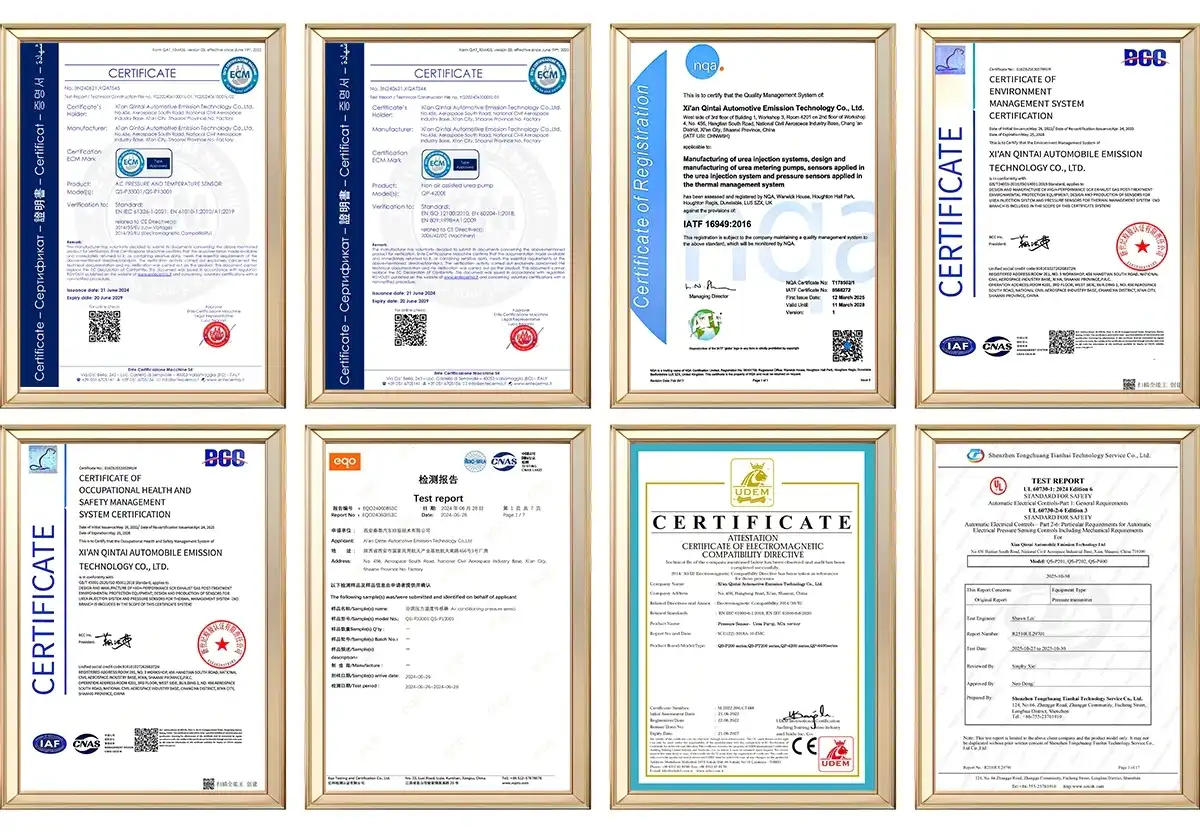
Quality standards are a basic way to make sure that a company can make things and keep an eye on the whole process. ISO 9001 certification shows that a basic quality management system is being used, while IATF 16949 covers the particular needs of the automotive industry for preventing defects and managing the supply chain. Regulatory compliance is proven by product-specific approvals such as CE marking for European markets, UL recognition for electricity safety in North America, and ATEX/IECEx for installations in dangerous areas.
As a measure of a company's manufacturing capacity, yearly production numbers, cleanroom facilities for assembly that can't be contaminated, and automatic testing equipment that makes sure everything works perfectly are all included. Lead times show how flexible the production schedule is; suppliers who keep extra standard pressure sensors on hand allow for quick prototyping, but unique designs may need 8–12 weeks for development. Requesting supplier facility checks or third-party assessment reports verifies skills that aren't just in marketing materials.
Major Industry Suppliers and Market Landscape
There are both well-known names in the global sensor market that are known for innovation and dependability, as well as smaller companies that focus on specific applications or areas. Companies like Bosch and Honeywell offer a wide range of products and strong expert support networks by drawing on decades of experience in the automotive and industrial sectors. TE Connectivity and Amphenol both make sensors that are built into connector systems. This makes installation easier for OEM users. Large multinational companies often offer standard products, but regional experts can often give more customization options and quick technical help. More and more, new suppliers from Asian manufacturing hubs are offering competitive quality at good prices. These suppliers are especially good for cost-sensitive uses where premium name knowledge doesn't add much value. Diversifying your relationships with suppliers from different sources lowers the risk of disruptions in the supply chain while keeping prices and service levels competitive.
Bulk Purchasing and Customization Advantages
Beyond lowering unit prices, volume agreements bring about big economic gains. Suppliers may offer contract inventory plans, in which the buyer pays the vendor for the goods until they are used up. This helps the buyer's cash flow and makes better use of storeroom space. Blanket purchase orders with planned releases keep prices stable across fiscal periods and can adapt to changes in demand. Custom sensor creation services meet the specific needs of an application that can't be met by standard catalog goods.
You can change things like the layout of the pressure ports, the specs of the electrical connectors, the output signal ranges, and the materials used to make the device chemically compatible. Development partnerships usually need minimum yearly volume pledges to cover the costs of engineering investments and tools. Ordering samples lets you make sure they work before committing to mass production, and reputable suppliers offer evaluation units for little or no cost to approved projects, which speeds up design verification and lowers technical risk.
Conclusion
Pressure sensor technology keeps getting better by using new materials, making things smaller, and adding smart signal processing features. To choose the right sensor, you need to weigh the technical specs against the needs of the application, the surroundings, and the total cost of ownership. Getting in touch with trusted providers who can show quality certifications, customization options, and quick technical support can give you a competitive edge by ensuring you always have the parts you need and that your products work at their best. Pressure monitors will become more important for safety systems, equipment efficiency, and environmental compliance as pollution rules get stricter and industrial automation grows. When procurement workers take the time to learn about sensor technologies and build strategic ties with suppliers, they set their companies up for long-term success in markets that are always changing.
FAQ
Q1: What distinguishes a pressure sensor from a pressure transducer?
A: Different businesses use terms in different ways, but there are practical differences. Pressure sensors usually have sensing parts and signal conditioning circuits built in. They produce standard electrical outputs like 0-10V or 4-20mA signals that can be directly connected to control systems. Pressure sensors can be basic sense elements that need external electronics to condition them, but these terms are often used to refer to the same thing these days. When listing the parts you need, be clear about the output forms and signal filtering that are needed to make sure they work with other systems.
Q2: How often should industrial pressure sensors undergo calibration?
A: How often you need to calibrate depends on how important the application is, how bad the working environment is, and what the rules say. Checking should be done every three to six months or once every six months for critical safety uses like tracking pressure relief systems. Calibration cycles are usually needed once a year for general industry process tracking. In safe settings, HVAC systems may go between 18 and 24 months between checks. Setting performance standards through initial and frequent testing lets you figure out the best times for each application based on experience.
Q3: Which sensor types provide optimal accuracy for automotive emission control?
A: For use in automotive exhaust systems, sensors need to be able to handle high temperatures and stay stable over time. For diesel particulate filter differential pressure tracking, ceramic capacitive sensors work better, while piezoresistive versions with high-temperature electronics work better for measuring exhaust backpressure. Sensors that are approved to meet automotive quality standards and have been shown to be reliable in the field reduce the risk to the guarantee and make sure that the vehicle meets emission standards for its entire service life.
Partner with Qintai for Reliable Pressure Sensor Solutions
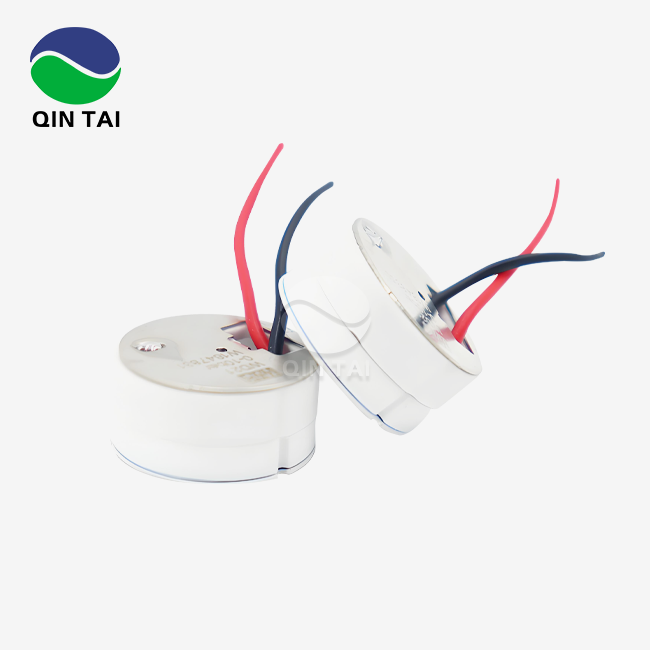
Picking the right pressure sensor maker has an effect on the quality of the product, how well it meets regulations, and how cheap it is in the long run. Qintai has been a top OEM provider to China's major power makers, such as Weichai, Yuchai, and Quanchai, for more than twenty years. They are experts in diesel engine aftertreatment systems and automotive sensors. Our wide range of certifications, including ISO9001, IATF16949, CE, UL, and REACH, shows that we are dedicated to meeting international quality standards. Additionally, our 58 invention patents show that we are always coming up with new ideas. We offer full customization, and our separate research and development teams can change the specs of the sensors to fit your exact needs. Our manufacturing capacity and expert support can help you find solutions that meet emission standards and business needs, whether you need prototype samples for validation testing or high-volume production with uniform quality. Contact us at info@qt-sensor.com to talk about your pressure sensor needs and find out how our OEM/ODM services can help your goods compete in global markets.
References
1. Webster, J.G. (2019). The Measurement, Instrumentation and Sensors Handbook. CRC Press, Boca Raton, FL.
2. Bao, M. (2020). Analysis and Design Principles of MEMS Devices. Elsevier Science, Amsterdam, Netherlands.
3. Fraden, J. (2016). Handbook of Modern Sensors: Physics, Designs, and Applications (5th ed.). Springer International Publishing, Cham, Switzerland.
4. Wilson, J.S. (2018). Sensor Technology Handbook. Newnes, Oxford, United Kingdom.
5. Shimazoe, M. & Matsuoka, Y. (2017). High-Temperature Pressure Sensors for Automotive Applications. SAE International Journal of Engines, 10(4), 1823-1831.
6. Tian, B., Zhao, Y., Jiang, Z. & Hu, B. (2021). Calibration and Compensation Methods for Capacitive Pressure Sensors in Industrial Applications. Measurement Science and Technology, 32(6), 065103.

Our customers’ satisfaction speaks for our quality — contact us to experience the same reliable service.