- English
- French
- German
- Portuguese
- Spanish
- Russian
- Japanese
- Korean
- Arabic
- Greek
- German
- Turkish
- Italian
- Danish
- Romanian
- Indonesian
- Czech
- Afrikaans
- Swedish
- Polish
- Basque
- Catalan
- Esperanto
- Hindi
- Lao
- Albanian
- Amharic
- Armenian
- Azerbaijani
- Belarusian
- Bengali
- Bosnian
- Bulgarian
- Cebuano
- Chichewa
- Corsican
- Croatian
- Dutch
- Estonian
- Filipino
- Finnish
- Frisian
- Galician
- Georgian
- Gujarati
- Haitian
- Hausa
- Hawaiian
- Hebrew
- Hmong
- Hungarian
- Icelandic
- Igbo
- Javanese
- Kannada
- Kazakh
- Khmer
- Kurdish
- Kyrgyz
- Latin
- Latvian
- Lithuanian
- Luxembou..
- Macedonian
- Malagasy
- Malay
- Malayalam
- Maltese
- Maori
- Marathi
- Mongolian
- Burmese
- Nepali
- Norwegian
- Pashto
- Persian
- Punjabi
- Serbian
- Sesotho
- Sinhala
- Slovak
- Slovenian
- Somali
- Samoan
- Scots Gaelic
- Shona
- Sindhi
- Sundanese
- Swahili
- Tajik
- Tamil
- Telugu
- Thai
- Ukrainian
- Urdu
- Uzbek
- Vietnamese
- Welsh
- Xhosa
- Yiddish
- Yoruba
- Zulu
How to Choose a Reliable Pressure Sensor Supplier
Picking the right pressure sensor provider has a direct effect on how reliable the product is, how well it meets legal requirements, and how much it costs to run in the long run. A reliable provider makes sure that sensors work the same way in all production batches, gives you clear technical paperwork, and provides responsive after-sales service to help your engineering team. When looking for parts for diesel engine systems, industrial automation, or emission control, it's important to make sure that the suppliers you choose are certified, scalable, and compatible with your technology. This will keep your supply chain safe from quality problems and production delays that could threaten important projects.

Understanding the Importance of Choosing the Right Pressure Sensor Supplier
Picking the right pressure sensor provider is important for keeping operations running smoothly and making sure the standard of products in the automotive, heavy machinery, and industrial automation sectors. Because these sensors are so important for keeping an eye on system performance and safety, working with sources you can't trust leaves you open to risks throughout the whole production process.
Why Supplier Selection Matters for OEM Manufacturers?
When looking for sensor providers, procurement managers in the diesel engine making and aftertreatment system integration industries have to deal with some unique problems. It's possible for a supplier to meet strict emission standards like China VI and Euro VI if their manufacturing processes are open, their regulatory certifications are checked, and they have shown they can produce a lot of products. If sensors aren't accurate or shipments are late, it can mess up assembly schedules, lead to more warranty claims, and hurt the brand's reputation in competitive markets where technical precision determines market position.
Risk Mitigation Through Strategic Supplier Partnerships
When your company works with providers who don't have the right certifications or the ability to make more, your company risks quality control problems and compliance violations. Choosing a provider has an effect on strategy that goes beyond the cost per unit and includes the total cost of ownership, which includes things like support for calibration, failure rates, and compatibility with current system designs. Setting up evaluation frameworks that combine technical ability with business reliability makes procurement more stable and makes sure that sensor performance meets industry needs in a variety of working conditions.
Core Criteria for Evaluating Pressure Sensor Suppliers
For procurement workers to effectively evaluate suppliers, they need to set clear evaluation criteria based on application needs and performance standards specific to the industry. This method is based on criteria, which lets you compare rival suppliers in an objective way while making sure that technical specs match operational needs.
Technical Specifications and Certification Standards
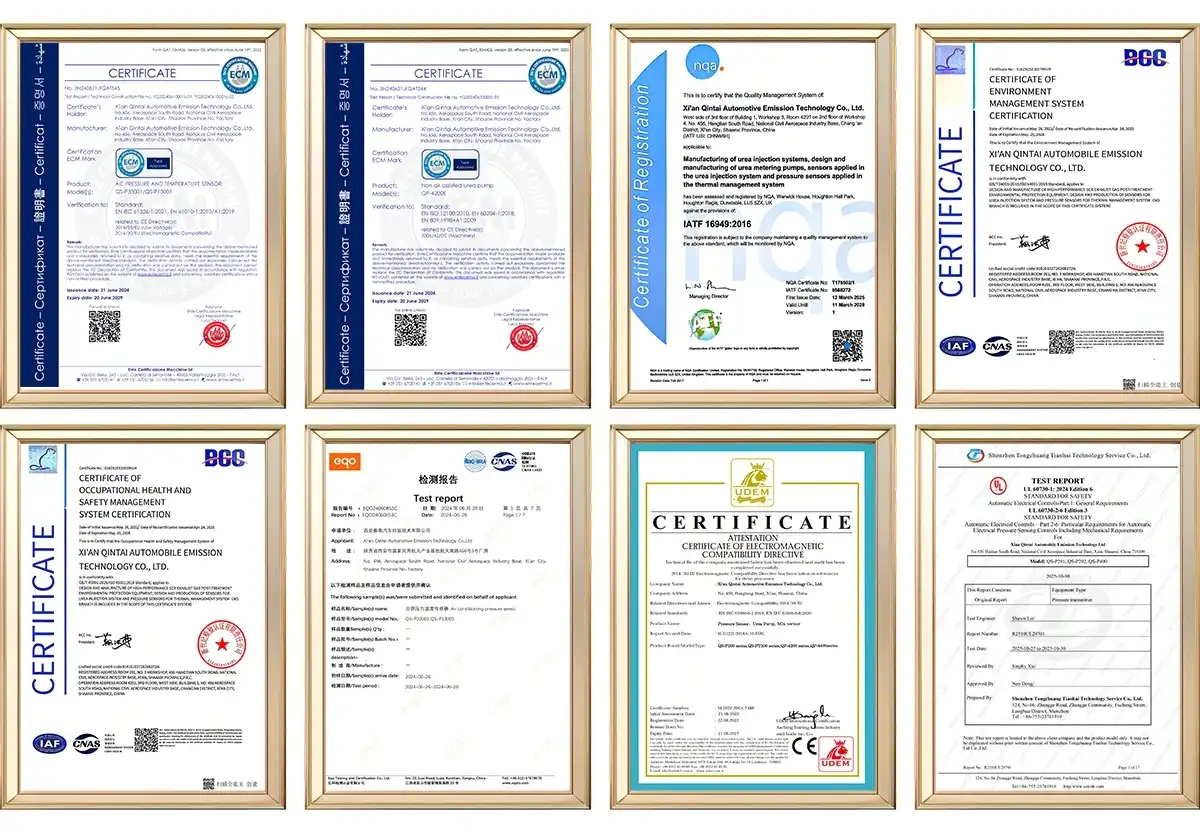
Technical review is based on things like pressure sensor precision, measurement range, and how to calibrate something. Suppliers should give thorough datasheets that list pressure ranges, accuracy limits (usually ±0.5% to ±2% full scale), response times, and how the sensors can adjust to changes in temperature. Industry certificates prove that the products are made well and follow the rules. ISO 9001 shows that you can control the process, and IATF 16949 talks about the needs of the car industry. ATEX approval shows that the product can be used in explosive environments in mines and power generation. Electrical safety standards for foreign markets are confirmed by UL and CE marks.
Balancing Cost, Quality, and Service Expectations
The total value of procurement includes more than just the price per unit. It also includes lead times, minimum order amounts, and professional help after the sale. Suppliers who offer deals for large orders should show that the quality of their products is the same across all batches by keeping statistical process control records. Budget overruns during project completion can be avoided by using clear price models that include details about the costs of tools, customization fees, and shipping terms. When you need to fix problems with installation or calibration, responsive technical help cuts down on downtime. This has a direct effect on your upkeep costs and system reliability throughout the lifecycle of the product.
Production Capacity and Supply Chain Stability
There is a difference between sellers who can grow with your business and those who can only do prototypes or small batches. Check the factory's ability to make things by having site checks or having a third party do assessments that look at how well the equipment is set up, how well quality control systems work, and how well inventory is managed. Suppliers with various production lines and backup sources for important parts show that their supply chains are resilient and can handle outages. Consistency in lead times and order fulfillment rates are visible signs of operational reliability that have a direct effect on how you plan your production and handle your supplies.
Comparing Pressure Sensor Types and Supplier Capabilities
Knowing the technological differences between pressure sensor types helps buying teams match what suppliers have to offer with the needs of a specific application. This makes sure that performance and cost-effectiveness are at their best in a wide range of industrial settings.
Sensor Technology Overview
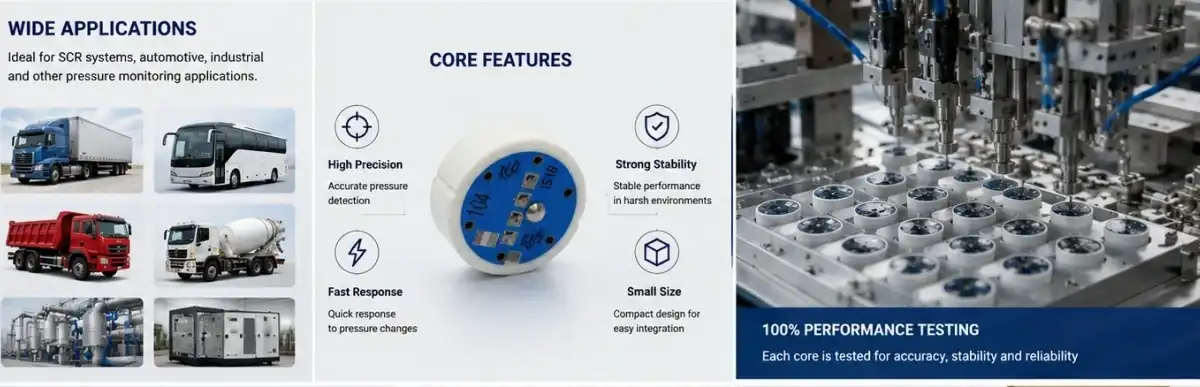
Changes in the electrical capacitance between two conductive plates divided by a dielectric material are used to measure pressure by capacitive pressure monitors. When pressure moves the detecting diaphragm, the distance between the electrodes changes. This changes the capacitance values, which are then turned into electrical signals that can be measured. Because this technology is so good at picking up on small changes in pressure, capacitive sensors are perfect for uses that need high sharpness and steadiness. Because they don't change much when the temperature does, they work well in battery-powered systems and places where the temperature is very high or very low. Because there are no mechanical moving parts, it is more durable and lasts longer than standard piezoresistive designs.
Digital sensors give off direct electronic signals that can connect to microcontrollers. This makes system integration easier and lowers the need for analog signal filtering. Analog versions provide a steady voltage or current output that changes in response to changes in pressure. These are chosen in older systems and situations that need real-time tracking without digital processing. Differential sensors find the difference in pressure between two places, which is important for tracking filters and measuring flow. Absolute sensors, on the other hand, use vacuum to get data that are accurate no matter what height they are at in aerospace and meteorology.
Matching Supplier Capabilities to Application Needs
Suppliers who focus on car emission systems know how hard it is for SCR and DPF aftertreatment systems to work in harsh conditions, such as when they have to deal with harmful exhaust gases and strict emission rules. Suppliers of industrial automation make sure that their sensors can work with a wide range of process controls by giving them standard communication methods like 4-20mA output or digital fieldbus connections. HVAC-focused providers focus on lowering costs for high-volume jobs that don't need a lot of accuracy.
When normal goods can't meet specific interface requirements or environmental conditions, customization becomes very important. Suppliers who have their own technical teams can change the way things are mounted, the electrical plugs they use, and the measurement ranges they offer without having to wait a long time. When you buy in bulk, the terms of the deal should include sample confirmation methods. This way, your engineering team can test the quality of the products before committing to big orders. This way of reducing risk keeps expensive redesigns from having to be done if the sensor's properties don't match the paper specs.
Evaluating Support Services and Technical Expertise
Calibration services make sensors last longer and keep measurements accurate while they are being used. Suppliers who offer yearly recalibration programs with standards that can be tracked show that they are committed to supporting their products for a long time. As part of maintenance help, there should be troubleshooting advice, access to new parts, and application engineering advice on how to best place sensors and put them. The quality of the technical paperwork has a direct effect on how well your team can combine sensors. Installation manuals, wiring diagrams, and performance curves that are clear and detailed cut down on engineering time and mistakes made during field installation.
Verifying Supplier Reliability through Case Studies and Testimonials
Supplier performance records with well-known names in the same business show that they are reliable, going beyond what they say in their ads. Case studies that show relationships that last more than one year with OEM makers show that suppliers can keep quality standards consistent and adapt to changing technology needs.
Analyzing Real-World Performance Indicators
Client comments from purchasing managers and engineering directors show how responsive a seller is when there are problems with quality or supply interruptions. When pressure sensor suppliers tell you about production problems and take steps to fix them, they show responsibility, which protects your project's schedule. Looking at the warranty terms shows that you trust that the product will last. For example, long warranty periods and clear repair processes show that the product was made well and that the customer is committed. Suppliers that are among the top OEM suppliers in major markets, like being the main provider of sensors for major diesel engine makers, show that they can meet strict quality and number requirements.
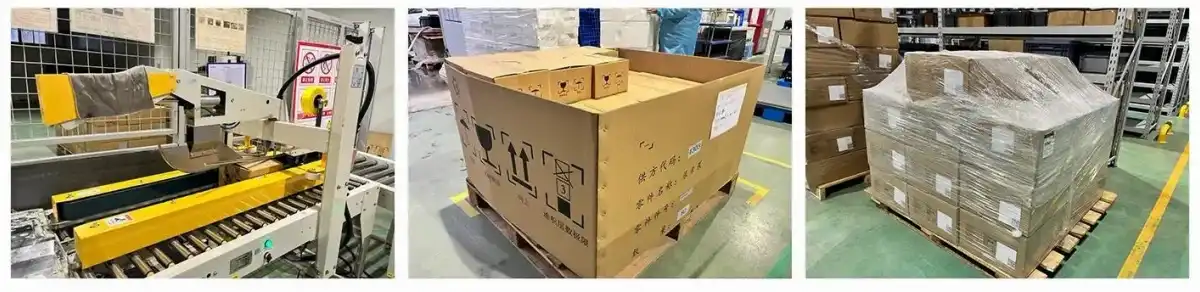
Lead time consistency across multiple sales means that operations are stable and production planning is working well. Ask for past data on on-time delivery rates and look into how providers handled problems in the supply chain when materials were short or there were logistics issues. Shipping methods should be based on the amount of items being sent. For example, large packages should be sent with consolidated freight and protective packing to keep them from getting damaged in transit. On the other hand, urgent orders should be sent with fast courier services that allow tracking.
Evaluating Transparency and Technical Support Quality
Transparent price models get rid of secret costs and make it easier to plan your budget accurately. Costs for parts, tooling fees for special designs, and shipping costs based on order number should all be broken down in detailed quotes. Strategic planning for purchases can be in line with production forecasts when suppliers offer tiered price structures for volume agreements. Technical datasheets need to be clear and include all the necessary information about environmental grades, electrical properties, mechanical dimensions, and safety certifications. They shouldn't use vague language or leave out any important details. Clear documentation shows that you are a serious expert and lowers the risks of merging for your development team.
Comprehensive technical support includes application engineering help during the planning process. This helps choose the best sensors for the job. Customer service teams that respond to questions within 24 hours show that the company cares about their clients' progress. Having access to field application engineers for on-site training or fixing adds value to the product itself, especially when installing sensors in difficult industrial settings with complicated installation rules.
How to Establish a Long-Term Partnership with Your Pressure Sensor Supplier?
Structured collaboration frameworks that balance performance responsibility with mutual growth opportunities are needed to build long-lasting relationships with suppliers. This will ensure that value is created throughout all procurement processes.
Negotiating Comprehensive Contract Terms
In addition to replacing parts that are broken, warranties should cover performance promises under certain working conditions. Clear warranties that spell out how to file claims, how long it will take to get an answer, and how to get a replacement stop disagreements when quality problems happen. After-sales service agreements should spell out when expert help is available, when calibrations will happen, and how many spare parts will be kept on hand. Sample unit options let your engineering team check the performance of the pressure sensor through accelerated life testing and environmental qualification before placing an order for production. This lowers the risk of qualification and makes sure that the sensor works with current system designs.
Performance review procedures set up objective ways to judge the quality of suppliers and how consistently they deliver. Business reviews every three months that look at failure rates, on-time delivery percentages, and how quickly technical help responds hold people accountable and find ways to make things better. Recalibration support agreements make sure that sensors stay accurate for their whole working life, which is very important in situations where measurement drift could harm safety or violate regulations. Recalibration times that are set based on what the maker suggests and how the system is used keep the accuracy from dropping, which could cause system malfunctions or emission violations.
Leveraging Supplier Innovation and Expertise
When suppliers put money into research and development, they come up with new sensor technologies that make measurements more accurate, use less power, or be more resistant to weather damage. Getting early access to new product developments gives you a performance edge over your competitors. Working together with providers on engineering projects lets them make custom sensor designs that solve problems that your normal product line can't. Suppliers who have a lot of intellectual property, like dozens of design patents, show that they can come up with new ideas that help sensor technology and manufacturing processes get better all the time.
Open lines of contact between your engineering, buying, and quality teams and your suppliers allow you to solve problems quickly and avoid problems before they happen. Sharing application comments through regular technical talks helps suppliers improve their goods and gives your team information about how to make things and where technology is going. Consistently keeping promises makes responsive customer service build trust, whether it's meeting pressing transport needs or answering technical questions during system integration.
Conclusion
To find a trusted pressure sensor provider, you need to carefully look at their technical skills, the quality of their products, and their service commitment. Professionals in procurement have to balance short-term cost concerns with long-term value factors like certification compliance, output scalability, and assistance after the sale. Suppliers with open operations, strong industry relationships, and quick technical know-how lower supply chain risks and make it easier to come up with new products. Frameworks for structured evaluations that include technical requirements, case study validation, and performance-based contracts help build partnerships that support operating excellence and competitive differentiation in a wide range of demanding industrial applications.
FAQ
Q1: What technical parameters should I prioritize in pressure sensor datasheets?
A: Pay attention to the measurement range that fits your needs, the accuracy (usually given as a percentage of full scale), the temperature adjustment range, and the reaction time. Check the electrical output compatibility (voltage, current, or digital protocol), the pressure media compatibility with the materials that will be in touch with the process fluids, and the environmental ratings for tolerance to high and low temperatures, humidity, and vibrations. Certifications like ISO 9001, IATF 16949, and approvals specific to the business show that the product is made well and follows the rules.
Q2: How do digital and analog pressure sensors differ in procurement considerations?
A: Digital pressure sensors make system integration easier by letting microcontrollers talk directly to each other. This lowers the cost of external signal processing, but the unit prices are usually higher. In upgrade situations, analog sensors are better because they work with more control systems that use voltage or current loops. Different types of sensors have different lifecycle costs. Digital sensors may require less installation work, while analog sensors are easier to service in the field without the need for special programming tools.
Q3: What lead times and logistics should I expect for bulk sensor orders?
A: Depending on the number of orders and the level of customization needed, standard product wait times are usually between 4 and 8 weeks. Lead times are extended to 12 to 16 weeks for custom designs that need machine development. Having regional storage centers by suppliers cuts down on shipping times and makes just-in-time inventory management possible. Ocean freight offers cheaper bulk shipping for orders that don't need to be delivered right away, while air freight charges more to meet urgent needs.
Partner with Qintai for Industrial-Grade Pressure Sensor Solutions
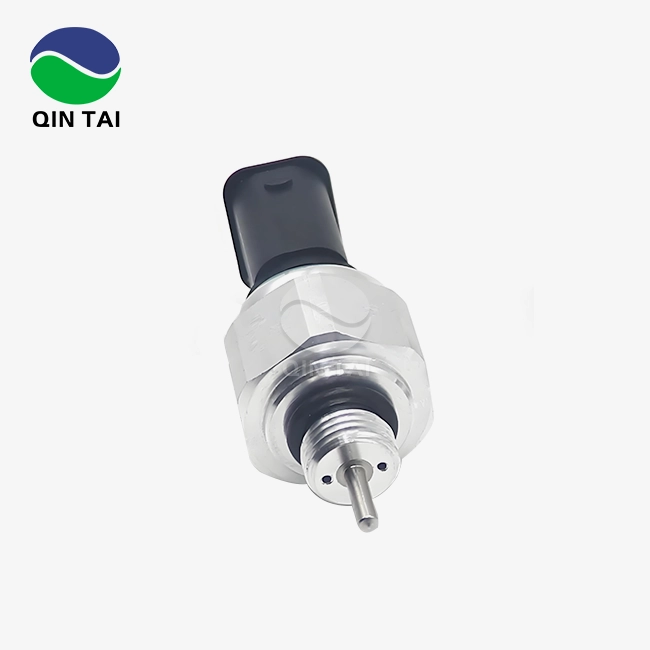
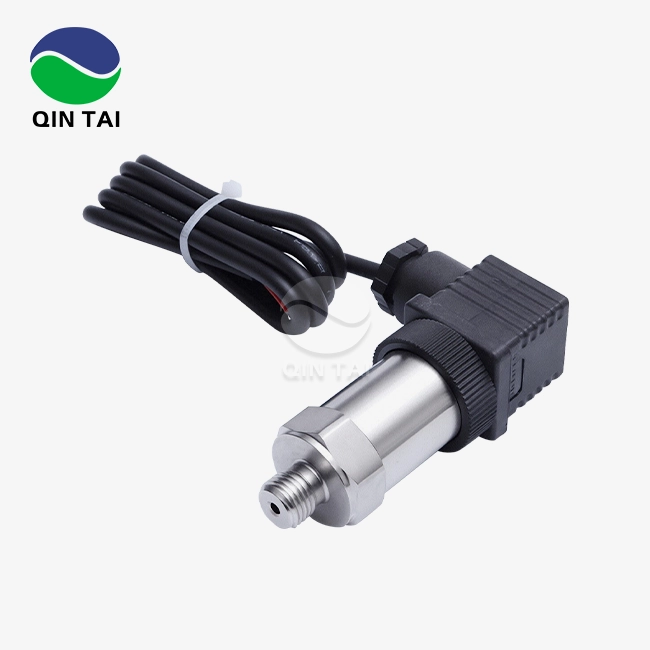
Qintai has more than 20 years of experience making industrial pressure sensors and systems for controlling emissions in cars. They can help you with your buying plan. We are the main seller of pressure sensors to China's top diesel engine makers, such as Weichai, Yuchai, and Quanchai. We can give your projects the dependability, scalability, and expert support they need. Our IATF 16949 and ISO 9001-certified factories make sure that the quality stays the same even during large-scale production runs. Also, our 58 idea patents show that we are always coming up with new sensor technologies.
We understand how important sensors are for meeting emission standards and keeping the system running well in tough circumstances. To meet your exact needs, our tech team can customize everything from sensor interfaces and measurement ranges to environmental specs. Qintai offers clear pricing, quick contact, and technical help throughout the entire buying cycle, whether you need samples for qualification testing or multi-year supply deals with support for recalibration. Get in touch with us at info@qt-sensor.com to talk about how our ability to make pressure sensors can help your supply chain and product development goals.
References
1. Johnson, M. & Peterson, R. (2021). Industrial Pressure Sensor Selection Criteria for Automotive Applications. Society of Automotive Engineers Technical Paper Series.
2. Chen, L. (2022). Capacitive Sensor Technology Advances in Emission Control Systems. Journal of Automotive Engineering and Technology, 14(3), 187-203.
3. Anderson, K. (2020). Supply Chain Risk Management in Electronic Component Procurement. International Journal of Production Economics, 228, 107-121.
4. Williams, D. & Thompson, S. (2023). Certification Standards for Automotive Sensors: A Global Perspective. Automotive Compliance Quarterly, 9(2), 45-62.
5. Martinez, E. (2021). Total Cost of Ownership Analysis for Industrial Sensors. Procurement Management Review, 17(4), 312-329.
6. Zhang, W. & Liu, H. (2022). Emerging Pressure Sensor Technologies for Heavy-Duty Applications. Sensors and Actuators A: Physical, 341, 113-128.


Our customers’ satisfaction speaks for our quality — contact us to experience the same reliable service.