- English
- French
- German
- Portuguese
- Spanish
- Russian
- Japanese
- Korean
- Arabic
- Greek
- German
- Turkish
- Italian
- Danish
- Romanian
- Indonesian
- Czech
- Afrikaans
- Swedish
- Polish
- Basque
- Catalan
- Esperanto
- Hindi
- Lao
- Albanian
- Amharic
- Armenian
- Azerbaijani
- Belarusian
- Bengali
- Bosnian
- Bulgarian
- Cebuano
- Chichewa
- Corsican
- Croatian
- Dutch
- Estonian
- Filipino
- Finnish
- Frisian
- Galician
- Georgian
- Gujarati
- Haitian
- Hausa
- Hawaiian
- Hebrew
- Hmong
- Hungarian
- Icelandic
- Igbo
- Javanese
- Kannada
- Kazakh
- Khmer
- Kurdish
- Kyrgyz
- Latin
- Latvian
- Lithuanian
- Luxembou..
- Macedonian
- Malagasy
- Malay
- Malayalam
- Maltese
- Maori
- Marathi
- Mongolian
- Burmese
- Nepali
- Norwegian
- Pashto
- Persian
- Punjabi
- Serbian
- Sesotho
- Sinhala
- Slovak
- Slovenian
- Somali
- Samoan
- Scots Gaelic
- Shona
- Sindhi
- Sundanese
- Swahili
- Tajik
- Tamil
- Telugu
- Thai
- Ukrainian
- Urdu
- Uzbek
- Vietnamese
- Welsh
- Xhosa
- Yiddish
- Yoruba
- Zulu
Urea Sensor Guide for Heavy Duty Vehicles
For heavy-duty diesel engines to meet pollution standards and work efficiently, it is important to choose the right Urea level and quality sensor. These monitors are what make Selective Catalytic Reduction (SCR) systems smart. They keep an eye on the factors of Diesel Exhaust Fluid (DEF) to make NOx reduction work best. When engineers and procurement managers understand how sensors work, how accurate they need to be, and how they can be integrated, they can choose parts that will work reliably in a wide range of difficult situations, from haul trucks that go across country to mine excavators. Our guide takes you through technical review, best practices for maintenance, seller strategies, and new trends. This gives you the information you need to make smart purchasing choices that protect your fleet investments and meet strict environmental standards.
Understanding Urea Sensors: Principles and Functionality
Urea level and quality sensors are the brains of current SCR aftertreatment systems. They constantly measure the amount of fluid and its chemical make-up to make sure that the right amount of ammonia is delivered. Multiple sensing technologies are built into these devices so they can tell you two important things: how much DEF is left in the tank and whether its purity meets requirements.
Level Sensing Technologies
Three main ways are used by modern DEF sensors to keep track of fluid amount. Float-based designs use mechanical movement that is turned into electrical messages. They are easy to use, but they aren't very accurate in places where there is a lot of shaking. Ultrasonic time-of-flight detection sends sound waves through the fluid and figures out the distance by timing when the waves bounce back. This method is very accurate and doesn't use any moving parts, so it's perfect for building equipment that is constantly being hit. Capacitive sensing picks up changes in the electrical field properties as the level of the fluid changes. This makes it work well in a wide range of temperatures, from the cool morning air to the hot afternoon sun.
Quality Detection Methods
Purity tracking uses complex methods to make sure that the DEF content stays within the 32.5% urea limit required by ISO 22241 standards. Near-infrared spectroscopy looks at how light moves through the solution and can very accurately find pollution from water, oil, or glycol. The thermal conductivity method, which is also known as the 3ω approach, measures how fast heat moves and how that speed changes depending on how much urea is present. Ultrasonic wave speed research measures how fast sound moves through a stream, which is directly related to its chemical make-up. These sensors let the engine control unit know when DEF breaks down or gets dirty, so that injector fouling or catalyst damage doesn't happen.
Integrated Temperature Management
Quality monitors have spiral heating parts that get heat from engine coolant because DEF freezes at -11°C (12°F). This combination stops crystallization during cold starts and keeps the machine running at the best temperature for precise readings. Temperature data also tells the ECU when the SCR can work fully and when it needs to be in a reduced mode while it warms up. Modern designs put heating coils in places that create convection currents that speed up thawing. This cuts down on the time between starting the engine and meeting emissions standards, which is especially useful in northern areas where boats are closely watched by regulators during the winter.
Evaluating Urea Sensors for Heavy Duty Vehicles: Accuracy, Calibration, and Maintenance
The dependability of Urea level and quality sensors has a direct effect on the certainty of compliance and the cost of upkeep. This makes evaluation criteria important to choices about procurement. When expert teams know how to measure things and what needs to be done for upkeep, they can choose parts that have the lowest total ownership costs and the most uptime.
Accuracy Standards and Calibration Protocols
The accuracy of premium DEF sensors is within ±1% across the operational range of 0% to 50% urea content. However, most uses focus on the 32.5% specification, which has a tight tolerance band. As part of the calibration process, standard solutions with known amounts are added to the sensor while output signals are recorded. Most makers say that testing should be done every 100,000 kilometers as part of regular maintenance. When techs follow standard procedures and change the offset and gain settings stored in the sensor's internal memory, the calibration process takes about 15 minutes. Some more advanced units have self-calibration algorithms that check the accuracy of different measurement technologies against each other. If one of the technologies drifts, the algorithms automatically fix the problem without any help from the workshop.
Practical Maintenance and Troubleshooting
When fluid drains, DEF crystals build up on sensor surfaces, making insulation layers that throw off readings. Technicians can see how much crystal growth there is around the sensor box during regular inspections like oil changes. To clean it, you have to take it apart and soak it in pure water for 20 minutes. After that, you have to gently brush it with soft nylon bristles. The sensing surfaces need to be replaced because they are damaged by harsh chemicals or rough tools. Another common way for cars to break down is electrical connector rust, which can happen near humid coasts or in the winter when road salt spray gets into engine spaces. Putting dielectric grease on connecting pins while they are being installed greatly increases their service life.
Real-World Deployment Insights
When using ISO-certified DEF, long-haul trucking fleets report sensor service intervals of about 120,000 to 150,000 miles. Construction equipment with higher vibration and contamination risks has shorter intervals of about 80,000 miles, which is because it works in harsher conditions. Marine generators can use sensors that last longer because they are more stable and store DEF more efficiently. These sensors can often work for more than 200,000 hours. These standards help buying teams make repair plans and inventory needs that are reasonable.
Decision-Making Guide: Choosing the Best Urea Sensor for Your Fleet or Production
When choosing a Urea level and quality sensor, technical efficiency and business needs to be balanced. It's up to procurement managers to sort through specs, supplier skills, and integration needs in order to find solutions that meet operating needs and stay within budget.
Core Selection Metrics
Response time shows how fast the SCR system responds to changes in DEF quality. Premium sensors give data within 5 seconds of changes in fluid properties. This lets doses be changed quickly, which keeps the catalyst working well during changing load conditions. This quick reaction is very important for stop-and-go city transport routes where engine loads change all the time. Durability under thermal cycles is also important. Sensors that can work in temperatures ranging from -40°C to +85°C can handle harsh environments without losing their setting. Validation of vibration resistance to IEC 60068-2-64 standards provides accurate readings in off-road situations where machinery is subjected to repeated high-frequency shocks.
Verification of compatibility goes beyond the physical measurements of the mounting. Electrical connections need to work with car CAN bus protocols. The most common standards are J1939 and OBD-II. Some companies make customizable sensors that can work with more than one protocol by changing how they are set up in software. This makes inventory management easier. To be chemically compatible with DEF, sensor materials must be able to withstand rust from ammonium compounds and keep the fluid clean. This is a requirement that has been proven through ISO 22241 testing of tank materials.
Comparative Analysis: Urea Versus Ammonia Sensors
Urea level and quality sensors keep an eye on the DEF liquid that is kept in tanks, and ammonia sensors check the NH₃ gas that comes out of the dose injector to make sure that the catalyst is really being added. Because Urea level and quality sensors are less expensive and can be used with current tank designs, they are now common on production cars. For optimizing an SCR system, ammonia sensors give better input, but they have to be installed in hot exhaust streams, which requires strong high-temperature building. OEM uses usually use Urea level and quality sensors for basic compliance and save ammonia sensors for high-end powertrains that need the most economy, which is why they cost more.
Supplier and Brand Considerations
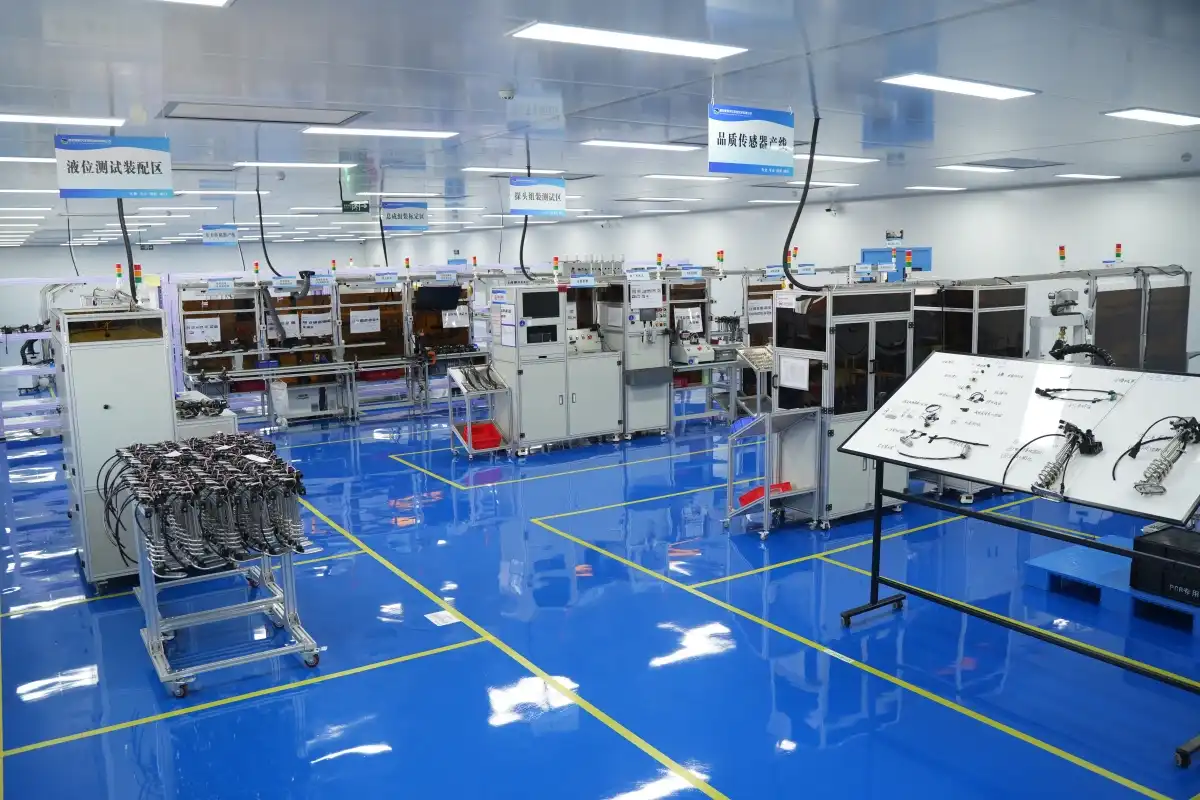
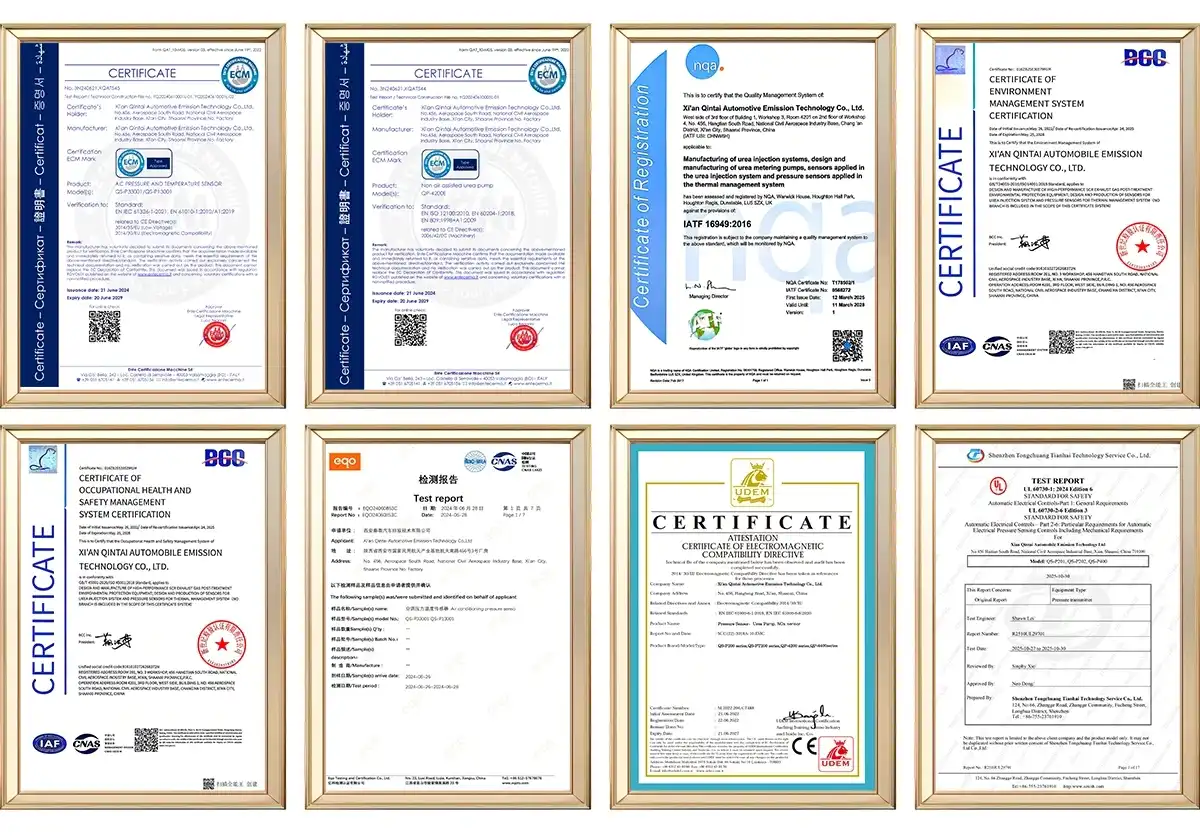
Well-known global names come with a lot of validation data and a lot of OEM approvals, which makes it easier for makers to integrate them. Bosch sensors are used in most big trucks in Europe because they are reliable and have a large repair network. Honeywell goods are popular in North American markets, especially in building and farming, where success in harsh environments is very important. Up-and-coming providers from specialized makers like Qintai offer competitive technical specs at good prices, and they can often make changes more easily for non-standard uses. Their ISO9001 and IATF16949 certifications give customers the same level of quality guarantee as well-known brands, and their 58 invention patents show that they are actively coming up with new ideas.
Warranty terms range from 12 to 36 months, and for an extra fee, they cover damage caused by the environment for a longer time. Support after the sale is what sets one provider apart from another. Technical hotlines, quick solving guides, and cross-reference compatibility databases all help keep operations running smoothly when problems arise in the field. Procurement teams should ask for promises of how long it will take to answer technical questions and look at the average settlement times of present customers as examples.

Procurement Strategies: Sourcing and Acquiring Urea Sensors Efficiently
Strategic buying finds the best mix between source dependability, lowering costs, and making the supply chain strong. B2B buying teams use a variety of methods to find Urea level and quality sensors that meet requirements and keep inventory risks under control.
Verified Supplier Identification
Authorized wholesalers work directly with manufacturers to make sure that the parts they sell are original and that the warranties they offer are valid. Online tools like GlobalSpec and ThomasNet collect technical specs from different sources so that they can be compared side by side. Face-to-face review of suppliers can be done offline at industry trade shows like CONEXPO for building tools or Work Truck Show for commercial vehicles. Before placing big orders with a seller, it's a good idea to check their trustworthiness by asking for ISO certificates, patent paperwork, and customer reference lists.
Bulk Purchasing and Customization
When you make a volume promise, you can use tiered prices, which lowers unit costs by a large amount. A 500-piece order might be 15% cheaper than a 100-unit order, and production runs of 2,000 pieces can get 25% cheaper. Custom specs for connector types, mounting clamps, or testing ranges usually need a minimum order quantity of 200 to 500 units. The cost of development is spread out over the production run. When you negotiate for flexibility in delivery plans, like quarterly releases instead of yearly contracts, you can balance the costs of keeping inventory with the benefits of lower prices.
OEM Compatibility and Technical Support
Electrical outputs from sensors must match what the ECU expects, with voltage ranges, signal frequencies, and problem detection methods perfectly lined up. By asking for pre-production models for integration testing, you can avoid having to pay a lot of money for redesigns after investing in tools. Suppliers who offer expert help on-site during the prototype phase speed up the development process. When planning for delivery, you should know that normal goods have lead times of 6 to 10 weeks and customized versions have lead times of 12 to 16 weeks. Setting up enough backup stock to cover 4 to 6 weeks of production in case of supply problems while keeping cash flow efficient.
Future Trends and Innovations in Urea Sensor Technology for Heavy Duty Vehicles
As technology changes, Urea level and quality sensors abilities change too. This leads to better performance, lower running costs, and the ability to meet stricter emission standards. When procurement professionals predict these changes, they set up their companies to use helpful tools early on.
IoT Integration and Predictive Maintenance
Sensors that are tied to the cloud send real-time information to fleet management systems about the quality of DEF, how much is being used, and the state of calibration. Because of this connection, predictive maintenance programs can replace sensors based on how badly they are working instead of at set times. Analytics systems find patterns that connect sensor failures to certain working conditions, like too much idling or contaminated DEF batches, so that they can be fixed before they happen. The end result is less unplanned downtime and better control of parts inventories across service networks that are spread out.
Smart Calibration and Self-Diagnostics
The sensors of the future use machine learning techniques that change the calibration settings automatically as parts wear out. These smart devices can find drift and fix it automatically by comparing readings from different measurement technologies inside the same building. Self-diagnostic features find buildup of contamination, weak electrical connections, or broken heating elements, sending out specific fault codes that help technicians figure out what's wrong. This intelligence cuts the time it takes to diagnose from hours to minutes and stops wrong diagnoses that cause parts to be replaced that aren't needed.
Regulatory Evolution and Performance Requirements
Around the world, emission rules are getting tighter. For example, the EPA is moving toward even higher NOx limits, and the EU is putting in place Real Driving Emissions testing that requires consistent performance in all driving situations. Because of these needs, the accuracy standards for sensors are getting tighter, going from ±1% to ±0.5%. As SCR systems improve dosing methods in real time, better temperature stability and faster response times become ways to stand out from the competition. Procurement teams should give more weight to sellers who can show active development roadmaps that are in line with expected regulatory changes. This will make sure that the sensors chosen stay compliant for the duration of their service life.
Conclusion
To find your way around the world of Urea level and quality sensors, you have to balance technical requirements, supplier skills, and new technologies with the facts of operations and your budget. When buying teams know about measurement principles, testing needs, and integration issues, they can choose parts that meet emissions standards reliably while keeping total ownership costs low. Strategic partnerships with suppliers based on open communication and quick help make sure that the standard of sensors stays the same from one production run to the next. As IoT connections and predictive diagnostics change what sensors can do, companies that keep up with new trends can use these changes to their advantage to make their fleets more efficient. Spending time and money to carefully test sensors pays off in fewer breakdowns, longer component life, and sure compliance with regulations in a wide range of heavy-duty uses.
FAQ
Q1: How often do urea sensors require replacement in heavy-duty applications?
A: Under normal operating conditions with ISO-certified DEF, a typical service life for Urea level and quality sensors ranges from 100,000 to 150,000 kilometers (60,000 to 90,000 miles). Construction and mining equipment that is subject to high vibration and contamination may need to be replaced closer to 80,000 miles, while marine and stationary power applications often last longer than 200,000 hours because the environments are cleaner.
Q2: What symptoms indicate low-quality DEF detected by the sensor?
A: Some warning signs are check engine lights that are on and showing SCR-specific fault codes, a drop in engine power because of derate protocols, higher NOx emissions seen during tests, and crystallization that can be seen around the dose injector. The sensor tells the ECU when the content is less than 32.5% ±0.5% or when contamination levels are too high. This sets off safety steps that keep the catalyst from getting damaged.
Q3: Can sensors from different manufacturers be used interchangeably across vehicle brands?
A: To be electrically compatible, CAN bus standards and ECU signal expectations must match. However, these can be different between OEMs. Different types of connectors and fixing sizes are also used. While aftermarket providers provide cross-reference guides for replacement situations, OEM production applications need proof testing to make sure the parts work together correctly. Some specialized makers make sensors that can be programmed to work with more than one interface. This makes them more flexible across platforms.
Partner with Qintai for Reliable Urea Level and Quality Sensor Solutions
Qintai is ready to help you with your SCR system needs with tried-and-true sensor technology and more than 20 years of experience in diesel aftertreatment. Our Urea level and quality sensors are key parts in systems made by Weichai Power, Yuchai Power, and Quanchai Power, three of China's top engine makers. They provide the accuracy and stability that OEM production needs. Our manufacturing quality meets the high standards needed by global buying teams because we have ISO9001, IATF16949, and other foreign certifications. As a dedicated Urea level and quality sensor seller, we offer full customization services that are made to fit your exact application needs, from the way the connectors are set up to the calibration settings. During the integration and production stages, our technical team provides quick help to make sure that release goes smoothly. Email us at info@qt-sensor.com to talk about the details of your project and get full quotes for large orders that take advantage of our ability to produce many items at once.
References
1. International Organization for Standardization. (2019). ISO 22241: Diesel engines — NOx reduction agent AUS 32 — Part 1-4. Geneva: ISO Standards.
2. Watling, T. C., & Ravenscroft, M. T. (2020). Selective Catalytic Reduction Systems and Control Technologies for Heavy-Duty Diesel Vehicles. SAE International Journal of Engines, 13(4), 521-542.
3. Environmental Protection Agency. (2021). Regulatory Requirements for Heavy-Duty Highway Compression-Ignition Engines and Urban Buses. Washington, D.C.: EPA Office of Transportation and Air Quality.
4. Johnson, T. V. (2018). Review of Vehicular Emissions Trends and Diesel Particulate Control Technologies. International Journal of Engine Research, 19(11), 1128-1149.
5. Bonfils, A., Creff, Y., Lepreux, O., & Petit, N. (2017). Closed-loop Control of a SCR System Using a NOx Sensor Cross-sensitive to NH₃. Journal of Process Control, 47, 368-379.
6. Tronconi, E., Nova, I., Marchitti, F., & Beretta, A. (2016). Interaction of NOx Reduction and NH₃ Oxidation in the SCR-DeNOx Catalytic System: Experimental and Modeling Studies. Chemical Engineering Science, 154(8), 180-195.
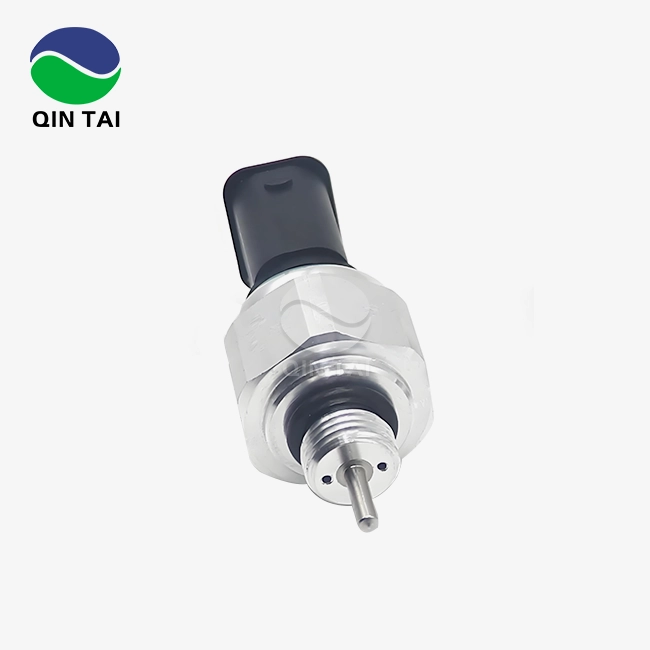
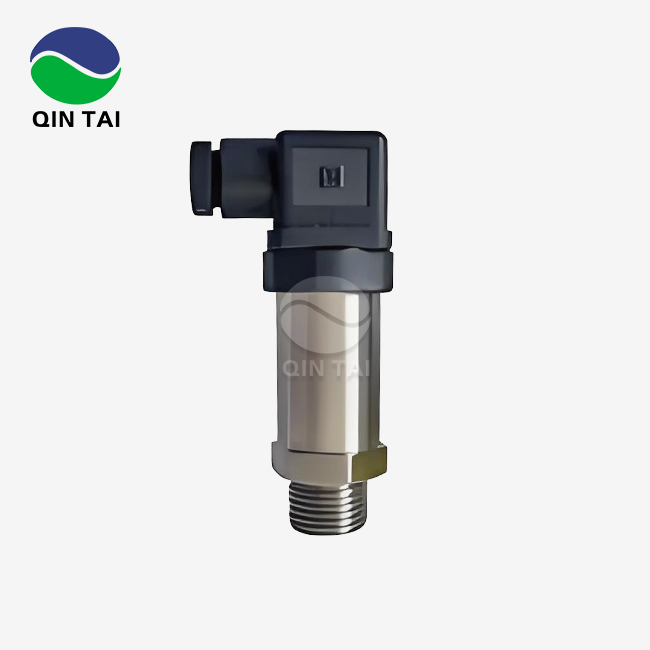

Our customers’ satisfaction speaks for our quality — contact us to experience the same reliable service.