- English
- French
- German
- Portuguese
- Spanish
- Russian
- Japanese
- Korean
- Arabic
- Greek
- German
- Turkish
- Italian
- Danish
- Romanian
- Indonesian
- Czech
- Afrikaans
- Swedish
- Polish
- Basque
- Catalan
- Esperanto
- Hindi
- Lao
- Albanian
- Amharic
- Armenian
- Azerbaijani
- Belarusian
- Bengali
- Bosnian
- Bulgarian
- Cebuano
- Chichewa
- Corsican
- Croatian
- Dutch
- Estonian
- Filipino
- Finnish
- Frisian
- Galician
- Georgian
- Gujarati
- Haitian
- Hausa
- Hawaiian
- Hebrew
- Hmong
- Hungarian
- Icelandic
- Igbo
- Javanese
- Kannada
- Kazakh
- Khmer
- Kurdish
- Kyrgyz
- Latin
- Latvian
- Lithuanian
- Luxembou..
- Macedonian
- Malagasy
- Malay
- Malayalam
- Maltese
- Maori
- Marathi
- Mongolian
- Burmese
- Nepali
- Norwegian
- Pashto
- Persian
- Punjabi
- Serbian
- Sesotho
- Sinhala
- Slovak
- Slovenian
- Somali
- Samoan
- Scots Gaelic
- Shona
- Sindhi
- Sundanese
- Swahili
- Tajik
- Tamil
- Telugu
- Thai
- Ukrainian
- Urdu
- Uzbek
- Vietnamese
- Welsh
- Xhosa
- Yiddish
- Yoruba
- Zulu
Beginner’s Guide to Urea Dosing Pressure Sensors in Diesel Engines
Diesel engines must comply with stricter worldwide pollution requirements, making Selective Catalytic Reduction (SCR) systems necessary. The Urea dosing pressure sensor, which detects and monitors urea solution (AdBlue or Diesel Exhaust Fluid) pressure in the dosing assembly, is essential to these systems. This sensor gives the engine management unit real-time data to inject precise urea to convert hazardous nitrogen oxides into harmless nitrogen and water vapor, meeting EPA Tier 4 Final and Euro VI emission criteria while optimizing engine performance.
What Is a Urea Dosing Pressure Sensor and How Does It Work?
Core Function in SCR Systems
A Urea dosing pressure sensor monitors SCR aftertreatment systems by detecting urea solution pressure between the dosing pump and injector nozzle. These measurements guarantee that the system maintains proper pressure levels—usually -14 to +130.5 psi—for precise fluid delivery. The sensor continually monitors pressure and sends data to the ECU, which regulates pump operation and injection time. Without appropriate pressure monitoring, the SCR system cannot provide enough urea, resulting in excessive emissions or fluid consumption.
Signal Output and Pressure Ranges
Most contemporary sensors communicate with engine control modules via analog voltage. The standard output spans from 0.5 VDC at low pressure to 4.5 VDC at maximum pressure, giving a reliable ratiometric signal despite electrical system voltage variations. The analog interface works well in diesel applications like heavy-duty vehicles and stationary generators. The sensor's ECU-regulated 5V power supply ensures accurate reading independent of battery voltage changes during engine start-up or heavy electrical loads.
Real-Time Monitoring Capabilities
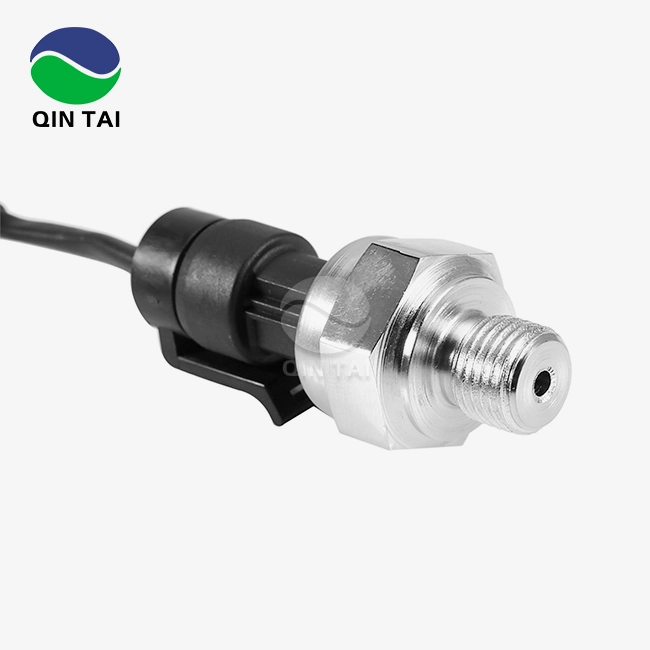
Continuous pressure monitoring detects system abnormalities immediately. When pressure decreases abruptly, the sensor warns the control unit to leaks, air incursion, or pump failure. Pressure readings above normal indicate clogs, frozen urea lines, or valve problems. Maintenance personnel may prevent costly repairs and compliance problems with real-time diagnostics. The QS-P226 type offers accurate readings with ±0.5% accuracy, ensuring excellent SCR performance under challenging working situations.
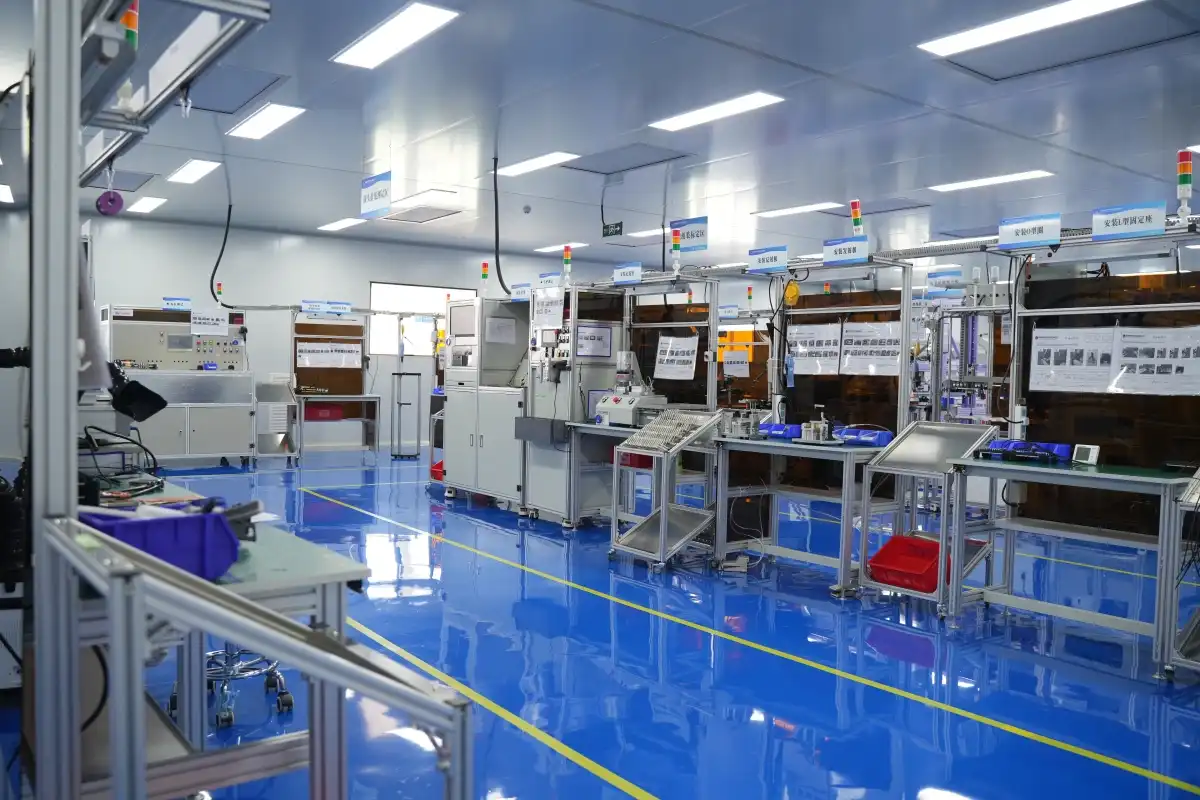
Types and Technologies of Urea Dosing Pressure Sensors
Strain Gauge Technology
Strain gauge sensors are the most prevalent automobile pressure sensor. When pressured, a flexible diaphragm coupled to resistive parts changes electrical resistance. Wheatstone bridge resistance changes as urea pressure rises and the diaphragm deflects. It becomes a proportional voltage signal. Strain gauge sensors are durable and temperature stable, making them suited for diesel engines' extreme vibration, thermal cycling, and chemical exposure.
MEMS-Based Sensing Elements
Micro-Electro-Mechanical Systems (MEMS) technology has revolutionized pressure sensing for devices like the Urea dosing pressure sensor by combining the sensor element and signal conditioning circuitry on a silicon chip. Compared to mechanical systems, MEMS sensors are more accurate, quicker, and cheaper to make. Qintai's self-developed sensor core technology uses sophisticated MEMS principles to remove supply chain dependencies and provide consistent performance over the operating range. While standard sensors struggle with temperature changes and fluid contamination, this patented technology performs consistently.
Importance of Temperature Compensation
Diesel sensors are exposed to temperatures from below freezing during cold starts to over 200°F under the hood. Temperature changes might impact the sensor element and urea solution, creating measurement inaccuracies. Quality sensors integrate temperature compensation circuits to automatically adapt output signals to environmental conditions. While retaining measurement integrity, the QS-P226 works well at 60-80°F. This correction keeps pressure measurements accurate in desert heat and cold, maintaining SCR performance year-round.
Pressure Sensors Versus Flow Sensors
Understanding pressure and flow measurement clarifies their complimentary functions in SCR systems. Pressure sensors measure urea fluid force to determine if the dosing pump creates enough pressure for injection. Flow sensors verify urea supply by measuring system volume. Together, both measures verify SCR functionality. Pressure monitoring identifies pump failures and line blockages quickly, while flow metering ensures catalyst dosage delivery. Comprehensive SCR diagnostics require both sensor types functioning together, thus procurement teams should realize this.
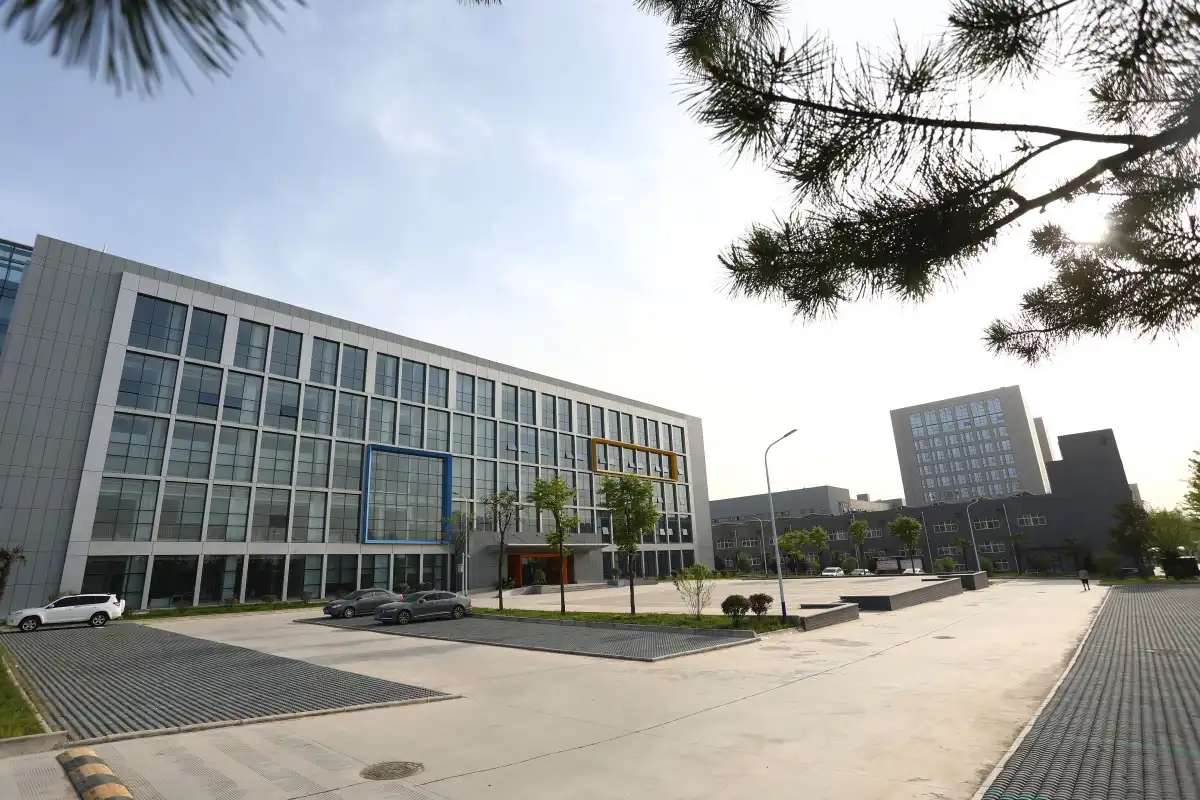
How to Choose the Best Urea Dosing Pressure Sensor for Your SCR System?
Measurement Accuracy Requirements
System efficiency and emission compliance depend on accuracy standards. While sensors with ±1% accuracy may be sufficient for basic applications, engines near emission restrictions require tighter tolerances. The QS-P226 offers ±0.5% accuracy across its measuring range, enabling precise urea dosage. This accuracy level reduces urea overdose and underdosing, which can cause compliance problems. Procurement managers should check sensor specifications for accuracy over the pressure and temperature range, not only under ideal lab circumstances.
Environmental Durability Considerations
Diesel engine sensors are exposed to moisture, road salt, diesel fuel fumes, and vibration. Strong sealing shields internal electronics from environmental stressors. With sealing against moisture, dust, and chemicals, the QS-P226 protects the environment. This safeguard enables reliable operation in harsh automobile conditions where sensor failures might deactivate fleets. When evaluating possibilities, R&D engineers should consider connection designs, housing materials, and ingress protection. Most heavy-duty applications may be protected by IP67 or IP69K sensors.
Compatibility with Existing Architectures
Electrical and mechanical compatibility with SCR system designs is needed for sensor integration. The QS-P226's 0.5-4.5 VDC ratiometric analog output links to normal ECU analog input channels without protocol conversion or signal conditioning gear. Mechanical connectors must match mounting and pressure port connections. Before placing bulk purchases for retrofit or multi-supplier sensors, purchasing managers should seek dimensions drawings and electrical requirements to ensure compatibility. Redesign expenses and production delays exceed initial price advantages due to incompatible interfaces.
Off-the-Shelf Versus Custom Solutions
Standard catalog goods are excellent for established designs with steady production quantities due to their instant availability and reduced unit prices. Customized OEM solutions maximize performance for individual applications by using precise pressure ranges, mounting arrangements, and connection types. Qintai supports both methods by supplying the QS-P226 as a standard solution and developing bespoke sensors with our 86-person R&D team. Custom development demands minimum order commitments and lengthier lead times, but it offers distinct performance that might justify the expenditure for high-volume projects or specialized applications.
Maintenance Tips and Troubleshooting for Urea Dosing Pressure Sensors
Common Failure Modes
One of the most common Urea dosing pressure sensor concerns is signal drift, which occurs when output voltage deviates from calibration. Diaphragm fatigue, electronic component age, and sensing surface contamination cause drift. Complete signal loss from electrical connection corrosion or internal circuit failures is another common issue. Urea crystallisation around the pressure port can obstruct the detecting diaphragm, freezing pressure readings. In high-vibration applications like construction and agricultural machinery, sensor housing or connection pin wire breakage causes intermittent or permanent failures.
Preventive Maintenance Practices
Regular inspections detect issues before system shutdowns. Regular service intervals should include visual inspection of electrical connections for corrosion or damage. Urea deposits surrounding the sensor mounting site indicate leakage that might contaminate or prevent crystallization. Periodic sensor output voltage verification against known excellent values at certain operating circumstances detects measurement drift before it causes diagnostic codes. The QS-P226's 12-month warranty covers normal service life, but these preventative practices prolong and decrease downtime.
Systematic Troubleshooting Approach
When diagnostic fault codes indicate pressure sensor failures, technicians should diagnose systematically. Start with electrical testing to check sensor supply voltage and return signal routes. Checking ground circuit continuity and the 5V supply using a multimeter removes wiring issues before rejecting the sensor. The sensor's accuracy is confirmed by comparing its output voltage to system pressure, measured with a mechanical gauge temporarily inserted in the urea line. Sensor replacement is needed if electrical connections are OK but readings are wrong. This systematic methodology promptly identifies sensor failures and avoids needless part replacement.
Repair Versus Replacement Decisions
Sealed structure and integrated electronics make pressure sensors less repairable than certain automobile components. Diagnosis and repair labor costs usually surpass sensor replacement cost, especially when factoring the probability of additional failures in fixed devices. Quality OEM-equivalent sensors give long-term solutions. Replacement is cost-effective for vehicle repairs and fleet maintenance programs with the QS-P226's affordable pricing and 100% certified quality assurance. To minimise vehicle downtime, supply chain managers should balance carrying costs against the operational effect of delayed repairs by stocking replacement sensors strategically.
Procurement and Supply Chain Insights for Urea Dosing Pressure Sensors
Evaluating Supplier Credibility
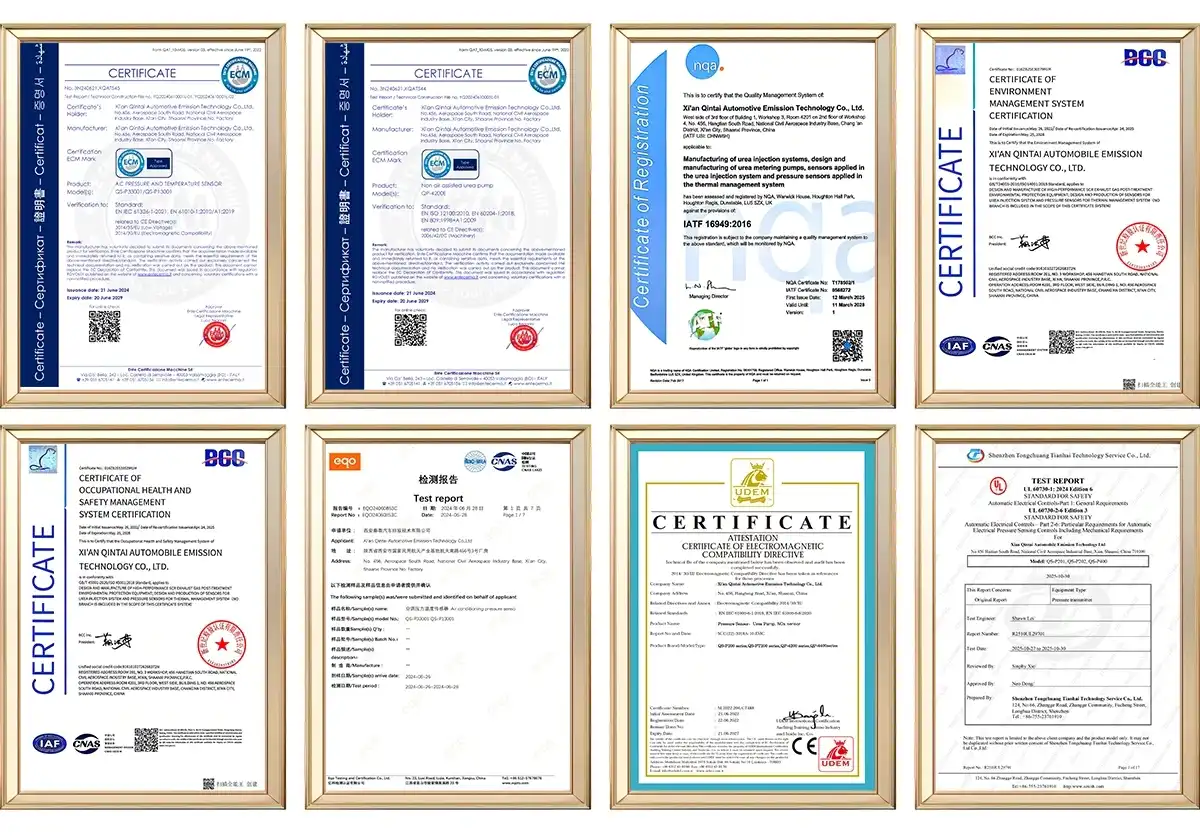
Supplier selection for a Urea dosing pressure sensor includes production, quality, and technical support, not just pricing. Manufacturers with ISO9001 and IATF16949 certifications have established quality management practices that satisfy international automotive standards. Qintai's certifications and approvals—CMC, Ex, UL, CE, REACH, and RoHS—show worldwide regulatory conformity. This certification portfolio guarantees buying managers that sensors fulfill worldwide safety, environmental, and performance criteria. These certifications are verified before sourcing by supplier audits or quality documentation requests.
Understanding MOQ and Pricing Structures
Whether consumers select regular catalog goods or bespoke combinations, minimum order amounts vary greatly. Standard sensors like the QS-P226 have lower MOQs—sometimes 100 units—making them suitable for smaller manufacturing projects or aftermarket wholesalers. To justify tooling and engineering costs, custom sensor creation takes several thousand units. Volume pricing rewards greater commitments with lower unit prices. Procurement teams should seek full quotes including pricing breakdowns, payment terms, and specific configuration tooling costs. Understanding total landed cost—freight, tariffs, and handling—enables realistic cost comparisons between local and overseas providers.
OEM Partnership Advantages
Partnerships with capable OEM suppliers offer benefits beyond transactional purchase. Qintai, the number one supplier to China's top diesel engine manufacturers Weichai Power, Yuchai Power, and Quanchai Power, can support difficult manufacturing settings. OEM relationships enable sensor specifications that optimise system performance by providing technical expertise throughout product development. Dedicated account management and priority manufacturing allocation maintain supply throughout demand variations. Technical help for integration issues and quick warranty administration are included in after-sales service. These partnership factors add value beyond pricing to justify supplier loyalty.
Logistics and Delivery Coordination
Shipping and manufacturing schedules must be coordinated for global sourcing. Standard catalog Urea dosing pressure sensor lead times are four to eight weeks, depending on order volume and manufacturing schedules. Custom sensors require additional development time, which might delay first shipments by 12 weeks. To account for supply chain uncertainty, purchasing managers should properly communicate production expectations and maintain buffer inventories. Qintai's yearly manufacturing capacity exceeds two million sensors, supporting large-volume requirements while preserving quality. Coordinating order placement with predicted demand eliminates stock-outs and high inventory costs.
Conclusion
Technical criteria, quality standards, and supply chain issues must be considered while choosing Urea dosing pressure sensors. For SCR system compliance, self-developed sensor core technology like the QS-P226 provides measurement precision and environmental durability. Purchasing managers and R&D engineers may make educated sourcing selections by understanding sensor technology, maintenance needs, and procurement strategies. Quality pressure sensing components prevent costly compliance failures and provide operational dependability as emission standards tighten internationally. Quality sensors allow clean diesel technology with their superior manufacture, extensive certifications, and rapid technical assistance.
FAQ
Q1: What happens if the urea dosing pressure sensor fails?
A: If the Urea dosing pressure sensor fails, sensor failures prevent ECU AdBlue dosing regulation. If the SCR system fails, the car may enter limp mode with reduced engine power. Loss of dosage control increases emissions, and ECU memory stores diagnostic fault codes. To prevent downstream component damage from inappropriate dosage, the control system may disable AdBlue injection.
Q2: What is the typical lifespan of a urea dosing pressure sensor?
A: Quality sensors last 3,000 to 5,000 engine hours under normal conditions, depending on operation environment and maintenance. Extreme temperature cycling, vibration, and urea solution contamination can shorten service life. The QS-P226 has a 12-month manufactured fault guarantee. Regular system maintenance and high-purity urea solution enhance sensor life.
Q3: Can pressure sensors be calibrated on-site?
A: After factory calibration, most automotive-grade pressure sensors are sealed, making field calibration impossible without specialist equipment. Integrated signal conditioning circuitry is calibrated during production, and sensor electronics store trimming values. Field calibration may damage sensitive parts. Replace rather than recalibrate when sensor accuracy falls beyond specs.
Partner with a Trusted Urea Dosing Pressure Sensor Manufacturer
Qintai welcomes procurement managers and technical experts to see how our QS-P226 sensor meets SCR system accuracy and reliability. Since 2001, we have combined independent R&D and production expertise to assist your emission compliance goals. Our engineering staff can help you choose and integrate sensors for your application. Contact our technical sales team at info@qt-sensor.com for specs, sample assessment, and custom sensor creation. We provide ISO9001 and IATF16949-certified quality, flexible customization, and quick after-sales service to major OEMs globally as a leading Urea dosing pressure sensor provider. Learn how Qintai's sensor solutions may improve SCR system performance and supply chain.
References
1. Johnson, M. & Peterson, R. (2021). Selective Catalytic Reduction Systems: Design, Operation, and Maintenance. SAE International Publishing.
2. Environmental Protection Agency. (2020). Diesel Engine Emission Control Technology: Technical Overview and Compliance Strategies. EPA Office of Transportation and Air Quality.
3. Zhang, L., Williams, K., & Anderson, P. (2022). "Sensor Technologies for Automotive Emission Control Systems," Journal of Automotive Engineering, 236(4), pp. 892-906.
4. International Organization for Standardization. (2019). ISO 22241: Diesel Engines—NOx Reduction Agent AUS 32. ISO Technical Committee.
5. Chen, H. & Kumar, S. (2023). Pressure Measurement in Harsh Environments: Sensor Selection and Application Guide. Industrial Press Inc.
6. Society of Automotive Engineers. (2022). SAE J1939 Network Standards for Heavy-Duty Vehicles. SAE Technical Standards Board.


Our customers’ satisfaction speaks for our quality — contact us to experience the same reliable service.