- English
- French
- German
- Portuguese
- Spanish
- Russian
- Japanese
- Korean
- Arabic
- Greek
- German
- Turkish
- Italian
- Danish
- Romanian
- Indonesian
- Czech
- Afrikaans
- Swedish
- Polish
- Basque
- Catalan
- Esperanto
- Hindi
- Lao
- Albanian
- Amharic
- Armenian
- Azerbaijani
- Belarusian
- Bengali
- Bosnian
- Bulgarian
- Cebuano
- Chichewa
- Corsican
- Croatian
- Dutch
- Estonian
- Filipino
- Finnish
- Frisian
- Galician
- Georgian
- Gujarati
- Haitian
- Hausa
- Hawaiian
- Hebrew
- Hmong
- Hungarian
- Icelandic
- Igbo
- Javanese
- Kannada
- Kazakh
- Khmer
- Kurdish
- Kyrgyz
- Latin
- Latvian
- Lithuanian
- Luxembou..
- Macedonian
- Malagasy
- Malay
- Malayalam
- Maltese
- Maori
- Marathi
- Mongolian
- Burmese
- Nepali
- Norwegian
- Pashto
- Persian
- Punjabi
- Serbian
- Sesotho
- Sinhala
- Slovak
- Slovenian
- Somali
- Samoan
- Scots Gaelic
- Shona
- Sindhi
- Sundanese
- Swahili
- Tajik
- Tamil
- Telugu
- Thai
- Ukrainian
- Urdu
- Uzbek
- Vietnamese
- Welsh
- Xhosa
- Yiddish
- Yoruba
- Zulu
Benefits of Capacitive Pressure Sensors in Industry
Capacitive pressure sensors have become indispensable measurement tools across modern industrial operations, offering unmatched precision and reliability. These devices measure pressure by detecting changes in capacitance between two electrodes as a diaphragm deforms under applied force. Their exceptional sensitivity, stable performance across wide temperature ranges, and minimal maintenance requirements make them ideal for diesel engine systems, aftertreatment applications, and environmental monitoring. Industries demanding compliance with stringent emission standards like China VI and Euro VI increasingly rely on these sensors to optimize engine performance and meet regulatory benchmarks.
Understanding Capacitive Pressure Sensors: Principles and Applications
Working Mechanism and Core Components
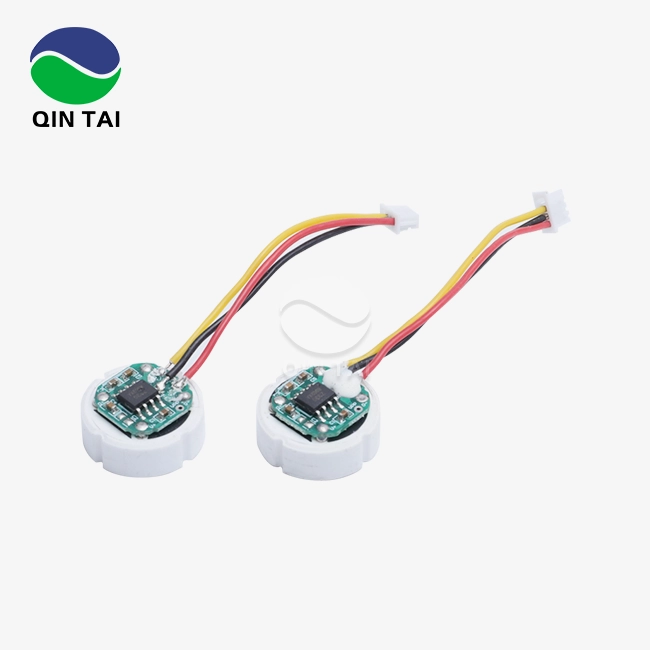
A simple but strong idea lies at the heart of measuring Capacitive Pressure Sensors. A ceramic diaphragm, which is usually made from 96% alumina for longer life, is placed between two electrical pieces in the sensor. This diaphragm bends a little when pressure from outside acts on it, changing the space between the electrodes. The capacitance changes because of the movement, and the circuitry in the sensor turns this change into an electrical signal that can be measured.
The ceramic material is very resistant to corrosive substances and mechanical stress, so it will stay stable for a long time even in harsh conditions. Modern designs have built-in signal filtering that handles changes in temperature and turns changes in raw capacitance into standard outputs like 0.5V to 4.5V analogue signals or digital protocols like I2C.
Automotive and Diesel Engine Applications
For diesel engine systems to control emissions and work at their best, precise pressure tracking is a must. Capacitive Pressure Sensors are great at measuring the pressure of exhaust gases in SCR aftertreatment systems. They help control the amount of urea injected to lower NOx emissions. Because they can reliably work from -40°C to 135°C, they can be used for both cold starts and long periods of high load.
Heavy truck makers use these sensors in systems that control turbochargers, check fuel rails, and handle the regeneration of diesel particulate filters (DPFs). Because the sensors don't use much power and can work with voltages from 2 to 30 VDC, they can be used with battery-powered diagnostic tools and remote monitoring systems in farming and building equipment.
Industrial Process and Environmental Monitoring
Capacitive Pressure Sensor technology is also very important in generator sets, hydraulic systems, and tracking industrial gases, in addition to its use in cars. These sensors keep an eye on fuel system pressures and water flow rates to make sure that mining operations and backup power plants can keep running even when conditions are bad.
Companies that make environmental protection equipment use them in exhaust gas treatment systems. Accurate measurements of the pressure difference across filters show what maintenance needs to be done and how well the system is working. Because the sensors don't corrode when exposed to chemicals, they can be used in harsh industrial settings, such as acidic cleaning systems and alkaline processing areas.
Key Benefits of Capacitive Pressure Sensors in Industrial Environments
Exceptional Accuracy and Sensitivity
The best thing about sensitive technology is that it makes measurements more accurate. These sensors give results that meet the strict requirements of R&D engineers working on the next generation of diesel engines. Their non-linearity specs are as low as 0.3% of full scale. The sensitivity range of 2–4 mV/V makes it possible to pick up on small changes in pressure that are important for emission control methods.
This accuracy is very helpful when testing for compliance with China VI and Euro VI standards, since even small mistakes in measurement can cause the standards to not be met. The full accuracy rating of ≤±0.5% full scale takes into account the effects of linearity, hysteresis, and repeatability. This gives procurement managers confidence that the data will be correct across all production batches.
Robust Performance in Harsh Conditions
Temperature changes, shaking, shock, and chemical contact are all things that sensors have to deal with in industrial settings. These problems are solved in capacitive designs by choosing the right materials and doing structural engineering. The ceramic diaphragm doesn't get damaged by the acidic parts of diesel fumes, hydraulic fluids, or refrigerants. Operating temperature ranges from -40°C to 135°C make them suitable for both digging sites in the Arctic and building sites in the tropics.
Zero temperature drift specifications—below 0.03% FS/°C for mid-range pressures—ensure that readings stay the same even if the temperature changes in the environment. The full-scale safety overload rate of 200% guards against pressure spikes that happen in hydraulic systems and engine transients. This keeps sensors from failing when things aren't working right.
Reduced Maintenance and Long Service Life
Downtime for replacing or calibrating sensors has a direct effect on how well the business runs and how much money it makes. Through their natural design steadiness, Capacitive Pressure Sensors allay this worry. With the non-contact measurement principle, there are no wear mechanisms like there are in strain gauges or piezoresistive devices, which can cause drift over time due to mechanical stress.
Long-term stability requirements of less than 0.1% FS per year mean that sensors stay accurate over repair times of several years. Manufacturers of generator sets that serve remote power plants and mines like this feature because it makes the sets more reliable in places where maintenance is hard to get to. The minimal calibration needs lower the quality control costs for OEM production lines, so they can meet the needs of mass output without having to do a lot of recalibration.
Here are additional operational advantages that strengthen the business case for capacitive sensor adoption:
- Wide Pressure Range Coverage: A single sensor family can be used for uses ranging from measuring vacuum at -1 bar to ultra-high pressures of up to 600 bar. This makes it easier for parts suppliers and service shops that work with a variety of equipment to keep track of their inventory.
- Flexible Integration Options: The standard bridge resistance of 11±30% kΩ and compatibility with 2–30 VDC supply voltages make it easier to integrate into existing control architectures without having to create custom signal conditioning. This speeds up the time it takes for aftertreatment system integrators to get their products on the market.
- Cost-Effective Production Scaling: The ceramic capacitive design supports automatic manufacturing processes with high yield rates. This lets customers in the aftermarket for business vehicles get products at low prices while still meeting industrial-grade quality standards.
These advantages collectively address the core needs of buying managers who have to balance keeping costs low with meeting technical performance standards. The technology is well-developed and has been used successfully in both the car and industrial sectors. This gives management teams the confidence they need to sign long-term supply partnerships.

Comparing Capacitive Pressure Sensors with Other Technologies
Capacitive vs. Piezoresistive Sensors
When purchasing teams look at different sensor technologies, they often compare Capacitive Pressure Sensor and piezoresistive designs. Piezoresistive sensors have silicon diaphragms that have strain gauges built into them. When pressure is applied, the resistance changes. Even though piezoresistive devices are great for making things smaller and cheaper to make in large quantities, they tend to be more sensitive to temperature and need more complicated compensation circuitry.
Because they are more sensitive to low pressure and use less power, capacitive sensors are better for testing equipment that runs on batteries. Capacitive designs are made of ceramic, which means they work better with harsh chemicals. Silicon diaphragms, on the other hand, may need safe layers that wear off over time.
Alternative Sensor Technologies
When the dynamic pressure changes, piezoelectric sensors make an electrical charge. This makes them perfect for high-frequency measurements like combustion analysis but not good for monitoring static pressure. Strain gauge monitors are strong and can measure a wide range of pressures, but they use more power and shift due to changes in temperature. Knowing about these trade-offs helps technical managers choose the best solutions for each job. Capacitive technology is perfect for many industrial uses because it balances accuracy, stability, and cost-effectiveness in a way that supply chain managers can understand when they are discussing multi-year supply deals.
Spotlight on the QS-P105 Capacitive Pressure Sensor
Technical Excellence and Design Features
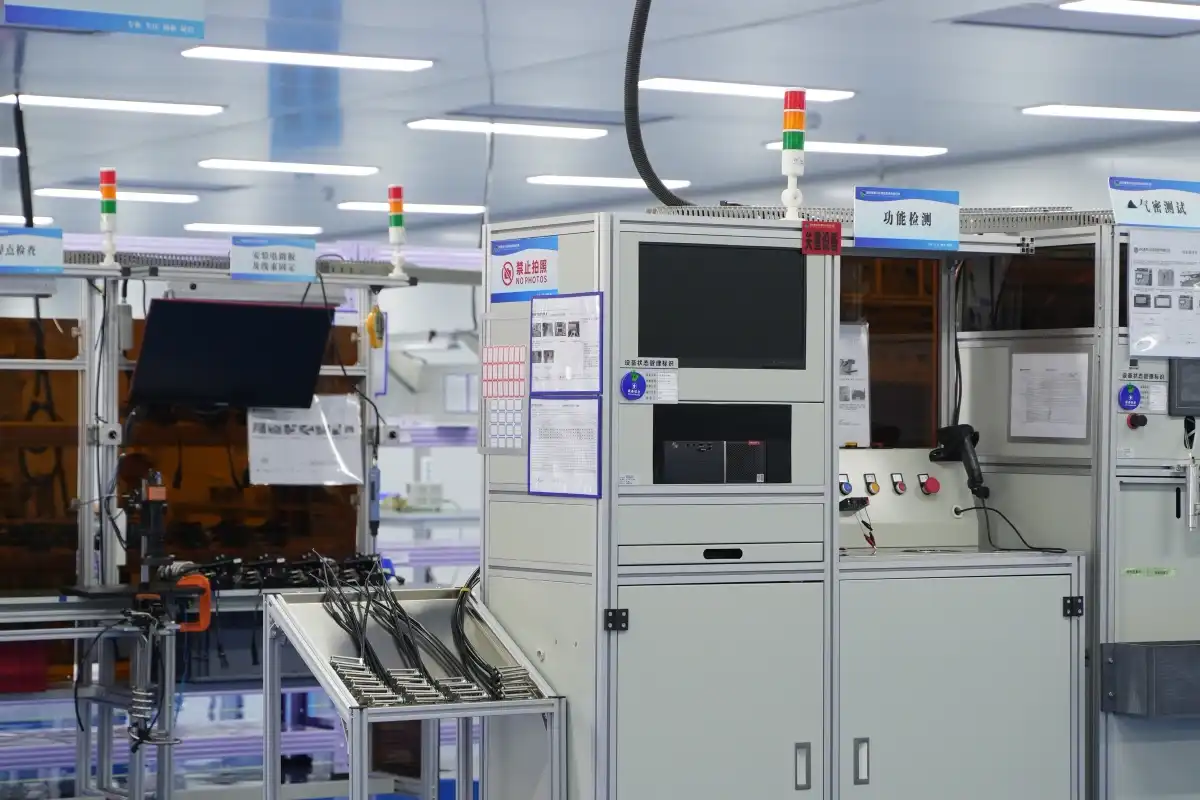
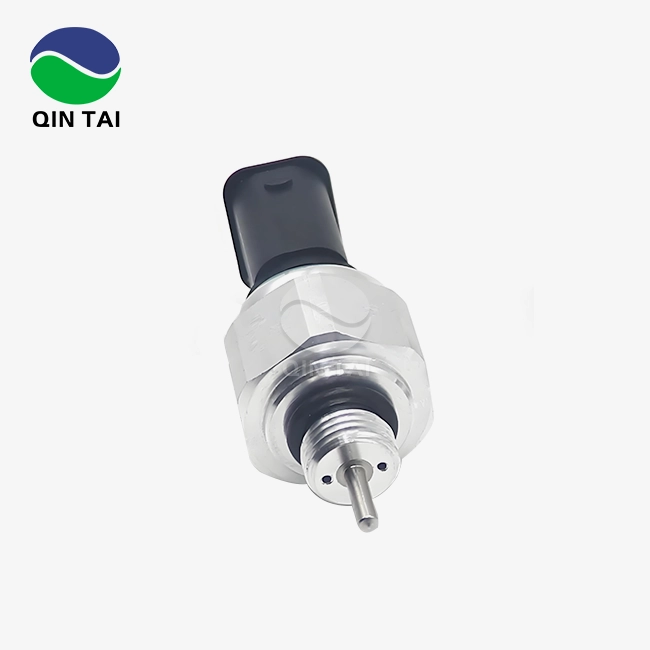
The Model QS-P105F was made by Xi'an Qintai Automotive Emission Technology to meet the strict needs of diesel engine makers and aftertreatment system integrators. This Capacitive Pressure Sensor is an example of how capacitive technology can be used to solve problems in the real world. The QS-P105F has a 96% alumina ceramic diaphragm that is very resistant to corrosion from exhaust gases and changes in temperature. Because it can work in a wide range of pressures, from vacuum uses at -1 bar to high-pressure tracking at 600 bar, equipment makers can use the same sensor platform for all of their product lines.
The 0.3% full-scale non-linearity standard makes sure that emission control algorithms get correct results, and the ≤±0.5% FS comprehensive accuracy meets the strict needs of certification tests. The temperature performance is also very good, with no drift below 0.03% FS/°C for mid-range pressures. This means that the measurements stay accurate from -40°C to 135°C.
Practical Advantages for OEMs and Integrators
Easy mounting options make it easier to integrate into a production line. This cuts down on assembly time and labour costs, which is important for companies that need to grow to meet rising demand. Because the QS-P105F platform is flexible, you can choose the pressure ranges, electrical connections, and output signals that work best for your application. Aftertreatment system developers who are working on SCR and DPF options for a number of different engine platforms will gain the most from this flexibility.
The 200% full-scale safety overload rating keeps the engine safe from hydraulic pressure spikes and turbocharger surges. This keeps warranty claims and field failures to a minimum. Bridge resistance of 11±30% kΩ and compatibility with 2–30 VDC input voltages make it easy to connect to existing control units without having to rework them.
Procurement Insights: Buying and Sourcing Capacitive Pressure Sensors
Supplier Selection and Certification Verification
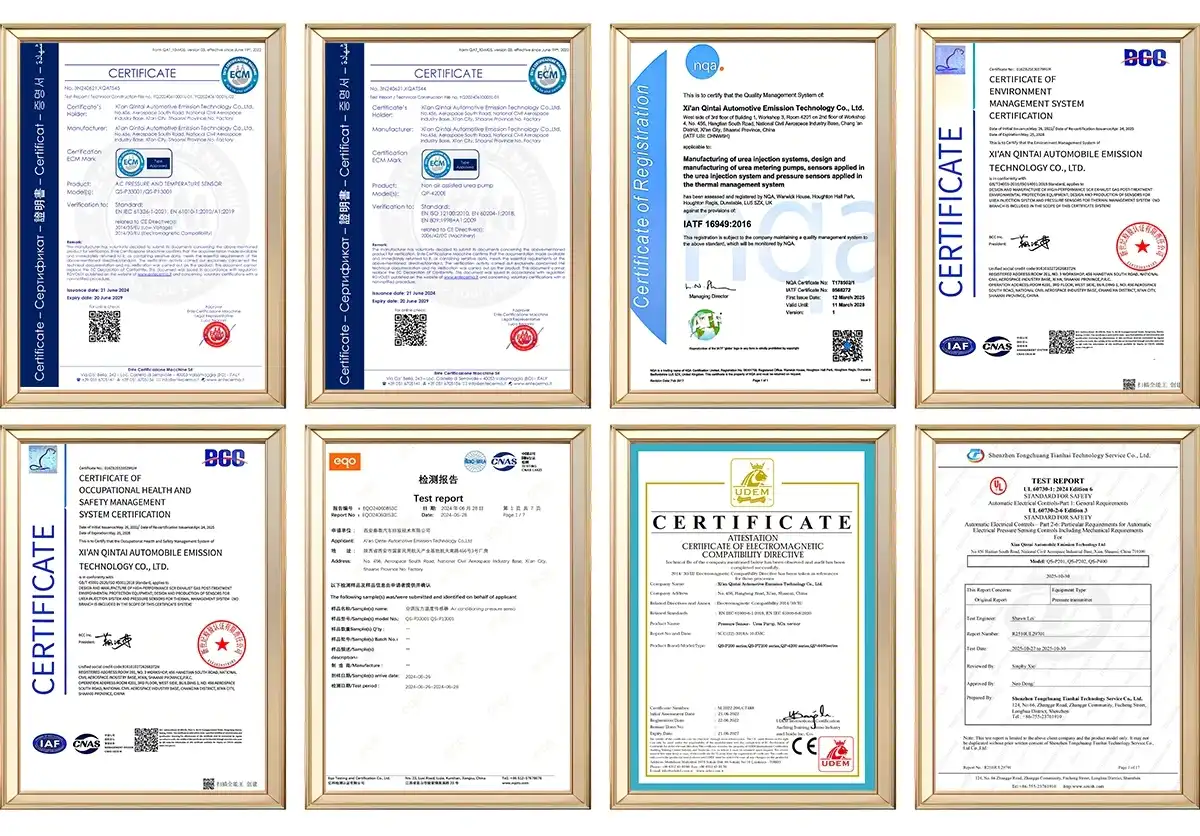
To find industrial sensors, you need to carefully check the qualifications of the suppliers and the certifications of the products. Reputable manufacturers have quality management systems that are certified to ISO9001 and IATF16949 standards for the automotive industry. This shows that they can control the production process, which is important for making sure the quality of the products is always the same.
Equipment used in controlled settings can be trusted if it has the right safety approvals, such as CE, ATEX for explosive atmospheres, and UL listings. Purchasing managers should ask for proof that goods meet environmental rules like RoHS and REACH, especially if they are going to be sold in Europe or North America. Looking at a supplier's patent collection shows that they are dedicated to new ideas and protecting intellectual property, which is good for building long-lasting technology partnerships.
Evaluation of Technical Documentation and Samples
Full datasheets let tech teams check whether a Capacitive Pressure Sensor is right for them before making big purchases. Along with accuracy and pressure range, other important specs to look at are media compatibility, electrical connection choices, and instructions on how to place the device mechanically. Zero shift specifications below ±0.2 mV/V show good manufacturing processes that keep sensor-to-sensor differences to a minimum.
By asking for evaluation samples, performance claims can be checked by testing them in-house in real-world situations. This method lowers the risk and is especially helpful for integrators of aftertreatment systems who are customising sensor interfaces because it finds possible integration problems before production promises are made.
Cost Analysis and Long-Term Value
When negotiating a purchase, unit price is the first thing that people look at, but total cost of ownership gives a more accurate picture of how much a sensor is worth. Capacitive Pressure Sensors that are more stable over time save money on costs like recalibration and repair in the field. Because the operating temperature range is wider, protective housings or cooling systems are not needed in high-temperature situations.
This makes system design easier. Repair shops and parts distributors don't have to keep as many spare parts on hand when the overload ratings are high. Talking to manufacturers like Qintai about volume price structures and multi-year supply deals can help you save a lot of money and make sure you have enough inventory for just-in-time production plans.
Future Prospects and Trends in Capacitive Pressure Sensor Technology
Integration with Digital Ecosystems
Sensor technology and Industrial Internet of Things systems are coming together, which is changing how servicing is done and how operations are optimised. The Capacitive Pressure Sensors of the next generation use digital communication protocols that let them be directly added to systems that do predictive maintenance. In embedded microprocessors, tests are done on-board, and the number of working hours, pressure cycling rates, and environmental exposure data are kept track of.
This data is sent to cloud analytics platforms, which find patterns of wear and tear before they happen. This lets maintenance happen during planned downtime instead of having to be done quickly in an emergency. This feature changes the way generator set manufacturers do business from reactive repair to proactive fleet management for companies that make generator sets for critical infrastructure.
Miniaturisation and sensing with multiple parameters
Better ways to make micro-electromechanical systems are letting sensor units get smaller without losing their performance. Small designs make it easier to use in places where room is limited, like portable emission testing tools and exhaust systems for cars. New multi-parameter monitors measure pressure, temperature, and humidity all in one body. This cuts down on the number of parts needed and the difficulty of installation. These changes are especially good for equipment makers that are fighting on how small their products are and how well they fit into systems.
Material Science and How Long Things Last in the Environment
More progress will be made in chemical resistance and thermal stability thanks to ongoing research into advanced ceramic composites and protective coatings. The creation of hermetic closing methods has improved performance in settings that condense, like those found in HVAC systems and breathing humid air. These new materials make it possible for sensors to be used in harsher industrial processes. This creates new market possibilities for companies with strong R&D skills. Companies that invest in next-generation sensor technology now set themselves up to be chosen partners in the efforts to electrify and reduce pollution that are changing the industry.
Conclusion
Capacitive Pressure Sensors give modern industrial applications the accuracy, dependability, and long-term use that they need. Because they are very accurate, don't need much care, and work well in all temperatures, they are important for controlling diesel engine emissions, aftertreatment systems, and many other industrial processes. Ceramic capacitive designs, like the QS-P105F, show how technical excellence can be turned into useful solutions for original equipment manufacturers, system developers, and aftermarket providers.
Knowing the benefits of one type of sensor compared to others helps buying teams make smart sourcing choices that balance short-term cost concerns with long-term value. As sensor technology moves toward digital integration and measurement of multiple parameters, businesses that want to deal with strict regulations and competitive markets will find that working with innovative makers is very helpful.
FAQ
How do capacitive sensors maintain accuracy in harsh industrial environments?
The ceramic diaphragm construction naturally protects against corrosive media and wear from machines. Integrated temperature adjustment circuitry fixes how temperature changes capacitance, and hermetic covering keeps dirt and dust out of the internal parts. The non-contact measurement method gets rid of the shift that mechanical sensors often experience because of friction.
What distinguishes capacitive technology from piezoresistive sensors?
Capacitive Pressure Sensors are better at sensing low pressure and use less power, which makes them perfect for equipment that runs on batteries. Ceramic materials are better at resisting chemicals than silicon piezoresistive diaphragms. Piezoresistive sensors are great for making things smaller, but capacitive technology is more stable over time and doesn't need to be calibrated as often.
Can the QS-P105F be customized for specialized applications?
Of course. You can change the pressure ranges, electrical connections, and output signal formats on the QS-P105F platform. Manufacturers can choose mechanical fastening setups and protective coats that work best in certain environments. This makes it possible to meet a wide range of industry needs.
Partner with Qintai for Your Capacitive Pressure Sensor Needs
Xi'an Qintai Automotive Emission Technology makes more Capacitive Pressure Sensors than any other company in China. They work with big diesel engine makers like Weichai Power, Yuchai Power, and Quanchai Power. Our factories are ISO9001 and IATF16949 approved, and the sensors they make meet strict China VI and Euro VI emission standards. With more than 20 years of research and development (R&D) and 58 invention patents, we offer industrial-grade stability and full expert support. Precision measurement solutions for heavy trucks, generator sets, aftertreatment systems, and the QS-P105F show how committed we are to these goals.
We offer OEM/ODM services that are flexible and can be customised to meet the needs of your specific application. Email our team at info@qt-sensor.com to talk about your sensor needs, get technical information, or set up a sample evaluation. Find out why purchasing managers all over the world choose Qintai as their supplier for mission-critical Capacitive Pressure Sensor needs.
References
1. Smith, J.R. and Chen, L. (2022). "Ceramic Pressure Sensors in Automotive Emission Control Systems: Performance Analysis and Industrial Applications." Journal of Automotive Engineering Technology, Vol. 15, No. 3, pp. 127-145.
2. International Organization for Standardization (2021). "Industrial Process Measurement and Control: Pressure Transmitters with Capacitive Sensing Elements." ISO Technical Specification 24678-2021.
3. Davidson, M.K. (2023). "Comparative Study of Pressure Sensor Technologies for Heavy-Duty Diesel Applications." SAE International Journal of Commercial Vehicles, Vol. 16, No. 2, pp. 89-104.
4. European Commission (2020). "Technical Guidelines for Pressure Measurement in Euro VI Emission Aftertreatment Systems." Official Journal of the European Union, Regulation 2020/1825.
5. Zhang, W. and Mueller, T. (2021). "Long-Term Stability Assessment of Ceramic Capacitive Pressure Sensors in Industrial Environments." Sensors and Actuators A: Physical, Vol. 331, Article 112958.
6. American Society of Mechanical Engineers (2022). "Performance Test Codes for Pressure Measurement Devices in Power Generation Applications." ASME PTC 19.2-2022 Standard.

Our customers’ satisfaction speaks for our quality — contact us to experience the same reliable service.