- English
- French
- German
- Portuguese
- Spanish
- Russian
- Japanese
- Korean
- Arabic
- Greek
- German
- Turkish
- Italian
- Danish
- Romanian
- Indonesian
- Czech
- Afrikaans
- Swedish
- Polish
- Basque
- Catalan
- Esperanto
- Hindi
- Lao
- Albanian
- Amharic
- Armenian
- Azerbaijani
- Belarusian
- Bengali
- Bosnian
- Bulgarian
- Cebuano
- Chichewa
- Corsican
- Croatian
- Dutch
- Estonian
- Filipino
- Finnish
- Frisian
- Galician
- Georgian
- Gujarati
- Haitian
- Hausa
- Hawaiian
- Hebrew
- Hmong
- Hungarian
- Icelandic
- Igbo
- Javanese
- Kannada
- Kazakh
- Khmer
- Kurdish
- Kyrgyz
- Latin
- Latvian
- Lithuanian
- Luxembou..
- Macedonian
- Malagasy
- Malay
- Malayalam
- Maltese
- Maori
- Marathi
- Mongolian
- Burmese
- Nepali
- Norwegian
- Pashto
- Persian
- Punjabi
- Serbian
- Sesotho
- Sinhala
- Slovak
- Slovenian
- Somali
- Samoan
- Scots Gaelic
- Shona
- Sindhi
- Sundanese
- Swahili
- Tajik
- Tamil
- Telugu
- Thai
- Ukrainian
- Urdu
- Uzbek
- Vietnamese
- Welsh
- Xhosa
- Yiddish
- Yoruba
- Zulu
How Pressure Transmitters Improve Industrial Automation Systems
Pressure transmitters revolutionize industrial automation by converting mechanical pressure measurements into precise electrical signals, enabling real-time monitoring and intelligent control across diverse applications. These devices eliminate guesswork and manual intervention, delivering consistent data streams that drive safer, more efficient operations. Modern pressure and temperature transmitters integrate dual-parameter sensing in compact housings, providing synchronized measurements that prevent correlation errors and reduce installation complexity. This combination enhances process visibility for diesel engine manufacturers, aftertreatment system integrators, and generator set producers who demand regulatory compliance and operational stability. By transforming raw physical data into actionable intelligence, pressure transmitters form the backbone of reliable industrial automation systems.
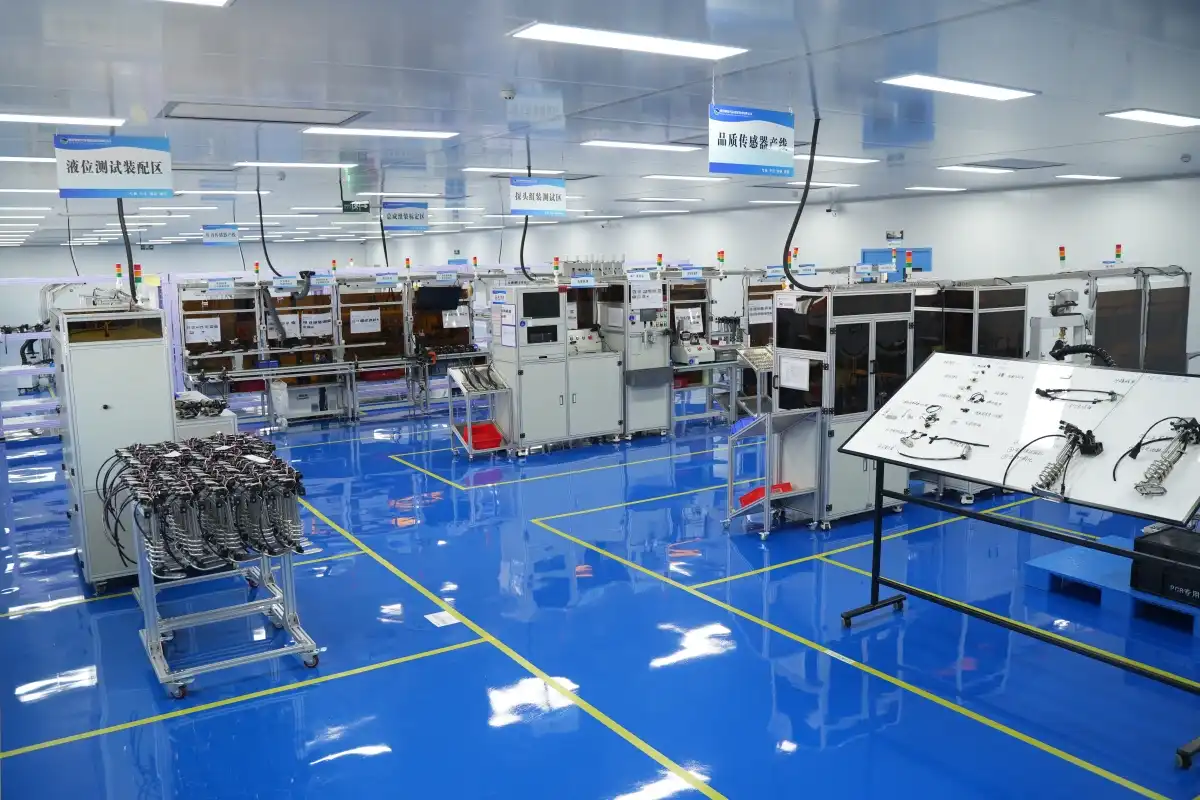
Understanding Pressure Transmitters and Their Role in Industrial Automation
Industrial environments demand precision measurement to maintain quality standards and operational safety. Pressure and Temperature transmitters serve as critical sensing components because they connect the real world of processes to digital control systems. These gadgets use cutting-edge transduction technologies to pick up changes in pressure and send out standard electrical signals that can be used with programmable logic controllers, distributed control systems, and platforms for supervisory control and data acquisition.
Core Working Principles Behind Pressure Measurement
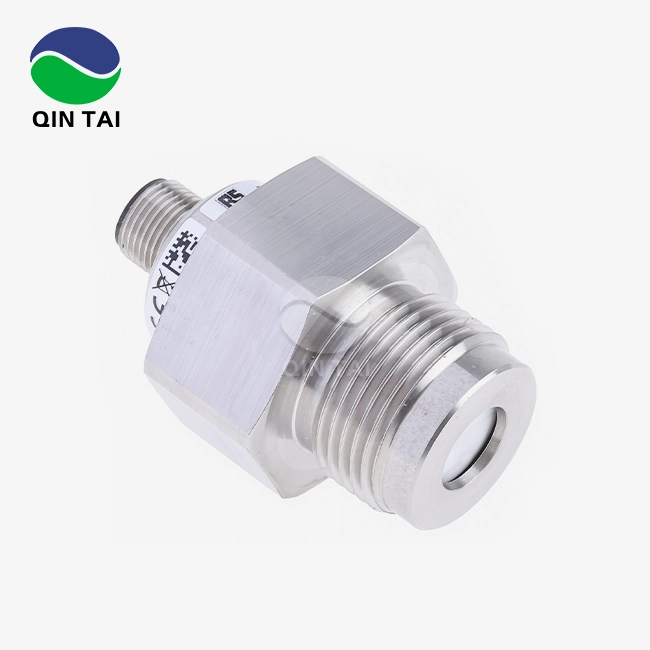
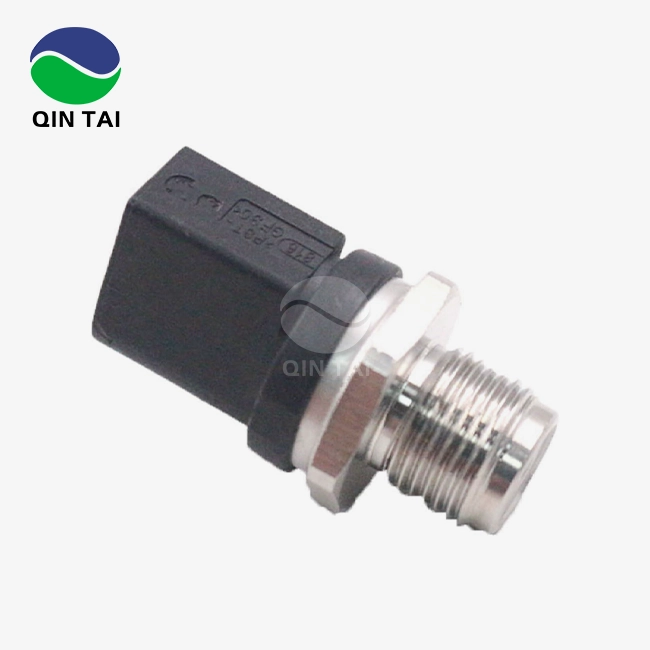
To get correct data, Pressure and Temperature transmitters use more than one way to send signals. When mechanical stress is put on piezoresistive sensors, strain-gauge elements change the electrical resistance. Capacitive sensors measure how much the diaphragm bends by changing the capacitance between plates that stay in place and plates that move. Ceramic pressure sensors, like the ones in the QS-PT225, are very stable and don't react with chemicals easily. This makes them perfect for use with diesel engine oil and coolants. Because it is piezo-resistive, the ceramic element directly changes pressure into changes in voltage. It stays accurate at all temperatures, from -40°F to 130°F. This strong construction makes sure that the sensor works reliably in heavy-duty machinery, construction equipment, and generator sets, where dirt and vibration could damage the sensor.
Device Types Tailored for Specific Applications
Choosing the right type of Pressure and Temperature transmitter depends on the needs of the application. Gauge transmitters are used in hydraulic systems and gas controls to measure pressure in relation to the air pressure. Absolute Pressure and Temperature transmitters set measurements to a perfect vacuum, which is necessary for aviation and meteorological instruments to do altitude-compensated calculations. Differential Pressure and Temperature transmitters figure out the changes in pressure between two ports. This lets you measure flow through orifice plates and check the state of filters. Wireless Pressure and Temperature transmitters get rid of the need for cables and the problems that come with installing them. This is especially helpful in retrofit projects and dangerous areas where wiring could explode.
In addition to measuring pressure, temperature transmitters keep an eye on the temperatures that affect things like process viscosity, chemical reaction rates, and equipment thermal expansion. Resistance temperature detectors use platinum elements whose resistance rises with temperature in a way that can be predicted. This makes the detectors more accurate and stable. Thermocouple sensors are great for high-temperature applications because they send millivolt signals that are proportional to the difference in temperature between the measurement junction and the reference junction. Semiconductor temperature monitors are a cheap way to measure temperatures in the normal range that are found in HVAC and cooling systems.
Integration Advantages of Dual-Parameter Transmitters
Pressure and Temperature transmitters send readings at the same time from the same process places. This gets rid of the spatial and temporal mistakes that come with installing different sensors. The QS-PT225 is an example of this method because it uses a single 304 stainless steel probe to record both ceramic pressure and NTC sensor temperature. This design cuts the space needed for placement by half, makes wiring easier, and makes it easier to plan for upkeep. Manufacturers of diesel engines benefit from accurate superheat estimates in systems that reuse waste gas. Precise pressure-temperature relationships ensure the best combustion efficiency and control of emissions. Integrators of aftertreatment systems use these two outputs to get the best performance from selective catalytic reduction and diesel particulate filter regeneration cycles. This helps them meet the strict emission standards set by China VI and Euro VI.
How Pressure Transmitters Solve Critical Industrial Automation Challenges?
Problems that keep coming up with industrial Pressure and Temperature transmitter measurement include electromagnetic interference, changes in process temperature, mechanical vibration, and contaminated media. Older pressure gauges and switches don't offer very good clarity, can't be monitored remotely, and need to be checked often by hand. Because of these problems, faults take longer to be found, systems go down without warning, and the standard of the result is lower.
Overcoming Environmental Interference and Signal Degradation
Modern Pressure and Temperature transmitters use complex compensation techniques and protected signal conditioning circuits to keep their accuracy even in harsh settings. The QS-PT225 has protections against overvoltage in both directions up to 32V DC and reverse polarity, which keeps it from getting damaged by mistakes during installation and the sudden changes in voltage that happen in mobile equipment. Within the working range of -30°C to 130°C, digital correction fixes any drift caused by temperature, keeping the full-scale accuracy at ±1%. This temperature-compensated output is very useful for generator sets that work in harsh environments, like oil fields in the desert or mines in the Arctic, where uncompensated sensors give readings that are more than 5% off.
Problems with process media fit often shorten the life and dependability of sensors. Aggressive fluids, such as engine oil, POE refrigeration oils, and different gases, can't damage ceramic sensor elements. The hermetically sealed design keeps out moisture, which breaks down piezo-resistive elements. This makes the service life longer than 100,000 pressure cycles. This makes it last longer, which cuts down on the number of replacements needed and the prices of upkeep. This is especially important for extra service providers who focus on total cost of ownership.
Measurable Operational Improvements
Deployments in the real world show measurable benefits. A European company that makes heavy trucks put Pressure and Temperature transmitters into common-rail fuel systems. This made fault detection 15% faster than with different sensor sets. When pressure and temperature data were synchronised, predictive algorithms were able to find injector wear 200 hours earlier than with traditional threshold-based diagnostics. This early warning system kept the engine from sustaining major damage and cut warranty claims by 22% a year.
Manufacturers of agricultural equipment that used Pressure and Temperature transmitters in hydraulic circuits said that installation time was 30% shorter than when separate sensor arrays were used. By getting rid of potential failure points, simplified wiring cut the number of electrical connectors by 40%, making the system more reliable. Repair shops found it easier to figure out what was wrong when they could see all of the parameters on a single device. This cut the time it took to figure out what was wrong from 45 minutes to 18 minutes per event.
Manufacturers of generator sets got uptime improvements that had never been seen before by using Pressure and Temperature transmitters that could measure coolant pressure with ±1% accuracy. Accurate measurements made it possible for control band algorithms to be tighter, which cut down on temperature overshoot during load changes. This improvement made engine parts last longer by reducing the number of heat stress cycles. This was especially helpful in backup power situations where frequent start-stop cycles speed up wear.
Selecting the Best Pressure Transmitter for Your Industrial Automation Needs
When making decisions about purchases, you have to weigh technical requirements for the Pressure and Temperature transmitter against program needs and spending limits. Measurement precision, reaction time, output signal format, environmental scores, and communication protocol compatibility are some of the most important performance metrics.
Evaluating Technical Specifications and Compatibility
Measurement uncertainty is given as a percentage of full-scale output in accuracy specifications. The QS-PT225 has a full-scale accuracy of ±1%, which includes mistakes in linearity, hysteresis, and repetition. This means that the range of 40 Bar has a maximum deviation of 0.4 Bar, which is fine for most diesel engine fuel rail and hydraulic applications. When making medicines or testing aerospace, high-precision requirements may mean that Pressure and Temperature transmitters with ±0.1% accuracy are needed, even if they cost more.
Response time tells Pressure and Temperature transmitters how fast they can track changes in pressure. Ceramic sensors that act quickly react in just 2 milliseconds, picking up pressure spikes during common-rail injection events and hydraulic valve opening. Devices with a slower response time are enough for tasks that happen slowly, like checking the level of a tank, where changes in pressure happen over seconds or minutes.
The forms of output signals must match those of receiving tools. The QS-PT225's 0.5V to 4.5V DC ratiometric output works directly with analog-to-digital converters in current engine control units. Its noise protection is better than that of millivolt thermocouple signals. Different 4-20mA current loop outputs work great for long-distance transmission through electrically noisy factory environments, keeping the signal strong over 1000-meter cable runs.
Process connection standards are different in each business and area. Hydraulic valves from Europe and Asia can use G1/4 and M12×1.5 threads, but most people in North America use NPT threads. The QS-PT225 has flexible links that get rid of the need for complicated adapters that cause leaks and pressure drops. Specifications for mounting force between 10 and 20 N·m make sure that the seal is good without hurting the ceramic sensor elements or the housing threads.
Comparing Established and Emerging Brands
Global leaders like Rosemount, Yokogawa, and Endress+Hauser made their names by offering a wide range of accurate measurements. Multinational companies that want to standardise across facilities like these names because they offer a full support system and parts that will be available for a long time. Their high price comes from decades of study and tested success in nuclear power, pharmaceutical, and aerospace uses that need to be completely reliable.
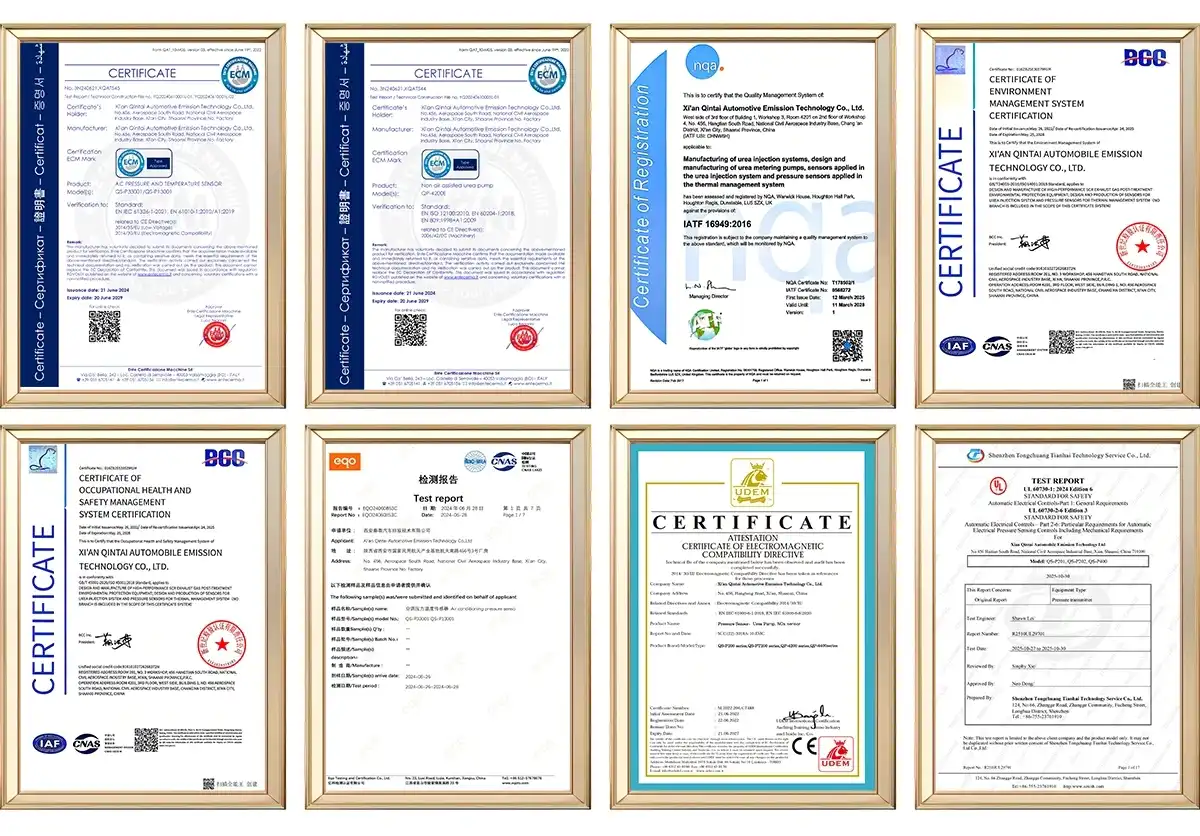
New makers like Qintai offer competitive performance for the Pressure and Temperature transmitter at prices that most people can afford. This makes them very appealing to cost-conscious aftermarket sellers and high-volume OEM uses. Qintai's IATF16949 certification shows that they follow the rules for automotive quality management systems, and their ISO9001 registration makes sure that their manufacturing processes are always the same. With 58 idea patents and 20 years of experience specialising in diesel engine sensors, Qintai can compete with well-known names in certain areas without charging the same high prices.
It is important for procurement managers to know the difference between Pressure and Temperature transmitters, basic pressure sensors, and pressure switches. Transmitters send out continuous analogue signals that are related to the pressure that is being monitored. This lets precise process control algorithms work. Sensors usually send unprocessed signals that need to be conditioned by circuits outside the sensor, which makes installation harder. At set limits, switches produce binary on/off outputs that can only be used for alarm functions that don't need to modulate.
Application-Specific Considerations
When working with chemicals, the materials need to be able to handle corrosive media and have to be certified for use in dangerous areas. Wetted stainless steel parts are resistant to many chemicals, and special coats keep hydrofluoric acid and other harmful chemicals out. ATEX and IECEx intrinsic safety approvals let things be installed in places where explosions could happen without the risk of starting a fire.
HVAC systems focus on being small, working with a variety of refrigerants, and using little energy. Pressure and Temperature transmitters get rid of the need for extra power supplies and control wiring, which saves space on the panel and time during commissioning. Accurately measuring superheat makes compressor operation more efficient by avoiding liquid slugging, which damages bearings, and too much superheat, which loses cooling capacity.
Construction and farming equipment needs to be built to be tough so it can handle shock, pressure, and dirt. With IP67/IP69K ratings, you can be sure that it will stay alive even after being washed with high-pressure water and submerged in mud or water. Temperature ranges from -40°C to 130°C allow tools to work in both winter in Siberia and summer in the Middle East without losing accuracy.

Maximizing Performance and Reducing Risks with Pressure Transmitters
To get the most out of your Pressure and Temperature transmitter investments, you need to install, calibrate, and maintain them correctly. Not paying attention to these basics can lead to less accurate measurements, shorter device life, and safety risks.
Calibration Best Practices and Intervals
Verification of the calibration makes sure that Pressure and Temperature transmitters stay accurate over their entire working life. For stable industrial processes that are only slightly exposed to the environment, annual testing times work well. Extreme temperatures, toxic media, or heavy vibrations are all examples of harsh conditions that need to be checked every six months. To meet legal requirements, critical safety applications may need to be checked every three months.
During calibration, the outputs of Pressure and Temperature transmitters are compared to reference standards that can be tracked back to national measurement centers. Precision pressure controllers and dead-weight testers create known pressures that are fed into transmitter inputs. Deviations that are outside the tolerance bands cause changes or the replacement of the part. The QS-PT225 has a total error band of 3% from -30°C to 130°C, which takes temperature changes into account without the need to set a correction table. This makes field calibration easier.
Quality management and legal checks depend on good documentation practices. It is possible to find out where the calibration tools came from and where it was used by looking at the calibration papers. Digital asset management systems automatically schedule calibrations and make compliance reports. This keeps devices from being missed and certifications from expiring.
Troubleshooting Common Installation Errors
Mistakes in measurements and early fails can happen when mounting is done wrong. When process connections are over-tightened, ceramic sensing elements get crushed, which can lead to lasting loss of accuracy or catastrophic sensor failure. When you undertighten something, pressure can leak past the threads, which can be dangerous and cause measurement errors. Both of these extremes can't happen with torque wrenches that are set to the manufacturer's specs. This keeps the seals tight without damaging the machine.
To avoid measurement mistakes, impulse line setups need to be done with great care. From the process links to the Pressure and Temperature transmitters, liquid-filled lines must always slope upward. This gets rid of any gas pockets that would normally absorb changes in pressure. Gas service lines are slanted down so that water can drain away from sensors. Isolation valves let you take out the transmitter for maintenance without stopping the process, and drain valves make it easier to clear the line during commissioning.
Electromagnetic interference can mess up measurement readings, but electrical grounding stops it. Shielded cables run away from motor power lines, keeping a distance of more than 300 mm between them. Only one point on a cable shield connects to ground. This stops ground loops that cause noise currents. The QS-PT225's highest supply current of 15mA makes it less sensitive to electrical noise than high-current Pressure and Temperature transmitters that need 4-20mA stimulation.
Integrating Smart Transmitters into IIoT Ecosystems
Modern smart Pressure and Temperature transmitters can do more than just measure. They can also diagnose problems, which lets maintenance plans plan ahead and avoid unplanned downtime. Self-diagnostic methods check for sensor drift, stable calibration, and the integrity of the electrical connection. Early warning signs let maintenance teams know when performance degradation patterns point to upcoming failures. This way, repairs can be set for planned outages instead of having to be done quickly in an emergency.
IIoT connection through industrial protocols like Modbus and OPC UA lets corporate factory execution systems and cloud analytics platforms use data from Pressure and Temperature transmitters. Pressure-temperature records are saved by historians so that quality can be analysed and processes can be made better. A computer program called machine learning can find small connections between process variables and product flaws. This lets problems be fixed before they happen.
Real-time data improve the speed of operations in many areas. Manufacturers of diesel engines use pressure-temperature profiles to improve combustion mapping, which cuts fuel use by 3–5% while still meeting pollution standards. Aftertreatment integrators keep an eye on the differences in diesel particulate filter pressure to make sure that regeneration processes happen at the best times, balancing the amount of fuel used with the efficiency of filter cleaning. Generator set operators keep an eye on the coolant system parameters to find leaks or broken thermostats before they cause the cylinder heads to overheat and crack.
Conclusion
Pressure and Temperature transmitters completely change industrial automation by allowing accurate measurements, monitoring in real time, and smart control. These dual-parameter devices send synchronised data that makes the process more visible while lowering the costs and difficulty of installation. To choose the right transmitters, you have to compare the application needs with the accuracy requirements, environmental rates, communication compatibility, and provider capabilities. The best performance and no early breakdowns happen when installation, calibration, and upkeep are done correctly. Strategic procurement that weighs beginning costs against total ownership costs, standardisation benefits, and future scalability makes sure that investments in automation give long-term value throughout the lifecycles of equipment.
FAQ
What distinguishes pressure transmitters from basic pressure sensors?
Pressure and Temperature transmitters have sensors and signal processing electronics built in. They send out standard signals like 4-20mA or 0-5V DC, which can be directly connected to control systems. Basic pressure sensors give off unprocessed, raw signals that need to be amplified and linearised by circuits outside the sensor. Transmitters are more accurate because they are factory calibrated and can adjust for temperature.
How often should pressure transmitters undergo calibration verification?
For most commercial uses with mild weather exposure and non-critical processes, once a year is a good time to do the calibration for the Pressure and Temperature transmitter. Extreme temperatures, toxic media, or heavy vibrations are all examples of harsh conditions that need to be checked every six months to find increased drift. Safety-critical systems like those that watch pressure vessels or handle burners may need to be checked every three months to meet government standards.
Can wireless pressure transmitters match wired device reliability in industrial environments?
Modern wireless Pressure and Temperature transmitters are just as reliable as wired ones thanks to mesh networking, multiple communication routes, and strong standards such as WirelessHART. Self-organising mesh networks automatically route around interference or failed nodes, and batteries that last more than 10 years don't need to be replaced very often. But wired transmitters are still better for safety-critical control loops because they have sure reaction times and can't be harmed by radio frequency interference.
Partner with Qintai for Reliable Pressure and Temperature Transmitter Solutions
Qintai is ready to help you with your automation needs with tried-and-true Pressure and Temperature transmitter technology and 20 years of experience with diesel engine sensors. Our QS-PT225 dual-parameter transmitter is accurate to within ±1%, has a ceramic sensor that lasts a long time, and is small and easy to integrate, which makes installation easier for OEM makers and aftermarket providers. We are the top OEM seller in China, and our products are certified to IATF16949 and ISO9001 standards. We offer stable quality, easy customisation, and quick expert support. Email our engineering team at info@qt-sensor.com to talk about the problems you're having with your program and to get full product specs.
References
1. Liptak, B.G. (2018). Instrument Engineers' Handbook: Process Measurement and Analysis, 5th Edition. CRC Press.
2. Johnson, C.D. (2020). Process Control Instrumentation Technology, 9th Edition. Pearson Education.
3. American Society of Mechanical Engineers (2019). Performance Test Code on Pressure Measurement, ASME PTC 19.2.
4. International Society of Automation (2021). Industrial Automation and Control Systems: Process Measurement and Control Devices, ISA-5.1-2009.
5. Webster, J.G. & Eren, H. (2022). Measurement, Instrumentation, and Sensors Handbook: Electromagnetic, Optical, Radiation, Chemical, and Biomedical Measurement, 2nd Edition. CRC Press.
6. Bentley, J.P. (2020). Principles of Measurement Systems, 4th Edition. Pearson Education Limited.

Our customers’ satisfaction speaks for our quality — contact us to experience the same reliable service.