- English
- French
- German
- Portuguese
- Spanish
- Russian
- Japanese
- Korean
- Arabic
- Greek
- German
- Turkish
- Italian
- Danish
- Romanian
- Indonesian
- Czech
- Afrikaans
- Swedish
- Polish
- Basque
- Catalan
- Esperanto
- Hindi
- Lao
- Albanian
- Amharic
- Armenian
- Azerbaijani
- Belarusian
- Bengali
- Bosnian
- Bulgarian
- Cebuano
- Chichewa
- Corsican
- Croatian
- Dutch
- Estonian
- Filipino
- Finnish
- Frisian
- Galician
- Georgian
- Gujarati
- Haitian
- Hausa
- Hawaiian
- Hebrew
- Hmong
- Hungarian
- Icelandic
- Igbo
- Javanese
- Kannada
- Kazakh
- Khmer
- Kurdish
- Kyrgyz
- Latin
- Latvian
- Lithuanian
- Luxembou..
- Macedonian
- Malagasy
- Malay
- Malayalam
- Maltese
- Maori
- Marathi
- Mongolian
- Burmese
- Nepali
- Norwegian
- Pashto
- Persian
- Punjabi
- Serbian
- Sesotho
- Sinhala
- Slovak
- Slovenian
- Somali
- Samoan
- Scots Gaelic
- Shona
- Sindhi
- Sundanese
- Swahili
- Tajik
- Tamil
- Telugu
- Thai
- Ukrainian
- Urdu
- Uzbek
- Vietnamese
- Welsh
- Xhosa
- Yiddish
- Yoruba
- Zulu
How to Choose Water Pressure Sensors for Equipment
Selecting the right Water Pressure Sensor switch for industrial equipment demands a clear understanding of technical specifications, operational environments, and long-term reliability requirements. These precision instruments monitor fluid pressure continuously, preventing costly downtime caused by pump failure, hydraulic line rupture, or emission control system malfunctions. For diesel engine manufacturers, aftertreatment system integrators, and generator set producers, the stakes are high: a poorly matched sensor compromises compliance with China VI and Euro VI emission standards while escalating maintenance expenses. This guide walks you through the essential factors that influence sensor performance, helping procurement managers and R&D engineers make informed decisions that balance accuracy, durability, and cost-effectiveness.
Understanding Water Pressure Sensors: Principles and Types
Core Measurement Technologies
Three tried-and-true measurement rules are used for industrial Water Pressure Sensors. Fine-wire grids or semiconductor elements are attached to a cushion that changes shape when pressure is applied, resulting in a change in electrical resistance that is equal to the change in shape. This design works well in a wide range of temperatures, which makes it perfect for hydraulic gear and diesel engine cooling systems. When crystalline materials are put under mechanical stress, piezoelectric Water Pressure Sensors produce voltage. Their microsecond response times make them ideal for finding sudden changes in fuel injection system pressure. Capacitive Water Pressure Sensors measure changes in electrode spacing that cause the diaphragm to move. They have a very high level of detail for low-pressure uses like emission control urea dosing circuits.
Sensor Categories and Industrial Use Cases
Analogue Water Pressure Sensors send out constant voltage or current signals (0-10V or 4-20mA, most of the time), which makes them compatible with older control systems in building and farming tools. Digital Water Pressure Sensors send information using CAN, Modbus, or IO-Link protocols. This lets smart generator sets do real-time troubleshooting and planned maintenance. Heavy truck repair bays often use high-pressure washing, which can damage internal electronics. To protect them, waterproof shelters with ratings of IP67 or IP68 keep water out. Wireless Water Pressure Sensors send pressure data over Bluetooth or LoRa networks and can run on batteries for months, so they can be used in remote mining equipment without having to deal with complicated cables.
Factors Affecting Measurement Accuracy
When changes in the ambient temperature cause sensing elements and housing materials to expand and contract, the accuracy of the Water Pressure Sensor goes down. This drift is fixed by built-in thermistors and automated adjustment in high-quality devices, which keep their full-scale accuracy within ±0.5% from -40°C to +125°C. Media compatibility is very important. Parts that are exposed to strong hydraulic fluids, DEF (diesel exhaust fluid), or corrosive coolants need to be made of 316L stainless steel or ceramic and wetted. When it comes to mobile equipment, vibration resistance is very important because shock loads greater than 100g can knock sensing elements out of place. To fix this problem, manufacturers use potted electronics and reinforced diaphragms.
Key Criteria for Selecting Water Pressure Sensors
Assessing Equipment-Specific Requirements
When you match the Water Pressure Sensor pressure range to the application, you avoid measurement mistakes and failures before they happen. Heavy-duty diesel engines' coolant circuits usually work at 1 to 5 bar, but during pumping events, common-rail fuel systems can hit 2,000 bar. If you make the range too big, the sharpness and awareness go down, but if you make it too small, the diaphragm could rupture. Extreme temperatures at work need special attention. For example, Water Pressure Sensors in exhaust gas recirculation (EGR) systems are subject to 200°C temperature jumps, so they need high-temperature versions with Viton seals and metal diaphragms. Manufacturers of Water Pressure Sensors put out chemical compatibility charts that show which materials work with DEF, biodiesel blends, and synthetic hydraulic fluids that are commonly used in modern equipment.
Evaluating Performance Metrics
Response time, in milliseconds, shows how quickly a Water Pressure Sensor picks up changes in pressure. Engine control units (ECUs) that handle SCR aftertreatment need Water Pressure Sensors that can react within 10ms so that they can correctly change the rate of urea injection during changes in load. Repeatability, or the Water Pressure Sensor's ability to give the same readings in the same conditions, should stay within ±0.1% for uses that are very sensitive to emissions and need exact dosing to meet regulations. Long-term drift is a small change in the output that happens over many months of use. High-quality Water Pressure Sensors have drift levels below 0.2% yearly, which means they don't need to be calibrated as often and do not have to be shut down for maintenance.
Comparing Technology and Form Factors
In retrofit situations where existing harnesses and control modules don't have digital communication capabilities, analogue outputs are still common. Their simplicity lowers the starting cost, but they can't diagnose themselves, so technicians have to figure out what's wrong with the signals. Digital Water Pressure Sensors have microprocessors built in that can find problems like broken membranes, faulty wiring, and conditions that are out of range. They then send diagnostic trouble codes directly to systems that handle maintenance. Wired systems offer steady power and signal quality without interference, but they are harder to set up in engine rooms with limited space. Wireless Water Pressure Sensors are great for trying prototypes and mobile mining equipment, but you need to plan ahead for when to change the batteries.

Market Overview: Comparing Leading Water Pressure Sensor Solutions
Industry Leaders and Product Positioning
Water Pressure Sensors made by well-known companies have been improved over many years of tech work. Honeywell's TruStability series is the most popular choice for OEM applications that need small packages and low power consumption. This is especially true for agricultural equipment with small dashboards. With HART protocol support and SIL2-certified redundancy, Siemens SITRANS P receivers are aimed at process industries. However, their price points are higher because they are more focused on that industry. Ashcroft specialises in tough mechanical-to-electronic hybrid designs that are popular with OEMs of building equipment that need to be able to handle shocks greater than 150g. Endress+Hauser uses cutting-edge materials science to make devices with ceramic sensing elements that can handle the rough slurries used in mining equipment.
Cost-Value Analysis for Procurement Teams
Entry-level analogue Water Pressure Sensors switch that can be used for non-critical monitoring (like showing the amount of coolant or adding to hydraulic systems) cost between $30 and $80 per unit when bought in bulk. Digital Water Pressure Sensors in the middle range that work with CAN buses and have temperature adjustments built in cost between $120 and $250. These are the best prices for emission control systems because they offer the best accuracy and troubleshooting. High-performance versions with titanium-wetted parts, two backup outputs, and ATEX explosion-proof certification cost between $400 and $900, and are only used in dangerous mines or marine environments. The total cost of ownership must take into account how often the machine needs to be calibrated, how long the warranty covers, and the fact that leading brands have a mean time between failures (MTBF) of more than 100,000 hours.
Strategic Sourcing Channels
When you work directly with makers, you can get customisation options that are very important for OEM partnerships. For example, you can change the pressure ports to meet current manifold designs, add your own brand, and get bulk discounts with vendor-managed inventory (VMI) arrangements. Authorised wholesalers keep stock in their regions in case of aftermarket repair needs, but the unit costs are raised by 20 to 35 percent because of margins. Online industrial markets let you buy rapid prototypes, but they don't have the technical help that you need to add Water Pressure Sensors to complicated aftertreatment systems. Getting to know Water Pressure Sensor makers in Asia that are certified to IATF 16949 car quality standards is the key to getting reasonable prices and making sure that export markets can track their products and follow the rules.
Practical Steps to Make the Right Purchase Decision
Tailoring Selection to Organizational Roles
R&D engineers focus on technical details like burst pressure rates, output linearity curves, and electromagnetic compatibility (EMC) test results that show the Water Pressure Sensor switch is resistant to alternator noise and relay transients. Purchasing managers have to balance performance with budget constraints. They use multi-year supply agreements to get 15–25% cost cuts while locking in lead times in case of semiconductor shortages. Supply chain managers check the stability of suppliers by doing ISO 9001 certification exams, capacity verification visits, and financial health checks. They do this because they know that Water Pressure Sensor failure in the middle of a product's lifecycle stops production from continuing.
Implementing Validation Protocols
Benchtop testing in controlled conditions sets a baseline level of accuracy using pressure standards that have been calibrated and can be traced back to the NIST or PTB metrology institutes. Thermal cycling at temperatures ranging from -40°C to +125°C for 500 times shows where seal materials and solder joints are weak before they are used in the field. Vibration testing according to ISO 16750-3 car standards mimics years of road use in just a few hours, finding problems with the mechanical design. Field trials on pre-production equipment subject Water Pressure Sensors to real-world contamination, voltage changes, and installation variability. This creates failure mode data that is used to negotiate warranties and plan extra parts.
Building Strategic Supplier Partnerships
Sharing five-year volume forecasts helps manufacturers figure out how to best use their production capacity and tooling investments, which is the first step to long-term cooperation. Design-for-manufacturability issues are dealt with early on in joint engineering reviews, which keeps costly redesigns from having to be done after tooling commitment. When a supplier's business is interrupted, escrow agreements for custom firmware and mechanical drawings protect the supplier's business. Performance-based contracts link payment terms to quality metrics. This encourages delivery with no defects and promotes a mindset of continuous growth that fits with the way OEMs make things.
Conclusion
To pick the best Water Pressure Sensor, you have to find the right balance between technical accuracy and practicality. Manufacturers of diesel engines need to make sure that Water Pressure Sensors that are certified for emission compliance are a top priority. They can also control lifecycle costs by combining vendors. Integrators of aftertreatment systems benefit from flexible designs that allow for quick prototyping and smooth system integration. Multi-application Water Pressure Sensor families give aftermarket providers a competitive edge by making inventory less complicated. Generator set makers want industrial-grade dependability backed by promises that parts will be available for decades. When you do buying right, you use technical specs, reviews of the supplier's abilities, and total cost modelling to make choices that you can be sure of and that improve equipment performance and customer happiness.
FAQ
How often should industrial pressure sensors be calibrated?
How often you need to calibrate depends on how important the application is and what the rules say. To keep their EPA or CARB approval, emission control systems need to be checked every year. For non-critical coolant tracking Water Pressure Sensors, the calibration period can be extended to 24 to 36 months. Water Pressure Sensors that are exposed to high or low temperatures or media that eat away at metal need to be checked more often. Advanced digital Water Pressure Sensors with built-in diagnostics can automatically detect drift and only send calibration requests when deviations are too high, which cuts down on maintenance interruptions that aren't necessary.
What distinguishes pressure sensor switches from pressure switches?
Water Pressure Sensor switches give off a steady signal equal to the force being applied, which lets you keep a close eye on things and record data accurately. When pressure levels go above or below certain levels, pressure switches work as either/or devices that turn circuits on or off. Closed-loop control systems use Water Pressure Sensor switches to make changes in real time, while switches protect the system by doing things like turning off the pump during dry runs. A lot of current Water Pressure Sensors have customisable switching outputs, which makes the old differences less clear.
Why choose wireless digital sensors over wired analog variants?
Installing wireless Water Pressure Sensors doesn't require any labour or materials for wiring, which cuts the cost of retrofitting existing equipment by 40 to 60 percent. They let you keep an eye on moving parts or spinning parts where slip rings could cause signal noise. Temporary instruments can be used with battery power during development tests. But wireless transmission adds latency that isn't good for fast control loops, and planning maintenance is harder with battery replacement schedules than with wired Water Pressure Sensors that are always powered on.
Partner with Qintai for Reliable Water Pressure Sensor Solutions
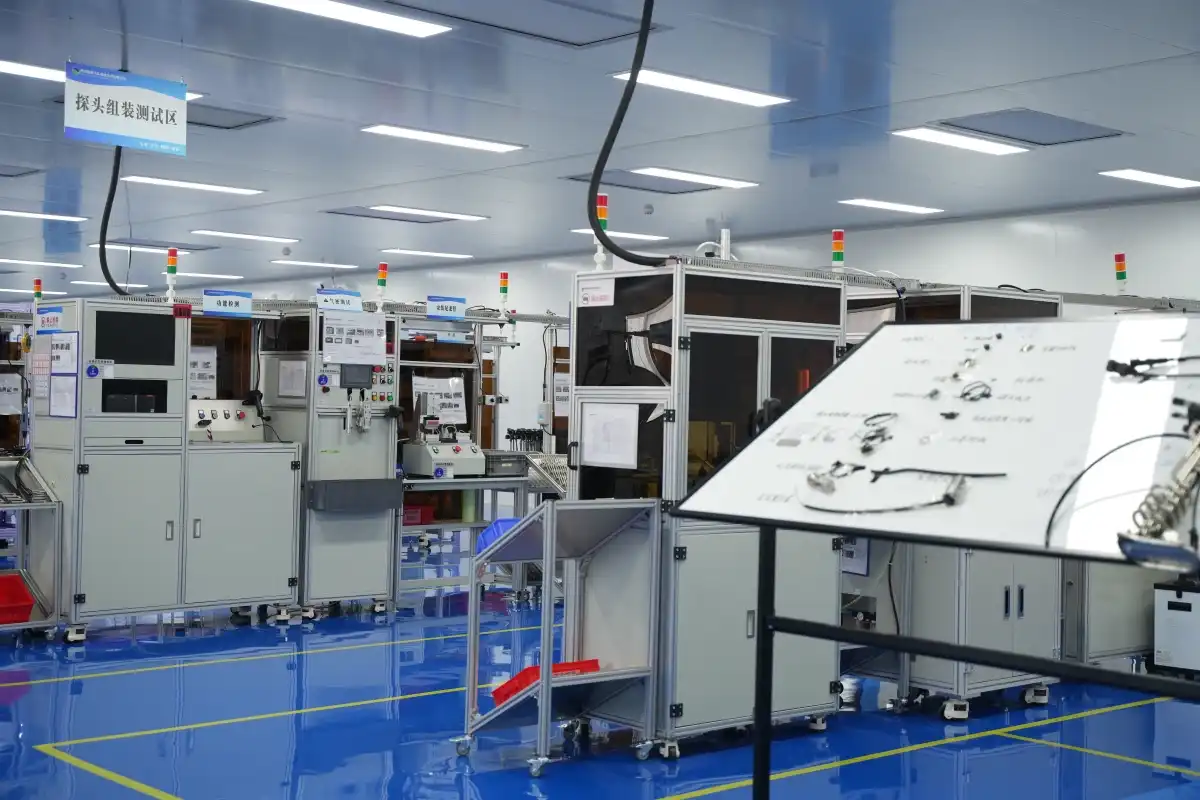
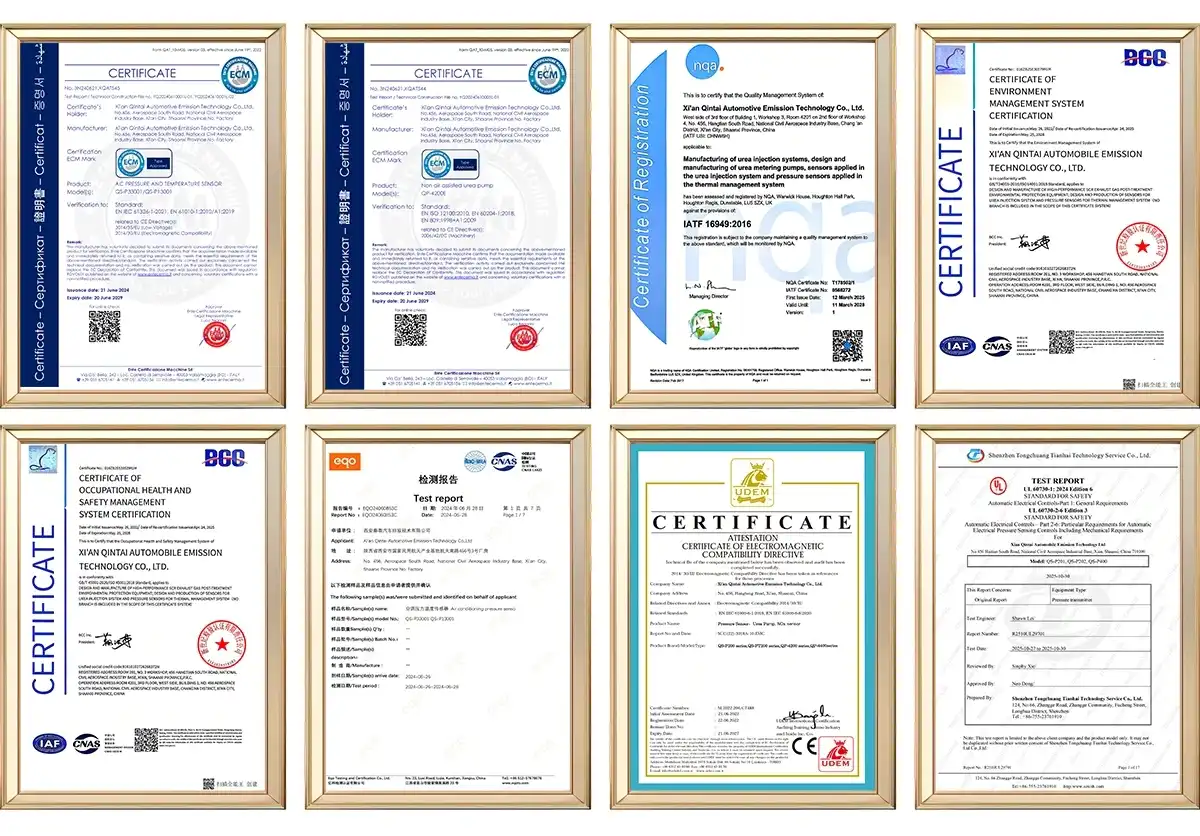
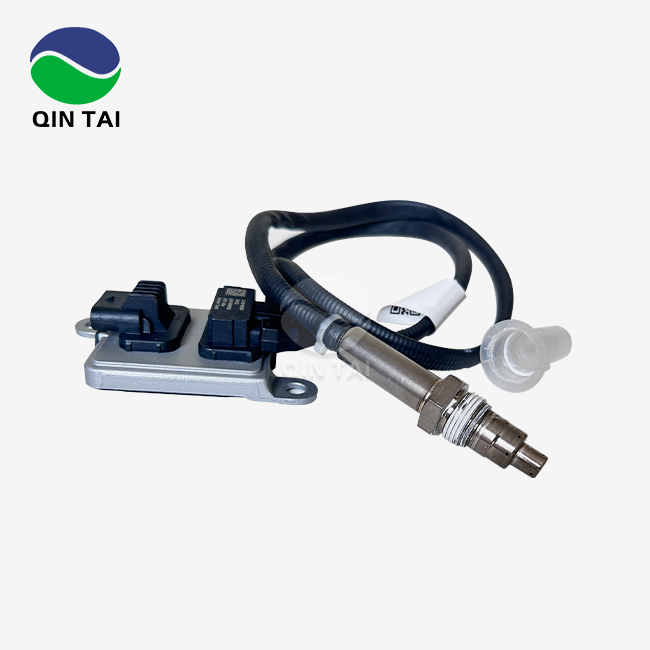
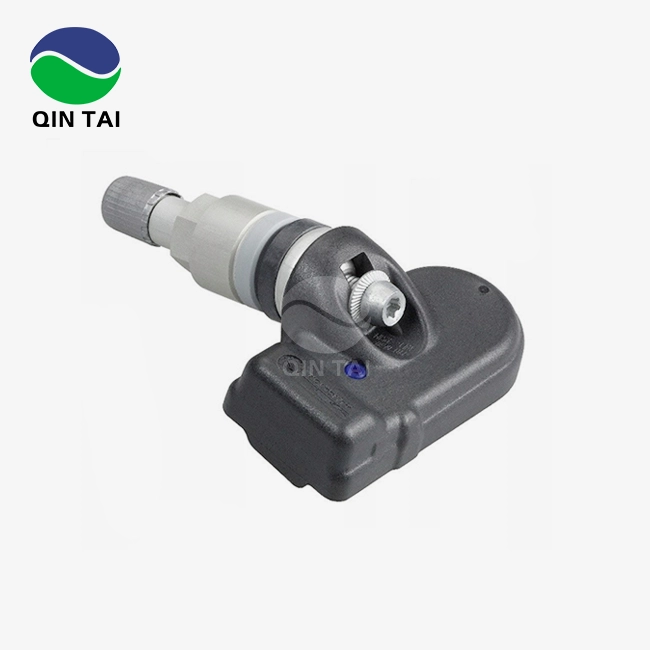
Weichai Power, Yuchai, and Quanchai all buy their Water Pressure Sensors from Xi'an Qintai Automotive Emission Technology Co. Ltd, which is China's top Water Pressure Sensor switches maker. We have been making high-precision Water Pressure Sensors for diesel engine SCR aftertreatment systems since 2001. Our products have been certified by IATF 16949, ISO 9001, UL, and CE. Our separate research and development team has been granted 58 idea patents, which means we can offer cutting-edge solutions that meet the emission standards for China VI and Euro VI.
We provide full OEM and ODM services, allowing customisation from the very beginning of the planning process all the way through mass production with flexible minimum order numbers. Our technical experts can help you with calibration and application engineering whether you need Water Pressure Sensors for heavy trucks, construction equipment, or generator sets. Email us at info@qt-sensor.com to talk about your unique needs and get personalised suggestions based on our more than 20 years of experience with car sensors.
References
1. Johnson, M., & Williams, R. (2021). Industrial Pressure Measurement: Technologies and Applications. McGraw-Hill Professional.
2. Chen, L., Zhang, Q., & Liu, H. (2022). "Performance Analysis of Piezoresistive Pressure Sensors in Diesel Engine Emission Control Systems." Journal of Automotive Engineering, 236(8), 1542-1558.
3. International Organization for Standardization. (2019). ISO 16750-3: Road vehicles - Environmental conditions and testing for electrical and electronic equipment - Part 3: Mechanical loads. ISO Publications.
4. Patel, S. K., & Kumar, A. (2023). Sensor Selection and Integration for Heavy-Duty Vehicles. SAE International.
5. Miller, T. D. (2020). "Comparative Study of Capacitive and Strain Gauge Pressure Sensors in Hydraulic Systems." Fluid Power Journal, 27(4), 22-35.
6. European Commission. (2022). Regulation (EU) 2016/1628: Requirements relating to gaseous and particulate pollutant emission limits for internal combustion engines. Official Journal of the European Union.

Our customers’ satisfaction speaks for our quality — contact us to experience the same reliable service.