- English
- French
- German
- Portuguese
- Spanish
- Russian
- Japanese
- Korean
- Arabic
- Greek
- German
- Turkish
- Italian
- Danish
- Romanian
- Indonesian
- Czech
- Afrikaans
- Swedish
- Polish
- Basque
- Catalan
- Esperanto
- Hindi
- Lao
- Albanian
- Amharic
- Armenian
- Azerbaijani
- Belarusian
- Bengali
- Bosnian
- Bulgarian
- Cebuano
- Chichewa
- Corsican
- Croatian
- Dutch
- Estonian
- Filipino
- Finnish
- Frisian
- Galician
- Georgian
- Gujarati
- Haitian
- Hausa
- Hawaiian
- Hebrew
- Hmong
- Hungarian
- Icelandic
- Igbo
- Javanese
- Kannada
- Kazakh
- Khmer
- Kurdish
- Kyrgyz
- Latin
- Latvian
- Lithuanian
- Luxembou..
- Macedonian
- Malagasy
- Malay
- Malayalam
- Maltese
- Maori
- Marathi
- Mongolian
- Burmese
- Nepali
- Norwegian
- Pashto
- Persian
- Punjabi
- Serbian
- Sesotho
- Sinhala
- Slovak
- Slovenian
- Somali
- Samoan
- Scots Gaelic
- Shona
- Sindhi
- Sundanese
- Swahili
- Tajik
- Tamil
- Telugu
- Thai
- Ukrainian
- Urdu
- Uzbek
- Vietnamese
- Welsh
- Xhosa
- Yiddish
- Yoruba
- Zulu
What Certification Standards Apply to Diesel NOx Sensors?
Diesel NOx sensors serve as the guardians of emission compliance in modern diesel engines, measuring nitrogen oxide concentrations with precision to meet increasingly stringent environmental regulations. These sensors function within Selective Catalytic Reduction (SCR) systems, providing real-time data that determines how much Diesel Exhaust Fluid (DEF) the system injects to neutralize harmful emissions.
Certification standards for these devices aren't merely bureaucratic checkboxes—they represent comprehensive testing protocols that validate sensor accuracy, durability, and reliability across diverse operating conditions. Diesel engine manufacturers, aftertreatment system integrators, and fleet operators depend on certified sensors to maintain regulatory compliance with US EPA standards, avoid costly penalties, and ensure their equipment operates without performance limitations or engine derating.
Overview of Diesel NOx Sensors and Their Regulatory Importance
When you understand how NOx Sensors work, you can see why approval is so important. These days, diesel cars usually have two NOx Sensors for controlling emissions: one upstream sensor is put before the SCR catalyst and one downstream sensor is put after it. The upstream sensor measures the combustion chamber's raw NOx output, which helps the engine control unit figure out the exact amount of DEF to use. The sensor further downstream checks the efficiency of the SCR catalyst, creating a feedback loop that keeps the best emission reduction at all times.
Yttria-stabilized zirconia ceramic elements work on oxygen ion transport principles in this two-sensor setup. When exhaust gas enters a chamber with an oxygen pump cell controlling the amount of oxygen, the detecting process starts. Then, gas with controlled oxygen levels comes into the sensing box. NOx breaks down into nitrogen and oxygen ions with the help of a catalyst. The current that comes out of this directly relates to the concentration of NOx, which makes the measurement accurate enough to meet legal requirements.
Why Certification Protects Your Business Investment
There is a lot of pressure on purchasing managers and R&D experts to choose parts that won't mess up the certifications of the whole car or piece of equipment. Uncertified NOx Sensors pose a number of business risks that go beyond the short-term cost savings that they offer. Regulatory agencies can pay makers a lot of money if their equipment breaks emission rules. In the worst cases, they can order the return of thousands of units that are already in use.
When NOx Sensors in a fleet don't work right, they set off fault codes that show up as warnings on the dashboard and finally force the engine to derate, which lowers power output until repairs are made to bring it back into line with emission standards. These situations lead to unplanned downtime, calls for emergency service, and unhappy customers who expect their tools to work reliably. These weaknesses can be closed with certified NOx Sensors that have been tested and shown to work well under stress conditions that are similar to years of use in the field but are crammed into shorter testing methods.
Regulatory Landscape Driving Sensor Standards
EPA Tier 4 laws set gradually higher NOx limits for all types of equipment in the US, from heavy cars to farm equipment. These rules make sure that diesel emissions stay within certain limits. These standards don't just suggest emission goals; they also require specific testing methods, ongoing monitoring of compliance, and penalties for breaking the rules. Engine makers have to show that their emission control systems, which include NOx Sensors, stay accurate over the course of their useful lives, even when they are exposed to extreme temperatures, vibration stress, and exhaust contaminants.
Key Certification Standards for Diesel NOx Sensors
Global markets are governed by different sets of rules that have similar goals but different ways of achieving them. Knowing about these standards helps purchasing teams choose NOx Sensors that meet the needs of more than one market. This makes it easier for companies that serve customers in different countries to keep track of their goods.
US EPA Tier 4 Requirements
Tier 4 standards set by the Environmental Protection Agency are some of the strictest emission rules in the world for diesel engines. These rules apply to all diesel equipment that isn't used on the road, like building equipment, trucks, and generator sets. In order to meet EPA standards, NOx Sensors must show that their measurements are accurate within certain limits throughout their whole working range, which for NOx detection is from 0 to 2500 ppm. Protocols for testing make sure that the NOx Sensor works well in temperatures ranging from -40°C to 800°C, which includes situations like starting up cold and running at high load for a long time.
Certification requires a lot of paperwork showing that NOx Sensors keep their calibration even when they are exposed to sulphur compounds, particulate matter, and thermal cycling, all of which would damage sensing elements that aren't protected. Manufacturers must show that their NOx Sensors have acceptable light-off times. This is the amount of time needed for the NOx Sensors to reach working temperature and start measuring accurately. Our engineering team has improved the startup sequences so that light-off happens much faster than the standard 165 seconds. This cuts down on the time that SCR systems have to wait for NOx Sensors to become ready.
ISO Standards Governing Sensor Performance
Protocols from the International Organization for Standardisation set quality and longevity standards for car parts that are known all over the world. ISO 27103 talks about NOx Sensor functional safety in detail, setting standards for fault detection, troubleshooting tools, and fail-safe operation when NOx Sensors face situations that aren't normal. This standard makes sure that broken NOx Sensors don't put the safety of vehicles at risk or let emission control systems work beyond the legal limits without being noticed.
In addition to these requirements, ISO 15751 sets out common ways to test the response properties of NOx Sensors. Manufacturers should follow these guidelines when checking NOx Sensor sensitivity, cross-sensitivity to other exhaust parts, and long-term drift characteristics. Following ISO standards gives purchasing managers faith that NOx Sensors from various suppliers go through similar testing, which lets them make useful technical comparisons when choosing suppliers.
OEM Qualification Processes
In addition to government rules and ISO standards, Tier 1 auto suppliers and engine makers have their own qualification processes that often go beyond what is required by law. These internal standards are based on what was learned from experience in the field and include extra testing for failure modes seen in certain apps. In order to get qualified by an OEM, suppliers usually have to send in a lot of technical information about things like design validation, process capability studies, and ongoing quality control procedures.
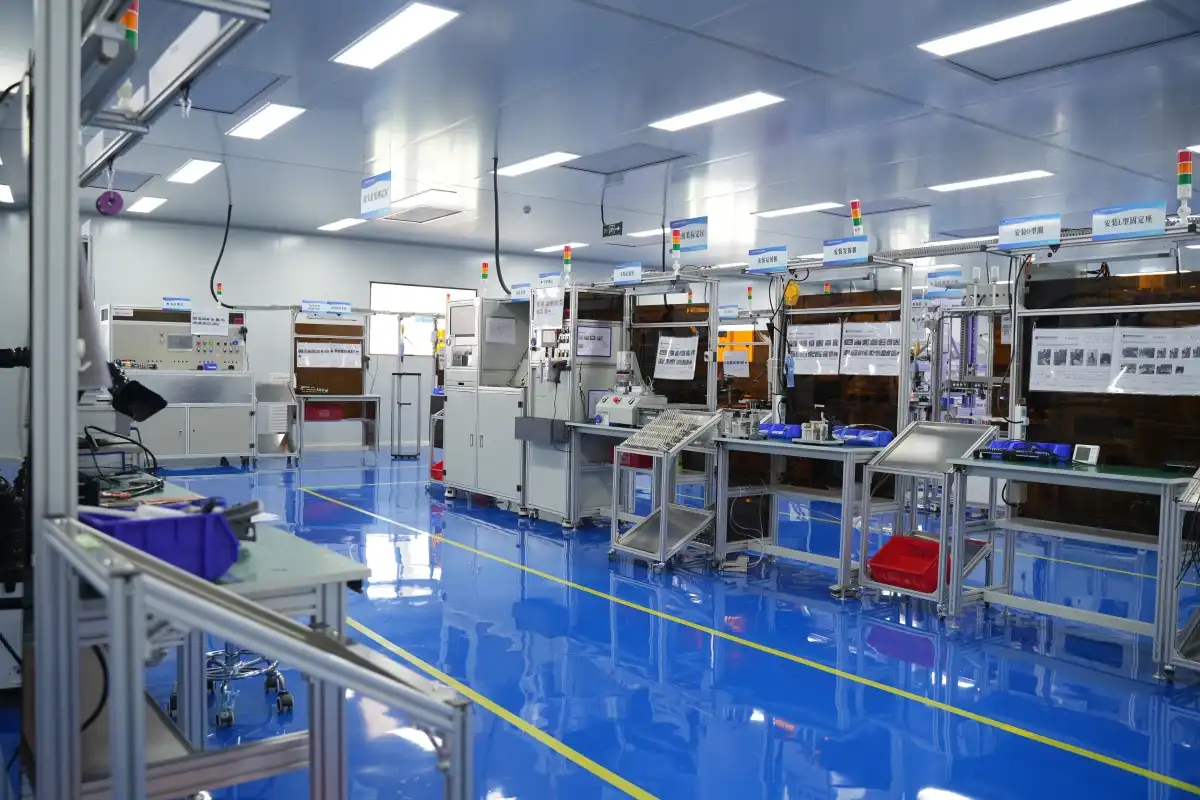
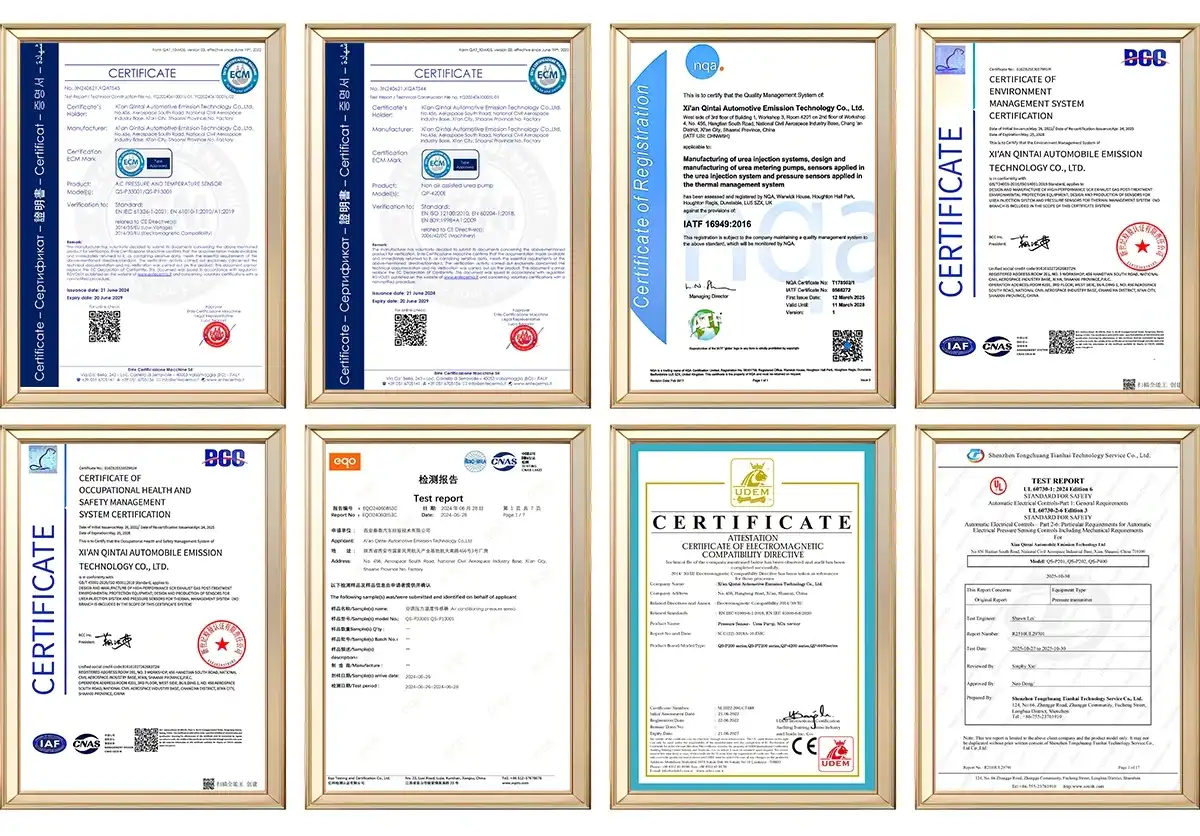
To become an approved seller for big OEMs, you have to pass strict tests that look at your technical skills, manufacturing methods, and quality systems. We keep our ISO9001, IATF16949, and other regional compliance marks up to date. This makes us a good partner for OEMs who need to make sure that quality management is recorded throughout the supply chain. Being the main supplier to China's top diesel engine makers, with key partnerships with Weichai Power, Yuchai Power, and Quanchai Power, shows that we can consistently meet strict OEM standards at high production volumes.

Certification Testing Procedures for Diesel NOx Sensors
Before NOx Sensors can get certified, they have to pass rigorous tests that mimic years of use in a short amount of time. With these methods, you can be sure that NOx Sensors will stay accurate and reliable even in tough settings like diesel exhaust.
Laboratory Validation Testing
Under controlled lab conditions, it is possible to get accurate readings of NOx Sensor properties using test conditions that can be used again and again. Temperature cycling subjects NOx Sensors to quick changes between very cold and very hot conditions. This makes sure that the sensing elements and computer parts can handle the stresses of thermal growth without breaking or losing their power. NOx Sensors are put through accelerations and frequencies that are similar to those that a car experiences when driving on rough ground or a highway at high speeds.
For chemical exposure testing, NOx Sensors are submerged in mixtures of exhaust gases that contain sulphur compounds, lead residues, and other contaminants in higher concentrations than what is normally found. This fast poisoning procedure checks to see if the sensing elements stay accurate even though they get surface layers that might stop oxygen ions from conducting. Our advanced poisoning resistance technology uses protective coatings and element designs that make NOx Sensors last longer than 6000 hours, which is a lot longer than the usual standards for durability in the industry. This longer service life directly lowers the total cost of ownership for fleet operators by cutting down on the number of replacements needed and the work that goes along with them.
Field Testing and Real-World Validation
Lab tests set the basic capabilities, but for approval, they also need to be proven in real-world working situations. In field testing, NOx Sensors are put in typical vehicles or pieces of equipment that are used in normal situations. These NOx Sensors are then left on for a certain number of hours at different duty cycles. Data logging records both NOx Sensor output and reference measures. This makes sure that NOx Sensors stay calibrated accurately over their entire service life.
We've set up flexible communication protocols that work with more than 300 different interface standards. This lets our NOx Sensors work with a wide range of engine control systems while they are being tested in the field. This compatibility gets rid of integration problems that could make testing less accurate or cause certification deadlines to slip. Our waterproof, sealed design makes sure that it will work reliably even when it is exposed to water, pressure washing, and chemicals that break down roads that were used for long field tests.
Addressing Common Certification Challenges
Sometimes NOx Sensors don't meet the standards for approval, which means that the root cause needs to be found and fixed. Drift, which means that the setting changes slowly over time, is a common problem that can happen when NOx Sensor elements break down or dirt builds up. We deal with this by using advanced element formulas and protection methods that keep measurements stable for as long as the NOx Sensor is in use.
Response time delays can keep NOx Sensors from being used in situations where they need to quickly update their emission measurements. Our technical optimisation gets reaction times below 1400ms, which makes sure that SCR systems get data quickly so that they can make accurate DEF dosing changes as engine load conditions change. These quick responses are especially helpful when engines are switching between rest and full power, which causes big changes in the amount of NOx in the air.
Evaluating Certified NOx Sensors for Procurement
Cost control and quality requirements should be balanced by procurement professionals who know how certification status affects total cost of ownership and operational reliability.
OEM-Certified Versus Aftermarket Options
On the market for NOx Sensors, there are both OEM-approved parts made for certain engine families and aftermarket options that say they can work with any engine. OEM-certified NOx Sensors are tested in full pollution control systems to make sure they work with custom software methods and communication protocols. These NOx Sensors usually come with a lot of technical information, a warranty that is backed by the name of the maker, and the ability to get help with installation or diagnosis.
Aftermarket NOx Sensors might be cheaper to buy, but they may not work with other devices, which can cancel out any savings you made at first. NOx Sensors that aren't properly certified could set off diagnostic trouble codes, make the SCR system not work, or break down too soon because they aren't durable enough. Fleet managers have to weigh the cost savings that seem to be there against the risk of voiding warranties, not following the rules, and having to stop operations because NOx Sensors stop working at crucial times.
Technical Specifications That Indicate Certification Quality
With detailed technical specs, buying teams can use numbers to judge the capabilities of NOx Sensors. With our NOx Sensors, you can measure NOx with an accuracy of ±10ppm between 0 and 100ppm and ±10% between 100 and 500ppm, which meets the strict requirements of OEMs. Measurement of oxygen at the same time with an accuracy of ±0.2% in the 0-5% range allows accurate tracking of the air-fuel ratio, which supports ideal combustion efficiency and emission control.
Operating temperature range of 100°C to 800°C for measuring NOx makes sure that NOx Sensors work reliably across the exhaust temperature range, from warm-up to long-term high-load conditions. Cables that can handle temperatures from -40°C to 200°C protect electrical links in harsh environments and hot garages. These specs aren't just random numbers; they're the limits of performance that have been proven through approval testing.
Certification Documentation and Traceability
Real certified NOx Sensors come with paperwork that shows how they were made and that they meet all the standards that apply. Certificate packages usually have test results that show the product meets pollution rules, ISO standards, and any other requirements set by OEMs or regulatory agencies. We keep detailed quality records that include batch test results, material approvals, and process validation data. This way, we can fully trace our products and help our customers meet their own compliance paperwork needs.
Standardised part markings and labelling help make sure that NOx Sensors are real, which protects against fake parts that can get into supply chains. Instead of depending only on direct promises of compliance, procurement teams should make sure that sellers provide the right certification paperwork. As part of our commitment to openness, we make technical specs and approval information easy to find so that you can make smart buying choices.
Conclusion
In conclusion, certification standards for diesel NOx Sensors are more than just legal requirements. They are full evaluation procedures that make sure NOx Sensors measure emissions accurately and reliably for long periods of time. When buying managers, R&D engineers, and technical decision-makers understand these standards, they can choose parts that protect their companies from legal risks and reduce the total cost of ownership.
Certified and uncertified NOx Sensors are different not only in the paperwork they come with, but also in how well they work, which affects the reliability of equipment, the cost of upkeep, and the continuation of operations. By working with well-known NOx Sensor makers who have strict quality control systems and a wide range of certifications, emission control systems can be sure to meet current standards and be able to adapt to new rules that come out in the future.
FAQ
How Often Should Certified Diesel NOx Sensors Be Replaced?
How often they need to be replaced depends on the severity of the application, the working conditions, and what the maker recommends. Heavy-duty uses that run all the time usually need new NOx Sensors every 6,000 to 8,000 hours. Lighter-duty cycles may increase the service life of NOx Sensors. Our 6000+ hour longevity rating is higher than the industry standard, so you won't have to replace it as often and won't have to pay as much for upkeep. Instead of relying only on mileage or hour-based schedules, monitoring diagnostic data helps figure out when certain NOx Sensors are getting close to the end of their useful lives.
Can Aftermarket Sensors Match OEM Certification Compliance?
When properly matched to the right application, quality aftermarket NOx Sensors that meet the same approval standards can work just as well as OEM parts. Verified compliance documentation, technical specification alignment, and compatibility with engine control system communication protocols are the most important factors. We make NOx Sensors for both OEM and aftermarket outlets. No matter how the NOx Sensors are sold, we follow the same quality standards and certification rules to make sure buyers get properly validated parts.
What Causes Sensors to Fail Certification Testing?
Common ways that things go wrong are not having enough resistance to poisoning, which leads to early loss of accuracy, not having enough temperature tolerance, which causes elements to crack, and having too long of a reaction time, which stops emission measurements from happening on time. Failure of electronic parts due to physical stress or water entry also rules out NOx Sensors. Our design includes advanced safety features that protect these weak spots, such as sealed, waterproof construction, element designs that are stronger, and electronics that have been tested for durability over a long period of time.
Partner With a Certified NOx Sensor Manufacturer You Can Trust
Choosing the right NOx Sensor supplier can affect how well your equipment works, how much it costs to maintain over time, and how well it meets regulatory requirements. Xi'an Qintai Automotive Emission Technology Co. Ltd. has been developing specialised NOx Sensors for more than 20 years and has a long list of certifications, such as ISO9001, IATF16949, and many other international compliance marks. As China's top OEM diesel engine NOx Sensor supplier, our engineering team has created 58 invention patents that have made NOx Sensor technology better while maintaining the high quality of our manufacturing.
We know that purchasing managers need more than just technical specs. You need quick help, the ability to make changes, and the assurance that your NOx Sensor supplier keeps up the quality systems and technical knowledge your projects need. Our NOx Sensor product line has real benefits, such as reaction times of less than 1400ms, service lives of more than 6000 hours, and advanced poisoning resistance that makes them more reliable. Whether you need standard setups or unique solutions with certain connectors, cable lengths, and communication methods, our team can help you succeed through technical teamwork and manufacturing.
Email our technical sales team at info@qt-sensor.com to talk about your specific application needs, get full technical paperwork, or look into business possibilities with a trusted NOx Sensor maker that serves markets on six continents around the world.
References
1. United States Environmental Protection Agency. "Emission Standards Reference Guide for Nonroad Diesel Engines." Office of Transportation and Air Quality, 2020.
2. International Organization for Standardization. "Road Vehicles - Nitrogen Oxides Sensor for Exhaust Gas - Part 1: Definition and Measurement Principles." ISO 27103:2017 Standard Documentation.
3. Society of Automotive Engineers. "Recommended Practice for Measuring Nitrogen Oxides in Diesel Exhaust." SAE J1939 Digital Communications Protocol Standards, 2019.
4. Automotive Industry Action Group. "Advanced Product Quality Planning and Control Plan Reference Manual." IATF 16949:2016 Quality Management System Requirements, 2018.
5. European Automobile Manufacturers Association. "Commercial Vehicle NOx Sensor Technology and Certification Requirements." Technical Report on Emission Control Systems, 2021.
6. Diesel Technology Forum. "Understanding Selective Catalytic Reduction Technology and Sensor Integration in Modern Diesel Engines." Industry White Paper on Emission Control Best Practices, 2022.

Our customers’ satisfaction speaks for our quality — contact us to experience the same reliable service.