- English
- French
- German
- Portuguese
- Spanish
- Russian
- Japanese
- Korean
- Arabic
- Greek
- German
- Turkish
- Italian
- Danish
- Romanian
- Indonesian
- Czech
- Afrikaans
- Swedish
- Polish
- Basque
- Catalan
- Esperanto
- Hindi
- Lao
- Albanian
- Amharic
- Armenian
- Azerbaijani
- Belarusian
- Bengali
- Bosnian
- Bulgarian
- Cebuano
- Chichewa
- Corsican
- Croatian
- Dutch
- Estonian
- Filipino
- Finnish
- Frisian
- Galician
- Georgian
- Gujarati
- Haitian
- Hausa
- Hawaiian
- Hebrew
- Hmong
- Hungarian
- Icelandic
- Igbo
- Javanese
- Kannada
- Kazakh
- Khmer
- Kurdish
- Kyrgyz
- Latin
- Latvian
- Lithuanian
- Luxembou..
- Macedonian
- Malagasy
- Malay
- Malayalam
- Maltese
- Maori
- Marathi
- Mongolian
- Burmese
- Nepali
- Norwegian
- Pashto
- Persian
- Punjabi
- Serbian
- Sesotho
- Sinhala
- Slovak
- Slovenian
- Somali
- Samoan
- Scots Gaelic
- Shona
- Sindhi
- Sundanese
- Swahili
- Tajik
- Tamil
- Telugu
- Thai
- Ukrainian
- Urdu
- Uzbek
- Vietnamese
- Welsh
- Xhosa
- Yiddish
- Yoruba
- Zulu
Best AdBlue Dosing System Features for Reliable Fleet Use in 2026
Easy to service, durable parts, precise flow control, freeze prevention, and matching voltage. The greatest fleet adblue dosing system. The SCR catalyst converts nitrogen oxides into nitrogen and water with the proper quantity of diesel exhaust fluid. Buyers should request pump curves, test records, and ISO 22241 fluid compatibility after accepting a design. Spending the most isn't always optimal. Adjust the system to the engine, load, weather, and controls. Engineers and buyers of buses, vehicles, construction equipment, agricultural implements, and generator sets may use this resource to evaluate possibilities.
Core Performance Features of a Dependable AdBlue Dosing System
Accurate and Stable Dosing Performance
The appropriate dosage is key to regulating SCR emissions. Pumps increase tank pressure. This allows AdBlue to enter the exhaust stream from the injector. The sensors, filters, valves, controller, and injector must operate together regardless of engine usage. Insufficient flow may cause emissions and engine derating. Too much force may damage parts. Nowadays, NOx restrictions are stringent, so even slight dosage errors are noticeable. Ask each nominated supplier for factory test records, pump curves, calibration data, and repeatability findings before approving.
Durable Components for Continuous Commercial Operation
Fleet workers endure dust, long hours, and trembling. A complete system may include sensors, filters, check valves, hoses, cables, seals, and brackets. AdBlue shouldn't corrode or crystallise moist objects, and oil, diesel, dust, and metal particles shouldn't enter the flow channel. It lasts longer and requires less maintenance since the connections are sealed, the hoses are strengthened, the mounts don't move, and the electronics are safe. When filters are accessible, frequent maintenance is easy. Clear connection marks simplify field wire installation and repair.
Temperature Management and Anti-Crystallization Protection
After 12°F (-11°C), AdBlue freezes. This may hinder pump start-up, line pressure loss, and injector operation. Near the exhaust, seals, sensors, and electronics wear down quicker. I advise buyers of heated tanks, pumps, hoses, and injectors to note down the heater power, activation temperature, warm-up time, and operating instructions. When power is disconnected, purge or drain-back functions clean lines. This reduces crystal formation. ISO 22241 requires 32.5 percent urea in deionised water. Regular filter checks and clean refills keep pressure consistent and the pump from breaking.
Integration, Installation, and Serviceability Essentials
Electrical Compatibility and Control Integration
Electrical fit can change the safety and stability of dosing. Twelve-volt systems are used in a few types of generators, light trucks, and smaller machines. 24-volt systems are more common in heavy trucks, busses, and industrial equipment. You should check the control signals, voltage, current draw, fuse rating, type of connector, and grounding to make sure they are correct before you buy.
Automatic systems that can change the dose based on the load and the exhaust conditions work well with SCR that is built into the engine. Hand-held units are used for things like workshops, restocking, and moving. When you have fail-safe controls, diagnostic communication, alerts, and data logging, your uptime goes up. Important here are also the pressure sensors, which tell the controller exactly how much pressure to use to keep the dosing steady.
Installation, Maintenance, and Serviceability
Even a good design of the adblue dosing system won't work if the installer doesn't do the first few things. Teams should check where the injector is, how much heat, water, mud, and impact it will be exposed to, as well as the diameter of the hose, the length of the line, the way it is mounted, and these things. Providers should make it clear what needs to be done for priming, bleeding, calibrating, and starting up.
Some of the things that are checked as part of preventative maintenance are filters, hoses, injectors, connectors, seals, wiring, leaks, crystal deposits, and strange pump noise. How often to change the filters depends on the brand and the amount of dust in the air. Do what the manufacturer says and cut it short on dirty sites. Also, make sure you have extra sensors, heated hoses, pumps, injector kits, filters, and seals on hand so that crews can fix common issues without having to fix the whole system.
Troubleshooting Common AdBlue Dosing System Problems
When a dosing system fails, changing the pump isn't always enough. Diagnostic codes, fluid level, quality, filters, suction lines, power supply, and grounding must be checked by technicians. insufficient flow or unstable pressure is often caused by crystallised AdBlue, a blocked injector, air on the suction side, the improper size hose, insufficient voltage, a damaged pump, or engine-incompatible software. If the filter fails, it may require more fluid, flash SCR warning lights, or enter derate mode. Check the voltage, current, pressure, and flow against the supplier's instructions. Using this step-by-step procedure saves time and money on unnecessary part replacement.
Matching the Right Configuration to Your Fleet
Selecting the Best AdBlue Dosing System for Different Fleet Applications
Setting up is best based on the duty cycle and operating environment. Most of the time, busses and trucks need to be able to accurately dose, have parts that can handle vibrations, work with 24V, have heated parts, and have links to the SCR controller. The seals on farming and building tools need to be stronger because they are exposed to dust, mud, shock, changes in temperature, storage during the off-season, and not being used all the time.
For diesel generators and marine engines, they need to be able to work all the time or stay still. Along with power and a place to live, they need to be protected from corrosion, be able to be watched from afar, and be easy to get to for service. You shouldn't just look at the engine's displacement when choosing the flow rate, pressure, heating, and control features. You should also look at how many hours the engine has been used and what the SCR needs.
Comparing AdBlue Dosing System Options Before Procurement
A full SCR dosing module, an AdBlue pump that works on its own, an injector, and a simple fluid-transfer unit should all be kept separate by the team in charge of buying things. Every quote should say if it comes with the controller, sensors, wiring, heated lines, filters, mounting parts, and help setting up and running the system. For the same amount of work, heaters cost more, use more power, and take more time to set up.
Different types that aren't heated might work well in warm places or inside. In general, automatic systems work better and more consistently, and the operator has to do less work. On the other hand, manual systems work better in workshops and transfer stations. Put the units next to each other and look at their pressure, flow, duty cycle, temperature range, protection rating, service life, cost of ownership, and spare parts.
Why Pressure Sensors and Filters Protect Dosing Stability
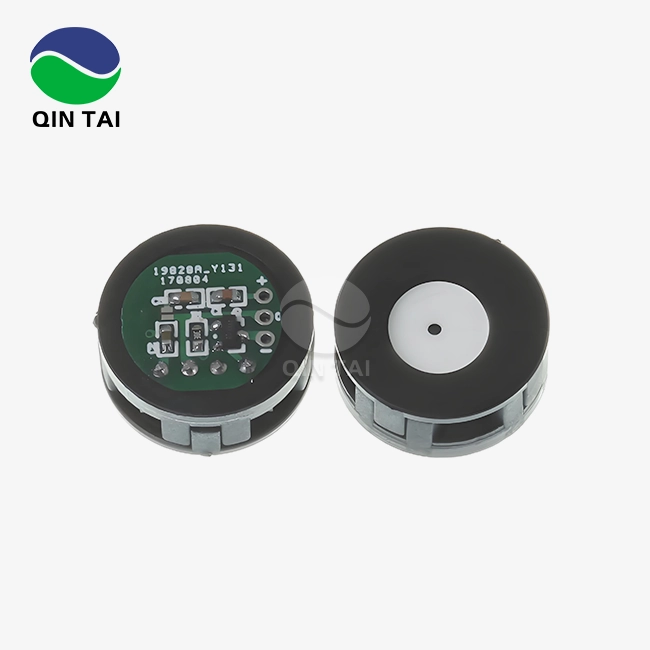
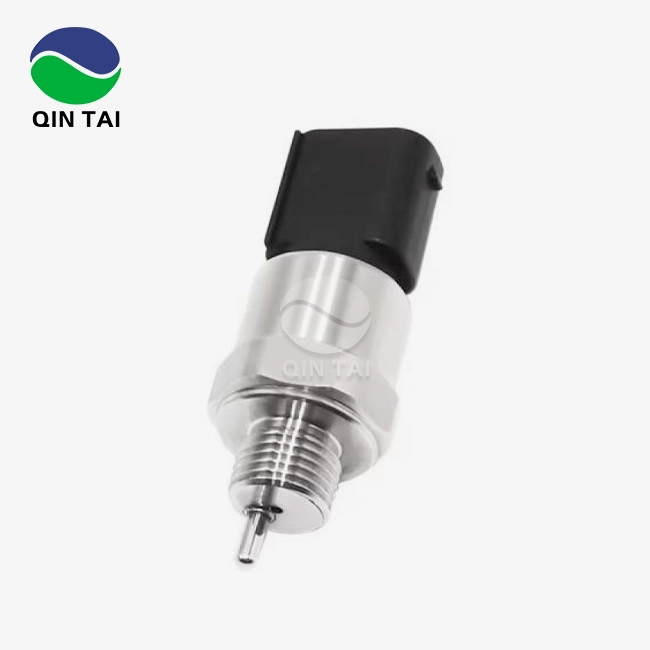
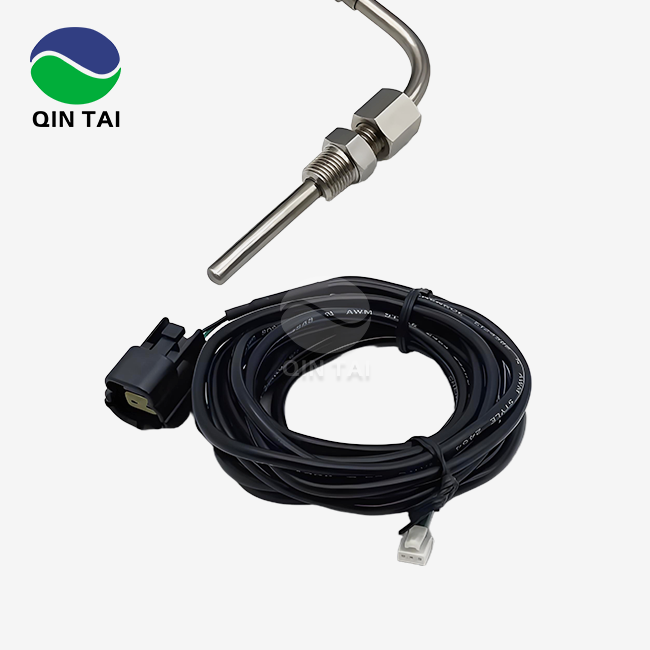
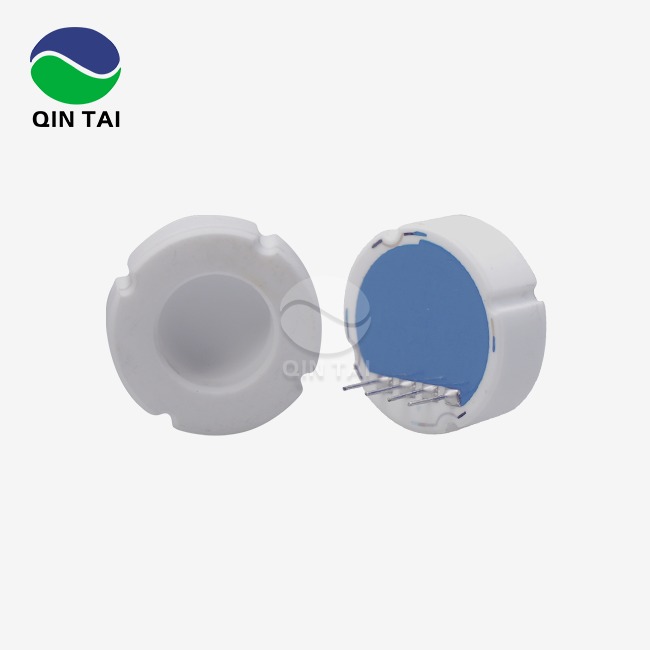
The pressure sensor of a dosing system indicates its stability. The sensor reports line pressure to the controller. The controller adjusts the pump for room demands. That signal might be mild or powerful. Filters catch crystals and other tiny particles before they reach the injector. Poor media may release adhesives into fluid. I recommend checking that the sensors and filters can handle urea solution and that the supplier is IATF 16949 certified. Qintai excels at diesel SCR aftertreatment products and pressure sensors. Most of our work is here.

Supplier Selection and Performance Verification
B2B Buying Guide: How to Choose a Dependable AdBlue Dosing System Supplier
You can get more from a good supplier than just a low price per unit. Buyers should consider a business's ability to produce goods, its quality control measures, its experience with exporting, the testing of its products, its technical documents, its sample support, its warranty service, and its spare parts availability before making a choice. In the specification, there should be information about the range of temperatures, flow, pressure, voltage, interfaces, dimensions, connectors, packaging, acceptance criteria, and change control for projects with OEM or private labels.
The RFQ for the adblue dosing system should include information about how it will be used, what kind of engine or equipment will be used, the climate, the yearly volume, where the goods will be delivered, certifications, Incoterms, and what is expected after the sale. Test orders and samples make sure that the technical fit is good before buying in bulk. They also set the stage for long-term supply.
Performance Verification Before Fleet Deployment
Both technical and business risk are lower when testing is done before a rollout. I value these checks the most:.
- Factory acceptance testing: Confirm flow rate, pressure, repeatability, leakage, start-up, shutdown, purge, fault protection, current draw, voltage tolerance, communication signals, and heater operation. Ask for written records for each item so your engineers can compare results against the agreed specification. Reject any lot that drifts outside the agreed limits before shipment.
- Pilot installation: Fit the system to representative vehicles or machines and run them through cold starts, high loads, idle periods, vibration, dust, long duty cycles, and temperature swings. Log every fault code and note when it appears, because patterns often point to wiring, software, or installation issues rather than the pump.
- Field monitoring: After deployment, track SCR fault frequency, pressure and flow stability, pump and injector replacement rates, downtime, AdBlue consumption, maintenance cost, warranty claims, and mean time between failures. Review these numbers quarterly to confirm the chosen system performs as promised, so you can adjust service intervals.
These checks make it clear that the decision to buy is a good one.
What Qintai Offers OEM and Aftermarket Buyers
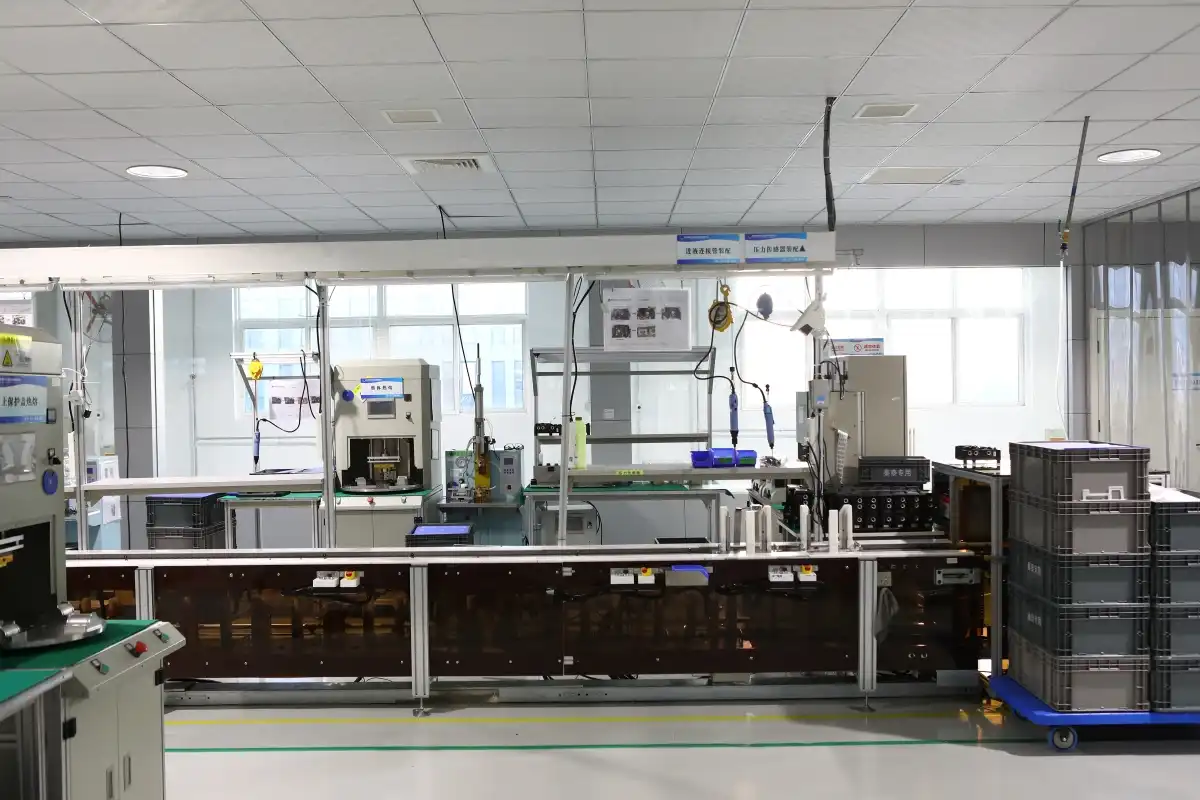
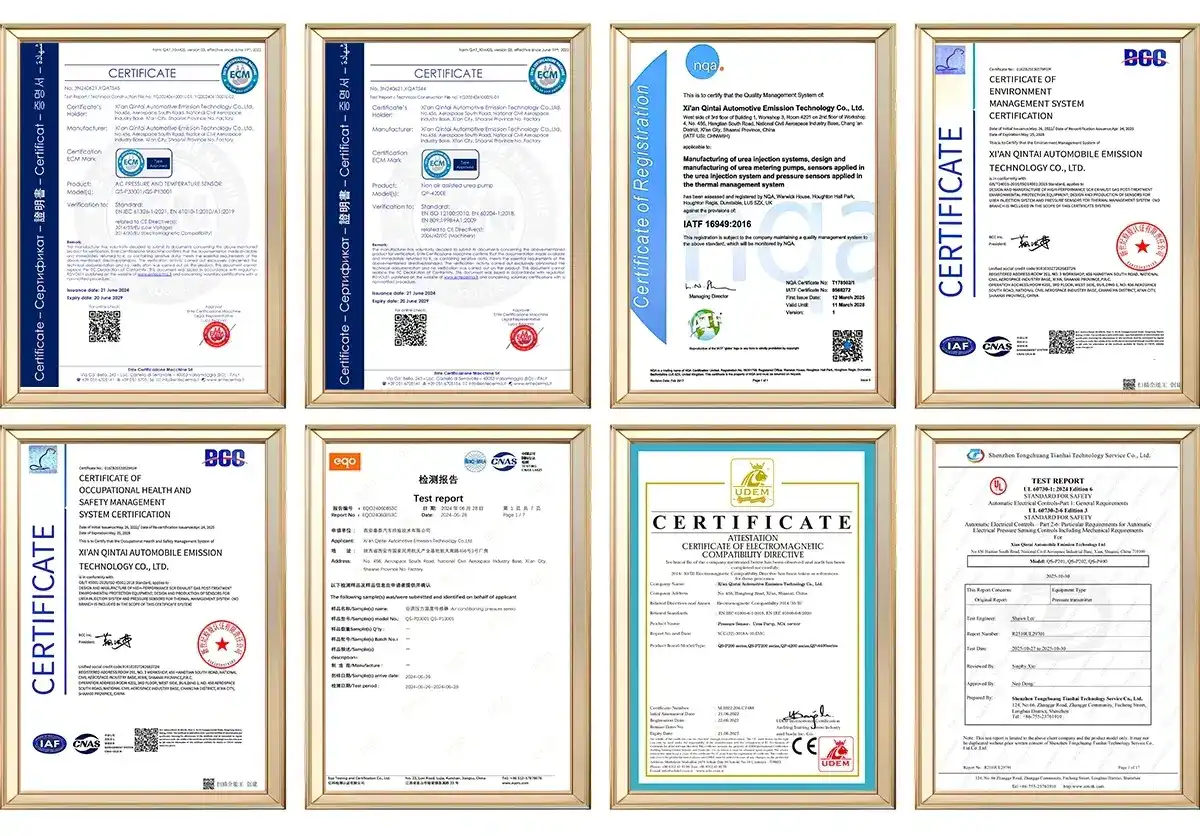
In 2001, Qintai was set up in Xi'an as a national high-tech company. The sensors and diesel engine SCR aftertreatment products that we make, sell, and fix are all things that we do. We are certified by ISO 9001, IATF 16949, CMC, Ex, UL, CE, REACH, and RoHS, and we have applied for 58 invention patents. Weichai Power, Yuchai Power, and Quanchai Power are all customers of ours. We provide OEM and ODM services that include designing the product and making a lot of them. Our goods are sold in over 60 countries and regions, and they can be changed to meet specific needs.
Future-Ready Features and Long-Term Supply for 2026
Future-Ready AdBlue Dosing System Features for 2026 and Beyond
The controls for the adblue dosing system will be tighter and the diagnostics will be better. When you use pressure, temperature, and flow sensors in closed-loop control, you can report problems from afar and plan maintenance for things like heater failure, filter blockage, crystallization, and pump wear. Because its software and calibration are flexible, one platform can work with a variety of engine sizes, duty cycles, and vehicle designs.
Block layouts with replaceable heaters, sensors, pumps, and injectors make it easier to keep track of inventory and cut down on the time it takes to fix things. It's also important to use less energy when heaters are being used for a long time. For fleets that use a lot of different types of equipment, standard connectors, mounting options, and the ability to get spare parts in different parts of the world are becoming important.
Meeting U.S. Emission Rules With a Capable Dosing Setup
NOx limits are very strict for people who buy in the U.S. In 2010, the EPA set this level for heavy-duty diesel engines. The last rule says that the emissions level must be 0.035 g/hp-hr if you buy a car after December 20, 2022. It also makes the warranty and useful life last longer. California passed the Heavy-Duty Omnibus Regulation in 2020, which is also a step in the same direction. SCR can get rid of up to 90% of NOx, but only if the dosing hardware adds the right amount of fluid at the right time. Then, correct dosing, diagnostics, and sensor quality must be at the center of every compliance plan.
OEM/ODM Customization and Global Supply Support
Not all standard products can meet your needs when it comes to flow, mounting, communication, temperature, vibration, or any of these other things. If this happens, a specialized manufacturer can make a new one or a solution that fits your needs. OEM and ODM companies can get help from Qintai with everything from design to mass production.
Our own R&D team is also always working to improve products. People in South America, Europe, the Middle East, and other places buy our goods. If you want to start an OEM program or a line of replacement parts, please send us your plans and drawings. After that, our engineers will talk to you about fit, interfaces, and parameters.
Conclusion
A reliable AdBlue dosing system needs to have accurate and stable flow, durable parts, temperature and crystallization control, an electrical design that works well with the system, and easy maintenance. There should be a clear order of checks when troubleshooting. The best way to set up a truck, machine, or generator depends on what it is used for, where it is located, and how often it is used.
Stress sensors and filters keep the dosage stable, and risk is kept to a minimum before the fleet goes into service by getting a full quote, checking out the supplier, testing in the factory, doing pilot trials, and keeping an eye on things in the field. Every year, the EPA and California make their limits stricter. This makes it more important to give the right dose and do a good job of diagnosing the problem. With sensors built in, systems will be made in 2026 that are modular, flexible, and easy to change. The best choice is the one that fits your needs and your total cost to own.
FAQ
What does an AdBlue dosing system do?
It carefully adds diesel exhaust fluid to the exhaust stream so that the SCR catalyst can change nitrogen oxides into nitrogen and water. A controller, heaters, tank, pump, and injector that all work together is very important.
Do I need a heated AdBlue dosing system?
AdBlue freezes at about 12°F (-11°C), so if you are installing it somewhere cold or outside, choose a heated system. A unit that isn't heated might work well in warm places or indoors where the temperature is controlled.
How often should I replace the urea filter?
How often you should do it depends on the manufacturer and how much dust is in the air. So, follow the manufacturer's instructions and do it less often on dusty job sites. To use a cleaned filter again, you should not clean the media too well because that could damage the media and let particles get to the injector.
What causes most dosing blockages?
A lot of blockages happen because of crystalline AdBlue, contamination, bad purge operations, and lines that are broken. When you cleanly fill up the tank and check it often, the risk is lower.
What should I send with an inquiry?
Include the type of engine or equipment, the flow and pressure requirements, the climate, whether you want the unit to be heated or not, the mounting size, the communication interface, the annual volume, and the target delivery date.
Contact Qintai for an AdBlue Dosing System Supplier Partnership
Contact Qintai, a supplier of an adblue dosing system that works with your OEM or fleet program. We are a national tech company that has been around since 2001. We have been certified by ISO 9001 and IATF 16949, have put in for 58 invention patents, and can do OEM/ODM customization. You can email info@qt-sensor.com with the model of your engine, the voltage, the flow, and the annual volume, or you can visit qt-sensor.com to learn more about the product.
References
1. ISO 22241-1: Diesel engines — NOx reduction agent AUS 32 — Part 1: Quality requirements, 2019
2. ISO 22241-2: Diesel engines — NOx reduction agent AUS 32 — Part 2: Test methods, 2019
3. U.S. Environmental Protection Agency, Control of Air Pollution From New Motor Vehicles: Heavy-Duty Engine and Vehicle Standards (Federal Register), 2023
4. U.S. Environmental Protection Agency, Control of Air Pollution From New Motor Vehicles: Heavy-Duty Engine and Vehicle Standards and Highway Diesel Fuel Sulfur Control Requirements (Federal Register), 2001
5. California Air Resources Board, Heavy-Duty Omnibus Regulation, 2020
6. SAE International, Review of Diesel Emissions and Control (SAE International Journal of Fuels and Lubricants), 2010

Our customers’ satisfaction speaks for our quality — contact us to experience the same reliable service.