- English
- French
- German
- Portuguese
- Spanish
- Russian
- Japanese
- Korean
- Arabic
- Greek
- German
- Turkish
- Italian
- Danish
- Romanian
- Indonesian
- Czech
- Afrikaans
- Swedish
- Polish
- Basque
- Catalan
- Esperanto
- Hindi
- Lao
- Albanian
- Amharic
- Armenian
- Azerbaijani
- Belarusian
- Bengali
- Bosnian
- Bulgarian
- Cebuano
- Chichewa
- Corsican
- Croatian
- Dutch
- Estonian
- Filipino
- Finnish
- Frisian
- Galician
- Georgian
- Gujarati
- Haitian
- Hausa
- Hawaiian
- Hebrew
- Hmong
- Hungarian
- Icelandic
- Igbo
- Javanese
- Kannada
- Kazakh
- Khmer
- Kurdish
- Kyrgyz
- Latin
- Latvian
- Lithuanian
- Luxembou..
- Macedonian
- Malagasy
- Malay
- Malayalam
- Maltese
- Maori
- Marathi
- Mongolian
- Burmese
- Nepali
- Norwegian
- Pashto
- Persian
- Punjabi
- Serbian
- Sesotho
- Sinhala
- Slovak
- Slovenian
- Somali
- Samoan
- Scots Gaelic
- Shona
- Sindhi
- Sundanese
- Swahili
- Tajik
- Tamil
- Telugu
- Thai
- Ukrainian
- Urdu
- Uzbek
- Vietnamese
- Welsh
- Xhosa
- Yiddish
- Yoruba
- Zulu
Can a Urea Dosing Pressure Sensor Boost SCR Accuracy in Trucks?
Yes, a urea dosing pressure sensor can boost SCR accuracy in trucks, within clear limits. It gives the control unit a live reading of diesel exhaust fluid (DEF) pressure, so the unit can correct pump speed and injector timing before dosing drifts. The sensor does not cut NOx by itself; the catalyst does that job. What the sensor removes is guesswork. In this guide, I explain how it works, why it fails, how to compare options, and what OEM and fleet buyers should ask a supplier before ordering.
Truck makers and fleets tell me the same stories: pump pressure that swings, clogged injectors, white crystal deposits, dashboard warnings, derated engines, and failed emissions checks. Many of these trace back to pressure that nobody measures well. EPA's heavy-duty rule, finalized in 2023, also tightens NOx limits from model year 2027, so dosing control matters more each year.
What Is a Urea Dosing Pressure Sensor and How Does It Work?
Where the Sensor Sits in the SCR Dosing System?
Something called an SCR holds DEF in a tank. There is a pump that sends it out and a pressure valve or control loop that keeps it steady. A hot line takes it to the injector. It sprays DEF into the exhaust before it hits the SCR catalyst. Ammonia is made when the DEF breaks down. Ammonia then changes NOx into nitrogen and water. This urea dosing pressure sensor is sometimes called a DEF pump pressure sensor because it is usually found at the pump module or dosing module. It lets the dosage control unit (ECU) know how much pressure is in the circuit. ISO 22241 says that DEF is a mix with 32.5% urea in it. While it's wet, the parts that aren't metal must be able to handle it.
From Pressure to Electrical Signal
Pressure from inside the sensor pushes on a diaphragm or a ceramic sensing element. The electronics take the small bend in the element and turn it into an electric signal. The result can be either a digital protocol or a voltage in the range of 4 to 20 mA. The 5V supply changes a ratiometric output from 0.5 VDC to 4.5 VDC. This means that the ECU reads pressure as a share of the supply voltage. The ECU changes the speed of the pump based on how far off that number is from its target. The NOx monitor, the engine load, and the exhaust temperature are some of the things that the controller reads. It helps set the time for the dose and shows up if there are any issues. The engine keeps this urea dosing pressure sensor measurement loop on all the time.
Key Specifications Buyers Should Review
First, there is the pressure range. It's not enough to just look at the label's number; you should also check the normal and high pressure. Some airless DEF systems work at about 5 to 9 bar (70 to 130 psi), but each one is different, so check the data from the manufacturer. Then look at the accuracy, source voltage, output type, and working temperature once more. After that, check out the parts that get wet, the thread, the response time, and the overpressure number. Some sensors have the right range but the wrong output, so they won't work with the ECU. Get a datasheet and a drawing before you ask for a quote.
Can a Urea Dosing Pressure Sensor Improve SCR Accuracy in Trucks?
How Pressure Feedback Shapes Injection Accuracy
It's not just the time an injector opens that changes the flow. It also depends on the type of injection, the temperature of the fluid, and the pressure in the line. If the pressure reading is off, the ECU might figure out the wrong flow. Should the reading be too low, you may use too much DEF, which can leave behind waste and buildup. If the reading is too high, you might not be getting enough. So NOx can get around the catalyst. Dosing is more accurate when you give the exact pressure because the controller can work from a real number. What I mean by "enabler" is that the monitor makes the data better so that the control plan can give the right amount.
Benefits Fleets and OEMs Can Expect
A good urea dosing pressure sensor can find problems like low pressure, too much pressure, slow pressure decay, pump wear, leaks, and clogged filters early on. Being able to find problems early on helps keep injections and NOx conversion steady. The injector can break down DEF into small pieces better when the pressure stays steady. This makes it less likely that clusters will form. When there are fewer avoidable SCR warnings, there is less risk of downgrading and fewer service visits. The EPA says that SCR technology can cut NOx by as much as 90%, but only if the dose is right for the engine. It stays close to its goal with better numbers on pressure.
The Limits: What a Sensor Cannot Fix
It's not possible to fix a urea dosing pressure sensor; it can only tell. Correct readings can't fix a pump that is worn out, an injector that is only partially blocked, a NOx sensor that moves, wiring that isn't working right, or an ECU that isn't set up correctly. Often, a good monitor will show these flaws by showing that the pressure never gets to where it should be. It's like a chain link. When a customer tells me the SCR isn't working right, I tell them to check the power signal, the pump, the injector, the NOx sensors, the harness, and the software calibration. When another part breaks, only the sensor needs to be changed. Time and money are being wasted.
Common Urea Dosing Pressure Sensor Failure Symptoms and Root Causes
Symptoms You Can See and Read
Watch for pressure readings that jump around, stay too high, or sit too low. If the ECU sees a code like P204B, a range or performance fault with the urea dosing pressure sensor, or a fault with the dosing module, it might record it and send a message to the driver. Check the service manual because the codes are different for each brand. Then, a screen will show an SCR or DEF warning, and the engine might enter limp mode, which makes it have less power. The ECU may also stop pumping DEF to protect parts, which raises emissions. Look for drips, weak spray, white crystals, or DEF use that doesn't make sense for the number of miles driven at the injector.
Root Causes Behind Bad Pressure Readings
If the monitor gives you a bad number, it doesn't always mean it's broken. With age, drift can happen, and a broken diaphragm can mess up the signal. Even so, the pressure could be off because the pump is old, the lines or filters are clogged, the regulator is broken, or there is air in the system. Parts are also put under stress when DEF freezes at about 12°F because it grows. On the electrical side, rust, water getting in, loose connections, and electromagnetic interference can all mess up a signal. It is important to figure out what is wrong before changing it because each cause has a different solution.
Simple Checks Before You Replace Anything
Start with the plug and wire harness. Watch out for wetness, green rust, bent pins, and wires that are chafed. The output voltage and the source voltage should be checked at the urea dosing pressure sensor. It's likely that there is an open or short circuit if the reading on a 0.5–4.5 V ratiometric sensor stays close to 0 V or 5 V. When you're done, compare the ECU's pressure number to a gage that was used to measure the same circuit. Since they both said yes, it's likely the sensor is fine. What needs to be fixed is the pump, filter, or injector. You should get a new sensor and check again if the differences are bigger than the claimed accuracy.

How to Choose and Compare a Urea Dosing Pressure Sensor
Match the Environment and Pressure Range
First, learn how the truck works. It's possible for a urea dosing pressure sensor to become old through vibration, changes in temperature, water, road salt, and chemical contact. To begin, you shouldn't just use the largest number to define the range. The normal pressure, peak pressure, resolution, safety limit, and ECU mapping are also things you should look at. A bigger range for an SCR system pressure monitor is better because it gives you more room to make a mistake.
| Feature | 0–10 bar (about 145 psi) | 0–16 bar (about 232 psi) |
|---|---|---|
| Signal detail near 70–130 psi | Finer | Coarser |
| Over-range margin | Moderate | Larger |
| Typical fit | Systems near 9 bar | Systems with higher spikes |
The last word should go to the OE pressure map.
Choose the Output Signal
Even though range is important, output type is even more so because it tells the ECU how to talk to the urea dosing pressure sensor. This kind of voltage is often found in truck dosing systems, and it can connect straight to an ECU input. One that gives out 4–20 mA is good for test stations and long wire runs. Digital outputs help with diagnostics, but they need help from the ECU.
| Output | Integration | Transmission | Diagnostics |
|---|---|---|---|
| Analog voltage | Simple | Good on short harnesses | Limited |
| 4–20 mA | Needs current-loop input | Strong over long runs | Moderate |
| Digital | Needs protocol support | Strong noise immunity | Rich |
One sensor doesn't work with all truck models, so check that the signal matches how the ECU was set up.
Weigh Total Cost, Then Run a Checklist
It might cost more in the long run if the price drops. It costs more to replace things and have them shut down when they aren't calibrated properly, sealed properly, tracked by batch, or fail early. To be safe, I think it's best to check the pressure range, signal, accuracy, reaction time, temperature rating, paperwork, and supply consistency before giving the go-ahead. Most of the time, when people buy replacements, they put fit and delivery first. Distributors keep an eye on how much stock there is and how stable prices are. For OEMs, customization and tracking are very important. For installers, paperwork and help with calibration are very important. With these checks, you're less likely to make a mistake, and you can see how much it costs to own everything.
Installation, Calibration, and Sourcing Guidelines
Install and Calibrate for Lasting Accuracy
Place the urea dosing pressure sensor where it should be under the pressure and tighten the port to the torque value that the manufacturer gives you. The body can bend if there is too much torque, and it can leak if there is not enough torque. First, clear the port of any stale DEF and other junk. Then, put the sensor in the right place, use the right cover, and keep it away from the hot exhaust. A calibrated gage should be compared to several reference points, the ECU's scale should be checked, and the results should be written down. There should be current in the pump, good performance from the injectors, and crystallization when it's time for service. After installation, check for leaks, stable idle and load readings, ordered vs. measured pressure, codes, and how the duty cycle acts.
Qintai QS-P226 at a Glance
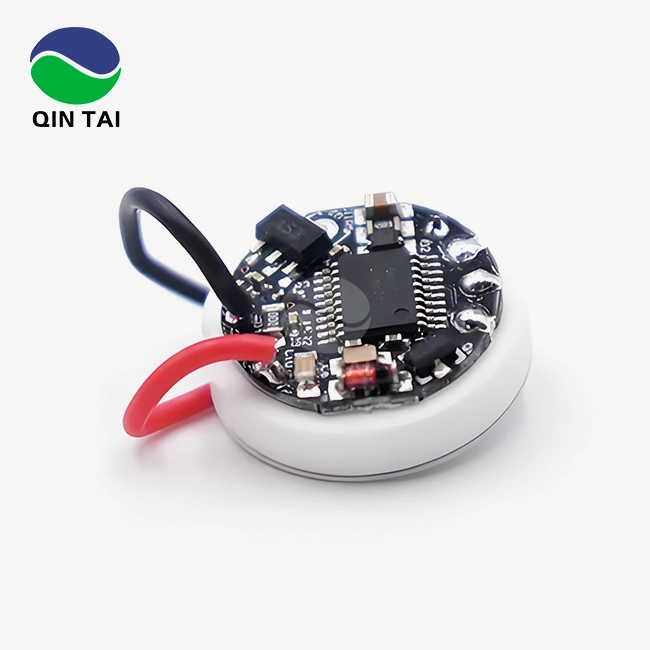
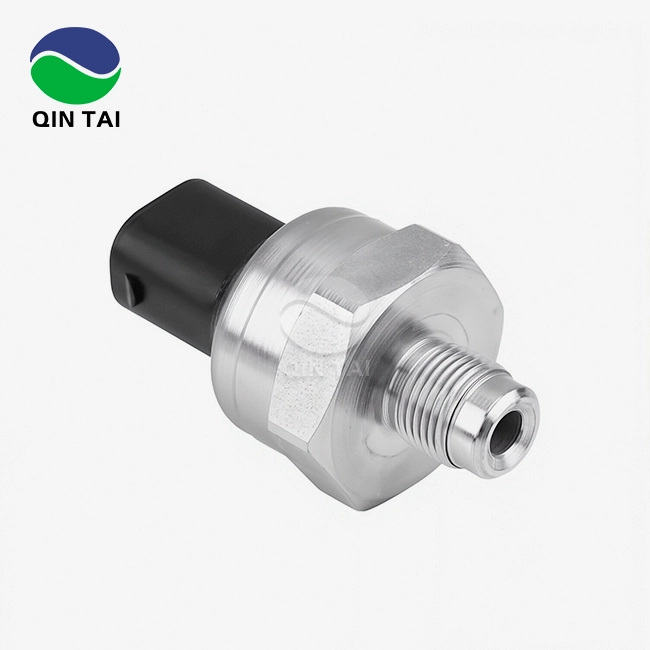
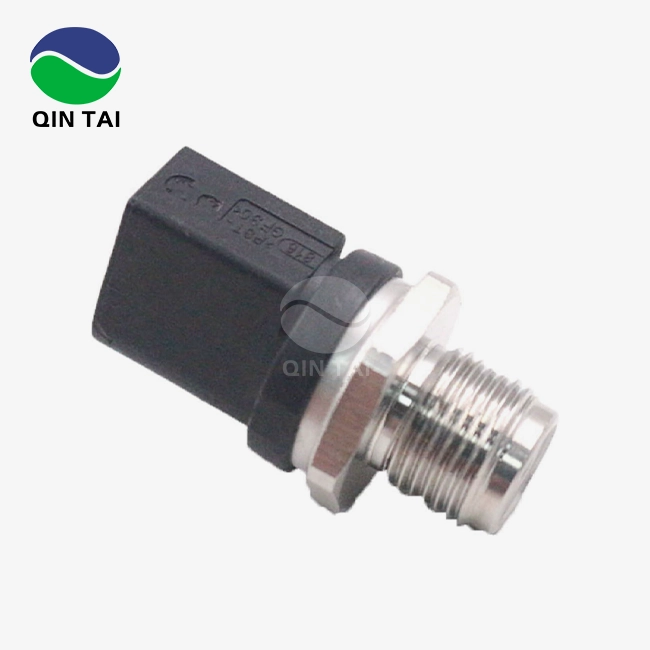
This is a diesel exhaust fluid pressure sensor from Qintai. It is based on a sensor core that we design and make ourselves. It can measure pressures from -14 psi to +130.5 psi and says "refer to OE" on the back of it.
| Parameter | Specification |
|---|---|
| Pressure range | Refer to OE |
| Measurement range | −14 psi to +130.5 psi |
| Supply voltage | 5V |
| Output | Analog, 0.5–4.5 VDC ratiometric |
| Medium | Urea |
| Accuracy | ±0.5% |
| Operating temperature | 60–80°F |
| Quality / Warranty | 100% tested / 12 months |
Buildings that are sealed keep out water, dust, and chemicals. Continuous tracking lets your SCR control unit know quickly about changes in dosing. There are two types of diesel engines that the sensor can work with: light-duty and heavy-duty. Tell our experts what your full temperature needs to be.
Supplier Qualification and Customization
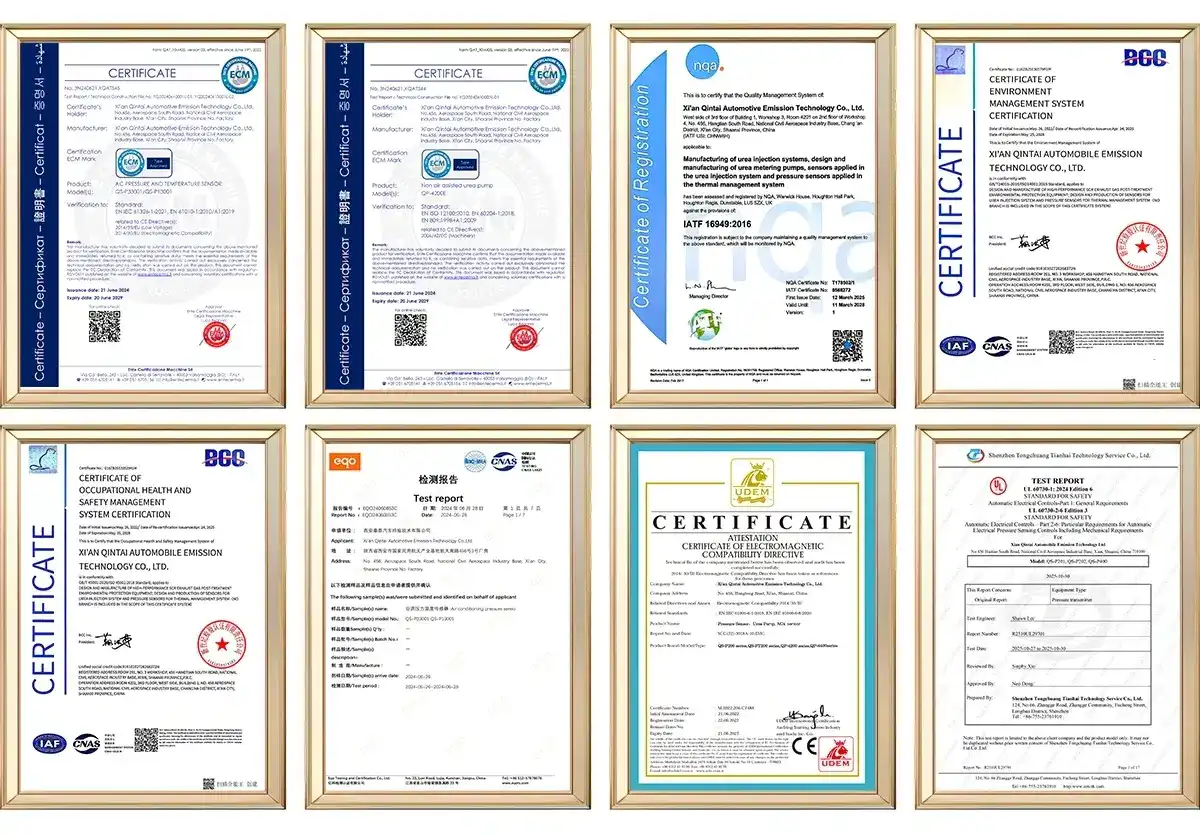
Before you place an order, make sure you know the supplier's history with used in cars or off-roading, DEF compatibility, production capacity, calibration controls, batch traceability, certifications, validation testing, warranty, and technical support. Find out about precision, connectors, materials, and more by asking for datasheets, drawings, wire plans, and datasheets. Qintai is a national tech company that was founded in 2001. It has REACH, CE, ISO9001, IATF16949, CMC, Ex, UL, CE, RoHS, and 58 idea patents. We have an R&D team of 86 people, can make more than 2 million sensors a year, and offer OEM/ODM service to help with testing, integrating, and making a lot of sensors. They buy from us, as do Weichai Power, Yuchai Power, and Quanchai Power. Our goods are sold in more than 60 countries and places. We can also make goods that meet certain needs.
Conclusion
If your truck has a urea dosing pressure sensor, the SCR will work better. This is because it helps the dose controller figure out what the real DEF pressure is. The reading tells the pump how much DEF to send, how to set the injectors, how to find problems, and how to keep sending DEF. This keeps the conversion of NOx stable and cuts down on the number of warnings and derailments. The sensor is just a small part of the system that manages emissions. A worn-out pump, a clogged injector, a broken NOx sensor, bad wiring, or wrong calibration are all things that it can't fix. When data, codes, or crystal deposits aren't stable, they need to be diagnosed one step at a time before they can be changed. When someone buys a new system, they should make sure that it works with the same chemicals, has the same output signal, connection, and mechanical fit as the old one. Also, they should try out examples in real life before placing big orders.
FAQ
What does a urea dosing pressure sensor do?
It sends the DEF pressure reading to the ECU and checks it in the dosing circuit. After that, the ECU changes the speed of the pump and the injection.
Does it reduce NOx directly?
Not at all. The SCR catalyst lowers the amount of NOx. The sensor makes it easier to control the flow of DEF, which keeps the exchange stable.
Should I choose 0–10 bar or 0–16 bar?
The OE level should be used for both normal and peak pressure. If you want more specifics, choose the 0–10 bar. Choose 0–16 bar if spikes need more space above them.
Can one sensor fit every truck?
Not at all. The thread, connector, range, and signal all need to match how the ECU is set up. There is no way to change between the 4–20 mA outputs and the analog voltage.
What if readings are unstable or warnings appear?
Before you change the sensor, use a gage to check the real pressure, the wiring, the connections, the pump, and the injector.
What should I send with a quote request?
Please let us know what it's for, the pressure range, the signal, the connector, the amount, the date of delivery, and any OE numbers or drawings you have.
CTA: Request a Urea Dosing Pressure Sensor Specification Review
The QS-P226 is our model for urea dosing pressure sensor. You can ask Qintai for a paper, a sample, or a case study at any time. We test all of our products and back them up with a 12-month warranty. Contact us by emailing info@qt-sensor.com for details.
References
1. ISO 22241-1: Diesel Engines — NOx Reduction Agent AUS 32 — Part 1: Quality Requirements, 2019
2. U.S. Environmental Protection Agency, Control of Air Pollution from New Motor Vehicles: Heavy-Duty Engine and Vehicle Standards and Highway Diesel Fuel Sulfur Control Requirements, 2001
3. U.S. Environmental Protection Agency, Control of Air Pollution from New Motor Vehicles: Heavy-Duty Engine and Vehicle Standards, 2023
4. Catalysis Today, Urea-SCR: A Promising Technique to Reduce NOx Emissions from Automotive Diesel Engines, 2000
5. SAE International Journal of Engines, Review of Diesel Emissions and Control, 2010
6. Bosch Automotive Handbook, 2022

Our customers’ satisfaction speaks for our quality — contact us to experience the same reliable service.