- English
- French
- German
- Portuguese
- Spanish
- Russian
- Japanese
- Korean
- Arabic
- Greek
- German
- Turkish
- Italian
- Danish
- Romanian
- Indonesian
- Czech
- Afrikaans
- Swedish
- Polish
- Basque
- Catalan
- Esperanto
- Hindi
- Lao
- Albanian
- Amharic
- Armenian
- Azerbaijani
- Belarusian
- Bengali
- Bosnian
- Bulgarian
- Cebuano
- Chichewa
- Corsican
- Croatian
- Dutch
- Estonian
- Filipino
- Finnish
- Frisian
- Galician
- Georgian
- Gujarati
- Haitian
- Hausa
- Hawaiian
- Hebrew
- Hmong
- Hungarian
- Icelandic
- Igbo
- Javanese
- Kannada
- Kazakh
- Khmer
- Kurdish
- Kyrgyz
- Latin
- Latvian
- Lithuanian
- Luxembou..
- Macedonian
- Malagasy
- Malay
- Malayalam
- Maltese
- Maori
- Marathi
- Mongolian
- Burmese
- Nepali
- Norwegian
- Pashto
- Persian
- Punjabi
- Serbian
- Sesotho
- Sinhala
- Slovak
- Slovenian
- Somali
- Samoan
- Scots Gaelic
- Shona
- Sindhi
- Sundanese
- Swahili
- Tajik
- Tamil
- Telugu
- Thai
- Ukrainian
- Urdu
- Uzbek
- Vietnamese
- Welsh
- Xhosa
- Yiddish
- Yoruba
- Zulu
Which SCR Dosing System Fits Euro 6 Trucks and Off-Road Equipment?
The right SCR dosing system for a Euro 6 truck or an off-road machine is an electronic, closed-loop unit that matches the engine's power, duty cycle, and exhaust layout. Trucks and buses usually need fast response, CAN communication, and accurate pressure feedback. Construction, farm, mining, and generator engines need the same control logic, plus stronger resistance to vibration, dust, and long low-load periods. Air-assisted designs suit tight mixing space and cold exhaust, while airless designs suit compact platforms with steady heat. Below, I explain each choice so your engineers and buyers can write a clearer RFQ.
Why SCR Dosing System Selection Matters for Euro 6 and Off-Road Applications?
What an SCR Dosing System Does
That's when diesel engines burn lean, which means they burn hot, and NOx is made. After leaving the engine, these gases are cleaned up by an SCR dosing system. A tank holds diesel exhaust fluid, or DEF. It goes into the tailpipe through an injector, and a pump pulls it out. Sensors send information to the ECU about the pressure, temperature, and NOx levels. The ECU changes the amount, and the SCR catalyst turns NOx into nitrogen and water. According to ISO 22241, DEF is a solution of 32.5% urea. Choice is important from the start because if one part changes, the chain stops working right.
Euro 6, Stage V, and U.S. Rules
In the EU, heavy-duty road engines must follow Euro VI rules. In the US, heavy-duty NOx can't be more than 0.2 g/bhp-hr, according to the 2010 EPA standard. Off-road cars and tools are governed by various rules. EU Stage V and EPA Tier 4 are set by Regulation (EU) 2016/1628. EU Stage V is for engines that aren't used on roads. This rule is for a lot of diesel trucks that aren't used on US roads. One platform may need to follow two or three sets of rules when taking goods from one country to another. Make sure you know the goal rule right away. A dosing plan that works for cars might not work for a low-load excavator cycle.
Risks of a Wrong Match
The field starts with a bad match. There is waste fluid when there is too much DEF because ammonia slips. This can cause ammonia to leak out of the tailpipe. It's possible for warning lights to come on or the engine to lose power when there isn't enough DEF. If spray hits cold lines, urea can build up on the walls and stop the flow. Every failure means more downtime, higher insurance costs, and a higher risk of not following the rules. You can avoid most of these problems when you list the engine data, duty cycle, and box size limits in your RFQ, when you compare technologies, or when you plan an OEM customization project SCR dosing system.
How an SCR Dosing System Works and Where EGR and DPF Fit
The Dosing Sequence from Engine to Tailpipe
NOx from the engine starts the process. The ECU checks the NOx readings, the temperature of the exhaust, and the load on the engine. It then tells the pump and injector what to do. A spray of DEF comes out of the exhaust. When it gets hot, the urea in the drops breaks down into ammonia. A mixer spreads the ammonia out over the face of the catalyst. Nitrogen and water are made when ammonia and NOx touch the catalyst surface. Wet DEF stays wet in cold weather thanks to warm lines. The tank has sensors that talk to the control box and check the level, temperature, and quality of the water. Each part has to do what the software tells it to do at the right time.
Conditions That Change Performance
Several things can make the outcomes different from one machine to the next. The most important thing is how cold the exhaust is, since DEF dosing doesn't begin until the exhaust warms up. Work that doesn't use much power can keep the exhaust cold. The type of DEF, the back pressure, the temperature of the surroundings, and the distance that can be used for mixing can also change the conversion. The control method is put to the test most when the engine is cold, when it is idle, and when the load changes quickly. This is because the spray quality and dose accuracy have to stay the same when temperatures change. Most of the time, these things happen to long-haul trucks when they first start up and when they're in city traffic. Every day, off-road vehicles hit them. Look at both ends.
SCR, EGR, and DPF Do Different Jobs
These three techs can't be used together. Not as much NOx is made because EGR sends some pollution back to the intake. After the fuel is burned, SCR gets rid of CO2. A diesel particulate filter (DPF) gathers soot. Many new platforms have all three, which means that heat and back pressure need to be taken care of together. When you regenerate the DPF, the exhaust temperature goes up. This can help the SCR work, but it may put stress on the area around the injectors. If the injector is not put in the right place, DEF crystallization can happen. You shouldn't buy the DOC, DPF, dosage hardware, SCR catalyst, and ammonia slip catalyst one at a time. Instead, you should think of them as all part of a good plan.
Which SCR Dosing Technology Fits Euro 6 Trucks and Off-Road Equipment?
Air-Assisted vs. Airless Designs
Systems that use air help break down DEF into small drops. Because they have a short mixing distance, a spray control that is flexible, and cold exhaust, they are good for heavy-duty work. However, they need to have their air line and valve serviced. Devices that don't use air only pressurize DEF and shoot it through an injector, which makes them easier to package. With small bases that have steady exhaust conditions, they can do their jobs. There isn't a clear winner among the styles. You should choose based on the air source you have access to, the amount of time you have to mix the materials, and the machine's coolest temperature when it's done SCR dosing system.
Why Electronic Closed-Loop Control Leads
Open-loop dosing stores a map and isn't very good at taking care of drift. Electronic closed-loop control checks the real result against the goal. For OBD to work, it needs to be able to read pressure and NOx input and talk to the engine ECU about problems. For Euro 6 and Tier 4 Final systems, which have short changes and strict limits, that works well. Stress feedback plays a direct part. If the Urea Dosing Pressure Sensor finds pressure drops because of leaks, blockages, or air in the line, it sends a warning. If there is too much pressure, it could mean that the DEF is frozen or the valves are broken. It also helps find out why pumps and injectors aren't working right.
Validate Packaging Early
It doesn't matter how advanced the technology is if the exhaust doesn't fit the hardware. Always make sure the pipe before the catalyst is straight and that the injector is in the right place. Keep the turbocharger and DPF from getting too hot. The injector, filter, and connectors should be able to be reached without having to take off the exhaust. Make sure there is enough room for service. Take a look at the interface guidelines too. Standardized holes for pressure sensors are M10x1 and M12x1.5. But the signal that comes out, which could be 0.5–4.5 V or SENT, has to match how the ECU is calibrated.
SCR Dosing System Selection by Application and Performance Checks
Trucks, Buses, and Road Vehicles
Cars on the road need things like quick response, accurate NOx control, low chance of crystals, and OBD compatibility. Many miles are driven by long-haul trucks, so the pressure sensors inside them have to stay accurate even though the trucks are shaking and heating and cooling all the time. Buses and delivery trucks make more stops and starts, which keeps the exhaust cooler and raises the risk of deposits. For these platforms, I like electronic closed-loop control, anti-crystallization purge logic, and CAN communication the most. That's not all buyers should ask for. They should also ask how long something lasts when it's loaded the same way their fleet is.
Off-Road, Mining, and Generator Sets
A lot of the time, dust, shock, vibration, and big changes in temperature are bad for mining equipment like excavators, loaders, tractors, and more. A lot of them also run for a long time with little work, which keeps the fuel cool. Warm lines, sealed connections, and tough instruments are more important here. In industrial and mining settings, engines may need to run all the time, handle high amounts, and be able to be checked out from afar. Stationary generator sets often have a PLC, automatic purge, and low-load control. They can be used as backup or main power. Before you decide, you should look at the duty cycle, engine power, exhaust conditions, installation space, and how easy it is to maintain each machine family SCR dosing system.
Evaluating Performance and Fixing Faults
You can compare service providers using the same factors, like how well they dose, how stable the pressure is, how fast the injector is, how good the spray is, how well it converts NOx to ammonia, how well it purges, how well it protects against freezing, and how well it diagnoses problems. Put it through tests on the bench, when it's cold, when it shakes, and on the engine. Read the test conditions for each claim. There are usually leaks, dirty DEF, deposits, or sensor drift to blame when the DEF pressure changes a lot while it's in use. One example of a P204B code is a urea pressure sensor circuit range/performance. This code can be caused by a dirty connection pin or an old sensor. Before you switch parts, figure out what's wrong.

How to Choose an SCR Dosing System Supplier
Start with a Clear Specification
Good quotes start with good facts. Prepare the engine model, power range, duty cycle, exhaust conditions, emissions goal, DEF needs, packaging limits, voltage, communication protocol, annual volume, and service-life goal. Providers should quote on the whole package, not just a pump or injector. The tank, heated lines, sensors, brackets, paperwork, ECU interface, and testing help should all be part of this. Coordinated parts make it easier to talk to each other, keep things moving, and avoid delays in tuning. Not only the unit price, but also the time it takes to set up, the DEF that is used, maintenance, downtime, and new parts. Based on facts, a weighted scorecard helps people decide what to do.
What Qintai Brings
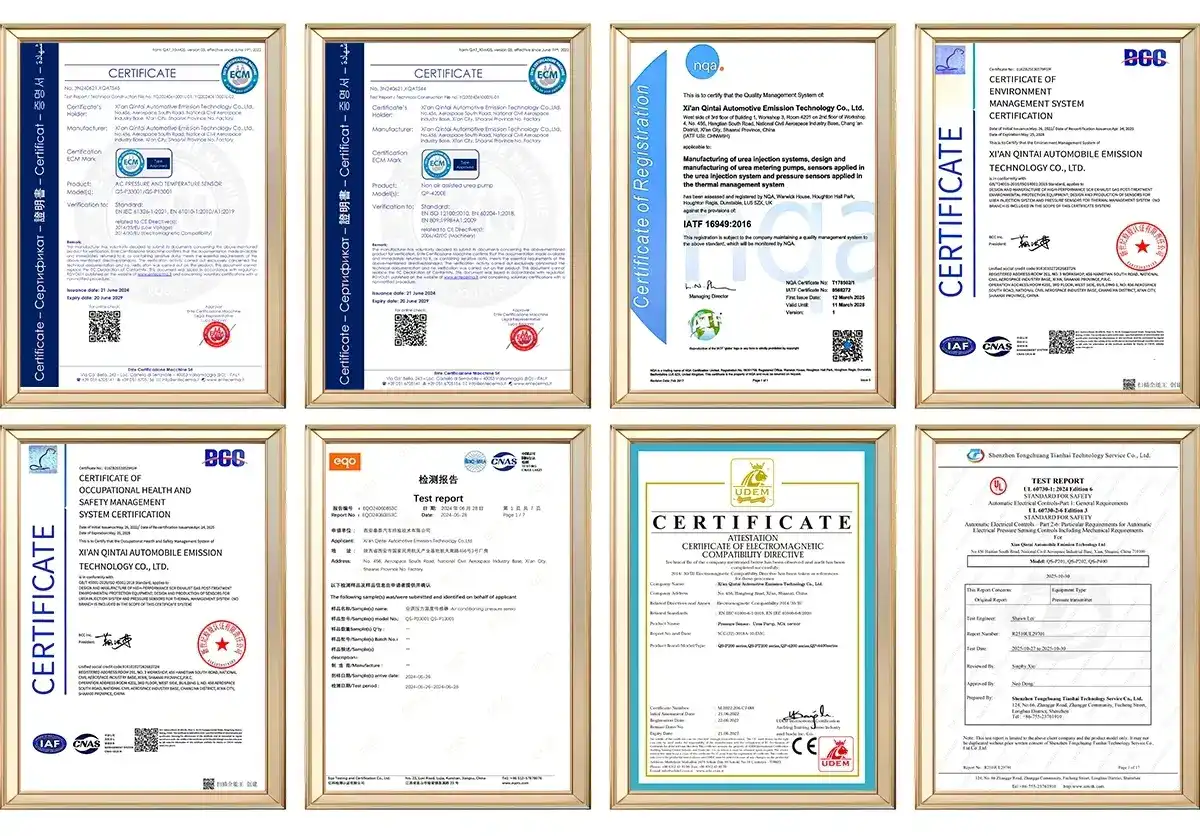
Xi'an Qintai Automotive Emission Technology Co. Ltd is a national high-tech company that has been around since 2001. We do research and development, make, sell, and provide service for sensors that are used in diesel engines with SCR aftertreatment. Specifically, we work on pressure sensors. We are certified by ISO9001, IATF16949, CMC, Ex, UL, CE, REACH, and RoHS, and we have applied for 58 invention patents. We sell our goods in more than 60 countries and regions. Weichai Power, Yuchai Power, and Quanchai Power are just a few of the companies that buy from us. We can make OEM and ODM goods just for you, from the idea stage to mass production.
Our Urea Dosing Pressure Sensor
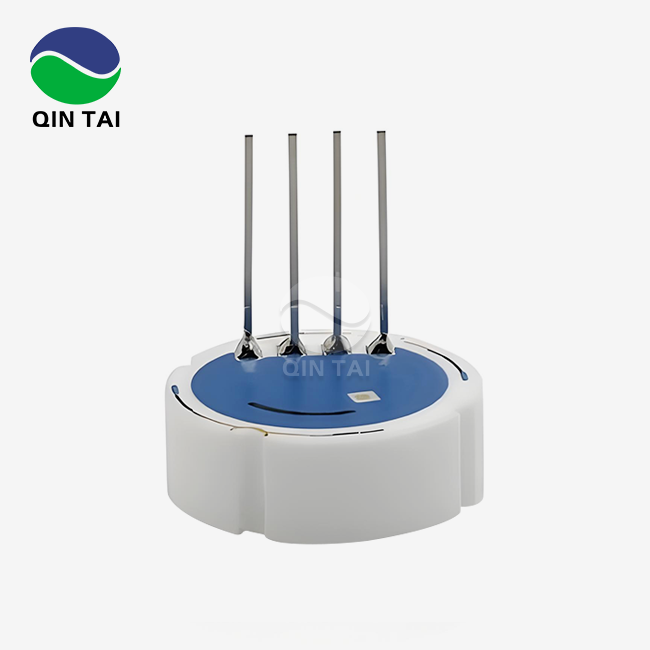
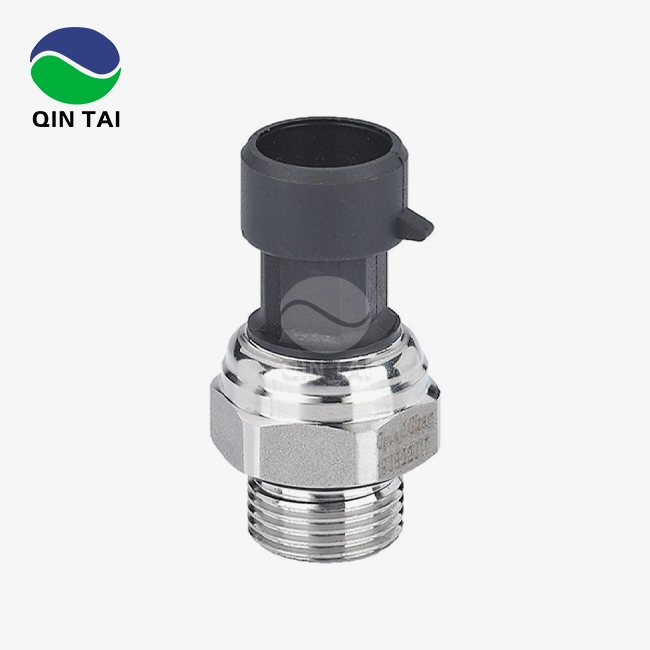
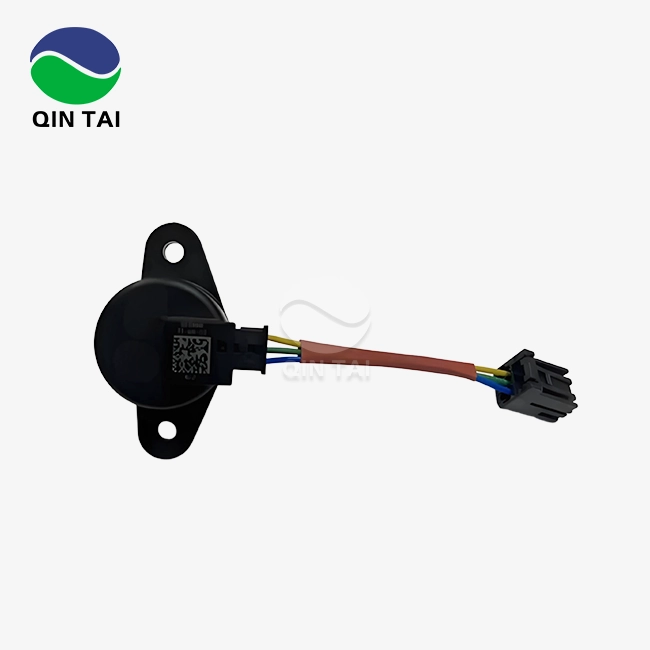
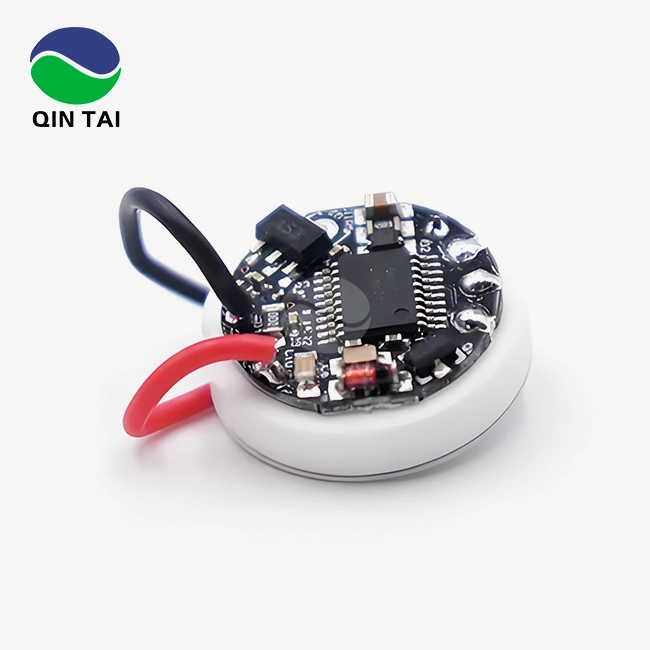
The Urea Dosing Pressure Sensor checks the DEF hydraulic pressure and sends correct information to the ECU in real time. There isn't much empty space inside the chamber, and the flow paths are smooth, so urea doesn't build up and crystallize. There are no contact problems because the connections are gold-plated, and the internal buffer is flexible enough to handle DEF growing when it freezes. The company that made it says it will last at least 15,000 to 20,000 hours of frequent business use. Heavy-duty trucks, construction tools, and mining gear all use it a lot. Just tell us what thread and signal you need, and we'll make sure the sensor works with your ECU.
Conclusion
This section talks about the duty cycle, exhaust temperature, and installation space of the engine. These all have an impact on the best SCR dosing system for Euro 6 trucks and off-road equipment. Because it works with CAN transmission, sensor input, and diagnostics, electronic closed-loop control can be used in most off-road and on-road projects today. Plans that use air work well when the exhaust is cold and the mixing distance is short. When the heat is steady and the platform is small, designs that don't need air help work well.
Since SCR works with EGR and DPF, the whole aftertreatment process needs to be looked at. This includes where the injectors are placed and the risk of crystallization. Pressure feedback is a way to find leaks, clogs, and problems with the pump or injector. It is better to compare suppliers fairly when there is a full specification than when there are only claims of performance. You'll be less likely to have ammonia slips, crystals, de-rating, or not following the rules if you use these tips.
FAQ
What is an SCR dosing system?
It makes sure that the exhaust has the right amount of DEF so that the SCR catalyst can change the NOx into nitrogen and water. The control box, the injection, the sensors, and the pump are all on it.
Which features matter most for Euro 6 trucks?
Closed-loop control, fast response, CAN transmission, accurate pressure feedback, and protection against crystallization are some of the things that this article talks about.
When does airless dosing suit construction equipment?
When the air temperature stays the same and the machine doesn't take up much room, it works well. Machines that haven't been used in a while might need to be filled with air. There should be tests to back up the final choice.
What causes clogging?
Bad purge control, injector leaks, low exhaust temperature, dirty DEF, weak atomization, and bad installation are some of the most common reasons.
What do you need for a quotation?
Send the engine's model, its power range, what it's used for, its emissions standard, how its exhaust is laid out, how much it needs every year, what kind of signal it sends, and how it can be installed. We can make products that fit the needs of OEMs based on those data.
Request an SCR Dosing System Recommendation or Quotation from Qintai
You can work with both OEM and ODM projects when you work with Qintai. They make SCR dosing systems for Euro 6 trucks, construction and agricultural equipment, mining equipment, and diesel generators. Send an email to info@qt-sensor.com with your engine type, power range, emissions standard, exhaust layout, and yearly demand to get a technical review, product advice, or price. Our skilled staff can make sensor solutions specifically suitable to your needs.
References
1. Commission Regulation (EU) No 582/2011, 2011
2. Regulation (EU) 2016/1628 of the European Parliament and of the Council, 2016
3. U.S. EPA, Control of Air Pollution from New Motor Vehicles: Heavy-Duty Engine and Vehicle Standards and Highway Diesel Fuel Sulfur Control Requirements, Federal Register, 2001
4. ISO 22241-1: Diesel engines — NOx reduction agent AUS 32 — Part 1: Quality requirements, 2019
5. Johnson, T. V., Diesel Emission Control in Review, SAE International Journal of Fuels and Lubricants, 2009
6. Koebel, M., Elsener, M., and Kleemann, M., Urea-SCR: A Promising Technique to Reduce NOx Emissions from Automotive Diesel Engines, Catalysis Today, 2000

Our customers’ satisfaction speaks for our quality — contact us to experience the same reliable service.