- English
- French
- German
- Portuguese
- Spanish
- Russian
- Japanese
- Korean
- Arabic
- Greek
- German
- Turkish
- Italian
- Danish
- Romanian
- Indonesian
- Czech
- Afrikaans
- Swedish
- Polish
- Basque
- Catalan
- Esperanto
- Hindi
- Lao
- Albanian
- Amharic
- Armenian
- Azerbaijani
- Belarusian
- Bengali
- Bosnian
- Bulgarian
- Cebuano
- Chichewa
- Corsican
- Croatian
- Dutch
- Estonian
- Filipino
- Finnish
- Frisian
- Galician
- Georgian
- Gujarati
- Haitian
- Hausa
- Hawaiian
- Hebrew
- Hmong
- Hungarian
- Icelandic
- Igbo
- Javanese
- Kannada
- Kazakh
- Khmer
- Kurdish
- Kyrgyz
- Latin
- Latvian
- Lithuanian
- Luxembou..
- Macedonian
- Malagasy
- Malay
- Malayalam
- Maltese
- Maori
- Marathi
- Mongolian
- Burmese
- Nepali
- Norwegian
- Pashto
- Persian
- Punjabi
- Serbian
- Sesotho
- Sinhala
- Slovak
- Slovenian
- Somali
- Samoan
- Scots Gaelic
- Shona
- Sindhi
- Sundanese
- Swahili
- Tajik
- Tamil
- Telugu
- Thai
- Ukrainian
- Urdu
- Uzbek
- Vietnamese
- Welsh
- Xhosa
- Yiddish
- Yoruba
- Zulu
Best Capacitive Pressure Sensor for Corrosive Environments
Diesel engine manufacturers and aftertreatment integrators need the finest capacitive pressure sensor for corrosive situations due to chemical exposure. Ceramic capacitive sensors, especially those with alumina diaphragms, exceed alternatives in chemical resistance and measurement precision. Even with acidic exhaust condensates, SCR urea solutions, and hydraulic fluids under high temperature changes, these instruments remain accurate. A sensor designed for corrosive environments minimizes maintenance costs, eliminates premature failure, and meets strict emission criteria.
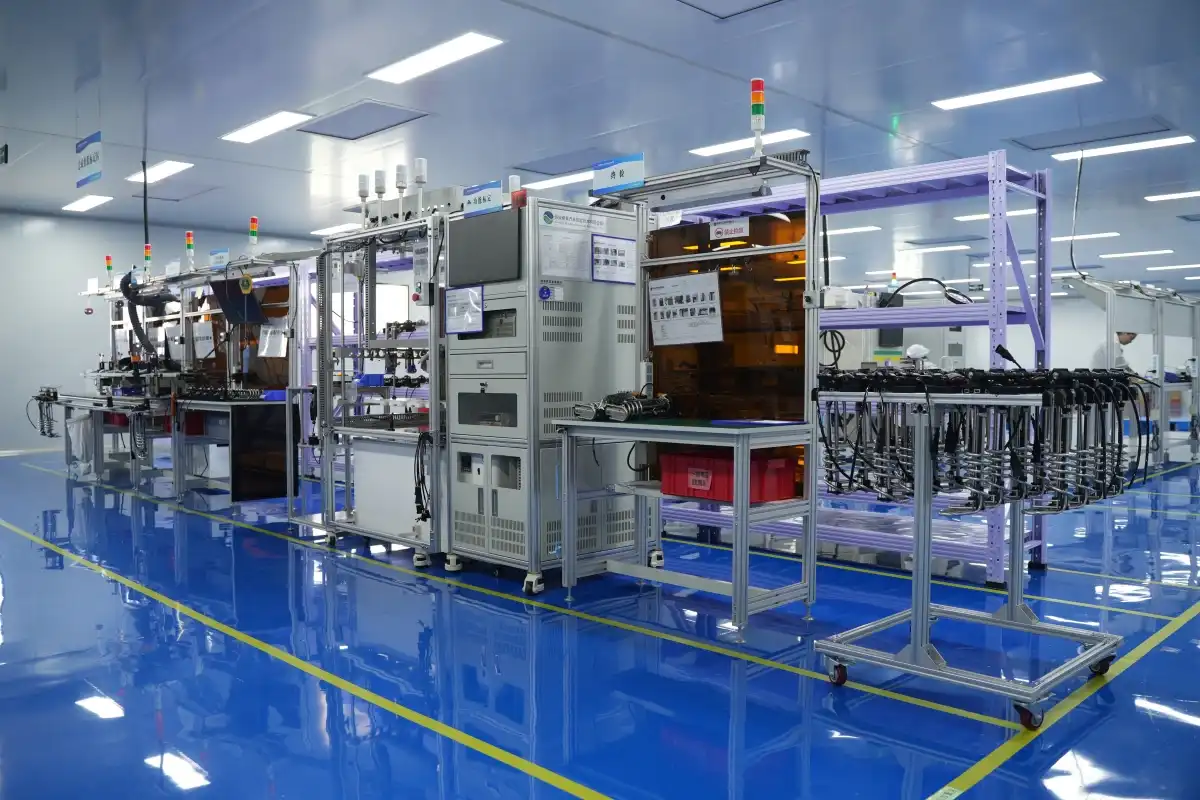
Understanding Capacitive Pressure Sensors in Corrosive Environments
How Capacitive Sensing Technology Works?
Pressure is detected via capacitance shifts between two conductive plates separated by a dielectric. Diaphragm deflection changes gap distance and capacitance as pressure rises. This approach is better than strain gauges in detecting pressure variations in diesel aftertreatment systems, hydraulic circuits, and exhaust gas recirculation valves.
Advantages in Harsh Chemical Conditions
The main benefit is material selection. Ceramic diaphragms withstand acids, alkalis, and organic solvents that degrade metal sensors. Durability ensures reliable zero-point readings and span accuracy throughout long service durations. In engine compartments and exhaust systems, temperature compensation circuits prevent thermal drift and ensure measurement integrity from -40°C to 135°C.
Addressing Common Performance Challenges
Capacitive pressure sensors have unique issues despite their robustness. Installation must include shielding and grounding to reduce measurement signal noise from alternators and ignition systems. Sensor electronics need capacitance compensation techniques for temperature-induced capacitance fluctuations. Regular calibration cycles detect micro-corrosion and dielectric aging, although superior ceramic designs limit these impacts compared to metallic alternatives.
Key Factors to Consider When Choosing Capacitive Pressure Sensors for Corrosive Applications
Material Compatibility and Construction
Wet materials must be considered while choosing capacitive pressure sensors. The QS-P105F type from Qintai has a 96% Al2O3 alumina ceramic diaphragm for chemical resistance and mechanical strength at 600 bar. This ceramic material resists urea crystallization in SCR systems and acidic condensation in exhaust paths better than stainless steel. In dusty or humid mining equipment and generator sets, advanced encapsulation protects electronic components from moisture and contaminants, increasing operational life.
Critical Performance Parameters
Measurement accuracy affects emission control and system diagnostics. Examine key specifications:
Nonlinearity and Sensitivity: The QS-P105F provides exact readings for closed-loop SCR dosage control with 0.3% full-scale nonlinearity and 2–4.0 mV/V sensitivity. This accuracy level fulfills China VI and Euro VI emission regulations.
Temperature Stability: Zero temperature drift below 0.03% FS/°C for lower pressure ranges and 0.04% for high-pressure variations assures accurate measurements across agricultural machinery's winter to summer temperature changes.
Pressure Range Flexibility: From turbocharger inlet monitoring to heavy-duty diesel engine common rail fuel pressure sensing, pressure ranges from vacuum (-1 bar) to 600 bar are available.
These factors allow procurement engineers to match sensor capabilities to application needs and predict long-term performance.
Certification and Compliance Standards
International certifications verify sensor suitability for hazardous and emission-critical applications. Generator sets for chemical factories or oil extraction operations need ATEX-compliant sensors for explosive atmospheres. Certifications like ISO 9001 and IATF 16949 show manufacturing consistency needed for large production integration. OEM manufacturers supplying European and North American heavy vehicle manufacturers need RoHS and REACH compliance for environmental responsibility and worldwide sales.
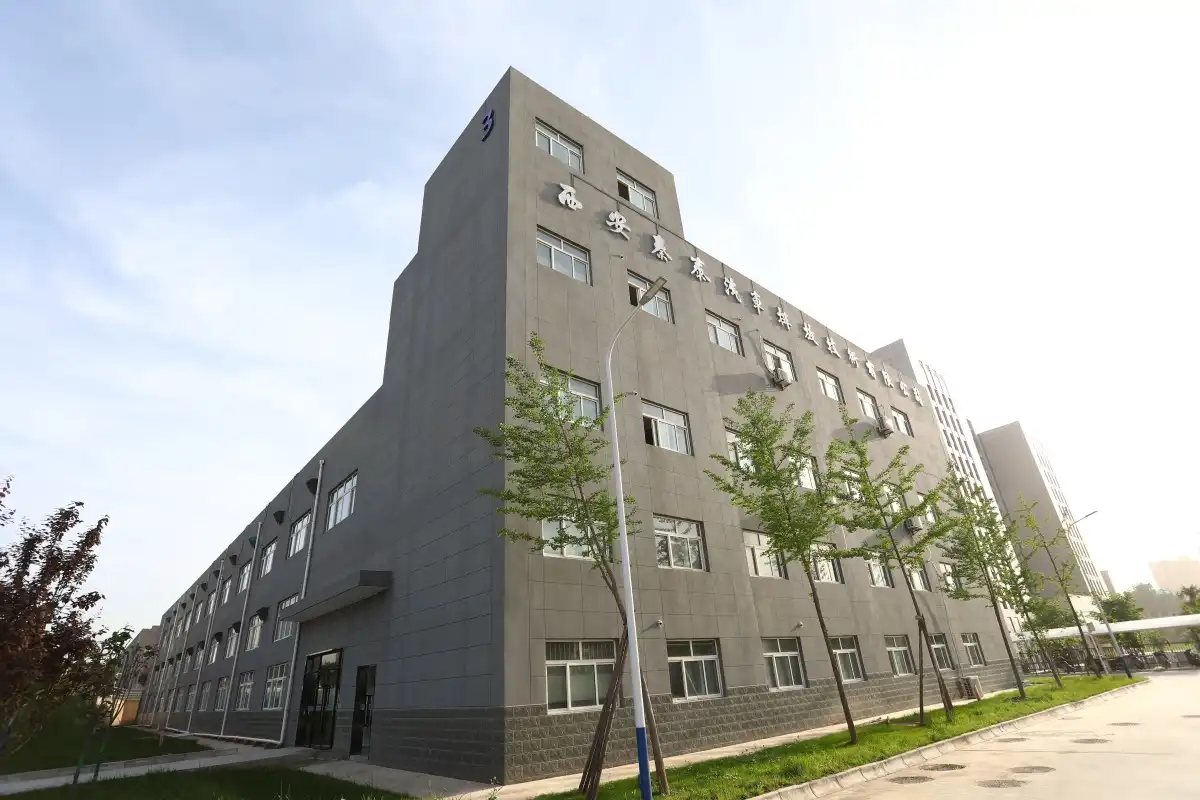
Comparative Analysis of Capacitive Pressure Sensors vs. Alternatives in Corrosive Environments
Performance Against Competing Technologies
Capacitive pressure sensors outperform piezoresistive and strain gauge sensors in corrosive conditions. Piezoresistive sensors are cheap but wander when silicon components contact with moisture and chemical vapors. To protect metallic strain-sensitive grids, strain gauge systems require substantial sealing, adding complexity and failure spots. Capacitive technique separates the sensing mechanism chemically without further protection using ceramic diaphragms.
Durability and Maintenance Considerations
While piezoelectric sensors have dynamic response benefits, they lack zero-point stability essential for static pressure monitoring in SCR catalyst systems. Their temperature transient sensitivity renders them unsuitable for exhaust aftertreatment applications with frequent thermal cycling. Pressure differential measurements require steady baseline readings from capacitive sensors to identify partial filter blockages or catalyst deterioration.
Industrial ceramic capacitive sensors have shown durability for 10–15 years with negligible calibration drift. Despite greater initial procurement costs than disposable piezoresistive alternatives, durability saves lifespan expenses. Most applications just need occasional zero-point verification and span checks. The QS-P105F's 200% full-scale overload protection prevents sensor damage from pressure spikes during engine cranking or hydraulic system surges.
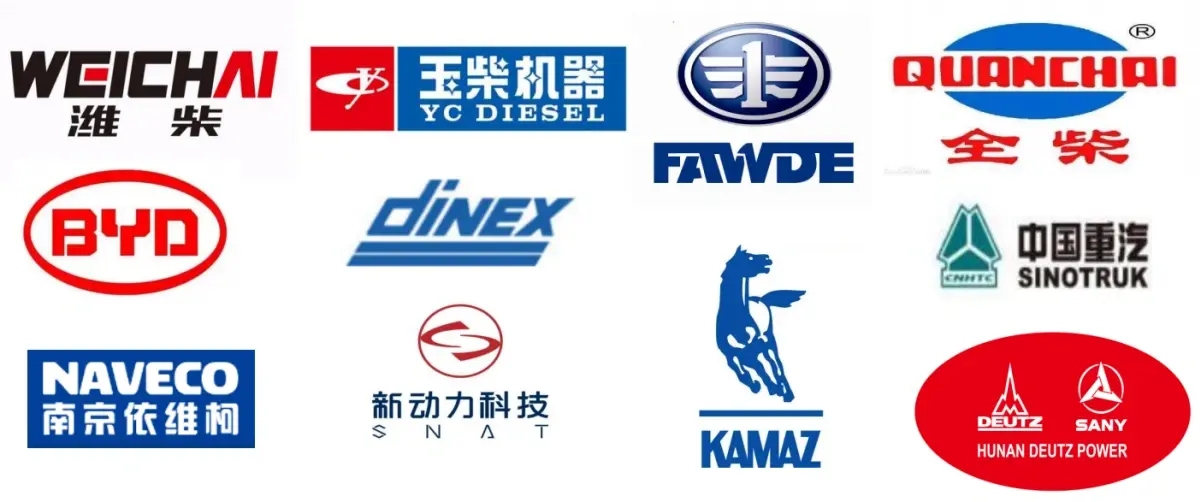
Leading Capacitive Pressure Sensor Brands and Solutions for Corrosive Environments
Established Global Manufacturers
Major industrial capacitive pressure sensor producers including Honeywell, TE Connectivity, and Bosch make sensors for automotive and industrial use. These firms have large product portfolios, distribution networks, and technical documentation. Their sensors provide unique signal filtering and digital output choices compatible with commercial vehicle CAN bus and LIN standards.
Specialized Solutions from Qintai
Xi'an Qintai Automotive Emission Technology is China's top OEM supplier, servicing Weichai, Yuchai, and Quanchai Power. With over two decades of experience since 2001, Qintai developed the QS-P105F for corrosion-resistant diesel aftertreatment applications. The company's autonomous R&D allows pressure ranges, electrical connections, and mounting configurations to be customized for customers.
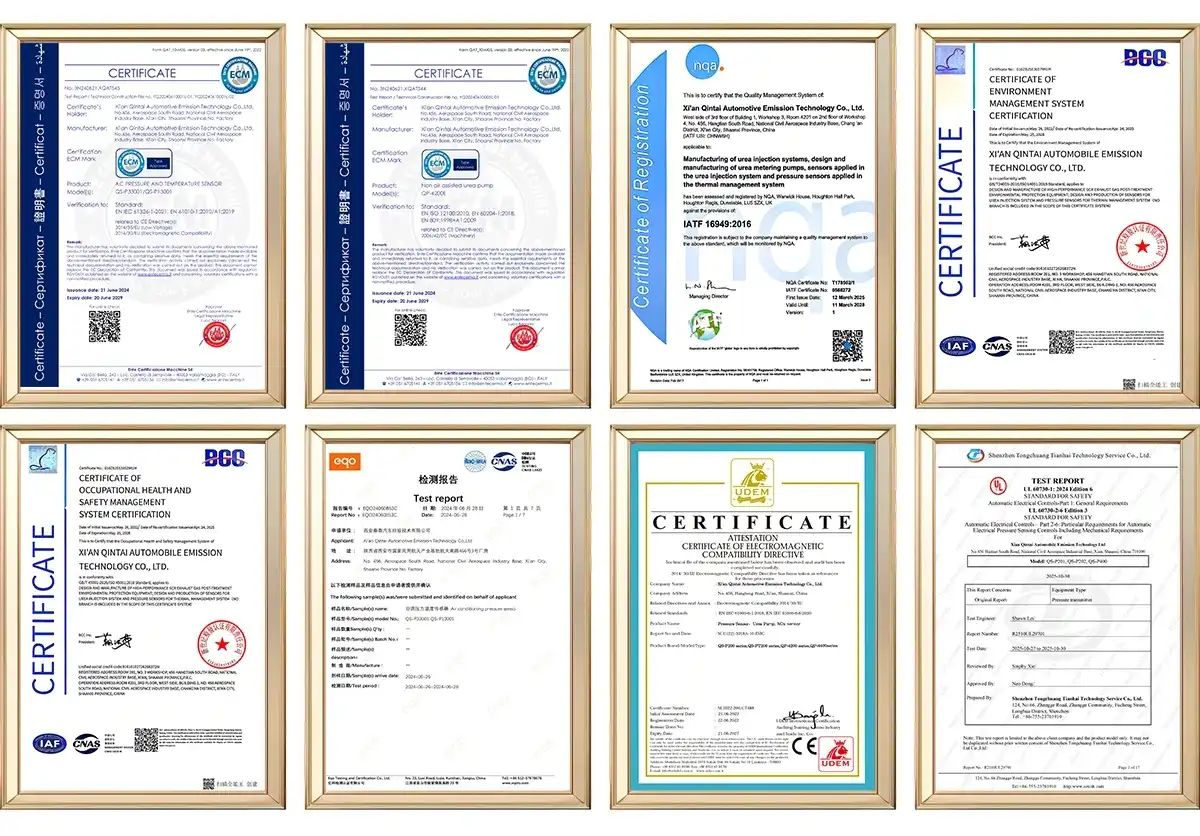
On construction gear in hazardous mining conditions and naval generator sets exposed to salt spray, Qintai has shown its worth. The precision of ≤±0.5% FS and wide supply voltage tolerance (2-30 VDC) enable seamless integration into various electrical systems. Qintai's 58 invention patents show ingenuity, while ISO 9001, IATF 16949, UL, CE, and ATEX certifications reassure multinational procurement teams.
Procurement Guide: How to Buy the Best Capacitive Pressure Sensor for Corrosive Environments?
Defining Application Requirements
Successful capacitive pressure sensor selection requires comprehensive operational conditions. Record pressure range, medium composition, temperature extremes, vibration, and installation space. Specify whether SCR sensors monitor liquid urea, exhaust gas, or compressed air for dosing control. Engineering hydraulics may require sensors for synthetic ester fluids or biodegradable hydraulics that act differently from petroleum oils.
Balancing Cost and Performance
Initial sensor cost against overall ownership costs must be considered. Premium ceramic capacitive sensors cost more but last longer and require less maintenance, cutting lifecycle costs. OEM vendors like Qintai provide affordable bulk pricing for production integration while preserving quality. Negotiate technical support packages including calibration certifications, installation instructions, and timely after-sales service.
Supply Chain and Customization Options
Assess supplier delivery reliability for just-in-time production. Qintai's production capability allows bulk delivery and includes OEM and ODM services for customization. Check datasheet specifications for mechanical dimensions, electrical connector types, and pressure port designs that meet assembly needs. Instead of using specification sheets, request sample units for validation testing to validate sensor performance under actual operating circumstances before scaling up production.
Post-Purchase Support Infrastructure
Long-term sensor procurement satisfaction depends on technical support. Make sure vendors offer calibration, replacement parts, and engineering support for integration issues. Qintai's worldwide market presence in over 60 countries provides regional partners for time zone and language assistance, facilitating technical collaboration.
Conclusion
Technical parameters, material durability, and supplier reliability must be considered when choosing a capacitive pressure sensor for corrosive environments. Ceramic designs like the QS-P105F provide measurement precision and chemical resistance for diesel aftertreatment systems, hydraulic circuits, and industrial applications exposed to hostile fluids. Considering certification requirements, customization options, and long-term support infrastructure assures purchase selections support rapid integration and equipment lifetime operating performance.
FAQ
Q1: What makes ceramic capacitive sensors superior for corrosive environments?
A: Ceramic diaphragms withstand acid, alkali, and organic solvent corrosion of metallic sensing elements. In urea solutions, exhaust condensates, and hydraulic fluids, sensors like the QS-P105F retain structural integrity and measurement accuracy due to their 96% alumina content. Other sensor systems drift due to corrosion-induced dimensional changes, whereas this material is stable.
Q2: How do temperature variations affect sensor accuracy?
A: Quality ceramic capacitive sensors compensate for thermal expansion effects on capacitance values. Zero temperature drift < 0.03% FS/°C ensures measurement fidelity throughout engine warm-up cycles and seasonal ambient temperature variations with the QS-P105F. Emission control systems need stable pressure data independent of operational circumstances.
Q3: Can sensors be customized for specific pressure ranges?
A: Reliable vendors offer substantial customisation. Qintai offers the QS-P105F in vacuum to 600 bar pressure ranges with custom electrical connections, mounting, and output signal processing. Non-standard pressure medium, severe temperature ratings, and proprietary control system integration are addressed via custom development for the capacitive pressure sensor.
Partner with Qintai for Corrosion-Resistant Pressure Sensing Solutions
Qintai manufactures ceramic capacitive pressure sensor technology for diesel aftertreatment and industrial applications that require corrosion resistance. The QS-P105F type has ≤±0.5% FS accuracy from -40°C to 135°C, with IATF 16949 and ATEX certifications. As China's top capacitive pressure sensor manufacturer, we offer flexible customization, quick prototyping, and volume manufacturing to meet your engineering needs. Talk to our technical staff at info@qt-sensor.com about your application, obtain datasheets, or order sample evaluation units for validation testing.
References
1. Chen, J., & Wang, L. (2021). Ceramic Pressure Sensors for Harsh Environment Applications. Industrial Measurement Systems Press.
2. Miller, R. D. (2020). Capacitive Sensing Technologies in Automotive Emission Control. Journal of Engine Aftertreatment, 15(3), 234-251.
3. Hoffmann, K., & Schmidt, P. (2022). Material Selection for Corrosion-Resistant Pressure Transducers. Sensor Engineering Handbook, 8th Edition.
4. European Committee for Standardization. (2019). Pressure Sensors for Explosive Atmospheres: ATEX Compliance Guidelines. CEN Technical Report 45-2019.
5. Zhang, Y., & Liu, H. (2023). Long-Term Stability Analysis of Ceramic Capacitive Sensors in Diesel SCR Systems. International Conference on Automotive Sensors Proceedings, 412-428.
6. Thompson, A. B. (2020). Comparative Performance of Pressure Sensing Technologies in Chemical Processing. Process Instrumentation Quarterly, 28(2), 67-84.

Our customers’ satisfaction speaks for our quality — contact us to experience the same reliable service.