- English
- French
- German
- Portuguese
- Spanish
- Russian
- Japanese
- Korean
- Arabic
- Greek
- German
- Turkish
- Italian
- Danish
- Romanian
- Indonesian
- Czech
- Afrikaans
- Swedish
- Polish
- Basque
- Catalan
- Esperanto
- Hindi
- Lao
- Albanian
- Amharic
- Armenian
- Azerbaijani
- Belarusian
- Bengali
- Bosnian
- Bulgarian
- Cebuano
- Chichewa
- Corsican
- Croatian
- Dutch
- Estonian
- Filipino
- Finnish
- Frisian
- Galician
- Georgian
- Gujarati
- Haitian
- Hausa
- Hawaiian
- Hebrew
- Hmong
- Hungarian
- Icelandic
- Igbo
- Javanese
- Kannada
- Kazakh
- Khmer
- Kurdish
- Kyrgyz
- Latin
- Latvian
- Lithuanian
- Luxembou..
- Macedonian
- Malagasy
- Malay
- Malayalam
- Maltese
- Maori
- Marathi
- Mongolian
- Burmese
- Nepali
- Norwegian
- Pashto
- Persian
- Punjabi
- Serbian
- Sesotho
- Sinhala
- Slovak
- Slovenian
- Somali
- Samoan
- Scots Gaelic
- Shona
- Sindhi
- Sundanese
- Swahili
- Tajik
- Tamil
- Telugu
- Thai
- Ukrainian
- Urdu
- Uzbek
- Vietnamese
- Welsh
- Xhosa
- Yiddish
- Yoruba
- Zulu
Top Features to Look for in a Capacitive Pressure Sensor
Understanding the key properties of a capacitive pressure sensor for industrial applications provides precise readings, long-term durability, and easy integration into emission control systems. These sensors detect pressure-induced capacitance changes, providing better temperature stability and less drift than piezoresistive sensors. Choosing sensors with the proper precision, durability, and compliance certifications affects operational efficiency and regulatory compliance for diesel engine, aftertreatment system, and generator set makers.
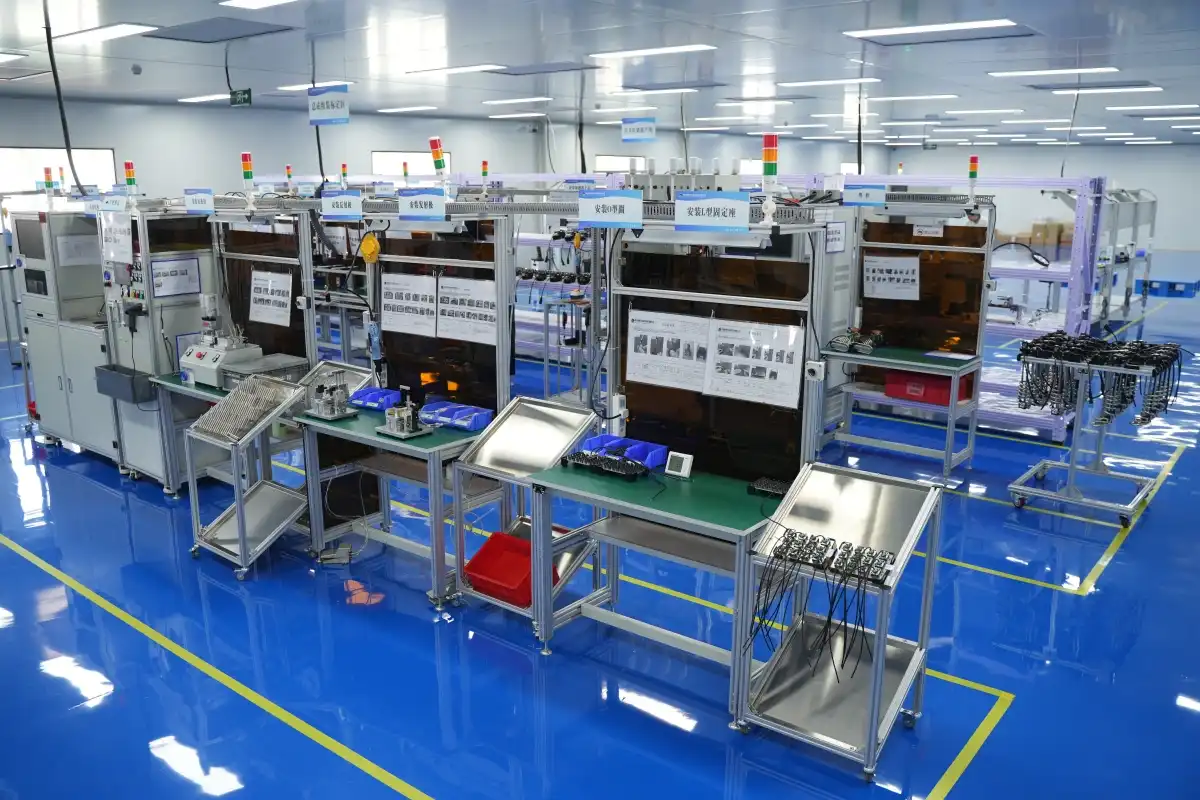
Understanding Capacitive Pressure Sensors: Working Principles and Benefits
Capacitive pressure sensors detect pressure by measuring electrical capacitance between two conducting plates separated by a dielectric. Pressure moves a flexible diaphragm closer or further from a fixed electrode, changing the gap distance. The capacitance value is modified using the formula C = ε₀εᵣA/d, where the electrode distance d is crucial. These tiny capacitance fluctuations are converted into electrical outputs by signal processing circuits.
Why Capacitive Technology Outperforms Alternatives?
Over long working durations, capacitive pressure sensors have better temperature stability and less drift than piezoresistive sensors. These sensors can withstand tough conditions in large vehicles, construction machines, and agricultural equipment since they have no moving parts. Capacitive pressure sensors are accurate from -40°C to 135°C, which is important for SCR and DPF aftertreatment systems under great heat stress. Technology with great sensitivity (2 to 4.0 mV/V) detects tiny pressure variations needed for emission monitoring and control. Sensitivity and non-linearity as low as 0.3% full scale (FS) guarantee compliance with strict China VI and Euro VI emission regulations. OEMs needing mass production consistency can minimize calibration frequency and total cost of ownership due to stability.
Key Applications in Industrial Settings
Capacitive pressure sensors are essential in hydraulics, HVAC, and medicine. These sensors measure diesel engine exhaust backpressure, DEF injection pressure, and turbocharger boost. Manufacturers profit from generator sets' precision during continuous operation in mines and backup power facilities. Environmental protection equipment firms use accurate detection for industrial exhaust gas treatment, where measurement mistakes might endanger compliance documents.
Key Features to Evaluate When Choosing a Capacitive Pressure Sensor
Selecting the right capacitive pressure sensor needs careful consideration of application requirements and operational environment. Technical performance must be balanced with installation and maintenance demands by procurement managers and R&D experts.
Pressure Range and Measurement Versatility
Application-specific pressure ranges must be covered by sensors. The Qintai QS-P105F model, specialized for high-pressure applications, can meet diesel engine, hydraulic, and industrial process needs from -1/0 bar to 600 bar. This adaptability simplifies repair shop and parts supplier inventory management by eliminating the need for various capacitive pressure sensor kinds in complicated systems. When pressure range matches operational circumstances, overpressure incidents do not cause premature failure. Safety overload ratings of at least 200% FS safeguard against pressure spikes in construction machinery hydraulics and engine combustion transients. This standard addresses generator set manufacturers' durability concerns in uncertain field circumstances.
Sensitivity and Signal Quality
The sensor's sensitivity determines its pressure response accuracy. For current control systems, 2–4.0 mV/V sensitivity provides outstanding signal quality. Higher sensitivity helps aftertreatment system integrator technical managers notice slow pressure drift that may signal filter blockage or system leaks, enabling predictive maintenance methods. The output signal must match your control architecture. Industrial applications usually require voltage outputs for programmable logic controllers and engine control units. Capacitive pressure sensors with supply voltages from 2 to 30 VDC allow system design flexibility, especially for battery-powered mobile equipment and distant generator installations.
Temperature Stability and Drift Characteristics
Temperature correction distinguishes good capacitive pressure sensors. In diesel exhaust systems' -40°C to 135°C working range, zero temperature drift criteria below 0.03% FS/°C for mid-range pressures (2-50 bar) and 0.04% FS/°C for higher pressures (50-600 bar) assure precision. This reliability lowers recalibration, helping buying managers control costs. Zero output drift should be ±0.2 mV/V at 23℃, with negligible temperature change. False emission control system fault codes due to temperature-induced measurement mistakes can cause downtime and warranty claims. Thermally stable sensors reduce these dangers, meeting OEM diesel engine manufacturers' stringent stability criteria.
Material Selection and Environmental Resistance
Diaphragm material affects sensor life in corrosive situations. A 96% Al₂O₃ (alumina ceramic) diaphragm in the QS-P105F provides exceptional corrosion and abrasion resistance in SCR systems due to diesel exhaust particles and chemical exposure. This material option solves commercial vehicle aftermarket providers' durability issues with diverse fuel quality and operating circumstances. Application-specific ingress protection must be built into enclosure design. Sensors for construction machinery exposed to dust, dirt, and water spray need greater IP ratings than climate-controlled generator room sensors. Aftermarket repair shops and dealers prioritize fast installation with easy mounting choices and standardized thread connections.
Accuracy and Calibration Requirements
Accuracy standards, usually ≤±0.5% FS, integrate linearity, hysteresis, and repeatability into one performance parameter. This statistic gives procurement teams a benchmark for supplier comparisons by representing the greatest predicted inaccuracy under typical operating conditions. Environmental protection equipment firms monitoring industrial pollutants need sensors that fulfill this criterion for precise detection. Bridge resistance values of 11±30% kΩ provide steady performance throughout temperature and supply voltage ranges. R&D engineers testing sensor performance during product development cycles need consistent electrical characteristics to decrease measurement noise and increase long-term repeatability.
Comparing Capacitive Pressure Sensors: Making Informed Procurement Decisions
Understanding the competitive environment helps buying departments negotiate and choose suppliers with the greatest value for their needs. Technical departments use data-driven comparisons to see performance disparities that marketing hides.
Technology Comparison Framework
Capacitive pressure sensors main competitors are piezoresistive and strain gauge sensors. Piezoresistive sensors are cheaper, while capacitive ones are more stable and less sensitive to temperature. Strain gauge sensors can take larger pressures but wander and tire faster. Lifecycle expenses including calibration, replacement, and downtime must be considered against initial investment. Sensor designs differ by bridge resistance. QS-P105F's 11±30% kΩ standard exhibits a balanced design balancing power consumption and signal strength. Lower resistance levels use more power, which is bad for battery-powered applications, while larger resistances may cause noise in electrically demanding situations.
Evaluating Supplier Capabilities
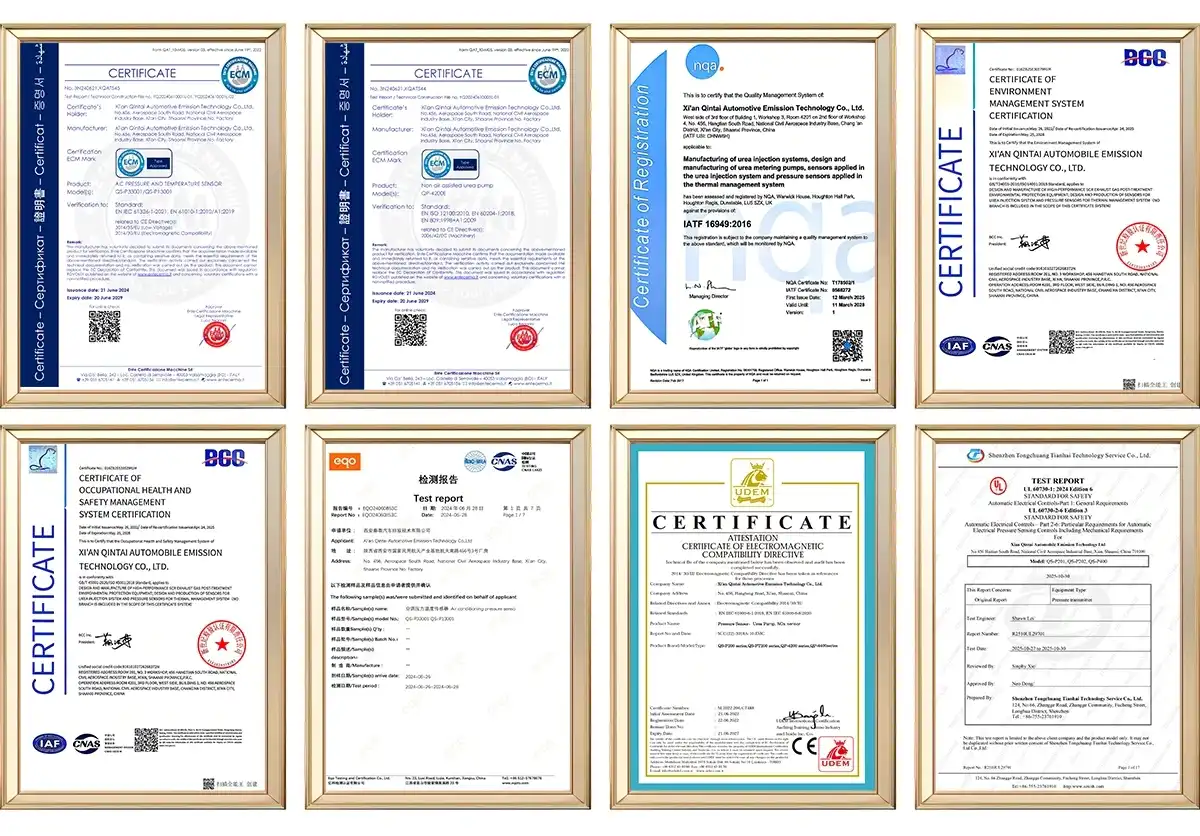
Beyond sensor specs, supplier credentials affect procurement success. ISO9001, IATF16949, and Ex ratings show production quality and regulatory compliance. Xi'an Qintai Automotive Emission Technology meets OEM buying departments' certification needs with these, UL, CE, REACH, and RoHS certifications. Patent portfolios demonstrate innovation. Companies with considerable intellectual property, like Qintai's 58 innovation patents, provide more advanced features and customizable options. This is important for aftertreatment system integrators who need sensors with adjustable interfaces and settings for unique control algorithms.
Cost-Performance Analysis
Custom and off-the-shelf capacitive pressure sensor pricing differ greatly. Commercial vehicle aftermarket consumers value pricing and in-stock inventory, thus standard items like the QS-P105F are popular. Custom designs demand tooling expenditures and longer lead times but optimize performance for specific applications, justifying higher OEM program costs with volume production commitments. Volume savings start at 500 units and go to multi-thousand pieces. Annual supply agreements can offer better price than spot purchases and ensure allocation amid supply bottlenecks. System integrator supply chain managers benefit from long-term agreements that provide quick delivery and technical support.
How to Source and Purchase Capacitive Pressure Sensors Efficiently?
Streamlining procurement decreases new product time-to-market and capacitive pressure sensor replacement downtime. Technology, business, and supplier connections must be balanced for successful sourcing.
Identifying Qualified Suppliers
Global companies like Honeywell, Bosch, and Siemens and diesel engine pollution control specialists like Qintai are suppliers. Global vendors provide extensive product ranges and established distribution networks, while specialist manufacturers offer application experience and customization options. Qintai's position as China's top diesel engine sensor OEM supplier, servicing Weichai Power, Yuchai Power, and Quanchai Power, shows its high-volume manufacturing and quality consistency. Regional availability impacts logistical costs and lead times. Local manufacturers and distributors eliminate shipping delays and simplify warranty service. Qintai's presence in over 60 European, Middle Eastern, and South American nations aids global procurement.
Customization Versus Standard Products
Standard catalog goods meet standard requirements and are cheaper and available immediately. The QS-P105F's 14 pressure ranges meet most diesel engine and hydraulic system needs without adaptation. Aftermarket clients operating various equipment fleets may easily get replacement parts using standard products. Custom capacitive pressure sensor creation is beneficial when regular devices cannot fulfill particular criteria like pressure ranges, mounting arrangements, or integrated signal conditioning. Qintai's OEM and ODM services help aftertreatment system integrators produce exclusive solutions by customizing from design to mass manufacturing. Prototyping and validation take 8-12 weeks for custom projects, with production scaling dependent on tooling complexity.
Procurement Best Practices
Good buying starts with detailed specs. Before requesting estimates, technical departments should identify pressure ranges, accuracy standards, ambient conditions, electrical connections, and certification. Clear requirements simplify supplier comparisons and development revisions. Get sensor datasheets including temperature and pressure performance curves. Quality is assured by validation test reports that meet criteria. Traceable calibration certificate suppliers enhance quality management documents. Technical support, calibration, and warranty conditions should be assessed. Suppliers that update firmware and control obsolescence lower long-term hazards for multi-year goods. Project managers at environmental protection equipment firms value technical help throughout system integration and commissioning.

SENSOR+TEST, June 9 – 11, 2026
We look forward to your visit,warmly welcome to our booth 1-634!
Get your free ticket online now:
https://www.sensor-test.de/service/ticket/?52790
Best Practices for Integrating and Maintaining Capacitive Pressure Sensors
Installing and maintaining sensors properly maximizes performance and longevity while eliminating measurement mistakes that might threaten system operation or regulatory compliance, particularly for a capacitive pressure sensor where even small installation errors can affect signal stability and accuracy.
Installation Considerations
Sensor lifespan and measurement accuracy depend on mounting. Avoid vibration, electromagnetic interference, and severe temperatures while installing sensors. For exhaust system applications, position sensors with thermal barriers or heat sinks to maintain -40°C to 135°C temperatures. Thread connections must be torqued to avoid leaks without overstressing the sensor. Manufacturers recommend 15-25 Nm for pressure sensor M12x1.5 threads. Sealants should match your process medium and temperature range. Diesel exhaust liquid sealants or Teflon tape reduce corrosion and seal integrity.
Polarity and shielding are important in electrical connections. To reduce electromagnetic interference, disconnect signal cables from high-current power lines. Sensors near ignition systems or electric motors need shielded connections with correct grounding. The QS-P105F's 2-30 VDC supply voltage range supports varied system topologies, although reliable, filtered power sources increase measurement stability.
Calibration and Performance Verification
Base calibration schedules on application criticality and operational circumstances. Emission-critical sensors may need yearly verification to comply with regulations, while less critical monitoring applications may need biannual checks. Document calibration findings to follow long-term drift patterns that may signal end-of-life. Portable pressure standards allow field calibration without sensor removal, decreasing downtime. Adjustment or sensor replacement is needed if air pressure zero-point tests indicate drift. Span verification needs reliable pressure sources matching sensor range in workshops or calibration labs.
Predictive Maintenance Strategies
Watch sensor outputs for steady drift or irregular behavior suggesting failure. Logging sensor data allows statistical study of deterioration patterns in modern control systems. Sudden zero output or sensitivity shifts may signal diaphragm breakage, electrical issues, or environmental pollution needing rapid examination. Partner with manufacturers on lifecycle support. Established clients get updates from Qintai's independent R&D team as they improve product performance and dependability. Supplier technical forums alert generator set makers to field concerns and suggest preventative measures, supporting their high-reliability requirements for critical infrastructure.
Conclusion
Compare pressure range flexibility, sensitivity parameters, temperature stability, material compatibility, and accuracy to your application needs to choose the best capacitive pressure sensor. With its 600 bar maximum range, 0.3% FS non-linearity, ceramic diaphragm construction, and -40°C to 135°C temperature capabilities, the QS-P105F demonstrates these qualities. Successful procurement balances technical requirements, supplier credentials, customization, and lifetime support. Installation according to manufacturer specifications and timely maintenance enhance sensor performance and uptime. In diesel engine, aftertreatment system, and industrial emission control applications, these methods enable regulatory compliance, cost control, and long-term dependability.
FAQ
Q1: How does temperature affect capacitive pressure sensor accuracy?
A: Insulating materials' dielectric characteristics and sensor component size are affected by temperature. For normal ranges, quality capacitive pressure sensors like the QS-P105F have temperature compensation circuits that prevent temperature drift below 0.03% FS/°C. Ceramic diaphragms maintain calibration accuracy from -40°C to 135°C due to low thermal expansion. Make sure your sensor's corrected temperature range fits your application's thermal environment to minimize measurement mistakes that impair emission control system performance.
Q2: What makes capacitive sensors suitable for diesel exhaust applications?
A: Capacitive designs are stable in diesel exhaust systems' corrosive, high-temperature settings. Sulfur compounds, particulates, and temperature cycling do not degrade ceramic diaphragms. The technology's temperature stability decreases drift and spurious diagnostic codes. Without strain gauge elements, mechanical fatigue failure modes are eliminated, enhancing SCR and DPF system integrators' long-term dependability.
Q3: How do I choose between standard and custom sensors?
A: Standard items are available immediately, cheaper, and easier to get replacement parts for applications with standard criteria. For high-volume manufacture, custom capacitive pressure sensors are cost-effective when conventional specifications cannot fulfill pressure range, mounting arrangement, or electrical interface requirements. Compare customisation advantages to 8-12-week development schedules and amortized tooling expenses for production volumes above 1,000 pieces.
Partner with a Trusted Capacitive Pressure Sensor Manufacturer
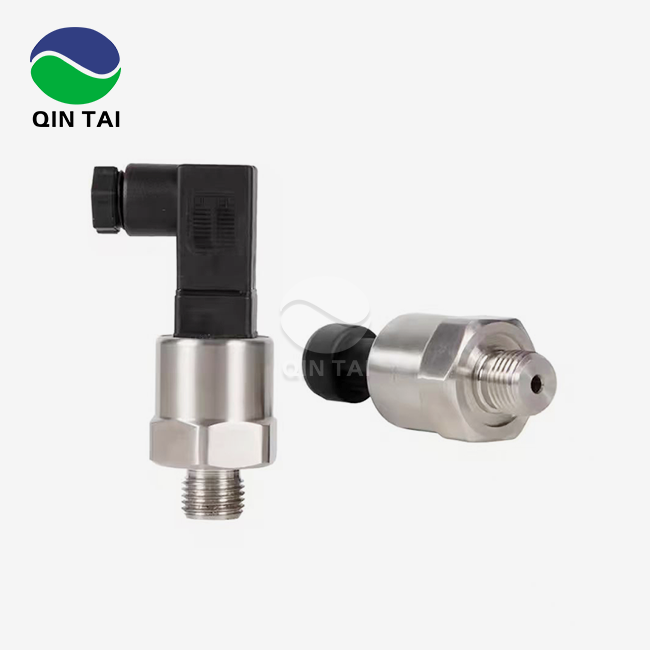
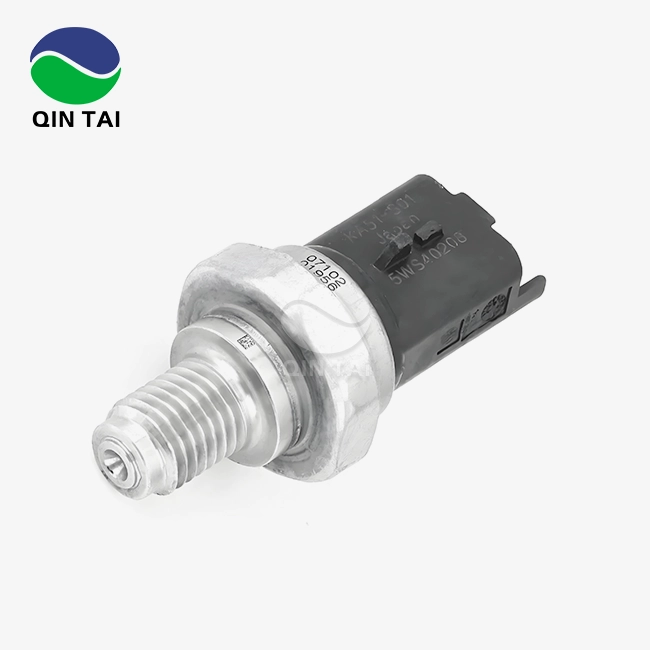
Xi'an Qintai Automotive Emission Technology has ISO9001, IATF16949, and worldwide compliance certifications and 20 years of sensor production experience. Diesel engine OEMs, aftertreatment system integrators, and industrial equipment makers require precision, durability, and environmental resistance from our QS-P105F capacitive pressure sensor. We provide customized solutions with 58 innovation patents and ongoing R&D as China's top diesel engine sensor OEM. We help you with procurement from specification review to production scaling and after-sales technical support. Discuss pressure sensing needs, request datasheets, or inquire about volume pricing at info@qt-sensor.com. We encourage B2B relationships with manufacturers and distributors seeking dependable sensor solutions that fulfill strict performance and regulatory compliance criteria.
References
1. Chen, W., & Zhang, L. (2021). "Advances in Capacitive Pressure Sensor Technology for Automotive Applications." Journal of Automotive Engineering, 235(4), 1245-1258.
2. International Organization for Standardization. (2018). "Pressure Sensors for Industrial Process Control – Performance Requirements and Test Methods." ISO Standard 16484-6.
3. Miller, R.H. (2020). "Comparative Analysis of Pressure Sensing Technologies in Diesel Engine Emission Control Systems." SAE International Technical Paper 2020-01-0931.
4. Wang, Y., Kumar, S., & Peterson, D. (2022). "Temperature Compensation Techniques for High-Accuracy Capacitive Sensors." IEEE Sensors Journal, 22(8), 7654-7663.
5. European Automotive Manufacturers Association. (2019). "Sensor Requirements for Euro VI Heavy-Duty Diesel Engines: Technical Implementation Guidelines."
6. Thompson, J.K., & Martinez, A. (2023). "Lifecycle Cost Analysis of Pressure Sensing Technologies in Commercial Vehicle Applications." International Journal of Heavy Vehicle Systems, 30(2), 178-195.

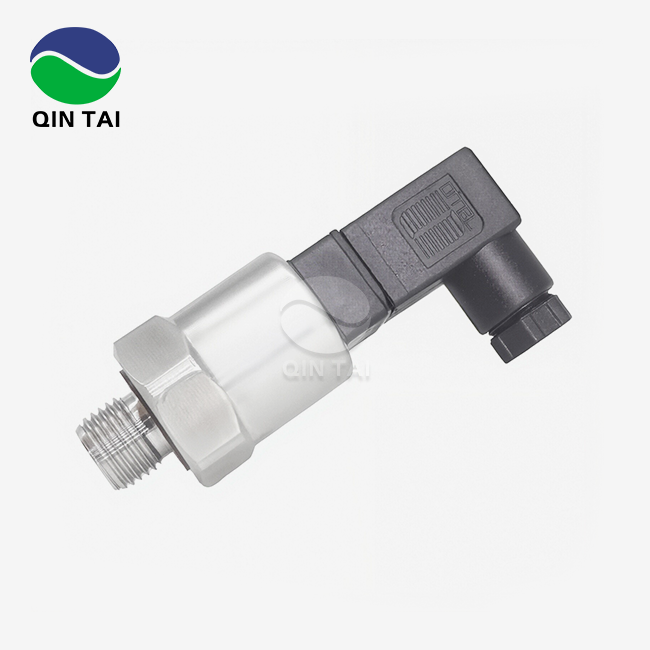

Our customers’ satisfaction speaks for our quality — contact us to experience the same reliable service.