- English
- French
- German
- Portuguese
- Spanish
- Russian
- Japanese
- Korean
- Arabic
- Greek
- German
- Turkish
- Italian
- Danish
- Romanian
- Indonesian
- Czech
- Afrikaans
- Swedish
- Polish
- Basque
- Catalan
- Esperanto
- Hindi
- Lao
- Albanian
- Amharic
- Armenian
- Azerbaijani
- Belarusian
- Bengali
- Bosnian
- Bulgarian
- Cebuano
- Chichewa
- Corsican
- Croatian
- Dutch
- Estonian
- Filipino
- Finnish
- Frisian
- Galician
- Georgian
- Gujarati
- Haitian
- Hausa
- Hawaiian
- Hebrew
- Hmong
- Hungarian
- Icelandic
- Igbo
- Javanese
- Kannada
- Kazakh
- Khmer
- Kurdish
- Kyrgyz
- Latin
- Latvian
- Lithuanian
- Luxembou..
- Macedonian
- Malagasy
- Malay
- Malayalam
- Maltese
- Maori
- Marathi
- Mongolian
- Burmese
- Nepali
- Norwegian
- Pashto
- Persian
- Punjabi
- Serbian
- Sesotho
- Sinhala
- Slovak
- Slovenian
- Somali
- Samoan
- Scots Gaelic
- Shona
- Sindhi
- Sundanese
- Swahili
- Tajik
- Tamil
- Telugu
- Thai
- Ukrainian
- Urdu
- Uzbek
- Vietnamese
- Welsh
- Xhosa
- Yiddish
- Yoruba
- Zulu
Best OEM Pressure Sensor Solutions for Truck Manufacturers
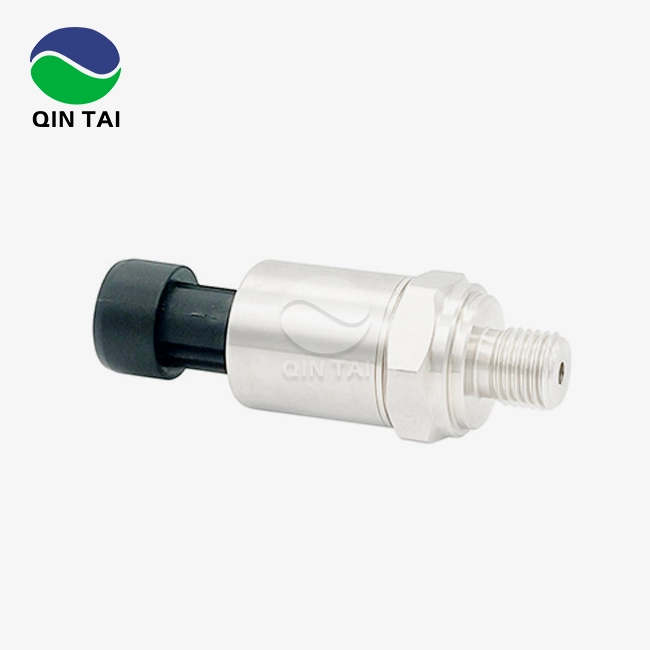
When truck manufacturers look for the best OEM pressure sensor choices, they should pick parts that are trustworthy, follow the law, and last a long time. High-performance pressure sensors send accurate data in real time to the engine management, brake systems, and pollution control. This has a direct effect on how safe and fuel-efficient the car is. New technologies from top sources now include approved, flexible sensor designs that meet strict emission standards such as China VI and Euro VI. These designs include capacitive and strain gauge types. For mass production needs, working with a maker with a lot of experience ensures smooth integration, strong technical support, and prices that are affordable. In the end, this will make your supply line better and your long-term relationship stronger.

Introduction
Each and every part of making a truck has to be done very precisely, and pressure sensors are a key part that determines how safe, reliable, and efficient the truck is. These sensors turn pressure from the body into electrical signals. This lets you see what's going on with the engine, brakes, gas, and pollution control right now. As laws get tighter around the world, especially the China VI and Euro VI pollution standards, OEM pressure sensors have to meet very strict requirements in order to get approved. They also have to be very stable and consistent.
This in-depth buying guide is made for OEM clients, purchasing managers, and R&D experts. It talks about the different kinds of sensors, how to pick the best ones, the difficulties of putting them together, and the best market choices in 2026. We talk about the technical needs, licenses, and ways to save money that buying teams look at. We also talk about the best ways to set up, adjust, and take care of tools. You can use this information to make smart decisions that will improve the quality of your goods, whether you make big trucks, building equipment, farm equipment, or generator sets. It will also help you build long-term relationships with reliable sensor providers.
Understanding Pressure Sensors in Truck Manufacturing
Fundamental Working Principles and Sensor Types
They turn physical pressure into electrical data that can be used to track and control things in real time. Pressure sensors are the most important parts of many truck modules. These tools' main job is to weigh force per unit area and change that mechanical input into electricity, current, or digital information. Today, three main types of sensors are used in truck systems: piezoelectric, capacitive, and strain gauge. There are times and ways to use each type that it works best.
Pressure sensors that use capacitance can change the amount of capacitance between two electrical plates. If pressure from outside bends a bendable diaphragm, it changes how far apart the sensors are. The capacitance numbers change because of this. To find them, use the formula C = ε₀εᵣA/d. Capacitive sensors are great for exact jobs like tracking fuel pressure and electronic control units because they are very accurate and don't change much with temperature. Because they don't have any moving parts, their simple design makes them very long-lasting and low-power. This makes them perfect for fleet management systems and services that run on batteries.
When a force is applied to a piezoelectric pressure sensor, it quickly responds by making an electrical charge. Because of this, they can be used to check the dynamic pressure in fuel tanks and for hydraulic movement. Strain gauge sensors, on the other hand, use changes in resistance to measure how much something has changed because of pressure. They do a good job in tough places like engine controls and exhaust systems. The right type of sensor is picked based on how accurate it needs to be, how fast it can react, what temperature range it can work in, and how well it works with the car's current electronics.
Critical Use Cases in Truck Systems
Pressure sensors are an important part of many truck parts. The people in charge of the engine keep an eye on the turbocharger's boost levels, the backpressure in the exhaust, and the pressure in the intake pipe. This lets them time the fuel pump perfectly and find the best mix of air and fuel. The way the fuel goes, the amount of power it makes, and how well it meets pollution guidelines are all affected by these rules. This is why it's so important for sensors to be accurate if you want to meet China VI and Euro VI guidelines.
Pressure sensors in stopping safety systems regulate hydraulic circuits, air brake lines, and anti-lock braking systems. The brakes work well, the force is spread out evenly, and the truck stays stable thanks to real-time pressure readings. These things are all very important for keeping big trucks safe. The right pumping pressure is kept at by sensors in the fuel system. These sensors also find leaks and keep the fuel from running out. In building and farming tools, on the other hand, steady pressure sensing is used to make sure that the loader arms, tilting systems, and transmission shifting all work together.
Environmental Factors and Calibration Best Practices
In trucks, sensors are often near parts of the engine that can get as hot as 125°C in the summer and as cold as -40°C in the winter. Shaking from rough ground and pollution from chemicals, dust, and water are other things that put sensors to the test. When this happens, capacitive sensors work best because they don't change with temperature and are sealed. On the other hand, piezoelectric and strain gauge sensors need to be placed carefully and have housings that protect them.
Procedures for calibration make sure that readings are correct for as long as the sensor is used. Performance is set by the first setting in the machine. Field adjustment should be done every 12 to 18 months, though, to account for things like weather change, wear and tear, and getting older. These days, diagnostic tools that can be moved around and digital platforms make it easy to make changes on-site. This keeps things running smoothly and meets OEM standards.

Challenges Truck Manufacturers Face with OEM Pressure Sensors
Prevalent Failure Modes and Installation Issues
It can be hard to trust the data and stability when pressure sensors are put in tough truck environments. Signal drift is one of the most common types of failure. This is when a sensor's output slowly moves away from its true pressure values due to damage, contamination, or changes in temperature. If you shake, shock, or use too little force when installing a sensor, the case could crack or the internal parts could become out of alignment. This could lead to results that are all over the place or the sensor failing completely.
Installing things correctly can be hard if the seals aren't good or if the parts are mounted in the wrong place or with bad electricity. If you don't seal ports well, moisture can get in and damage electronics and insulation. Also, sensors that aren't placed properly can bend when they're put under forces they weren't designed to handle. Sensor data can be messed up by electrical noise from nearby alternators, ignition systems, and wireless communication units. This can lead to less accurate readings and wrong diagnosis codes.
Durability and Latency in Harsh Settings
In some situations, standard wired sensors may not last as long when exposed to changes in temperature, chemicals, or mechanical shaking. If the temperature of a cable changes, the covering could crack. This would let the wires rust and cause short circuits. Nowadays, most sensor designs have very low latency. However, latency can be a problem if signal processing circuits add delays or if data transfer methods store readings before they get to control units. In safety-critical cases, delays of even a few microseconds are not acceptable for real-time engine and brake systems that need pressure input right away.
Maintenance Protocols and Sensor Integrity
Sensors need to be carefully adjusted and regularly kept so that they keep working right over time. Regularly check the fixing pressure specs, clean the connectors, and make sure the wires stay connected. It is possible to find early signs of signal drift with diagnostic tools. This lets you repair sensors before they stop working and make the car unsafe to drive. With conformal coats, airtight seals, and stainless steel housings, you can protect the environment and make things last longer in places that are harsh or harmful.
Manufacturers can make it easier to put their pressure sensing systems, choose strong sensors, and fix them in ways that make them last longer and work better if they know about these issues. These risks are even lower when you work with suppliers who offer full expert help and quick after-sales service. This ensures that production doesn't stop and that the seller will be reliable in the long term.
How to Select the Best OEM Pressure Sensors for Truck Manufacturing?
Defining Critical Procurement Criteria
You need to look at how accurate it is, how fast it responds, how reliable it is, and how well it works with other systems to find the best pressure sensor. Teams that buy things should decide on performance standards based on what each program needs. For instance, fuel injection systems need to be accurate to within ±1% and have response times below 1 millisecond. Hydraulic sensing, on the other hand, might be able to handle larger errors. The sensors must work with the car's hardware in terms of temperature, pressure, and the type of data they send (analog voltage, current loop, or digital bus protocols).
It's still very important to get certified, especially for OEMs that work with areas that are controlled. If a company gets ISO 9001 or IATF 16949 certification, it means that they follow quality control standards when they make things. They also have to meet safety and environmental standards like Ex, UL, CE, REACH, and RoHS. You need sensors that work well with SCR aftertreatment systems, DPF regeneration controls, and NOx sensing units in order to meet the pollution guidelines for China VI and Euro VI.
Cost control makes sure that the initial price of sensors is equal to their total cost of ownership, which includes the work needed to install them, the number of times they need to be calibrated, the number of times they break, and the coverage of the warranty. Deals with suppliers that last a long time and buy in bulk can save you money and keep your prices fixed even when the market changes. It is very important for just-in-time manufacturing that wait times and inventory levels stay the same. One way to do this is to see if a source can handle mass production.
Comparing Sensor Technologies for Truck Applications
Because they are reliable, don't change much with the weather, and don't use much power, capacitive sensors are good for electrical control units, keeping fuel pressure in check, and keeping track of emissions. They will last a long time since they don't have any moving parts. But in order to work with older car systems, they might need special devices for signal conditioning.
These sensors are great for getting readings in real time for things like tracking shaking and analyzing combustion because they answer quickly and can pick up a wide range of frequencies. It's more difficult to set up because they are more affected by weather and might need charge boosts. Strain gauge sensors can handle high heat and mechanical stress, so they can work well in tough situations. But they might move over time, so they need to be adjusted often.
Wireless Versus Wired Technologies
Wired sensors are still the norm in the business world because they are stable, don't mess up radio waves, and don't have any lag. Wireless choices are attractive for retrofitting and complicated setups, but they raise concerns about the safety of the signal, how quickly they respond, and how long the batteries last. Manufacturers need wired links to work reliably in safety-critical systems like engine control and braking. On the other hand, wireless options may be better for tracking chores like checking tire pressure and package weight.
Customized ideas help match sensor specs to specific truck systems. For example, engine controls must be able to work in a range of temperatures and not be affected by vibrations. On the other hand, tracking emissions must be stable over time and be accepted by regulators. It's easier to make changes to mounting ports, electrical connections, and calibration factors when sources are involved early in the planning process. This makes sure that everything works well and fits together perfectly.
Top OEM Pressure Sensor Solutions Available in 2026 for Truck Manufacturers
Leading Sensor Manufacturers and Product Portfolios
In the market for OEM pressure sensors in 2026, there are good ones from both big-name brands and smaller, more specialized ones. There are many piezoresistive, capacitive, and MEMS-based devices made by Honeywell that can be used in both vehicles and factories. Bosch has worked in the car business for a long time and now makes small sensor units that measure pressure, temperature, and flow all at the same time. The sensors that TE Connectivity makes are tough and can work in rough circumstances. Inside, they are made of stainless steel and have airtight seals that keep dirt and mechanical shock out.
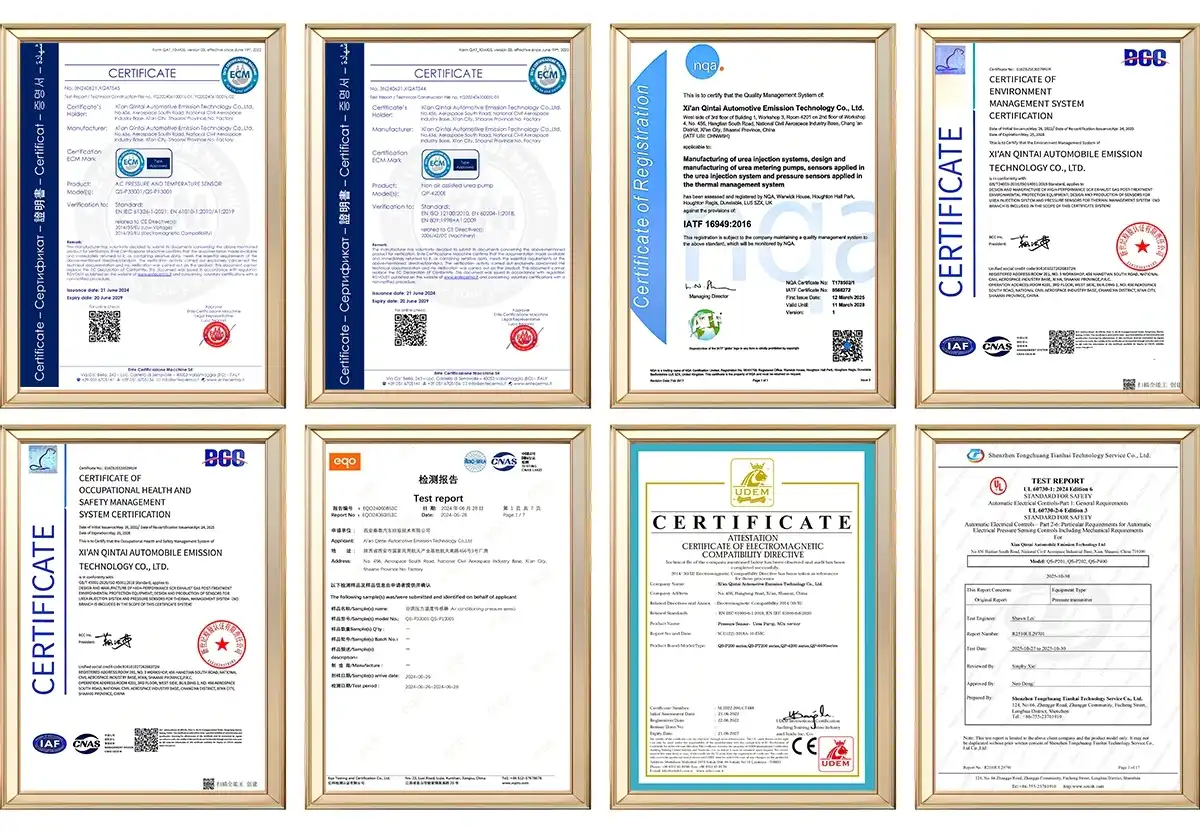
Xi'an Qintai Automotive Emission Technology is a national high-tech business that has been around since 2001. They focus on building full sensor systems and SCR aftertreatment for diesel engines. It has filed for 58 invention patents and has ISO 9001, IATF 16949, CMC, Ex, UL, CE, REACH, and RoHS certifications. On top of that, Weichai Power, Yuchai Power, and Quanchai Power buy most of their parts from this company. It also has the biggest share of the Chinese market. They have a separate research and development team that always thinks of new ways to improve their goods and make them tougher. You can also get full OEM and ODM services from them, which let you make creative changes based on the use and customer wants.
Key Technical Specifications and Certifications
When you look at different sensing choices, you need to make sure that the technical features fit the purpose. To track an input pipe, the pressure range is typically between 0 and 5 bar. For fuel injection systems that use a shared rail, the pressure goes from 0 to 2000 bar. It goes from ±0.25% full scale for accurate engine control to ±2% for support systems that aren't as important. The temperature range should be from -40°C to +125°C for general use. Sensors that are set to +150°C should be used for the exhaust and compressor systems.
Analog voltage (0–5 V), current loop (4–20 mA), and digital standards like CAN bus, LIN bus, and SENT are some of the signal types that can be sent. Electrical plugs need to be able to handle being outside and shaking. Different Deutsch, AMP, and custom-molded forms have different seals and life spans. Response times of less than 1 millisecond are best for dynamic flame sensing. On the other hand, hydraulic and stop systems can handle delays of 5 to 10 ms.
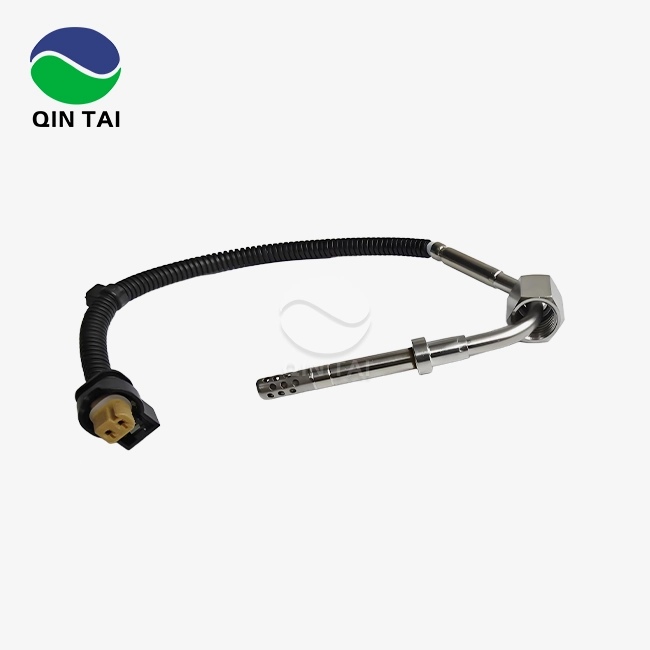
Getting certified in a field is a sure way to be successful and follow the rules. In the auto industry, IATF 16949 makes sure that quality management is followed. Ex approval lets it be used in places that could explode, like fuel systems, and REACH and RoHS compliance make sure that there are no dangerous materials present. A lot of tests are done on emission control sensors to make sure they are stable, accurate, and able to connect to SCR, DPF, and NOx sensing systems.
Strategic Procurement and OEM Partnerships
You can save money and keep the supply line stable if you buy in bulk. Some of the best sellers use tiered pricing to reward customers who buy in bulk. Others use exchange inventory programs to lower their need for working capital and protect themselves against changes in demand. Sensors are made to work perfectly with certain car designs with the help of customization services that do everything from changing connectors and attaching brackets to software tuning and calibration changes.
When you work with an OEM strategically, you do more than just offer parts. Some of these are shared testing programs, research and development that is done together, and the creation of next-generation sensing technologies together. It's possible to find suppliers like Qintai in more than 60 countries around the world. These suppliers offer fast expert support, on-site training, and delivery of new parts, which helps keep production going without stopping.
Installation, Calibration, and Maintenance Best Practices for Truck OEMs
Step-by-Step Installation Checklist
For sensors to work at their best, they need to be installed properly. To begin, make sure that the pressure range, output signal, and connection type of the sensor model you choose are right for the job. On top of that, make sure it works with the car's computer controls. Clean the fitting surface well to get rid of oil, dirt, and old gasket material. This will make sure the contact is flat and doesn't leak.
Make sure you use the right thread sealer or gasket by following the maker's instructions. Also, don't use too much of it because it could get into the pressure port. To tighten the sensor to the recommended level (10 to 20 Nm), use a tool that has been checked for accuracy. If you don't tighten it enough, the case could crack. If you do it too tight, water could leak out. Wires that carry electricity should not be near heat sources, sharp edges, or parts that move. They need to be held in place with clamps that don't move and have a way to release stress at the link.
Before you hook up the sensor to the car wiring, make sure the pins are set correctly and that the link locks securely. Cover open parts with heat-shrink tubes or rubber boots to keep water out. Check the signs, output range, and error codes with repair tools before you start putting the car together.
Calibration Protocols and Service Intervals
Over the life of a pressure sensor, calibration keeps readings correct. If the pressure sensor isn't calibrated in the field every 12 to 18 months, it won't be able to keep up with changes in the environment or wear and tear. Techs can use current diagnostic tools that connect to car control units to compare pressure sensor outputs to reference standards and automatically apply correction factors.
One way to calibrate a pressure sensor is to set the zero point, which is done with no pressure applied, and another way is to use exact pressure sources that can be traced back to national standards for span calibration. Some newer pressure sensors can check for drift and let you know when they need to be adjusted through internal readings. This keeps them up to OEM standards and cuts down on unnecessary downtime.
Preventative Maintenance and Troubleshooting
Regular checks should be made on the cleanliness of the connectors, the stability of the wires, and the mounting pressure. You can see rust, damage, and fluid leaks by looking at the holes in the sensors. If you clean the joining pins with contact cleaner and cover them with dielectric grease, they won't rust and the electrical links will be strong.
For starters, you need diagnostic check tools that can read live sensor data, error codes, and past trends. Data could be wrong if there are open connections, electromagnetic interference, or issues inside the sensor. This could mean that the parts are old or that the equipment needs to be adjusted. On the other hand, rapid breakdowns are generally caused by damage or issues with the electricity.
Sensors last longer when they are kept away from the surroundings. Electronics are kept clean and dry by conformal coats, pressure media are kept out of electrical spaces by airtight seals, and strong chemicals don't damage stainless steel housings. When they're ready, software updates improve the way devices work, add ways to fix problems, and make sure they can work with new electronics in cars.
This is the best way to make sensors last longer, keep readings correct, and lower the number of breaks that happen out of the blue. This makes production go more easily and makes sure that cars work well.
Conclusion
To find the best OEM pressure sensor choices for truck manufacturers, they need to strike a balance between technical performance, legal compliance, cost control, and the reliability of the source. Each type of sensor—capacitive, piezoelectric, and strain gauge—is better at certain tasks, such as controlling an engine precisely or keeping hydraulics in place. To get reliable real-time data and sensors that work for a long time, you need to know how to put them, how to calibrate them, and how to keep them in good shape. You can be sure of smooth integration, quick help, and low prices when you work with qualified providers like Qintai. They have their own research and development teams, a lot of certifications, and long-term relationships with OEMs. When you buy things strategically and work with your sellers, you can make better products and build stronger long-term relationships.
FAQ
How often should pressure sensors be calibrated to maintain accuracy?
How long it takes to calibrate something relies on how important it is and how it is being used. Field testing should be done about every 12 to 18 months, to account for changes in the weather and wear on the tools. Some systems, like brakes, need to be checked more often than others. Systems that don't need to be checked as often can wait longer. They can tell you when they need to be adjusted, which keeps you from having to deal with unplanned downtime and makes sure you're following the rules.
What is the difference between pressure sensors and pressure transducers?
Transducers and pressure sensors both do the same thing, but transducers generally have signal processing gear built in that turns the raw output from sensors into electrical signals that control systems can understand, such as voltage, current, or digital data. An outside source may be needed to boost and clean up the raw analog data that sensors send out. This difference helps the people who buy parts pick parts that work with the car's computer system and makes it easy to put them together.
Are wireless pressure sensors reliable for truck manufacturing applications?
Standard wired options are still the best choice for safety-critical systems because they work regularly, don't have delay, and don't get messed up. Wireless sensors are easy to set up and can be added at any time. Wireless systems have to deal with issues like batteries that last a long time, messages that are safe, and systems that act fast. You can track more things with wireless technologies, like tire pressure and load weight. But you need wired links for stops and engine settings because they are more reliable.
Partner with Qintai for Industry-Leading Pressure Sensor Solutions
Qintai makes certified, high-performance pressure sensors for companies that make diesel engines, install aftertreatment systems, and make industrial vehicles. Sensor options that can be changed to fit your needs are made by our independent research and development team. There are 58 invention patents, ISO 9001, and IATF 16949 that back up these answers. Weichai, Yuchai, and Quanchai Power all choose us as their top OEM provider in China. We can help you improve your supply chain and make sure it works well in the long term by making a lot of things quickly and on a big scale. You can talk to our team about your pressure sensor needs, get full technical datasheets, or get low bulk prices by emailing info@qt-sensor.com.
References
1. Johnson, M. (2023). Automotive Sensor Technologies: Design, Integration, and Performance. SAE International Press.
2. Liu, H., & Zhang, Y. (2022). "Pressure Sensor Applications in Heavy-Duty Diesel Engines: A Comprehensive Review." Journal of Automotive Engineering, 236(4), 512–527.
3. Smith, R. (2024). OEM Component Procurement Strategies for Commercial Vehicle Manufacturing. Industrial Press.
4. Wang, L., et al. (2023). "Capacitive Pressure Sensor Performance in High-Temperature Automotive Environments." Sensors and Actuators A: Physical, 348, 113–122.
5. European Automobile Manufacturers Association. (2023). Euro VI Emission Standards: Technical Requirements and Compliance Testing. Brussels: ACEA Publications.
6. National Institute of Standards and Technology. (2022). Calibration and Measurement Best Practices for Industrial Pressure Sensors. NIST Special Publication 1200-15.

Our customers’ satisfaction speaks for our quality — contact us to experience the same reliable service.