- English
- French
- German
- Portuguese
- Spanish
- Russian
- Japanese
- Korean
- Arabic
- Greek
- German
- Turkish
- Italian
- Danish
- Romanian
- Indonesian
- Czech
- Afrikaans
- Swedish
- Polish
- Basque
- Catalan
- Esperanto
- Hindi
- Lao
- Albanian
- Amharic
- Armenian
- Azerbaijani
- Belarusian
- Bengali
- Bosnian
- Bulgarian
- Cebuano
- Chichewa
- Corsican
- Croatian
- Dutch
- Estonian
- Filipino
- Finnish
- Frisian
- Galician
- Georgian
- Gujarati
- Haitian
- Hausa
- Hawaiian
- Hebrew
- Hmong
- Hungarian
- Icelandic
- Igbo
- Javanese
- Kannada
- Kazakh
- Khmer
- Kurdish
- Kyrgyz
- Latin
- Latvian
- Lithuanian
- Luxembou..
- Macedonian
- Malagasy
- Malay
- Malayalam
- Maltese
- Maori
- Marathi
- Mongolian
- Burmese
- Nepali
- Norwegian
- Pashto
- Persian
- Punjabi
- Serbian
- Sesotho
- Sinhala
- Slovak
- Slovenian
- Somali
- Samoan
- Scots Gaelic
- Shona
- Sindhi
- Sundanese
- Swahili
- Tajik
- Tamil
- Telugu
- Thai
- Ukrainian
- Urdu
- Uzbek
- Vietnamese
- Welsh
- Xhosa
- Yiddish
- Yoruba
- Zulu
Capacitive pressure sensors in automotive air brake systems
Capacitive pressure sensors are now necessary for all current air brake systems in cars, as they ensure safety and accuracy. These sensors find out how much pressure there is by picking up changes in capacitance that happen when force is put on the diaphragm. When added to air brake circuits, they check the pressure in the brake chamber, the stability of the supply line, and the response of the system in real time. This lets quick fixes be made that keep the brakes from failing. Because they are so sensitive, stable at all temperatures, and well-built, they are the best choice for big trucks, building equipment, and business teams that have to work in tough circumstances.
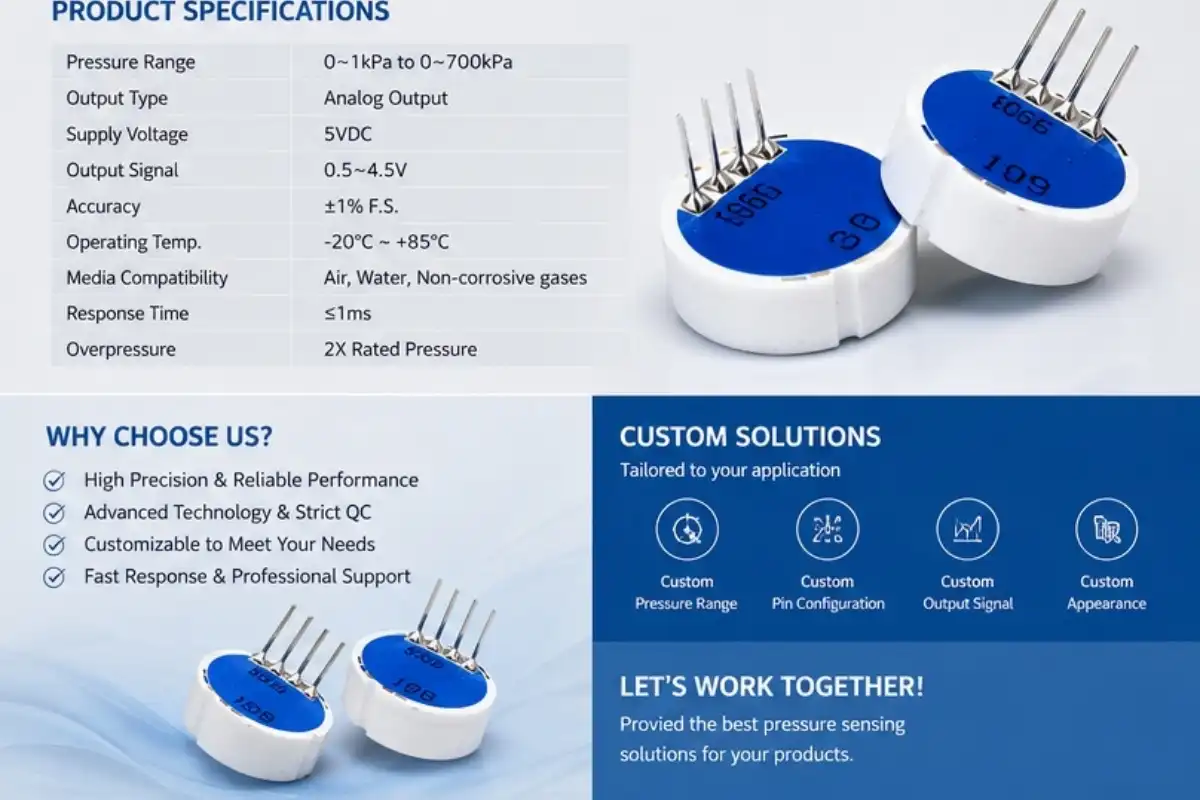
Understanding Capacitive Pressure Sensors in Automotive Air Brake Systems
A simple but clever idea behind capacitive pressure sensors: they have a cushion that can bend and a set electrode that is split by a dielectric material. When you put pressure on the diaphragm, it changes the space between the electrodes. This changes the capacitance directly, as shown by the formula C = ε₀εᵣA/d. In this equation, d stands for the distance between the electrodes. Even small changes in this gap can cause capacitance shifts that can be measured. Specialized circuits then boost these changes and turn them into electrical signs that can be read.
Core Components and Operating Mechanism
The diaphragm, which is usually made of stainless steel or silicon-based alloys, bends in response to the amount of stop air pressure that is applied. This movement makes the electrodes closer together, which raises the capacitance. When the pressure drops, on the other hand, the diaphragm goes back to where it was, which makes the gap bigger and the capacitance smaller. In more advanced systems, two capacitors work together to improve accuracy and account for interference from the surroundings. This is called differential capacitance setup. The fixed electrode stays attached to a hard ceramic or silicon base. This keeps the dimensions stable even when heavy-duty cars shake and heat up and cool down.
Signal Conditioning and Data Output
Changes in raw capacitance are very small and can only be used with precise signal processing circuits. Integrated capacitance-to-digital translators boost these signals, remove electromagnetic noise, and level out the output so that it can be understood consistently. A lot of industrial-grade sensors have analog outputs that range from 0V to 10V or 4V to 20mA. This makes it easy to connect them directly to electronic control units (ECUs) and programmable logic controllers (PLCs) in vehicles. More and more, digital communication methods like I²C or CAN bus are being used to send data more quickly and do tests in real time, which are important for features like advanced driver assistance systems (ADAS) and automatic stopping.
Advantages Over Alternative Sensing Technologies
Capacitive sensors are more sensitive and have less distortion than piezoresistive or strain gauge sensors. This means that they return to normal readings more consistently after pressure cycles. They stay accurate over a wide temperature range, from -40°C to +125°C, without drifting much. This is an important trait for cars that work in cold places like the Arctic or hot places like the desert. Because they have a simple mechanical structure, they have fewer parts that wear out quickly. This lowers the cost of long-term upkeep and makes the system more reliable overall. These features are great for diesel engine makers and aftertreatment integrators who need to meet strict emission standards and make sure that the quality of mass output is always the same.
Technical Insights: Features and Calibration of Capacitive Pressure Sensors
Pressure sensors work best in safety-critical air brake uses when they are accurate and reliable. Capacitive pressure sensors are usually accurate to within ±0.5% of full scale and reliability is better than 0.1%. This means that data for brake pressure stay the same after millions of rounds. This level of accuracy helps make sure that the stopping systems for business vehicles in the US and Europe follow the rules set by FMVSS 121 (Federal Motor Vehicle Safety Standard) and ECE-R13.
Temperature Compensation Techniques
In automotive settings, sensors are exposed to sudden changes in temperature, which can make things expand and electrical parts move around. Some good capacitive sensors have temperature adjustment built in. These use reference capacitors or thermistors to change the output signal in real time. During manufacturing, calibration includes recording sensor reactions across the operating temperature range and putting correction factors into microcontrollers that are built into the sensors. This process makes sure that pressure readings are correct no matter if the vehicle is sitting in freezing weather or pulling heavy loads through hot terrain.
Interpreting Datasheets for Procurement Decisions
When procurement managers and R&D workers look over sensor datasheets, they need to look at a number of important factors. The pressure range that works best is very important. Most air brake systems work between 0 and 150 psi, so sensors should be able to handle this range with some extra room for safety. Response time, which is usually less than 10 milliseconds, makes sure that the ECU gets the info it needs in time to change the brake force during emergency stops. Overpressure tolerance, which is usually 2–3 times the recommended limit, keeps the sensor from getting damaged when the system doesn't work right or when the pressure goes up. Electrical specs like source voltage, current draw, and output signal type need to match up with how vehicles are built now so that expensive redesigns aren't needed.
Calibration Protocols and Quality Assurance
Manufacturers use NIST-traceable reference standards to do multi-point calibration, which maps sensor output to known pressure sources. Testing for hysteresis, checking for uniformity, and zero-offset adjustment are all common parts of this process. When mass production is needed, automatic testing units speed up the process while keeping the quality of the work the same. Suppliers who give full calibration certificates and test results show that they are honest and committed to quality, which are qualities that buying teams look for in partners they want to work with for a long time. Having access to these papers ahead of time lets buying teams make sure that sensors are suitable before placing large orders.

Market Comparison and Selection Criteria for Automotive Air Brake Systems
To pick the best pressure sensor technology, you have to weigh the trade-offs in performance against the needs of the product and your budget. Capacitive pressure sensors are very stable and sensitive, but it's easier to see what they're worth when you know how they compare to other options.
Capacitive vs. Piezoresistive Sensors
Because they are small and cheap, piezoresistive sensors are very popular. They work by changing the resistance in silicon when it is mechanically stressed. But they are more sensitive to weather and need more complicated correction systems. In comparison, capacitive sensors naturally have lower temperature coefficients and better long-term stability, which makes them perfect for cars that will be used for 10–15 years with little to no recalibration. Capacitive technology has a higher initial cost, but fewer insurance claims and field problems make up for it. This is important for OEMs who care about company image and total cost of ownership.
Strain Gauge and Piezoelectric Alternatives
Strain gauge sensors connect resistant parts to a diaphragm and measure strain by changing the resistance. Even though they are strong, they get worn out after a lot of spinning and aren't as good for measuring low pressure as sensitive sensors are. Piezoelectric devices make a charge that changes based on the stress that is applied, but their output decreases over time, making them less useful for tracking static pressure. Because air brake systems need to keep an eye on the pressure all the time, sensitive sensors are the best way to do that without signal loss.
Key Selection Factors for Procurement Professionals
When choosing a sensor provider, you need to look at more than just the technical specs. When buying teams look at capacitive pressure sensor makers, these are the main benefits they should focus on:
- Certification Compliance: To make sure quality control and legal compliance, check that sensors have ISO 9001, IATF 16949, and any related vehicle certifications (FMVSS, ECE, etc.).
- Mass Production Capacity: Suppliers must show that they can make large quantities of goods with consistent quality from one lot to the next, backed up by statistical process control and automatic testing.
- Customization Flexibility: OEM and ODM features let you change the electrical outputs, mounting arrangements, and sensor inputs to fit different car designs.
- Supply Chain Reliability: To lower the risk of disruptions, look at wait times, how material is managed, and where production sites are located.
- Technical Support: Having access to application experts who can help with merging, fixing, and managing the lifecycle of an application increases the value of the business.
Trusted Global Brands and Sourcing Strategies
Leading sensor makers have built their names over decades of coming up with new ideas and working with customers. Well-known European and North American names usually come with high prices, but they also come with a lot of information and quick customer service after the sale. Asian makers, especially those that serve big Chinese OEMs like Weichai and Yuchai, offer low prices and quality that is getting better, all backed by foreign approvals. Strategic seller relationships and bulk buying deals let procurement managers get big prices and priority placement during component shortages. These are benefits that forward-thinking procurement managers use to get the best cost structures.
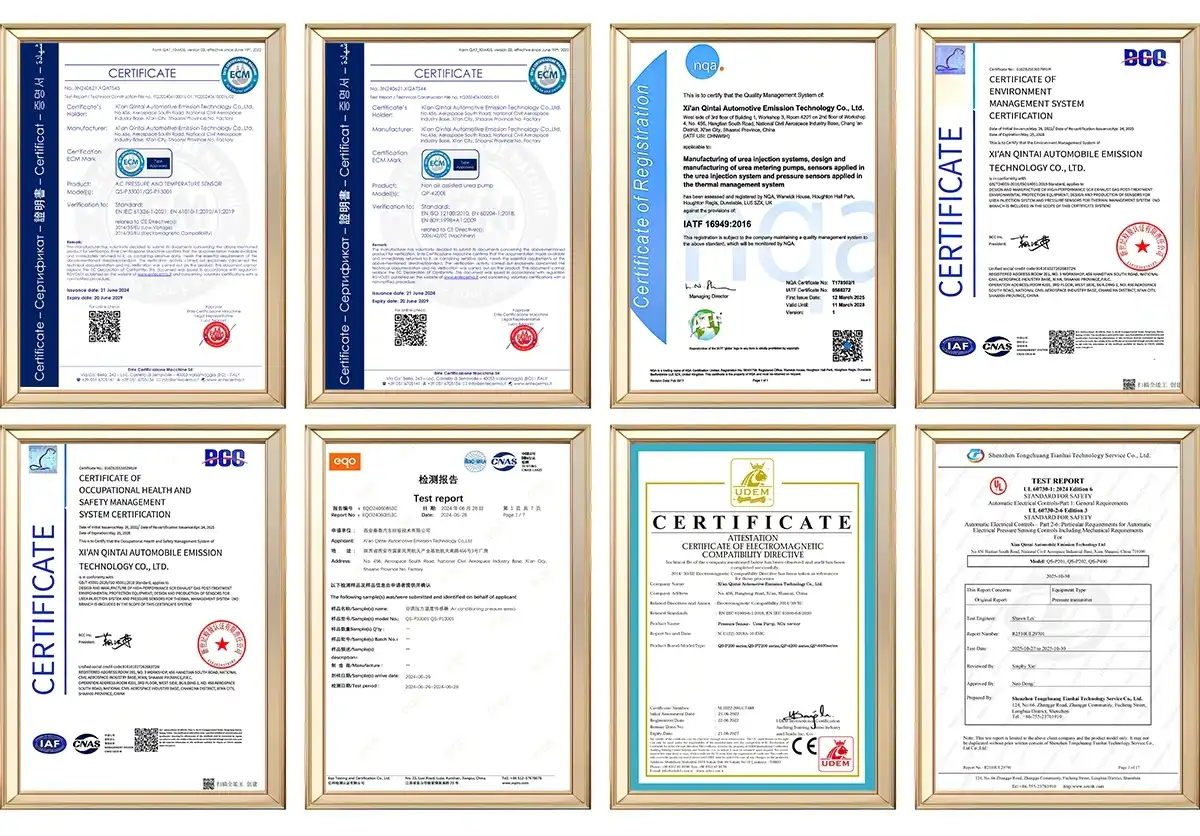
Procurement Strategies and Considerations for Capacitive Pressure Sensors
Procurement that works well strikes a mix between short-term cost goals and long-term practical goals. Knowing how prices change and how to evaluate a supplier gives buying teams the power to negotiate good terms and get reliable parts. The cost of capacitive pressure sensors depends on how many are bought, how complicated the design is, and where the seller is located.
Pricing Structures and Minimum Order Quantities
Standard stock sensors for secondary uses usually cost $15 to $40 per unit in small to medium amounts. Custom OEM designs, on the other hand, cost $25 to $80 per unit, based on the number of units needed for certification and the certification process. Minimum order numbers (MOQs) can be as low as 100 units for samples or as high as 5,000 units or more for mass production contracts. During the initial approval stages, sellers often offer flexible MOQs. When compared to buying on the spot, negotiating tiered prices based on expected annual amounts can save you 20–30%.
Lead Times and Inventory Management
Standard sensor types can be shipped in two to four weeks, but special designs may need eight to twelve weeks for tooling, testing, and approval. Setting up contract inventory deals with suppliers makes sure that parts are available without taking up working capital. This is especially helpful for aftermarket wholesalers that work with service shops and parts suppliers. Electronic data exchange (EDI) systems allow automatic restocking based on trends of use, which cuts down on stock-outs and increases the turnover of goods.
Supplier Evaluation and Risk Mitigation
To build long-lasting relationships, suppliers need to be carefully evaluated in a number of areas. Check the quality management systems of providers by visiting their sites or having a third party do the testing. Make sure that the measuring tools can be tracked and that the process controls are strict. To get a sense of the proactive quality mindset, ask for documents on failure mode and effects analysis (FMEA) and correction action records. Supply problems can be avoided by being open and honest about things like component failure, material sources, and technology roadmaps. Dual-sourcing methods reduce reliance on a single provider, but they make approval and managing supplies more difficult.
Leveraging Samples and Pilot Programs
By asking for pre-production models, tech teams can make sure that sensors work well in real vehicles before placing big orders. Pilot programs with small production runs show problems with integration and help improve installation methods, which lowers the cost of redoing work during the full-scale rollout. Suppliers that allow fast testing and ongoing revision show that they care about their customers, which is good for long-term partnerships.

SENSOR+TEST, June 9 – 11, 2026
We look forward to your visit,warmly welcome to our booth 1-634!
Get your free ticket online now:
https://www.sensor-test.de/service/ticket/?52790
Future Trends and Performance Optimization in Automotive Air Brake Sensor Technology
Continuous sensor innovation is driven by the advancement of automotive technology, with capacitive pressure sensors advancing in terms of performance, size, and interaction with car intelligence systems.
Sensor Miniaturization and Integration
Micro-electromechanical systems (MEMS) manufacturing has come a long way, making it possible to make devices smaller than a coin that are still accurate enough for use in industry. Small designs make it easier to place in brake systems with limited room and lower weight, which are both very important for electric and hybrid cars whose range is affected by every gram. Integrated sensor units that measure pressure, temperature, and shaking make wire cables easier to use and cut down on the number of parts needed, which lowers the cost of assembly and raises the reliability.
Enhanced Environmental Robustness
Conformal layers and airtight seals are used on next-generation sensors to make them resistant to salt spray, water, and acidic exhaust gases that are common in aftertreatment settings. Better electromagnetic compatibility (EMC) protection stops high-power electrical systems from interfering, so electric motors and inverters can work reliably with hybrid powertrains. The temperature range has been widened to include -55°C to +150°C, which makes it easier to use in harsh regions and close to engine heat sources.
Autonomous and Electric Vehicle Readiness
To meet ISO 26262 safety guidelines for functional safety, self-driving business cars need to have multiple sensor systems that can continuously diagnose themselves. These designs work perfectly with capacitive sensors that have fault monitoring and CAN bus connection built in. To keep the battery's range, electric car air brakes need to use very little power. Capacitive sensors' very low current draw—often less than 5mA—helps achieve this goal. Predictive maintenance algorithms use streams of sensor data to predict when parts will wear out and plan maintenance tasks, which cuts down on unplanned downtime.
Optimization Strategies for Real-World Conditions
To get the most out of sensors, you need to pay attention to how they are installed and how the system is designed. Placing sensors away from sources of high shaking keeps the mechanical parts from wearing out, and running wires through protected tubes reduces electromagnetic interference. Using movable test tools to check the calibration on a regular basis ensures accuracy throughout the lifecycle of the car. Software filters inside ECUs can smooth out sudden changes in pressure that happen when valves are switched on and off. This makes the control loop more stable without slowing it down.
Conclusion
Capacitive pressure sensors give car air brake systems unmatched accuracy, longevity, and temperature stability, meeting the important safety and efficiency needs of heavy-duty vehicles. Their high level of long-term dependability and low need for upkeep are great for OEM production goals and service standards in the aftermarket. As air brake systems become more automated and powered by electricity, capacitive sensor technology keeps getting better by getting smaller, more durable, and smarter at diagnosing problems. Professionals in procurement who know about technical specs, testing standards, and suppliers' skills put their companies in the best situation to get the best parts that meet regulations and run smoothly.
FAQ
How do capacitive pressure sensors improve air brake safety?
Capacitive pressure sensors continuously and accurately measure the pressure in the brake chamber. This lets the engine control unit (ECU) find leaks, jams, or valve problems in milliseconds. This real-time feedback lets the brakes take corrected steps automatically, like turning on backup air sources or warning cars, before they stop working safely. Their low hysteresis and high repeatability make sure that the stopping force stays the same over thousands of cycles, which lowers the risk of an accident.
What criteria should influence sensor selection over alternative technologies?
The choice is based on objectives that are specific to the application. Capacitive sensors are the best choice when you need long-term steadiness, a wide temperature range, and low upkeep. Piezoresistive choices work well in controlled settings where cost is an issue. Compare the pressure range, precision, reaction time, and source certificates to the needs of the business and the available budget.
Can capacitive pressure sensors be customized for specific vehicle platforms?
Reliable makers let you make a lot of changes, such as changing the mounting plate design, the type of electrical connection, the direction of the pressure ports, and the output signal forms. Custom testing ranges and temperature adjustment patterns make sensors work best in specific situations and make sure they work well with current brake systems and computer control systems.
Partner with Qintai for Reliable Capacitive Pressure Sensor Solutions
Qintai Automotive Emission Technology Co., Ltd. has been making precise sensors and post-treatment for diesel engines for more than twenty years. We have environmental approvals (REACH, RoHS, CE) and ISO 9001, IATF 16949, and our capacitive pressure sensors are strong enough to handle the needs of big trucks, building equipment, and generator sets. We are the main OEM capacitive pressure sensor source for China's top diesel engine makers, such as Yuchai Power and Weichai Power. Our industrial-grade stability and consistent mass production are what buying managers and R&D engineers trust.
Our independent research and development team is always coming up with new ways to make sensors work better, and our OEM/ODM services allow us to make designs that are exactly what you want. Whether you need samples to make sure the product works, large orders to start production, or expert advice on how to connect systems, we'll be there for you every step of the way during your buying trip. Qintai is ready to improve your supply chain with reliable sensor technology. They have a global market presence in more than 60 countries and a track record of success in emission compliance projects. Email us at info@qt-sensor.com right now to talk about your application needs and get detailed datasheets.
References
1. Smith, J. L., & Anderson, R. M. (2021). Capacitive Sensing Technologies in Automotive Safety Systems. Society of Automotive Engineers International.
2. Chen, W., & Liu, H. (2020). Pressure Measurement Principles for Commercial Vehicle Brake Systems. Journal of Mechanical Engineering Science, 234(8), 1542-1558.
3. European Commission. (2019). ECE Regulation No. 13: Uniform Provisions Concerning Braking of Heavy Vehicles. United Nations Economic Commission for Europe.
4. National Highway Traffic Safety Administration. (2022). Federal Motor Vehicle Safety Standard No. 121: Air Brake Systems. U.S. Department of Transportation.
5. Zhang, Y., & Kumar, P. (2023). Advanced Sensor Technologies for Autonomous Commercial Vehicles. International Journal of Automotive Technology, 24(2), 405-421.
6. ISO Standards Committee. (2018). ISO 26262: Road Vehicles—Functional Safety. International Organization for Standardization.

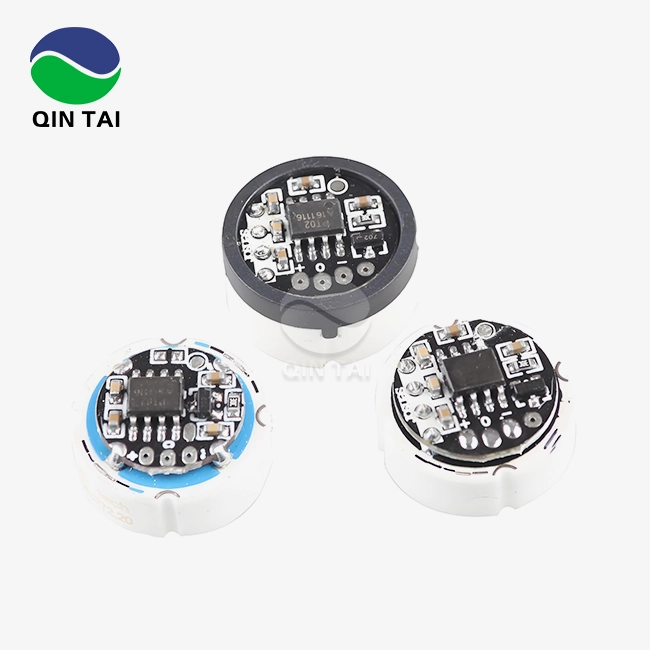
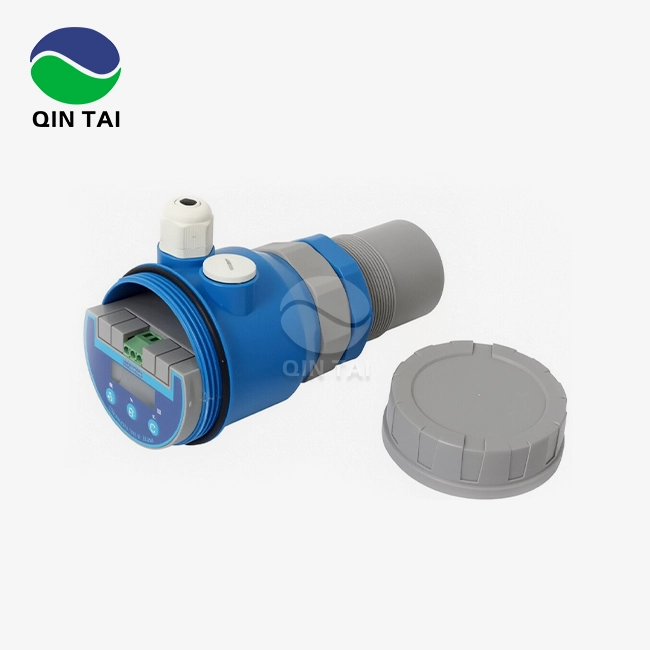

Our customers’ satisfaction speaks for our quality — contact us to experience the same reliable service.