- English
- French
- German
- Portuguese
- Spanish
- Russian
- Japanese
- Korean
- Arabic
- Greek
- German
- Turkish
- Italian
- Danish
- Romanian
- Indonesian
- Czech
- Afrikaans
- Swedish
- Polish
- Basque
- Catalan
- Esperanto
- Hindi
- Lao
- Albanian
- Amharic
- Armenian
- Azerbaijani
- Belarusian
- Bengali
- Bosnian
- Bulgarian
- Cebuano
- Chichewa
- Corsican
- Croatian
- Dutch
- Estonian
- Filipino
- Finnish
- Frisian
- Galician
- Georgian
- Gujarati
- Haitian
- Hausa
- Hawaiian
- Hebrew
- Hmong
- Hungarian
- Icelandic
- Igbo
- Javanese
- Kannada
- Kazakh
- Khmer
- Kurdish
- Kyrgyz
- Latin
- Latvian
- Lithuanian
- Luxembou..
- Macedonian
- Malagasy
- Malay
- Malayalam
- Maltese
- Maori
- Marathi
- Mongolian
- Burmese
- Nepali
- Norwegian
- Pashto
- Persian
- Punjabi
- Serbian
- Sesotho
- Sinhala
- Slovak
- Slovenian
- Somali
- Samoan
- Scots Gaelic
- Shona
- Sindhi
- Sundanese
- Swahili
- Tajik
- Tamil
- Telugu
- Thai
- Ukrainian
- Urdu
- Uzbek
- Vietnamese
- Welsh
- Xhosa
- Yiddish
- Yoruba
- Zulu
Advantages of capacitive pressure sensors in medical respirators
In medical breathing devices, where even small changes in pressure can have a big effect on how well a patient does, capacitive pressure sensors provide the highest level of accuracy. These sensors find out how much pressure there is by picking up changes in capacitance between two wires that are divided by a dielectric. When pressure changes the distance between the electrodes, an accurate reading of the pressure is given by the capacitance shift that happens. This way of working lets lung pressure be constantly and real-time monitored, making sure that ventilators give patients the exact help they need during critical breathing treatment.
Understanding Capacitive Pressure Sensors in Medical Respirators
Core Operating Mechanism
The basic building blocks of a capacitive pressure sensor are a set base electrodes and a movable membrane that acts as an electrode. A dielectric layer, which is usually ceramic, rubber, or air, sits between them and controls how sensitive they are and how well they work at different temperatures. When breathing pressure puts stress on the diaphragm, it changes shape and shortens the distance (d) between the sensors. The capacitance formula, C = ε₀εᵣA/d, says that this shorter distance makes the capacitance go up in the same way that pressure does. Differential capacitance setups in more advanced designs record changes in pressure in both directions, which makes measurements much more accurate during air cycles.
Signal Processing Architecture
Changes in raw capacitance are still very small, which means that complex signal filtering circuits are needed. Capacitance-to-digital converters and special integrated circuits make these small changes stronger and more uniform while blocking electromagnetic interference. A lot of systems use Wheatstone bridge designs to change changes in capacitance into voltage data that respiration tracking systems can understand. The result of the processing is either an analog signal (0–10V or 4–20mA) or a digital protocol (I²C, SPI), which makes it easy to connect to the control electronics of the blower. This strong signal chain makes sure that each breath cycle is tracked with accuracy that meets clinical standards.
Medical Application Integration
In respiratory care, these capacitive pressure sensors check the pressures in the airways during inspiration and expiration, find circuit leaks, and measure positive end-expiratory pressure (PEEP). Their quick response times—often less than 10 milliseconds—capture quick changes in pressure when the patient takes a breath. This response is very important during pressure-support breathing modes, where comfort and efficiency depend on how well the patient's efforts match up with the machine's support. Engineers like how small sensor packages make it easier to fit them into respirator pipes that don't have a lot of room. They also like how accurate the measurements are across the whole clinical pressure range, from -20 to +100 cmH₂O.

Advantages of Capacitive Pressure Sensors in Medical Respirators
Superior Sensitivity and Clinical Accuracy
Capacitive pressure sensors can measure with a precision of better than 0.1 cmH₂O, picking up on small changes in pressure that happen when you breathe on your own. This awareness lets doctors find early signs of breathing problems, finetune machine settings, and get the best results from treatment. Capacitive designs stay linear across their working range, so they don't need to be calibrated as often as strain gauge sensors do. This makes sure that the device works the same way for many years, which lowers upkeep costs and raises patient safety.
Environmental Stability and Durability
There are a lot of difficult situations in medical settings, such as changes in humidity, temperature, and chemical contact from cleaning products. Ceramic diaphragm capacitive pressure sensors are much better than metal-based ones at resisting rust, water damage, and chemical breakdown. The thermal adjustment circuits in these devices actively fix any temperature-related drift, so they stay accurate from working room temperatures to emergency transport conditions. This ability to adapt to different environments means that it can work reliably in a wide range of clinical situations, from controlled hospital rooms to unpredictable field hospitals.
Power Efficiency for Portable Devices
Battery-powered mobile ventilators and home breathing devices need to use as little power as possible so they can run for as long as possible before they need to be charged again. During active monitoring, capacitive pressure sensors usually use less than 5 milliamps, which is a lot less power than other technologies. This is because they only use electricity to measure things, so there is no need for mechanical pressure energy to be lost. Longer energy life lets patients move around for longer amounts of time and eases their worries about having power during important transport situations, which directly improves the quality of care.
Compact Footprint Enabling Design Flexibility
Modern capacitive pressure sensors can fit in spaces as small as 10×10×5 mm, which makes it easier to make breathing circuits smaller. Manufacturers of medical devices use this small design to make ventilators smaller and lighter, making them easier to carry and better for patients' comfort and movement. The small size also makes it easier to add to breathing circuit designs that are already in place, without having to do a lot of redesigning. Manufacturing benefits include easier manufacturing processes and lower material prices. These are benefits that procurement managers see right away when they do cost-benefit studies.
These performance characteristics position capacitive pressure sensors as the best technology for making the next wave of breathing devices. Engineers who choose parts for ventilator platforms find that when they combine accuracy, longevity, and efficiency, they can meet a lot of design limits at once. This speeds up development times and makes sure that the medical devices meet strict standards.
Comparing Capacitive Pressure Sensors with Alternative Technologies
Technology Performance Comparison
Piezoresistive sensors are cheaper, but they are very sensitive to temperature, which means they need a lot of adjustment circuitry. Their resistance-based measurement method makes measurements more sensitive to noise, which can make them less accurate in hospitals with a lot of electrical noise. Strain gauge monitors are strong, but they lose their sensitivity at lower pressure levels that are important for newborn breathing. Piezoelectric devices are great at measuring changes in pressure, but they can't measure steady pressures. This means they can't be used for constant tracking of breathing, where the standard pressure is just as important as changes in pressure.
Capacitive pressure sensors are the best of both worlds because they are very sensitive without having the noise problems that come with resistive technologies and can keep DC readings stable in a way that piezoelectric designs can't. Their output is naturally digital, which makes it easier to connect to current breathing systems that use microcontrollers. Comparing how long different types of sensors last shows that ceramic capacitive pressure sensors last longer than metal diaphragm options in harsh hospital settings. This means that they need to be replaced less often, which lowers the total cost of ownership.
Wired Versus Wireless Configurations
Traditional wired capacitive pressure sensors are the most reliable because they connect directly to the power source, so you don't have to worry about signal confusion or power outages. These designs work well for stable ventilators where there are no problems with managing the cables. New wireless capacitive pressure sensors use low-power Bluetooth or their own RF protocols to let you watch patients without cables, which makes the circuit simpler and makes it easier to move around. But with wireless solutions, you need to think about how to take care of the batteries, keep the signals safe, and make sure they don't interfere with other medical equipment.
When procurement teams look at different rollout situations, they have to weigh the benefits of freedom against the needs for stability. Critical care units usually put wired stability first, while home care apps and therapy facilities are using more and more wireless options that make patients more independent. Knowing these trade-offs helps makers choose the right sensor setups for the use cases and market groups they want to reach.
Technical Implementation and Calibration for Optimal Performance
Signal Conditioning Best Practices
To get medical-grade performance, the PCB structure needs to be very careful so that electromagnetic interference and parasitic capacitance are kept to a minimum. Noise doesn't get into the sensitive front-end circuits because of ground plane design, filtering methods, and the right placement of components. Using multi-stage filtering, which combines digital signal processing with conventional low-pass filters, gets rid of high-frequency noise without slowing down the reaction time. In the 50–100 kHz range, engineers should choose excitation frequencies that are above mechanical resonance but below frequencies where stray capacitance is most important.
Pay close attention to the control of the power source because changes in voltage have a direct effect on capacitance data. Reference voltages stay stable with ultra-low noise linear regulators or well-filtered switching sources. By putting temperature monitors close to the sensitive element, real-time thermal compensation algorithms can fix drift and keep the accuracy requirements the same across the entire working temperature range. These design factors turn basic capacitive pressure sensor skills into measurement systems that can be trusted in clinical settings.
Calibration Procedures and Traceability
Manufacturers set up testing procedures that use NIST-traceable pressure standards that are applied at several places in the sensor's working range. For linear devices, three-point calibration (zero, mid-range, full-scale) is enough. For any remaining nonlinearity, higher-order polynomial fixes take care of it. This process is automated by production calibration systems, which store adjustment factors in non-volatile memory in the sensor module or host respirator electronics. Regular recalibration times, usually once a year or after 10,000 hours of use, make sure that the accuracy stays in line with government standards.
Software correction methods make calibration last longer by changing on the fly to account for changes in temperature, humidity, and wear and tear. Machine learning techniques can even guess how capacitive pressure sensors will move over time, setting off maintenance alerts before the accuracy drops too far. This proactive repair plan cuts down on unplanned downtime and makes sure patients are safer. Keeping logs of calibration processes and traceability is very important for regulatory checks. This helps medical device certifications like FDA 510(k) clearance or CE marking under the Medical Device Regulation.

SENSOR+TEST, June 9 – 11, 2026
We look forward to your visit,warmly welcome to our booth 1-634!
Get your free ticket online now:
https://www.sensor-test.de/service/ticket/?52790
Procurement Considerations for Medical Respirator Manufacturers
Selection Criteria and Evaluation Framework
Technical specs are what you use to choose a capacitive pressure sensor. For example, the pressure range needs to meet clinical needs with enough room for error, the precision needs to meet or beat regulatory standards (usually ±1% full scale), and the reaction time needs to reflect how the body works. The possibility of mechanical coupling is based on things like the fastening style, the electrical links, and the weather grades. To find the best mix between these technology needs and cost goals, procurement managers look at the total landing cost, which includes taxes, freight, and the cost of keeping goods.
Assessing a supplier's skills is more than just looking at product info sheets. Manufacturers who have ISO 13485 medical quality certifications show that they are dedicated to controlled fields and keep up with paperwork systems that help get devices approved. Supply chain robustness is affected by things like production capacity, wait times, and the ability to adapt to changes in demand. When integration problems come up during the product development process, technical support responsiveness—which can be judged by how quickly engineering questions are answered and how well they help with applications—often makes all the difference.
Pricing Models and Volume Economics
Prices for capacitive pressure sensors vary a lot depending on the level of accuracy, how they are packaged, and who sells them. Industrial-grade devices that can be used in medical settings cost between $15 and $50 per modest volume (1,000 or more units per year), while approved medical-grade versions cost 20 to 40 percent more. Prices for large orders are usually set in tiers, with breaks at 500, 1,000, 5,000, and 10,000 annual pieces. By setting up blanket buy deals with planned releases, you can get the best prices while still having some product flexibility.
Leading suppliers including Honeywell, TE Connectivity, and Omron offer comprehensive product portfolios spanning various pressure ranges and output formats. Specialized makers that only make medical sensors, on the other hand, often offer better program support and customization options. When you work with more than one source during the planning phase, you can fully compare performance and cost. Before agreeing to large-scale production, procurement teams should ask for sample amounts to be tested to make sure they work with current breathing circuit designs and that the stated specs are met in real-world circumstances.
Conclusion
In conclusion, capacitive pressure sensors are the best for medical respirator uses because they are very accurate, don't change much in harsh environments, and use very little power. Their high sensitivity makes it possible to precisely measure lung pressure, which directly improves patient safety and treatment results. When compared to other tracking technologies, capacitive designs offer the best mix of performance, longevity, and ease of interaction that companies that make medical devices need.
Proper technical execution through strong signal filtering and strict testing processes guarantees that these sensors will work reliably at the clinical level for a long time. Those who work in procurement and know about evaluation criteria, seller skills, and volume economics can find the best sensing solutions that meet both scientific requirements and business goals. This will lead to life-saving breathing care devices in the end.
FAQ
How do capacitive pressure sensors specifically improve patient safety in ventilators?
These sensors pick up on tiny changes in pressure that show whether a patient is trying to breathe or whether the circuit is disconnected or blocked. Because they can respond quickly, ventilators can match their help to what the patient needs. This makes breathing easier and prevents lung damage caused by the ventilator.
Are capacitive sensors compatible with existing ventilator electronics?
These days, capacitive pressure sensors have both digital and analog outputs that work with common medical device connections. The 0-5V and 4-20mA analog outputs connect straight to analog-to-digital converters, and the I²C, SPI, and UART digital standards connect to microcontrollers. Detailed datasheets list the electrical properties of an item, making it easy to add to current designs.
What typical lead times and minimum order quantities should procurement teams expect?
Standard stock sensors usually ship between 4 and 8 weeks, and you need to order at least 100 to 500 of them. For customized versions, production and approval take 8 to 16 weeks, and at least 1,000 to 5,000 pieces must be sold each year. By setting up planning deals and planned releases, smart relationships with suppliers can often cut down on wait times and minimum amounts.
Partner with Qintai for Advanced Capacitive Pressure Sensor Solutions
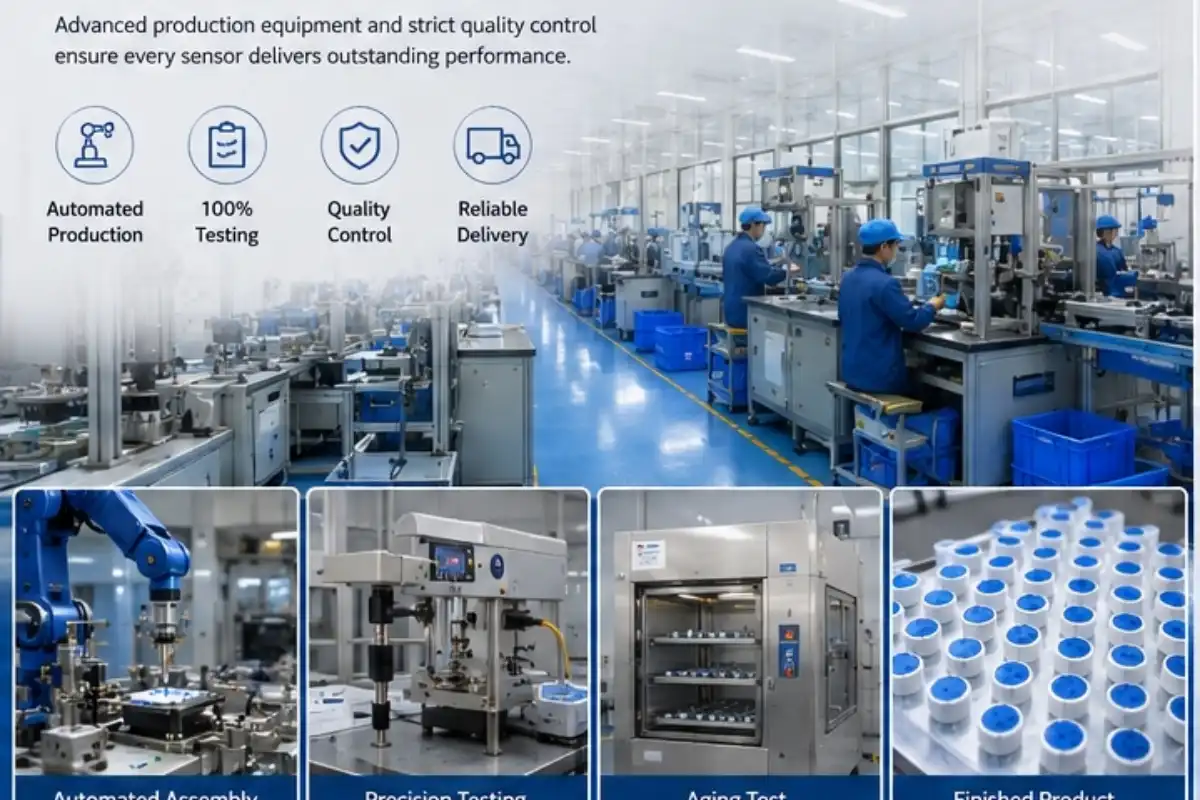
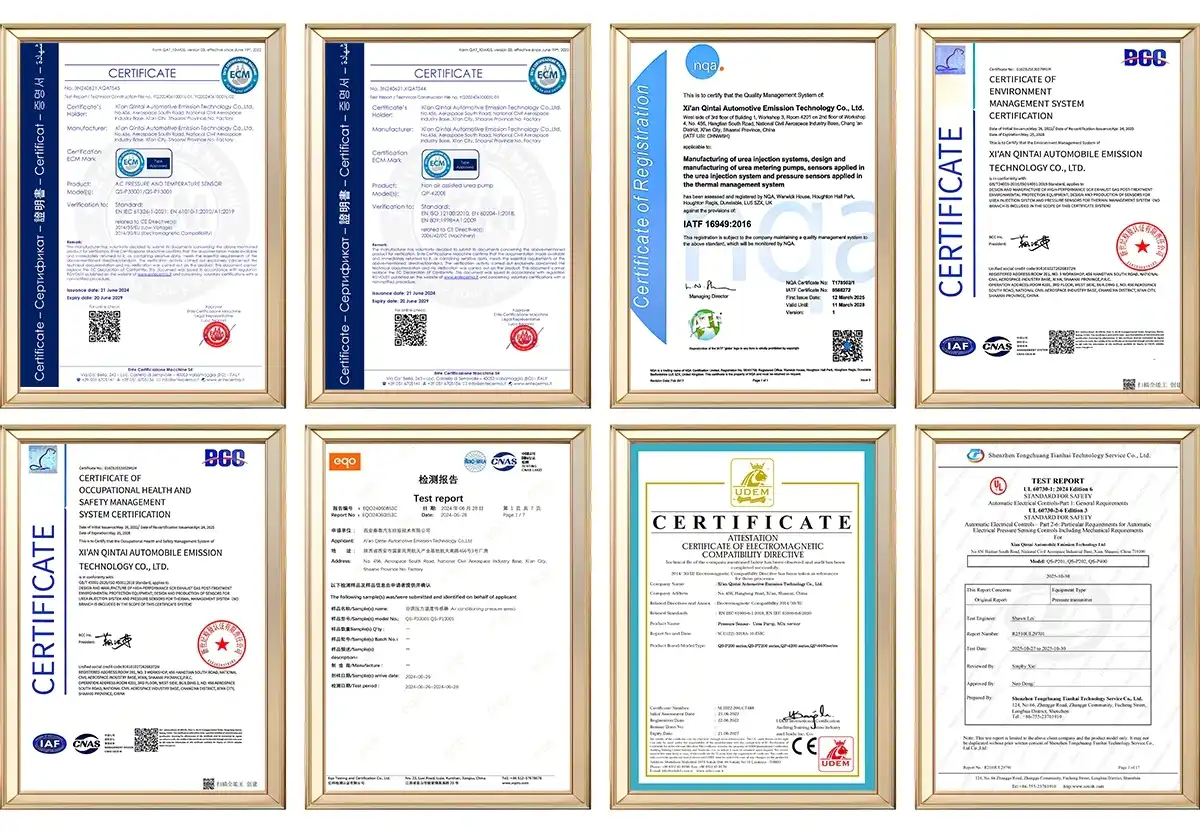
When medical device makers look for reliable capacitive pressure sensor sources, working with Xi'an Qintai Automotive Emission Technology Co. Ltd. gives them a strategic edge. Our company has been making precise sensors for tough jobs since 2001, and we are now known as China's top OEM provider to Weichai Power, Yuchai Power, and Quanchai Power. Our ISO9001, IATF16949, and medical-related certifications show that we are dedicated to quality systems that help you stay in line with regulations.
Our independent research and development team is always coming up with new sensing technologies. They have 58 idea patents that make products work better. We provide full OEM/ODM services, from the initial idea to mass production, and we can make changes that are flexible enough to meet your specific breathing tracking needs. Whether you need help with fast prototyping, custom electrical connections, or specific pressure ranges, our technical knowledge cuts down on the time it takes to build something while keeping costs low.
To talk about your capacitive pressure sensor needs, please email our expert sales team at info@qt-sensor.com. We give you complete datasheets, application notes, and sample units so that you can fully evaluate them before committing to production. Discover how our ability to make things, expert help, and low prices add value to every part of your supply chain.
References
1. Webster, J.G. (2020). Medical Instrumentation: Application and Design, 5th Edition. Hoboken: John Wiley & Sons.
2. Chatburn, R.L. & Mireles-Cabodevila, E. (2019). "Pressure and Flow Measurement in Mechanical Ventilation: Sensor Technologies and Clinical Applications." Respiratory Care Journal, 64(8), 931-945.
3. Fraden, J. (2016). Handbook of Modern Sensors: Physics, Designs, and Applications, 5th Edition. Cham: Springer International Publishing.
4. Tobin, M.J. (2021). Principles and Practice of Mechanical Ventilation, 4th Edition. New York: McGraw-Hill Education Medical.
5. Bao, M.H. & Wang, W. (2018). "Capacitive Pressure Sensors for Medical Applications: Design Considerations and Performance Characteristics." IEEE Sensors Journal, 18(12), 4892-4903.
6. Cairo, J.M. & Pilbeam, S.P. (2020). Mosby's Respiratory Care Equipment, 10th Edition. St. Louis: Elsevier Health Sciences.

Our customers’ satisfaction speaks for our quality — contact us to experience the same reliable service.