- English
- French
- German
- Portuguese
- Spanish
- Russian
- Japanese
- Korean
- Arabic
- Greek
- German
- Turkish
- Italian
- Danish
- Romanian
- Indonesian
- Czech
- Afrikaans
- Swedish
- Polish
- Basque
- Catalan
- Esperanto
- Hindi
- Lao
- Albanian
- Amharic
- Armenian
- Azerbaijani
- Belarusian
- Bengali
- Bosnian
- Bulgarian
- Cebuano
- Chichewa
- Corsican
- Croatian
- Dutch
- Estonian
- Filipino
- Finnish
- Frisian
- Galician
- Georgian
- Gujarati
- Haitian
- Hausa
- Hawaiian
- Hebrew
- Hmong
- Hungarian
- Icelandic
- Igbo
- Javanese
- Kannada
- Kazakh
- Khmer
- Kurdish
- Kyrgyz
- Latin
- Latvian
- Lithuanian
- Luxembou..
- Macedonian
- Malagasy
- Malay
- Malayalam
- Maltese
- Maori
- Marathi
- Mongolian
- Burmese
- Nepali
- Norwegian
- Pashto
- Persian
- Punjabi
- Serbian
- Sesotho
- Sinhala
- Slovak
- Slovenian
- Somali
- Samoan
- Scots Gaelic
- Shona
- Sindhi
- Sundanese
- Swahili
- Tajik
- Tamil
- Telugu
- Thai
- Ukrainian
- Urdu
- Uzbek
- Vietnamese
- Welsh
- Xhosa
- Yiddish
- Yoruba
- Zulu
What is the sensitivity range of modern capacitive sensors?
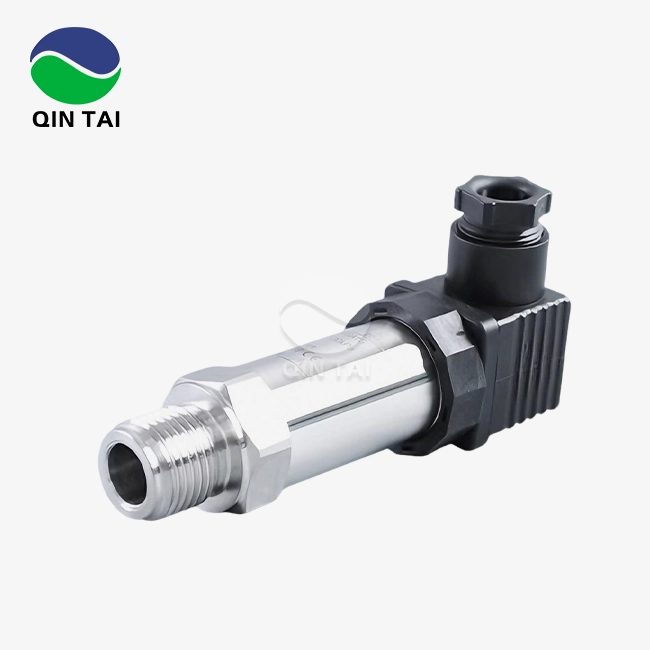
Depending on the design architecture and the requirements of the application, modern capacitive pressure sensor technology usually works within a sensitivity range of 0.01 mV/V/Pa to 100 mV/V/Pa. Sensitivity is a measure of how well the sensor can respond to small changes in pressure by changing its output. High-performance capacitive pressure sensors are often used in diesel engine aftertreatment systems and emission control settings. They have sensitivities that range from 5 mV/V/kPa to 50 mV/V/kPa, which is a good balance between accuracy and signal-to-noise ratios. This feature tells you if the device can consistently pick up on small changes in pressure that are important for optimizing the SCR and DPF systems, especially in tough environments like heavy trucks, construction machinery, and generator sets.
Understanding the Sensitivity Range of Capacitive Sensors
Sensitivity is a measure of how well a capacitive pressure sensor changes applied mechanical force into an electrical signal. Engineers look at this factor when choosing sensors for tracking emissions. Detecting changes in pressure as small as 0.1 kPa can affect how well doses are delivered and how well they meet regulations.
What Defines Sensor Sensitivity in Pressure Measurement?
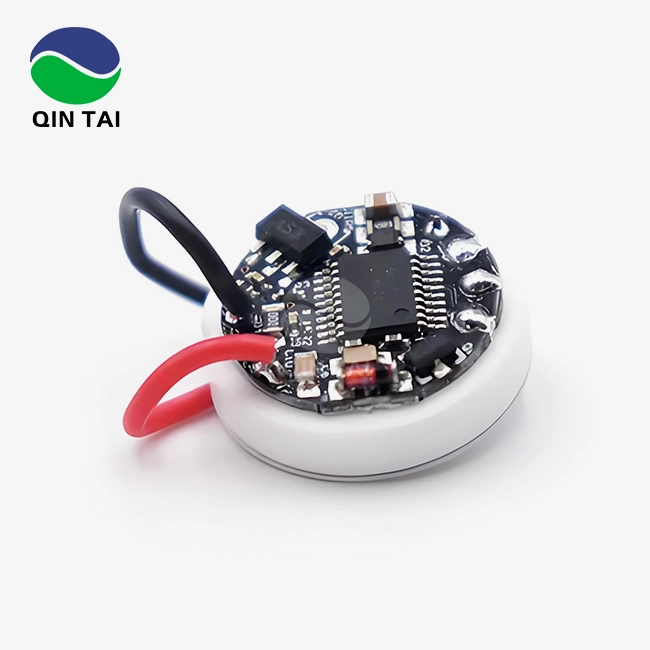
A capacitive pressure sensor's sensitivity is based on how the diaphragm bends, the size of the electrode gap, and the signal preparation circuits. The capacitance changes when pressure changes the shape of the flexible diaphragm, as shown by the equation C = ε₀εᵣA/d. More displacement per unit of pressure means higher awareness, but too much movement makes it less durable.
The choice of material is very important. Ceramic diaphragms are very stable and resistant to chemicals, which makes them good for exhaust settings where acidic gases and temperatures above 150°C can damage sensors. Linearity is better with silicon-based designs, but they need protective coats in tough industrial settings.
Typical Sensitivity Ranges Across Sensor Categories
Sensors with a low sensitivity (0.01–1 mV/V/kPa) are used in high-pressure situations, like the hydraulic systems in building equipment, where the pressure can reach 40 MPa. Most pollution control in cars uses devices with a medium sensitivity (1–20 mV/V/kPa), which find the best balance between resolution and overload tolerance.
High-sensitivity settings (20–100 mV/V/kPa) allow accurate measurements in low-pressure areas, such as differential pressure tracking in DPF systems, where changes below 5 kPa determine when the recycling process starts. As we've worked with Weichai Power, Yuchai Power, and Quanchai Power to provide key components, we've learned that matching sensitivity to working pressure ranges keeps signals from becoming saturated and keeps measurements accurate over the life of the sensor.
How Design and Materials Influence Sensitivity?
When compared to flat designs, corrugated diaphragm shapes make sensitivity 30% to 50% higher by amplifying displacement without reducing mechanical strength. Whether it's air, silicone, or ceramic, the dielectric material between the electrodes changes the permittivity part in the capacitance equation. This changes baseline sensitivity and temperature stability directly.
Integrated circuits for signal processing now have adaptable methods that fix non-linearities. This makes the useful sensitivity range bigger while keeping accuracy at ±0.5% full scale. Because of these improvements, one sensor design can now work with a wider range of pressures by making small changes to the software. This makes inventory simpler for OEM makers and people who build aftertreatment systems.
Temperature and Voltage Effects on Sensitivity Stability
Changing the operating temperature can change the dielectric constants and the flexibility of the diaphragm. This can cause sensitivity drift that is more than 2% per 50°C if nothing is done to fix it. Thermistors are used in advanced variable capacitance pressure sensors to measure temperature in real time. Digital adjustment methods then cancel out thermal effects in the -40°C to 150°C range that is common in diesel engine uses.
Changes in the supply voltage can also affect the steadiness of the test; even a 5% difference can cause changes in the proportional sensitivity. We solve this problem by carefully controlling the power inside our sensor modules. This way, even if the electrical system of a heavy-duty truck or farm equipment changes, the modules will always work the same way.
Key Dimensions That Define Capacitive Sensor Performance
Sensitivity by itself does not promise accurate measurements. If a capacitor pressure monitor meets strict emission compliance requirements and operating demands, its accuracy, resolution, and long-term stability all play a role.
Sensitivity Versus Accuracy in Measurement Quality
Accuracy measures how far away from true values the measurement is across the whole range, while sensitivity measures how much the output changes for each unit of input. If non-linearities are not fixed, a capacitive pressure sensor may have high sensitivity but low accuracy. These days' gadgets are more accurate than ±0.25% full scale thanks to polynomial correction and individual testing.
When OEM engineers choose sensors for SCR dosing control, this difference is very important. High sensitivity lets sensors respond quickly to sudden changes in pressure, while high accuracy makes sure that urea injection rates meet China VI and Euro VI emission standards without going too high, which could damage the catalyst or cause ammonia to slip.
Calibration Methods for Optimizing Sensitivity
Because of differences in how they are made, each sensor needs to be calibrated to meet certain sensitivity limits. Correction factors are kept in non-volatile memory after multi-point testing against reference standards. To compensate for changes in temperature, you have to describe how sensitivity changes across the working range and program lookup tables or polynomial functions into the processor of the sensor.
We use automatic test tools that can be traced back to national measuring institutes to calibrate our capacitive pressure sensors. This makes sure that they keep working as expected for as long as they are in use. The amount of time between calibrations depends on the type of application. For example, sensors in generator set backup power systems that only work sometimes may need to be checked every 24 months, while continuous-duty units in mining equipment only need to be checked once a year.
Application-Specific Sensitivity Requirements
Automotive emission aftertreatment needs monitors that can handle changes in pressure below 0.5 kPa, vibrations higher than 20 g, and temperature changes from room temperature to 180°C. Long-term stability is more important to industrial exhaust gas treatment systems than dynamic reaction. They are willing to accept slower measuring update rates in exchange for better chemical resistance.
To pick up on even the smallest changes in bodily pressure, medical monitoring equipment needs to be very straight and repeatable. Sensitivities above 50 mV/V/kPa are often required. When buying managers understand these complex needs, they can choose sensors that don't fail or have extra features that drive up costs. This is especially important when making large-volume supply deals for mass production.
The way that supply chain managers look at sensor sets is shaped by these application-specific needs. Repair shops and parts providers that serve the business vehicle aftermarket put flexibility first. A single sensor SKU that covers multiple pressure ranges through changeable sensitivity modes cuts down on inventory costs while keeping prices low.
When project engineers buy monitors for mine power generation, they look for devices whose sensitivity stays stable even when dust gets in, humidity changes, and the temperature in the room goes up and down more than 60°C. Because we can customize, we can change sensitivity curves, pressure ports, and electrical connections to fit specific operating patterns. This lets us offer better solutions instead of making customers adapt systems to standard parts.
Comparison of Capacitive Sensors with Alternative Technologies
To choose the right sensor technology, you need to know how capacitive designs stack up against other options in terms of sensitivity, sturdiness, and value for money.
Sensitivity Ranges in Competing Sensor Technologies
Piezoresistive sensors have sensitivity ranges from 1 to 30 mV/V/kPa and are very stable at high and low temperatures. However, they can't handle too much voltage. Piezoelectric designs are very sensitive (up to 500 pC/kPa), but they can't measure steady pressures, so they can only be used for active tasks like analyzing burning.
Resistive strain gauge sensors are reliable and have a modest level of sensitivity (0.5–10 mV/V/kPa), but they tend to move over time when they are exposed to high temperatures. Capacitive pressure sensors are perfect for emission control because they have good overload protection, enough sensitivity, and very little hysteresis. This means that the sensors can handle occasional pressure spikes from exhaust backpressure events without losing their calibration.
Performance Trade-offs Affecting Technology Selection
In harsh settings, technology choices are based on how long it will last. Ceramic capacitive pressure sensors can handle the acidic parts of exhaust and temperature cycling that break down piezoresistive devices after 2,000 hours of use. If you compare this to piezoresistive sensors, they have easier signal filtering and use less power, which is good for battery-powered apps.
Precision medical instruments often use capacitive designs because they are very straight over a wide range of pressures. On the other hand, resistive technologies are preferred in market uses that need to save money, even though they are less stable over time. These trade-offs are what keep different technologies from taking over all markets. When making purchases, people have to weigh the initial costs against the total costs of ownership, which include how often the technology needs to be calibrated, how often it breaks, and how easy it is to get a new one.
Matching Sensitivity to Application Requirements
Medium-sensitivity sensors (5–15 mV/V/kPa) work well in heavy industrial settings because they can handle pressure spikes and contamination while still having enough precision for process control. Precision instruments need to be very sensitive and have noise floors of a few millihertz. This can be done with differential capacitance arrangements and simultaneous demodulation methods.
We've seen that more and more aftertreatment system designers ask for sensors with customizable sensitivity ranges. This way, a single piece of hardware can be used on different car models by changing the software setup. This method lowers the cost of research and speeds up the time it takes to get a product on the market, which are both very important when changing emission systems to meet new rules.
These ideas are clearly shown in real-life usage cases. Generator set makers who put sensors in backup power systems for data centers choose reliability over maximum sensitivity. They accept 10 mV/V/kPa devices that offer enough resolution for keeping an eye on cooling and lubrication circuits and have been tested and proven to work for 60,000 hours. OEMs of construction equipment have to deal with different problems.
Sensors for load-sensing hydraulic systems have to be able to handle constant shaking, high temperatures, and dirty hydraulic fluid. Working with equipment makers has shown that capacitive pressure sensors that are properly defined work better than other options in these tough settings. This lowers the number of guarantee claims and improves the brand's image by ensuring uniform performance in a wide range of conditions.

SENSOR+TEST, June 9 – 11, 2026
We look forward to your visit,warmly welcome to our booth 1-634!
Get your free ticket online now:
https://www.sensor-test.de/service/ticket/?52790
Procuring Capacitive Pressure Sensors: Sensitivity Considerations for Buyers
How Sensitivity Characteristics Affect Sensor Pricing
Because they have to be made with more accuracy and use more complex signal processing technology, gadgets with higher sensitivity cost more. A 50 mV/V/kPa sensor might cost 40–60% more than a 10 mV/V/kPa sensor of the same type, but the higher sensitivity can save money by getting rid of secondary amplification steps or making packages smaller and lighter.
During talks for large purchases, sensitivity limits should be taken into account. Tighter specs lead to lower manufacturing yields, which in turn raise unit costs. We work with OEM customers to set reasonable error bands that ensure useful performance without putting too many restrictions on accuracy that drive up costs.
Interpreting Supplier Datasheets and Testing Protocols
Datasheets from reliable companies list the sensitivity under certain conditions, like at room temperature with a certain stimulation voltage. There are temperature factors in the comments that show how the sensitivity decreases across the working range, usually by 0.02% per degree Celsius. Different testing methods have different effects on sensors.
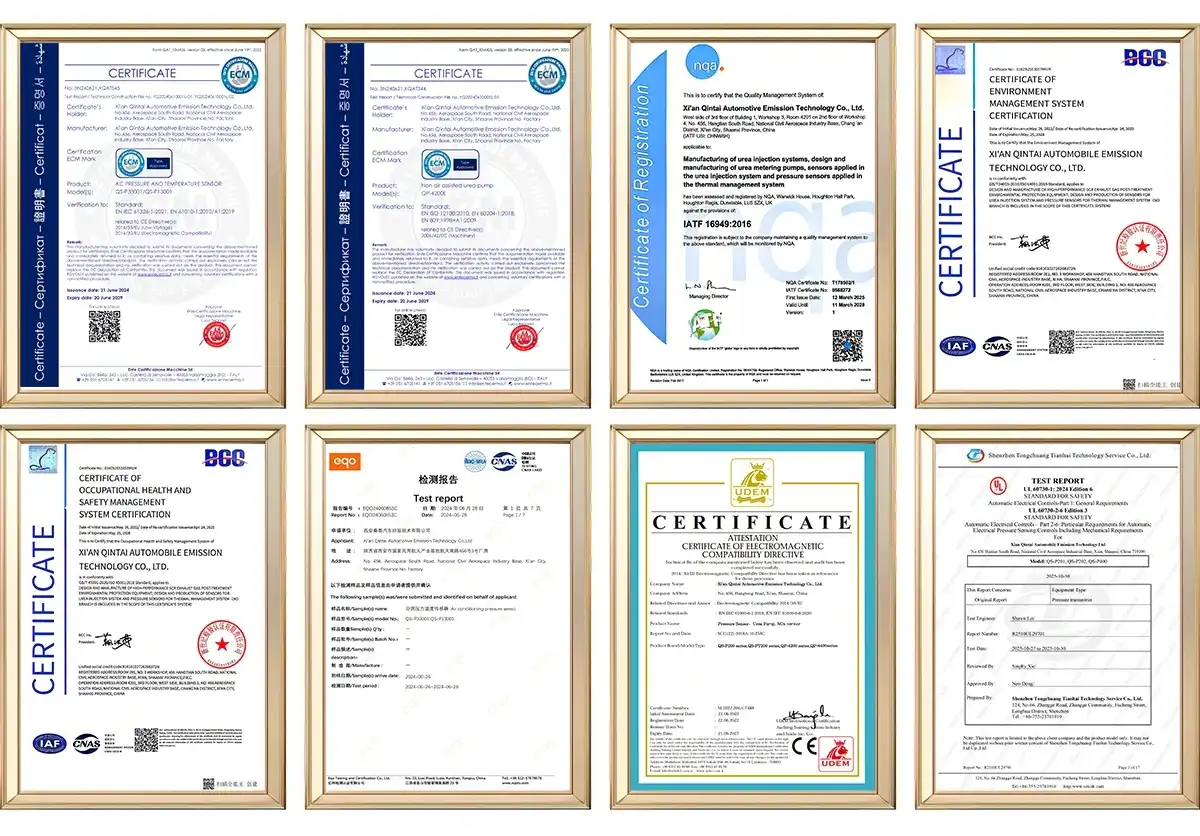
Sensors that were tested using static pressure standards may not respond the same way to changes in dynamic pressure that happen in exhaust systems. Asking for test data that shows frequency response and step response traits can help you understand how something works in the real world. Our quality certificates, such as ISO9001, IATF16949, and Ex approval, show that we are dedicated to strict testing procedures that make sure specs are met in real-world application settings.
Benefits of OEM Collaboration for Custom Sensitivity Solutions
Most of the time, standard stock devices don't improve all of their settings for specific uses. By working together on a project, sensitivity curves can be changed to fit different pressure levels and output needs. A generator set maker might want a measurement range of 0 to 500 kPa with 20 mV/V/kPa sensitivity in the important 100–300 kPa working band. They might be okay with less sensitivity outside of this range to get the best clarity where it means the most.
Our independent research and development team uses 58 invention patents to come up with solutions for specific problems. For example, they change port configurations to fit installations with limited space, make changes to electrical interfaces so they work with existing control systems, or make chemical resistance better for use with alternative fuel applications. With this partnership method, sensors go from being common items to important parts that set finished goods apart in markets where competition is high.
Having long-term ties with suppliers has benefits beyond just being sensitive to customs. Technical help during system integration speeds up the development process, and sure capacity sharing keeps supplies from running out when output goes up. As the top OEM provider in China's diesel engine market, we can make anything from a few prototypes to millions of units every year without lowering the quality of our work. Purchasing managers like stable prices, effective aging management, and quick after-sales support. These are important factors when choosing partners for important emission control parts that fail in the field and lead to expensive refunds and fines from regulators.
Future Trends in Capacitive Sensor Sensitivity and Performance
New technologies offer to increase awareness while also fixing problems that exist in tough environment uses.
Innovative Materials Expanding Sensitivity Boundaries
Graphene-enhanced diaphragms can bend 50% more than regular materials while still being strong, which means they might be able to double the sensitivity without lowering the longevity. Nanostructured dielectric materials with tunable permittivity make it possible to improve sensitivity for certain pressure ranges by changing the makeup instead of redesigning the structure. These improvements are especially helpful for measuring low-pressure differentials in diesel particulate filters.
Finding changes of less than a kilopascal size affects how well the filters regenerate. Through relationships with academic institutions, we're constantly studying these materials so that we can use breakthroughs in production sensors as soon as the materials are mature enough and the costs drop enough that they can be used in business.
Integration with Digital Systems and Smart Calibration
More and more modern capacitive pressure sensors have microcontrollers that run complex programs that change the sensitivity based on the working conditions. Machine learning models that have been taught on past data can predict drift trends and make changes before they happen. This means that in safe settings, calibration times can be increased from 12 months to 36 months.
Digital output methods, such as I²C and SPI, make it possible to connect directly to car control units. This keeps analog signals from degrading and makes the design of the system simpler. These smart monitors send diagnostic information like temperature, signal quality measures, and estimates of how much service life is left. This lets maintenance plans plan ahead and lowers unplanned downtime in business trucks and industrial equipment.
Market Drivers Accelerating Sensitivity Evolution
Strict emission rules around the world require aftertreatment systems to be controlled more and more precisely, which lowers the requirements for sensitivity while increasing the working temperature ranges. More and more industrial equipment is connecting to the internet of things (IoT). This increases the need for sensors that can send detailed pressure profiles to cloud analytics platforms. To get useful data, these sensors need to have higher resolution.
For medical diagnostic improvements like constant breathing tracking to work, devices must be able to measure changes in pressure below 0.1 kPa and update more than 100 times per second. As these trends come together, more money is being put into next-generation sensor technologies. This gives procurement professionals the chance to choose cutting-edge solutions that will keep product designs flexible as needs change.
The way the market works in North America looks especially good. Heavy trucks that use green diesel and biodiesel have to use sensors with wider sensitive ranges and better chemical resistance because the new burning features change the exhaust pressure patterns. Our growth into markets in Europe, the Middle East, and South America (now in more than 60 countries) gives us a better idea of how specifications are preferred and how regulations are changing over time in those areas. Our product plan is based on this world view, which makes sure that new features meet the needs of new markets. When procurement pros work with sellers who take this kind of forward-looking approach, they can get technologies that solve problems for tomorrow instead of just meeting today's minimum requirements.
Conclusion
Capacitive pressure sensors with a range of sensitivity from 0.01 to 100 mV/V/Pa offer diesel engine makers, aftertreatment system designers, and industrial equipment builders a wide range of options that can be used in a variety of situations. Knowing how sensitivity works with accuracy, stability, and resistance to the environment helps you make smart purchasing choices that improve performance while keeping costs low.
As rules on emissions get stricter and industrial systems get smarter, sensor technology keeps getting better by using new materials, integrating digitally, and being tailored to each application. If you choose suppliers with proven engineering skills, full quality certifications, and a commitment to long-term partnerships, your company will be able to take advantage of these improvements and make sure that measurement systems stay compliant, reliable, and competitive for longer product lifecycles.
FAQ
What pressure range requires which sensitivity specification?
Sensitivities above 20 mV/V/kPa are best for low-pressure differential uses below 10 kPa to get good clarity. On the other hand, 5–20 mV/V/kPa sensors work best for medium-pressure systems (10–500 kPa). For hydraulic and pneumatic uses with pressures higher than 1 MPa, devices with lower sensitivity (0.5 to 5 mV/V/kPa) are usually used because they can handle high forces without overloading the diaphragm.
How does sensitivity affect sensor response time?
When the sensitivity is higher, the diaphragm movement is usually bigger. This can slightly lower the mechanical resonance frequency and make the reaction time longer. Modern designs get around this problem with better diaphragm shapes and more advanced signal processing, which lets them get response times below 2 milliseconds even in high-sensitivity setups that are good for testing rapid emissions.
Can sensitivity be adjusted after sensor installation?
Fixed-architecture sensors can't have their physical sensitivity changed after they've been made, but digital versions can have their gain changed within certain limits. If you replace the signal filtering electronics or reprogramme the microcontroller settings, you can make small changes to the sensing element's sensitivity without changing the element itself. This is helpful when updating a product and having to adapt to new system requirements.
Partner with Qintai for Precision Capacitive Pressure Sensor Solutions
Since 2001, Xi'an Qintai has provided pollution control measurement solutions and is the main seller of capacitive pressure sensors to China's top diesel engine makers. Our many certifications, including ISO9001, IATF16949, CMC, Ex, UL, CE, REACH, and RoHS, show that we are dedicated to quality, and our 58 idea patents show that we are always coming up with new sensor technologies. We provide full OEM and ODM services, from helping with the initial design to producing large quantities. We can also make changes to meet your unique needs for sensitivity, pressure ranges, and weather conditions.
Our engineering team works closely with buying managers and research and development (R&D) engineers to make sure that the specifications of our sensors meet emission standards, stay within budget, and work reliably for a long time. Get in touch with us at info@qt-sensor.com to talk about how our capacitive pressure sensors can improve your aftertreatment systems, lower your warranty risk, and streamline your supply chain by giving you accurate, high-performance measurement tools and quick technical support for the life of the product.
References
1. Webster, J.G., & Eren, H. (2018). Measurement, Instrumentation, and Sensors Handbook: Spatial, Mechanical, Thermal, and Radiation Measurement, 2nd Edition. CRC Press.
2. Fraden, J. (2016). Handbook of Modern Sensors: Physics, Designs, and Applications, 5th Edition. Springer International Publishing.
3. Wilson, J.S. (2005). Sensor Technology Handbook. Elsevier Advanced Technology.
4. Bao, M.H. (2020). Analysis and Design Principles of MEMS Devices. Elsevier Science Publishers.
5. Keil, S. (2017). Technology and Practical Use of Strain Gages: With Particular Consideration of Stress Analysis Using Strain Gages. Ernst & Sohn Publishing.
6. Pallas-Areny, R., & Webster, J.G. (2012). Sensors and Signal Conditioning, 2nd Edition. John Wiley & Sons.


Our customers’ satisfaction speaks for our quality — contact us to experience the same reliable service.