- English
- French
- German
- Portuguese
- Spanish
- Russian
- Japanese
- Korean
- Arabic
- Greek
- German
- Turkish
- Italian
- Danish
- Romanian
- Indonesian
- Czech
- Afrikaans
- Swedish
- Polish
- Basque
- Catalan
- Esperanto
- Hindi
- Lao
- Albanian
- Amharic
- Armenian
- Azerbaijani
- Belarusian
- Bengali
- Bosnian
- Bulgarian
- Cebuano
- Chichewa
- Corsican
- Croatian
- Dutch
- Estonian
- Filipino
- Finnish
- Frisian
- Galician
- Georgian
- Gujarati
- Haitian
- Hausa
- Hawaiian
- Hebrew
- Hmong
- Hungarian
- Icelandic
- Igbo
- Javanese
- Kannada
- Kazakh
- Khmer
- Kurdish
- Kyrgyz
- Latin
- Latvian
- Lithuanian
- Luxembou..
- Macedonian
- Malagasy
- Malay
- Malayalam
- Maltese
- Maori
- Marathi
- Mongolian
- Burmese
- Nepali
- Norwegian
- Pashto
- Persian
- Punjabi
- Serbian
- Sesotho
- Sinhala
- Slovak
- Slovenian
- Somali
- Samoan
- Scots Gaelic
- Shona
- Sindhi
- Sundanese
- Swahili
- Tajik
- Tamil
- Telugu
- Thai
- Ukrainian
- Urdu
- Uzbek
- Vietnamese
- Welsh
- Xhosa
- Yiddish
- Yoruba
- Zulu
Ceramic Pressure Sensors: Top Benefits for Harsh Industrial Uses
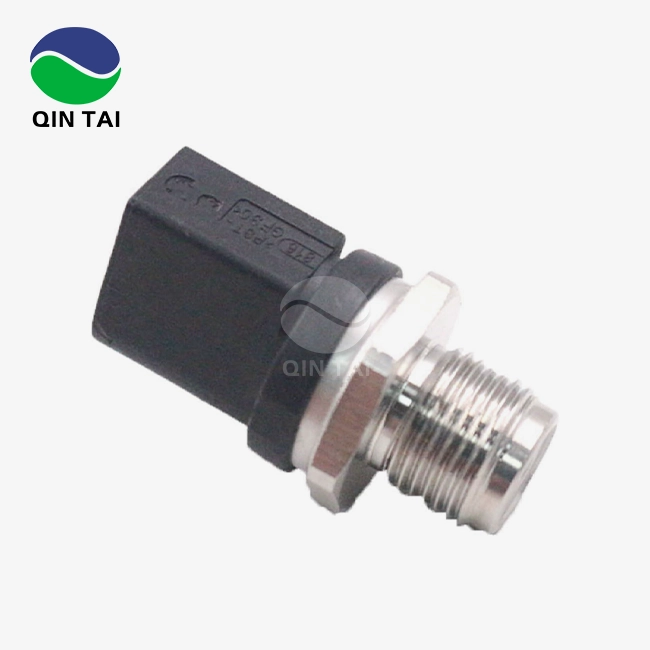
Ceramic pressure sensors have become the preferred sensing solution for industries where reliability is non-negotiable. Built from 96% Al2O3 ceramic material, these sensors deliver precise pressure measurement across extreme temperatures, corrosive media, and high-vibration environments. Unlike conventional metal or silicon sensors, ceramic diaphragm pressure transducers resist chemical attack and mechanical wear without signal degradation.
For OEM engineers, procurement managers, and aftertreatment system integrators operating in heavy-duty sectors, understanding what makes ceramic sensing technology superior is a direct path toward fewer equipment failures, lower maintenance costs, and stronger regulatory compliance.

Understanding Ceramic Pressure Sensors: Principles and Advantages
A piezoresistive principle is what makes a ceramic pressure sensor work. When you put pressure on the ceramic diaphragm, it changes the electrical resistance of the sense elements that are attached to its surface on a tiny level. This change in resistance is turned into a voltage signal that can be measured. This signal sends correct real-time pressure data to the control system.
How Ceramic Differs from Metal and Silicon Sensors
Stainless steel sensors rust in harsh media, and silicon sensors move when the temperature changes, but ceramic sensors stay structurally sound for decades. The 96% Al2O3 structure makes it hard, almost as hard as diamond. It can withstand wear from slurry, exhaust gas with particles, and hydraulic fluid. Because of this material advantage, diesel engine OEMs and generator set manufacturers always choose ceramic diaphragm sensors over other options when they need to last a long time between services.
Some of the most important performance traits that make ceramic pressure sensors stand out are:
- Chemical inertness: Acids, bases, and organic solvents can't break down alumina ceramic, but they can break down metallic sensing elements in months.
- Thermal stability: Ceramic sensors stay calibrated through cold starts and long periods of high engine load. They work reliably from -40°C to 135°C with no temperature change below 0.05% FS/°C.
- Mechanical toughness: Safety overload rated at 200% FS means that short-term pressure spikes don't damage the sensing element permanently.
These features directly meet the main needs of R&D workers working on emission-compliant powertrains and SCR/DPF aftertreatment systems, where precise measurements—enabled by ceramic pressure sensors—are key to how well the systems work.
Why Ceramic Pressure Sensors Excel in Harsh Industrial Environments
Ceramic pressure sensors perform admirably in harsh industrial settings. Sensing equipment in industrial settings is put through situations that most computer parts can't handle for a long time. High pressure, temperature cycling, and chemically aggressive media are all used together in diesel exhaust aftertreatment systems, building machinery hydraulics, mine-site generator sets, and industrial exhaust gas treatment installations.
Durability Backed by Real Operating Data
In corrosive exhaust settings, field data from heavy trucks shows that ceramic diaphragm pressure sensors last three to five times longer than stainless steel versions. Because there is no metal fatigue or oxidation layer building up on the sensing surface, maintenance intervals get a lot longer. This means that repair shops and parts suppliers that serve the commercial vehicle aftermarket will get fewer warranty returns and keep more of their customers.
Performance Under Mechanical Stress
Machines used in building and farming always have to deal with vibration and mechanical shock. Because ceramic is naturally stiff, the diaphragm doesn't shift over time like it does in metal sensors, which leads to zero-point error. Ceramic sensors give accurate readings even when they are used on rough ground or close to diesel engines with a non-linearity specification of ≤ 0.3% FS and a complete accuracy specification of ≤ ±0.5% FS.
Because these things last longer, procurement managers can justify the higher initial unit cost by figuring out the total cost of ownership, which includes fewer replacements, less labor for swapping sensors, and less unplanned downtime, especially when ceramic pressure sensors are used.
Introducing the Qintai QS-P105 Ceramic Pressure Sensor
Model QS-P105 from Qintai is designed to work with diesel engines and other hard industry equipment. It meets all kinds of needs, from diesel OEM production lines to integrating aftertreatment systems, thanks to its advanced 96% Al2O3 ceramic pressure sensor technology.
Here are the core technical specifications of the QS-P105:
| Parameter | Specification |
|---|---|
| Pressure Range | -1/0 bar to 600 bar |
| Sensitivity | 2–4.0 mV/V |
| Non-linearity | ≤ 0.3% FS |
| Zero Temperature Drift | < 0.03–0.05% FS/°C |
| Supply Voltage | 2–30 VDC |
| Comprehensive Accuracy | ≤ ±0.5% FS |
| Material | 96% Al2O3 Ceramic |
| Working Temperature | -40°C to 135°C |
| Safety Overload | 200% FS |
The QS-P105 can handle a wide range of pressures, from vacuum to 600 bar. This means it can be used for tracking hydraulics, reading diesel fuel rail pressure, measuring differential pressure in SCR systems, and treating industrial exhaust gasses. The supply voltage range of 2–30 VDC makes it easier to integrate into a variety of control architectures without the need for extra hardware for signal conditioning.
The small size allows it to be mounted in places where bigger sensors physically can't, which makes installation easier on engine systems that are already put together. Technical managers and supply chain managers can choose the connector types, pressure ports, and output signal formats that work best with their current system design thanks to customizable interface choices. These benefits cut down on technical work that needs to be redone and speed up the time it takes to make something.

Choosing the Right Ceramic Pressure Sensor for Industrial Procurement
Before choosing a supplier, procurement managers and OEM engineers should compare a number of technical factors related to ceramic pressure sensors to the needs of their applications.
Critical Selection Criteria
Compatibility with the pressure range is the first step. The QS-P105 can handle pressures from -1/0 bar to 600 bar, which is wide enough for most diesel engine, hydraulic, and industrial gas cleaning tasks. The temperature range needs to match the placement conditions. For most heavy-duty diesel and generator set uses, a range of -40°C to 135°C is enough without any extra thermal management gear.
The type of signal output is important for integrating the system. Integrators of aftertreatment systems can easily connect to existing ECU hardware thanks to a ratiometric mV/V output with a source voltage range of 2–30 VDC. Certifications from the seller, such as ISO9001 and IATF16949 qualifications, give purchasing teams quality assurance paperwork that can be checked and is needed for OEM supply chain approval.
Customization sets capable sellers apart from common distributors. For OEM production schedules to work, sensors must be pre-configured to exact specifications so that they don't have to be changed in the field, which takes time. Working with a manufacturer that offers both OEM and ODM services from the planning stage to mass production lowers the complexity of the supply chain and the overall cost of buying things.
Case Studies and Performance Verification
China's biggest diesel engine makers, like Weichai Power, Yuchai Power, and Quanchai Power, have bought ceramic pressure sensors measuring solutions from Qintai. This has helped them become the market leader in China's diesel aftertreatment sensor area. As a result of these agreements, a lot of OEM parts need to be made that are consistent from batch to batch, can be tracked, and meet China VI and Euro VI emission standards.
In generator set uses at mine sites and power plants, Qintai sensors have shown that they can keep working for years without needing to be serviced, even in dusty, high-vibration places where it's hard to get replacements. The 200% FS overload grade protects against pressure spikes that happen when the generator's load is suddenly cut off.
Independent laboratory validation confirms that piezoresistive ceramic pressure sensors achieve accuracy within ±0.1% to ±0.5% of full scale, with the QS-P105 meeting the ±0.5% FS specification consistently across production batches. This amount of measuring trust helps with accurate SCR dosing control, which has a direct effect on meeting NOx emission standards.

Conclusion
Ceramic pressure sensors are better than metal and silicon options in every way that matters to commercial buyers: they last longer, work more accurately, are resistant to chemicals, and are more durable. These pros are all in one Qintai QS-P105 platform that can be customized and works in temperatures ranging from -40°C to 135°C and -1/0 bar to 600 bar. For OEM engineers, aftertreatment integrators, and procurement specialists who need a reliable source with IATF16949 certification and a history of producing OEM parts, the QS-P105 is a technically sound and cost-effective option.
FAQ
How accurate are ceramic pressure sensors compared to metal sensors?
Depending on how they are designed and calibrated, piezoresistive ceramic pressure sensors can be accurate to within ±0.1% to ±0.5% FS. The QS-P105 is very accurate, with a range of ≒ ±0.5% FS and non-linearity of ≤ 0.3% FS. Metal sensors tend to lose their zero-point accuracy over time because of wear and tear on the material and oxidation, especially in corrosive environments. This happens even if the sensors are not recalibrated.
Can ceramic sensors handle extreme temperature swings in automotive applications?
The QS-P105 works reliably from -40°C to 135°C, and its zero temperature drift is less than 0.05% FS/°C. This range includes conditions for cold-starting a diesel engine and long periods of high load. This means it can be used for big trucks on the road, building equipment off the road, and generator sets that work in harsh weather.
What should procurement teams consider when ordering custom ceramic pressure transducers?
Some important things to think about are the goal pressure range, the type of signal output, the connection specifications, the mounting thread, and any standards that are needed, like IATF16949 or CE. Unit prices are affected by the number of orders, and OEM partnership agreements often allow for dedicated production scheduling. Supply continuity is protected by making sure the manufacturer can make a lot of things and has quality documentation before making a commitment.
Partner with Qintai for Proven Ceramic Pressure Sensor Solutions
Qintai is a certified ceramic pressure sensors manufacturer with more than 20 years of OEM production experience. They sell the QS-P105 and a wide range of other industrial pressure sensing solutions to customers in more than 60 countries. No matter if you need a lot of products, special interface configurations, or expert advice on how to connect systems, our engineering team is ready to help you with your project from the planning stages to mass production. Contact us at info@qt-sensor.com or visit qt-sensor.com to request a quote or download the product catalog.
References
1. Sensors and Actuators A: Physical — Elsevier, 2021
2. IEEE Transactions on Industrial Electronics — IEEE, 2020
3. Journal of the European Ceramic Society — Elsevier, 2022
4. Measurement Science and Technology — IOP Publishing, 2019
5. SAE International Journal of Engines — SAE International, 2021
6. Industrial Sensors and Controls Handbook — CRC Press, 2018

Our customers’ satisfaction speaks for our quality — contact us to experience the same reliable service.