- English
- French
- German
- Portuguese
- Spanish
- Russian
- Japanese
- Korean
- Arabic
- Greek
- German
- Turkish
- Italian
- Danish
- Romanian
- Indonesian
- Czech
- Afrikaans
- Swedish
- Polish
- Basque
- Catalan
- Esperanto
- Hindi
- Lao
- Albanian
- Amharic
- Armenian
- Azerbaijani
- Belarusian
- Bengali
- Bosnian
- Bulgarian
- Cebuano
- Chichewa
- Corsican
- Croatian
- Dutch
- Estonian
- Filipino
- Finnish
- Frisian
- Galician
- Georgian
- Gujarati
- Haitian
- Hausa
- Hawaiian
- Hebrew
- Hmong
- Hungarian
- Icelandic
- Igbo
- Javanese
- Kannada
- Kazakh
- Khmer
- Kurdish
- Kyrgyz
- Latin
- Latvian
- Lithuanian
- Luxembou..
- Macedonian
- Malagasy
- Malay
- Malayalam
- Maltese
- Maori
- Marathi
- Mongolian
- Burmese
- Nepali
- Norwegian
- Pashto
- Persian
- Punjabi
- Serbian
- Sesotho
- Sinhala
- Slovak
- Slovenian
- Somali
- Samoan
- Scots Gaelic
- Shona
- Sindhi
- Sundanese
- Swahili
- Tajik
- Tamil
- Telugu
- Thai
- Ukrainian
- Urdu
- Uzbek
- Vietnamese
- Welsh
- Xhosa
- Yiddish
- Yoruba
- Zulu
Choosing A Pressure Sensor For Industrial Applications
It's important to find the right pressure sensor for commercial uses by weighing technical specs, operational dependability, and compliance needs. Industrial pressure sensors turn mechanical force into electrical signals that can be measured. This lets diesel engines, aftertreatment systems, building equipment, and environmental protection equipment be watched in real time. To get the best performance and meet emission standards like China VI and Euro VI, it's important to understand sensor technologies, accuracy parameters, environmental adaptability, and supplier capabilities. This guide covers important selection criteria for purchasing managers, R&D engineers, and technical professionals looking for reliable measurement solutions.
Understanding Pressure Sensors in Industrial Applications
Technology for measuring pressure is the basis for keeping an eye on and managing important business processes. These gadgets pick up changes in the force of fluids and gases and turn them into electrical signals that repair teams and control systems can understand right away.
What Defines Industrial Pressure Sensors?
Industrial pressure sensor units record information that is needed for forecast maintenance plans by measuring the force that is applied to a certain area. The transduction device turns mechanical force into voltage or current signs, and the sensor element picks up on changes in hydraulic fluids, compressed air, or exhaust gases. The outputs are then filtered and formatted by signal conditioning circuits so they can be used by display systems or computerized platforms for repair management. This constant tracking lets teams find possible equipment failures before they become major problems. This cuts down on downtime and increases the useful life of assets.
Primary Measurement Categories
Three basic types of pressure sensors are used for different tasks in industry. Absolute pressure sensors detect force in relation to a vacuum. This makes them great for applications that need to be sensitive to altitude or sealed systems. Gauge pressure sensors measure the pressure in the air and are often used in hydraulic and gas systems. Differential pressure sensors find changes in force between two measurement places. They are very useful for keeping an eye on filters and measuring flow in SCR aftertreatment systems. Differential readings are especially important for diesel engine makers to make sure that DPF regeneration happens at the right times.
Industrial Application Scenarios
For heavy-duty tasks, measurement methods that work well in a variety of settings are needed. For building equipment's hydraulic systems to work properly, the sensors need to be able to handle pressure, shock, and dirt. Agricultural equipment works in dirty and wet places, so sensor housings that are protected keep them from breaking down too soon. In mines and power plants, generator sets need sensors that can work reliably for a long time while being loaded all the time. Aftertreatment systems have many sensors that check the backpressure of the exhaust, the pressure of the DEF input, and the efficiency of the catalyst. All of these things are important for meeting pollution standards.
Core Criteria to Consider When Choosing an Industrial Pressure Sensor
For performance to be effective, technical requirements must exactly match operating needs. Decision-makers should look at a number of linked factors that, when put together, show whether a sensor is right for a certain job.
Accuracy and Measurement Range Requirements
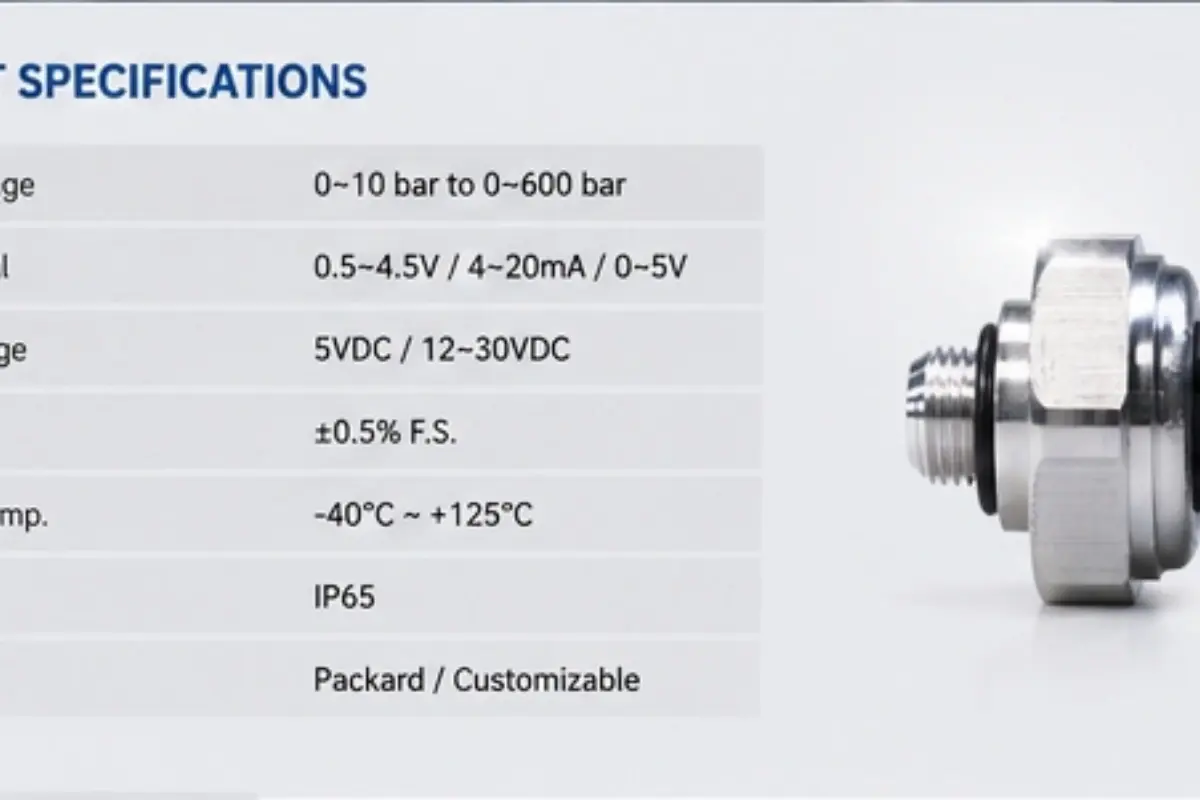
Precision of measurements has a direct effect on the quality of system control and compliance with regulations. To keep the right air-fuel ratios and control emissions, diesel engine uses usually need accuracy within ±0.5% of full scale. The pressure range needs to include both normal operation and possible fault situations. Ranges that are too small cause pressure sensors to become saturated, while ranges that are too big lose precision. The sensitivity specs tell you the smallest change in pressure that can be detected. This is especially important for uses that need to react quickly to sudden situations, like turbocharger surge events.
Environmental Compatibility Factors
Operating conditions put a lot of stress on the materials and design of sensors. Sensors ranging from -40°C to 150°C or higher are needed for the temperature ranges found in engine compartments and exhaust systems. When it comes to temperature stability, ceramic diaphragm shapes are better than metal ones. When pressure washing and being exposed to water are common in building and farming, waterproofing becomes very important. Ratings of IP67 or IP69K make sure that the pressure sensor will work reliably even when cleaned in hard ways. When sensors are exposed to toxic gases or fluids, they need materials that don't react badly with them. In these situations, stainless steel wetted parts and fluorocarbon seals last longer.
Output Configurations and Integration
The right electrical connections must meet the needs of system interaction. Long wire runs don't pick up noise with analog outputs like 4-20mA current loops, so they can be used for spread sensor networks in big buildings. Voltage outputs of 0V to 5V or 0V to 10V work well for digital data acquisition tools and shorter lengths. Being compatible with both the CAN bus and industrial protocols lets engine control units and programmable logic controllers talk to each other directly, without the need for extra signal processors. Aftertreatment system integrators like sensors whose output parameters can be changed and which can work with current system designs without requiring major changes.
Calibration and Long-Term Stability
Accuracy that lasts rests on following the right tuning steps and having sensors that are naturally stable. Sensors that keep specifications between calibrations are useful for industrial uses because they lower upkeep costs and guarantee consistency. Different technologies, like piezoresistive and capacitive, move in different ways. Knowing these differences can help you figure out what tuning frequency you will need. When facilities use predictive maintenance strategies, they should choose sensors that can diagnose problems and let them know when they need to be re-calibrated instead of sticking to set plans.
Comparing Different Pressure Sensor Technologies for Industry Use
There are a lot of different transmission principles on the market for industrial sensors, and each one has its own benefits for different types of situations and performance needs. Knowing about these changes in technology helps you make smart choices about what to buy.
Piezoresistive Sensor Characteristics
Piezoresistive sensors have strain gauges attached to a membrane that bends when pressure is put on it. The voltage changes because the strain gauge resistance changes in the same way that the diaphragm does. This technology works well for tracking engine oil pressure, fuel rail pressure, and hydraulic systems because it is constant and repeatable over a wide range of pressures. Manufacturing methods make mass production cheap, which meets the needs of OEM makers who need quality that stays the same across thousands of units. Temperature adjustment circuits keep thermal drift to a minimum, but in the worst cases, you may still need more correction methods.
Capacitive Technology Benefits
A ceramic diaphragm acts as one electrode in capacitive pressure sensor units, paired with a set reference electrode to make a changeable capacitor. When the pressure between the sensors changes, the capacitance changes in a way that is proportional to the force that is delivered. Because of their high long-term stability and low drift, this design makes capacitive sensors perfect for uses that need longer calibration intervals. Ceramic is a strong material that can handle harsh chemicals and high temperatures better than silicon-based materials.
Diesel engine makers like these sensors because they can take readings that are very important for emissions and if the accuracy drops, it could lead to compliance problems. The technology works especially well for differential pressure uses in DPF systems, where small changes show how loaded the filters are.
Piezoelectric Sensors for Dynamic Measurements
When put under mechanical stress, piezoelectric sensors directly produce an electrical charge, so in some cases they don't need any extra power. This technology is great for tracking pressures that change quickly, like those that happen in a combustion chamber or during a hydraulic shock. However, piezoelectric devices can only measure dynamic events because they can't measure static forces. Because they can respond to high frequencies, they are useful for research and development where thorough pressure trace analysis helps improve designs.
Clarifying Sensor and Transducer Terminology
The terms pressure sensor, transducer, and emitter are sometimes used interchangeably in the industry. The basic electrical changes made by pressure sensors are detected. Transducers use signal filtering to send out electrical messages that are all the same. For long-distance transmission, transmitters add power and change the system. Knowing these differences helps buying teams be clear about what they need and keep sellers from getting confused. In real life, the terms are sometimes used interchangeably because many modern gadgets have all of their features built into small housings.
How to Select and Procure Pressure Sensors for Industrial Use?
To do procurement right, you need to carefully look at technical needs, provider skills, and total ownership costs. Smart choices about where to get products affect their quality, how reliably they are delivered, and the value of long-term partnerships.
Defining Comprehensive Procurement Needs
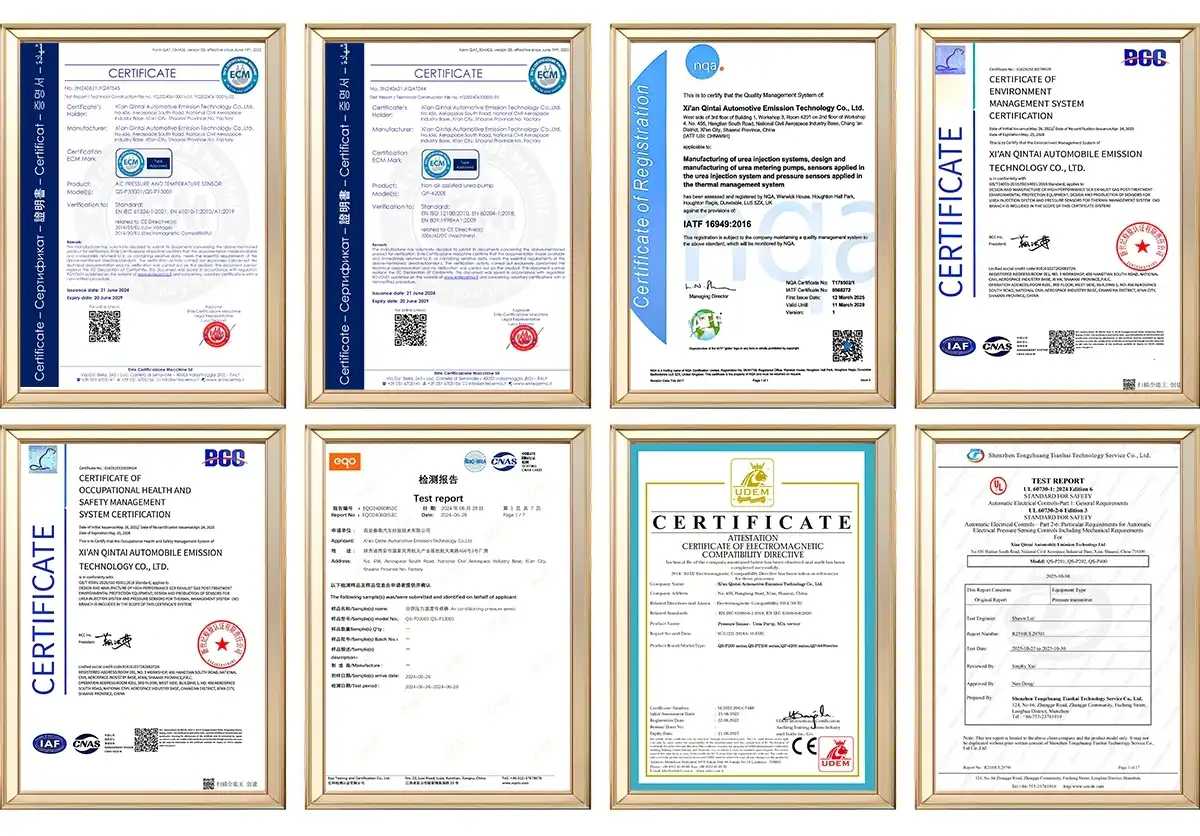
Technical specifications are the basis, but full needs go beyond these basic factors. Manufacturers of diesel engines need to make sure that the sensors they use have the right licenses. For example, IATF16949 is for vehicle quality systems, ISO9001 is for general quality management, and there are also approvals for emissions.
Explosion-proof grades (Ex certification) are needed for things that are used in dangerous places, like generator sets in mine activities. The selection of a supplier is affected by the amount that needs to be produced. For mass production, producers with a history of capacity and steady quality control are favored. Customization needs for OEMs could include electrical connections, mounting arrangements, or pressure sensor port positions that can't be found in standard catalog goods.
Evaluating Supplier Qualifications
When choosing a supplier, the factors should put equal weight on technical skill and operational dependability. Companies that have their own research and development departments show that they can come up with new ideas and make improvements to their products quickly. Companies that have a lot of foreign certificates, like UL, CE, REACH, and RoHS, show that they care about environmental issues and meeting the standards of the global market.
Patent portfolios show progress in technology and exclusive advantages—suppliers with a lot of idea patents often offer better performance. Verifying production capacity keeps supplies from being interrupted when demand changes. Having ties with important diesel engine makers shows that the quality and dependability of the product have been tested and proven. Qintai Automotive Emission Technology Co., Ltd. Ltd is a good example of these skills because it has been specializing in diesel engine sensors and SCR aftertreatment systems for over 20 years.
Interpreting Technical Datasheets
Datasheets have important information that needs to be carefully interpreted. Specifications for accuracy may talk about best-fit straight line, terminal-based linearity, or total error band. Each way of calculating gives different numbers for the same sensor performance. There should be a difference between adjusted and uncompensated standards in the operating temperature ranges, since accuracy often drops outside of compensated zones.
Response time specs tell you how fast sensors can track changes in pressure, which is important for readings that only last a short time. The electrical requirements must match the power sources that are accessible and the input needs of the instruments that are linked. Mechanical standards, such as pressure port threads, electrical connection types, and fixing measures, keep things from not working with each other physically.
Managing Cost Without Compromising Quality
When figuring out prices, you should look at the total costs of ownership instead of just the unit buy prices. When cheaper sensors fail more often, it costs more to repair them, deal with the downtime, and file a warranty claim than the original savings. When you buy in bulk, you usually get savings, but the lower unit price has to be balanced against the costs of keeping supplies and the risk of items going out of style.
Long-term supply deals with reliable makers can often get you better prices and make sure that you always have the product you need. OEM partnerships allow for special tech that makes sensors work better in certain situations, which could lower the cost of the system in other places. When used in the aftermarket, sensors need to be both cost-effective and reliable. Repair shops need sensors that can do a lot of different things and don't break down often so that customers are happy.

Automechanika Istanbul 2026 (19-22,May,2026)
We look forward to your visit,warmly welcome to our booth 11A-B117-5!
Get your free ticket online now:
https://www.automechanikaistanbulplus.com/register/en

SENSOR+TEST, June 9 – 11, 2026
We look forward to your visit,warmly welcome to our booth 1-634!
Get your free ticket online now:
https://www.sensor-test.de/service/ticket/?52790
Troubleshooting, Calibration, and Best Practices for Pressure Sensor Longevity
To get the most out of sensor lives and keep measurement accuracy, you need to be proactive about care and use organized troubleshooting methods when problems happen.
Calibration Protocols and Frequency
Regular testing makes sure that readings stay within the range of accuracy throughout the pressure sensor lifecycle. Important sensors that deal with emissions in diesel engines usually need to be checked once a year to stay in line with regulations. When high-stability capacitive sensors are used in industrial processes, adjustment times could be pushed back to 18 to 24 months. Reference standards that are at least four times more accurate than the device being tested and can be tracked back to national measurement centers should be used for calibration. Single-point checks are less accurate than multi-point calibration across the working range. Recording the past of calibration helps find sensors that are drifting in a way that isn't normal and may need to be replaced instead of being adjusted.
Common Issues and Solutions
One of the most common problems with sensors is signal drift, which can be caused by changes in temperature, mechanical stress, or contamination. If the thermal drift is within the design limits, temperature compensation changes can fix it. If the drift is too high, however, it means the sensor is worn out and needs to be replaced. Electrical noise disturbance shows up as numbers that aren't consistent or signals that change too much. Most electrical noise problems can be fixed by properly grounding, shielding wires, and keeping them away from high-voltage lines.
Damage to the physical part from pressure spikes or pollution leads to failure or behavior that isn't consistent. Putting in safety features like snubbers for pressure spikes and screening for contaminated media stops breakdowns from happening too soon. If the output signs aren't within the expected ranges, it could mean that there are problems with the wiring, the power source, or the sensors. Systematic electrical checks find the root cause.
Maintenance Practices for Extended Service Life
Preventive repair greatly increases the useful life of sensors while keeping their accuracy. By checking electrical connections on a regular basis, you can find corrosion or loose terminals before they cause random breakdowns. By looking at the pressure port, you can see that there is buildup of contamination that can affect the accuracy of the measurements. Cleaning the port gently with the right chemicals fixes the problem without hurting the sensing elements.
Verification of the mounting hardware stops vibration-induced shifting that can lead to measurement mistakes or damage to the hardware itself. Protecting the environment with protective covers or moving away from sources of high heat lowers the stress on sensor parts. By using condition tracking techniques that keep an eye on how sensor output changes over time, you can find patterns of wear and tear early on and replace the part during routine maintenance instead of having to deal with problems that come up out of the blue.
Conclusion
In conclusion, to choose the right industrial pressure sensor units, you need to look at the measurement needs, the surroundings, the technology choices, and the supplier's skills. The accuracy requirements, pressure ranges, and output settings must all match the needs of the application. Certifications make sure that the product meets legal requirements. Both piezoresistive and capacitive technologies have their own benefits, and knowing these differences will help you make the best choice.
A successful buying process includes more than just technical requirements. It also includes the supplier's dependability, ability to make changes, and long-term support. Regular testing and proactive repair keep measurements accurate and extend the life of sensors. Diesel engine makers, aftertreatment integrators, and equipment makers can improve their operations by working with experienced sensor providers who provide reliable quality and quick technical support.
FAQ
Q1: What distinguishes absolute pressure sensors from differential pressure sensors?
A: Absolute pressure sensor models measure force in relation to a perfect vacuum, so their results are not affected by changes in the atmosphere. These sensors work well in sealed systems and places where changes in the air can affect readings. Differential sensors find the difference in force between two points. They are often used to check the state of filters or the rate of flow. By comparing the pressures of the smoke coming from the engine's upper and downstream parts, DPF systems can tell how much particulate matter is present.
Q2: How often should industrial pressure sensors undergo calibration?
A: How often you calibrate relies on how important the application is, how it's being used, and the type of sensor being used. Measurements related to emissions usually need to be checked once a year to stay in line with regulations. Intervals can be extended to 18 to 24 months for process control uses that use high-stability sensors. More frequent checks are needed in harsh settings with high temperature changes or contamination. Setting up standard calibration trends helps make plans that are based on real drift patterns instead of just making up dates.
Q3: Can wireless pressure sensors match wired sensor reliability?
A: Modern wireless pressure sensors are just as reliable as wired ones when they are set up correctly. When designing a system, you need to think about things like battery life and signal confusion. Wireless setups get rid of wire failure modes and make installation easier in places that are hard to get to. Because of their ongoing power and data routes, wired sensors are still preferred by critical safety systems. Hybrid methods that use wired sensors for safety-critical readings and wireless sensors for non-critical tracking are a good balance between freedom and dependability.
Partner with Qintai for Industrial Pressure Sensor Solutions
Qintai Automotive Emission Technology Co. Ltd has been a specialist in diesel engine aftertreatment systems and industrial sensors for more than 20 years. We serve Weichai Power, Yuchai Power, and Quanchai Power with quality that is backed by IATF16949 and ISO9001 certifications because we are the top producer and seller of pressure sensor solutions in China's automotive market. Our separate research and development team makes OEM and ODM products that meet Euro VI and China VI pollution standards. We offer highly better goods at reasonable prices and with reliable shipping thanks to our 58 idea patents and many certifications, such as UL, CE, REACH, and RoHS. Email our engineering team at info@qt-sensor.com to talk about your unique pressure sensor needs and get suggestions that are right for your industrial uses.
References
1. Johnson, M. R., & Thompson, K. L. (2022). Industrial Pressure Measurement: Technologies and Applications. Technical Publishing International.
2. Chen, W., & Anderson, P. (2023). Sensor Selection for Diesel Engine Emission Control Systems. Automotive Engineering Journal, 45(3), 178-195.
3. Mitchell, D. A. (2021). Capacitive vs. Piezoresistive Pressure Sensors: Comparative Performance Analysis. Industrial Instrumentation Review, 38(6), 412-428.
4. Roberts, S., & Kumar, A. (2023). Calibration Protocols for Industrial Pressure Sensors. Metrology Standards Quarterly, 29(2), 88-103.
5. European Automotive Manufacturers Association. (2022). Pressure Sensor Requirements for Euro VI Compliance. Technical Specification Document ES-2022-447.
6. Zhang, L., & Williams, R. T. (2023). Long-Term Reliability of Pressure Sensors in Heavy-Duty Applications. Journal of Industrial Maintenance, 51(4), 267-284.
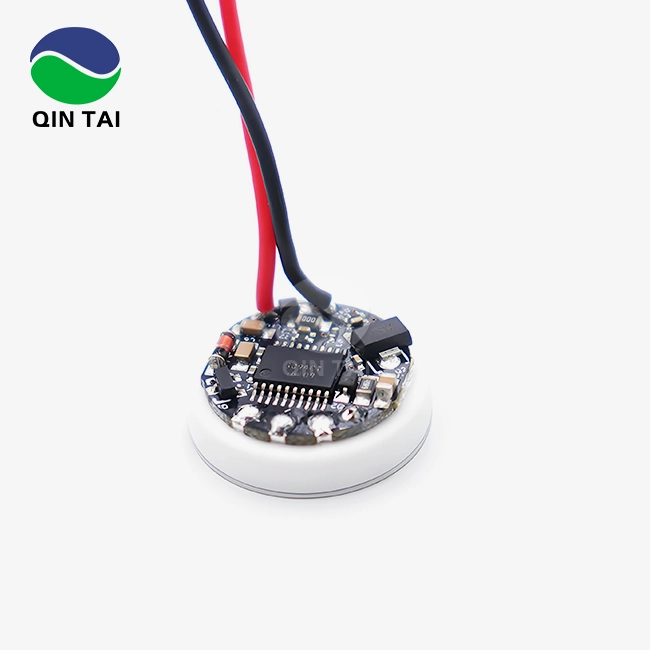



Our customers’ satisfaction speaks for our quality — contact us to experience the same reliable service.