- English
- French
- German
- Portuguese
- Spanish
- Russian
- Japanese
- Korean
- Arabic
- Greek
- German
- Turkish
- Italian
- Danish
- Romanian
- Indonesian
- Czech
- Afrikaans
- Swedish
- Polish
- Basque
- Catalan
- Esperanto
- Hindi
- Lao
- Albanian
- Amharic
- Armenian
- Azerbaijani
- Belarusian
- Bengali
- Bosnian
- Bulgarian
- Cebuano
- Chichewa
- Corsican
- Croatian
- Dutch
- Estonian
- Filipino
- Finnish
- Frisian
- Galician
- Georgian
- Gujarati
- Haitian
- Hausa
- Hawaiian
- Hebrew
- Hmong
- Hungarian
- Icelandic
- Igbo
- Javanese
- Kannada
- Kazakh
- Khmer
- Kurdish
- Kyrgyz
- Latin
- Latvian
- Lithuanian
- Luxembou..
- Macedonian
- Malagasy
- Malay
- Malayalam
- Maltese
- Maori
- Marathi
- Mongolian
- Burmese
- Nepali
- Norwegian
- Pashto
- Persian
- Punjabi
- Serbian
- Sesotho
- Sinhala
- Slovak
- Slovenian
- Somali
- Samoan
- Scots Gaelic
- Shona
- Sindhi
- Sundanese
- Swahili
- Tajik
- Tamil
- Telugu
- Thai
- Ukrainian
- Urdu
- Uzbek
- Vietnamese
- Welsh
- Xhosa
- Yiddish
- Yoruba
- Zulu
Common Issues and Troubleshooting of Pressure Sensors
When a pressure sensor fails, it can stop production lines, put emission control systems at risk, and cause expensive downtime. These gadgets pick up on force applied to a surface and turn it into a measurable electrical signal. This lets diesel engines, aftertreatment systems, and other industry uses use predictive maintenance plans. Understanding the root causes and using thorough troubleshooting is important for keeping operations running smoothly and following the rules when sensors stop working, whether it's because of signal drift, calibration mistakes, or damage from the environment.
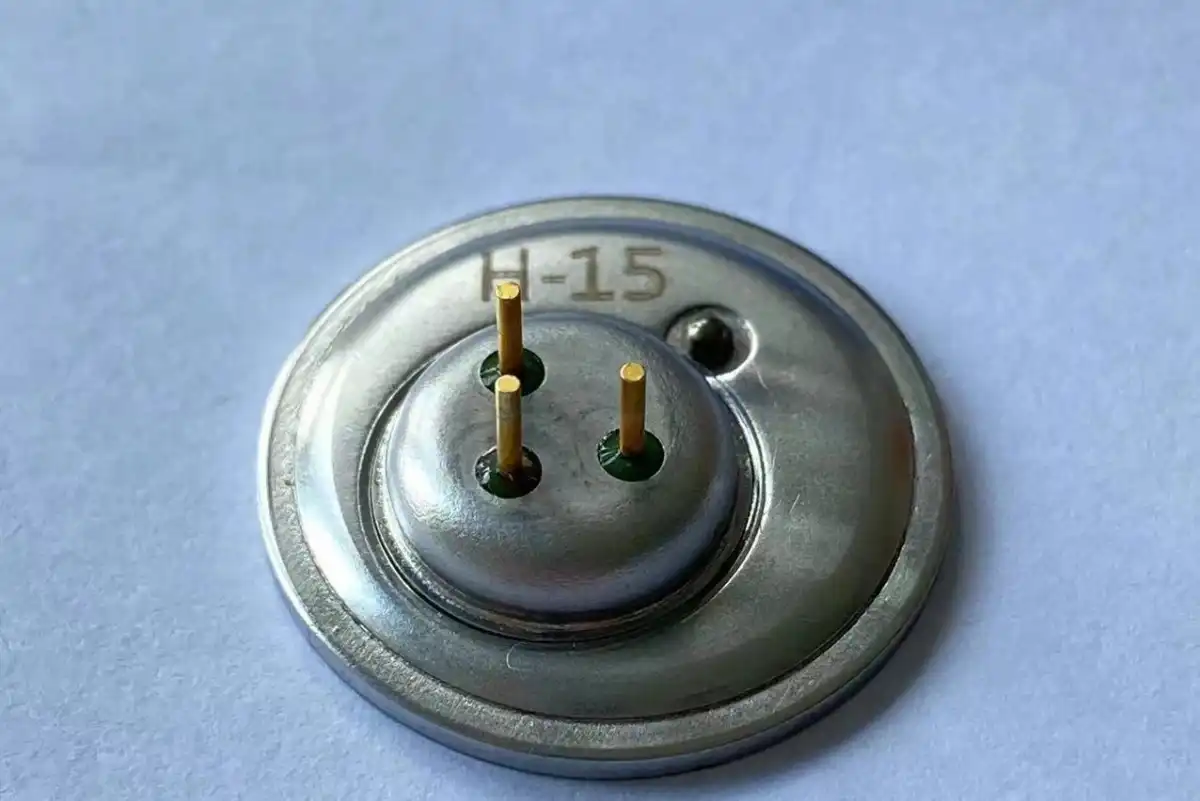
Understanding Common Pressure Sensor Issues
Pressure measuring tools in industry and cars can fail in a number of ways that have a direct effect on how well the system works. When procurement managers and R&D experts see these trends, they can take steps to stop problems before they become major.
Signal Drift and Zero-Point Errors
Signal shift is one of the most sneaky issues with how pressure sensor units work. Even though the real pressure stays the same, the electrical output slowly moves away from its calibrated standard over time. This usually happens when a part gets old, when the temperature changes, or when the material in the detecting element wears out. Zero-point errors happen when sensors record numbers that are not zero at atmospheric pressure. This leads to systematic measurement mistakes across the entire working range.
Changing temperatures make sensing elements expand, which can have an effect on strain gauges and ceramic diaphragms in particular. Different materials expand and shrink at different rates when the temperature changes from -40°C during winter starts to 85°C inside the engine. This heat stress weakens the ties that hold strain gauges and diaphragms together over time. This causes baseline changes that build up over months of use.
Moisture getting into electrical parts speeds up signal loss by making new conduction paths. Even if an item has an IP67 or IP68 grade for protection against water or dust, repeated heat cycling can damage the seal around electrical connections. As soon as water gets into protection housings, rust starts at the points where two different metals meet. This raises the resistance of the contact and adds noise to measurement circuits.
Mechanical Wear and Physical Damage
When used in heavy-duty situations, vibration causes fatigue stresses that break sensor elements or loosen mounted hardware over time. When construction equipment is used on rough ground, it shocks sensors with loads greater than 50G acceleration, and diesel engines continuously vibrate at frequencies that match the resonance points of components. These mechanical forces cause damage that gets worse over time. The damage might not fail right away, but it does make measurements less accurate over time.
Water hammer effects or rapid valve closures can cause pressure spikes that can forever deform diaphragms that were made for certain pressure ranges. When short-term pressures are higher than twice the allowed maximum, which happens a lot in hydraulic systems when they need to stop quickly, thin metal or ceramic membranes change plastically and can't go back to their original shape. Because of this lasting change, the link between applied pressure and electrical output is no longer the same, so calibrations that were made before are no longer valid.
Particulate matter contamination in measured media makes things even more difficult. Diesel exhaust goes through SCR aftertreatment systems that deal with soot particles, urea crystals, and condensed hydrocarbons. These can block sensor ports or cover diaphragm surfaces. Even small amounts can change how heat moves and put mechanical limits on sensors, which can slow them down or make them less accurate.
Electrical Interference and Installation Errors
Voltage jumps on sensor signal lines are caused by electromagnetic interference from ignition systems, alternators, and power inverters. If you don't shield and ground properly, these electrical disturbances show up as measurement noise or wrong data that make control systems lose their way. The problem gets worse in places with a lot of electrical noise where sensitive measurement circuits are close to a lot of high-current devices.
Several hundred percent of perceived sensor problems are caused by bad installation. When fittings are too tight, they put side loads on sensing elements that cause stress concentrations. When connections are too loose, pressure leaks happen that make measurements less accurate. When mounting is done wrong, fluid can build up in electrical holes, and when sensor lines aren't cleared of air, compressible volumes form that weaken pressure signs and slow reaction times.
When sensors link to tracking systems through more than one electrical path with different ground potentials, ground loop problems happen. When this happens, current flows through the signal wires and adds shift voltages that change depending on the electrical loads on the engine. This problem mostly happens with analog output sensors in cars, where the chassis ground potential changes in relation to the negative battery connections when the starting motor is running or when other high-current loads are present.
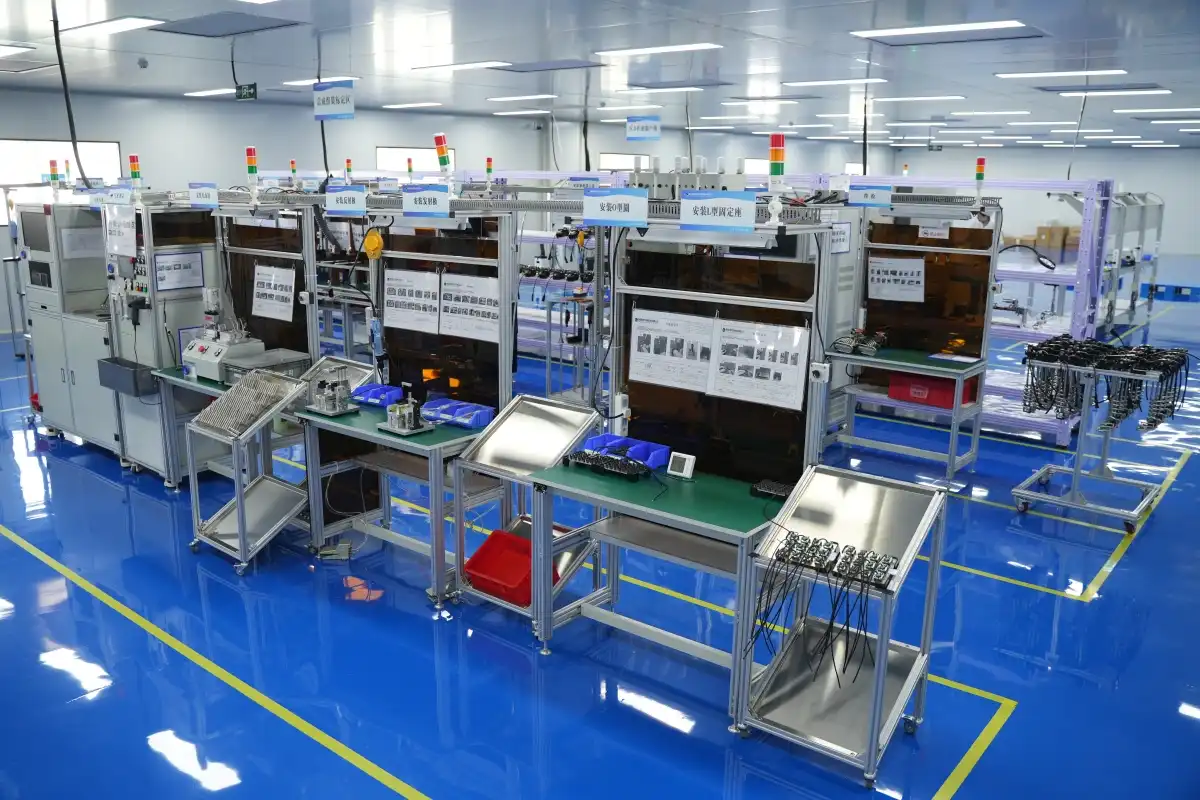
Effective Troubleshooting Methods for Pressure Sensors
Systematic testing methods cut down on downtime and keep parts from having to be replaced when they don't need to be. The following methods make it easier for expert teams to find the root reasons.
Visual Inspection and Physical Assessment
Start fixing by looking at where the pressure sensor is mounted for clear signs of damage. When you see cracked housings, rusted electrical plugs, or fluid leaking around sealing surfaces, you know right away that something is mechanically broken and needs to be replaced. Check the mounting hardware for any looseness that could cause vibration-induced wear and tear, and make sure that the protective caps are still firmly connected to ports that aren't being used.
Check wire leads for chafing damage where cords touch moving parts or sharp edges. Check for darkened insulation, which means the wires are getting too hot, and bend the cables near the ends while checking for electrical continuity to find connection failures that happen from time to time. Check the connecting pins for rust, bent contacts, or moisture that makes the contacts less reliable.
Functional Testing and Calibration Review
Using precise test tools, compare the results of sensors to known standards. Use measured sources to apply controlled pressures while digital multimeters or oscilloscopes are used to watch electrical signs. Write down any changes that aren't following the published specs. Also, make a note of whether the mistakes are the same across the whole measurement range or just happen at certain pressure levels.
Test dynamic response by changing the pressure quickly and checking how long it takes for the sensor to respond. Responses that are slow could be caused by technical problems like contamination or the breakdown of the damping fluid, while overshoot and oscillation could be signs of resonance issues. You can see if performance drops over time by comparing these traits to standard data from the initial commissioning.
Check the records of calibration to see when the last proof testing of the sensors was. Depending on how hard they are used, many apps need to be recalibrated every 6 to 24 months. When sensors get close to or past the suggested intervals, they may lose accuracy even if there is no clear physical damage.
Advanced Diagnostic Tools and Techniques
Digital multimeters measure voltage and current for analog sensors to make sure the power source is stable and the output signal levels are correct. For ratiometric sensors, set the meters to measure DC voltage. For industrial receivers, set them to measure 4-20mA current loops. Check the input voltage when the load is on it to make sure that the power sources stay regulated within the sensor's requirements.
Averaging multimeters can't see problems with signal quality that oscilloscopes can. To see full signal patterns, connect probes to sensor outputs and change the time base settings. Noise spikes, AC ripple on top of DC levels, or failures that happen every so often are all signs of bad links. Compare the waveforms of sensors that you think are broken with those that you know are working.
Manufacturers of vehicles and machines make specialized diagnosis software that has testing methods for specific sensors. Often, these tools come with automatic test routines that go through different pressure ranges while keeping an eye on how the system responds. Built-in pass/fail criteria based on maker specs make fixing easier and keep track of test results for quality records.
Preventive Maintenance Strategies
Set up regular review times based on how the system is working and information about past failures. Sensors that are used in tough settings need to be visually checked every three months. Installations that are covered may only need to be checked once a year. Write down what you find during a check so you can see patterns of wear and tear before they happen.
Set up recalibration plans that are in line with what the maker suggests and what the law requires. To keep their certifications valid, emission control systems usually need to be tested for compliance once a year. Keep records of calibrations that show they can be traced back to national standards using approved reference tools.
Use heat shields, vibration dampers, and moisture barriers that are right for the purpose to protect sensor elements from harsh weather conditions. Use thread sealants that are suitable with the tested media, and make sure that electrical connections get dielectric grease to stop corrosion. In challenging situations, these easy steps greatly increase the service life of sensors.
Comparing Pressure Sensor Types and Their Troubleshooting Needs
Different sensor systems have different ways of failing, so they need different ways to be diagnosed. Knowing these differences helps teams choose the right ways to fix problems.
Pressure Sensors, Transmitters, and Transducers
The language used to describe pressure sensor devices is often hard to understand, and differences in how they work affect how to fix problems. Basic sensors turn changes in pressure into raw electrical data like changes in capacitance or resistance. To make outputs that can be used, these devices need extra signal conditioning circuits. This adds more parts to the measurement chain, which makes debugging harder.
Transmitters combine sensors with electronics for signal filtering and amplification to create standard outputs such as 4-20mA current loops or ratiometric voltage signals. When emitters stop working, techs have to figure out if the problem is with the sensing parts or the electronics that are connected to them. Usually, this needs to be tested at several places along the signal line to find the broken parts.
Transducers are the simplest type of conversion device. They usually give off high-level voltages that are directly related to the applied pressure without doing a lot of signal processing. Their simpler designs tend to be more reliable, but they may not be as accurate or able to adjust for weather as more complex receivers.
Analog Versus Digital Sensor Challenges
When voltage or current readings are sent continuously by analog sensors, they can be affected by electromagnetic interference and voltage drops that happen over long wire runs. When you are troubleshooting analog systems, you need to pay close attention to how you ground them and how well the protection is working. Noise issues usually show up as numbers that change all the time when the electricity load changes or when the device is close to sources of interference.
By sending data as modified digital protocols, digital sensors with built-in microprocessors are better at blocking noise. When digital sensors fail, the issues are usually communication protocol mistakes, supply power problems, or the sensor fails completely, rather than losing accuracy over time. Protocol scanners that can decode sensor-specific digital communication standards must be part of diagnostic tools.
Modern digital sensors have built-in self-diagnostic features that make them much better at finding problems. These devices keep an eye on their own functions all the time and send out trouble codes that show exactly what went wrong. To get to this diagnostic data, you need to use suitable scan tools or software interfaces. However, the thorough failure data makes troubleshooting much faster than with analog devices that need external test equipment.
Absolute, Gauge, and Differential Pressure Measurement
Absolute sensors measure pressure in relation to a perfect vacuum, so changes in air pressure don't affect them. These gadgets need reference tanks that are hermetically sealed, but over time, leaks can happen and cause calibration changes. Checking the quality of the reference chamber by comparing it to barometric pressure data is part of troubleshooting absolute sensors.
Through reference ports that are open to the air, gauge sensors measure pressure in relation to the surrounding atmosphere. These holes can get clogged up with dirt or moisture, which can cause mistakes like absolute sensor reference leaks. Part of troubleshooting is checking and cleaning out air tubes to get the right atmospheric reference back.
Differential sensors find the difference in pressure between two process lines. They are often used to check the state of filters and measure flow. Measurement mistakes happen when either sensor port is blocked or leaks. To figure out what's wrong, you have to isolate each port separately to make sure that the pressure connection is working right and to find any sense lines that are clogged.

SENSOR+TEST, June 9 – 11, 2026
We look forward to your visit,warmly welcome to our booth 1-526!
Get your free ticket online now:
https://www.sensor-test.de/service/ticket/?52790
Procurement Insights: Selecting Reliable Pressure Sensors to Minimize Issues
Choosing the right pressure sensor units strategically cuts down on practical problems and upkeep costs by a large amount. The following things should be thought about when buying long-lasting, accurate measuring tools.
Material Quality and Environmental Ratings
The materials used in sensing elements must be able to withstand chemical attacks from the media being measured and keep their shape across a wide range of temperatures. Stainless steel diaphragms are strong and don't react badly with chemicals, so they can be used in diesel engines and aftertreatment systems. Ceramic sensing elements are better at staying stable at high temperatures and resisting rust in harsh settings, but they are more fragile and need to be installed with care.
The amount of environmental safety shown by IP ratings depends on the materials used for housing and the way they are sealed. Sensors with an IP67 rating can survive being submerged in water for a short time, while sensors with an IP69K rating can survive being washed in high-pressure, high-temperature water that is common in building and farming equipment. By matching environmental scores to real working conditions, failures caused by moisture or contaminants can be avoided before they happen.
Long-term dependability is affected by electrical connection methods in a big way. When it comes to corrosion protection, threaded brass connections with gold-plated contacts are better than molded plastic designs. Connectors that meet standards in the car industry, like Deutsch or AMP, make sure that they work with current wire harnesses and have been shown to last in mobile equipment uses.
Certification Requirements and Industry Standards
In the United States, emission control uses sensors that meet SAE and EPA standards for accurate measurements and long life. China VI and Euro VI compliance requires sensors to be proven to work by following specific test methods that record how well they work when exposed to chemicals, changing temperatures, and vibrations. Instead of depending only on what the maker says, procurement managers should make sure that potential sensors have the right certifications from well-known testing labs.
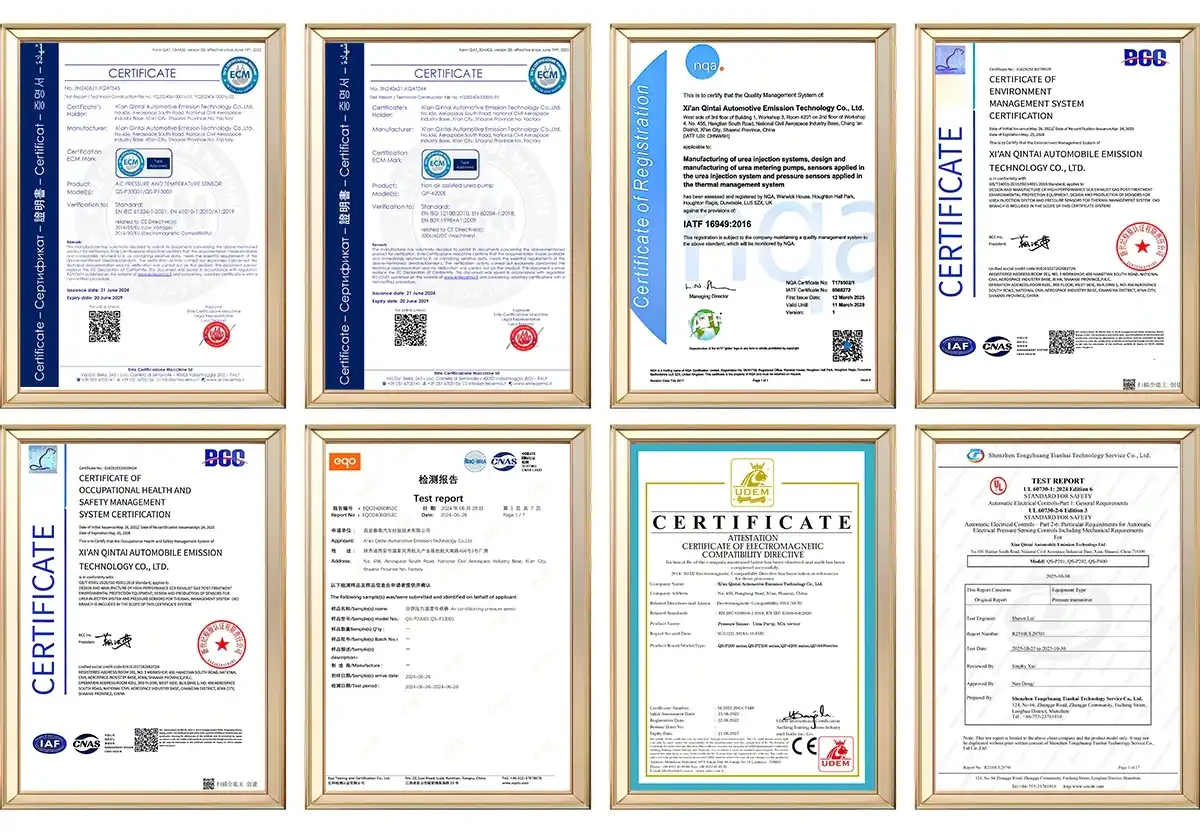
If a company has IATF 16949 certification, it means that their quality management systems meet the needs of the car industry for controlling processes, keeping records of them, and always making things better. This approval guarantees that the production process stays consistent, making it ideal for high-volume OEM uses where sensor-to-sensor differences must be kept to a minimum.
Intrinsically safe approvals are needed for sensors that work in explosive environments, like those found in mine equipment or oil extraction machinery. These special approvals make sure that the electrical properties of the sensor can't set off dangerous gases or dust, even if there is a fault. This means that energy-limiting designs and component rates need to be carefully thought out.
Supplier Reliability and Support Services
Supplier track records with big OEM customers can tell you a lot about how consistent the quality is and how well the supplier can help with technical issues. Tier-one diesel engine makers like Weichai Power, Yuchai Power, and Cummins work with manufacturers that have shown they can meet the strict needs of car production. These connections show strong quality systems that can handle large-scale output while keeping tight control over specifications.
How quickly technology problems are fixed during the product integration and production ramp-up phases depends on the infrastructure for after-sales support. Problems can be solved faster by suppliers with local technical representatives who understand the difficulties of a specific application than by makers far away who need to communicate remotely, which takes time. Request technical data packages from suppliers and see how quickly complete information comes to see how fast they are.
Failure analysis services and warranty covers protect against broken parts and give useful information about how to avoid application situations that cause failures to happen too soon. Full guarantees show that the company that makes the product is confident in its dependability, and the ability to analyze failures helps customers tell the difference between problems caused by production flaws and problems caused by the application that need design changes.
Troubleshooting Support and Future-Proofing Your Pressure Sensor Solutions
Today's technology lets us use proactive upkeep methods that stop mistakes before they happen, instead of just fixing problems as they happen. Using these methods will increase the uptime of your machinery and lower its total cost of ownership.
Predictive Maintenance Through IoT Integration
By connecting pressure sensor units to IoT platforms, performance decline can be detected before it leads to total crashes. Cloud-based analytics compare how sensors are behaving now to how they have behaved in the past. This finds small changes in zero-point stability, noise levels, or reaction times that show problems are starting to appear. Because of these early signs, work can be scheduled for planned downtime instead of having to happen when there are emergencies.
Machine learning systems that have been taught on big datasets can see patterns of failure that human operators can't. By looking at thousands of sensor lifecycles, these systems get better at predicting how long a sensor will still be useful. They then figure out the best time to change a sensor so that uptime and component costs are balanced. Large teams can gain the most from this technology because statistical analysis of many similar assets makes predictions more accurate.
Real-time alerting systems let repair teams know right away if sensor numbers go outside of the normal range of operation or show other strange behaviors. Integrating mobile devices makes sure that important messages get to the right people, no matter where they are, quickly, preventing damage from equipment problems caused by pressure. Configurable alert limits let you make changes that fit the needs of your program and your level of comfort with risk.
Self-Diagnostic Capabilities and Smart Sensors
Modern sensors have microprocessors that use built-in test methods to constantly make sure that the sensors' internal functions are working correctly. These self-checks keep an eye on the stability of the source voltage, the continuity of the signal line, and the operation of the temperature compensation circuit. If any problems are found, they send diagnostic trouble codes to let you know. When problems happen, techs can access detailed failure information that pinpoints individual component failures instead of having to do time-consuming hand troubleshooting.
Automatic compensation methods change the outputs of the sensors based on temperature readings from built-in thermistors. This keeps the sensors accurate over a wide range of temperatures without the need for human calibration. This feature is especially useful for mobile equipment that has to deal with big changes in temperature between cold starts and long periods of heavy use. Users can see what the pay is, which makes system interaction easier and measurement accuracy better.
Digital connections make it possible to change the pressure ranges, output formats, and reaction traits in the field without having to change the hardware. This programmability cuts down on inventory needs by letting software configure a single sensor type to work in more than one way. After installation, software updates for sensors can add features or make them work better, which increases the worth of the product over its entire lifecycle.
Long-Term Partnership Benefits
By working together with sensor makers, you can get access to tech know-how that makes sensor integration and application-specific customization go more smoothly. Suppliers who have worked with diesel engine aftertreatment systems know how to deal with problems like the chemistry of exhaust gases, the harshness of temperature cycling, and the different shaking patterns that come with different engine platforms. This specific understanding shortens the time it takes to build something and stops expensive design iterations from happening.
Instead of pushing standard goods into situations where they don't work, custom sensor versions that are made to fit specific mounting requirements, electrical interfaces, or environmental conditions make the system simpler and more reliable. If a manufacturer does its own research and development, it can change the designs of sensing elements, the way housings are put together, and the electrical properties of their products to meet the exact needs of each customer while still keeping quality ratings.
Sensor suppliers offer technical training programs to make sure that application engineers and support staff know how to properly place sensors, fix problems, and do preventative maintenance. This sharing of information builds up internal skills that make the company less reliant on outside help and higher the success rate of fixing problems the first time they happen. Teams stay up to date on new assessment tools and best practices through ongoing training changes.
Conclusion
To effectively fix pressure sensor units, you need to know how to use systematic testing methods and be aware of typical failure causes and changes in sensor technology. When making purchasing choices, putting an emphasis on quality certifications, supplier skills, and the right sensor technologies for the job cuts down on operating problems and upkeep costs. Modern predictive maintenance methods that use IoT connections and self-diagnostic sensors make it possible to find problems before they become expensive to fix. Forming partnerships with seasoned makers gives you access to technical know-how and the ability to make changes that improve sensor performance in tough diesel engine and industrial settings. These methods work together to make sure that measurement systems are reliable and help meet goals for legal compliance and operational efficiency.
FAQ
What causes pressure sensor readings to fluctuate erratically?
Usually, readings that aren't accurate are caused by electrical interference, links that aren't tight, or irregular mechanical touch within sensing elements. Check to see if any of the cables are close to starting wires or power sources that could be making electromagnetic noise. Check the pins on electrical sockets for rust or looseness, and make sure you're grounding them correctly. Some mechanical problems are diaphragms that are broken or pressure sensor surfaces that are contaminated.
How often should industrial pressure sensors undergo recalibration?
Recalibration times depend on the seriousness of the application and the rules set by the government. Most emission control systems need to be checked once a year, but for general industry uses, the time between checks can be 18 to 24 months. Calibration checks should be done more often, every 6 to 12 months, in harsh settings with high or low temperatures, shaking, or corrosive media. Keep records that show how the information can be traced back to national standards.
Can pressure sensors be repaired or must they be replaced when faulty?
Most current sensors are protected, which means that they can't have their internal parts fixed in the field. When sense elements break or accuracy goes beyond what was specified, they need to be replaced. However, many sensor failures that look like they need to be replaced are actually caused by wire issues, connector rust, or mistakes in the installation process that can be fixed without replacing the sensor. Through systematic fixing, real sensor problems are separated from problems in the outside world.
Partner with Qintai for Reliable Pressure Sensor Solutions
Controlling diesel engine emissions and keeping an eye on industrial processes are both based on quality measurement technology. Since 2001, we've been making pressure sensor units and have over 20 years of experience in this field. We know how important accurate, long-lasting sensing is for keeping up with regulations and running operations efficiently. Our production skills include ISO 9001, IATF 16949, and other foreign certifications. We also have established OEM supply relationships with Weichai Power, Yuchai Power, and Quanchai Power, three of China's top engine makers.
Our separate research and development team has come up with 58 idea patents that solve problems that come up in real life in tough industrial settings and SCR aftertreatment systems. We provide full OEM/ODM services that allow customization from the very beginning of the planning process all the way through mass production. This makes sure that the sensors exactly meet your needs in terms of mounting options, electrical connections, and environmental protection. Our quality systems and manufacturing ability give you reliable results whether you need a few hundred sensors to test a prototype or tens of thousands for mass production. Get in touch with our technical team at info@qt-sensor.com to talk about how our knowledge of pressure sensors can help your unique application needs and long-term relationship goals.
References
1. Webster, J.G. (2019). The Measurement, Instrumentation and Sensors Handbook: Spatial, Mechanical, Thermal and Radiation Measurement. CRC Press.
2. Bao, M. & Wang, W. (2020). Future of Microelectromechanical Systems (MEMS). Sensors and Actuators A: Physical, 305, 111825.
3. Johnson, R.K. & Stevens, L.M. (2021). Industrial Pressure Sensor Reliability in Heavy-Duty Diesel Applications. SAE International Journal of Engines, 14(3), 421-438.
4. Chen, X., Liu, H. & Zhang, Y. (2022). Failure Mode Analysis and Preventive Maintenance of Automotive Pressure Sensors. Journal of Automotive Engineering, 236(8), 1542-1558.
5. Anderson, P.T. (2020). Predictive Maintenance Technologies for Industrial Sensor Systems. IEEE Transactions on Industrial Electronics, 67(11), 9456-9467.
6. Thompson, D.R. & Martinez, S.C. (2021). Calibration Standards and Traceability Requirements for Emission Control Pressure Measurement. Environmental Technology & Innovation, 23, 101604.

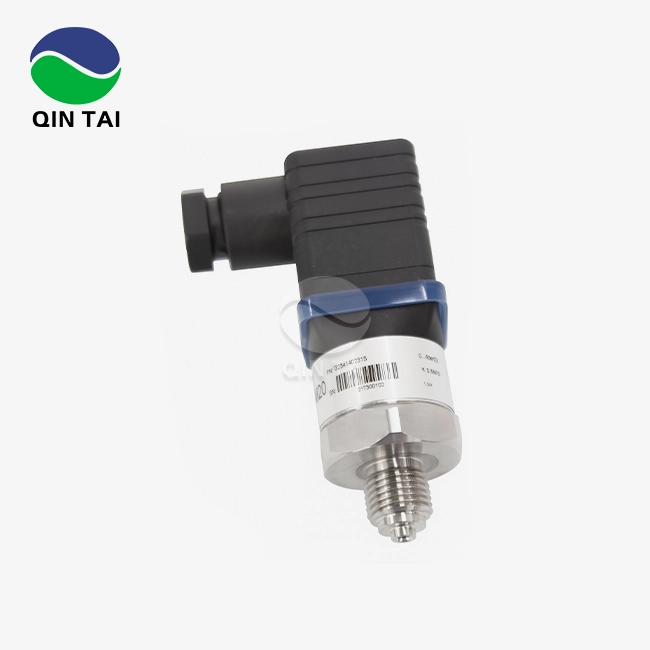

Our customers’ satisfaction speaks for our quality — contact us to experience the same reliable service.