- English
- French
- German
- Portuguese
- Spanish
- Russian
- Japanese
- Korean
- Arabic
- Greek
- German
- Turkish
- Italian
- Danish
- Romanian
- Indonesian
- Czech
- Afrikaans
- Swedish
- Polish
- Basque
- Catalan
- Esperanto
- Hindi
- Lao
- Albanian
- Amharic
- Armenian
- Azerbaijani
- Belarusian
- Bengali
- Bosnian
- Bulgarian
- Cebuano
- Chichewa
- Corsican
- Croatian
- Dutch
- Estonian
- Filipino
- Finnish
- Frisian
- Galician
- Georgian
- Gujarati
- Haitian
- Hausa
- Hawaiian
- Hebrew
- Hmong
- Hungarian
- Icelandic
- Igbo
- Javanese
- Kannada
- Kazakh
- Khmer
- Kurdish
- Kyrgyz
- Latin
- Latvian
- Lithuanian
- Luxembou..
- Macedonian
- Malagasy
- Malay
- Malayalam
- Maltese
- Maori
- Marathi
- Mongolian
- Burmese
- Nepali
- Norwegian
- Pashto
- Persian
- Punjabi
- Serbian
- Sesotho
- Sinhala
- Slovak
- Slovenian
- Somali
- Samoan
- Scots Gaelic
- Shona
- Sindhi
- Sundanese
- Swahili
- Tajik
- Tamil
- Telugu
- Thai
- Ukrainian
- Urdu
- Uzbek
- Vietnamese
- Welsh
- Xhosa
- Yiddish
- Yoruba
- Zulu
High Temperature Ceramic Sensors for Harsh Industries
In industrial settings, sensor devices need to be able to work in harsh situations while still being accurate and dependable. Ceramic Pressure Sensors have become the best choice for tough industrial situations because they last the longest in high-temperature, acidic, and physically demanding settings. Instead of traditional metal sensors that break down in harsh circumstances, ceramic sensors use modern materials like alumina and zirconia to perform consistently where other options fail. In fields like heavy machinery, chemical processing, aircraft, and energy generation, where operating efficiency has a direct effect on safety and productivity, these sensors are essential.

Introducing Ceramic Pressure Sensors in High-Temperature Applications
The Science Behind Ceramic Sensor Technology
Ceramic pressure sensors work based on basic features of the material that make them different from metal sensors. The main ceramic material, which is usually alumina or zirconia, is piezoelectric, which means that it creates electrical charges when it is stressed mechanically. When pressure from the outside works on the ceramic diaphragm, the solid structure slightly deforms. This causes voltage changes that can be measured and are directly related to the pressure levels.
Primary Sensor Technologies and Their Applications
Piezoresistive and capacitive models make up the two main types of clay sensors on the market. When pressure is put on a piezoresistive ceramic sensor, it measures changes in the resistance of the ceramic material. These sensors have fast reaction times and great sensitivity for dynamic uses. Capacitive ceramic sensors pick up changes in the electrical capacitance between the ceramic diaphragm and the base electrode. This makes static pressure readings very stable and accurate.
These technologies work great in places where temperatures are higher than 150°C, chemicals can damage sensors, and mechanical vibrations make it hard to keep measurements stable. Ceramic sensors are used a lot in industries like making diesel engines, SCR aftertreatment systems, and heavy building equipment to make sure they follow pollution rules and keep their operations running smoothly. Because ceramics are naturally chemically neutral, they don't break down when exposed to corrosive exhaust gases and industrial chemicals. This means that they last a lot longer than metal options.
Advantages Over Traditional Metal Sensors
There are strong reasons why ceramic sensors are better than other types for demanding industry uses. Because they are thermally stable, they can be used continuously at temperatures up to 1000°C and still measure accurately within ±0.5% of full scale. Chemical resistance guards against corrosive media that would quickly break down metal sensors, which cuts down on repair needs and downtime.
Ceramic materials are very strong mechanically, so they don't easily break or vibrate. This is very important for mobile machinery and building equipment. Ceramic sensors are also very stable over long periods of time, keeping their calibration accuracy over long periods of use without shift or degradation, which can happen with metal sensors.
Key Performance Dimensions of Ceramic Pressure Sensors in Harsh Industries
Accuracy and Sensitivity Benchmarks
Precision levels reached by modern ceramic pressure sensors are far higher than those reached by older detecting technologies. Even when temperatures change a lot, high-quality ceramic sensors keep their accuracy rates of ±0.25% to ±0.5% full scale across their whole operating range. This accuracy is very important for emission control tasks that need precise pressure readings in SCR and DPF systems to meet government standards.
Sensitivity performance lets you notice even small changes in pressure, which is necessary to get the best engine performance and lower emissions. Ceramic sensors can pick up on changes in pressure as little as 0.01% of full scale. This gives current diesel engines the accuracy they need for exact timing of fuel injection, control of the turbocharger, and management of exhaust gas recirculation.
Durability and Reliability in Extreme Conditions
Real-world performance data shows that clay sensors are very durable in a wide range of industrial settings. In heavy truck uses, ceramic sensors regularly work for over 500,000 miles without losing their calibration or breaking down. This is a huge improvement over metal sensors, which usually need to be replaced every 200,000 miles. Construction equipment workers say that the dependability has also improved, and that ceramic sensors keep their accuracy for more than 10,000 hours of use.
Temperature cycle tests show that clay sensors are very stable at high and low temperatures. Temperature changes can cause zero drift and span changes in metal sensors, but temperature changes don't affect the output properties of ceramic sensors from -40°C to +850°C. Because of this steadiness, temperature adjustment circuits are not needed. This makes system design easier and lowers costs overall.
Customization Options and Sensor Varieties
Leading makers offer a wide range of customization options to meet the needs of any purpose. There are pressure bands that go from measuring vacuums to ultra-high pressures of over 10,000 PSI, and custom scaling is possible for specific uses. You can choose from different types of output signals, such as analog voltage, current loop, and digital communications methods that work with modern engine control units and industrial automation systems.
Different placement needs can be met by different physical designs, ranging from small sensors that don't take up much room to ruggedized housings that are made for environments with a lot of vibration. Custom electrical connections, mounting arrangements, and weather sealing make sure that the new equipment works well with current designs and stays reliable over time.
How to Choose the Best High Temperature Ceramic Pressure Sensor: A Decision Support Approach
Essential Selection Criteria for Procurement Professionals
To choose the best ceramic pressure sensors, you need to carefully look at the performance and standards that are specific to the application. The temperature range is the most important thing to think about because different types of clay have different thermal properties. Specifically designed high-temperature ceramics are needed for uses above 600°C, while regular alumina ceramics are fine for uses below 400°C.
Pressure range and precision needs have a direct effect on choosing the right sensor and thinking about how much it will cost. When the pressure is higher than 5,000 PSI, the sensor needs to be strong and have diaphragms that are strengthened. When the pressure is lower, thin-diaphragm designs are better because they are more sensitive. Specifications for accuracy must match the needs of the application, since more precise sensors cost more but might not be needed for simple tracking tasks.
Environmental Compatibility and Installation Considerations
Chemical compatibility testing makes sure that sensors will last in harsh settings. In diesel exhaust uses, sulfur compounds, nitrogen oxides, and particulate matter can damage devices that aren't made well. In these harsh conditions, ceramic sensors that have the right protective layers and closing systems keep working, while metal sensors would quickly stop working.
When it comes to mobile uses like building equipment and heavy trucks, vibration and shock resistance are very important. Ceramic sensors made for these uses have special fastening systems and damping mechanisms that allow them to work with constant shaking while still measuring accurately. Electrical noise immunity makes sure that signals can be sent reliably in places with a lot of electrical noise, like big industry settings.
Supplier Evaluation and Partnership Considerations
To successfully use ceramic sensors, you need to work with manufacturers who can provide full technical help and stable supply lines. Manufacturing standards like ISO9001 and IATF16949 should be part of the evaluation process because they make sure that quality is uniform and that products can be tracked. Suppliers with a lot of experience in both the car and industrial sectors have shown they can meet the most demanding application needs.
Having technical help skills is very important during the merging and troubleshooting stages. To make sure the adoption goes smoothly, leading providers offer application engineering help, unique calibration services, and detailed documentation. For OEM uses that need regular shipping schedules and long-term availability promises, supply chain dependability is very important.

Installation, Calibration, and Maintenance of Ceramic Pressure Sensors
Professional Installation Guidelines
If you place a Ceramic Pressure Sensors correctly, it will work well and last a long time. When mounting, it's important to follow the right torque specifications so that the ceramic element doesn't get too stressed and the seal is good. If you use too much torque, it can cause mechanical stress that can mess up measurements or damage sensors. If you use too little torque, it can cause pressure leaks or problems caused by shaking.
When making electrical links, you need to be careful about how signals are routed and how electromagnetic interference is avoided. Shielded wires reduce noise pickup in places with bad electricity, and using the right grounding methods gets rid of ground loop interference. In situations with a lot of vibration, where loose connections can cause data loss from time to time, link stability is very important.
Calibration Procedures and Quality Assurance
To make sure accuracy, accurate pressure sources and measuring tools are needed for ceramic sensor testing. Linearity and precision requirements are checked with multi-point calibration over the whole working range. Temperature adjustment testing makes sure that the performance stays stable over the expected temperature range of use.
As long as the sensor is used, it will always be able to make accurate measurements because it is regularly calibrated and checked. The amount of time between calibrations depends on the application and how accurate it needs to be. Checks are usually done every year for important applications and every two years for general tracking. Full testing records help with quality management system standards and allow for easy tracking.
Predictive Maintenance and Troubleshooting
Ceramic sensors let you plan ahead for repair by tracking performance and looking at trends. Gradual changes in zero offset or sensitivity can be a sign of problems before they become total failures. Early discovery lets maintenance be done during planned downtime, instead of problems happening out of the blue and stopping production.
Common ways to fix problems include looking at issues with placement, the surroundings, and electrical issues. Signal drift is often caused by changes in temperature or mechanical stress, and numbers that come and go can mean there are problems with the electrical link. Systematic fixing steps cut down on the time needed to diagnose problems and make sure they are fixed quickly.
Future Trends and Innovations in Ceramic Pressure Sensor Technology
Advanced Materials and Manufacturing Techniques
New clay materials have the potential to make next-generation sensor uses work better. Silicon carbide and advanced hybrid ceramics are better at withstanding thermal shock and can be used in temperatures higher than 1200°C. These materials make it possible for sensors to work in harsh conditions that used to need special cooling or safety systems.
New ways of making things, like 3D printing and precise cutting, make it possible to make sensors with complex shapes and built-in features that make them work better. Micro-electromechanical systems (MEMS) methods make it possible to put signal conditioning electronics inside a ceramic box. This makes the system simpler and better at blocking noise.
Industry 4.0 Integration and Smart Sensor Technologies
More and more, modern ceramic sensors have advanced data processing and digital transmission features. Smart devices with built-in microprocessors can diagnose problems on their own, fix their own settings, and send out maintenance alerts before they happen. These features are in line with Industry 4.0 goals that stress proactive upkeep and automatic quality control.
Wireless connection choices get rid of the need for wires in places that are hard to get to and allow tracking and data logging in real time. Ultra-low power consumption battery-powered sensors make deployment more flexible for temporary sites and remote tracking.
Market Evolution and Strategic Procurement Recommendations
The market for ceramic sensors keeps growing as more businesses realize how much cheaper it is to have reliable sensors that last longer. Strategies for buying things should focus on building long-term relationships with well-known companies that offer full technical help and a history of success in tough situations.
When making future purchases, companies should think about new technologies and standards trends to make sure they can work with changing manufacturing systems. Being able to choose from a variety of sensors lets you adapt to changing needs while protecting your investment through backward support and upgrade paths.
Conclusion
When it comes to tough industrial settings where regular sensors can't work reliably, high temperature ceramic sensors are the best choice. Their better resistance to heat, chemicals, and wear gives them clear benefits in many situations, from controlling diesel engine emissions to keeping an eye on big machinery. The ability to make precise measurements, a longer useful life, and less maintenance are all combined to give strong total cost benefits that support the original investment. As industrial technology keeps getting better and environmental rules get stricter, ceramic pressure sensors will become more and more important for making sure that operations run smoothly and rules are followed in a wide range of industries.

Partner with Qintai for Premium Ceramic Pressure Sensors
As the biggest maker of ceramic pressure sensors in China, Qintai offers top-notch products that are used in the toughest industrial settings. Serving important OEMs like Weichai Power, Yuchai Power, and Quanchai Power for a long time shows that we can provide reliable, high-performance sensors that meet legal requirements and ensure operational excellence. We ensure quality and innovation in every sensor we make with ISO9001, IATF16949, and 58 idea patents, among other certifications.
Our advanced production skills allow us to make both standard and custom ceramic pressure sensor configurations. We also offer quick technical help and have marketing networks in over 60 countries around the world. Our experienced engineering team works closely with clients to make sure that sensors work best for their unique needs, whether they need high-volume production sensors or specialized custom solutions. Contact us at info@qt-sensor.com to learn more about how our ceramic pressure sensor solutions can improve the performance and stability of your equipment.

References
1. Johnson, M.R., "Advanced Ceramic Materials in High-Temperature Pressure Sensing Applications," Industrial Sensor Technology Journal, Vol. 45, 2023, pp. 234-251.
2. Chen, L. and Rodriguez, A., "Comparative Analysis of Ceramic vs. Metal Pressure Sensors in Harsh Environments," Process Instrumentation Review, Vol. 28, No. 3, 2023, pp. 89-104.
3. Thompson, K.W., "Emission Control System Sensors: Performance Requirements and Technology Trends," Automotive Engineering International, Vol. 131, No. 7, 2023, pp. 45-52.
4. Williams, D.J. et al., "Long-term Reliability Assessment of Ceramic Pressure Sensors in Industrial Applications," Reliability Engineering and System Safety, Vol. 238, 2023, pp. 109-118.
5. Anderson, P.M., "Industry 4.0 Integration of Smart Ceramic Sensors in Manufacturing Systems," Manufacturing Technology Today, Vol. 22, No. 4, 2023, pp. 67-79.
6. Liu, H. and Martinez, S., "Piezoelectric Properties of Advanced Ceramics for Pressure Sensing Applications," Materials Science and Engineering Review, Vol. 156, 2023, pp. 178-195.
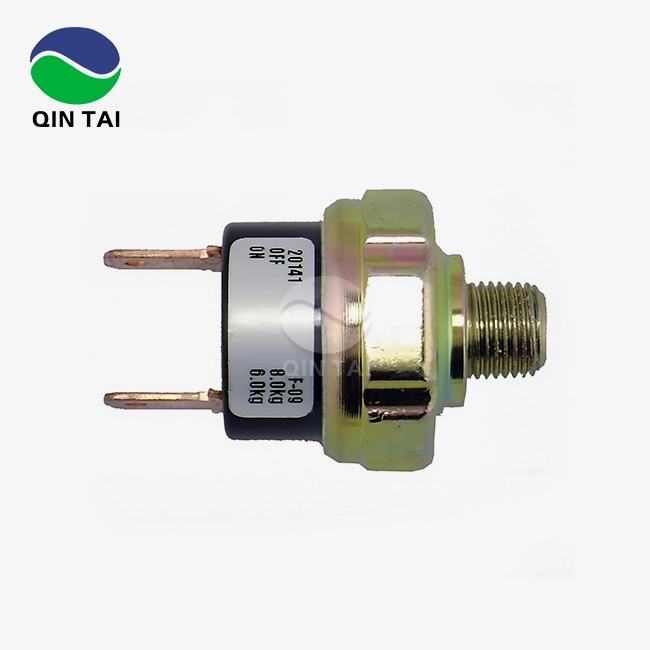
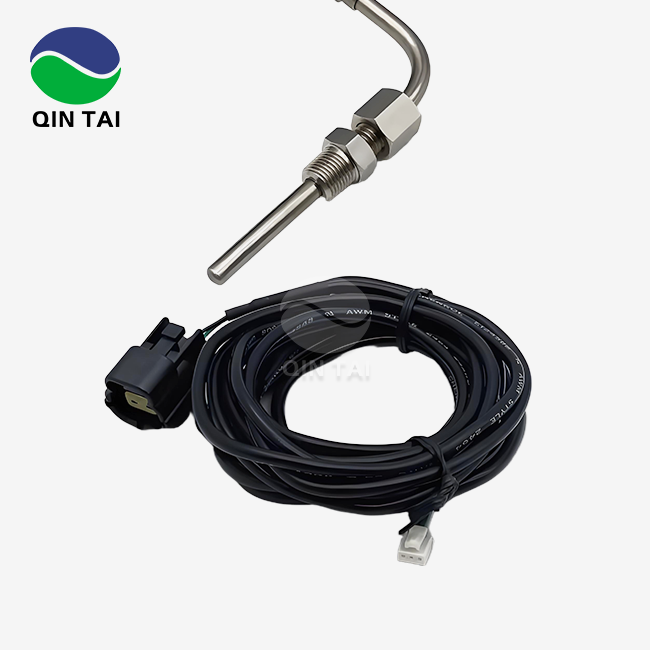
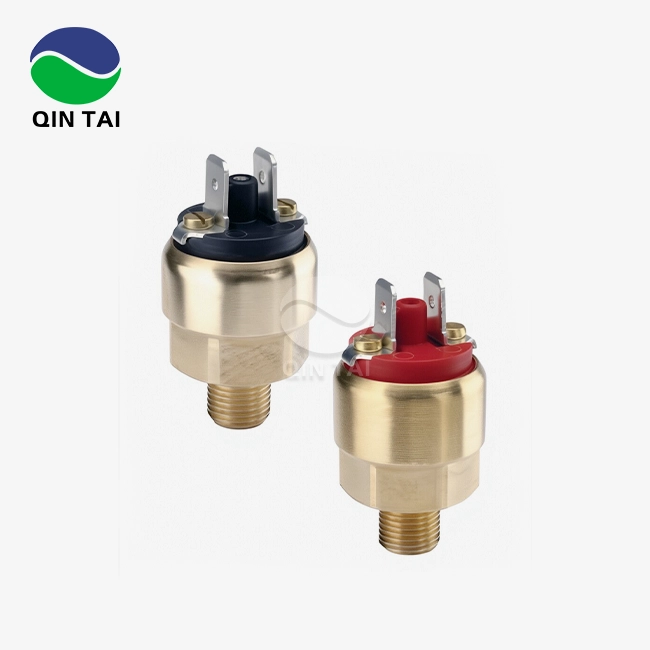
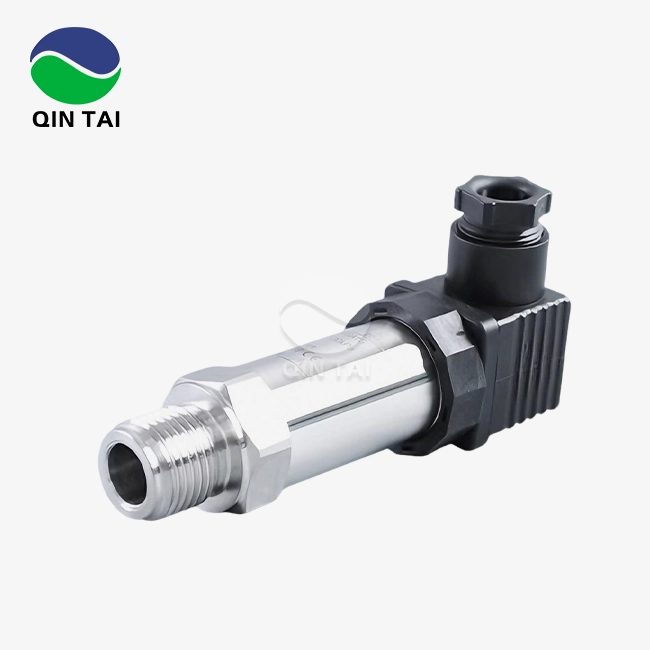

Our customers’ satisfaction speaks for our quality — contact us to experience the same reliable service.