- English
- French
- German
- Portuguese
- Spanish
- Russian
- Japanese
- Korean
- Arabic
- Greek
- German
- Turkish
- Italian
- Danish
- Romanian
- Indonesian
- Czech
- Afrikaans
- Swedish
- Polish
- Basque
- Catalan
- Esperanto
- Hindi
- Lao
- Albanian
- Amharic
- Armenian
- Azerbaijani
- Belarusian
- Bengali
- Bosnian
- Bulgarian
- Cebuano
- Chichewa
- Corsican
- Croatian
- Dutch
- Estonian
- Filipino
- Finnish
- Frisian
- Galician
- Georgian
- Gujarati
- Haitian
- Hausa
- Hawaiian
- Hebrew
- Hmong
- Hungarian
- Icelandic
- Igbo
- Javanese
- Kannada
- Kazakh
- Khmer
- Kurdish
- Kyrgyz
- Latin
- Latvian
- Lithuanian
- Luxembou..
- Macedonian
- Malagasy
- Malay
- Malayalam
- Maltese
- Maori
- Marathi
- Mongolian
- Burmese
- Nepali
- Norwegian
- Pashto
- Persian
- Punjabi
- Serbian
- Sesotho
- Sinhala
- Slovak
- Slovenian
- Somali
- Samoan
- Scots Gaelic
- Shona
- Sindhi
- Sundanese
- Swahili
- Tajik
- Tamil
- Telugu
- Thai
- Ukrainian
- Urdu
- Uzbek
- Vietnamese
- Welsh
- Xhosa
- Yiddish
- Yoruba
- Zulu
How Can Pressure Transmitters Improve Process Control Systems?
Pressure transmitters transform industrial process control by converting physical pressure measurements into precise electronic signals that enable real-time monitoring and automated responses. These devices eliminate guesswork from critical operations, providing continuous data streams to control systems like PLCs and SCADA platforms.
By delivering accurate pressure readings instantly, pressure transmitters help manufacturing facilities, power generation plants, and processing industries maintain optimal operating conditions, prevent equipment failures, and ensure regulatory compliance. The integration of these measurement devices directly addresses the industry's demand for stability, safety, and efficiency in complex automated environments.

Understanding Pressure Transmitters and Their Role in Process Control
What Distinguishes Pressure Transmitters from Basic Sensors
Pressure Transmitters and sensors can both notice changes in pressure, but Pressure Transmitters have built-in circuitry that changes raw sensor data into standard output forms. A normal pressure sensor sends out a millivolt signal that is related to the applied pressure. This signal needs to be amplified and processed by an outside device. Pressure Transmitters have these features built in, and they provide standard outputs like 4-20mA current loops or digital protocols like HART and Modbus. This combination makes designing systems easier and makes sure that signals stay strong over long wire runs.
The electronics that are built in can also compensate for temperature, make the signal more straight, and do diagnostics that raw sensors can't do. If a manufacturing facility chooses Pressure Transmitters over basic sensors, it makes installation easier and increases the accuracy of measurements.
Core Types of Pressure Transmitters for Different Applications
Gauge Pressure Transmitters are great for keeping an eye on vessel pressures in chemical processing and hydraulic systems in construction equipment because they measure pressure in relation to the air pressure. Absolute Pressure Transmitters work with a perfect vacuum to give accurate readings for applications that need to know the altitude and for monitoring sealed systems in generator sets.
Differential Pressure Transmitters find the difference in pressure between two places. This lets you measure flow through orifice plates and check the state of filters in systems that clean water after treatment. Integrators of SCR and DPF systems need these tools to get accurate readings of backpressure in order to improve the performance of emission control systems. Sealed Pressure Transmitters have reference pressure cavities that stay stable even when the temperature changes. This makes them very useful for outdoor installations on mining and farming equipment, where extreme weather can make it hard to get accurate readings.
Advantages of Wired Versus Wireless Transmission Technologies
Wired Pressure Transmitters with 4-20mA loops are still the standard in the industry because they don't pick up noise, get power through signal cables, and can't fail. When there is a problem with a Pressure Transmitter, the current goes below 3.8mA or rises above 20.5mA, which immediately sets off alarms. This two-wire design keeps stability high in places with a lot of electrical noise, like around diesel engines and power production equipment, while keeping installation costs low.
Wireless Pressure Transmitters don't need cables, so they're cheaper to put in repair jobs and places that are hard to get to. Wireless devices that run on batteries and use protocols like WirelessHART or ISA100.11a work best in situations where continuous monitoring is more important than millisecond response times. But places that need real-time control loops for safety-critical tasks usually need wired Pressure Transmitters to make sure that communication doesn't stop and that the system always responds the same way.
Challenges in Process Control and How Pressure Transmitters Solve Them
Eliminating Manual Reading Errors and Data Delays
In the old way of measuring pressure with mechanical gauges, people had to go to measurement places, write down numbers, and put data into control systems by hand. This method allows for mistakes made by people, breaks in the consistency of data, and delays in responding to process changes. If a diesel engine test cell relies on human pressure readings, it might miss short-term pressure jumps that show problems with the injectors or turbocharger.
By offering continuous electronic monitoring that connects directly to data acquisition systems, Pressure Transmitters overcome these restrictions. Automated data collection makes it possible to look at trends, control statistical processes, and sound an alarm right away when parameters move out of acceptable ranges. Heavy truck engine testing facilities can now record pressure profiles over full duty cycles. This lets them find small changes in performance that would be missed by manual methods.
Seamless Integration with Modern Control Platforms
Programmable Logic Controllers, Distributed Control Systems, and Supervisory Control and Data Acquisition networks are some of the control architectures that are used in industrial facilities. Pressure Transmitters made for industrial use offer a number of ways to communicate that work directly with these platforms without the need for custom interface development.
A company that makes building equipment that wants to use automated gearbox testing can connect Pressure Transmitters straight to PLC analogue input modules. This way, the company can use hydraulic pressure data right away in their control algorithms. The same Pressure Transmitters might have a HART digital communication overlay that lets technicians get diagnostic data and set up the system from afar without interrupting the 4-20mA signal. This flexibility speeds up the commissioning process and makes it easier to maintain the system over time.
Proven Performance in Demanding Industrial Environments
Extreme temperature changes, vibrations, and contamination from dust and chemicals make it hard for makers of agricultural tools to get accurate measurements. In these situations, standard pressure measuring devices often break down too soon, which can cause problems with the guarantee and make customers unhappy. These problems are specifically addressed by industrial-grade Pressure Transmitters, which are built to last and have ratings for environmental safety.
Units that are approved to IP67 or IP69K standards can handle the high-pressure washing that is common in farming and food preparation. Wetted materials made of stainless steel don't rust when they come in contact with coolants, fertilisers, or diesel exhaust droplets in SCR systems. Designs that are resistant to vibration keep their calibration even when they are exposed to engine harmonics and road shocks over and over again. This makes sure that measurements stay stable throughout the lifecycle of the product.

Selecting the Right Pressure Transmitter for Industrial Applications
Critical Specification Parameters for Procurement Decisions
Accuracy of measurements has a direct effect on how well process controls work and how well they follow the rules. To meet the requirements of Euro VI and China VI emission standards, accurate control of SCR dosing is needed. To do this, Pressure Transmitters must have accuracy specifications of ±0.25% full scale or better in order to keep the right urea injection rates. The pressure range must be able to handle both normal operating conditions and possible overpressure events without hurting the sensor.
Response time is very important in situations where the control loop needs to be updated quickly. To keep the right air-fuel ratios even when the load changes quickly, a turbocharger boost pressure control system needs Pressure Transmitter response times of less than 50 milliseconds. The temperature ranges must match the working environment. For example, diesel engines often need ranges of -40°C to +125°C for cold starts and hot conditions under the hood.
Matching Transmitter Features to Application Requirements
Based on how they work, different businesses put different Pressure Transmitter traits at the top of their lists. Explosion-proof certifications and long-term stability in dangerous areas are important in oil and gas processing. ATEX-certified Pressure Transmitters make it safe to work in environments that could be explosive by reducing the amount of energy that can be used for ignition through designs that are naturally safe.
When making medicines, you need clean designs that have 3-A sanitary certifications and flush-mounted diaphragms that keep things from getting dirty and make cleaning easier. For outdoor locations, water treatment plants like underwater designs that offer strong lightning protection. Generator set makers can depend on Pressure Transmitters with wide source voltage ranges and EMI immunity to work well in places with bad electricity, like near high-current switching equipment.
Evaluating Total Cost of Ownership Beyond Purchase Price
The initial cost of purchase affects buying choices, but the total cost of ownership includes costs for installation, calibration, and upkeep. A cheaper Pressure Transmitter that doesn't have temperature compensation may drift a lot, needing to be re-calibrated every three months, which costs more than the savings from the lower price.
Self-diagnostic Pressure Transmitters find sensor failures, wire problems, or process oddities before they cause the system to shut down, which cuts down on the time needed to fix problems. With built-in displays, you don't need separate signs, which saves room on the panel and money on wires. When looking at providers, you should think about how quickly they respond to technical help requests, how easy it is to get extra parts, and how well they offer calibration services. These all have a big effect on long-term running costs and system uptime.
Installation, Calibration, and Maintenance for Optimal Performance
Best Practices for Physical Installation
When the mounting is orientated correctly, measurement errors caused by trapped air or sediment buildup are avoided. To keep the sensing diaphragm wet and get rid of air bubbles in the pressure cavity, place the Pressure Transmitter below the process connection when measuring liquid pressure. Installations that are mounted on top keep condensation from building up in the sensing element, which is good for measuring gas pressure.
Impulse lines that connect the Pressure Transmitter to process taps need to be carefully routed so that they don't go through low points where gases can build up or high points where liquids can build up in gas service. Isolation valves let you take out the Pressure Transmitter for repair without stopping the process. Vent and drain valves make setting up and fixing problems easier. Electrical connections must follow local rules and the manufacturer's instructions. Pay special attention to shield grounding methods that keep noise from getting into signal cables.
Calibration Protocols and Verification Intervals
New Pressure Transmitters are already calibrated when they leave the factory, but checking them before placement makes sure they work right and sets a standard for future performance. Apply known pressures across the Pressure Transmitter's range using a measured pressure source while recording output signals at different places, such as 0%, 25%, 50%, 75%, and full scale.
Check that the observed values are in line with the requirements for accuracy. Diesel engine makers usually set calibration schedules for their production test equipment once a year. Emission testing labs, on the other hand, may need to check their equipment every three months to keep their certification body approval. For quality system requirements and audit trails, it's important to keep track of all calibration results by writing down the dates, the name of the technician who did the calibration, and the reference standard that was used.
Preventive Maintenance and Troubleshooting Techniques
Regular checking keeps measurements accurate and stops unexpected fails. Check the electrical lines for corrosion or looseness that could cause signs to go out and back on. Check the links between the process parts for leaks that could let pressure drop or get sensor parts dirty. Clean the outside to keep buildup from happening that could stop heat from moving and cause mistakes caused by temperature.
Before assuming a sensor is broken when fixing a Pressure Transmitter that seems to be acting up, check the source voltage at the device terminals. A lot of the time, Pressure Transmitter problems that look like sensor problems are actually caused by wiring damage, controller input card failures, or changes in the process condition. Using block valves to separate the Pressure Transmitter from the process, then applying known pressure with a calibrator to see if the device responds correctly. This organised method quickly finds the real failure modes and cuts down on the number of parts that need to be replaced that aren't needed.
Future Trends and Innovations in Pressure Transmitter Technology
Smart Diagnostics and Predictive Maintenance Capabilities
In addition to measuring pressure, modern Pressure Transmitters have microprocessors that continuously monitor device health. These smart devices keep an eye on the temperature inside, the amount of signal noise, and the performance of electronic parts. They look for patterns of degradation that show failures are coming. Predictive alerts let maintenance be done during planned breaks instead of having to fix problems that happen out of the blue, which stops production.
Advanced diagnostic functions find problems in the process, like impulse line blockages, cavitation, or strange vibrations that impact the accuracy of the measurements. Integrators of aftertreatment systems use these features to find out when the SCR catalyst is breaking down or the DPF is overloaded before emission compliance is lost. The diagnostic data is sent to maintenance management systems, which create work orders and make the best use of spare parts inventory based on the real state of the device instead of random time intervals.
Integration with Industrial Internet of Things Platforms
Pressure Transmitters can connect to cloud-based analytics platforms that collect data from many facilities thanks to Industry 4.0 projects. This design lets you compare different production lines, find the best ways to do things, and find systemic problems that tracking from a single spot might miss. Manufacturers of generator sets can compare performance data from units that have been used in different climates. This helps them improve pressure control methods that take into account differences between regions.
Edge computing features built into next-generation Pressure Transmitters process data locally, which lowers bandwidth needs and lets control respond in real time. Machine learning systems find complicated trends in pressure data that are linked to things like equipment breaking down, changes in product quality, or wasted energy. These findings lead to efforts for continuous growth that lower costs and make the business more competitive.
Emerging Sensor Technologies and Performance Improvements
Thin-film sensor technology is a big step forward from the old way of attaching strain gauges to metal diaphragms with organic glues. Vacuum sputtering attaches sensing elements directly to stainless steel diaphragms at the molecular level. This forms atomic-level bonds that get rid of the stretching and wearing that come with adhesive layers. This construction provides better long-term stability and temperature performance, which is important for diesel engine applications that go through a lot of temperature changes.
Manufacturers are always coming up with new materials and ways to make things that increase accuracy, decrease size, and increase pressure ranges. MEMS-based sensors can be made smaller so they can work in places with limited room while still delivering industrial-grade performance. Wireless power transfer technologies claim to work without batteries for tracking rotating machines and other situations where wired connections are not realistic.

Conclusion
Pressure Transmitters make process control systems much better by sending accurate pressure data in real time, which lets computers respond automatically and make smart decisions. These devices solve important problems like reading mistakes, delayed information, and complicated system interaction, all while helping with regulatory compliance and operational efficiency. When choosing the right Pressure Transmitters, you need to carefully think about the accuracy requirements, the environment, and the total cost of ownership while also taking into account the needs of the application.
When you install something correctly, calibrate it regularly, and do preventative maintenance, it will keep working well for a long time. New technologies like smart diagnostics, IoT integration, and advanced sensor designs offer more capability and reliability gains. This will lead to more automation progress in the diesel engine manufacturing, emission control systems, and related industries.
FAQ
What accuracy level should I specify for emission control applications?
To keep exact SCR dose control, Pressure Transmitters usually need to be accurate to within ±0.25% of the full scale in order to meet Euro VI and China VI standards. Higher accuracy standards of ±0.1% are good for study and regulatory testing where measurement error has a direct effect on the results of approval. When setting specifications, keep in mind that accuracy decreases over time. Devices must stay in compliance between calibration intervals.
How do I determine the appropriate pressure range for my application?
The best range for accuracy is one where the average working pressure is between 30% and 80% of full scale. This will keep the sensor from getting damaged by overpressure events. Diesel engine turbochargers that use 4-5 bar range Pressure Transmitters should have a normal boost of 2.5 bars. This gives the Pressure Transmitters room for short-term jumps while keeping the resolution. To make sure there are enough safety margins, check with the Pressure Transmitter manufacturers about overpressure limits and burst pressure ratings.
Can wireless transmitters replace wired devices in safety-critical applications?
While wireless technologies today are good for monitoring, they usually can't match the reliable reaction times and fail-safe features of wired Pressure Transmitters with 4-20mA loops that are needed for safety instrumented systems. Emission control and equipment protection regulations usually require hardwired connections for control functions, while wireless connections are only allowed for extra data collection and troubleshooting.
Partner with Qintai for Precision Pressure Measurement Solutions
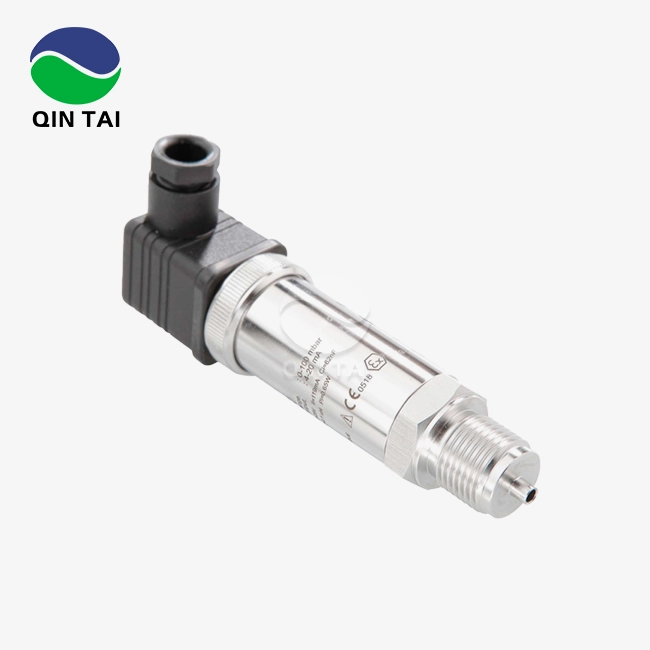
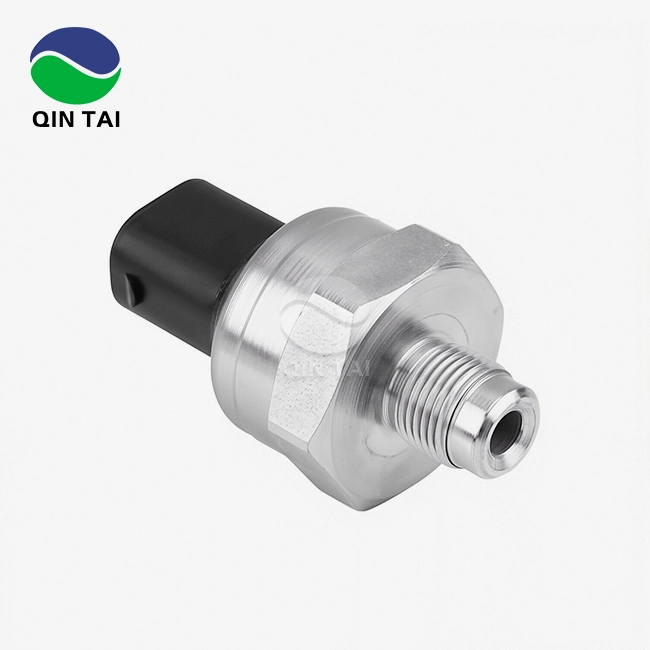
Qintai Automotive Emission Technology Co., Ltd. Ltd sells industrial-grade Pressure Transmitters that were designed to work with gasoline engines and limit emissions. Our ISO9001 and IATF16949-certified manufacturing makes sure that the quality is always the same and meets the requirements of Euro VI and China VI. We understand the important balance between accuracy, durability, and cost-effectiveness that OEM procurement requires because we are the main supplier of Pressure Transmitters to China's top diesel engine manufacturers, such as Weichai, Yuchai, and Quanchai. Our expert team is fully certified by ATEX, UL, and CE and can help you with everything from choosing the specifications to installing them.
Qintai has the knowledge and manufacturing ability to meet your output needs, whether you need standard configurations or solutions that are specifically designed for your needs. Email us at info@qt-sensor.com to talk about the problems you're having measuring pressure and find out how our tried-and-true methods can help your process control systems.
References
1. Liptak, B.G. (2018). Instrument Engineers' Handbook: Process Measurement and Analysis. CRC Press.
2. Webster, J.G. & Eren, H. (2014). Measurement, Instrumentation, and Sensors Handbook: Spatial, Mechanical, Thermal, and Radiation Measurement. CRC Press.
3. Johnson, C.D. (2006). Process Control Instrumentation Technology. Prentice Hall.
4. Morris, A.S. & Langari, R. (2021). Measurement and Instrumentation: Theory and Application. Academic Press.
5. Spitzer, D.W. (2005). Industrial Flow Measurement. International Society of Automation.
6. Hughes, T.A. (2002). Measurement and Control Basics. International Society of Automation.

Our customers’ satisfaction speaks for our quality — contact us to experience the same reliable service.