- English
- French
- German
- Portuguese
- Spanish
- Russian
- Japanese
- Korean
- Arabic
- Greek
- German
- Turkish
- Italian
- Danish
- Romanian
- Indonesian
- Czech
- Afrikaans
- Swedish
- Polish
- Basque
- Catalan
- Esperanto
- Hindi
- Lao
- Albanian
- Amharic
- Armenian
- Azerbaijani
- Belarusian
- Bengali
- Bosnian
- Bulgarian
- Cebuano
- Chichewa
- Corsican
- Croatian
- Dutch
- Estonian
- Filipino
- Finnish
- Frisian
- Galician
- Georgian
- Gujarati
- Haitian
- Hausa
- Hawaiian
- Hebrew
- Hmong
- Hungarian
- Icelandic
- Igbo
- Javanese
- Kannada
- Kazakh
- Khmer
- Kurdish
- Kyrgyz
- Latin
- Latvian
- Lithuanian
- Luxembou..
- Macedonian
- Malagasy
- Malay
- Malayalam
- Maltese
- Maori
- Marathi
- Mongolian
- Burmese
- Nepali
- Norwegian
- Pashto
- Persian
- Punjabi
- Serbian
- Sesotho
- Sinhala
- Slovak
- Slovenian
- Somali
- Samoan
- Scots Gaelic
- Shona
- Sindhi
- Sundanese
- Swahili
- Tajik
- Tamil
- Telugu
- Thai
- Ukrainian
- Urdu
- Uzbek
- Vietnamese
- Welsh
- Xhosa
- Yiddish
- Yoruba
- Zulu
How do capacitive pressure sensors compare to piezoresistive ones?
When choosing between pressure sensing systems, it's important to know what the main differences are. When force is given to a diaphragm, it changes shape and the distance between the electrodes changes. This is how a capacitive pressure sensor counts pressure. Piezoresistive sensors pick up on changes in resistance in semiconductor materials when they are put under mechanical force. Capacitive designs are more stable and don't drift much in controlled settings, but piezoresistive designs respond faster and can handle a wider range of pressures. Your choice will rely on the needs of the application, the surroundings, and your long-term business goals.
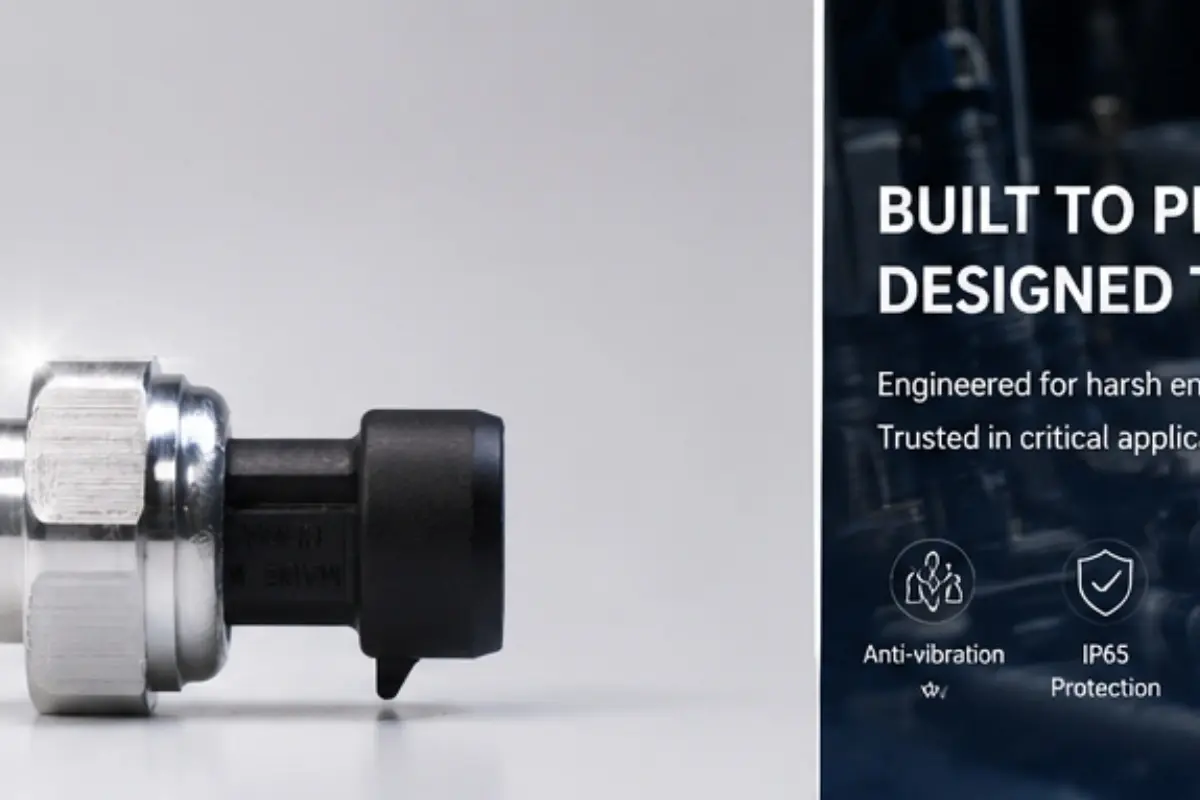
Understanding Capacitive and Piezoresistive Pressure Sensors
How Capacitive Sensors Function?
The basic idea behind it is that capacitance changes inversely with electrode separation distance, as shown by the equation C = ε₀εᵢA/d. When pressure is put on the flexible diaphragm, which is usually made of silicon or metal alloys, it bends toward the fixed electrode. This closes the gap and raises capacitance in a proportional way. Ceramic or silicone dielectrics are used to split the electrodes, which changes the temperature ranges and levels of sensitivity. Dual capacitors are used in more advanced differential designs to measure changes in pressure that go in both directions. This makes measurements much more accurate when micron-level accuracy is needed.
Signal filtering circuits take small changes in capacitance and turn them into standard outputs of 0–10V or 4–20mA that can be used in industrial control systems. Integrated capacitance-to-digital converters block electromagnetic interference and account for temperature changes, so results stay stable even when the world changes. Because they are so strong, capacitive sensors work best in clean, temperature-controlled places where long-term steadiness is more important than response speed.
How Piezoresistive Sensors Operate?
Semiconductor materials that change their electrical resistance when put under mechanical force are used in piezoresistive technology. When pressure applies to the detecting element, which is usually silicon with piezoresistors embedded in it, strain changes the movement of electrons, which leads to changes in resistance that can be measured. These changes are picked up by Wheatstone bridge arrangements, boosted, and turned into electrical signals that are related to the pressure that is being applied.
Because they are made of small semiconductors, piezoresistive sensors can respond more quickly to changes in pressure than capacitive sensors. This makes them perfect for tracking dynamic pressure in fuel injection systems, hydraulic equipment, and oil extraction equipment. Because they can measure high pressures—often more than 10,000 psi—they are good for tough industrial environments that make sensors last less long.
Typical Industrial Applications
Capacitive sensors are great for measuring fluid levels accurately, keeping an eye on the environment, and controlling the pressure in clean rooms with little electromagnetic interference. Because a capacitive pressure sensor is very accurate at low pressures, it is useful for making medicines, semiconductors, and lab equipment. We saw that they worked well in diesel particulate filter differential pressure tracking, where finding soot that builds up slowly needs a sensitivity level below 0.1% full scale.
In high-pressure industrial settings, piezoresistive sensors are most common. These include hydraulic brake systems, tracking pipeline flow, and deep-well digging. Their tough design can handle pressure, shock, and temperature changes that happen a lot in mining equipment, building equipment, and generator sets. Piezoresistive technology is used a lot in the car industry for airbag deployment systems and tire pressure tracking. Response times of just a few microseconds are very important for safety.

Technical Comparison: Capacitive vs. Piezoresistive Sensors
Sensitivity and Measurement Precision
Capacitive sensors are very sensitive at low pressure levels; they can pick up changes as little as 0.01% of full scale. Their low signal shift over long periods of time—usually less than 0.1% per year—makes them good for uses that don't need to be re-calibrated very often. The non-contact measurement method keeps mechanical wear to a minimum, which helps keep accuracy high over time in clean settings.
In a single device design, piezoresistive sensors can measure from zero levels to pressures over 15,000 psi. The fact that they are made of semiconductors lets them respond more quickly to changes in pressure, picking up pressure spikes that happen in milliseconds. Temperature coefficients, on the other hand, can reach 0.3% per degree Celsius, which means that complex correction circuits are needed to keep data stable across industrial temperature ranges of -40°C to 125°C.
Environmental Durability Factors
Different systems have very different levels of temperature stability. Dielectric materials don't expand much when they get hot or cold, so capacitive designs stay accurate over a wide range of temperatures without having to use complicated correction. Different types of ceramic diaphragm don't rust when exposed to strong chemicals, so they can be used in farming equipment that comes in contact with fertilizers and industrial solvents.
To fix the problem of semiconductor temperature sensitivity, piezoresistive sensors need thermal adjustment networks. Because they are sensitive to electromagnetic radiation, they need to be installed in places with a lot of electrical noise, like generator sets and welding equipment, with shielding. Mechanical vibration has different effects on the two technologies. Capacitive sensors are better at handling constant vibration, while piezoresistive versions are better at handling shock loads because they are solid-state.
Calibration and Maintenance Requirements
We've found that a capacitive pressure sensor needs to be calibrated more often than once every 24 months in safe situations. This cuts down on repair costs and production downtime. Their simple two-wire or three-wire designs make installation and fixing easier. This is especially helpful for aftermarket repair shops that have to keep track of a lot of different kinds of equipment. Because there aren't any moving parts, there are fewer ways for them to break, which increases the average time between failures in business car uses.
Most piezoresistive sensors need to be re-calibrated every 12 to 18 months, especially if they are subject to changes in temperature and mechanical stress. Adjusting for zero-point shift is necessary on a regular basis, which raises the total cost of ownership. However, their standard electrical connections make it easy to switch between different platforms of equipment, which makes them appealing to system integrators who need flexible strategies for getting parts.

Decision Criteria for Procurement Managers
Matching Performance to Application Needs
Setting measuring limits is the first step in choosing the best sensing technology. Capacitive sensors work well in places where pressure changes slowly, accuracy is needed to be better than ±0.25% of the full scale, and the working area is clean and the temperature is kept stable. These conditions are similar to watching emissions in diesel SCR systems, where tracking the slow degradation of the catalyst is more important than millisecond reaction.
When tracking sudden changes in pressure, when working ranges go over 1,000 psi, or when diaphragm size is limited by the need for small packaging, piezoresistive technology is better. The microsecond reaction times of piezoresistive sensors help heavy truck makers who use common rail fuel injection systems control combustion more precisely, meeting EPA 2024 pollution standards. Even though they need to be calibrated more often, piezoresistive sensors often need to be able to work in a wide range of temperatures, from the hottest deserts to the coldest arctic regions.
Total Cost of Ownership Analysis
The price of the sensor is only one part of its economy. From working with OEM diesel engine makers, we know that the longer calibration times of capacitive sensors lower their lifetime costs by 15–25% compared to piezoresistive options in stable settings. Generator set teams that work in remote mining areas can use fewer service vehicles because they don't need as much upkeep.
On the other hand, the lower unit cost of piezoresistive sensors makes them better for high-volume car uses where regular replacement cycles are already in place. Because they work with current computer control units, engineers don't have to spend as much time and money redesigning old equipment. Aftermarket wholesalers like that piezoresistive sensors can work with a lot of different products. This makes their inventory easier to manage when they have a lot of different customers in the building and farming industries.
Supplier Evaluation and Compliance Standards
Certification standards have a big impact on choosing a seller. ISO 9001 and IATF 16949 certifications make sure that quality management systems meet the standards of the car industry. This is very important when providing heavy truck OEMs that are trying to comply with China VI and Euro VI. CE and RoHS approvals make sure that products are compatible with electromagnetic fields and follow the rules for dangerous substances needed to enter the European market.
The ability to customize sets basic sellers apart from strategic partners. We've put money into separate research and development teams that can change sensing ranges, electrical outputs, and mechanical connections to meet the needs of different integration projects. This adaptability is very important when aftertreatment system designers need a capacitive pressure sensor that works with their own control algorithms or when generator makers need industrial-grade reliability certifications for backup power systems that are used for mission-critical tasks.

Automechanika Istanbul 2026 (19-22,May,2026)
We look forward to your visit,warmly welcome to our booth 11A-B117-5!
Get your free ticket online now:
https://www.automechanikaistanbulplus.com/register/en

SENSOR+TEST, June 9 – 11, 2026
We look forward to your visit,warmly welcome to our booth 1-634!
Get your free ticket online now:
https://www.sensor-test.de/service/ticket/?52790
Case Studies and Industrial Use Examples
Emission Control System Integration
When updating their heavy truck line for China VI rules, a major diesel engine maker had to deal with tough pollution compliance issues. Differential pressure tracking across diesel particulate filters was needed to find slowly building up soot without getting fake positives from vibrations from the road. When used on rough ground, traditional piezoresistive sensors made noise jumps that caused regeneration cycles that weren't needed and lowered fuel economy by 3%.
When you switch to ceramic capacitive differential pressure sensors, the signal stability goes up by 40%. This gets rid of false renewal triggers and keeps the 0.5% measurement accuracy from -40°C to 125°C. The longer calibration times cut the cost of warranty repair by $180 per car over the course of five years of ownership. This rollout showed that matching sensor technology to the needs of an application has a direct effect on both following the rules and making the business profitable.
Agricultural Machinery Hydraulic Systems
The chemical resistance of capacitive sensors is good for companies that make construction equipment that works in harsh conditions. A company that makes farm sprayers had sensor failures happen too soon because fertilizer breaks down piezoresistive sensing elements. Drift caused by corrosion broke down the hydraulic system, which led to crop damage claims that averaged $12,000.
Using ceramic diaphragm capacitive sensors got rid of problems caused by corrosion, which increased the average time between repairs from 800 to 3,200 hours. Within six months, fewer warranty claims and more service on the equipment more than made up for the higher starting cost of the sensors. It was easier for equipment sellers to keep track of their stock because one sensor model could do the work that used to require three different piezoresistive types with different pressure ranges.
Generator Set Reliability Enhancement
Industrial backup power systems need sensors that are as reliable as generators that must be up more than 99.5% of the time. In a mine operation, generators shut down without warning because of piezoresistive oil pressure sensor drift, which was caused by constant shaking and temperature changes from 15°C at night to 45°C during the day. The lost production from each shutdown was about $85,000.
Over the course of 18 months, replacing vital oil pressure sensors with a capacitive pressure sensor version cut the number of false shutdowns by 90%. Because the sensors didn't get damaged by vibrations and didn't change much in temperature, they kept giving correct readings all season long without needing to be re-calibrated. This increase in dependability was worth the 35% higher cost of the sensors because they prevented production losses. This shows that when analyzing overall costs, they should focus on preventing downtime instead of just looking at the prices of the parts.
Future Trends and Innovations in Pressure Sensing
MEMS Technology Advancements
Microelectromechanical systems are still changing the powers of capacitive sensors by making them smaller and more integrated. New MEMS capacitive designs get as accurate as 0.05% in 5mm × 5mm packages, which lets them be used in car and aerospace uses that are limited by space. Multi-axis sensing blends the measurement of pressure, temperature, and humidity into a single device. This cuts down on the number of parts needed and the complexity of the system.
Silicon-on-insulator methods help make piezoresistive MEMS sensors more stable at temperatures up to ±0.1% across industrial ranges. Integrated digital signal processing gets rid of the need for external filtering circuits. This cuts system costs by 20–30% and makes the system more resistant to electromagnetic fields. These improvements are especially helpful for companies that make electric cars and want small, combined sensor solutions for managing battery temperature and cooling power electronics.
Digital Connectivity and IoT Integration
Initiatives for Industry 4.0 are increasing the need for sensors that can communicate digitally natively. Modern capacitive sensors have I²C, SPI, and CAN bus connections that let predictive maintenance programs look at drift trends to figure out when they need to be calibrated. Cloud connection lets you change the calibration from afar, which cuts down on the number of times a service worker has to visit generator companies that are spread out across multiple countries.
More and more piezoresistive sensors can send data wirelessly using Bluetooth Low Energy and industrial IoT standards. These new developments are good for retrofitting situations where it would be too expensive to put new wiring, like in fleets of old building equipment. Blockchain-verified calibration records make maintenance histories clear, which is important for markets that buy and sell used equipment where sensor reliability paperwork affects the value of the equipment being sold again.
Market Growth Projections
The demand for pressure sensors around the world keeps growing in the areas of green energy, electric vehicles, and industrial technology. The pharmaceutical and chip industries are the ones that are using capacitive sensors the most. This is because fully sealed designs are better at keeping out contamination, so they can be priced higher. As pollution rules get stricter around the world, analysts predict yearly growth of 7.2% through 2030.
Demand for piezoresistive sensors is growing quickly in the parts of the market for electric vehicles that need to handle batteries and check the pressure in hydrogen fuel cells. As building equipment becomes more electric, it opens up possibilities for sensors that can work with high pressure and digital data. As long as there are limits on chip capacity, part lead times could go up to 16–20 weeks. This should be accounted for in procurement plans.
Conclusion
When choosing between capacitive and piezoresistive pressure sensors, you have to weigh the needs of the application against the accuracy of the measurements, the stability in harsh environments, and the cost-effectiveness of the whole lifecycle. In controlled settings, a capacitive pressure sensor is very stable over time and needs little upkeep. This makes it perfect for tracking emissions and making precise parts. Piezoresistive sensors work great in dynamic, high-pressure situations where small size and quick reaction are more important than tuning frequency. We've successfully sold both technologies to OEM customers around the world and seen how the right choice of sensor directly affects regulatory compliance, equipment durability, and the total cost of ownership for diesel engines, building equipment, and generator sets.
FAQ
Q1: Can capacitive sensors replace piezoresistive sensors in existing systems?
A: Interchangeability depends on more than just being compatible in terms of pressure range. Sizes for mounting, types of electricity output, and reaction times must all match what is already planned for the system. Most of the time, capacitive sensors need different signal processing than piezoresistive ones, which could mean that the electrical control unit needs to be reprogrammed.
Q2: What determines capacitive sensor lifespan?
A: The choice of diaphragm material has the biggest effect on how long it lasts. Ceramic diaphragms don't corrode when exposed to chemicals and keep their flexibility after millions of pressure cycles. In clean settings, they can last for more than 10 years. Exposure to sharp particles, rapid changes in temperature, or acidic atmospheres speed up the breakdown process.
Q3: How do I request custom sensor specifications?
A: For example, our tech team can change the pressure levels, electrical outputs, or even the way the sensors are mounted. Your technical needs, such as measurement ranges, accuracy standards, working conditions, and output volumes, are discussed during the initial consultation. Within 4–6 weeks, we send you prototype models, which are then tested to make sure they work and come with approval paperwork. Send information about your program to info@qt-sensor.com to start the modification process.
Partner with Qintai for Advanced Pressure Sensing Solutions
With more than 20 years of experience in diesel engine aftertreatment, Xi'an Qintai Automotive Emission Technology is ready to help you with your pressure sensor needs. We are the top capacitive pressure sensor supplier to Weichai Power, Yuchai Power, and Quanchai Power in China's original equipment market. Our products are reliable and are used in heavy trucks, construction equipment, farming equipment, and generator sets.
Our independent research and development has led to 58 idea patents, which ensures that sensor technology will continue to improve. We are committed to international quality standards that are important for global supply lines, as shown by our many approvals, such as ISO 9001, IATF 16949, CE, RoHS, and REACH. Our engineering team is here to help you with technical issues during the whole creation and production process, whether you need stock products that can be sent right away or solutions that are made to fit your specific integration needs.
Get in touch with us at info@qt-sensor.com to talk about how our pressure measuring solutions can help your diesel engine systems, aftertreatment integration, or industrial equipment uses. We want to build strategic partnerships with you that go beyond just supplying parts. These partnerships will include professional teamwork and efforts to make your business better all the time, which will help you succeed in markets around the world.
References
1. Webster, J. G., & Eren, H. (2018). Measurement, Instrumentation, and Sensors Handbook: Spatial, Mechanical, Thermal, and Radiation Measurement (2nd ed.). CRC Press.
2. Barlian, A. A., Park, W. T., Mallon, J. R., Rastegar, A. J., & Pruitt, B. L. (2009). Review: Semiconductor Piezoresistance for Microsystems. Proceedings of the IEEE, 97(3), 513-552.
3. Puers, R. (1993). Capacitive sensors: When and how to use them. Sensors and Actuators A: Physical, 37-38, 93-105.
4. Tian, B., Zhao, Y., Jiang, Z., Zhang, L., Liao, N., Liu, Y., & Meng, C. (2012). Fabrication and structural design of micro pressure sensors for tire pressure measurement systems. Sensors, 12(2), 1658-1673.
5. Gerlach, T., & Würtenberger, H. (2005). Working principle and performance of the side-opened ceramic differential pressure sensor in diesel particulate filters. SAE Technical Paper Series, 2005-01-0182.
6. Kumar, S. S., & Pant, B. D. (2014). Design principles and considerations for the 'ideal' silicon piezoresistive pressure sensor: A focused review. Microsystem Technologies, 20(7), 1213-1247.
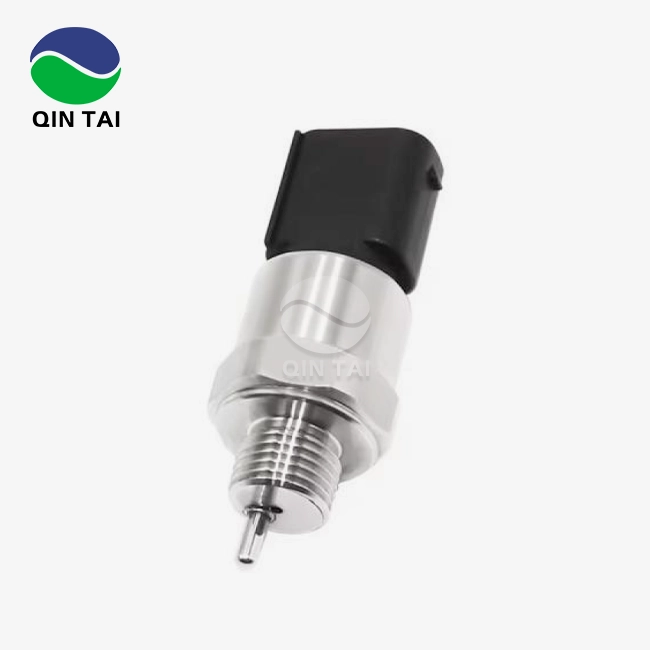
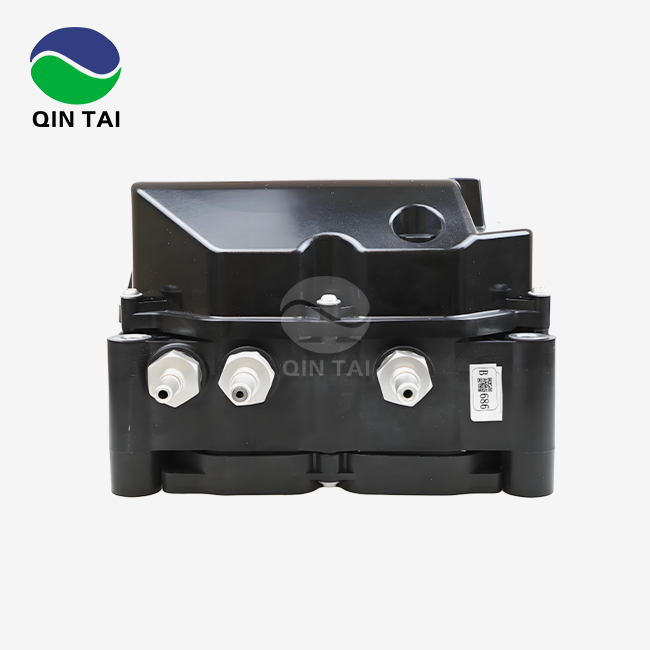
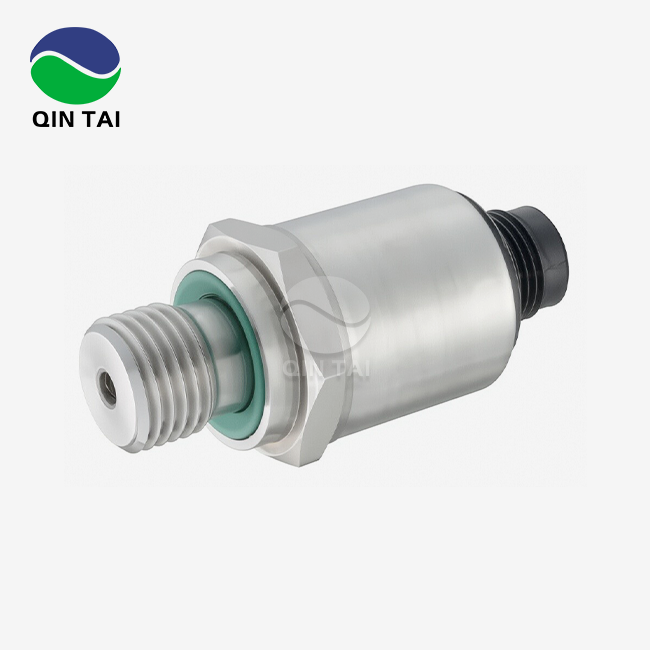
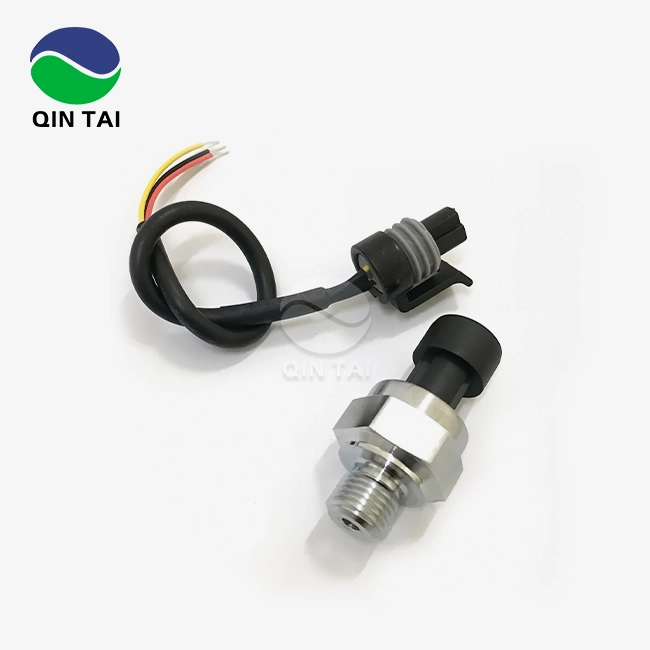

Our customers’ satisfaction speaks for our quality — contact us to experience the same reliable service.