- English
- French
- German
- Portuguese
- Spanish
- Russian
- Japanese
- Korean
- Arabic
- Greek
- German
- Turkish
- Italian
- Danish
- Romanian
- Indonesian
- Czech
- Afrikaans
- Swedish
- Polish
- Basque
- Catalan
- Esperanto
- Hindi
- Lao
- Albanian
- Amharic
- Armenian
- Azerbaijani
- Belarusian
- Bengali
- Bosnian
- Bulgarian
- Cebuano
- Chichewa
- Corsican
- Croatian
- Dutch
- Estonian
- Filipino
- Finnish
- Frisian
- Galician
- Georgian
- Gujarati
- Haitian
- Hausa
- Hawaiian
- Hebrew
- Hmong
- Hungarian
- Icelandic
- Igbo
- Javanese
- Kannada
- Kazakh
- Khmer
- Kurdish
- Kyrgyz
- Latin
- Latvian
- Lithuanian
- Luxembou..
- Macedonian
- Malagasy
- Malay
- Malayalam
- Maltese
- Maori
- Marathi
- Mongolian
- Burmese
- Nepali
- Norwegian
- Pashto
- Persian
- Punjabi
- Serbian
- Sesotho
- Sinhala
- Slovak
- Slovenian
- Somali
- Samoan
- Scots Gaelic
- Shona
- Sindhi
- Sundanese
- Swahili
- Tajik
- Tamil
- Telugu
- Thai
- Ukrainian
- Urdu
- Uzbek
- Vietnamese
- Welsh
- Xhosa
- Yiddish
- Yoruba
- Zulu
How Do Ceramic Pressure Sensors Compare With Silicon Alternatives?
Ceramic pressure sensors and silicon alternatives serve the same core function—measuring pressure—but they behave very differently under real-world industrial conditions. Ceramic sensors, built from materials like 96% Al₂O₃, resist corrosion, abrasion, and thermal stress far better than their silicon counterparts.
Silicon sensors deliver superior resolution in stable, controlled settings but tend to degrade when exposed to moisture, aggressive media, or extreme temperatures. For OEMs, aftertreatment system integrators, and procurement engineers selecting sensors for diesel engines, generator sets, or heavy machinery, understanding these differences directly affects system reliability and long-term cost.


Understanding Ceramic and Silicon Pressure Sensors
How a pressure sensor reacts to its surroundings over time depends on what it is made of. Both types work on the idea of piezoresistivity, but the object that they are glued to changes everything.
How Ceramic Sensors Work
A ceramic plate, usually alumina, that changes shape when pressure is applied is used in piezoresistive ceramic pressure monitors. The electrical resistance of the resistors printed on the diaphragm changes in proportion to how much it bends. This makes a bridge output signal that is directly linked to pressure. You can't mix alumina clay with acids, fuels, oils, or exhaust gasses because it is chemically neutral. Because of this, ceramic diaphragm pressure monitors are the best choice for hydraulic and fuel aftertreatment systems.
How Silicon Sensors Work
Silicon MEMS pressure sensors use etching to put tiny detecting parts right on a silicon chip. This process makes it possible to make things very small and sensitive at low pressures. When the working conditions are stable, silicon sensors work well in lab equipment, consumer electronics, and medical devices. Silicon, on the other hand, is fragile and easily damaged by corrosive substances if it doesn't have a protective coating. This makes industrial applications more difficult and expensive.
Key Material Differences
The main difference is that ceramic pressure sensors can handle being hit by objects and chemicals without losing performance, while silicon is better at being precise in softer settings. This difference is very important for procurement managers who are looking at sensors for SCR/DPF systems, hydraulic circuits, or monitoring generator exhaust.
Performance Comparison: Ceramic vs. Silicon Pressure Sensors
Numbers about performance are easier to understand than words used in marketing. The most important things in B2B buying are shown below to show how these two systems compare.
Temperature Stability
Ceramic sensors are accurate from -40°C to 135°C, which is the temperature range they can work in. Good ceramic sensors have zero temperature drift below 0.05% FS/°C, which is a number that works in engine bays, mines, and outdoor generator installations. When the temperature is controlled, silicon sensors have less drift, but their performance drops more quickly when the temperature goes up or down, especially above 125°C.
Accuracy and Linearity
A well-made ceramic pressure transducer is accurate to within ±0.5% FS all the way through. It stays at or below 0.3% FS because of non-linearity. These numbers are good enough for systems that control emissions, keep an eye on hydraulics, and run industrial processes. When everything is perfect, silicon sensors can be more accurate. But when mechanical stress, humidity, or chemical contact come into play, that edge goes away.
Long-Term Drift and Maintenance
Ceramics don't have a lot of hysteresis or long-term signal drift, so they need less frequency recalibration. This stability directly leads to a lower total cost of ownership in high-volume OEM applications, where it's pricey to replace or re-calibrate sensors on thousands of units. In harsh settings, silicon sensors may need to be calibrated more often, which can add secret costs to the original price benefits.

Applications and Use Cases in Industrial Procurement
A buying mistake that gets worse over time is picking the wrong monitor technology for the job. In the following business settings, ceramic pressure sensors always work better than silicon options.
In the main areas where ceramic technology is useful, these are listed:
- Diesel engine aftertreatment systems: SCR and DPF systems require sensors that withstand exhaust gases, soot contamination, and thermal cycling. Ceramic diaphragm sensors handle these conditions reliably, supporting China VI and Euro VI emission compliance.
- Hydraulic and pneumatic systems in construction machinery: Pressure spikes, abrasive fluid particles, and wide ambient temperature swings make ceramic the practical choice for excavators, loaders, and agricultural equipment.
- Generator sets in mines and power plants: Continuous operation in dusty, chemically active environments demands long sensor life. Ceramic sensors reduce unplanned downtime in applications where backup power cannot fail.
- Industrial exhaust gas treatment: Environmental protection systems measuring stack pressure or filter differential pressure benefit from the chemical inertness of alumina ceramic against acidic flue gases.
In the handling of industrial exhaust gasses, environmental protection systems that measure stack pressure or filter differential pressure can benefit from the fact that alumina clay doesn't react chemically with acidic flue gasses.
Silicon sensors, on the other hand, work best in places with clean media and a narrow temperature range, like tracking barometric pressure, home HVAC systems, and precise lab tools. This difference should be taken into account every time a procurement team looks at a specification for a heavy-duty industrial platform.
Making Informed Procurement Decisions: Spotlight on Qintai QS-P105
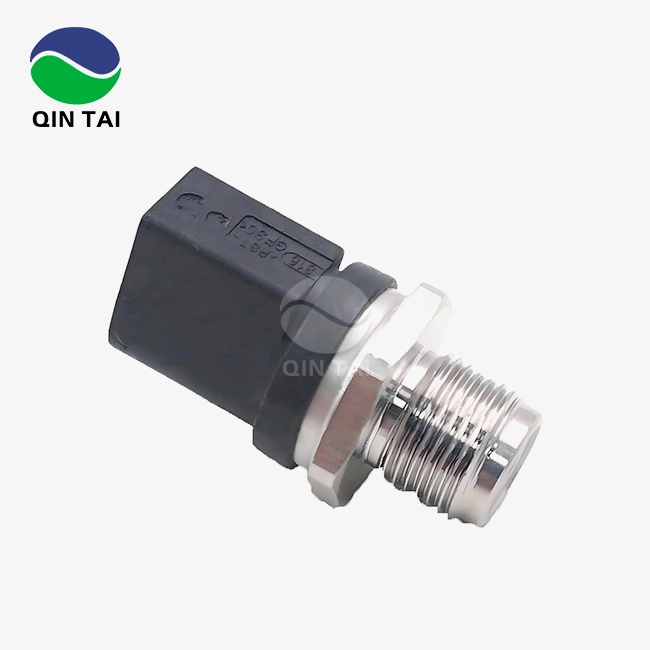
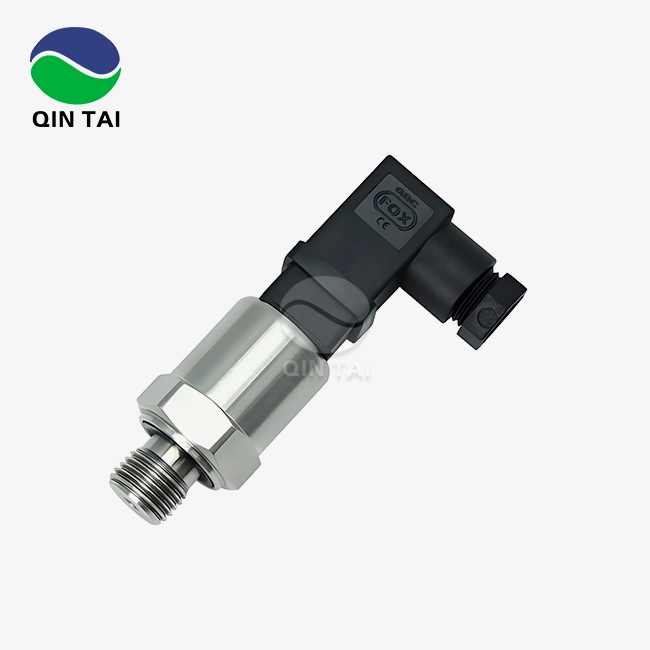
Choosing a pressure monitor isn't just a scientific matter; it's also a matter of money and the supply chain. The Qintai QS-P105 ceramic pressure sensor is an example of a well-designed ceramic object that is ready for mass production.
QS-P105 Technical Specifications
The QS-P105 is made of 96% Al₂O₃ ceramic and can handle pressures from -1/0 bar to 600 bar. The input voltage ranges from 2 to 30 VDC, and the sensitivity is between 2 and 4 mV/V. This means that it can work with a number of different ECU and driver interfaces. The bridge has a resistance of 11 ±30% kΩ and a safety overload limit of 200% FS, which is very important for uses where there are pressure spikes.
Why OEMs Trust This Design
The QS-P105 was designed so that OEMs could make a lot of them. Simple mounting options cut down on installation work. The small size makes it easy to package in engine bays and machinery frames that aren't very big. Because interfaces and parameters can be changed, procurement engineers can specify the exact output configuration they need without having to redesign the systems around them. You can get OEM and ODM service from Qintai, from concept to mass production.
Compliance and Certification Backing
Qintai has approvals from CE, UL, Ex, CMC, REACH, and RoHS, as well as ISO9001 and IATF16949. Qintai has filed 58 invention patents and has direct OEM supply relationships with Weichai Power, Yuchai Power, and Quanchai Power. This means that the company can prove that its products are made well. This certification portfolio meets the standard audit needs of buying managers who need proof that a provider is qualified.

Conclusion
Wherever extreme temperatures, corrosive media, or mechanical stress are present, ceramic pressure sensors work better than silicon options. Silicon devices are still useful for precise tasks in safe environments, but they aren't made to handle harsh conditions in the workplace.
The ceramic diaphragm pressure sensor is more valuable in the long run for OEMs, system developers, and aftermarket sourcing teams that work with diesel, building, agriculture, or generators. The Qintai QS-P105 is a tried-and-true, approved, and customizable choice that comes with more than 20 years of production experience and a history as China's top OEM sensor provider.
FAQ
What pressure ranges can ceramic sensors handle?
Piezoresistive ceramic pressure sensors cover a wide span—from low-pressure ranges starting near 0–1 bar up to 600 bar or higher depending on design. The QS-P105 specifically supports -1/0 bar to 600 bar, making it suitable for both hydraulic and vacuum applications.
How accurate are ceramic pressure transducers?
Ceramic sensors typically achieve accuracy between ±0.1% and ±0.5% FS. The QS-P105 reaches ±0.5% FS comprehensive accuracy with non-linearity at or below 0.3% FS—sufficient for emission control systems and process monitoring.
When should I choose silicon over ceramic?
Silicon sensors suit applications where measurement resolution is the top priority and the media is clean, dry, and within a moderate temperature range. Consumer barometers, medical equipment, and laboratory instruments are typical fits.
Can ceramic sensors be customized for OEM requirements?
Yes. Qintai offers full OEM and ODM customization for the QS-P105, including interface configuration, pressure range adjustment, and mounting options. Contact info@qt-sensor.com for application-specific requirements.
What certifications should I look for in a ceramic pressure sensor supplier?
ISO9001 and IATF16949 are baseline requirements for OEM procurement. Additional certifications like CE, UL, Ex (explosion-proof), and RoHS confirm environmental and safety compliance. Qintai holds all of these.

Get Ceramic Pressure Sensors From a Proven Manufacturer — Contact Qintai
Since 2001, Qintai has sold ceramic pressure sensors to original equipment manufacturers (OEMs) in more than 60 countries. The company has 58 idea patents and is certified by IATF16949 and CE. It is possible to get the QS-P105 with full OEM customization, stable mass production capacity, and direct technical support. Visit qt-sensor.com or email info@qt-sensor.com right now to get a sample or specs sheet. When people ask about procurement, our engineering team answers quickly.
References
1. Fraden, J. Handbook of Modern Sensors: Physics, Designs, and Applications. Springer. 2016.
2. Beeby, S., Ensell, G., Kraft, M., & White, N. MEMS Mechanical Sensors. Artech House. 2004.
3. Middelhoek, S., & Audet, S. A. Silicon Sensors. Academic Press. 1989.
4. Tran, A. V. "Ceramic-Based Pressure Sensors for High-Temperature Applications." Sensors and Actuators A: Physical. 2019.
5. International Organization for Standardization. ISO 9001:2015 Quality Management Systems — Requirements. ISO. 2015.
6. SAE International. SAE J1939 Standards for Heavy-Duty Vehicle Communication Networks and Sensor Integration. SAE International. 2021.
 Sensor.webp)

Our customers’ satisfaction speaks for our quality — contact us to experience the same reliable service.