- English
- French
- German
- Portuguese
- Spanish
- Russian
- Japanese
- Korean
- Arabic
- Greek
- German
- Turkish
- Italian
- Danish
- Romanian
- Indonesian
- Czech
- Afrikaans
- Swedish
- Polish
- Basque
- Catalan
- Esperanto
- Hindi
- Lao
- Albanian
- Amharic
- Armenian
- Azerbaijani
- Belarusian
- Bengali
- Bosnian
- Bulgarian
- Cebuano
- Chichewa
- Corsican
- Croatian
- Dutch
- Estonian
- Filipino
- Finnish
- Frisian
- Galician
- Georgian
- Gujarati
- Haitian
- Hausa
- Hawaiian
- Hebrew
- Hmong
- Hungarian
- Icelandic
- Igbo
- Javanese
- Kannada
- Kazakh
- Khmer
- Kurdish
- Kyrgyz
- Latin
- Latvian
- Lithuanian
- Luxembou..
- Macedonian
- Malagasy
- Malay
- Malayalam
- Maltese
- Maori
- Marathi
- Mongolian
- Burmese
- Nepali
- Norwegian
- Pashto
- Persian
- Punjabi
- Serbian
- Sesotho
- Sinhala
- Slovak
- Slovenian
- Somali
- Samoan
- Scots Gaelic
- Shona
- Sindhi
- Sundanese
- Swahili
- Tajik
- Tamil
- Telugu
- Thai
- Ukrainian
- Urdu
- Uzbek
- Vietnamese
- Welsh
- Xhosa
- Yiddish
- Yoruba
- Zulu
How Does a Capacitive Pressure Sensor Work Internally
Understanding the internal mechanisms of pressure sensing technology can transform your procurement decisions. A capacitive pressure sensor operates by detecting changes in capacitance when applied pressure causes diaphragm displacement. Inside the device, two conductive plates separated by a dielectric material form a capacitor. When pressure deforms the sensing diaphragm, the distance between these plates changes, altering the capacitance value. This variation converts mechanical pressure into a measurable electrical signal that industrial control systems can interpret, making these sensors indispensable for applications requiring high accuracy and long-term stability.
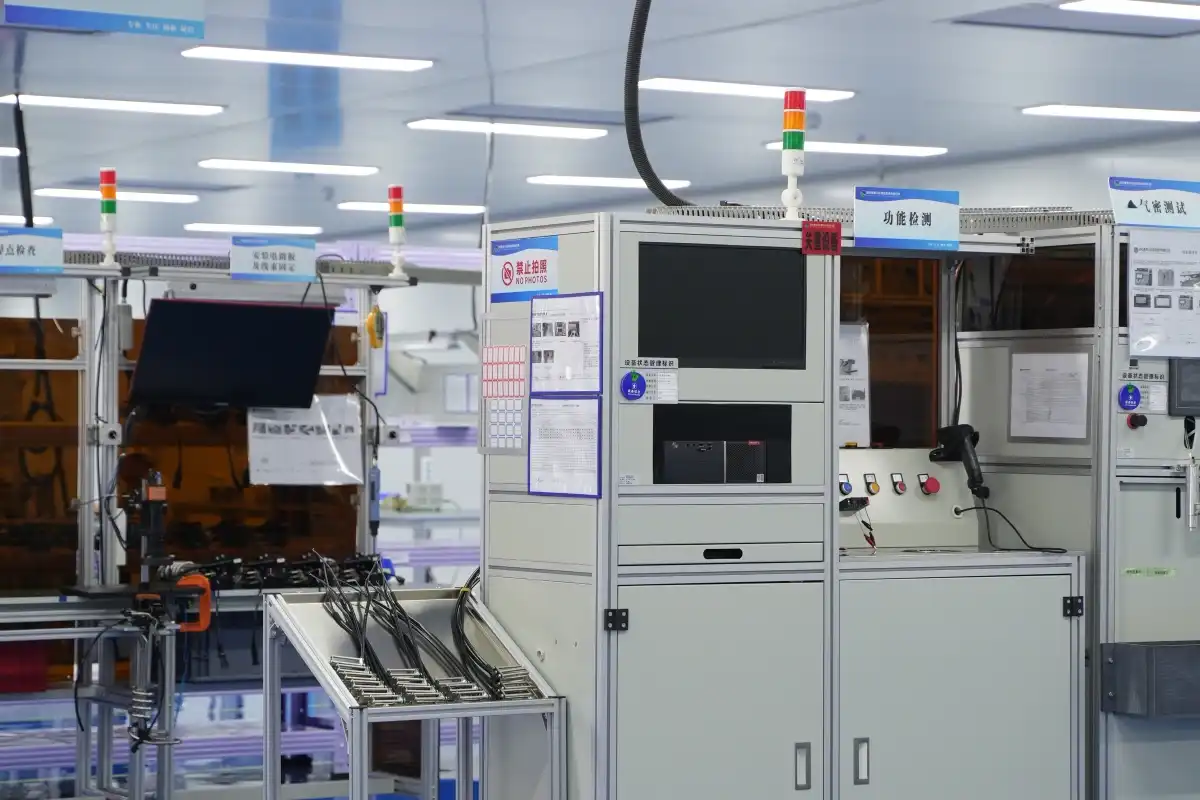
Fundamentals of Capacitive Pressure Sensors
What Makes Capacitive Technology Different
The basic idea behind capacitive pressure sensor technology is simple but very strong. A thin diaphragm inside the sensor works as an electrode and is placed across from a set reference electrode. A insulating layer, which is usually air or clay, sits between these parts. When pressure from outside the system acts on the diaphragm, it moves very slightly toward or away from the fixed plate, which changes the distance between the two. Because capacitance goes down as the distance between plates goes up, even tiny motions can be used to measure capacitance changes.
Compared to other technologies, this physical arrangement provides very high sensitivity. When it comes to types like Qintai's QS-P105, the ceramic diaphragm is made of 96% Al2O3, which is very strong and doesn't react badly with chemicals. This alumina ceramic's insulating properties don't change when the temperature does, so results will stay the same from -40°C to 135°C.
Core Components and Their Functions
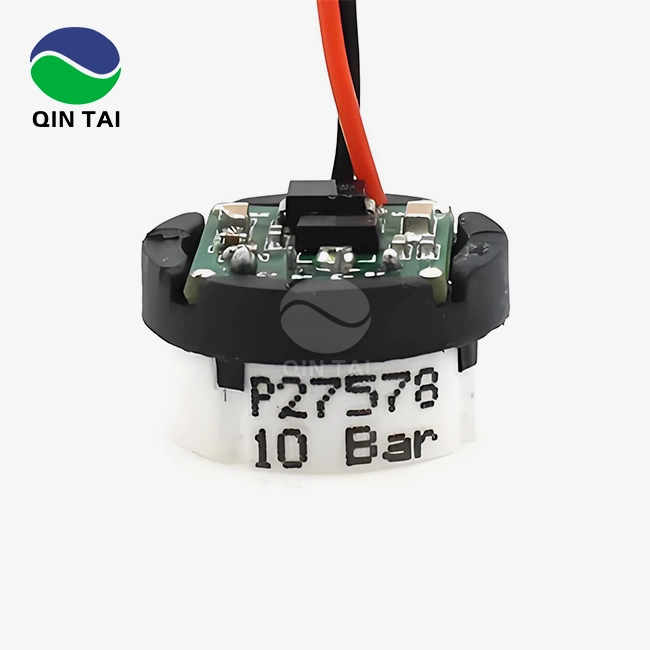
Each capacitive pressure sensor is made up of several important parts that work together. The sensing diaphragm is the main part that interacts with the medium being measured. It is made to bend in a predictable way when pressure is applied while still being structurally sound. The capacitive element behind this diaphragm measures displacement very accurately, often picking up movements that are measured in nanometers.
The signal filtering circuit turns the small changes in capacitance into output signals that can be used. Today's designs include temperature adjustment circuits right in the sensor assembly. This fixes any thermal effects that might affect accuracy otherwise. The QS-P105 does a great job of integrating these features; it keeps the temperature stable at or below 0.03% FS/°C over a range of modest pressures and at or above 0.04% FS/°C at higher pressures up to 600 bar.
Comparison with Alternative Technologies
When engineers are looking at different types of sensors, they often compare capacitive pressure sensor technology to piezoresistive and piezoelectric technologies. Piezoresistive sensors are great at measuring changes in dynamic pressure and are built to last, but they tend to use more power and be more sensitive to temperature changes. Piezoelectric devices react very quickly to changes in pressure, which makes them great for measuring dynamic pressure. However, they can't reliably measure static pressure.
In a way, capacitive pressure sensors occupy a unique middle ground. They accurately measure both static and dynamic pressure while using very little power. For example, the QS-P105 can work with supply voltages ranging from 2 to 30 VDC, so it can be used with battery-powered systems.
The non-linearity guideline of 0.3% FS makes sure that measurements are accurate across the whole range. This is very important for emission control systems that need to meet the strict China VI and Euro VI standards. Leading diesel engine makers are choosing capacitive technology for SCR aftertreatment systems more and more because it is accurate, doesn't use a lot of power, and stays stable at low temperatures.
Key Internal Mechanisms and Design Considerations
Capacitive Sensing Element Architecture
The detecting element is the most important part of any capacitive pressure sensor. These parts are set up by engineers as parallel plate capacitors, with the diaphragm making up one plate and the fixed reference plate being held by the substrate. As the pressure rises, the diaphragm bends inward, closing the gap and making the capacitance higher. When the pressure drops, the diaphragm moves back to its original position, which lowers capacitance by the same amount.
A range of 2 to 4 mV/V is possible with the QS-P105 thanks to careful tweaking of the diaphragm thickness, electrode area, and gap spacing. This sensitivity standard lets the sensor pick up on small changes in pressure while still having the structure strength needed for 200% FS safety overload protection. This kind of overload protection keeps pressure spikes from happening, which can happen in diesel engine exhaust systems during regeneration cycles when conditions briefly rise above standard working pressures.
Temperature Compensation and Calibration Methods
There are several ways that temperature can change capacitive pressure sensors. The gap distance and diaphragm stiffness are both changed by thermal expansion, which changes the size of the sensor parts. Temperature also changes the dielectric constant of the materials between the capacitive plates, which has an effect on capacitance data that is separate from changes in pressure.
To deal with these problems, manufacturers use complex compensation plans. Active compensation uses built-in temperature sensors to check the temperature of the sensor and corrective algorithms to change the output signal in real time. For passive compensation, materials with complementary thermal coefficients are used to get rid of errors caused by temperature. The result is clear from specs like the QS-P105's full accuracy of ≤±0.5% FS, which stays the same over its entire operating range. When aftertreatment systems need to exactly control the rate of DEF injection to get the best NOx reduction while stopping ammonia slip, this level of accuracy is important.
Signal Conditioning and Output Integration
Before they can be used as signals by industrial systems, raw capacitance data need to be "conditioned." Changes in capacitance are turned into voltage outputs by internal circuits. Usually, these outputs are analog messages that work with standard industry protocols. The QS-P105's bridge resistance specification of 11±30% kΩ makes sure stable operation while drawing as little current as possible from power supplies.
Modern designs also use filtering to get rid of electromagnetic interference. This is especially important in heavy-duty car settings where electrical noise from alternators, starting motors, and computer control units can be a problem. The zero output standard of ±0.2 mV/V at 23°C gives a stable starting point, which makes testing easier when the system is being put together. Supply chain managers like this plug-and-play feature because it cuts down on the time it takes to install and the amount of technical knowledge that is needed for replacements in service settings.
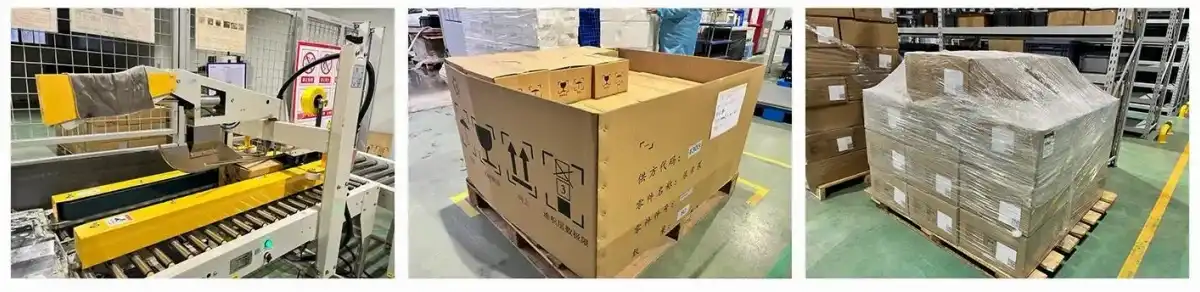
Applications and Performance in Industrial Environments
Heavy-Duty Diesel Engine Applications
Capacitive pressure sensors are now commonplace in systems that control diesel emissions. In SCR systems, these devices check the amounts of the DEF tank, the backpressure of the exhaust, and the difference in pressure between the DPF filters. Because the technology doesn't react badly with corrosive environments, it works great in these settings where sensors come into contact with hot exhaust gasses that contain particles, nitrogen oxides, and acidic condensates.
Sensors like the QS-P105 can measure pressures from -1/0 bar to 600 bar, which means that a single sensor base can be used for many different tasks. Manufacturers of construction equipment can define the same general sensor architecture for fuel systems, emission controls, and hydraulic systems. This makes working with suppliers easier and keeps inventory simpler. This versatility directly helps purchasing managers keep costs down, and it gives R&D engineers confidence in the technology's track record of dependability.
Durability in Harsh Operating Conditions
Sensors in industrial settings are subject to mechanical shaking, changing temperatures, pressure changes, and pollution that would quickly destroy less durable technologies. The ceramic diaphragm design makes it very resistant to wear from fluids and gasses that contain particles. Diesel fuel, oil mist, road salt, and the ammonia solutions used in SCR systems can't break down the material because it is chemically inactive.
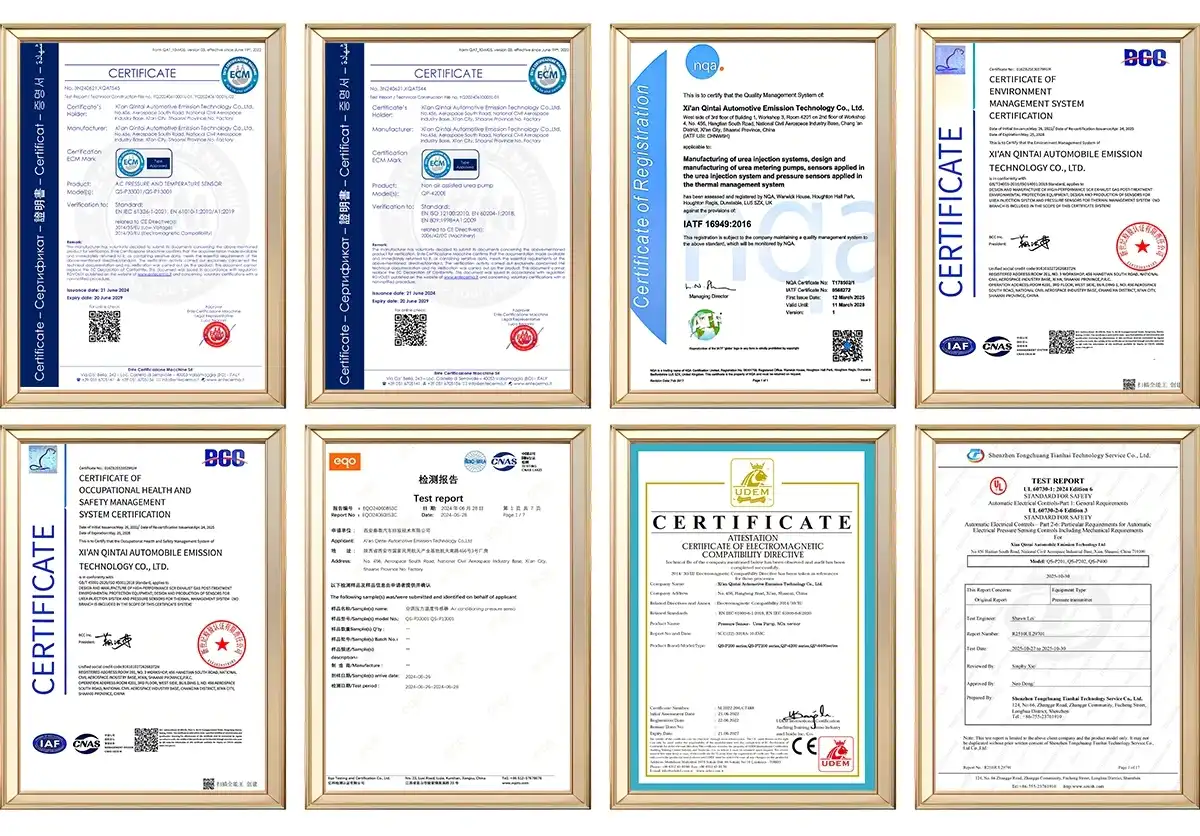
This longevity has been tested in the real world. Qintai's sensors go thru a lot of testing to make sure they work right. They are exposed to corrosive media for a long time, go thru vibration tests that meet automotive standards, and are thermally shocked between extreme temperatures. The company has several certificates, such as IATF16949 for car quality management and CE compliance for European markets.
These certifications allow a third party to check that the products are consistently made and are reliable. Capacitive pressure sensor technology, in particular, is rigorously evaluated under these same tests to ensure stable signal output and long-term drift resistance. When technical managers choose sensors for integrating SCR/DPF systems, they can use these certifications as proof during the approval process. This speeds up the procurement cycle.
Case Studies in OEM Manufacturing
Millions of production engines made by Weichai Power, Yuchai Power, and Quanchai Power and other top Chinese engine makers have Qintai capacitive pressure sensors built in. These agreements show that the technology can handle large-scale production needs while still keeping the regularity needed for emission compliance. When engines are certified for China VI standards, the accuracy of the sensors has a direct effect on whether the whole system meets the stricter NOx limits.
Another area of sensor performance that can be seen is in agricultural machinery. Tractors and harvesters work in dirty places where the temperature can change a lot, from below zero in the morning to very hot in the middle of the day. The QS-P105 can work in temperatures ranging from -40°C to 135°C, which is a wide range that should cover most situations.
This means that DEF injection control will work reliably no matter what the weather is like. Manufacturers of generator sets like that they can be used in a variety of environments. This makes them ideal for backup power setups at rural mines and phone centers where service access is limited and dependability is essential.
Procurement Considerations: Choosing the Right Capacitive Pressure Sensor
Critical Specifications for Application Matching
To choose the right capacitive pressure sensor, you need to carefully look at what the application needs. The most obvious requirement is the pressure range, which must include normal operating pressures plus a safety margin for sudden changes. The QS-P105 has 11 standard ranges that make it easy to match exactly to the needs of an application without over-specification, which raises costs for no reason.
Specifications for accuracy need close attention because they include many sources of mistake. Total error band is made up of nonlinearity, hysteresis, repetition, and temperature effects. The full accuracy specification of ≤±0.5% FS gives a fair picture of how well it works in real life. Instead of focused only on individual specs that might give falsely high performance claims, procurement managers should compare this total accuracy number.
For changing apps, response time is important. As the specs don't always say frequency response directly, how quickly the sensor picks up changes in pressure depends on the diaphragm's mass and stiffness. Most capacitive designs can react quickly enough for diesel engines, where changes in pressure happen over milliseconds instead of microseconds. Ceramic diaphragms have a low moving mass, which means they can respond well to aftertreatment systems without the overshoot and ringing that can happen with piezoresistive designs.
Evaluating Manufacturers and Product Portfolios
There are both multinational companies and specific regional producers in the global capacitive pressure sensor market. Well-known names like Honeywell and Bosch have a lot of products to choose from, and they have global delivery networks and decades of engineering experience to back them up. Their sensors usually cost more than others, but that's because they come with a lot of technical information, application engineering help, and data that shows how reliable they are.
Regional manufacturers offer good alternatives, especially for uses that need to keep costs low. Qintai is a good example of this group because it has more than 20 years of experience in making automotive emission sensors and has certifications that meet international standards.
Capacitive pressure sensor designs are a core part of Qintai's product line, and their proven reliability directly supports the company's ability to meet strict OEM requirements while controlling costs. The company has shown that it can meet the strict needs of major engine makers while keeping prices low enough to accommodate the budgets of aftermarket suppliers and sellers, as it is the top OEM supplier in the Chinese market.
The company's 58 idea patents show that it is always coming up with new ways to make sensors, process signals, and make things. This intellectual property portfolio shows a dedication to constant improvement rather than just copying ideas that already exist. Independent research and development lets you change the sensor interfaces, pressure ranges, and output settings to fit the needs of each customer. This is especially helpful for aftertreatment system designers who are making their own control strategies.
Practical Sourcing Strategies and Supplier Relationships
A successful procurement process includes more than just technical specifications. It also includes reliable delivery, quick technical support, and stable partnerships that last for a long time. Lead times vary a lot from one source to the next. Standard stock items usually ship within weeks, but personalized items may need months for tooling and proof. Before finalizing specs, supply chain managers should talk to possible providers early on in the design phase about expected volumes, shipping schedules, and customization needs.
When negotiating prices, it helps to know what makes sensor production so expensive. A big part of the cost is the raw materials, especially the high-purity ceramic substrates and precious metal electrodes. Due to setup times and tuning needs, production quantities have a huge effect on unit costs. Suppliers can often offer better prices for blanket orders with planned releases. This lets customers know when their orders will be shipped and gives suppliers more control over their costs.
Support after the sale is what sets high-quality suppliers apart from average ones. The QS-P105's easy mounting design makes installation easier, but some uses still need expert help to make sure they work right. Manufacturers who offer application engineering support to help customers choose the best sensors, mount them correctly, and improve signals add value that goes beyond the product itself. This help is especially important for service shops and parts suppliers that work with the aftermarket because they may not have as much technical knowledge as OEM engineering teams.
Conclusion
In conclusion, capacitive pressure sensors use both basic physics and precise engineering to make readings that can be trusted in harsh industrial settings. Ceramic diaphragms, carefully designed capacitive elements, and advanced signal conditioning make up their internal architecture. This architecture gives them exact pressure data that is needed for emission compliance and operating efficiency.
When procurement professionals understand these internal processes, they can make smart choices that balance technical needs, cost limits, and provider capabilities. Capacitive pressure sensors are still an important part of emission control systems and industrial pressure measurement applications around the world, even tho the technology is always getting better at handling changes in temperature, using less power, and integrating more components.
FAQ
How do capacitive pressure sensors deal with problems with different types of media?
Ceramic diaphragms, which are used in high-quality capacitive sensors, are very resistant to most industrial gasses and fluids. Diesel exhaust, DEF solutions, hydraulic fluids, and most common chemicals can't damage the 96% Al2O3 alumina ceramic in devices like the QS-P105. The material doesn't break down when it's exposed to high or low temperatures or changes in pressure, so it stays calibrated throughout its useful life. Media with rough particles can touch the diaphragm without wearing it down like metal diaphragms do in piezoresistive sensors.
Can capacitive pressure sensors tell the difference between positive and negative pressure?
It is possible for many capacitive devices to measure both gage pressure and vacuum conditions. There is a -1/0 bar option on the QS-P105 that is designed for applications that need to sense vacuums. The sealed reference chamber design of the sensor lets it correctly react to pressures below atmospheric. This is helpful for checking the pressure in the intake manifold and the backpressure in the DPF during regeneration tests. Because it can work in both directions, there is no need for two different vacuum sensors in devices that have both positive and negative pressures.
What causes measurement shift, and how can it be kept to a minimum?
Long-term drift happens because the materials used in the sensors change physically, dirt and other things get on the detecting surfaces, and the diaphragm mounting slowly loses its stress. These effects are kept to a minimum by good manufacturers who choose the right materials and use hermetic sealing and stress-relief annealing during production. The zero shift limit of less than 0.2 mV/V shows that the baseline is very stable. Any drift can be found before it affects system performance by regularly checking the calibration against reference standards. This is especially important for emission compliance, where accuracy directly affects the results of regulatory tests.
Partner with Qintai for Reliable Capacitive Pressure Sensor Solutions
Join forces with Qintai to get dependable capacitive pressure sensor solutions. Xi'an Qintai Automotive Emission Technology can meet the needs of your diesel engine systems for proven performance and legal compliance. Our QS-P105 capacitive pressure sensor is the result of more than 20 years of specialized engineering and IATF16949 quality management. It is trusted by China's top engine OEMs.
Whether you're an aftermarket provider looking for cost-effective inventory solutions or an aftertreatment system integrator needing unique interfaces, our expert team is here to help you thru the design, integration, and production phases. Contact info@qt-sensor.com to talk about your pressure sensing needs with a capacitive pressure sensor manufacturer that wants to help you succeed by offering competitive pricing, easy customization, and reliable shipping around the world.
References
1. Webster, J.G. (2019). The Measurement, Instrumentation and Sensors Handbook: Spatial, Mechanical, Thermal and Radiation Measurement. CRC Press.
2. Bao, M. (2020). Analysis and Design Principles of MEMS Devices. Elsevier Science Publishers.
3. Fraden, J. (2016). Handbook of Modern Sensors: Physics, Designs, and Applications. Springer International Publishing.
4. Wilson, J.S. (2018). Sensor Technology Handbook. Newnes Publishing.
5. Nawrocki, W. (2016). Measurement Systems and Sensors. Artech House Publishers.
6. Tian, B., Zhao, Y., Jiang, Z. (2017). "Temperature Characteristics and Compensation Methods for Capacitive Pressure Sensors in Automotive Applications." Sensors and Actuators A: Physical, 263, 632-643.
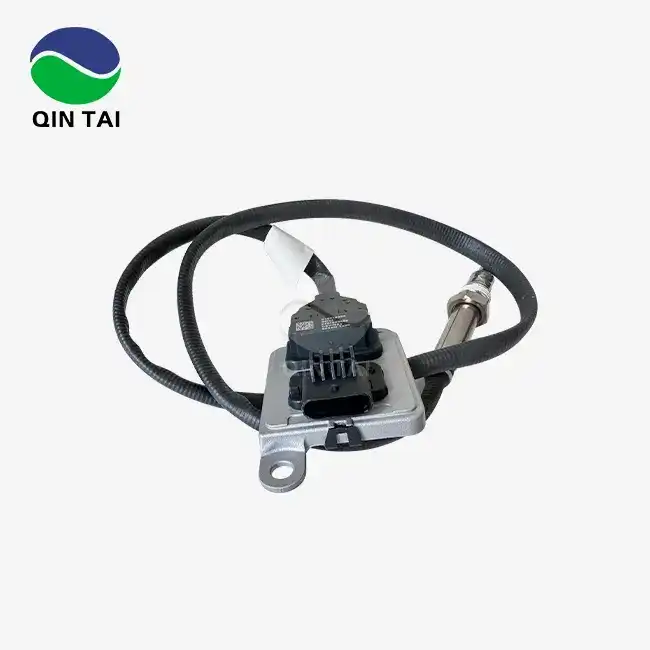

Our customers’ satisfaction speaks for our quality — contact us to experience the same reliable service.