- English
- French
- German
- Portuguese
- Spanish
- Russian
- Japanese
- Korean
- Arabic
- Greek
- German
- Turkish
- Italian
- Danish
- Romanian
- Indonesian
- Czech
- Afrikaans
- Swedish
- Polish
- Basque
- Catalan
- Esperanto
- Hindi
- Lao
- Albanian
- Amharic
- Armenian
- Azerbaijani
- Belarusian
- Bengali
- Bosnian
- Bulgarian
- Cebuano
- Chichewa
- Corsican
- Croatian
- Dutch
- Estonian
- Filipino
- Finnish
- Frisian
- Galician
- Georgian
- Gujarati
- Haitian
- Hausa
- Hawaiian
- Hebrew
- Hmong
- Hungarian
- Icelandic
- Igbo
- Javanese
- Kannada
- Kazakh
- Khmer
- Kurdish
- Kyrgyz
- Latin
- Latvian
- Lithuanian
- Luxembou..
- Macedonian
- Malagasy
- Malay
- Malayalam
- Maltese
- Maori
- Marathi
- Mongolian
- Burmese
- Nepali
- Norwegian
- Pashto
- Persian
- Punjabi
- Serbian
- Sesotho
- Sinhala
- Slovak
- Slovenian
- Somali
- Samoan
- Scots Gaelic
- Shona
- Sindhi
- Sundanese
- Swahili
- Tajik
- Tamil
- Telugu
- Thai
- Ukrainian
- Urdu
- Uzbek
- Vietnamese
- Welsh
- Xhosa
- Yiddish
- Yoruba
- Zulu
How Does a Urea Level & Quality Sensor Improve SCR Maintenance Costs?
A urea level & quality sensor helps keep SCR maintenance costs down by recognizing two issues early: low diesel exhaust fluid (DEF) and diluted or polluted DEF. With precise level and concentration data received by the control unit, it can notify the operator in time, dose appropriately and prevent the pump, injector and catalyst damage bad fluid may cause. This leads to fewer unexpected repair calls, fewer warranty claims and reduced downtime. In this essay, I will describe how the sensor works, where the savings are, and what I look for when evaluating a sensor for OEM and fleet programs.

Why SCR Maintenance Costs Increase Without Accurate DEF Monitoring?
The role of DEF, AdBlue, and urea solution in SCR systems
DEF, often marketed as AUS 32 or AdBlue, is a 32.5% urea solution in de-ionized water. Its quality criteria are described in ISO 22241-1. An SCR system injects it into the hot exhaust stream where it decomposes into ammonia. The ammonia then reduces the nitrogen oxides (NOx) to nitrogen and water. NOx reductions of 90 percent or higher have been reported in urea-SCR studies . That outcome is dependent on the proper quantity of fluid at the right concentration. If the tank runs empty or the fluid wanders from the 32.5% level, the system can't keep its emissions standards and the engine controller might reduce speed to remain inside the limits.
Common maintenance problems caused by unreliable urea sensing
Weak or drifting signal causes challenges on the level side and on the quality side. Wrong level measurements create false low-fluid alarms, premature refills and roadside calls. They may also conceal an absolutely empty tank, allowing the pump to run dry. Wrong concentration data is harder to detect. Diluted DEF decreases NOx conversion. Fluid with the improper urea concentration might produce solid deposits which block the injector nozzle. DEF also freezes at roughly 12°F (-11°C), thus sensors on vehicles and equipment in cold U.S. states have to withstand freeze and thaw cycles without losing accuracy.
The hidden cost of reactive SCR maintenance
Repairing anything after it breaks costs more than the portion that failed. A single problem might entail hours spent in the diagnostic lab, a tow and a service bay detained for hours. Often, technicians may repair several parts (injector, pump, catalyst, etc.) before discovering the underlying problem. For OEMs, recurring failures manifest as warranty claims and field campaigns. And proactive monitoring is another thing. The sensor indicates a diluted tank or a declining level, although the repair is still a fluid change or a fluid top-up. In my mind that distinction is what differentiates a planned maintenance activity from a costly breakdown.
What Is a Urea Level and Quality Sensor?
Urea tank level sensor function
A DEF level sensor in the urea tank notifies the controller how much DEF is left. The most common varieties are the float, capacitive and ultrasonic designs. The signal powers the dashboard gauge and low-level alarms and informs the control unit if dosing is at risk. Accurate readings enable operators to schedule refills around routes and shifts, rather than responding to alerts. Tank form is key here. Baffles, slosh and uneven installation might distort a reading, therefore the probe length and location of the urea level & quality sensor should fit the tank. A level sensor has one job: to tell you whether there is enough fluid to keep the SCR system running.
Diesel exhaust fluid quality sensor explained
A DEF quality sensor addresses a separate question: is the fluid good for dosing. It calculates urea concentration and some designs additionally provide temperature, conductivity or symptoms of contamination. Ultrasonic versions employ the speed of sound in the fluid , which varies with concentration . Optical versions react to how light interacts in the liquid. The controller compares the result with the nominal value of 32.5% Water, fuel or the incorrect fluid can push the reading out of range and the system may register a defect before damaged dosing gear accomplishes the same task at a far greater cost.
Combined level and quality sensors versus separate sensors
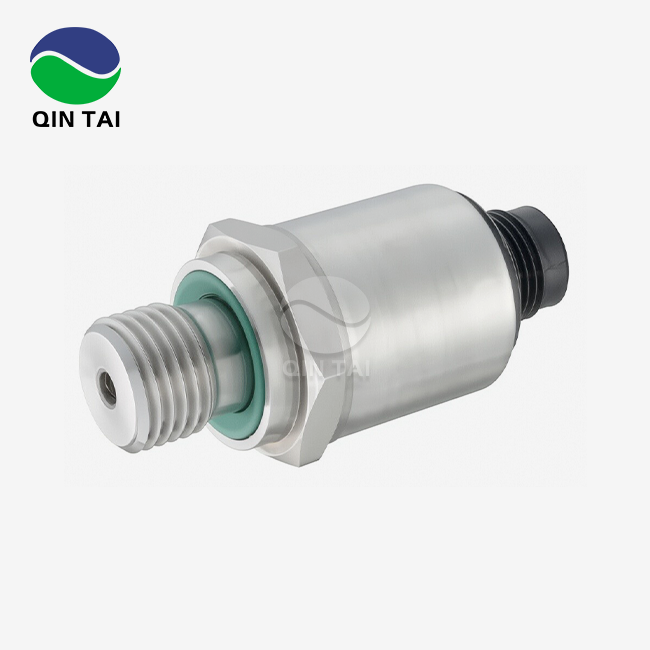
A combined urea level & quality sensor combines the two functions into one tank assembly. Fewer parts, less wiring, one tank opening, one calibration step, and perfect for OEM platforms and tiny tanks. Makes sense for separate sensors otherwise. Retrofit projects and existing tank designs and modular replacement programs sometimes need a level probe and a quality module to be put at various locations. No option is superior in every circumstance. My decision would be based on the tank design, available space and servicing plan. Qintai provides product modification for particular applications, so that the shape may be in line with the equipment.
How Does a Urea Level & Quality Sensor Work?
Basic operating principle inside the DEF tank
The sensor is in or adjacent to the DEF tank. It includes a sensing device, a signal processor and a communication interface. In use, the element creates or senses an electric field, sound wave or light beam. The raw signal is picked up by on board circuits that filter noise and compensate for temperature. Then, the sensor delivers level, concentration and temperature data to the engine control unit (ECU). The ECU utilizes the data to control dosage, activate alarms, conduct emissions tests and implement derating as required. Each step contributes to the final reading . Stable electronics are just as important as the sensor element.
How level and concentration measurement work
Capacitive level sensors detect changes in the electrical field when the level of the fluid changes around the probe. Ultrasonic sensors transmit a sound pulse and time the echo, converting the delay into distance. The measurement signal might be speed of sound, light absorption or conductivity for concentration, depending on the design. Real tanks enhance difficulties. Vibration, sloshing, deposits, froth, vehicle tilt and temperature changes contaminate the raw signal. These consequences are compensated for by good designs in a urea level & quality sensor. I assess technologies against the real duty cycle, not a generic assertion, because each approach responds differently to them.
Data communication and SCR system compatibility
The sensor is only helpful if the ECU knows what it means. The output type, connection, supply voltage and software mapping all need to be compatible with the platform. The sensor may output an analog signal or digital data across a communication bus like may . It is dependent on the system . The device could measure right but might give bogus error signals if a mismatch occurs. Before every purchase, I check the ECU requirements, the dosage module interface and the diagnostic software. By giving the supplier the interface specification on an early stage, it reduces the number of sample iterations and surprises in the test bench validation.

How Accurate Sensing Lowers SCR Maintenance Costs
Preventing incorrect refilling and unnecessary service visits
With accurate level data there is a lot less guessing involved in managing your DEF. Fleets may arrange fills at the depot instead of the roadside and technicians cease chasing warnings from a negative reading. That's important because US pollution standards require an engine to derate — drop in power — when it runs out of DEF, so a missed refill might strand a truck. A false low level alert is a wasted service call . The pump may run dry if the tank runs dry without the pump knowing it. A steady level indication prevents both eventualities, and lets operators measure how much fluid each vehicle consumes.
Detecting incorrect urea concentration before dosing problems occur
Keeping Track of Concentration: Protecting the Parts Most Expensive to Replace Diluted DEF leads to lower NOx conversion and polluted fluid may cause deposits in the injector and dosing line. Then the fluid goes into the exhaust stream . The quality sensor detects the deviation at the tank . The repair therefore is simple: drain, flush and refill with approved DEF . This is important for fleets that are fueled from several sources, e.g. bulk dispensers, drums, and jugs. Without a quality signal, the first symptom of faulty fluid is usually a fault code or blocked nozzle and the repair bill is already starting.
Reducing downtime and total cost of ownership
The sensor itself is a tiny piece of the SCR bill. The pump, injector, heater and catalyst are much more expensive. A reliable signal from the urea level & quality sensor allows them all to operate within their design parameters. Fewer failures imply fewer return trips and better spare-parts preparation. The same rationale applies to OEMs with warranty exposure over a production run. When I assess choices, I look at cost per vehicle-year, including field failures and service time, not just the purchase price. A sensor that stays calibrated will normally cost you less over the life of the device.
How to Choose a Urea Level and Quality Sensor for B2B Procurement?
Define the application and operating conditions
Procurement begins with the equipment, not the catalog. I note the kind of vehicle or machine, i.e. trucks, busses, agricultural machinery, construction equipment or generator sets, as well as the tank size and how it is mounted. Then I mention the probe length, measuring range, operating temperature, vibration exposure and material compatibility with DEF. Cold-start behavior requires its own line, as DEF freezes at about 12°F (-11°C). If you write down these parameters before getting a quote, the supplier may recommend a sensor that will fit, saving you re-work later in the process.
Verify compatibility with the SCR system
Then I check that the sensor works with the ECU, dosing module, pump and diagnostic tools. This comprises connection type, supply voltage, output signal or CAN message mapping and any platform specific calibrations. Samples should be bench tested and prototype validated under realistic temperature, vibration and fluid conditions prior to volume orders. Buyers operating under OEM quality systems should also ask for PPAP and APQP paperwork, since it indicates how the supplier controls design and manufacturing. The most frequent reason for a good sensor to fail in the field is to skip compatibility testing.
Evaluate supplier capabilities beyond unit price
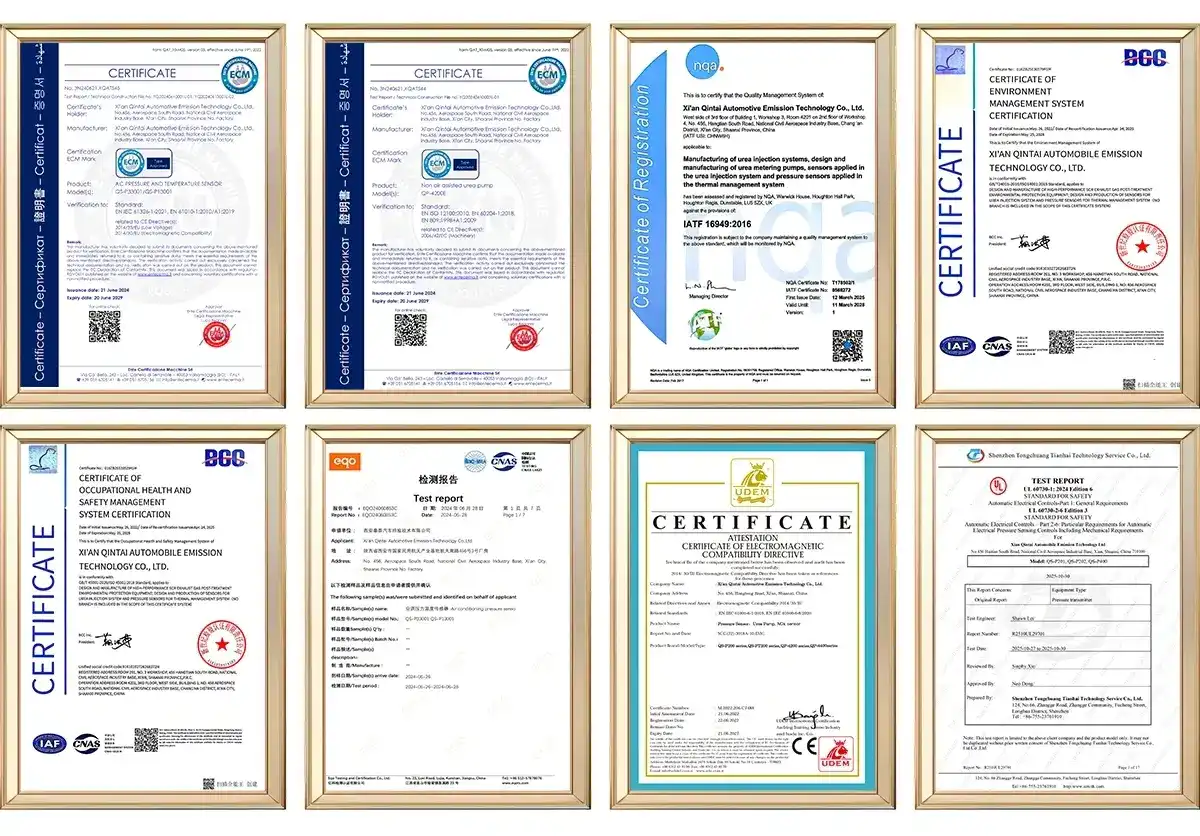
Unit pricing is just half of the tale. I also consider certificates, engineering support & manufacturing control. Xi'an Qintai Automotive Emission Technology Co. Ltd is a national high-tech firm established in 2001, which mainly engages in the research and development and production of diesel SCR aftertreatment products and sensors. Qintai obtained ISO9001, IATF16949, CMC, Ex, UL, CE, REACH and RoHS certifications and has filed for 58 innovation patents. It is a key supplier for Weichai Power, Yuchai Power, Quanchai Power, etc., providing OEM and ODM services, and selling in over 60 countries and regions. Those data offer purchasers something to check against.
Conclusion
A urea level & quality sensor allows the ECU to be given correct information about the quantity and condition of the DEF, leading to a reduction in SCR maintenance costs. Level Sensing avoids availability issues, such as misleading alarms, missed refills and pumps running empty. Quality sensing identifies diluted or tainted fluid before it may affect the injector, pump or catalyst. Combined assemblies simplify parts and wiring. Separate sensors suit retrofits and existing tanks. Capacitive, ultrasonic, optical and conductivity technologies each react differently to vibration, temperature and tank design, therefore the choice should be dictated by the application. Validation testing and compatibility with the ECU is what determines if a sensor operates in service. The cost of the sensor is outweighed by reduced downtime and fewer failures during the life of the equipment.
FAQ
Q1: What is the difference between a urea level sensor and a urea quality sensor?
A: A level sensor informs the controller how much DEF is left in the tank. "A good sensor is if the fluid is close to 32.5% urea and there's no contamination." With a full tank, diluted fluid may still be stored therefore many SCR systems need both functionalities.
Q2: Can a faulty urea sensor cause SCR derating?
A: Yes. Under emissions guidelines, if the ECU gets an unreasonable level or concentration indication it might register error codes, display warnings and restrict engine performance. 1st check wiring, fluid and sensor condition. Refer to the engine manufacturer's diagnostic method.
Q3: What information should I provide when requesting a quotation?
A: Provide the tank design, probe length, mounting technique, connection type, supply voltage, output signal or CAN protocol, temperature range, target ECU and projected yearly volume.
Request a Urea Level & Quality Sensor Solution from Qintai
Qintai is a urea level & quality sensor manufacturer with IATF16949 certification, 58 invention patents, and OEM/ODM customization for diesel SCR applications. Send your tank drawing, interface requirements, and annual volume to info@qt-sensor.com, and our engineers will review compatibility and sample options with you.
References
1. ISO 22241-1: Diesel engines — NOx reduction agent AUS 32 — Part 1: Quality requirements, 2019
2. ISO 22241-2: Diesel engines — NOx reduction agent AUS 32 — Part 2: Test methods, 2019
3. U.S. Environmental Protection Agency, Control of Air Pollution from New Motor Vehicles: Heavy-Duty Engine and Vehicle Standards and Highway Diesel Fuel Sulfur Control Requirements, 2001
4. U.S. Environmental Protection Agency, Control of Emissions of Air Pollution from Nonroad Diesel Engines and Fuel, 2004
5. Nova, I. and Tronconi, E., Urea-SCR Technology for deNOx After Treatment of Diesel Exhausts, Springer, 2014
6. Robert Bosch GmbH, Diesel-Engine Management, Springer Vieweg, 2014

Our customers’ satisfaction speaks for our quality — contact us to experience the same reliable service.