- English
- French
- German
- Portuguese
- Spanish
- Russian
- Japanese
- Korean
- Arabic
- Greek
- German
- Turkish
- Italian
- Danish
- Romanian
- Indonesian
- Czech
- Afrikaans
- Swedish
- Polish
- Basque
- Catalan
- Esperanto
- Hindi
- Lao
- Albanian
- Amharic
- Armenian
- Azerbaijani
- Belarusian
- Bengali
- Bosnian
- Bulgarian
- Cebuano
- Chichewa
- Corsican
- Croatian
- Dutch
- Estonian
- Filipino
- Finnish
- Frisian
- Galician
- Georgian
- Gujarati
- Haitian
- Hausa
- Hawaiian
- Hebrew
- Hmong
- Hungarian
- Icelandic
- Igbo
- Javanese
- Kannada
- Kazakh
- Khmer
- Kurdish
- Kyrgyz
- Latin
- Latvian
- Lithuanian
- Luxembou..
- Macedonian
- Malagasy
- Malay
- Malayalam
- Maltese
- Maori
- Marathi
- Mongolian
- Burmese
- Nepali
- Norwegian
- Pashto
- Persian
- Punjabi
- Serbian
- Sesotho
- Sinhala
- Slovak
- Slovenian
- Somali
- Samoan
- Scots Gaelic
- Shona
- Sindhi
- Sundanese
- Swahili
- Tajik
- Tamil
- Telugu
- Thai
- Ukrainian
- Urdu
- Uzbek
- Vietnamese
- Welsh
- Xhosa
- Yiddish
- Yoruba
- Zulu
Why HAVC Transmitters Improve HVAC Energy Monitoring and Safety
HAVC transmitters enhance HVAC energy monitoring and safety by converting pressure, temperature, humidity, and CO₂ variables into stable signals controllers can read each second. With correct data, a system can regulate fans, compressors and pumps to meet actual demand, rather than guessing. It also sounds alerts if refrigerant pressure becomes too high, if a filter gets clogged, or if the airflow slows. I think of these gadgets as the connection between a machine and its control brain. This page describes how they operate, where they fit and how to purchase them with confidence.

What HAVC Transmitters Are and How They Work?
From Sensing Element to Control Signal
A transmitter senses a physical variable and turns it into an electrical or digital output that a controller or building management system (BMS) may utilize. The sensor element monitors temperature, humidity, pressure or CO2. The internal electronics eliminate faults, amplify the weak signal and transmit it out as 4-20 mA, 0-10 V, Modbus or BACnet. The controller reads the value and responds. It revs up fans, readies machinery or sets off an alert. I refer to it as sense, condition, and communicate. If any stage fails, the control decision is based on incorrect data, so each step has to be paid to in design.
How a Transmitter Differs From a Basic Sensor?
A simple sensor just senses a state . Its raw output, whether a modest voltage or a resistance change, often requires some additional circuitry before it can be used by a controller. A transmitter encloses the sensing device with signal conditioning so that the output is in standard range. That difference counts in the production line. Engineers calibrate to a recognized scale. Assembly teams connect a standard signal, not proprietary circuitry. Standard outputs also ease end-of-line testing and enable transfer of a part from one unit model to another. HAVC transmitters therefore provide a convenient interface between mechanical hardware and control circuitry.
Gauge, Differential, and Absolute Pressure Types
There are three primary categories of pressure transmitters. For most HVAC systems, pressure readings are gage pressure, which is pressure relative to the surrounding atmospheric pressure. Differential pressure transmitters are used to measure difference between two locations , hence they are used in air filtration and ventilation . Absolute pressure transmitters are referenced to a perfect vacuum and are used for specific applications such as vacuum systems or barometer measurements. A similar kind is the compound transmitter which reads above and below atmospheric pressure, useful in systems swinging between positive and negative states. Engineers will frequently look at gage sensing first for a refrigerant circuit. The ultimate decision depends on the application.
Types of HVAC Transmitters and Where They Work
Temperature, Humidity, and CO₂ Transmitters
HAVC transmitters are located in rooms, ducts, pipelines, air handling units (AHUs) and outdoors. Humidity transmitters assist in maintaining comfort and avoiding condensation in moisture-sensitive areas. CO₂ transmitters provide ventilation data based on occupancy and enable demand-controlled ventilation. ASHRAE Standard 62.1 in the United States establishes ventilation rates to maintain acceptable indoor air quality, and CO₂ levels are commonly used to confirm that occupied rooms are receiving sufficient amounts of outside air. Each type requires the proper range, mounting technique and environmental protection. A duct probe and a wall-mounted room unit are not the same, although they both monitor temperature.
Pressure Applications Across an HVAC System
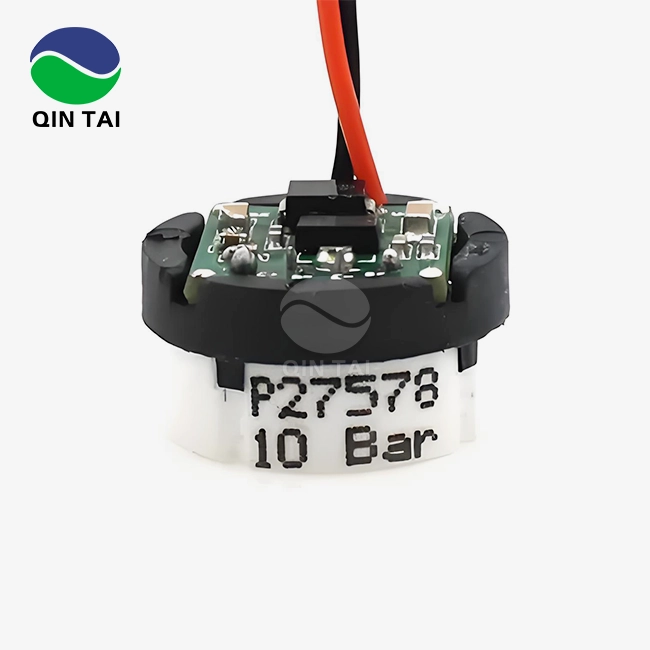
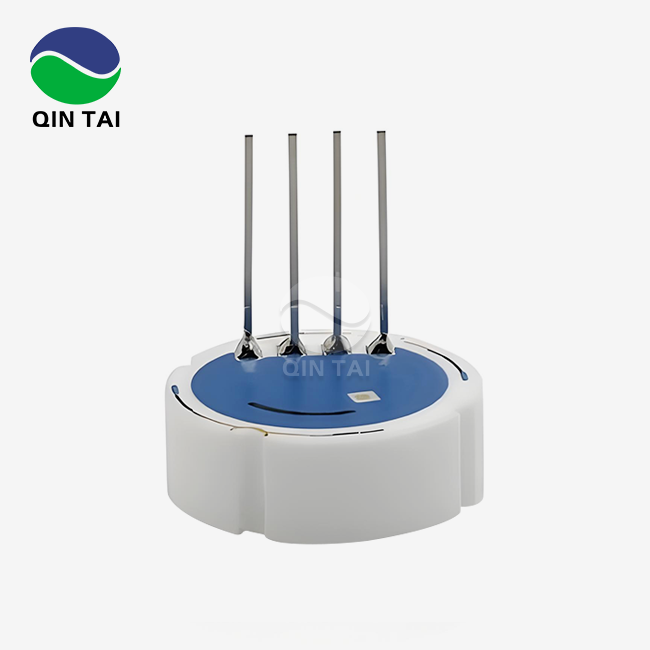
More sites than many consumers assume have pressure transmitters. They can also sense air pressure for airflow control and filter monitoring in ducts. They monitor high-side and low-side pressure on the refrigerant circuit to ensure that the system is cooling effectively and protecting itself. A differential measurement across a filter bank indicates the pressure decrease and tells when a filter needs to be replaced. In chilled water loops they verify adequate pressure for cooling and in hydronic heating systems they monitor pumps and pipelines to verify proper water flow. For unit makers it is the HVAC pressure transducer or the air conditioning pressure transducer on the refrigerant side which is most important.
Use in Demanding Conditions
For HVAC pressure transmitters the model may be designed to operate outside of the regular comfort cooling settings. Some types can survive temperatures of 150°C or more. The sensor may be protected from harsh chemicals or moisture by special coatings or materials. Explosion-proof versions are available for use in locations with combustible gasses or vapors. Not every model has every functionality, therefore I would suggest cross referencing the datasheet with the genuine site. Check temperature, media and ingress protection together, since a rating in one category does not cover the others. Qintai has Ex certification as one of the corporate credentials and we urge purchasers to check the extent of each certificate with the particular model number.

How HAVC Transmitters Improve Energy Monitoring and Safety?
Matching Equipment Output to Real Demand
Control techniques can only meet the demand with the production if the measured data is correct. According to the U.S. Energy Information Administration's Commercial Buildings Energy Consumption Survey, heating, cooling and ventilation are important energy demands in commercial buildings, so little control improvements add up. With consistent pressure, temperature, humidity and CO2 sensors, a controller can slow a fan when demand lowers, reset duct static pressure, modify chilled-water flow or operate an economizer at exactly the right moment. ASHRAE Guideline 36 details high-performance sequences of operation such as these based on observed values. Better data doesn't save energy by itself, but it allows the control logic accomplish what it's supposed to do.
Spotting Faults Before They Become Failures
Trends tell a story before the failure occurs. A rising differential pressure across a filter indicates loading, and a pressure drop in a duct may mean leakage or a damper failure. Unusual refrigerant pressure over many days may be a sign of a dirty coil. HAVC transmitters can trigger alarms that allow staff to take action during a scheduled visit rather than on an emergency call. The same monitoring in occupied buildings supports indoor air quality, thermal comfort, cleanroom pressure management and moisture avoidance. Transmitters are most effective as part of an overall safety, maintenance and compliance program.
Protecting Compressors and Refrigerant Circuits
For manufacturers of chillers and heat pumps, pressure protection is the essential safety layer. The controller may shut off a compressor before it is damaged by high and low pressure measurements. Refrigerant changes are another reason. The U.S. AIM Act calls for a phasedown of hydrofluorocarbons, and EPA standards under it are pushing new equipment toward lower-GWP refrigerants. Each refrigerant has distinct pressure properties and hence each redesign may need a transmitter with a new range and proven media compatibility. Leakage at the pressure port is particularly significant since a bad sensor might lead to a field complaint. Your providers may give you the burst pressure, sealing technique and test data for your refrigerant.
Output Signals, Selection, and Installation
Comparing 4–20 mA, 0–10 V, Modbus, and BACnet
The output signal dictates how readily a transmitter may join the control system. The 4–20 mA signal is noiseproof and can travel great distances. Its live zero is also useful: a reading around 0 mA indicates a damaged wire, while NAMUR NE 43 specifies failure-signal values beyond the usual range. For shorter building automation runs, a 0–10 V signal is acceptable. Modbus and BACnet transmitters send digital data, which may include multiple values, status flags, and configurable options, via one network. Digital needs attention to addresses, registers, baud rates and commissioning. Check controller input type, power supply, cable length and communication requirements before purchase.
Selecting the Right Transmitter for a Project
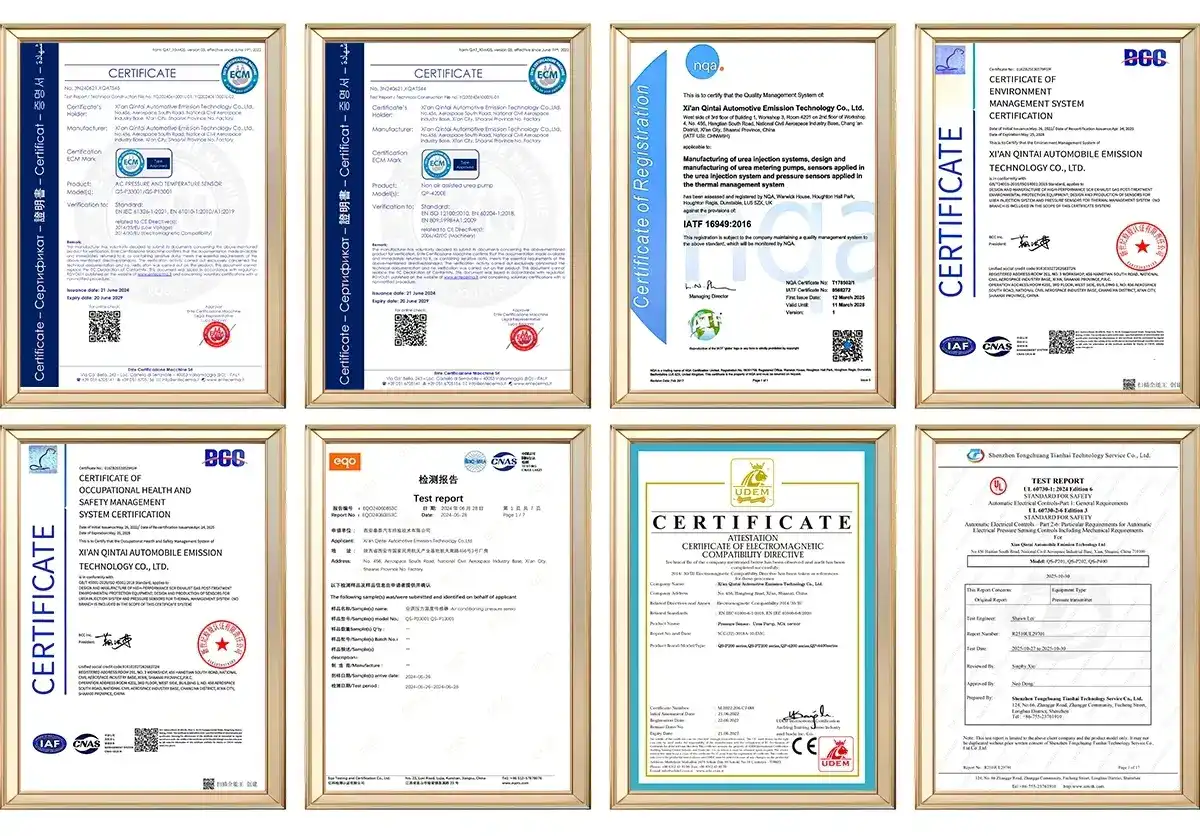
Price comparisons alone will lead to bad selections. Starting with the measured variable, the range, the mounting technique and the environment. Then look at accuracy, repeatability, reaction time, drift, ingress protection and operating temperature. For OEM devices, include media compatibility, pressure rating and certifications such as UL and CE, since completed equipment is commonly sent to the United States and Europe. Qintai has ISO9001, IATF16949, UL, CE, REACH and ROHS certifications and has filed for 58 innovation patents, so buyers have paperwork to check. Finally, include the total cost of ownership, which includes installation, commissioning, calibration, maintenance and the cost of a field replacement.
Installation, Wiring, and Calibration
Proper installation will maintain accuracy. Find the spot to take the measurement where it will indicate the genuine system conditions, away from heat sources, direct sunshine, dead zones, strong vibration and bad air. Pay careful attention to the product wiring schematic, particularly for two-wire and three-wire 4-20mA devices. Check polarity, supply voltage, loop resistance, grounding, controller scaling and network settings. For calibration, allow the instrument to settle, compare it to a calibrated reference, verify zero and span, and record the findings. Inspect for contamination, clogged pressure tubes, loose wiring, moisture penetration and sensor drift on a schedule. Calibration intervals vary with application and manufacturer for HAVC transmitters.
Troubleshooting, Procurement, and Implementation
Troubleshooting and Replacement
Start with the physical installation, then the electrical circuit, and lastly the software. Common causes for misreadings include: inadequate placement of the sensors, contamination, condensation, inaccurate ranges, drift in calibration, broken sensing elements and inappropriate controller scaling. Signal loss: Check supply voltage, polarity, cable continuity, terminals, loop resistance, shielding, grounding, network addresses, and baud rates. Replace the transmitter if calibration does not restore accuracy, the output is unstable, the housing or probe is damaged, or the device is not compatible with a new control system. Replacement must be same range, mounting, output, wiring and application. Document each step so the next tech can follow.
Procurement Guide for Global B2B Buyers
Global B2B purchasers should align the buying channel to project volume, customized demands, delivery objectives and technical support. Online ordering is good for small standard amounts, wholesalers carry local inventory, and buying straight from the manufacturer may provide better price and OEM coordination for bigger projects. Check datasheets, calibration records, certifications, export experience, lead time, manufacturing capacity, warranty.
Qintai is a national high-tech firm created in 2001, specializing in the development and production of sensors, especially the pressure sensors. We are a main supplier for Weichai Power, Yuchai Power, Quanchai Power, sell in more than 60 countries and territories, and provide OEM/ODM service and customization. For private-label work, validate housing, labels, probe details, packing and validation samples before manufacturing.
Common Mistakes and a Practical Rollout Plan
Typical errors include not verifying BMS compatibility, selecting the improper mounting type, pursuing the lowest unit price and overlooking calibration. Even a precise device will not work if its signal, protocol, scale, register map or power supply does not match the controller. Cheap parts might cause service calls, false alarms, and commissioning delays. To prevent this, map each measurement location, specify ranges, outputs, alert limits and calibration intervals and evaluate samples for accuracy, signal stability and installation fit prior to bulk orders. During commissioning, record location, serial number, range, signal type and calibration results. Track trends and tweak after starting. Also examine regional certification, EMC, labeling and paperwork for North American and European projects.
Conclusion
HAVC transmitters translate pressure, temperature, humidity and CO₂ conditions into standard signals which controllers utilize to regulate energy and safeguard equipment. This article explained how they vary from basic sensors, how gage, differential, absolute and compound pressure types are suited for distinct jobs and where each transmitter type fits in an HVAC system. Good data enables the controls to match output with demand, to detect early filter loading and other issues, and to provide compressor protection via pressure monitoring. The results rely on the accurate output signal, the appropriate range and calibration set, careful installation, frequent calibration and clear strategy for troubleshooting. The complete procedure is supported by a provider that sells paperwork, samples and customisation.
FAQ
Q1: What is the difference between an HVAC sensor and a transmitter?
A: A sensor detects a condition and gives a raw output. A transmitter adds signal processing and sends a standard output, such as 4–20 mA, 0–10 V, Modbus, or BACnet, to a controller.
Q2: How do HAVC transmitters support energy efficiency?
A: They give controllers accurate data to adjust fans, pumps, and ventilation to real demand. They also flag clogged filters or abnormal pressure that waste energy.
Q3: When should I choose 4–20 mA instead of 0–10 V?
A: Choose 4–20 mA for long cable runs, electrically noisy settings, or cases where fault detection matters. Choose 0–10 V for short, simple connections. Confirm the controller input first.
Q4: How often should I calibrate a transmitter?
A: The interval depends on the application, accuracy needs, and manufacturer guidance. Check critical points more often and keep written records of every result.
Request HAVC Transmitters From Qintai for Safer HVAC Energy Monitoring
Qintai, a national high-tech enterprise founded in 2001, holds ISO9001, IATF16949, UL, CE, REACH, and RoHS certificates and provides OEM/ODM service and customization. If you are searching for a HAVC transmitters supplier, send your pressure range, output signal, quantity, and target market to info@qt-sensor.com. Our team will review your application and recommend suitable pressure sensors.
References
1. ASHRAE, Standard 62.1: Ventilation and Acceptable Indoor Air Quality, 2022
2. ASHRAE, Standard 90.1: Energy Standard for Sites and Buildings Except Low-Rise Residential Buildings, 2022
3. ASHRAE, Guideline 36: High-Performance Sequences of Operation for HVAC Systems, 2021
4. U.S. Energy Information Administration, Commercial Buildings Energy Consumption Survey, 2018
5. U.S. Environmental Protection Agency, Technology Transitions Rule under the American Innovation and Manufacturing (AIM) Act, 2023
6. NAMUR, NE 43: Standardization of the Signal Level for the Failure Information of Digital Transmitters, 2003
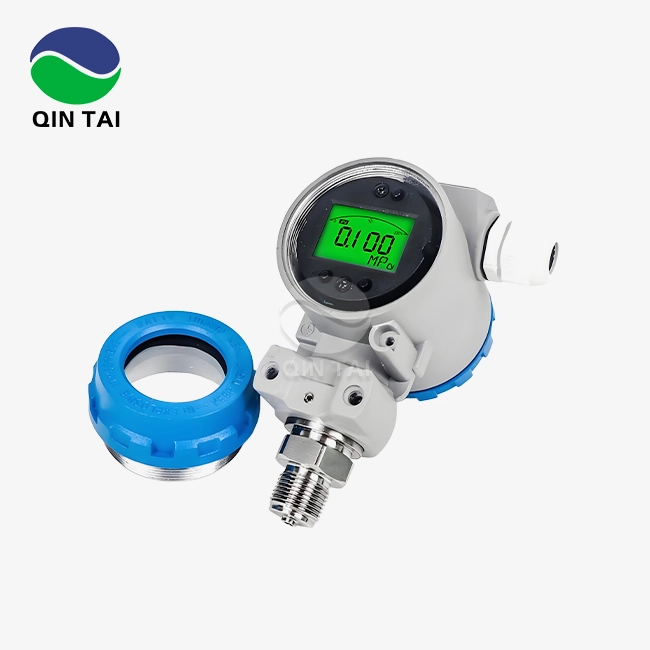

Our customers’ satisfaction speaks for our quality — contact us to experience the same reliable service.