- English
- French
- German
- Portuguese
- Spanish
- Russian
- Japanese
- Korean
- Arabic
- Greek
- German
- Turkish
- Italian
- Danish
- Romanian
- Indonesian
- Czech
- Afrikaans
- Swedish
- Polish
- Basque
- Catalan
- Esperanto
- Hindi
- Lao
- Albanian
- Amharic
- Armenian
- Azerbaijani
- Belarusian
- Bengali
- Bosnian
- Bulgarian
- Cebuano
- Chichewa
- Corsican
- Croatian
- Dutch
- Estonian
- Filipino
- Finnish
- Frisian
- Galician
- Georgian
- Gujarati
- Haitian
- Hausa
- Hawaiian
- Hebrew
- Hmong
- Hungarian
- Icelandic
- Igbo
- Javanese
- Kannada
- Kazakh
- Khmer
- Kurdish
- Kyrgyz
- Latin
- Latvian
- Lithuanian
- Luxembou..
- Macedonian
- Malagasy
- Malay
- Malayalam
- Maltese
- Maori
- Marathi
- Mongolian
- Burmese
- Nepali
- Norwegian
- Pashto
- Persian
- Punjabi
- Serbian
- Sesotho
- Sinhala
- Slovak
- Slovenian
- Somali
- Samoan
- Scots Gaelic
- Shona
- Sindhi
- Sundanese
- Swahili
- Tajik
- Tamil
- Telugu
- Thai
- Ukrainian
- Urdu
- Uzbek
- Vietnamese
- Welsh
- Xhosa
- Yiddish
- Yoruba
- Zulu
Why SCR Dosing System Is Essential for Modern Diesel Vehicles
To achieve stringent nitrogen oxide (NOx) limitations without compromising power and fuel efficiency, contemporary diesel automobiles employ an SCR dosing system. It meters and injects diesel exhaust fluid (DEF, marketed in Europe as AdBlue) into the exhaust stream. There the fluid breaks down into ammonia and the SCR catalyst turns NOx into nitrogen and water. Get the wrong dose and your vehicle, generator or excavator can fail emissions testing or waste fluid or lose engine power. I prepared this guide for the engineer and the customer who wants to understand how the system works and how to pick one.
How an SCR Dosing System Works?
The Fluid Path From Tank to Catalyst
There are many types of SCR dosing systems. The one is for urea, the other for AdBlue. It does a straight line only. DEF is a mixture of 32.5 % urea and water which has to fulfill the specifications of ISO 22241. After it leaves the tank the liquid first passes through a filter. Then it travels to the dosage pump. An injector pumps it up and sprays a tiny mist into the exhaust pipe. The droplets are dispersed . They may be ammonia when they reach the catalyst . The following phase is different from the previous one. When the filter is blocked the pressure falls and when the spray is bad it accumulates on the pipe wall.
Sensors and the Control Unit
The control unit determines how much fluid to put in. Then it knows how much and monitors the noise level, exhaust flow, exhaust temperature and engine load. The gear accomplishes its job owing to sensors that assess pressure, level, temperature and quality. In the urea tank there are three sensors to check the quantity of AdBlue, the temperature of the solution to prevent it from freezing and the quality of the solution to ensure it remains within limits. The sensors give electrical impulses to the control unit. Normally these signals go via a CAN connection. The size of the system is a function of the NOx mass flow, the desired conversion, the responsiveness of the injectors and the placement of the catalysts. For this reason the final modification needs to be verified in practice.
Why the Urea Pressure Sensor Matters?
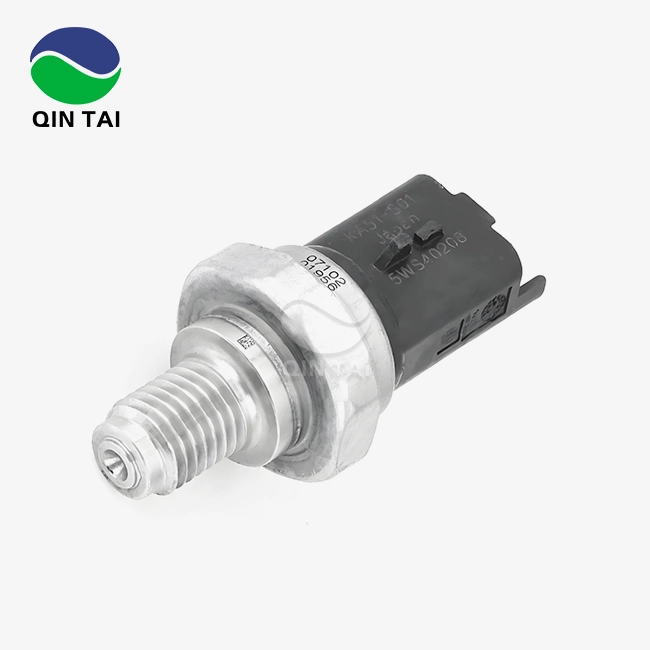
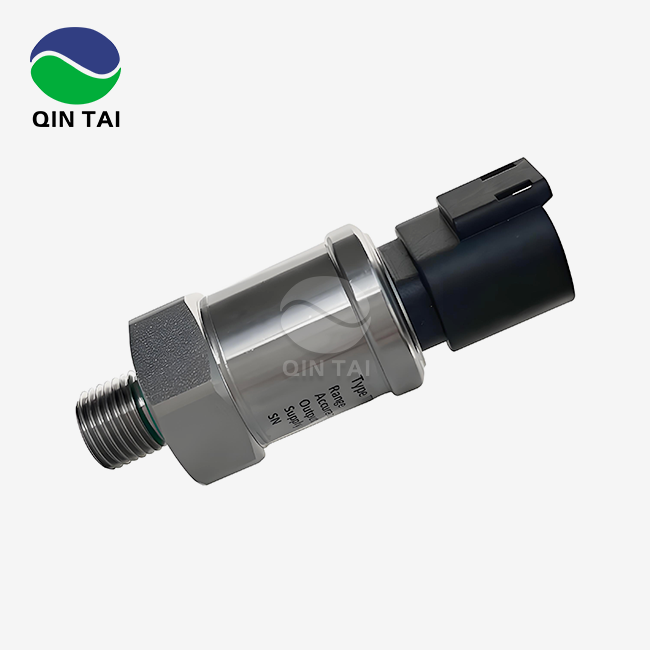
The urea dosing pressure sensor monitors the hydraulic pressure of the DEF and transmits it to the dosing control unit or ECU. This closed loop feedback guaranties the accuracy of the injected volume. If the pressure reduces there may be air in the line, a break or both. If the AdBlue freezes, or a valve breaks, you may have too much pressure. If the dosage pressure isn't stable the automobile will throw itself into limp mode, that’s never good. This is the signal that helps technicians determine what is wrong with an injector or pump . Qintai is particularly adept at manufacturing pressure sensors. The design we have designed has very little vacant space and clean flow routes inside so that urea that is not flowing does not build up and clog the diaphragm.
Why Accurate Dosing Protects Compliance and Cost?
Emission Rules Set a High Bar
The U.S. EPA set a restriction for heavy-duty highway engines in 2010, prohibiting NOx emissions over 0.20 grams per brake horsepower-hour. These are the restrictions that diesel engines not used on public roadways have to follow: In Europe, heavy-duty NOx emissions are limited to 0.4 g/kWh on the WHSC test cycle. Many scientists feel urea-SCR is an excellent approach to reduce NOx in gasoline. Under the correct circumstances it may reduce the NOx by up to 90%. VI. SCR is commonly used to tune engines from firms selling their products in the US, Europe and China. This means that the engine passes or fails depends on the SCR dosing system. And thus the hardware you choose might impact how it gets certified, how it gets resold, and how it gets covered under warranty in various regions.
What Under-Dosing and Over-Dosing Cost You?
Both errors carry a price, as these two cases show:
- Under-dosing leaves NOx in the air. The car could fail an emissions test, the on-board monitoring system could find a problem with the efficiency, and the efficiency of the change could go down. The driver could also be told about the problem, and the engine could lose power until it is fixed. After that, fleets waste time and have to pay for extra visits and tows.
- Over-dosing sends extra ammonia past the trigger when you do too much. It's called ammonia slip. DEF is usually only used in small amounts, about 2% to 3% of the diesel fuel mass. This waste can also build up into urea deposits that can block the injector or cover the brake pipe. It takes work and time to get rid of those deposits.
Accurate pressure feedback and tight calibration prevent both problems before they reach the roadside.
Freezing and Crystallization Risks
DEF freezes at 12°F (-11°C) so if you're in the north, you'll need to ready for winter activities. When the system is switched off there is a flush procedure which cleans the lines and warms the tank to protect the pump and injector. Inside our pressure sensor there is a flexible buffering structure to accommodate urea expansion upon freezing. There is also the danger of crystallization. If the engine doesn't purge completely, if the nozzle is poor, if the spray is bad or if the injectors leak, it grows larger. Deposits are more prone to develop, thus they should test cold starts and low load cycles as soon as feasible. The crystals do not develop when the DEF is clean, the mixer is nicely manufactured and it is set appropriately.

Choosing, Installing, and Maintaining the Right System
Main Configurations Compared
If you use compressed air to split up the liquids into tiny droplets it is termed "air-assisted". They can only operate in automobiles that can receive air so they can handle more plumbing and air flow. In systems without air, atomization is a function of pump pressure, nozzle geometry and the way the output is combined. Today's engines are electronically controlled with variable capabilities of load, temperature and sensor input. Some light duty jobs utilize a 12V system. 24V is more common for heavy duty autos and industrial items. Various kinds of vehicles, generators and construction equipment all have various reaction times, durability and packing, and each of them is vital in its own manner when integrating an SCR dosing system. When selecting a layout, relate it to your task cycle.
Data to Gather Before Requesting a Quote
First, you have to check the engine size, power, exhaust flow, temperature range, NOx %, duty cycle, voltage, and space for installation. Then verify each one's dosage range, response speed, freeze protection, purge capability, sensor compatibility, and CAN communication. It is also important for buying managers to look at how well the product can be manufactured, how effectively it inspects for quality, the length of its warranty period, and how well it supports replacement parts. M10x1 and M12x1.5 are the usual thread types for pressure sensors. But the signal coming out, which might be from 0.5V to 4.5V or SENT, has to match the ECU's calibration. If the signals do not match, trouble codes may be issued even if the part is good.
Installation, Commissioning, and Maintenance
Correct installation safeguards the dosage accuracy. Avoid excessive heat, shaking, wetness and road debris for pumps and injectors. Also, ensure the tube is positioned properly so it doesn't break or pool liquids. Be careful to verify the starting, pressure, flow, injectors action, leak strength, purge operation, heater performance, sensor signals and ECU contact before installing the system. Taking care of the automobile is easy, look at the lines and connections, replace the filters when necessary, check the problem codes, check the injectors for buildup, and make sure the pump is working. The optimum is to utilize clean DEF meeting ISO 22241 criteria. It should have no water, oil or gasoline in it. This means that shops and dealers don’t have to pay for the same product again.
Troubleshooting Common Faults
Many times it is things like clogged injectors, crystallization, poor pump pressure, leaks, bad sensors, communication problems or freeze damage. Check the pressure, the flow, the flow rate, the integrity of the line, the condition of the filter, the fluid level, the connection, the ground, the power before changing any part. If you are getting a P204B signal, it suggests there is an issue with the range or operation of the urea pressure sensor. This is usually caused by either signal drift on an aging sensor or filthy connection pins. Our sensors have gold plated connections so there's less possibility of contamination. Don't merely delete a code. As long as the issue does not come back, connect each remedy to the test results and the manufacturer's recommendations.
Evaluating Performance and Choosing a Supplier
Metrics That Show Real Performance
Don't simply verify bits of the system, validate the entire SCR dosing system. Monitor NOx conversion, pressure stability, injector response time, spray uniformity, DEF consumption, ammonia slip frequency, crystallization frequency and error code frequency. Mean time between breakdown and mean time to downtime should be included for those that acquire fleets. Test cold starters, low and high loads, rapid changes in load and lengthy runs at ambient temperature utilizing engine bench, lab and field data. It is best to match the pump capacity, injectors flow, mixer form and sensors accuracy than merely improve one item. Yes, maintain the test records. They'll need them to get the go-ahead to the purchasing and management teams to the supplier.
Where These Components Work
Three areas where a urea dosage pressure monitor is required the most. For long-haul autos it needs to maintain its accuracy even when the weather or the road rattles. It must withstand dust and stress in operations and mines, on excavators and loaders. It can withstand high flow urea dosing in salty air, which is vital for naval diesel engines that need to be rust resistant. They also provide backup power for power stations, mines, and other locations. They need a lot of time to be able to provide continuous pressure feedback. Our sensors are built for corporate usage, thus they are designed for at least 15,000 to 20,000 hours. Users that develop pollution clean-up systems and enterprises may also request custom improvements to suit their requirements.
What Qintai Brings to Your Project
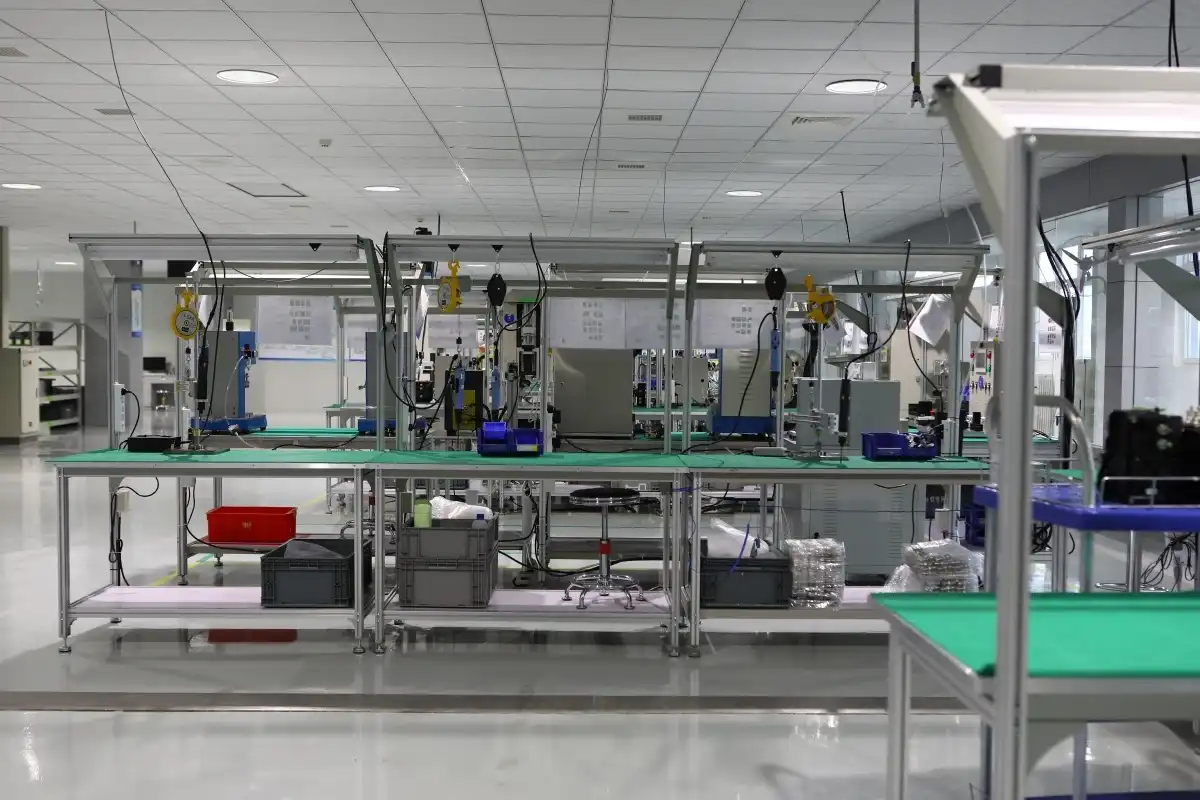
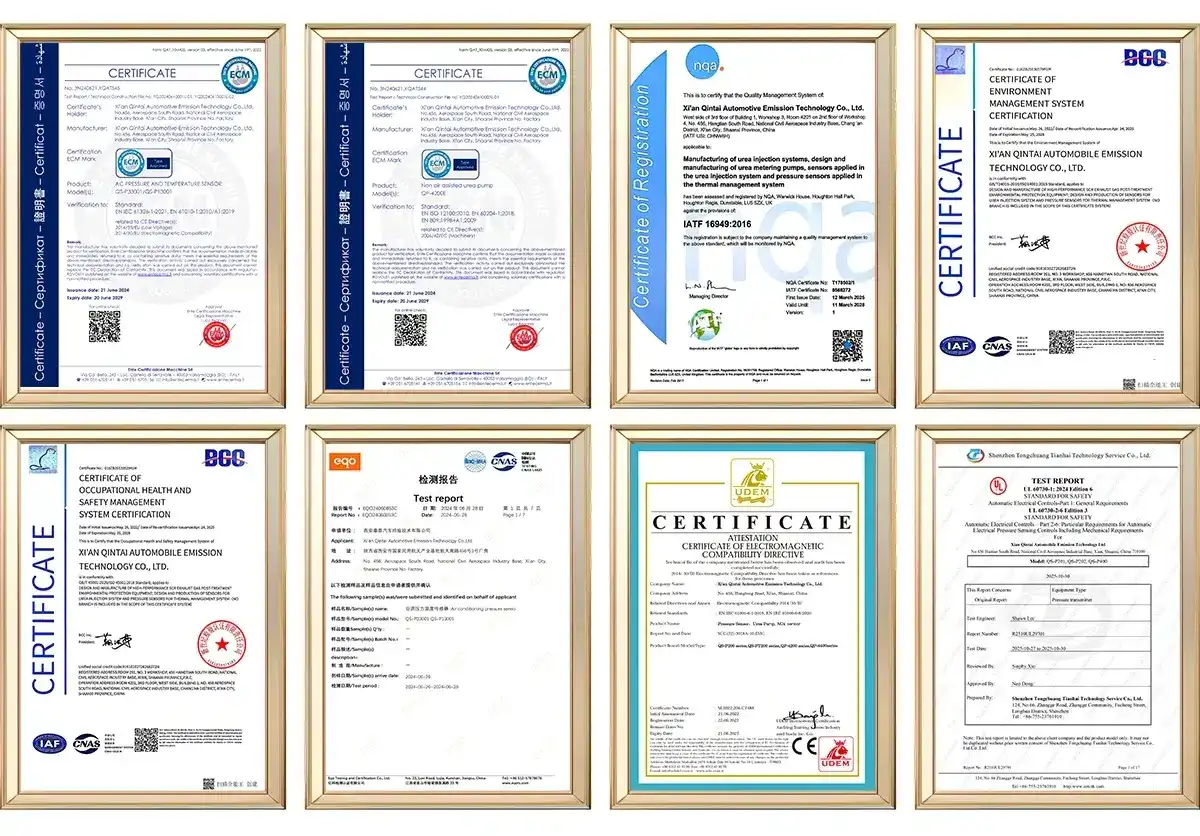
Xi'an Qintai Automotive Emission Technology Co., Ltd. is a national high-tech enterprise established in 2001. We manufacture pressure sensors . We are the finest on the market for diesel engine SCR aftertreatment items and sensors. We handle creative work, production, sales and after sale support. We are accredited by ISO9001, IATF16949, CMC, Ex, UL, CE, REACH, RoHS and have applied for 58 concept patents.
We provide a lot of help to some of the most prominent power firms in China. China has the biggest market share for us. OEM & ODM Services We can assist you from concept to large manufacturing. We may also customize it to fit your requirements. We sell our products to more than 60 destinations in the world. It assists the engineers in their job, supports the buying teams in manufacturing, and provides management with a supplier that has verifiable quality certifications.
Conclusion
EPA 2010 guidelines, Tier 4 Final and Euro VI all have NOx restrictions that new diesel engines have to fulfill. That's where an SCR dosing system helps them out. One portion controls it, while other others monitor the level, pressure, temperature and quality of the fluid. Filter, pump, injection, mixture and catalyst are all connected together, forming a single line. Better to be safe than sorry on the dosage side than too safe and not pass emissions tests or too much power. If you do it incorrectly, you may waste DEF, leak ammonia and leave deposits. It has to be heated, drained, blended thoroughly and given clean DEF to melt or freeze it. Voltage, signal type and configuration must be the same as the engine. Setup and maintain the system with care and test the complete thing with loads that alter and loads that are cold, hot and in between. Putting pressure on helps with both regulating and assessing.
FAQ
Q1: What does an SCR dosing system do?
A: It stores, presses, and adds DEF to the exhaust so that the SCR catalyst can change NOx into water and nitrogen.
Q2: What function does the urea pressure sensor serve?
A: The quantity is tested in a closed loop for correctness. It checks for leaks, blockages or air to discover low pressure . It also discovers excessive pressure coming from AdBlue that is frozen or valves that are damaged. This helps to see what is wrong with the pump and injectors.
Q3: Can one sensor fit different SCR brands?
A: Most of the time, threads like M10x1 and M12x1.5 are the same. If your ECU is tuned to 0.5V to 4.5V, either the output signal or the SENT signal must match. Please let us know about your ECU before you place your order.
Q4: How long does a Qintai pressure sensor last?
A: That's why our monitors are built to last at least 15,000 to 20,000 hours of steady use.
Q5: How does the sensor handle crystallization?
A: Because there is less dead space and smooth flow paths inside, urea doesn't stay still.
Contact Qintai for Your SCR Dosing System Needs
We are ready to work on your next job with you. If you need a supplier for an SCR dosing system, let us know about your engine, how it will be used, the voltage, how much you want to order, and when you need it delivered. Our team will make a price, talk about customization, and make sure everything works together. If you need IATF16949 certification or OEM or ODM service, Qintai can provide it. People who make generators, installers, buyers from the aftermarket, and OEMs are all welcome. To find out more about this product, email info@qt-sensor.com for product details.
References
1. Federal Register, 2001: Control of Air Pollution from New Motor Vehicles: Heavy-Duty Engine and Vehicle Standards and Highway Diesel Fuel Sulfur Control Requirements
2. Federal Register, 2004: Control of Emissions of Air Pollution from Nonroad Diesel Engines and Fuel
3. Official Journal of the European Union, 2009: Regulation (EC) No 595/2009 on type-approval of motor vehicles and engines with respect to emissions from heavy-duty vehicles (Euro VI)
4. International Organization for Standardization, 2019: ISO 22241-1, Diesel Engines: NOx Reduction Agent AUS 32, Part 1: Quality Requirements
5. Catalysis Today, 2000: Urea-SCR: A Promising Technique to Reduce NOx Emissions from Automotive Diesel Engines
6. SAE International Journal of Engines, 2016: Vehicular Emissions in Review


Our customers’ satisfaction speaks for our quality — contact us to experience the same reliable service.