- English
- French
- German
- Portuguese
- Spanish
- Russian
- Japanese
- Korean
- Arabic
- Greek
- German
- Turkish
- Italian
- Danish
- Romanian
- Indonesian
- Czech
- Afrikaans
- Swedish
- Polish
- Basque
- Catalan
- Esperanto
- Hindi
- Lao
- Albanian
- Amharic
- Armenian
- Azerbaijani
- Belarusian
- Bengali
- Bosnian
- Bulgarian
- Cebuano
- Chichewa
- Corsican
- Croatian
- Dutch
- Estonian
- Filipino
- Finnish
- Frisian
- Galician
- Georgian
- Gujarati
- Haitian
- Hausa
- Hawaiian
- Hebrew
- Hmong
- Hungarian
- Icelandic
- Igbo
- Javanese
- Kannada
- Kazakh
- Khmer
- Kurdish
- Kyrgyz
- Latin
- Latvian
- Lithuanian
- Luxembou..
- Macedonian
- Malagasy
- Malay
- Malayalam
- Maltese
- Maori
- Marathi
- Mongolian
- Burmese
- Nepali
- Norwegian
- Pashto
- Persian
- Punjabi
- Serbian
- Sesotho
- Sinhala
- Slovak
- Slovenian
- Somali
- Samoan
- Scots Gaelic
- Shona
- Sindhi
- Sundanese
- Swahili
- Tajik
- Tamil
- Telugu
- Thai
- Ukrainian
- Urdu
- Uzbek
- Vietnamese
- Welsh
- Xhosa
- Yiddish
- Yoruba
- Zulu
How Long Can an Industrial Pressure Transmitter Operate Reliably?
Industrial pressure transmitters typically operate reliably for 10 to 15 years when properly maintained, though this varies based on environmental conditions, application demands, and maintenance quality. High-quality sensors utilizing thin-film or capacitive technology can achieve mean time between failures (MTBF) exceeding 150 years under optimal conditions. However, harsh industrial environments—such as extreme temperatures, corrosive media, or constant pressure cycling—may reduce operational lifespan to 5 to 8 years. Regular calibration, protective installations, and selecting pressure transmitters with appropriate certifications ensure maximum service life and measurement accuracy throughout their operational period.
Understanding the Operational Lifespan of Pressure Transmitters
Defining Reliability Metrics and Performance Benchmarks
Several measurable factors determine how well pressure sensing equipment works. MTBF is the average amount of time that a piece of equipment works before breaking down, and accuracy stability is a measure of how well a device keeps its measurement accuracy over long periods of time. Modern industrial sensors have MTBF values of between 100 and 200 years in controlled conditions. However, they usually only last a shorter time in real life because of the stresses of the environment.
Quality devices usually keep accuracy drift within ±0.1% to ±0.25% per year. Accuracy drift is the slow change in values from what they were calibrated to. When purchasing managers and research and development experts are looking for heavy trucks, building equipment, farm equipment, and generator sets, these performance markers help them set realistic goals.
How Working Principles Affect Durability
The underlying sensing technology has a big effect on how long something lasts and how often it needs to be maintained. Strain gauge Pressure Transmitters connect resistant parts to a diaphragm that bends when pressure is applied. The mechanical deformation is then turned into electrical signals. Traditional glued gauges that use chemicals may creep and wear out over time, which means they will only last 8 to 12 years.
Thin-film Pressure Transmitters get around this problem by using vacuum-sputtering to place strain gauges directly onto stainless steel diaphragms. This makes atomic-level links that get rid of failure modes related to adhesives. This artificial sensing element can withstand changes in temperature and pressure, which means it can be used for at least 15 years.
Capacitive sensors are very stable and don't move much. They measure pressure by changing the capacitance between two plates that are divided by a diaphragm. When put under mechanical stress, piezoelectric Pressure Transmitters create electrical charges. They have quick response times that make them great for dynamic measurements, but they need signal conditioning that can make things more complicated. Purchasing teams should choose sensing methods based on the needs of the application. For example, capacitive designs work best for stable process monitoring, while piezoelectric designs work best for high-frequency pressure changes.
Comparing Technology Types and Expected Lifespans
Wired Pressure Transmitters are the most common type used in industry because they always have power and send signals reliably. If you install these devices correctly, they should last between 12 and 15 years. Most of the time, they break down because of environmental damage rather than electronic component wear. Wireless options give you more installation options and lower wiring costs, but their battery life is limited and can be anywhere from 5 to 10 years, based on the regularity of transfer and the location. When technical managers figure out the total cost of ownership, they have to take into account the extra maintenance costs that come with replacing batteries over and over again.
Differential Pressure Transmitters that measure the difference in pressure between two places are under more mechanical stress than gauge pressure units that are set to air pressure. In challenging situations, this extra stress can cut the life of an operation by 15% to 20%. Modern differential designs with dual-sensor structures and advanced materials, on the other hand, get rid of these problems and offer the same level of durability as simpler gauge setups. When Absolute Pressure Transmitters are sealed with reference vacuums, they are very stable. However, in harsh settings, the reference chamber may leak after 10 to 12 years.
Key Factors Influencing the Reliable Operating Time
Environmental Conditions and Installation Quality
Frequent changes in temperature can shorten the life of sensors. When industrial-grade devices are used outside of their recommended temperature ranges (usually -40°C to 85°C), parts break down faster and seals fail more often. When temperatures change, things expand and shrink, which puts stress on electrical connections and mechanical systems. Electronic circuits and sensing elements can be damaged by humidity and wetness getting in. This is especially true for outdoor setups that don't have enough protection levels. Devices that are approved to IP67 or IP68 standards keep water and dust out, which means they last 30% to 40% longer in tough conditions than lower-rated options.
Careful material choice is needed for chemical exposure. Many corrosive media can't damage wet stainless steel parts, but strong acids like hydrochloric acid or sulfuric acid need special alloys or coatings. Pressure Transmitter selection must also account for these aggressive services, because even with corrosion-resistant materials, the transmitter's wetted path and diaphragm geometry influence chemical compatibility.
Hastelloy, Monel, and Tantalum are more resistant to corrosion than other metals, but they cost more. Cost control and long-term dependability should be balanced by purchasing managers who choose materials that work with the actual process conditions instead of over-engineering for possible worst-case scenarios. Correct fitting methods, such as impulse line design, mounting direction, and vibration isolation, have a direct effect on the accuracy of measurements and the life of the equipment.
Maintenance Practices That Extend Service Life
Regular calibration keeps measurements accurate for as long as they are used. We suggest that important applications be checked once a year and less demanding processes be checked every two years. During calibration, the output of the Pressure Transmitter is compared to tracked pressure standards, and the zero and span settings are changed to account for drift. Simple two-point methods are less accurate than three-point methods that cover the lower, middle, and high range. Technicians should write down the results of calibration so that drift trends can be tracked. This will allow predictive maintenance plans to be made that replace devices before they break.
Modern Pressure Transmitters have diagnostic features that change the way upkeep is done. Self-diagnostic features check the health of the sensor and find problems like membrane ruptures, electronic failures, or signal degradation before they lead to measurement mistakes. Diagnostic data from remote tracking systems is sent to central control rooms. This lets technical managers plan maintenance for planned downtime instead of having to deal with problems that happen out of the blue. Predictive algorithms look at past performance data to guess how much longer something will last. They then figure out the best time to replace it so that reliability and capital expenditure are both balanced.
Technological Advances in Reliability Management
Some of the biggest manufacturers have added features that make operations much more reliable. In dual-sensor redundancy configurations, there are two separate sensing elements that constantly compare measurements with each other. If the primary unit fails, the system automatically switches to the backup sensor. In important systems like power plant controls and safety systems, this architecture makes it possible to have almost no downtime. Modern signal processing methods can handle temperature changes and nonlinearities, keeping accuracy over a wide range of working conditions without any help from a person.
Adding the HART protocol lets two-way digital communication be added on top of normal 4-20 mA analog signals. This lets setup and diagnostics be done from afar without stopping process control. This feature lowers maintenance costs by getting rid of the need for site visits to make changes to parameters. The Foundation Fieldbus and PROFIBUS PA protocols make it possible to share even more data, which helps with asset management methods that cover a lot of ground. These digital communication standards make it easier to connect to remote control systems. This makes the whole process more efficient and makes it easier to fix problems when they happen.
Comparing Pressure Transmitter Types for Longevity and Reliability
Differential Versus Gauge Pressure Configurations
Differential Pressure Transmitters are great for measuring flow, keeping an eye on filters, and finding levels because they use the difference in pressure between two places to give useful process data. Their two-port design adds more possible leak paths compared to single-port gauges, so the seal integrity has to be more rigorous. Isolating diaphragms and fill fluids in high-quality differential units keep the sensing element safe from process media, which extends its life in tough situations. These safety features make things more complicated, but they are necessary for SCR and DPF aftertreatment systems to work reliably. Accurate tracking of exhaust pressure makes sure that emissions meet China VI and Euro VI standards.
Gauge Pressure Transmitters that measure in relation to atmospheric pressure are easier to build and have a lower failure rate in safe environments. Because they only have one port, they are easier to install and less likely to have leaks, which makes them better for simple pressure monitoring tasks. When difference readings are not needed, these units work well for tasks like checking the hydraulic system, controlling the compressor, and checking the pressure in a tank. The simpler design usually costs 20% to 30% less than similar differential models. This makes it appealing to aftermarket buyers who want to save money without giving up important features.
Electric Versus Pneumatic Transmission Methods
Electronic Pressure Transmitters are used in most current industrial settings because they are more accurate, respond quickly, and work with digital control systems. Solid-state electronics can measure with errors of less than ±0.075% of the span, which is much better than pneumatic alternatives. Their 4-20 mA current loop signals don't get messed up by electrical noise over long cable runs, so the signal stays strong over distances of more than 1,000 meters. Electronic devices need electricity, which can come from the control system or from outside sources. This means that they can explode in flammable environments. Intrinsically safe designs that are ATEX-certified limit the amount of energy that can be used to levels that can't light flammable gases on fire. This lets them be used safely in dangerous places.
Pneumatic Pressure Transmitters use mechanical parts instead of electrical ones to turn pressure readings into proportional air pressure signals, which are usually between 3 and 15 PSI. Because they are naturally safe, they can be used in places where explosives are present without the need for extra safety barriers. However, pneumatic transmission has reaction times that are slower and is less accurate, with errors that are usually around 1% of span. Moving parts that wear out and the need for clean, dry instrument air supplies make maintenance more important. Pneumatic devices aren't usually used in modern setups unless they are needed because of current infrastructure or safety rules.
Selecting for Harsh Environment Performance
Pressure Transmitters are subject to a lot of vibration, shock, and dirt when they are used in mines, on building sites, or on mobile equipment. Designs that are made to be tough have housings with thick walls, electronics that are protected, and wire entries that are strengthened to withstand physical damage. Vibration resistance ratings, which are given in g-forces across frequency ranges, show if the product is suitable for use on mobile devices. Bulldozers, excavators, and off-highway trucks that are constantly under mechanical stress should use units rated for 10 g or more. Shock ratings tell you the fastest speed that a device can handle in an instant. This is very important for things that might get hit while they're being used or transported.
Environmental flexibility includes being able to adjust to different temperatures and choose the right materials. Wide-range compensation algorithms keep the accuracy even when the temperature ranges from -40°C to 125°C, which is common in generator sets that provide backup power or are used for remote mining operations. All-welded stainless steel construction gets rid of the need for elastomeric seals that can be damaged by chemicals and high temperatures. These strong features come at a higher price—usually 40% to 60% more than normal industrial grades—but they last longer and break down less often, which makes the original investment worth it because the total cost of ownership is lower.

Troubleshooting and Maintenance Best Practices to Maximize Service Life
Identifying Common Failure Modes
Sensor drift is the most common way that performance goes down, showing up as a slow loss of accuracy compared to the calibration. Zero drift changes the whole measurement range, while span drift changes how sensitive the scale is all the way across it. Environmental factors, such as changes in temperature and humidity, speed up the rate of drift beyond what is normally expected as a result of aging. Drift can be found before it affects process control or safety gaps by checking regularly against reference standards. By writing down drift patterns, you can tell if the problems are caused by harsh working conditions that need better environmental protection or by parts that are getting close to the end of their useful life and need to be replaced.
Signal loss or output that changes all the time is usually a sign of an issue with the electrical link, not a failure of a sensor element. Control systems can go wrong when terminal screws that are too loose, connections that are corroded, or cables that are broken break current loops. Systematic debugging starts with checking the voltage of the power source and reading the resistance of the loop to find any opens or shorts. Moisture getting into the cables through damaged glands leads to intermittent problems that get worse over time. As a preventative step, cable openings should be heat-shrunk sealed, and termination rooms should be checked regularly for signs of water buildup or corrosion.
Systematic Diagnostic Procedures
For troubleshooting to work, it makes sense to move from easy checks to more complicated ones. Check that the voltage from the power supply meets the needs of the Pressure Transmitter. For loop-powered devices, this is usually between 12 and 42 VDC. Check the polarity of the wiring because connections that are backwards can damage electronics or give you wrong readings. Separate the Pressure Transmitter from the control system. Use an accurate multimeter to measure its output while a test pump or dead-weight tester applies known pressures. This process finds out if the problem starts in the Pressure Transmitter or in the instruments further downstream.
Advanced diagnostics use self-testing features that are built in and can be accessed through HART communicators or configuration software. Diagnostic factors show the temperature of the sensor, the source voltage, the state of the output saturation, and any error flags that show that a problem has been found. Trend study of these factors shows trends of degradation that allow for early action. Many devices keep track of the lowest and highest process values. This helps technicians figure out if measurement problems are caused by real process events or by instrument failures.
Calibration Procedures and Best Practices
For accurate testing, you need pressure standards that can be tracked, like dead-weight testers or precision digital scales, that are four times more accurate than the device being tested. The first step in the process is to let the temperature stabilize, since changes in temperature between the Pressure Transmitter and the test tools can cause mistakes. To find hysteresis, apply pressures at 0%, 25%, 50%, 75%, and 100% of the range and record output at each point during both sequences of increasing and decreasing pressure. Find the linearity errors and change the zero and span settings to make the range's deviations as small as possible.
Common mistakes include not letting enough air out during zero adjustments, not giving enough time for the pressure to stabilize between changes, and contaminating test equipment, which can lead to inaccurate measurements. Technicians shouldn't put more pressure on the Pressure Transmitter than what it can handle, because overpressure exposure can forever lower accuracy. Recording calibration results along with accuracy levels before and after, environmental conditions, and the name of the technician creates audit trails that support quality management systems and meet regulatory compliance needs.
Making Informed Procurement Decisions for Reliable Pressure Transmitters
Critical Selection Criteria for Long Service Life
Performance specifications have a direct effect on how reliable operations are and how much they cost to maintain. The accuracy class, which can be shown as a percentage of the span or as absolute pressure units, tells you if the device is right for use in situations where control tolerances are very tight. The turndown ratio, which is the ratio between the highest and lowest measured pressures that can still be used accurately, gives systems that have different operating points more freedom.
Stability specs that show the most drift that can happen in a year help figure out when to calibrate and how well the system will work in the long run. Pressure Transmitter selection must consider all these factors, because its overall performance directly ties to the stated accuracy, turndown, and stability. Instead of setting too strict limits that raise costs without giving enough benefits, purchasing managers should match these parameters to the real needs of the application.
Material consistency makes sure that process media lasts a long time. Parts that come into contact with measured gases or fluids must be able to fight rust for the whole time they are supposed to work. 316L stainless steel is good for most general industrial uses, while other alloys are better for dealing with harsh chemicals. The same things need to be thought about when choosing an elastomer seal material. Viton is good for oil-based products, EPDM is good for water and steam, and Kalrez is great for chemical resistance. Technical information from reputable manufacturers includes thorough charts that show how materials react with hundreds of typical process fluids.
Evaluating Manufacturers and Supply Partners
The terms of the warranty show that the manufacturer trusts the product to work well. Most industrial warranties cover you for 12 to 36 months, but some premium brands cover you for up to 5 years. The warranty should cover both problems with the way the product was made and problems with how well it works. However, damage from the surroundings or bad fitting will usually not be covered. Responding to customers during and after the sale shows that the supplier wants the customer to succeed. The availability of technical support, such as help with application engineering, configuration, and troubleshooting, adds value beyond what the product specifications say.
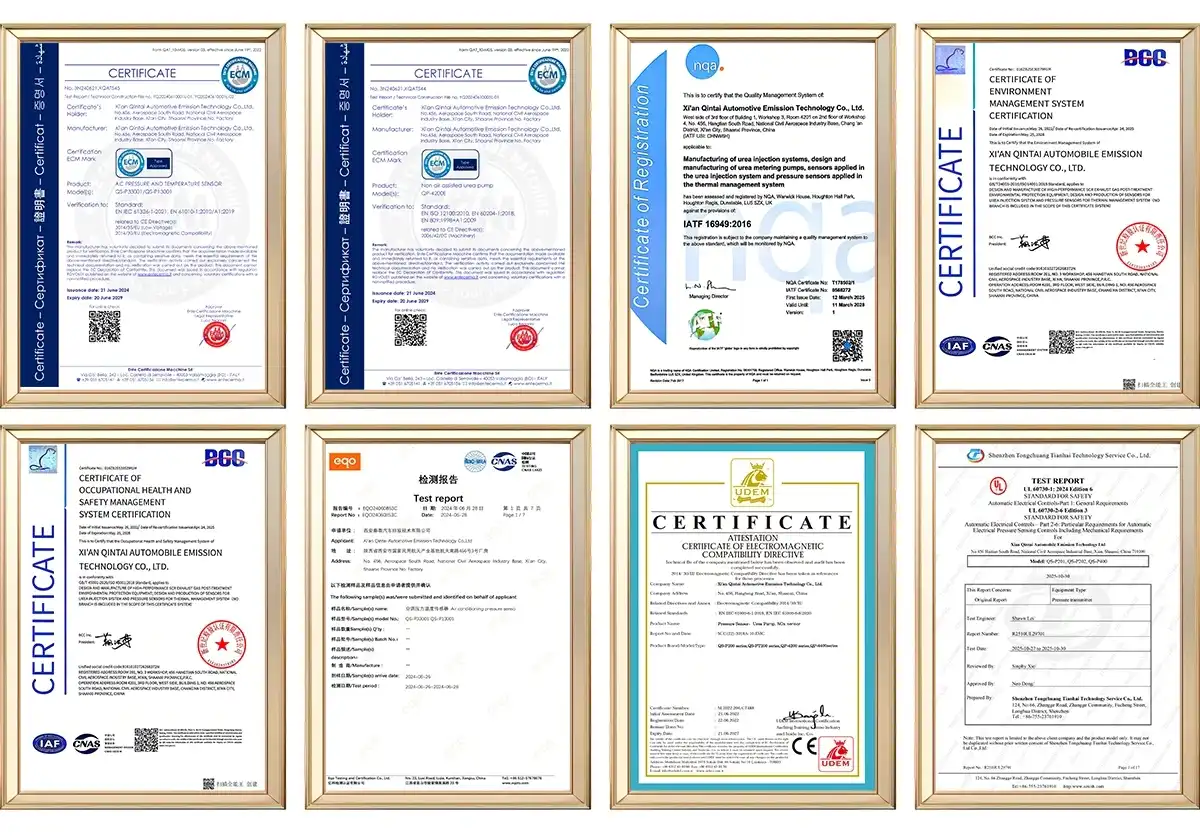
Certification requirements give clear proof of quality and compliance. ISO 9001 certification shows that quality management is done in a planned way, and IATF 16949 certification talks about the needs of the automotive industry in a way that OEM suppliers to heavy truck and construction machinery makers need to know. Certifications for dangerous areas like ATEX, IECEx, and UL make it possible to work safely in explosive environments. Legal metrology uses CMC certification to prove the accuracy of measurements. These credentials show that makers have strong methods for development, production, and testing, which directly affects how reliable their products are.
Partnering with OEM Suppliers for Customization Capabilities
Standard catalog items can be used for many things, but sometimes they need to be customized to fit special needs. Manufacturers that offer ODM services can change the output ranges, mounting setups, electrical connections, and pressure ports to fit the needs of each location. This makes it possible to avoid field adaptations that add failure points and make maintenance harder.
Custom calibration ranges improve control accuracy compared to standard models with a wider range by making the accuracy and sharpness better for narrow working bands. Electrical connection options, such as flying leads, M12 connectors, or automotive connectors in the Packard style, should match how the customer wants to put the parts together and how reliable they expect them to be.
OEM customers who build hundreds or thousands of units a month can be sure of a steady supply of parts thanks to mass production capacity. Just-in-time delivery plans help customers keep their working capital needs as low as possible by working with suppliers who have specific production lines and large stock positions. Maintaining interchangeability through consistent quality across production lots makes installation easier and testing less time-consuming. Long-term partnership deals keep prices stable and ensure a steady supply of parts. These are important things for R&D engineers to think about when choosing parts for products that will last for many years and need service support for at least ten years after the first production.
Conclusion
Industrial Pressure Transmitters work well for 10 to 15 years if they are chosen, installed, and taken care of correctly. By knowing how sensing technology, environmental factors, and maintenance methods affect operational lifespan, buyers can make smart choices that balance initial costs with long-term dependability. Traditional bonded strain gauge construction is less stable than thin-film and capacitive designs. Regular upkeep, diagnostic checks, and calibrations make the service last longer and keep the accuracy that is needed for process control and emission compliance.
A successful relationship depends on carefully choosing manufacturers based on their certifications, professional help, and ability to make changes to the product. When you choose the right types and materials of Pressure Transmitters for the job, you get the most value over the life of the product. This helps you meet cost-cutting goals while still meeting high performance standards in heavy-duty industrial settings.
FAQ
How often should industrial pressure transmitters be calibrated?
How often you calibrate depends on how important the application is and how it is being used. Safety-critical systems, like boiler controls or emergency shutdown devices, need to be checked once a year to make sure they are still working properly. If drift tracking shows steady performance, general process monitoring applications can go to every two or three years. Checks may need to be done every three months in harsh settings with high temperatures, vibration, or corrosive media. In some businesses, regulations require specific calibration plans to be followed, even if the previous schedules have been shown to work. By writing down the actual drift rates during calibrations, risk-based interval optimization can be used to find the best balance between maintenance costs and reliability.
What causes pressure transmitter accuracy to degrade over time?
A loss of accuracy over time is caused by a number of different factors. Changes in temperature and pressure put stress on sensor diaphragms and strain gauge elements, which permanently deforms them. Aging electronic parts can cause offset and gain mistakes in signal filtering circuits. Humidity, chemicals, and other contaminants in the environment can damage electrical connections and seals. In bonded strain gauge designs, the adhesive wears away, letting the sensor element move in relation to the diaphragm. When process media builds up on sensing surfaces, it changes how the mechanical response works. These things usually cause drift rates in good industrial Pressure Transmitters to be between 0.1% and 0.3% per year.
Can pressure transmitters be repaired or must they be replaced?
How cost-effective it is to fix something depends on how it broke and how much it's worth. Electronic problems in high-end Pressure Transmitters that cost several thousand dollars may be worth fixing through the manufacturer's service programs or at a specialized repair shop. Simple problems, like broken cable glands, corroded terminals, or broken indicator lights, are easy to fix in-house.
However, failures of detecting elements like diaphragms that burst, strain gauge bonds that come apart, or reference vacuum loss usually cost more to fix than the devices themselves. If the calibration moves outside of the adjustment range, it means that the sensor is permanently damaged and needs to be replaced. A lot of people set price limits—often between 50% and 60% of the cost of replacement—below which it's cheaper to buy new equipment than to try to fix the old one.
Partner with Qintai for Dependable Pressure Transmitter Solutions
Industrial-grade Pressure Transmitters made by Xi'an Qintai Automotive Emission Technology are designed to last longer in tough environments. Our gadgets use advanced thin-film sensor technology that gets rid of failure modes related to adhesives. This gives them better long-term stability, which is very important for diesel engine aftertreatment systems, generator sets, and heavy machinery. We meet the quality standards needed by OEM makers and offer reasonable prices for aftermarket wholesalers. We have IATF 16949 certification and 58 invention patents. For your particular application needs, our independent research and development team can customize the interfaces, pressure ranges, and electrical links.
As Weichai Power, Yuchai Power, and Quanchai Power's main supplier of Pressure Transmitters in China, we know how hard it is to keep up with emission regulations and how sensor reliability affects regulatory performance. Throughout the lifecycle of a product, our engineering support team helps with choosing the right sensors, installing them, and fixing problems. Large stock levels allow for quick delivery—usually within 72 hours for standard configurations—meeting the needs of aftertreatment system integrators and commercial vehicle repair shops that need to be prompt.
To talk about your Pressure Transmitter needs, email our technical sales team at info@qt-sensor.com. OEM makers looking for certified suppliers, system integrators needing flexible solutions, and sales partners wanting to grow their sensor product lines in global markets are all welcome to get in touch with us.
References
1. Liptak, B. G. (2018). Instrument Engineers' Handbook: Process Measurement and Analysis (5th ed.). CRC Press.
2. Johnson, M. A., & Moradi, M. H. (2017). Industrial Instrumentation: Principles and Design. Cambridge University Press.
3. Webster, J. G., & Eren, H. (2019). Measurement, Instrumentation, and Sensors Handbook: Electromagnetic, Optical, Radiation, Chemical, and Biomedical Measurement (2nd ed.). CRC Press.
4. International Society of Automation. (2020). Pressure Transmitter Performance and Reliability Standards: ISA-51.1. ISA Publications.
5. Dunn, W. C. (2019). Process Control Instrumentation Technology (9th ed.). Pearson Education.
6. Bela, P., & Kumar, A. (2021). "Long-term Stability Assessment of Industrial Pressure Transmitters in Harsh Environments." Journal of Process Control and Instrumentation, 44(3), 287-305.
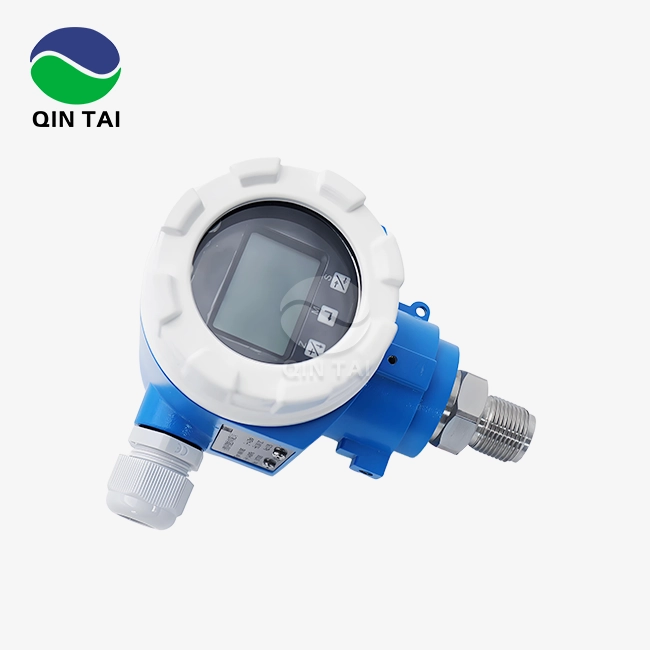
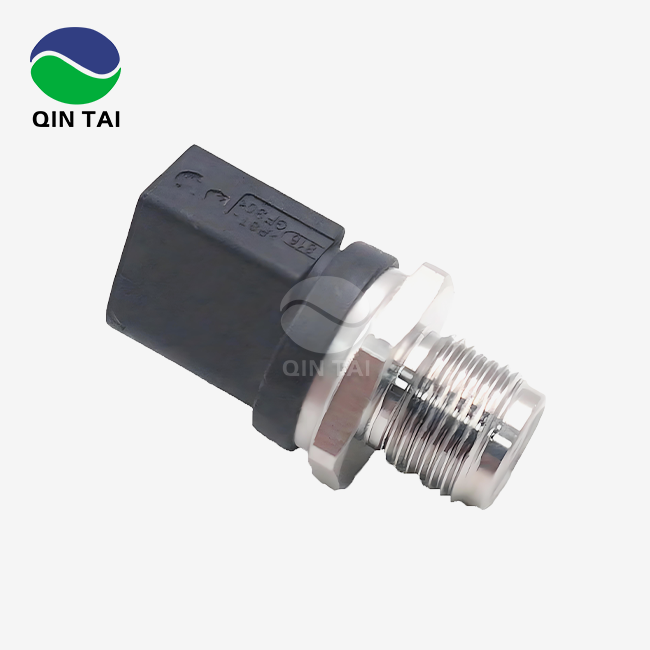
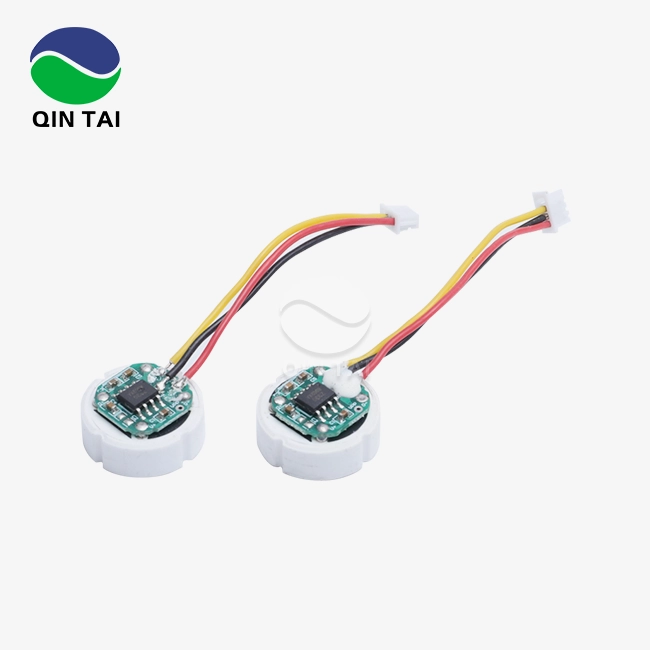

Our customers’ satisfaction speaks for our quality — contact us to experience the same reliable service.