- English
- French
- German
- Portuguese
- Spanish
- Russian
- Japanese
- Korean
- Arabic
- Greek
- German
- Turkish
- Italian
- Danish
- Romanian
- Indonesian
- Czech
- Afrikaans
- Swedish
- Polish
- Basque
- Catalan
- Esperanto
- Hindi
- Lao
- Albanian
- Amharic
- Armenian
- Azerbaijani
- Belarusian
- Bengali
- Bosnian
- Bulgarian
- Cebuano
- Chichewa
- Corsican
- Croatian
- Dutch
- Estonian
- Filipino
- Finnish
- Frisian
- Galician
- Georgian
- Gujarati
- Haitian
- Hausa
- Hawaiian
- Hebrew
- Hmong
- Hungarian
- Icelandic
- Igbo
- Javanese
- Kannada
- Kazakh
- Khmer
- Kurdish
- Kyrgyz
- Latin
- Latvian
- Lithuanian
- Luxembou..
- Macedonian
- Malagasy
- Malay
- Malayalam
- Maltese
- Maori
- Marathi
- Mongolian
- Burmese
- Nepali
- Norwegian
- Pashto
- Persian
- Punjabi
- Serbian
- Sesotho
- Sinhala
- Slovak
- Slovenian
- Somali
- Samoan
- Scots Gaelic
- Shona
- Sindhi
- Sundanese
- Swahili
- Tajik
- Tamil
- Telugu
- Thai
- Ukrainian
- Urdu
- Uzbek
- Vietnamese
- Welsh
- Xhosa
- Yiddish
- Yoruba
- Zulu
Why Thin Film Pressure Sensors Are Used in Industry
Thin film pressure sensors have transformed industrial measurement across diesel engine manufacturing, emission control systems, and heavy machinery applications. These precision instruments deliver accurate pressure data essential for meeting stringent emission regulations like China VI and Euro VI standards while ensuring operational reliability in demanding environments. Their robust construction, exceptional sensitivity, and ability to withstand extreme conditions make thin film pressure sensors the preferred choice for OEMs, aftertreatment system integrators, and equipment manufacturers seeking consistent performance and regulatory compliance.
Introduction
The way industrial pressure is measured has changed a lot in the last twenty years. This is because of stricter emission standards and the need for accuracy in mechanical systems that are very complicated. Thin Film Pressure Sensors are a big step forward in measurement technology because they are accurate and last a long time. They solve problems that diesel engine makers, aftertreatment system providers, and generator set builders are having.
These Thin Film Pressure Sensors are better than other measuring tools in some ways. The way they are made gets rid of frequent places where regular sensors break while still giving current emission control systems the accuracy they need. These devices provide accurate data that engineers and purchasing managers can rely on. They can be used to track the recirculation of exhaust gas in heavy trucks or the hydraulic pressure in construction equipment.
Thin Film Pressure Sensors have both technical and practical benefits that help decision-makers improve their supply lines, make sure they follow the rules, and lower the costs of long-term upkeep. This detailed guide looks at why businesses all over the world are switching to this tried-and-true technology.
Understanding Thin Film Pressure Sensors
Advanced Manufacturing Through Sputtering Technology
Sputtering is a special method of making Thin Film Pressure Sensors. In this process, very thin layers of metal are deposited on a stainless steel base in a high-vacuum environment. This atomic-level bonding makes the sensing element, insulating layer, and base physically connected. It does this without using glues or other bonding agents that can break down over time.
By getting rid of adhesives, creep effects that affect the accuracy of measurements in regular sensors are stopped. Microscopic deflections happen when the pressure medium touches the stainless steel diaphragm. These changes in the Thin Film Pressure Sensor element's electrical resistance cause a signal that can be measured and is related to the pressure that is being applied.
Piezoresistive Principles in Action
For these devices to work, the piezoresistive effect is essential. It is easy to see how the electrical resistance changes when mechanical stress bends the Thin Film Pressure Sensor element. This effect makes it possible to measure pressure accurately over a wide range, from low pressures used in SCR systems to high pressures monitored in hydraulic equipment.
In contrast to capacitive sensors that need complicated electronics or strain gauge devices that can change with temperature, Thin Film Pressure Sensors always respond in a straight line across their entire working range. The one-piece design makes sure that thermal expansion has the same effect on all parts, which reduces the errors caused by temperature that happen with other sensor technologies.
Structural Integrity Without Weak Points
In traditional pressure Thin Film Pressure Sensors, parts like O-ring seals, silicone oil filling, or isolation diaphragms can fail in different ways. Laser or plasma welding is used to connect the sensing element directly to the pressure port in Thin Film Pressure Sensors. This makes a unit that is completely sealed and doesn't have any weak spots. The pressure medium works directly on the sensor core, which is resistant to corrosion. This eliminates gearbox losses and improves frequency response.
This way of thinking about design works especially well in diesel engine situations where there is constant shaking, temperature changing, and contact with harsh chemicals. Since there are no flexible joints, there are no worries about damage from fuel additives, exhaust gases, or hydraulic fluids that are common in places where heavy machinery is used.
Why Thin Film Pressure Sensors Are Ideal for Industrial Use?
Uncompromising Accuracy for Regulatory Compliance
To get accuracy levels between 0.1% and 0.25% full scale, you have to pay close attention to how the diaphragm is designed and how the data is processed. The sensitivity and pressure range are based on the diaphragm thickness, which is usually between a few micrometres and tens of micrometres. The mechanical qualities needed for repeatable readings can be found in materials like silicon carbide or certain types of stainless steel alloys.
Laser resistance cutting technology is used in advanced production facilities like ours to make sure that each Thin Film Pressure Sensor is calibrated to meet strict requirements. This level of accuracy gives diesel engine makers the peace of mind they need to meet emission standards, where even small mistakes in measurement could mean they don't meet the rules. Thin Film Pressure Sensors give R&D engineers the accuracy they need when SCR systems need exact pressure data to make the best use of urea input.
Modern signal conditioning circuits have temperature compensation algorithms that take into account nonlinear thermal effects. Our Thin Film Pressure Sensors work effectively in temperatures ranging from -40°C to +125°C. In normal configurations, they can handle temperatures up to +150°C, and in custom designs, they can handle temperatures up to +200°C. This thermal stability is very important for systems that treat waste gases, whose temperatures change a lot while they're working.
Exceptional Durability in Harsh Industrial Environments
Thin Film Pressure Sensors are put through tough conditions in industries that use big trucks, building equipment, and farm tools. Continuous shaking from diesel engines, shock loads when equipment is being used, and contact with harmful substances all require measuring tools that are made to last through abuse that would quickly destroy regular sensors.
Because Thin Film Pressure Sensors are welded together, they make a strong assembly that can handle mechanical stress. These Thin Film Pressure Sensors stay calibrated even after years of hard use because they don't have silicone oil filled cavities or flexible diaphragms that wear out over time. Leakage risks that threaten safety and dependability in important uses are eliminated because there are no elastomeric covers.
Because the pressure medium and stainless steel sensing elements are in close touch with each other, corrosion doesn't happen. The Thin Film Pressure Sensor's exposed sides are not easily damaged by chemicals, even when they are used to measure hydraulic fluid in building equipment or to keep an eye on the combustion pressure in generator sets. This means that they will last longer and break down less often, which will lower the total cost of ownership for people who operate and manage fleets of vehicles.
Superior Dynamic Response for Real-Time Control
To get the most out of combustion and aftertreatment processes, modern emission control systems need to get feedback on pressure right away. Thin Film Pressure Sensors have frequency response characteristics that can't be matched by sensors that use isolation diaphragms or hydraulic coupling. This is because the pressure media and sensing element are directly coupled in Thin Film Pressure Sensors.
Pressure changes quickly when diesel particulate filters clean or when SCR systems change how much urea is injected. Thin Film Pressure Sensors accurately track these transients, which lets control systems act in the right way. This ability to measure in real time helps aftertreatment solution providers integrate systems precisely, which is what they need to do when they're making next-generation emission control technology.
These Thin Film Pressure Sensors are small, often smaller than traditional measuring tools, which makes them easier to put in places with limited room. In motorsports, where minimising weight and increasing reaction speed are very important, they show what they can do. The same benefits help manufacturing equipment makers who want to improve packaging while keeping the accuracy of measurements.

How to Choose the Best Thin Film Pressure Sensor for Your Industry Needs?
Critical Selection Parameters for OEM Applications
Choosing the right pressure range is the first step in properly describing a Thin Film Pressure Sensor. For diesel engine uses, Thin Film Pressure Sensors with ratings from 0 to 10 bar may be needed to measure the intake manifold and from 0 to 2000 bar may be needed to watch the common rail fuel injection. Matching the sensor's capacity to its real working pressure gives you the best accuracy while still giving you enough of a safety margin in case the pressure gets too high.
Different applications have different accuracy needs. Measuring things that affect emissions needs to be accurate to 0.1%, but monitoring points that aren't as sensitive may be able to handle 0.5% accuracy. Knowing these differences helps buying managers find a mix between meeting performance standards and staying within budget. The environment where Thin Film Pressure Sensors will be used has a big impact on the materials that can be used and the level of protection that is needed.
Compatibility of output signals affects how hard it is to integrate a system. 4-20mA current loops are standard for industrial control systems. Ratiometric voltage outputs are standard for car use, and digital protocols like CAN bus are standard for modern networked systems. We offer interfaces and parameter sets that can be changed to fit the needs of each customer. This makes integration easier for makers of aftertreatment systems.
Evaluating Supplier Capabilities and Support Infrastructure
How quickly technical support responds can determine the success of a project. When engineers are designing new equipment with Thin Film Pressure Sensors, they need to be able to quickly get answers to application questions and view specific technical documentation. When standard Thin Film Pressure Sensors don't fully meet the needs of an application, suppliers with strong research and development (R&D) capabilities can help with custom sensor development.
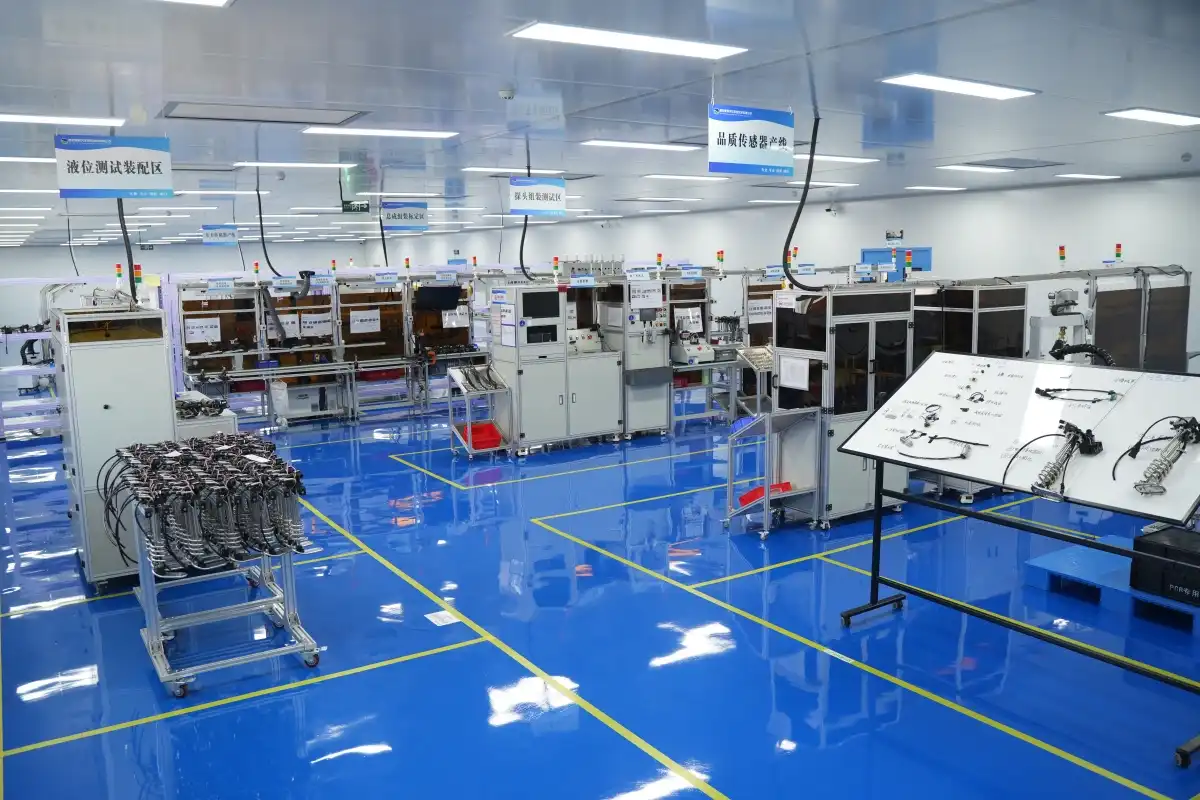
Delivery times and prices for large purchases are affected by how much a factory can make. As China's main original equipment manufacturer (OEM) supplier for major power system makers like Weichai, Yuchai, and Quanchai, we keep up production infrastructure that can handle large-scale production needs while also being flexible for smaller, more specialised orders. Our ISO9001 and IATF16949 certifications show that we are dedicated to quality control systems that make sure that all of our production runs are the same.
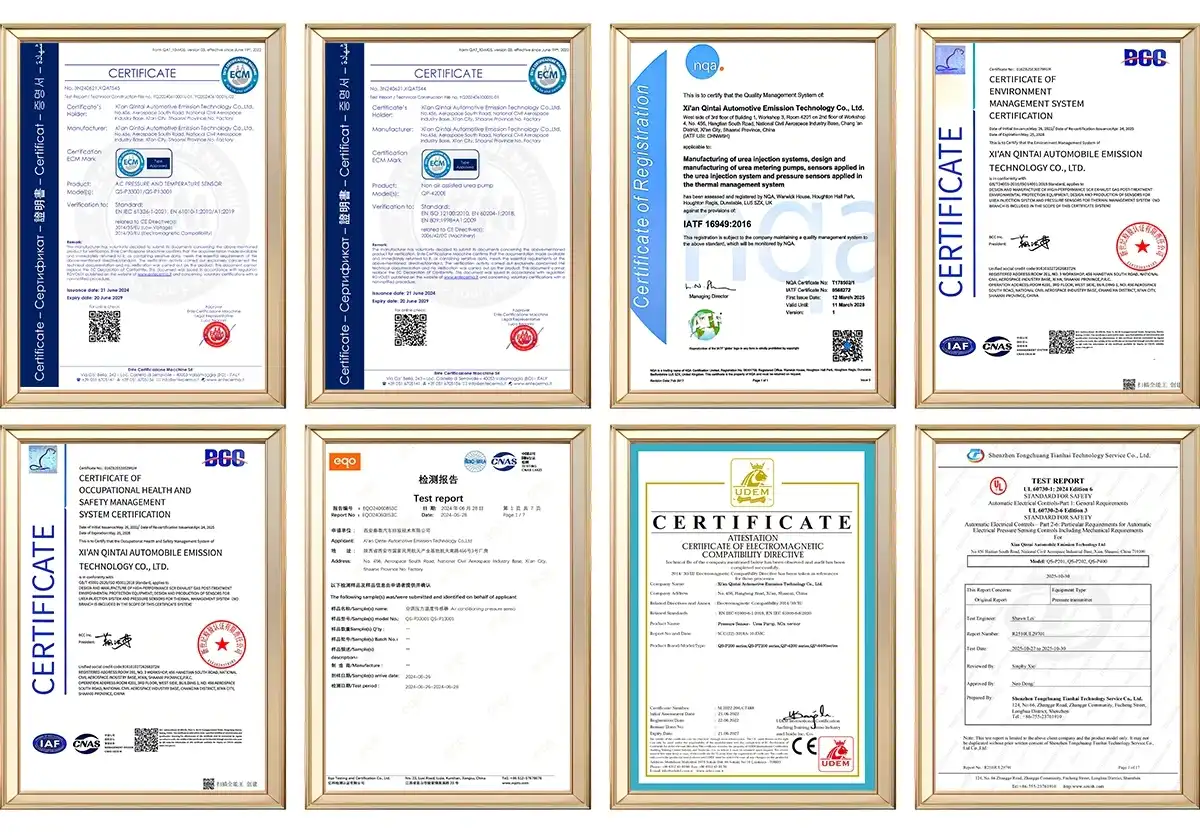
As safety and environmental standards get stricter in global markets, certification requirements become more important. Our wide range of certifications, such as CMC, Ex, UL, CE, REACH, and RoHS, makes sure that our Thin Film Pressure Sensors meet the rules in all foreign markets. This wide range of certifications makes the approval process easier for OEMs that sell equipment around the world.
Balancing Cost Considerations with Long-Term Value
The initial buying price is only one part of the total cost of owning. When Thin Film Pressure Sensors need to be calibrated often, break down early, or require complicated installation steps, they create secret costs that cancel out any savings that might be seen from cheaper options. Looking at lifetime prices gives you a better idea of what real value is.
Due to their sturdy construction and stable calibration, our Thin Film Pressure Sensors have a longer useful life. The sealed design keeps out dirt and dust that hurts the performance of regular sensors that are used in tough industrial settings. When aftermarket suppliers for commercial vehicles look at replacement parts, they find that our Thin Film Pressure Sensors offer the dependability and low failure rates that parts managers need while still keeping their reputations safe.
Warranty terms and support after the sale show that the manufacturer trusts the quality of the product. Comprehensive warranties and quick technical support give businesses peace of mind that their relationships with suppliers will lead to long-term success. Our worldwide marketing network in more than 60 countries makes sure that customers from other countries can get local help.
Installation, Calibration, and Maintenance Best Practices
Proper Installation Techniques for Reliable Operation
In some situations, the function is affected by the mounting position. Even though Thin Film Pressure Sensors can work in any position, setups should stay away from places where water or other contaminants could build up at the electrical links. To keep leaks from happening and to avoid stress that could mess up the measurements, pressure ports need to be properly sealed using the recommended torque specs.
Electrical links must be able to send signals reliably without adding noise. Shielded wires are helpful in places with a lot of electrical noise, like near sources of high current or radio frequency. If you follow the manufacturer's instructions for routing cables and grounding, you can avoid measurement errors caused by electromagnetic interference, which can mess up Thin Film Pressure Sensor signals.
When Thin Film Pressure Sensors are exposed to high temperatures, thermal control issues come up. Allowing enough heat to escape around sensor bodies keeps measurements accurate and stops thermal harm. In vent uses with high temperatures, heat shields or isolation plates may be needed to keep Thin Film Pressure Sensors from being exposed to temperatures higher than their maximum capacity.
Calibration Methods for Maintaining Accuracy
The relationship between applied pressure and Thin Film Pressure Sensor output is set up during the initial testing. Calibration curves are based on high-precision pressure standards that can be traced back to national metrology institutes. Calibration at multiple points across the sensor's working range picks up nonlinearities, which lets signal filtering circuits do accurate correction.
Performance across certain temperature ranges is confirmed by testing in an environmental chamber. When you change the temperature, you can see thermal hysteresis and drift, which affect how accurate the results are in the real world. As part of our manufacturing process, we test each Thin Film Pressure Sensor individually to make sure it meets the stated specs. Only then do we ship the product to the customer.
Field calibration procedures let you check the accuracy of Thin Film Pressure Sensors on a regular basis, like when you service your equipment. Technicians can check the performance of Thin Film Pressure Sensors on installed equipment with portable testing equipment. This lets them find problems with the sensors' performance before measurement mistakes affect the system's performance. Keeping track of the history of calibrations helps quality control systems and meets regulatory standards.
Preventive Maintenance for Extended Service Life
Checking electrical connections on a regular basis keeps them from breaking down because of corrosion or mechanical damage. Testing output data against known pressure references on a regular basis can find problems that are starting to show up before the Thin Film Pressure Sensor fails completely. This proactive method cuts down on unplanned downtime in important applications where measurement accuracy affects safety or following the rules.
When cleaning, you can't damage Thin Film Pressure Sensor elements or put dirt or other things into the pressure ports. Manufacturer suggestions list the right cleaning products and methods that are safe for sensor materials. With proper upkeep, measurement accuracy is kept and operating life is extended beyond the normal replacement intervals for less durable sensor technologies.
To figure out when replacement is cheaper than continued maintenance, you have to use your best judgement based on how often something fails and how important the application is. As a safety measure, equipment that works in harsh environments may need Thin Film Pressure Sensors to be replaced less often. On the other hand, sensors that work in controlled environments usually last for many years before they need to be replaced.
Future Trends and Innovations in Thin Film Pressure Sensor Technology
Industry 4.0 Integration and Smart Sensor Capabilities
When measurement technology and digital connectivity come together, Thin Film Pressure Sensors go from being passive measuring tools to being smart parts of systems. Embedded microprocessors allow for on-board diagnostics, predictive maintenance algorithms, and adaptive calibration that keeps the accuracy of sensors over their entire lifetime. These smart features make the system less complicated and more reliable.
When actual links are hard to make or impossible, wireless communication gets rid of the need for wiring harnesses. Battery-powered Thin Film Pressure Sensors that can collect energy make it possible to measure things in places that weren't possible before. IoT integration lets you keep an eye on distributed sensor networks from afar, giving you a clear picture of how all of your equipment is working across whole fleets or building setups.
Standardised communication methods make it easier to integrate systems from different vendors. Digital interfaces are more accurate than analogue communication because they don't let electrical noise or voltage drops in long wire runs mess up the data. These improvements help designers of aftercare systems who are working on complex control strategies that need to carefully coordinate a lot of measurement points.
Advanced Materials and New Ways of Making Things
New sensing materials are being studied, which should lead to better performance. Silicon carbide Thin Film Pressure Sensors are very stable at high temperatures, which means that sensors can be used in situations that used to require special technologies. Nanostructured materials make low-pressure readings more sensitive while still protecting against overload in safety-critical situations.
With additive manufacturing, you can make shapes that are too complicated to be possible with traditional cutting. Three-dimensional Thin Film Pressure Sensor designs make the best use of mechanical reaction while keeping size and weight to a minimum. These improvements in manufacturing lower the cost of making things while also making them work better. This means that more people can use advanced sensor technology.
Better signal processing algorithms get the most data out of Thin Film Pressure Sensor outputs. Machine learning techniques find small patterns that show failures are about to happen. This allows for predictive maintenance that keeps equipment from breaking down when it's least expected. Together, these gains in computing power and sensor gear make measurement systems more powerful than ever before.
Market Growth and Emerging Applications
More precise measurements are needed in burning and aftertreatment systems because global pollution rules are getting stricter. When emerging markets accept environmental standards, it opens up possibilities for Thin Film Pressure Sensor providers who have a track record of meeting regulatory requirements. We can help customers expand into new geographic markets because we have a wide range of certifications and long-term relationships with major OEMs.
Even if mobile equipment is powered by electricity, it still needs to be able to measure pressure. Thin Film Pressure Sensors are needed for the brakes, the battery cooling circuits, and the management of temperature. Hybrid powertrains that use both combustion engines and electric motors need even more advanced sensing integration in both of the driving systems.
Hydrogen fuel cells and biogas producers are two examples of renewable energy uses that need accurate Thin Film Pressure Sensor measurements to work safely and efficiently. These new markets value the dependability that has been proven over time and the ability to customise sensors that well-known makers offer. Our 58 invention patents show that we are committed to constant innovation, which keeps our products at the cutting edge of technology.
Conclusion
Modern industry uses need Thin Film Pressure Sensors that are accurate, last a long time, and work reliably. These Thin Film Pressure Sensors meet those needs. Their strong construction gets rid of common ways for things to go wrong, and they provide accurate measurements that are needed for emission compliance and system optimisation. Industries that use sensor technology that can work in harsh conditions without losing its effectiveness include those that make diesel engines and those that integrate aftertreatment systems.
To choose the right Thin Film Pressure Sensors, you need to know what the application needs, what the world is like, and what the seller can do. When installed, calibrated, and maintained correctly, measuring devices work more accurately and last longer. Thin Film Pressure Sensors will continue to play a bigger part in industrial measurement and control systems around the world as digital integration and new materials make technology better.
FAQ
What accuracy levels can thin film pressure sensors achieve?
Accuracy levels for modern Thin Film Pressure Sensors are usually between 0.1% and 0.25% of full scale. This is possible thanks to improved production and testing methods. With the sputtering deposition method, you can precisely control the film thickness and material qualities. This makes it possible to make measurement elements that are very sensitive and repeatable. Laser resistance trimming is used to fine-tune each sensor so that it meets the strict requirements needed for emission-critical applications. Temperature compensation circuits keep the accuracy from -40°C to +150°C in standard configurations by taking into account the effects of temperature across the entire operating range.
How do thin film sensors perform in corrosive environments?
When pressure media are directly exposed to stainless steel detecting elements, Thin Film Pressure Sensors are much less likely to rust than sensors that use isolation diaphragms or elastomeric seals. Because they don't have silicone oil filling or rubber O-rings that break down in tough chemicals, Thin Film Pressure Sensors can work in diesel fuel, hydraulic fluid and exhaust gas. The welded construction makes a fully sealed unit that can't let the kinds of pollution that can damage regular sensors in. Because they last so long, they are perfect for heavy gear and industrial equipment that needs to work in tough circumstances.
Can thin film pressure sensors be customized for specific applications?
Full customisation options meet the specific needs of applications in all fields. You can set up pressure settings that go from low-level intake manifold tracking to high-pressure fuel injection measurement. Output signals, such as 4-20mA current loops, ratiometric voltage, or digital communication protocols, are tailored to meet the needs of each customer's control system. The physical configurations change depending on the available space and the mounting needs. When standard Thin Film Pressure Sensors don't fully meet the needs of an application, our engineering team works with customers to make custom sensor solutions.
Partner with Qintai for Advanced Thin Film Pressure Sensor Solutions
Xi'an Qintai Automotive Emission Technology is ready to help you measure pressure with Thin Film Pressure Sensor technology that has been used by top diesel engine makers and is trusted. Being China's top OEM provider is the result of 20 years of new ideas, high-quality production, and an unwavering dedication to customer satisfaction. We make sensors that meet the strictest requirements thanks to our 58 invention patents and many certifications, such as ISO9001, IATF16949, and international approvals.
Our separate research and development team is always improving Thin Film Pressure Sensor technology to meet the changing needs of the industry. Our production capacity and technical know-how will make sure the success of your project, whether you need standard sensors right away or custom-engineered solutions for unique uses. We help OEM users and distribution partners in more than 60 countries by providing quick technical support and a stable supply chain.
Find out how our Thin Film Pressure Sensor options can help your emission control systems work better, measure more accurately, and lower the total cost of ownership. Email our engineering team at info@qt-sensor.com to talk about your unique needs, get detailed documentation, or look into chances to work together as an OEM. As a well-known company that makes Thin Film Pressure Sensors, we're dedicated to forming lasting partnerships that help both of us succeed in global markets that are becoming more and more competitive.
References
1. Smith, R.A., & Johnson, M.K. (2021). Advanced Pressure Measurement Technologies for Automotive Applications. Society of Automotive Engineers International.
2. Chen, L., Wang, H., & Zhang, Y. (2020). Thin Film Sensor Technology in Emission Control Systems. Journal of Industrial Instrumentation, 45(3), 178-195.
3. European Commission (2022). Heavy-Duty Vehicle Emission Standards and Testing Procedures. Official Journal of the European Union.
4. Thompson, D.E. (2019). Sensor Selection and Integration for Diesel Engine Management. McGraw-Hill Professional Engineering.
5. International Organization for Standardization (2021). Pressure Sensors: Performance Specifications and Testing Methods (ISO 15768-2021). Geneva, Switzerland.
6. Martinez, P.J., & O'Connor, B.T. (2023). Material Advances in MEMS Pressure Sensing Technology. Sensors and Actuators Review, 38(2), 234-251.

Our customers’ satisfaction speaks for our quality — contact us to experience the same reliable service.