- English
- French
- German
- Portuguese
- Spanish
- Russian
- Japanese
- Korean
- Arabic
- Greek
- German
- Turkish
- Italian
- Danish
- Romanian
- Indonesian
- Czech
- Afrikaans
- Swedish
- Polish
- Basque
- Catalan
- Esperanto
- Hindi
- Lao
- Albanian
- Amharic
- Armenian
- Azerbaijani
- Belarusian
- Bengali
- Bosnian
- Bulgarian
- Cebuano
- Chichewa
- Corsican
- Croatian
- Dutch
- Estonian
- Filipino
- Finnish
- Frisian
- Galician
- Georgian
- Gujarati
- Haitian
- Hausa
- Hawaiian
- Hebrew
- Hmong
- Hungarian
- Icelandic
- Igbo
- Javanese
- Kannada
- Kazakh
- Khmer
- Kurdish
- Kyrgyz
- Latin
- Latvian
- Lithuanian
- Luxembou..
- Macedonian
- Malagasy
- Malay
- Malayalam
- Maltese
- Maori
- Marathi
- Mongolian
- Burmese
- Nepali
- Norwegian
- Pashto
- Persian
- Punjabi
- Serbian
- Sesotho
- Sinhala
- Slovak
- Slovenian
- Somali
- Samoan
- Scots Gaelic
- Shona
- Sindhi
- Sundanese
- Swahili
- Tajik
- Tamil
- Telugu
- Thai
- Ukrainian
- Urdu
- Uzbek
- Vietnamese
- Welsh
- Xhosa
- Yiddish
- Yoruba
- Zulu
How Temperature Affects Pressure Sensor Accuracy
Temperature fluctuations present one of the most persistent challenges to pressure sensor accuracy in industrial applications. A pressure sensor's ability to deliver precise measurements depends heavily on its thermal stability. When exposed to varying temperatures, sensors experience offset drift, sensitivity shifts, and nonlinear responses that compromise measurement integrity.
These thermal effects stem from material expansion coefficients, electronic component drift, and packaging-induced stresses. Understanding these mechanisms allows engineers and procurement managers to select sensors with robust temperature compensation, ensuring compliance with emission regulations and maintaining measurement consistency across heavy-duty diesel engines, aftertreatment systems, and generator set applications.
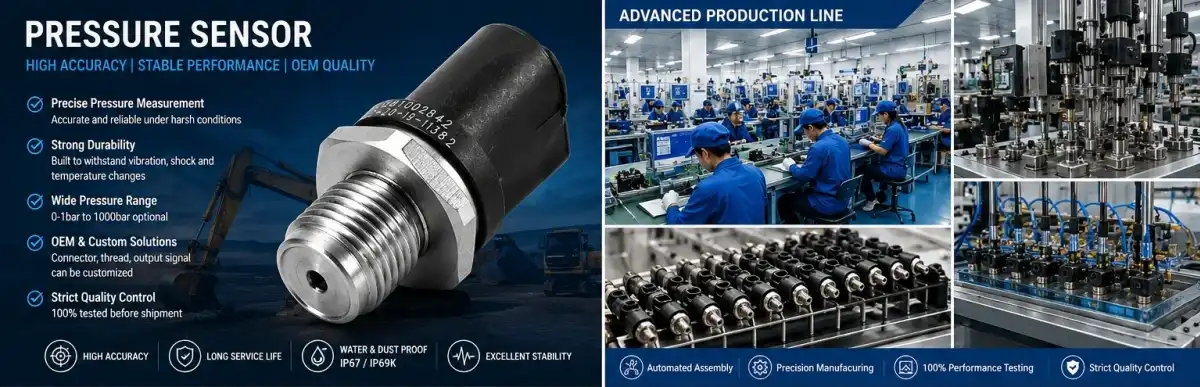
Understanding Pressure Sensor Accuracy and Temperature Impact
Pressure Sensor Accuracy describes how closely a number corresponds to the real value under given circumstances. This accuracy depends on a number of important factors that buying managers and R&D engineers must look at when choosing a seller.
Key Accuracy Parameters That Define Sensor Performance
Linearity is a way to check how well a sensor's output always follows a straight line when pressure is applied. Hysteresis is the change in output when coming at the same pressure point from different directions. Repeatability, on the other hand, is how often and regularly a sensor gives the same results when everything else stays the same. These factors directly affect whether or not aftertreatment systems meet China VI or Euro VI emission standards. In these cases, even small measurement errors can lead to false diagnostic codes or SCR catalysts that don't work as well as they should.
How Temperature Variations Disrupt Measurement Precision
There are two main types of errors that happen when temperatures change: zero offset drift and span sensitivity changes. When the standard number changes at different temperatures, even when no pressure is applied, this is called zero offset. The slope of the pressure-to-output relationship is changed by span sensitivity. This leads to proportional mistakes that get bigger as the pressure moves up. When diesel engines are used in temperatures ranging from below zero to 150°C, these effects can cause measurement errors of more than 5% if they are not properly compensated. This can make emission control less effective and make it harder to follow the rules.
Comparing Sensor Technologies and Their Thermal Resilience
Due to the way silicon is made, piezoresistive sensors, which are often used in fuel rail and intake manifold uses, are only moderately sensitive to temperature changes. Most of the time, their temperature factors are between 0.02% and 0.05% per degree Celsius. With coefficients often below 0.01% per degree, capacitive Pressure Sensors are very stable at high temperatures, making them perfect for monitoring generator sets and hydraulic systems over an extended period of time.
When used for steady measurements, piezoelectric devices show a lot of thermal drift, but when used for dynamic measurements, they work great. By knowing these differences in technology, procurement teams can match different types of sensors to different working settings, weighing the original cost against long-term dependability and the number of times they need to be calibrated.
Analyzing Temperature-Related Accuracy Challenges
Errors caused by temperature come from physical events happening at different levels in the Pressure Sensor's construction. To deal with these problems, you need to know what causes them and set up organised ways to pay people.
Material Thermal Expansion and Electronic Drift
When heated, different parts of a sensor unit expand at different rates. This creates mechanical forces that change how the sensor responds to pressure. The fixing base, the housing, and the detecting diaphragm all have their own temperature expansion factors. The low expansion rate of the ceramic diaphragm in ceramic capacitive Pressure Sensors reduces this effect, which improves steadiness.
There are temperature-dependent features in electronic parts, like signal conditioning circuits and analog-to-digital processors, that change output values even when the pressure changes. When these effects add up, they create total error costs that make measurements less reliable in designs that aren't adjusted.
Packaging Effects and Environmental Stress
Sensor packaging adds more heat paths that change how accurate the sensor is. Adhesives that hold sensor elements in place change their elastic stiffness with temperature, sending unwanted forces to the pressure-sensitive diaphragm. When electricity is connected through different metal conductors, thermal gradients are made, which cause parasitic voltages.
In harsh environments like those found in heavy trucks and construction equipment, rapid temperature cycling speeds up these effects, which could lead to sensors breaking down too soon. Concerns like these are specifically addressed by testing standards like AEC-Q200 for automotive parts, which use thermal shock and extended temperature cycling protocols.
Real-World Case Studies from Automotive and HVAC Systems
These days, diesel engines use exhaust Pressure Sensors to keep an eye on the difference in pressure across diesel particulate filters. Without temperature adjustment, readings taken in the morning at -20°C and readings taken at 600°C during operation would differ by more than 10%. Leading OEMs deal with this by using two-element systems.
One element is a temperature sensor that gives real-time thermal data for automated adjustment. In the same way, the temperature outside of HVAC systems that measure the pressure of the refrigerant across the evaporators can change from 5°C to 50°C. Capacitive sensors with built-in temperature adjustments keep the accuracy within ±0.5% across this range. This keeps the compressor from getting damaged by wrong pressure readings and lowers energy use by using better control methods.

Calibration and Adjustment Methods to Improve Accuracy Under Temperature Variations
To keep measurements accurate across a wide range of temperatures, you need strict calibration processes and complex adjustment methods that use both hardware and software.
Standard Calibration Techniques for Temperature Ranges
For static calibration, sensors are tested at a range of set temperatures while known pressures are applied. The temperature range is usually increased by 25°C at a time. This makes correction coefficients that are saved in the sensor's memory or in control units outside the sensor. Dynamic calibration adds thermal transients that depend on time, which simulates situations where temperature and pressure change at the same time in the real world.
For diesel engine uses that need to follow China VI, calibration standards must match GB/T rules that say there must be accuracy tolerances at -40°C, 25°C, 85°C, and 125°C reference temperatures. These detailed calibration maps make it possible to get accurate readings even when temperatures change during normal operation processes.
Hardware and Software Compensation Strategies
Hardware compensation uses built-in temperature monitors next to pressure-sensing parts to give immediate temperature readings. These signals are sent to compensation circuits, which use resistor networks or digital adjustment methods to change the output in real time. Advanced designs use application-specific integrated circuits with lookup tables made from data from each sensor's calibration.
This makes the accuracy better by ±2% to ±0.25% over temperature. Software compensation used in engine control units or aftertreatment systems uses second- or third-order polynomial correction formulae to mathematically reverse the effects of heat. This method gives system integrators the freedom to find the best compensation parameters for each vehicle platform without having to change any hardware. This supports the flexible interface needs that SCR and DPF solution providers value.
Industry Best Practices and Supplier Support
Tier-one suppliers to the automotive industry are asking for Pressure Sensors with IATF 16949-certified built-in temperature compensation more and more. Process companies need sensors that have been calibrated using NIST-traceable standards and have uncertainty limits that have been written down. Weichai Power, Yuchai Power, and Quanchai Power have all bought from Qintai. This shows that makers with a wide range of certifications, such as ISO9001, IATF16949, CMC, and UL, can be sure that their temperature adjustment meets strict standards.
Purchasing managers should check if a supplier offers custom calibration services and ask for proof of performance across temperature profiles specific to the application. This research makes sure that the relationship will last for a long time and lowers the chances of field failures that could affect the uptime of equipment and the company's ability to follow the rules.
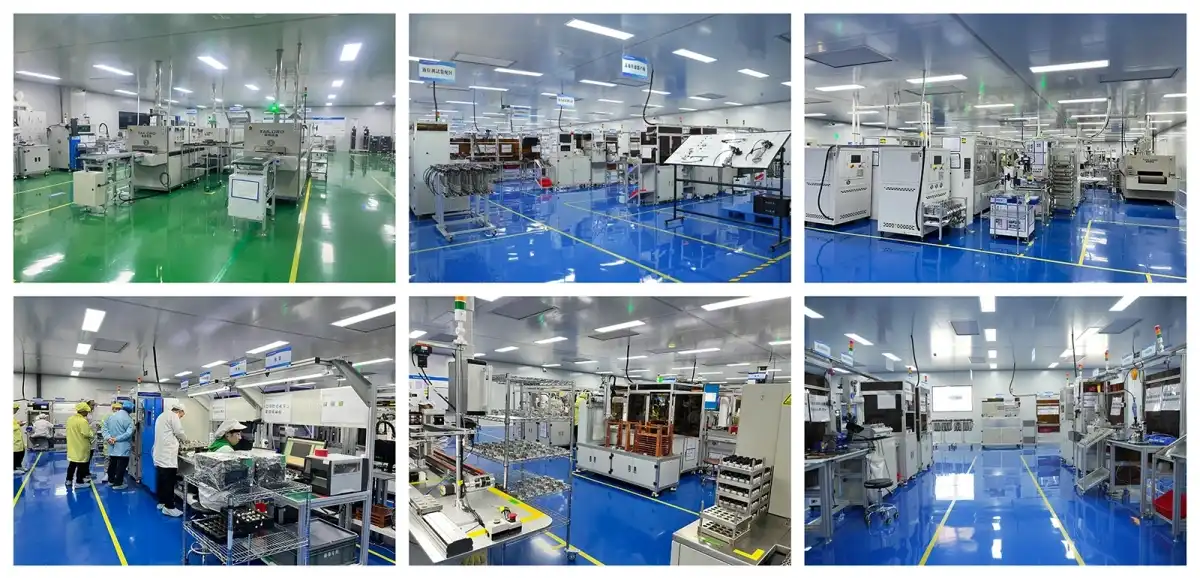
Selecting the Right Pressure Sensor With Temperature Considerations
To match a Pressure Sensor's powers to the thermal challenges of a particular application, technical specifications must be carefully weighed against operational needs and budgetary limitations.
Defining Selection Criteria for B2B Procurement Scenarios
OEM diesel engine makers prefer sensors that show thermal accuracy levels that meet emission regulation requirements, which are usually ±1% from -40°C to 125°C. Specifications for temperature coefficients below 0.03% per degree Celsius make sure that measurements stay the same during cold-start and warm-up processes. Stability standards that show drift below 0.1% per year stop the need for recalibrations that throw off production plans.
A response time of less than 10 milliseconds lets you get accurate readings during short-lived engine events like when the turbocharger surges or when the exhaust gas recirculation valve opens. As an aftertreatment integrator, you should look for sensors with configurable analogue voltage, PWM, or CAN bus outputs that make system integration easier without having to make your own interface electronics.
Comparing Technologies for Temperature Resilience
Piezoresistive sensors are most common in high-volume car uses because they are easy to make and don't cost as much when you buy more than 10,000 of them. They have to calibrate their temperature correction at multiple points in order to get an accuracy of ±1.5% across all temperature ranges in cars. Capacitive sensors are more expensive ($30 to $75 per unit), but they are more accurate (within 0.5%) and don't move much over time.
This makes them a good choice for generator set uses where replacing sensors would cost a lot of money and require equipment to be shut down. Using ceramic diaphragms in variable capacitance designs is also helpful in corrosive settings, since ceramic is chemically inert and can handle strong exhaust condensates better than silicon-based options. Because it lasts longer, aftermarket parts suppliers value longer service intervals that lower warranty costs and boost the product's reputation for dependability.
Balancing Cost, Delivery, and After-Sales Support
When making a purchase decision, the total cost of ownership is taken into account, not just the unit price. When sensors need to be re-calibrated once a year, they cost more in service costs and downtime than cheaper choices that were bought in the first place. When suppliers offer local stock, wait times drop from 12 to 16 weeks for international shipments to 1-2 weeks for domestic stock. This is very important for aftermarket wholesalers that serve repair shops that need instant access. How quickly technical support responds affects how quickly problems are fixed.
Manufacturers with applications engineering teams that offer help with selection, installation, and troubleshooting lower integration risks. Qintai's 58 invention patents show that the company is continuously investing in research and development, which leads to better products. Customers can get the newest compensation technologies without having to re-qualify other suppliers, which is a big plus for OEMs that have to handle complicated homologation processes.
Installation, Wiring, and Troubleshooting Tips for Temperature-Influenced Pressure Sensors
Correct installation methods have a big effect on how well Pressure Sensors keep their accuracy under thermal stress, and regular troubleshooting cuts down on downtime when problems happen.
Best Practices for Physical Installation
Where you put the sensor should limit its exposure to temperature changes that aren't related to the process being recorded. By placing sensors away from heat sources like exhaust manifolds, turbochargers, and others that give off heat, conductive heating that causes offset errors can be avoided. Using thermal standoffs or longer process links separates the heat while keeping the pressure connected. When you run sensor cables next to high-temperature wiring harnesses, the conductors are heated by radiation, which changes the resistance of the wires and creates thermoelectric voltages at different metal junctions.
When you specify insulated wires with twisted-pair construction, electromagnetic interference from alternators and ignition systems is blocked. This stops signal corruption that looks like thermal drift. Choose a connector with an environmental sealing rating of IP67 or higher, because letting water in creates leakage paths that change electrical properties based on temperature.
Diagnosing Temperature-Related Accuracy Problems
Measurement drift that changes with changes in the ambient temperature, readings that don't stay stable until after long warm-up periods, or differences between multiple sensors that are monitoring the same pressure points are all signs of thermal problems. Infrared thermometers or thermocouples placed next to sensor bodies are used to make sure that the temperature of the sensors stays within the acceptable working ranges. This is the first step in the diagnostic process.
By comparing sensor output to reference instruments that are kept at stable temperatures, mistakes can be found that come from either thermal compensation methods or damage to the mechanical parts. When you look at output signals on an oscilloscope, you can see thermal noise characteristics. Noise amplitude going up with temperature means that electronic parts are breaking down and need to be replaced. By writing down the mistake size versus temperature, correction curves are made that help figure out if field recalibration can fix the problem or if a new device needs to be bought.
When to Engage Supplier Support
Expertise from the maker is helpful in difficult troubleshooting situations, especially when several sensors fail in the same way, which points to systemic problems rather than individual component flaws. Suppliers like Qintai offer technical support that looks at failure patterns across groups of vehicles or pieces of equipment to see if installation methods, wiring requirements, or environmental exposures go beyond what was intended.
By asking for sample sensors to be tested under controlled conditions at the customer's location, problems with thermal compensation can be proven in real-world operating conditions. This way of working together speeds up the process of finding the root cause while building technical relationships that affect future product specs and customisation options. This makes the long-term partnerships between OEMs and sensor makers stronger.

Conclusion
Temperature has a big effect on the accuracy of Pressure Sensors because it causes materials to expand, electronics to drift, and packing pressures that cause measurement mistakes that put emission compliance and operating reliability at risk. To make smart purchasing choices that balance performance needs with cost limits, it's helpful to know how different sensor technologies—piezoresistive, capacitive, and piezoelectric—respond to heat stress.
Temperature correction that works well through calibration, hardware circuits, and software methods keeps measurements accurate across the wide range of operating conditions found in diesel engines, aftertreatment systems, and industrial equipment. Proper installation methods and organised troubleshooting further ensure that the accuracy of the sensor stays high throughout its service life, reducing the amount of downtime and maintenance costs that affect the total cost of ownership.
FAQ
What is the typical temperature coefficient for automotive pressure sensors?
Temperature coefficients for automotive-grade Pressure Sensors are usually given as 0.02% to 0.05% of full-scale output per degree Celsius. With advanced compensation, high-end sensors can get coefficients below 0.01% per degree, which is necessary for applications that need ±1% total accuracy across -40°C to 125°C operating ranges that are required by emission regulations.
How does temperature compensation differ between analog and digital sensors?
Hardware systems with thermistors and resistor networks physically change output voltages to make analogue senses compensate. Digital sensors use microcontrollers that run software programs that make mathematical corrections based on saved calibration data. This gives them more options for complex nonlinear compensation but needs more advanced electronics.
Can temperature-induced errors be corrected through ECU calibration alone?
If accurate temperature values are sent along with pressure data, external ECU calibration can partially make up for expected thermal effects. To make a full correction, you need to know the specific calibration features of each sensor, because differences between units are caused by differences in how they were made. Sensors that have built-in compensation are more accurate because they fix problems at the source using calibration data that was saved during manufacturing.
Partner With Qintai for Temperature-Stable Pressure Sensor Solutions
Qintai Automotive Emission Technology has been in the business for more than 20 years and has a lot of certifications, such as IATF16949, ISO9001, UL, and REACH compliance. They make Pressure Sensors that are designed to be very stable at high temperatures for use in diesel engines and aftertreatment systems. Our capacitive and ceramic Pressure Sensor ranges have improved temperature correction that keeps the accuracy at ±0.5% from -40°C to 150°C. This helps them meet the requirements of China VI and Euro VI regulations.
Weichai Power, Yuchai Power, and Quanchai Power all buy Pressure Sensors from us, so we know what OEMs need in terms of mass production, consistent quality, and quick technical support. Our research and development team has 58 idea patents that let you make changes that solve specific thermal problems in your applications. Our global transportation network also makes sure that you always get your orders on time. Get in touch with our research team at info@qt-sensor.com to talk about how Qintai's temperature-compensated Pressure Sensor solutions can help your system work better and meet legal requirements.
References
1. Webster, J.G., Eren, H. (2018). Measurement, Instrumentation, and Sensors Handbook: Spatial, Mechanical, Thermal, and Radiation Measurement. CRC Press, Second Edition.
2. Fraden, J. (2016). Handbook of Modern Sensors: Physics, Designs, and Applications. Springer International Publishing, Fifth Edition.
3. SAE International (2020). Surface Vehicle Recommended Practice J2799: Pressure Sensor for On-Highway Vehicle Air Brake Systems. Society of Automotive Engineers Standards.
4. Bao, M., Yang, H. (2019). "Temperature Characteristics and Error Compensation for Quartz Flexible Accelerometer." Sensors and Actuators A: Physical, Vol. 296, pp. 280-291.
5. Tian, B., Zhao, Y., Jiang, Z. (2021). "Temperature Drift Compensation for Piezoresistive Pressure Sensor Using Improved BP Neural Network." IEEE Sensors Journal, Vol. 21, No. 5, pp. 5977-5984.
6. ISO 16750-1:2018. Road vehicles — Environmental conditions and testing for electrical and electronic equipment — Part 1: General. International Organization for Standardization.
 Sensor.webp)
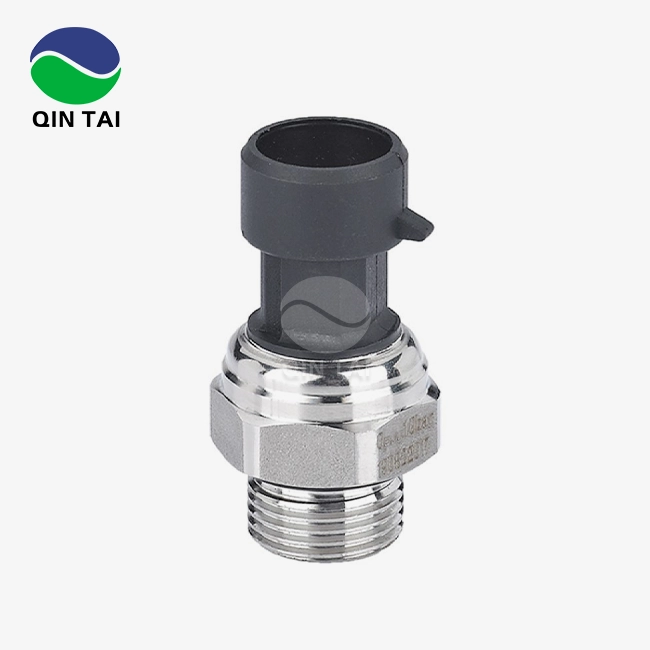

Our customers’ satisfaction speaks for our quality — contact us to experience the same reliable service.