- English
- French
- German
- Portuguese
- Spanish
- Russian
- Japanese
- Korean
- Arabic
- Greek
- German
- Turkish
- Italian
- Danish
- Romanian
- Indonesian
- Czech
- Afrikaans
- Swedish
- Polish
- Basque
- Catalan
- Esperanto
- Hindi
- Lao
- Albanian
- Amharic
- Armenian
- Azerbaijani
- Belarusian
- Bengali
- Bosnian
- Bulgarian
- Cebuano
- Chichewa
- Corsican
- Croatian
- Dutch
- Estonian
- Filipino
- Finnish
- Frisian
- Galician
- Georgian
- Gujarati
- Haitian
- Hausa
- Hawaiian
- Hebrew
- Hmong
- Hungarian
- Icelandic
- Igbo
- Javanese
- Kannada
- Kazakh
- Khmer
- Kurdish
- Kyrgyz
- Latin
- Latvian
- Lithuanian
- Luxembou..
- Macedonian
- Malagasy
- Malay
- Malayalam
- Maltese
- Maori
- Marathi
- Mongolian
- Burmese
- Nepali
- Norwegian
- Pashto
- Persian
- Punjabi
- Serbian
- Sesotho
- Sinhala
- Slovak
- Slovenian
- Somali
- Samoan
- Scots Gaelic
- Shona
- Sindhi
- Sundanese
- Swahili
- Tajik
- Tamil
- Telugu
- Thai
- Ukrainian
- Urdu
- Uzbek
- Vietnamese
- Welsh
- Xhosa
- Yiddish
- Yoruba
- Zulu
How Does a Pressure Sensor Measure Pressure Accurately?
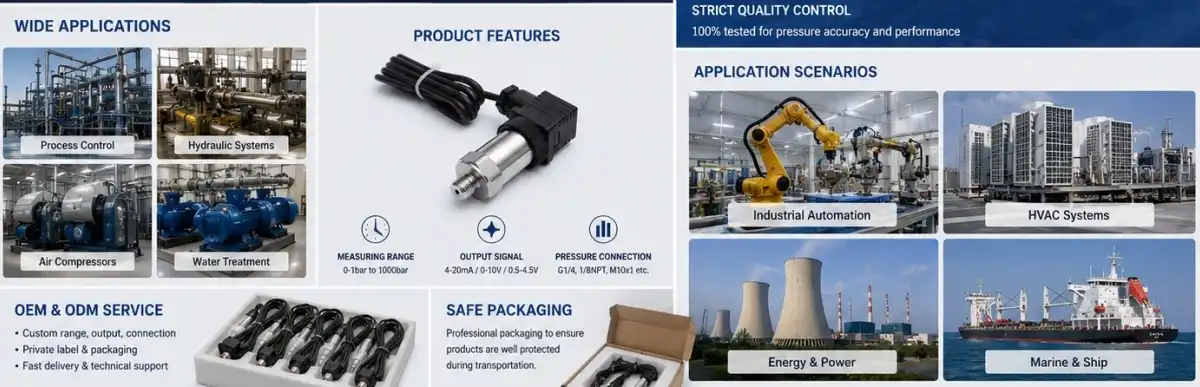
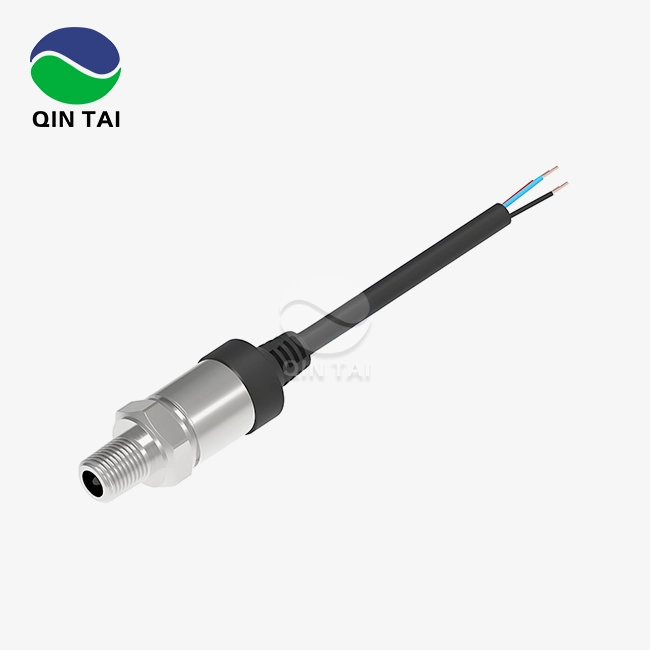
Pressure sensors measure pressure accurately by converting mechanical deformation into electrical signals through specialized transduction mechanisms. When pressure acts on a sensing element—such as a diaphragm or membrane—it creates physical changes that generate proportional electrical outputs. These outputs are then processed, conditioned, and calibrated to deliver precise pressure readings essential for critical applications in diesel engine aftertreatment systems, industrial automation, and automotive emission control.
Understanding the Fundamentals of Pressure Sensing
Pressure sensing works by turning real force into electrical signs that can be measured. The accuracy needed in harsh industrial settings is determined by how well these devices do with this conversion process.
Core Operating Principles
Transduction mechanisms that respond to mechanical stress are what make pressure sensing work. When force is applied to a detecting element, the electrical properties change in a way that can be measured. This basic idea is at the heart of all precision measurement tasks, from keeping an eye on diesel engines to controlling SCR aftertreatment systems.
Most of the time, the sensing element is a flexible diaphragm that bends in response to pressure. This deflection changes the way the sensor works electrically, giving results that are directly related to pressure levels. The accuracy of measurements is directly affected by how straight and repeatable this change is.
Key Sensor Technology Variants
Depending on the accuracy needed and the operating conditions, different sensing technologies are used. When put under mechanical stress, piezoelectric devices make an electrical charge. This makes them very sensitive to changes in dynamic pressure in diesel engines running at high speeds. Their quick response time makes them good for tracking in real time, but they can't measure static pressure.
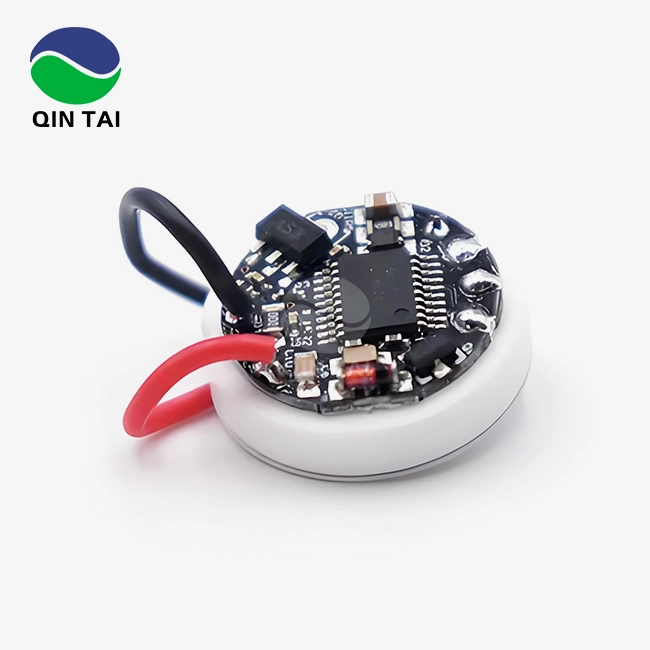
A ceramic diaphragm in capacitive sensors changes shape when pressure is put on it. One electrode is the diaphragm, and the other is the fixed electrode. Together, they make a capacitor. The capacitance between the sensors is changed when the pressure changes, which is measured and turned into an electrical output. This capacitance-type pressure sensor design is very stable and accurate over long periods of time. It is especially useful for emission control systems that need accurate readings over long periods of time. The ceramic material is very stable at high temperatures and doesn't rust, which are both very important in exhaust gas tracking uses.
When mechanical force is applied to piezoresistive sensors, the electrical resistance changes. This makes them very sensitive over a wide range of pressures. Because they are strong and don't cost a lot of money, they are often used in building and farming tools where dependability is just as important as accuracy. These types are the most common ones used to measure fuel line pressure and keep an eye on heavy cars' hydraulic systems.
Critical Performance Parameters
How well a sensing device reacts to small changes in pressure is called its sensitivity. Higher sensitivity lets you see even the smallest changes, which is necessary to follow emission rules. Stability makes sure that results stay the same even when temperatures change and the device is subjected to the vibrations that are common in heavy-duty automotive uses.
Response time is a measure of how quickly measurements reflect changes in actual pressure, which is important for making real-time changes to the engine's controls. Resolution shows the smallest difference in pressure that can be seen, which can affect accuracy in tasks like monitoring DPF regeneration. Together, these factors show if a device meets the strict accuracy requirements for China VI and Euro VI emission standards.
Applications Driving Accuracy Demands
For engine control systems, fuel pressure monitoring systems, and tyre pressure monitoring systems, pressure sensing is needed. For each application, different amounts of accuracy and resistance to external stress are needed. Differential pressure measurements must be exact across filters, valves, and flow systems for industrial process control. Any mistakes in these measurements have a direct effect on how well the system works.
Differential pressure measurements are used by HVAC systems to keep an eye on airflow and find clogged filters. For these uses, readings must stay stable even when the outside conditions change. For barometric measurement and fuel system tracking in aerospace uses, where accuracy can affect safety results, you need very high reliability and precision.
Factors Affecting Pressure Sensor Accuracy
During the life of a sensing device, many interconnected factors affect how accurate measurements are. Knowing about these things helps people who work in buying choose the best options for each situation.
Design Elements and Material Selection
Diaphragm material has a big effect on how well it works and how long it lasts. Stainless steel is very strong and doesn't rust, making it perfect for tough exhaust conditions. Ceramic materials are better at withstanding chemicals and staying stable at high temperatures, which is important for integrating SCR systems in places where urea and ammonia are present.
Sensitivity and uniformity are both affected by the shape of the detecting element. Thinner diaphragms are more sensitive, but they may not be as stable in the long run. The crystalline structure of a material affects its temperature coefficients and hysteresis properties. Because of these design choices, there are trade-offs between sensitivity, stability, and resistance to the environment that must be matched with the needs of the application.
Environmental Condition Impacts
Changes in temperature can affect the electrical and physical qualities of materials, which can lead to mistakes in measurements. When generators are used in mines or other open areas, the temperature can change a lot, which needs strong correction. Pressure sensors are particularly susceptible to such thermal effects, as their output can shift with temperature variations. Differences in temperature between the measuring element and the electronics add to the drift that needs to be fixed during design.
Electrical protection can be damaged by humidity, and signals can get weaker in units that aren't protected properly. Heavy trucks and construction equipment that are exposed to vibrations can cause mechanical stress and potential resonance effects that make accuracy worse. Shock loads during operation can permanently change the calibration of units that were not built well.
Through temperature monitors built into the structure of the gadget, compensation methods lessen these effects of the surroundings. Advanced signal processing algorithms use temperature readings to apply correction factors that keep the accuracy of the readings across all operational ranges. Some designs use thermal separation structures to keep the effects of temperature differences between the sense elements and the reference circuits to a minimum.
Calibration Procedures and Standards
Setting up the link between applied pressure and electrical output is what calibration is all about. It's what makes precision possible. In the factory, the output of the sensor is compared to reference standards that can be tracked across the whole working range. Multi-point testing at various temperatures raises precision in a range of situations.
How often calibration is done depends on how important the application is and how bad the environment is. Applications that are very important for emissions may need to be re-calibrated every year to stay in line with regulations. When using a generator set in a stable environment, the intervals can be pushed back to every two years. Calibration certificates must be properly documented to show that they can be traced back to national standards, which is a requirement for quality system compliance.
Signal Conditioning and Output Types
Electrical signal filtering boosts the outputs of small pressure sensors and gets rid of noise that lowers the accuracy of measurements. To keep uniformity and minimise drift, analogue filtering circuits need to be carefully designed. Digital signal processing is better at blocking noise and lets you use more complex correction methods that make things more accurate.
Analogue output devices send out constant voltage or current signs that are related to pressure. Because they are simple, they are cheaper, but they don't block out much noise in places where diesel engines are installed that are noisy electrically. Digital output devices change measurements internally and send data serially, which protects against electrical interference and lets calibration adjustments be made from afar. Choosing between analogue and digital outputs changes both how hard it is to install and how easy it is to keep the accuracy over time.
Comparing Pressure Sensor Types for Accurate Measurement
To choose the right sensing technology, you need to know how the different methods deal with different accuracy and weather issues. Each technology has its own benefits that make it a good fit for a certain application.
Piezoelectric vs Capacitive Technologies
When measuring dynamically and needing a quick reaction, piezoelectric devices work great. Their high-frequency reaction picks up quick changes in fuel injection systems and tracking combustion. However, because they can't measure static pressure, they can't be used for continuous monitoring.
Capacitive ceramic pressure sensors are very accurate and stable over time for readings that don't change quickly or at all. Because they don't change much with temperature, they work perfectly in emission aftertreatment systems that need to keep working well for years. The ceramic design protects against the harmful chemicals found in SCR systems' exhaust gases and urea solutions. Because of these traits, they are widely used in HVAC, industrial process monitoring, and controlling engine power in cars, where accurate baseline measures are more important than short-term reaction.
Digital vs Analog Sensor Systems
Analog-to-digital conversion and data processing are built into the housing of digital sense devices. This integration stops analogue signals from losing quality over long cable runs and protects against electromagnetic interference that is common in places where heavy equipment is used. Built-in tests can find sensor faults and calibration drift, which lets repair plans be planned ahead of time.
It's easier to connect analogue devices to older control systems, and they cost less at first. Their constant output makes it easy to use their interfaces for simple monitoring tasks. But limitations on cable length and electrical noise can make installations more difficult to read when there are a lot of sensors spread out across machines.
Modern digital systems have software interfaces that let you change the parameters and calibrate the system remotely, which cuts down on the need for field service. This feature is especially helpful for designers of aftertreatment systems who need to be able to use different sensor setups on different engine platforms without having to change the hardware.
Specialized Solutions for Challenging Environments
Designs that are waterproof and don't explode are made for tough industrial circumstances. Construction that is hermetically sealed stops wetness from getting in, which can lead to long-term drift and electrical problems. Designs that are intrinsically safe and have been approved for use in dangerous areas allow accurate pressure tracking in the explosive environments that are common in fuel system uses.
Wide-range devices that use little power are good for remote monitoring in generator sets and backup power systems that run on batteries. Extended temperature range specifications allow operations in harsh environments, from power plants in the desert to mines in the Arctic. Because of their unique qualities, these products cost more, but they are reliable enough to be worth the money for mission-critical uses.
Automotive Application Case Study
Modern diesel engines use fuel rail pressure sensing to show how accurate the requirements are that drive technology choice. To comply with Euro VI, fuel delivery must be precisely controlled within very small ranges. The monitor has to stay accurate even when the temperature changes from cold start to full load, and it also has to be able to handle vibrations and changes in the fuel's chemistry.
Suppliers who meet these needs use piezoresistive sensing elements along with advanced digital signal processing and temperature compensation. Accuracy of measurements within 1% of full scale across the working range makes sure that emissions standards are met and allows the engine to work at its best. Testing for durability makes sure that the sensor will work after millions of pressure cycles, which is how long it is expected to last. This tough application shows how accuracy, dependability, and resistance to the environment all work together to make a successful sensor solution.

Ensuring and Verifying Pressure Sensor Accuracy in Procurement
Strategic approaches to procurement balance technical needs with business needs, making sure that the solutions chosen provide long-lasting accuracy throughout their operational life.
Interpreting Technical Specifications
Specifications for datasheet accuracy need to be carefully interpreted. The percentage of reading is very different from the percentage of full scale that is given. A device that is rated at 0.5% of 10 bar full scale has an uncertainty of ±0.05 bar across its whole range. This means that readings close to zero have larger relative mistakes.
Range specifications should match the needs of the application without leaving too much room for error. When working pressures are normal, ranges that are too big make precision and accuracy less useful. Long-term drift rates are shown by stability specifications. These are usually given as a percentage change per year. For applications that need to be accurate over time, the yearly drift must be less than 0.1%.
Reliable Sourcing Strategies
Global brands that people trust offer consistent quality and full technical support, which is important for integrations that are complicated. Their wide range of application experience helps them find the best solutions for each situation. However, high prices may make it harder to keep costs down, especially in high-volume production settings.
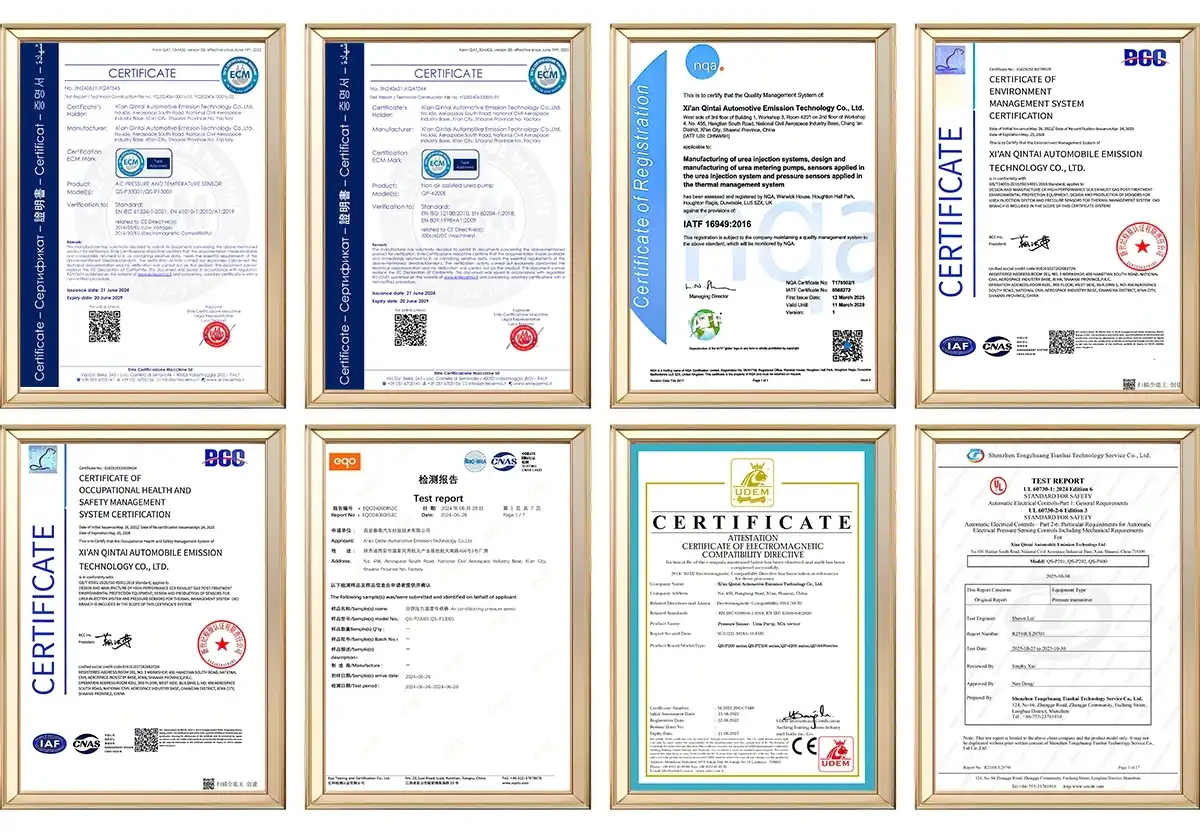
OEM relationships let you get options that are specifically made for your needs. With ISO9001, IATF16949, and explosion-proof standards, suppliers like Qintai show that their quality systems are mature, which helps with long-term cooperation. The fact that they are China's main OEM provider to Weichai Power, Yuchai Power, and Quanchai Power shows that they can produce pressure sensors on a large scale and reliably. Custom sensor development lets you change the interface and parameters to make the interaction with current control systems work better.
When judging a supplier's technical support, you should look at how quickly they respond to application questions and how willing they are to help with integration. When problems happen, it takes less time to fix them when local technical resources are available. When suppliers offer full calibration services, it's easier to keep the accuracy of a product throughout its entire lifecycle.
Best Practices for Procurement Excellence
Finding a reliable provider means looking at more than just the quality of the first product. It also means checking for consistent delivery and business security. Suppliers that show they can be flexible with their production can adapt to changes in demand without affecting wait times. Their inventory management practices make sure that parts are available to support production schedules.
The terms of the warranty show that the manufacturer trusts the product to work well. Options for longer warranties show that you care about quality and protect your costs against failures that happen too soon. Clear definitions of warranty coverage keep disagreements from happening when failures happen in the field under unclear circumstances.
Post-Purchase Verification Methods
Factory calibration certificates show that the equipment is calibrated according to national standards and keep track of measurement error and calibration point information. These certificates show that quality standards have been met and help with government checks. Checking the validity of the certificate and the date of calibration makes sure that the devices meet the current accuracy standards.
On-site testing methods make sure that sensors work well in real-world situations. After installation, comparing it to portable reference standards confirms its accuracy and finds problems caused by shipping damage or mistakes made during installation. Periodic verification testing during operational life finds drift that needs to be fixed or replaced before the accuracy falls below acceptable levels.
Troubleshooting and Maintaining Pressure Sensor Accuracy
To keep accuracy, you need to do preventative maintenance that fixes common ways that measurements get worse before they get worse.
Common Causes of Accuracy Loss
Sensor drift happens slowly as the qualities of a material change due to changes in temperature and buildup of mechanical stress. As electronic parts age, they change how amplifiers work, which changes the tuning. When working conditions are harsh, drift rates increase, so more often recalibration is needed in difficult situations.
There are several ways that contamination can affect accuracy. When particles build up on diaphragms, they change how they work mechanically, which leads to measurement mistakes. Corrosive gases leave behind chemical deposits that change the surface's properties, which in turn changes the way it conducts electricity. When moisture gets into electrical insulation, it breaks down, which leads to signal instability and eventually failure.
Practical Troubleshooting Approaches
The first step in a diagnostic process is to check the electrical connections and power source. Intermittent errors that look like sensor failures are caused by loose connections. Uneven voltage changes can make output unstable, leading to symptoms that look like drift.
By comparing sensor errors to standard readings, system-level problems can be separated. Portable calibrators let you check things in the field without taking sensors out of their installations. A big difference from the standard numbers shows that the sensor is degrading and needs to be fixed.
Recalibration vs Replacement Decisions
When drift stays within acceptable ranges and there is no physical damage, recalibration brings back precision. How cost-effective something is depends on how much the pressure sensor is worth, how much it costs to re-calibrate, and how long you expect it to last. Investing in recalibration is worth it for high-value devices, but replacing cheap sensors is better.
When physical damage stops accurate calibration or when drift goes beyond the adjustment range, replacement is needed. Outdated designs that don't have new parts need to be brought up to date with the latest product generations. When new technologies come out, it may be worth it to replace old units even if they still work.
Long-Term Accuracy Preservation
Regular testing plans keep things accurate for as long as they are used. The regularity of scheduling should match how important the application is and how fast it is drifting. Recording the past of calibrations lets you find the best intervals based on data, matching the need for accuracy with cost.
Managing the environment lowers the rate at which accuracy is lost. Protection from high and low temperatures, water, and other contaminants increases the time between calibrations and the service life of the device. When you fix something correctly, vibrations and mechanical stress are spread out less.
Conclusion
Accurate measurement depends on choosing the right technology, installing it correctly, and keeping it in good shape. Knowing how different sensing technologies turn pressure into electrical signs helps you make smart decisions about what to buy based on your application needs. Environmental factors, the quality of the calibration, and signal processing all have a direct effect on how accurate something stays over its entire working life. Pressure sensors must be selected with particular attention to these factors, as their long-term stability relies on both proper installation and environmental compensation.
Long-term measurement integrity is ensured by getting supplies from qualified suppliers who can provide full certification and technical support. Buyers benefit from carefully reading specifications, making sure they are correct through proper testing, and following upkeep plans that keep calibration. These methods provide accurate measurements that help with pollution control, improving working efficiency, and keeping equipment safe in diesel engines, factories, and power plants.
FAQ
How often should pressure sensors be recalibrated?
Recalibration times depend on how important the application is and how bad the operation is. Applications that depend on diesel engines for pollution control usually need to be recalibrated once a year to stay in line with regulations. When things are stable, monitoring of industrial processes may go up to every two years. In harsh environments with high or low temperatures, vibration, or exposure to corrosives, verification needs to be done more often. While manufacturer suggestions are a good place to start, working experience is what should drive optimisation. If the calibration history shows stable accuracy, longer intervals may be okay, but drifting signals mean that the frequency needs to be raised.
Can temperature compensation eliminate all measurement errors?
Temperature compensation can greatly lower the effects of temperature on accuracy, but it can't completely get rid of them. Based on readings from temperature sensors, compensation algorithms use correction factors to fix the main causes of thermal drift. But there are still some mistakes because of thermal gradients, time-dependent thermal effects, and the limits of the compensation model. When temperature ranges are taken into account, high-quality devices have errors of less than 0.5%, but when temperature ranges are not taken into account, errors can be over 3%. Temperature-controlled systems or devices with better compensation performance are useful for tasks that need higher accuracy in very hot or cold conditions.
Are digital sensors more accurate than analog versions?
Digital sensing devices usually provide better accuracy because they have built-in signal processing and noise immunity. Their built-in analog-to-digital conversion keeps the accuracy even in noisy electrical environments by preventing signal degradation over long cable runs. Digital interfaces let you change the calibration from afar, and advanced correction techniques make the precision better. But good analogue designs can get close to the same level of accuracy in safe places with short cable runs. Digital technology has a big edge when it comes to accuracy in complicated setups with spread-out pressure sensors, electromagnetic interference, and the need for flexible remote configuration.
Partner with Qintai for High-Precision Pressure Sensing Solutions
Sensor technology that has been tried and tested and comes with full technical support should be used in industrial settings that need accurate results. Qintai is a national high-tech company that was founded in 2001. Its main business is making pressure sensors that are specifically designed to meet the needs of diesel engine aftertreatment systems and industry tracking. Our independent research and development team is always improving the performance of our sensors. They have earned certifications for quality and safety, such as ISO9001, IATF16949, Ex, UL, CE, REACH, and RoHS.
We are the main seller of pressure sensors to Weichai Power, Yuchai Power, and Quanchai Power, three of China's biggest engine makers. We offer proven stability on a large scale. Our OEM and ODM services allow for flexible customisation to meet specific needs for integration. Whether you need standard solutions or devices that are specifically made for you, our team can help you make the best choice. Contact us at info@qt-sensor.com to talk about your pressure sensing needs and find out how our precise measurement solutions can help your business run more smoothly and meet legal standards.
References
1. Webster, J.G. (2019). The Measurement, Instrumentation, and Sensors Handbook: Spatial, Mechanical, Thermal, and Radiation Measurement. CRC Press.
2. Bao, M.H. (2021). Handbook of Sensors and Actuators: Micro Mechanical Transducers, Pressure Sensors, Accelerometers and Gyroscopes. Elsevier Science Publishers.
3. Wilson, J.S. (2018). Sensor Technology Handbook. Newnes Publishing.
4. Pallas-Areny, R., & Webster, J.G. (2020). Sensors and Signal Conditioning. John Wiley & Sons.
5. Fraden, J. (2022). Handbook of Modern Sensors: Physics, Designs, and Applications. Springer International Publishing.
6. Norton, H.N. (2017). Sensor and Analyzer Handbook. Prentice Hall Professional Technical Reference.

Our customers’ satisfaction speaks for our quality — contact us to experience the same reliable service.